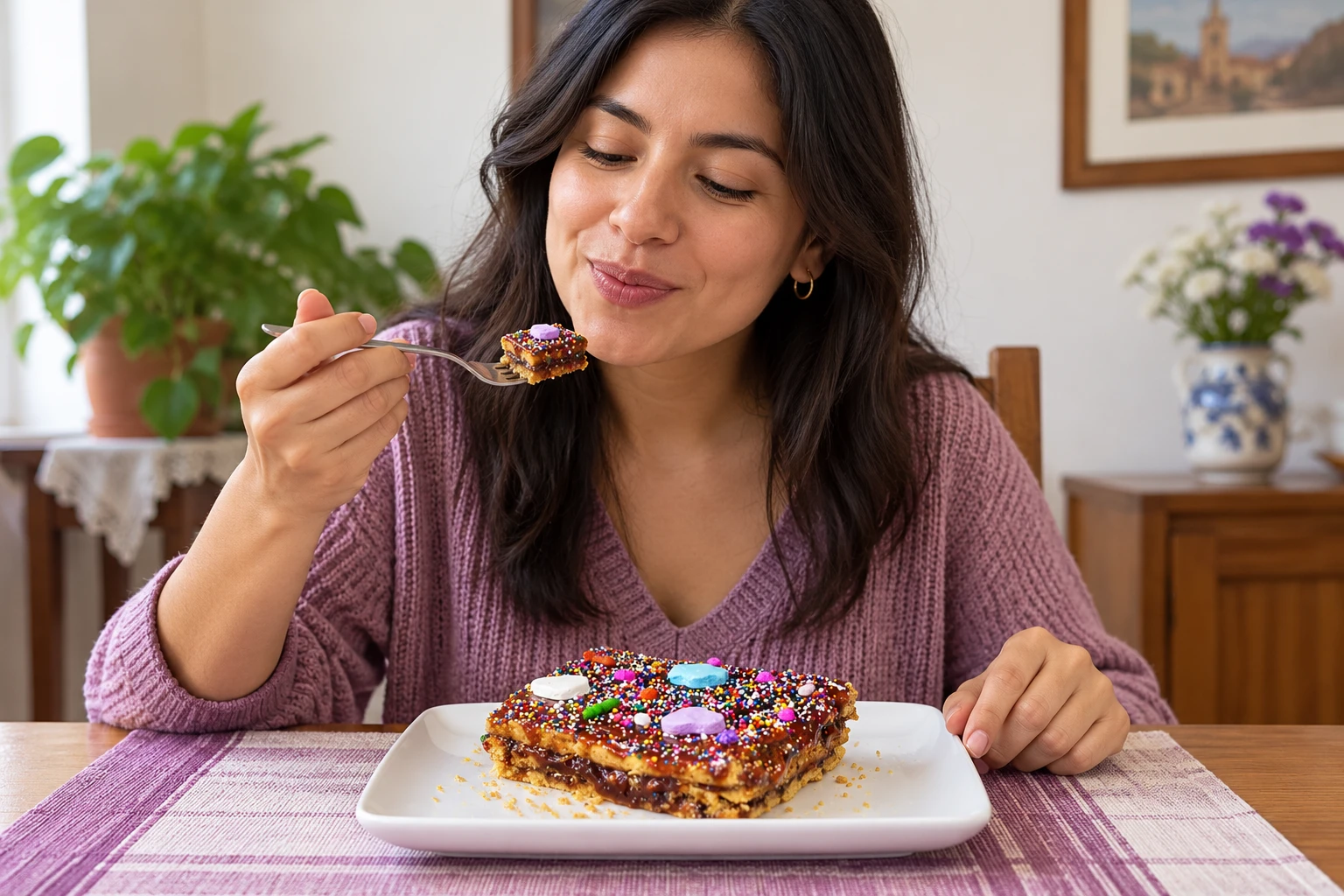
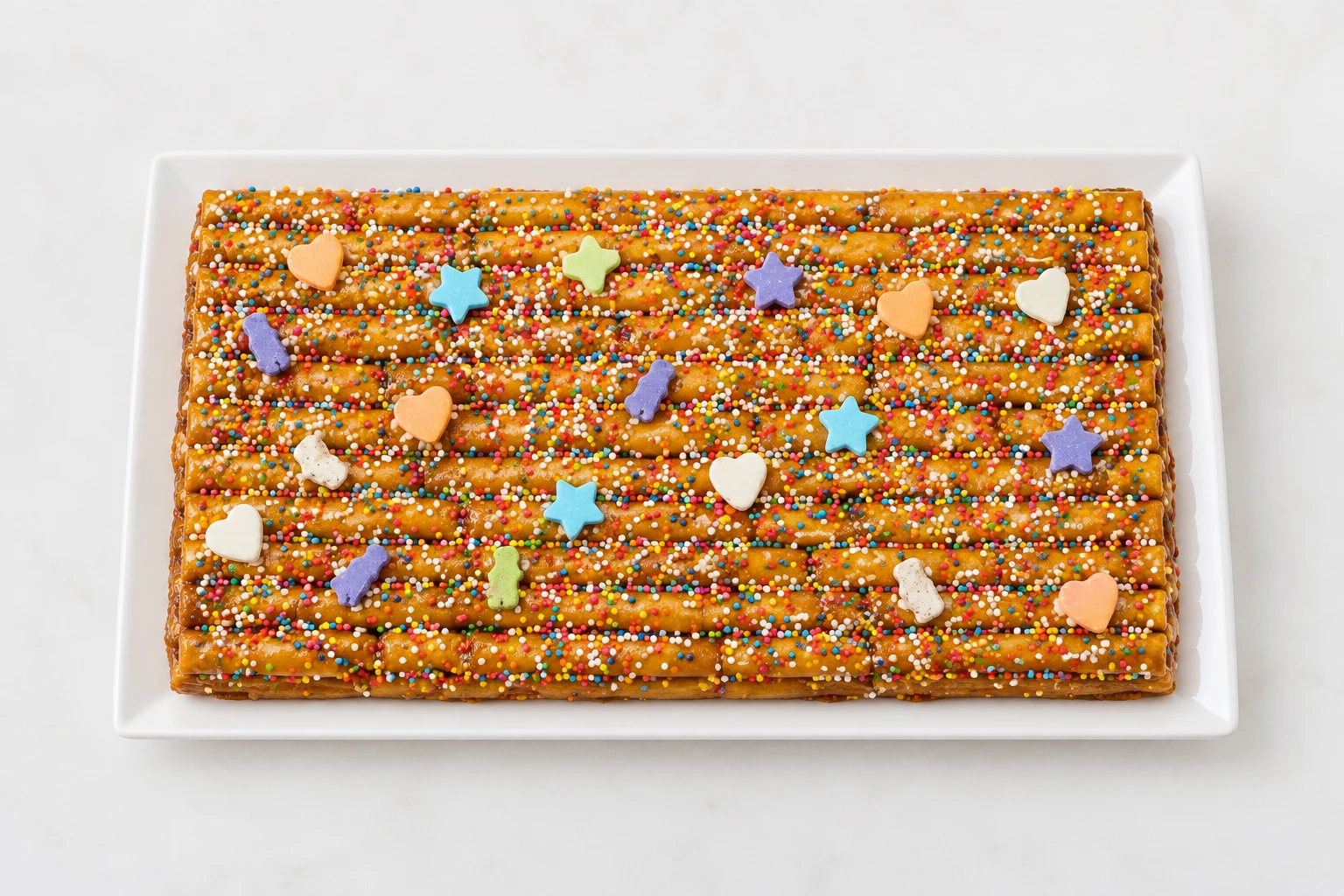
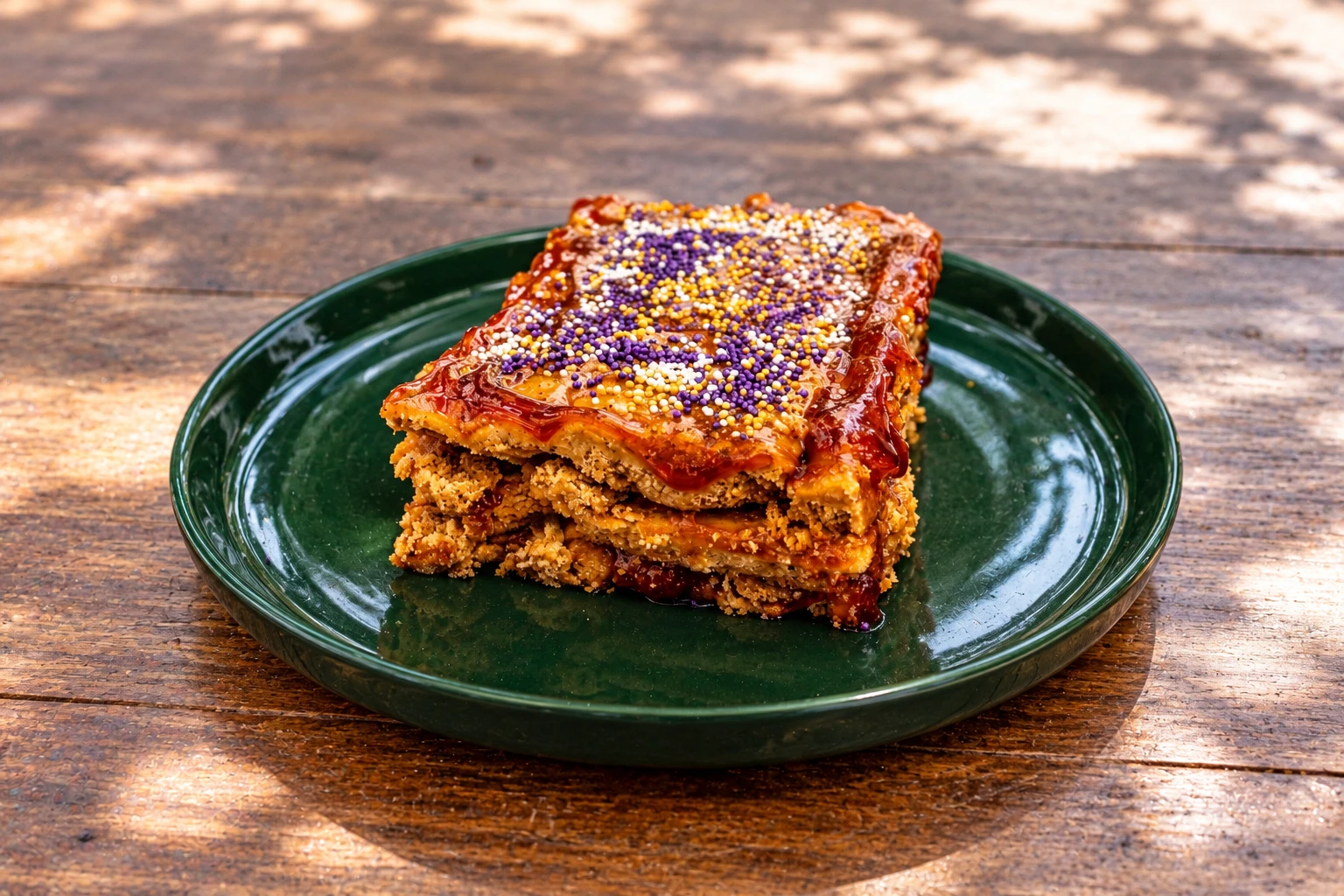
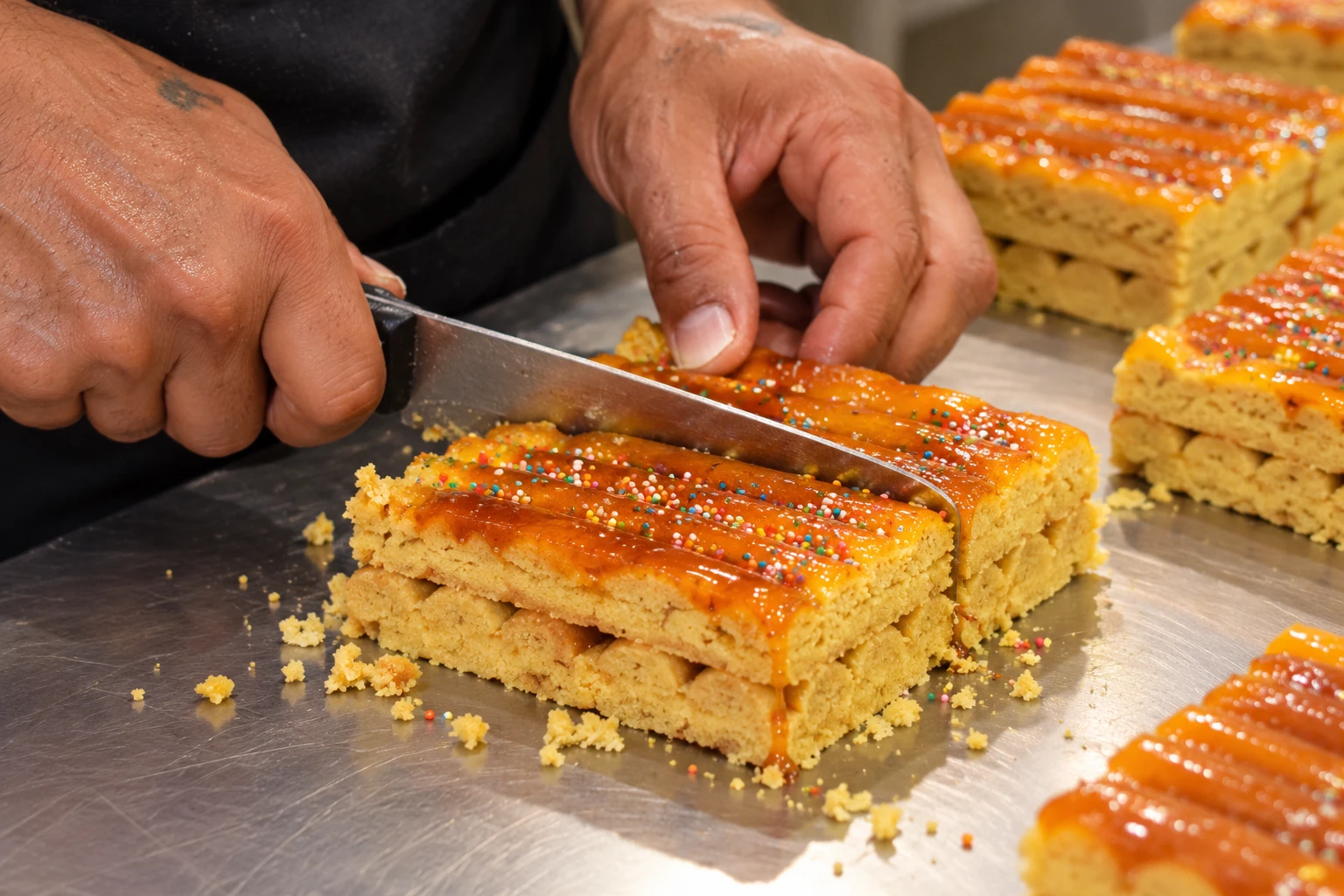
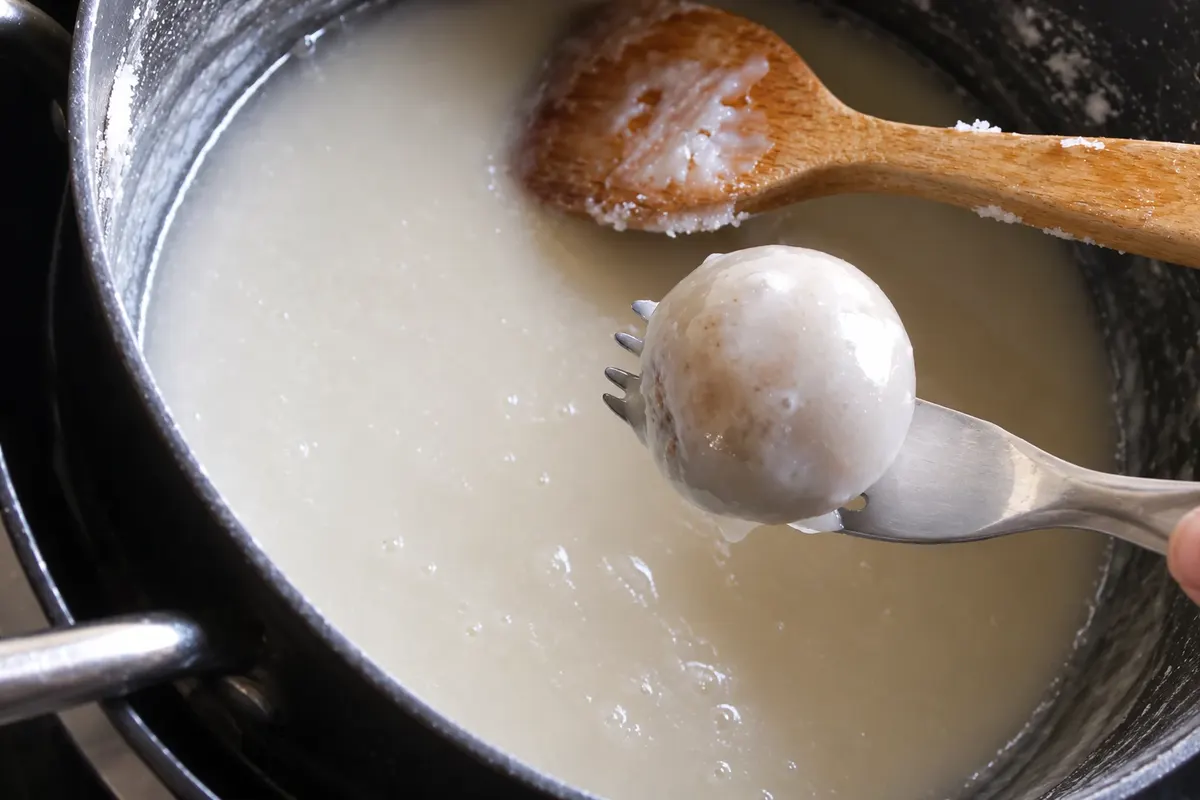
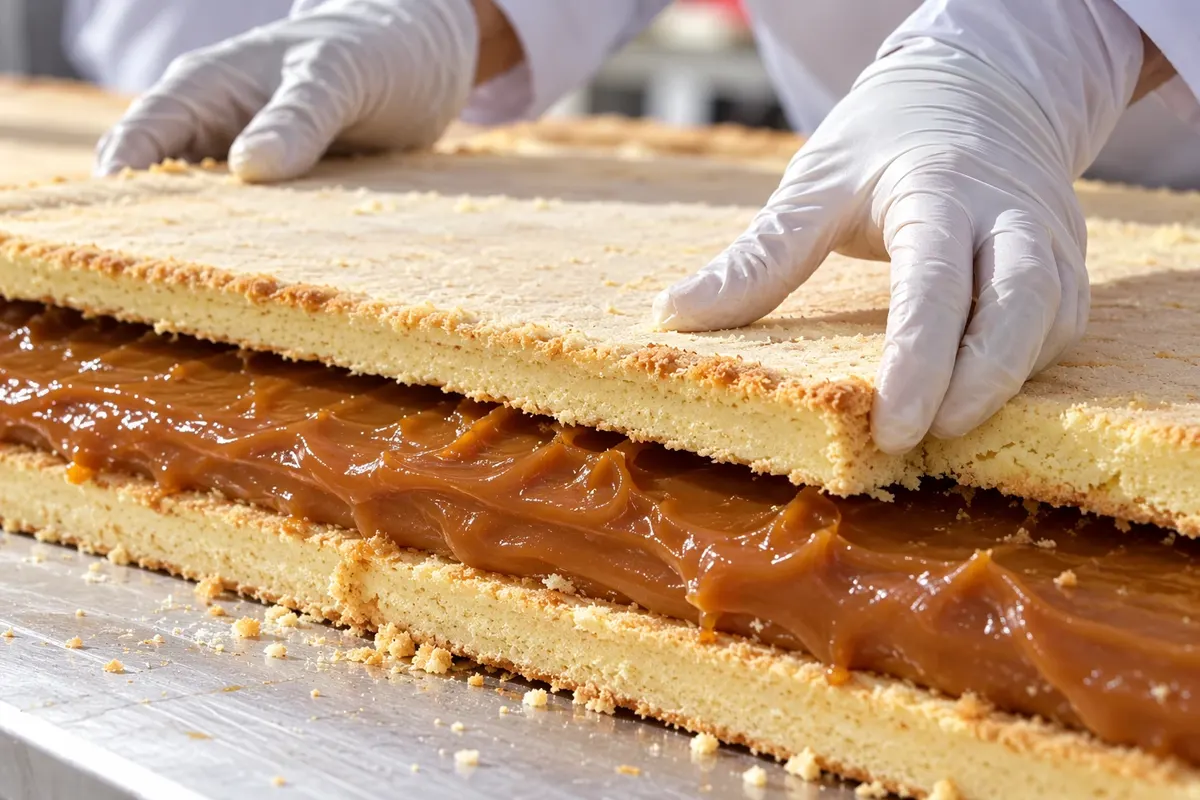
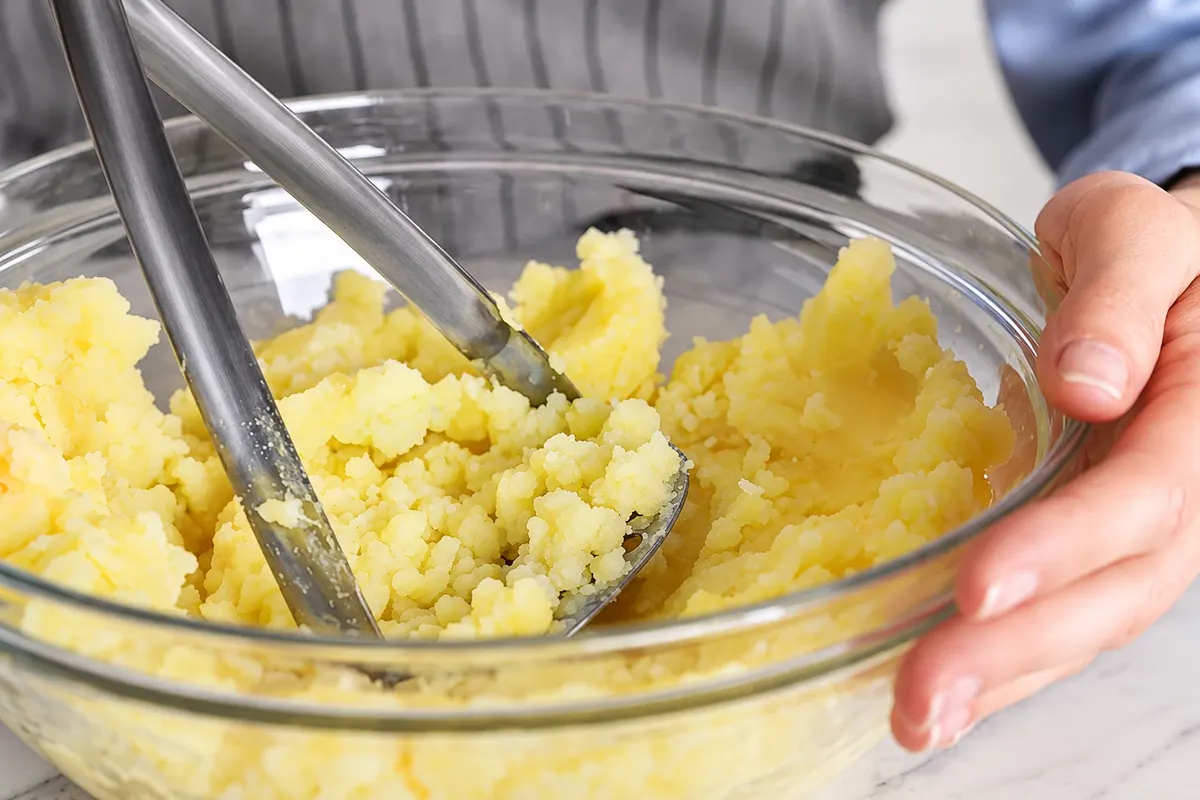
Doña Pepa turrón is made from sticks of flour dough, butter, egg yolks and anise, baked and stacked in layers like a tray. Between the layers and on top goes a thick chancaca honey, the block brown sugar, perfumed with fruits and spices. The topping includes colorful sprinkles and nonpareils. It’s cut into rectangular pieces.
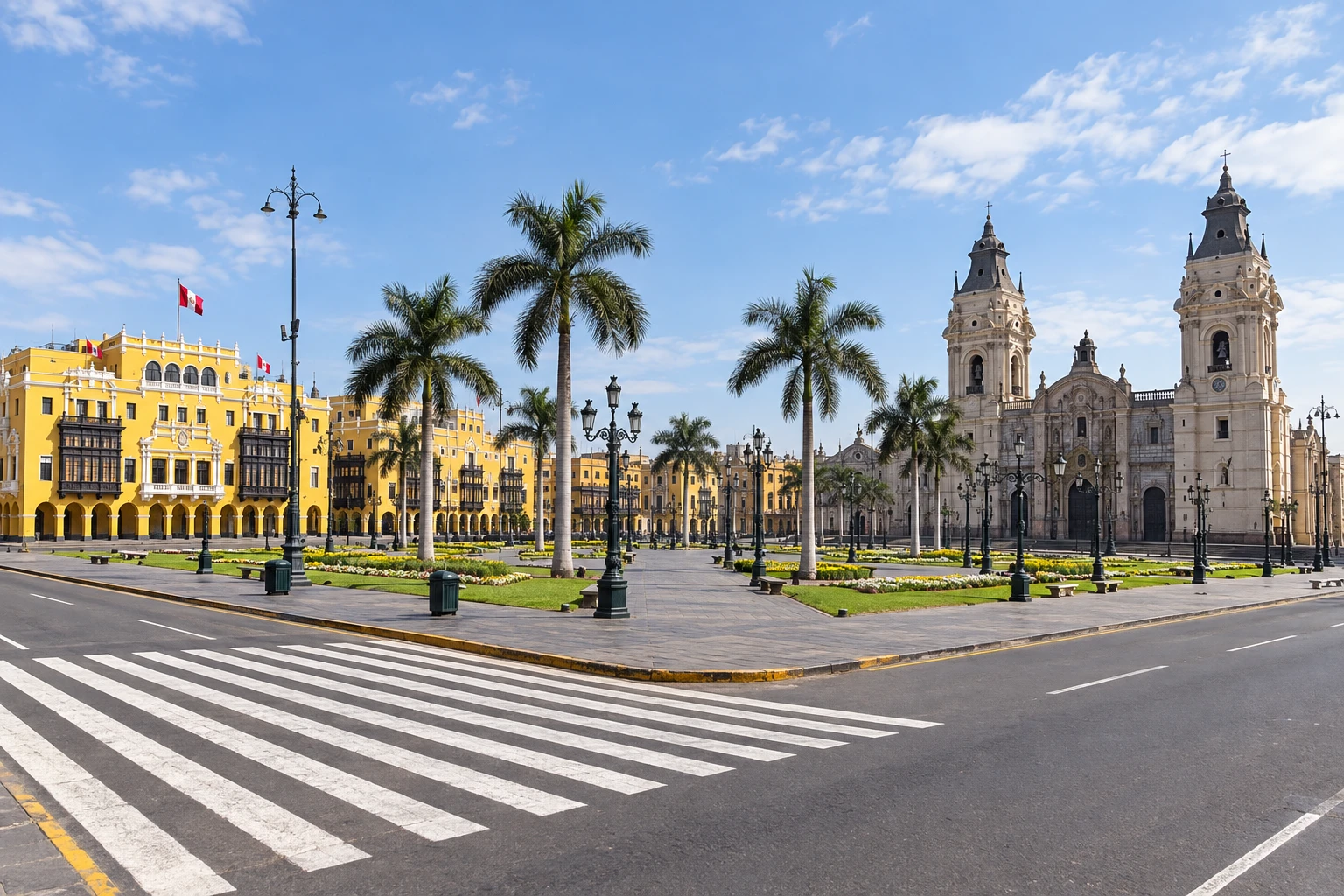
The sweet is inseparable from October in Lima, the purple month of the Señor de los Milagros, the image of the Christ of Pachacamilla that goes in procession through the city center. On those days turrón is sold in the streets, in bakeries and outside churches, and the Marca Perú portal calls it a symbol of Limeña Christianity.
The origin has several versions. The best-known one speaks of Josefa Marmanillo, an Afro-descendant woman enslaved in the Cañete valley, south of Lima, who at the end of the 18th century was said to have been cured of a paralysis in her arms after praying to the Christ and created the sweet in gratitude. Other versions mention a Lima cook named Josefa and a freed woman Josefa Piérola who ran a confectionery in Lima in 1880. None have definitive proof.
In the 19th century, street vendors announced “the good turrones of Doña Pepa” as they walked the streets. Today there is turrón year-round, but the October tradition continues. Turrón de Doña Pepa is the name of a type of sweet, not a brand.


 Brazilija
 Antarktika
 Argentina
 Bolivija
 Čile
 Kolumbija
 Ekvator
 Gvajana
 Francoska Gvajana
 Falklandski otoki (Malvini)
 Paragvaj
 Surinam
 Urugvaj
 Venezuela
 Nemčija
 Avstrija
 Belgija
 Hrvaška
 Danska
 Slovaška
 Slovenija
 Španija
 Finska
 Francija
 Grčija
 Nizozemska
 Madžarska
 Irska
 Islandija
 Italija
 Luksemburg
 Norveška
 Poljska
 Portugalska
 Združeno kraljestvo
 Češka
 Švedska
 Švica
 Turčija
 Bermudi
 Kanada
 Združene države Amerike
 Grenlandija
 Mehika
 Sveta Peter in Mihael
 Dominikanska republika
 Japonska
 Južnoafriška republika
 Egipt
 Avstralija
 Fidži
 Nova Zelandija
 Papua Nova Gvineja