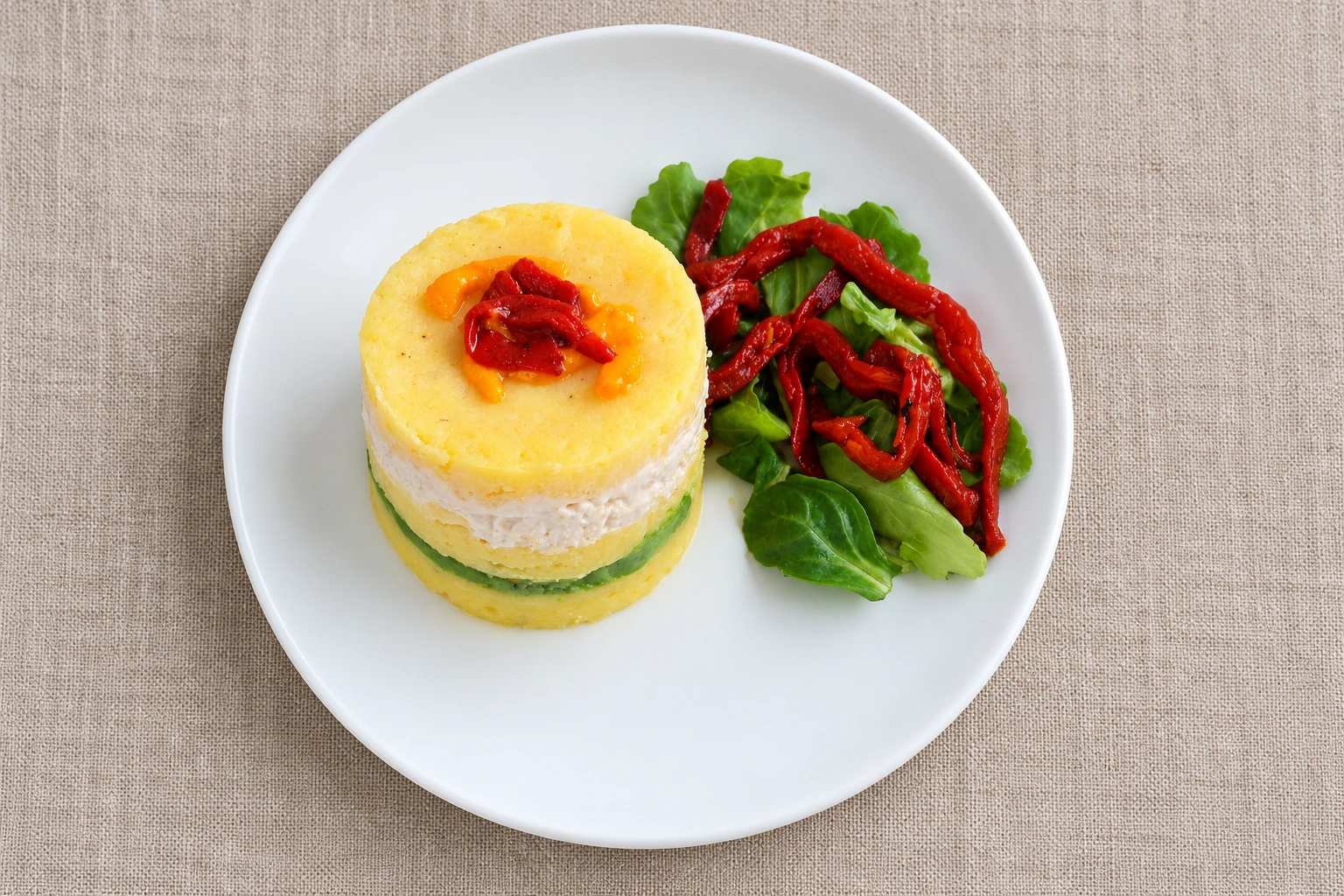
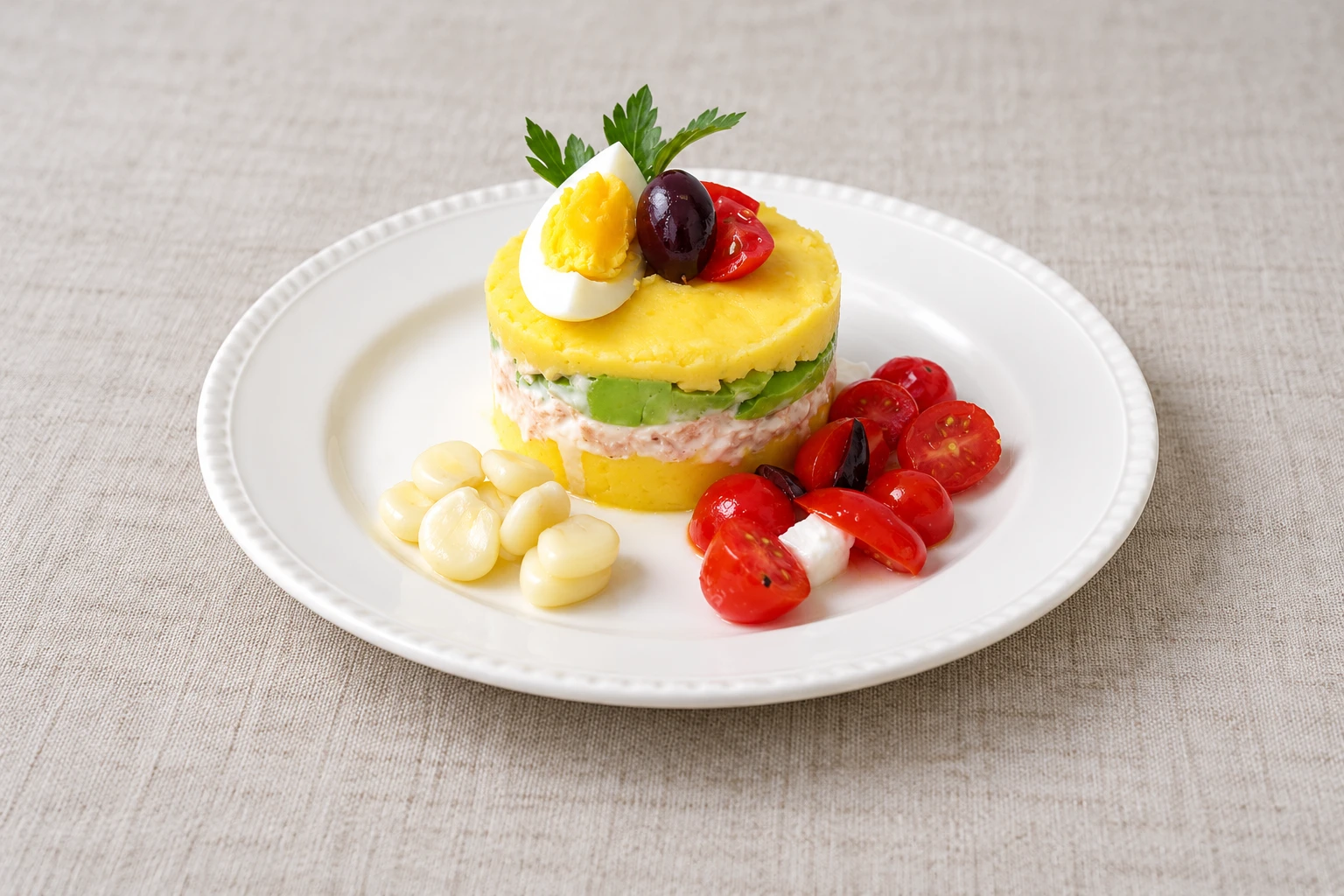
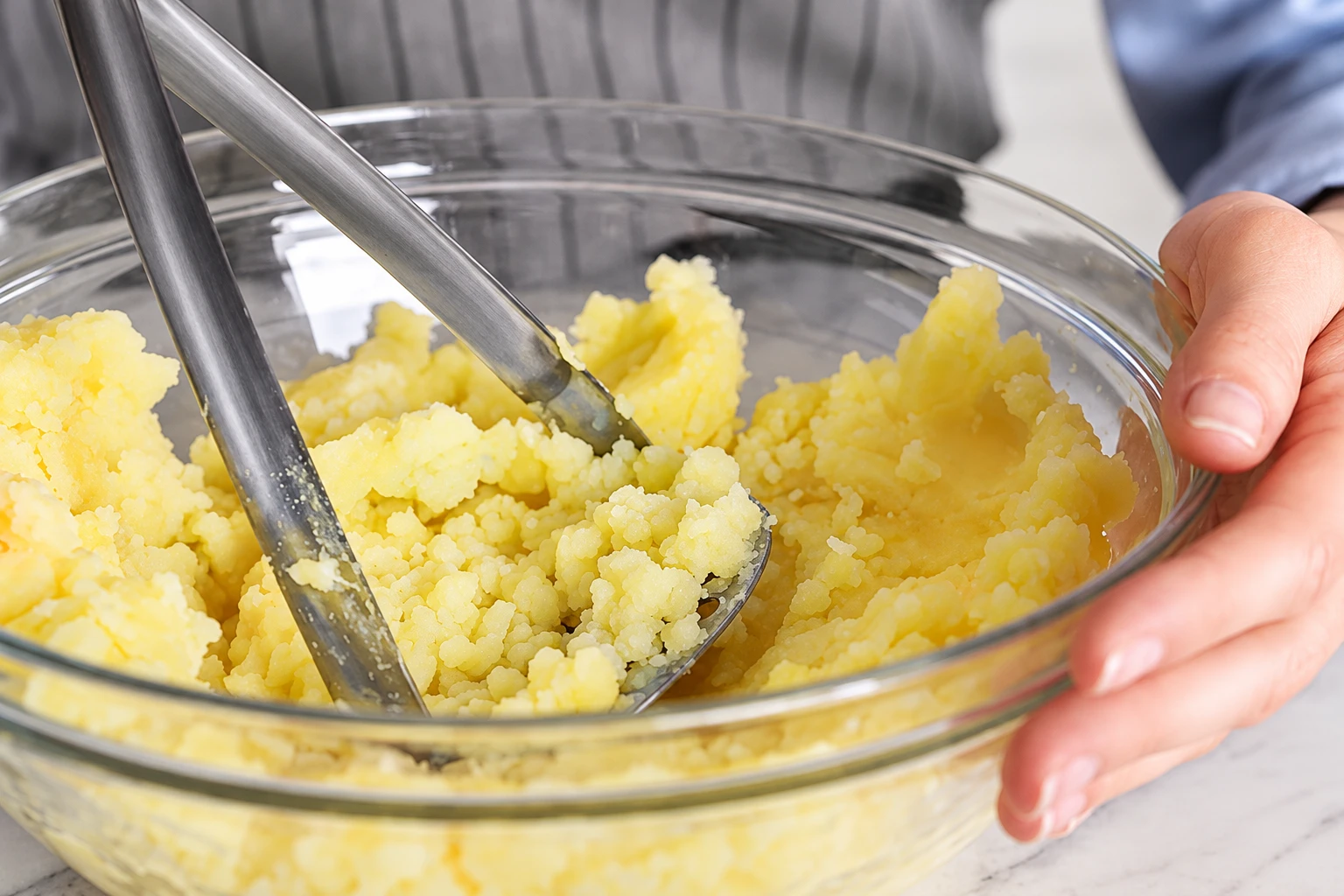
Causa limeña is a cold dish made with cooked yellow potatoes mashed and seasoned with ají amarillo, lime juice, oil, and salt until it becomes a soft but firm dough. The dough is assembled in layers, like a pie, with filling between them: shredded chicken with mayonnaise, tuna, crab or other seafood, and sometimes avocado. On top it is usually garnished with hard‑boiled egg, a black olive, and a bit more ají.
Its roots are Andean. Potato and ají have been cultivated in Peru long before the arrival of the Spanish, and researchers link the name causa to the Quechua word kawsay, associated with sustenance and life. The lime, oil, and fillings arrived with colonial cuisine.
The name causa limeña has a story told in Lima. According to tradition, during the Independence campaign in 1820–1821, women sold the dish in the city’s streets and squares to help pay the expenses of José de San Martín’s army, announcing it was "for the cause." The same story is repeated for the War of the Pacific at the end of the 19th century. These are popular accounts without documentary confirmation.
Today causa is eaten throughout Peru as a starter or light dish, and appears in versions with different fillings. In Lima it is commonly found on criollo food menus and at family tables.


 Brazilija
 Antarktika
 Argentina
 Bolivija
 Čile
 Kolumbija
 Ekvator
 Gvajana
 Francoska Gvajana
 Falklandski otoki (Malvini)
 Paragvaj
 Surinam
 Urugvaj
 Venezuela
 Nemčija
 Avstrija
 Belgija
 Hrvaška
 Danska
 Slovaška
 Slovenija
 Španija
 Finska
 Francija
 Grčija
 Nizozemska
 Madžarska
 Irska
 Islandija
 Italija
 Luksemburg
 Norveška
 Poljska
 Portugalska
 Združeno kraljestvo
 Češka
 Švedska
 Švica
 Turčija
 Bermudi
 Kanada
 Združene države Amerike
 Grenlandija
 Mehika
 Sveta Peter in Mihael
 Dominikanska republika
 Japonska
 Južnoafriška republika
 Egipt
 Avstralija
 Fidži
 Nova Zelandija
 Papua Nova Gvineja