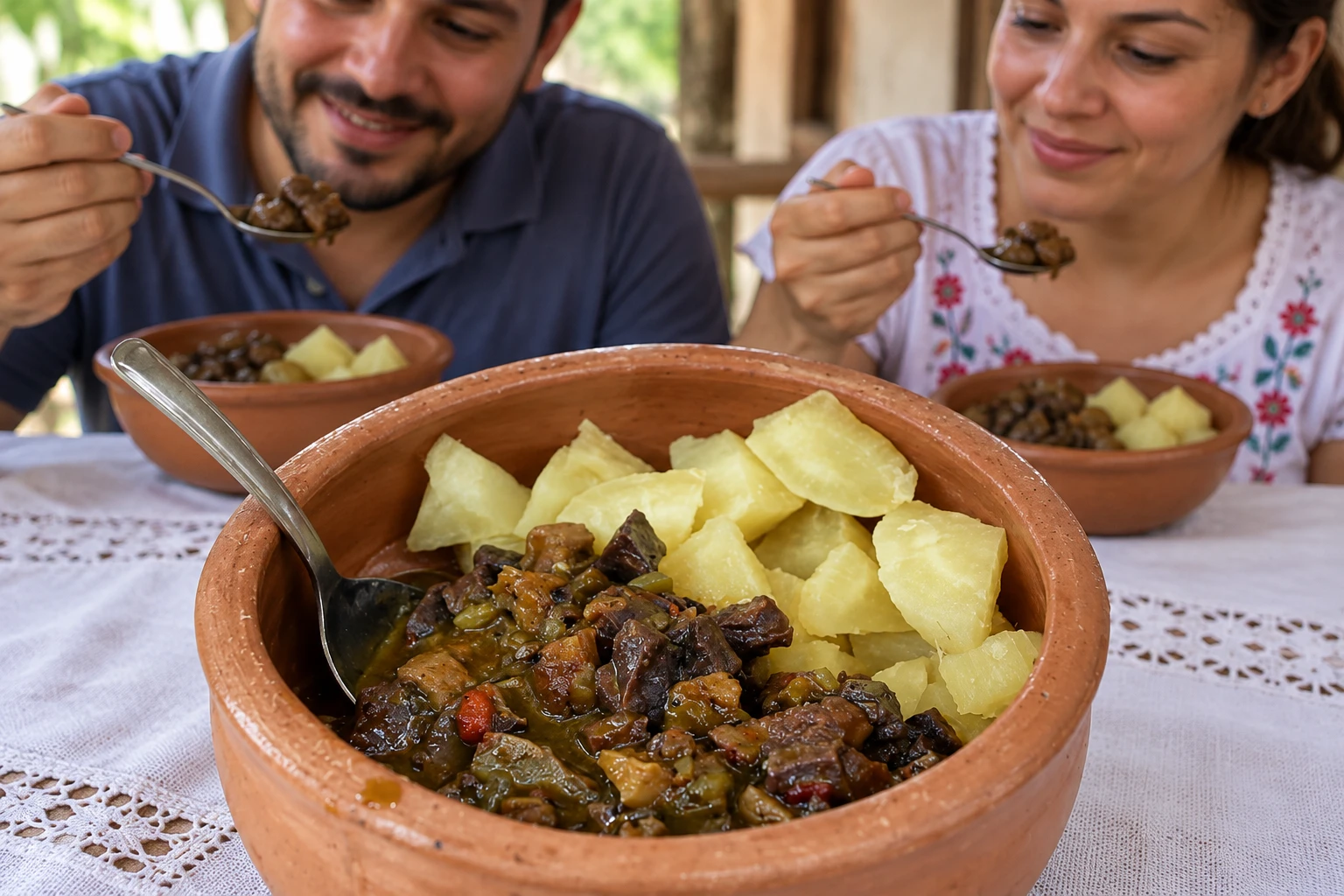
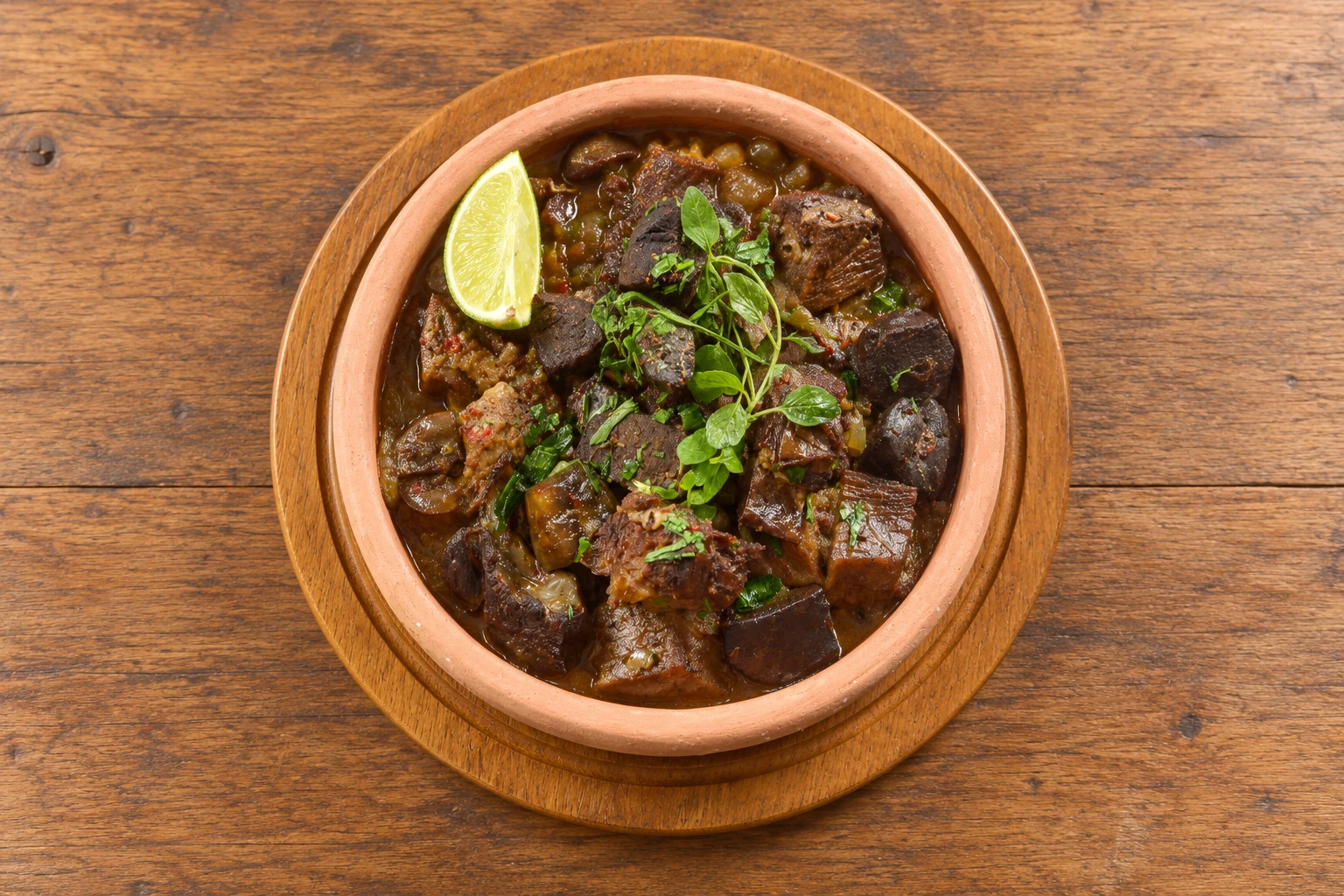
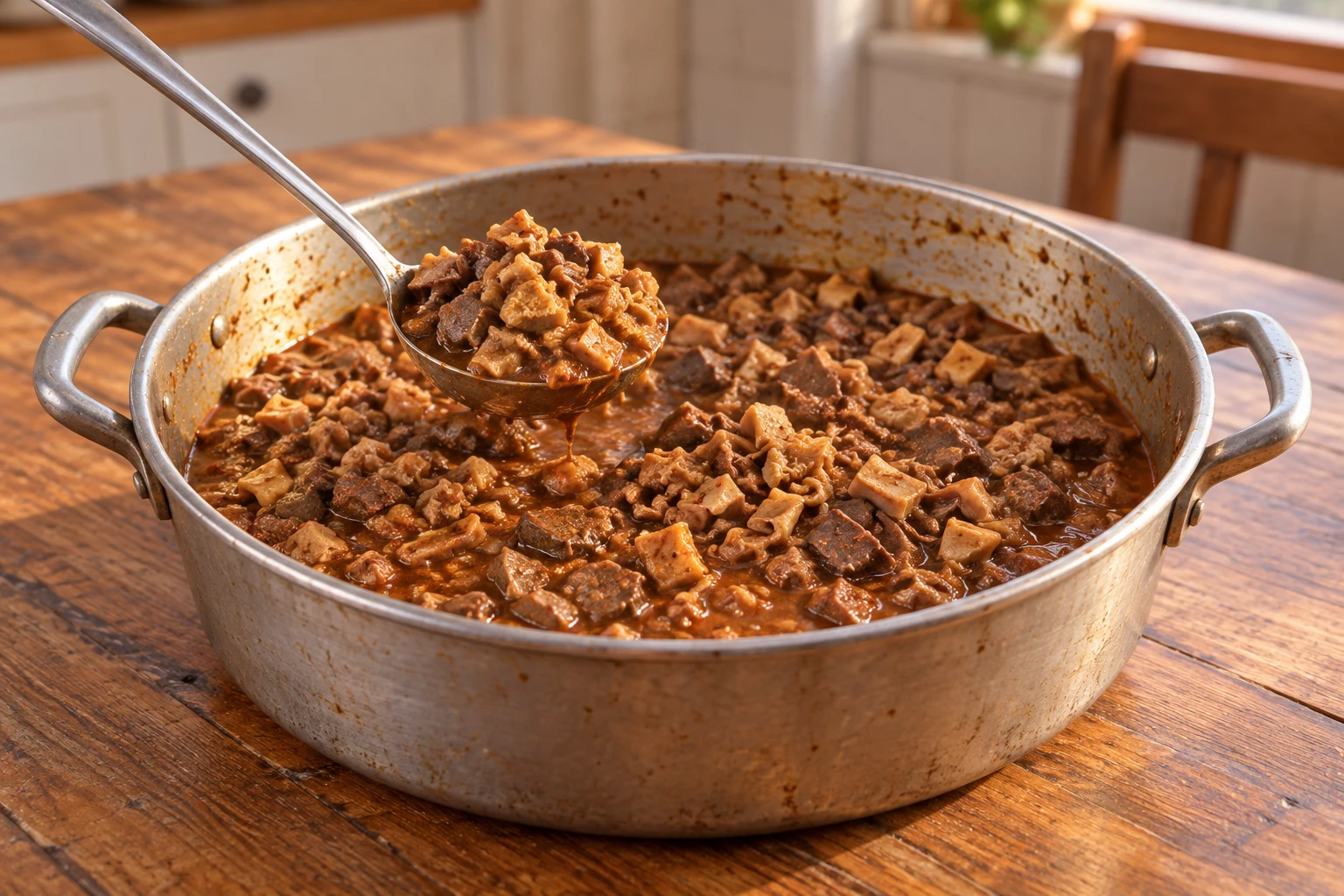
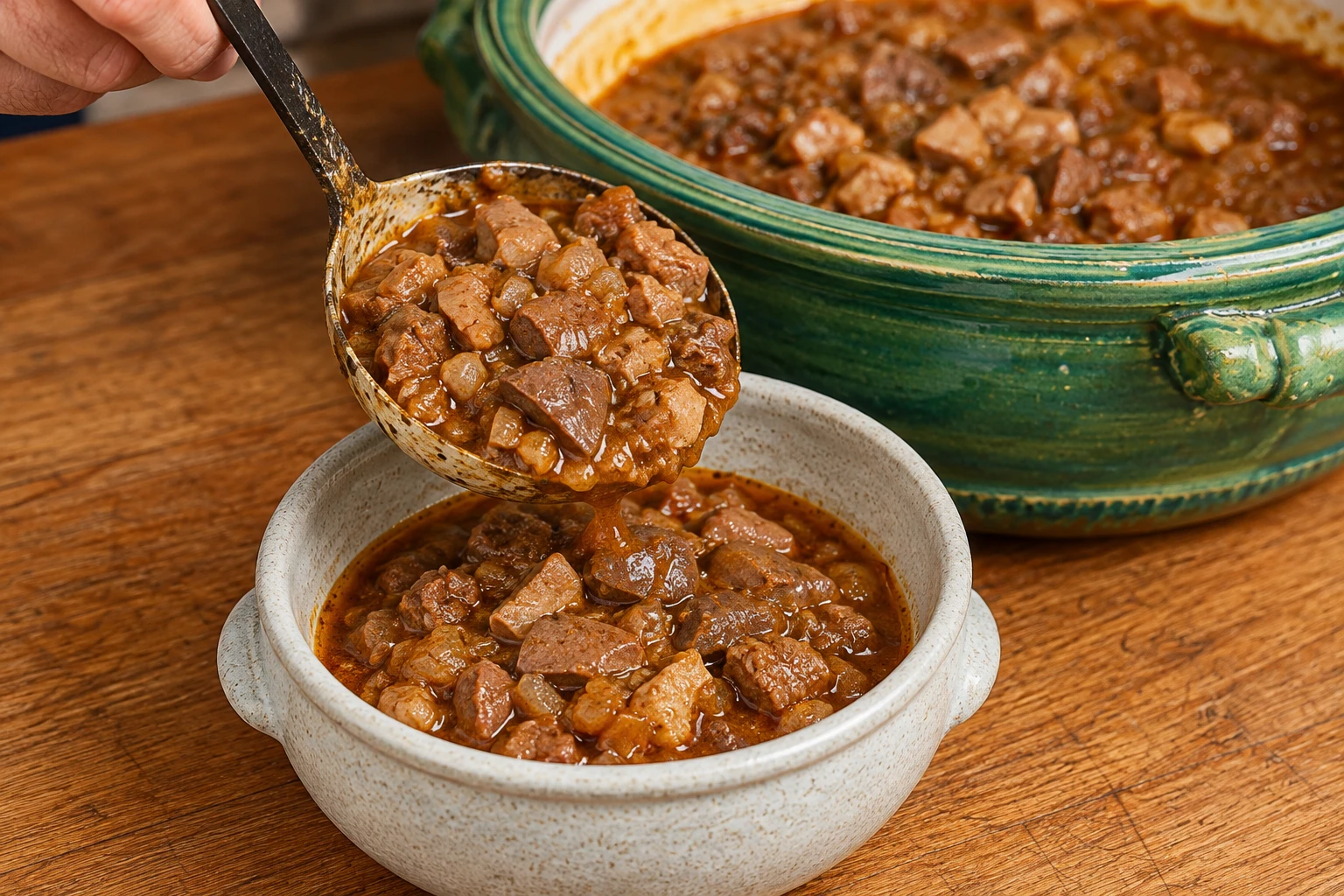
Batiburrillo is a stew of offal chopped into small pieces. It includes liver, heart, kidney, tongue and tripe, sautéed in pork fat or oil with onion, sweet bell pepper, the locote ky'ỹi (a small spicy chili), garlic, black pepper and salt, and cooked with red wine. The liver is added last, near the end of cooking. The result is a dark, well-seasoned stew.
In San Juan Bautista, capital of the Misiones department, the dish's origin is told by the family that brought it. Local tradition says it was introduced in 1926 by Sebastián Sasiain Zubillaga, an immigrant from the Basque Country who settled in the town with his wife, Brígida Zubia Erostarbe. He prepared the stew at gatherings he hosted for neighbors and friends, as a reminder of pilgrimages from his homeland, and she served it in clay pots, with bread and wine for the Basques and with manioc for the neighbors.
The original recipe used pork and sheep offal from the region's estancias. Over time it came to use cattle offal, which were easier to find, and pre‑cooked tripe was added to the pot. In town, batiburrillo became a starter for large occasions, served before the aperitif and the roast. Historian Margarita Miró Ibars sees it as an example of how a foreign recipe adapts to local ingredients and becomes part of a community's identity.
Since 2002 the municipality has organized the Festival del Batiburrillo, Siriki y Chorizo Sanjuanino in Plaza Boquerón to celebrate the municipality’s anniversary on January 26. For two nights there is music, a typical foods fair and a contest for the most flavorful batiburrillo. The siriki, an aperitif of caña blanca with lime, ice and soda, is also attributed to Sasiain, and the chorizo sanjuanino, a pork-and-beef sausage, completes the celebration.


 Brazilija
 Antarktika
 Argentina
 Bolivija
 Čile
 Kolumbija
 Ekvator
 Gvajana
 Francoska Gvajana
 Falklandski otoki (Malvini)
 Peru
 Surinam
 Urugvaj
 Venezuela
 Nemčija
 Avstrija
 Belgija
 Hrvaška
 Danska
 Slovaška
 Slovenija
 Španija
 Finska
 Francija
 Grčija
 Nizozemska
 Madžarska
 Irska
 Islandija
 Italija
 Luksemburg
 Norveška
 Poljska
 Portugalska
 Združeno kraljestvo
 Češka
 Švedska
 Švica
 Turčija
 Bermudi
 Kanada
 Združene države Amerike
 Grenlandija
 Mehika
 Sveta Peter in Mihael
 Dominikanska republika
 Japonska
 Južnoafriška republika
 Egipt
 Avstralija
 Fidži
 Nova Zelandija
 Papua Nova Gvineja