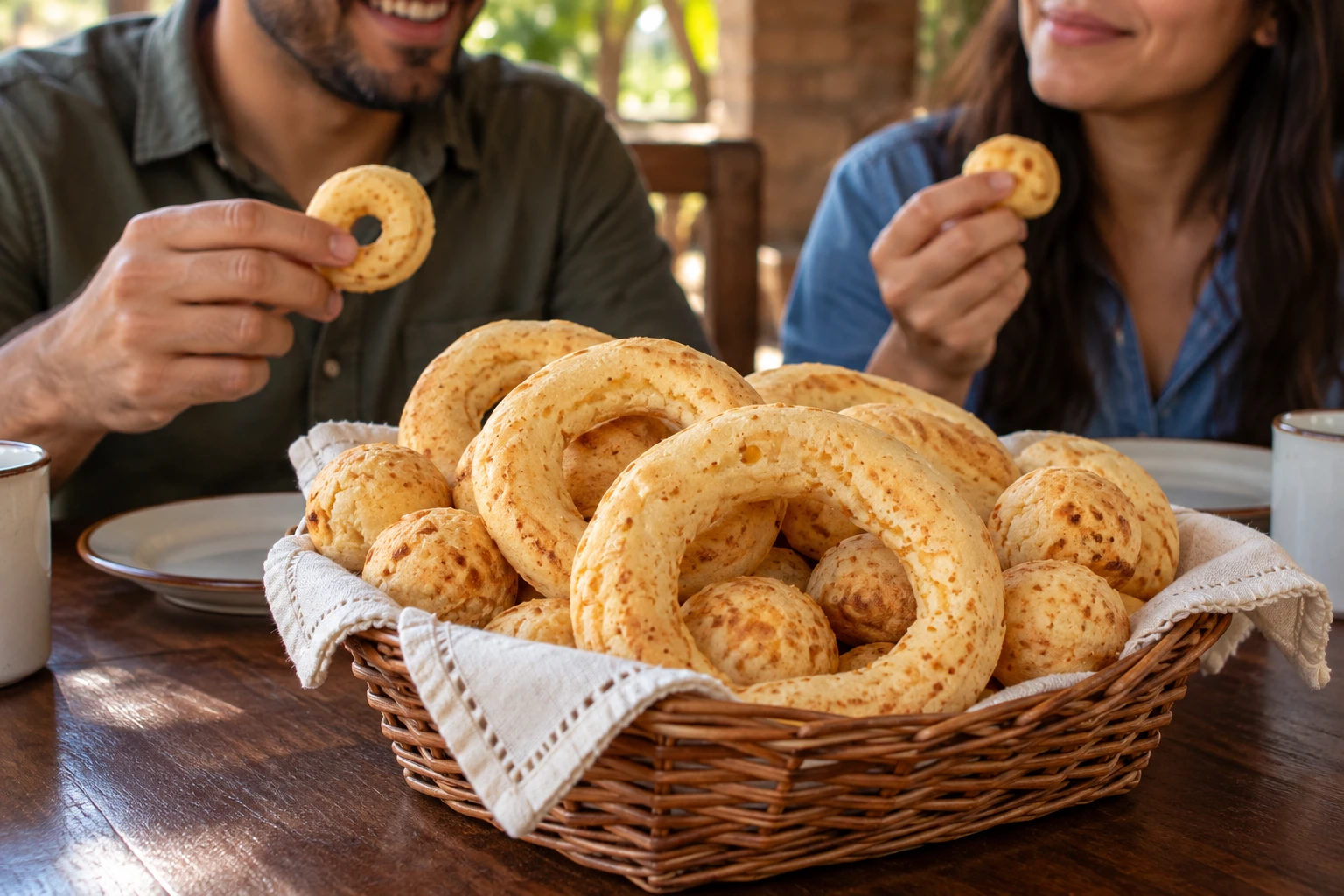
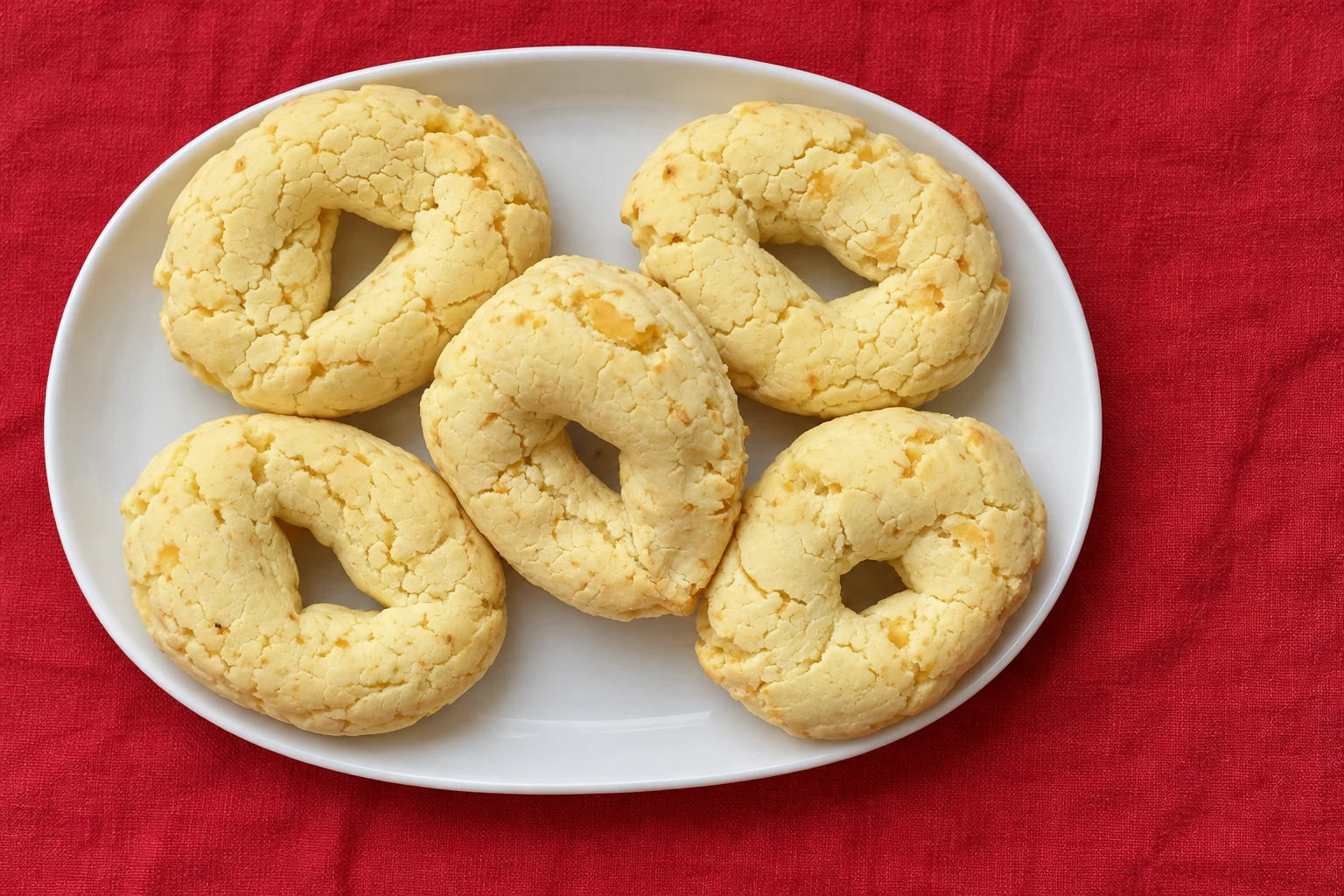
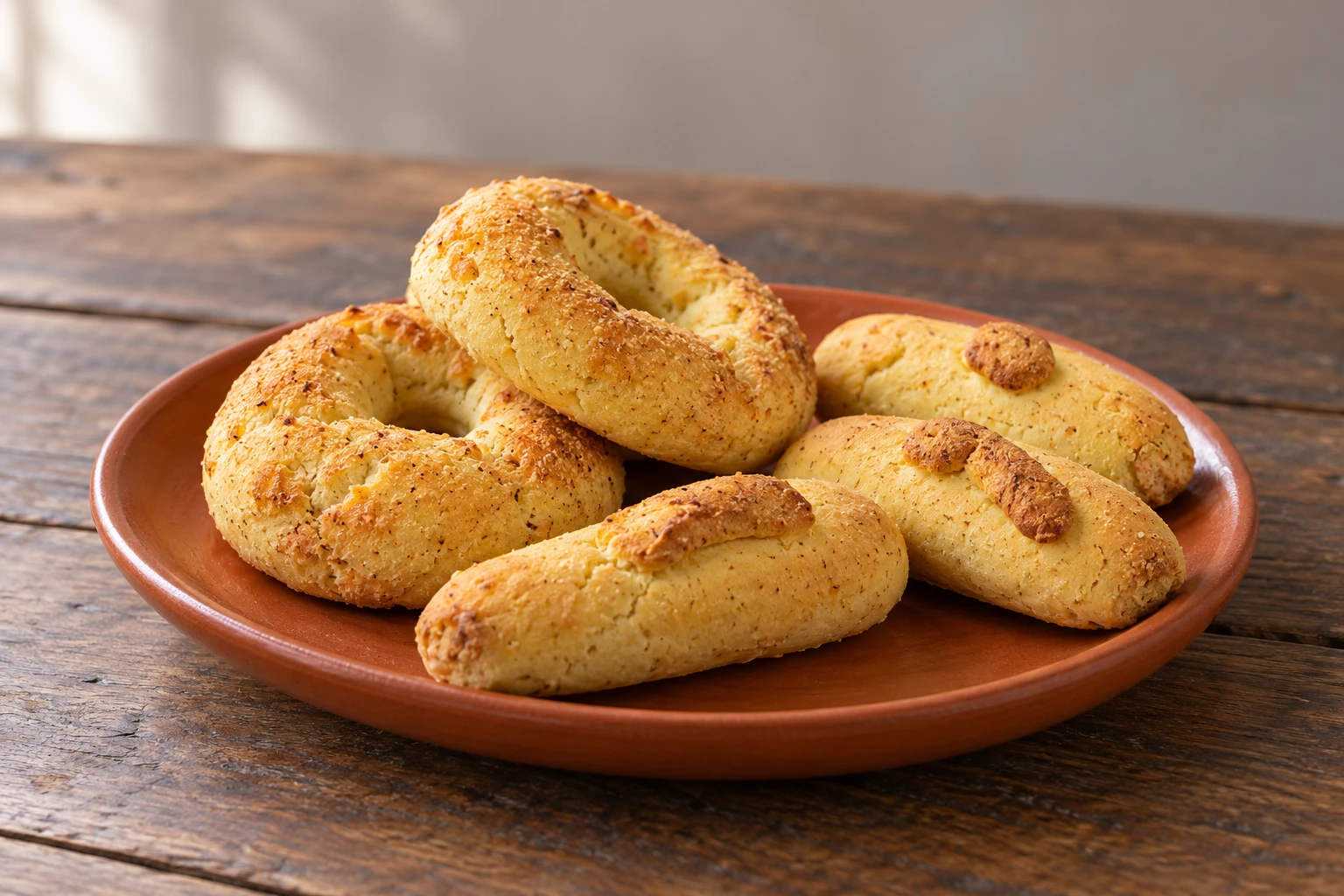
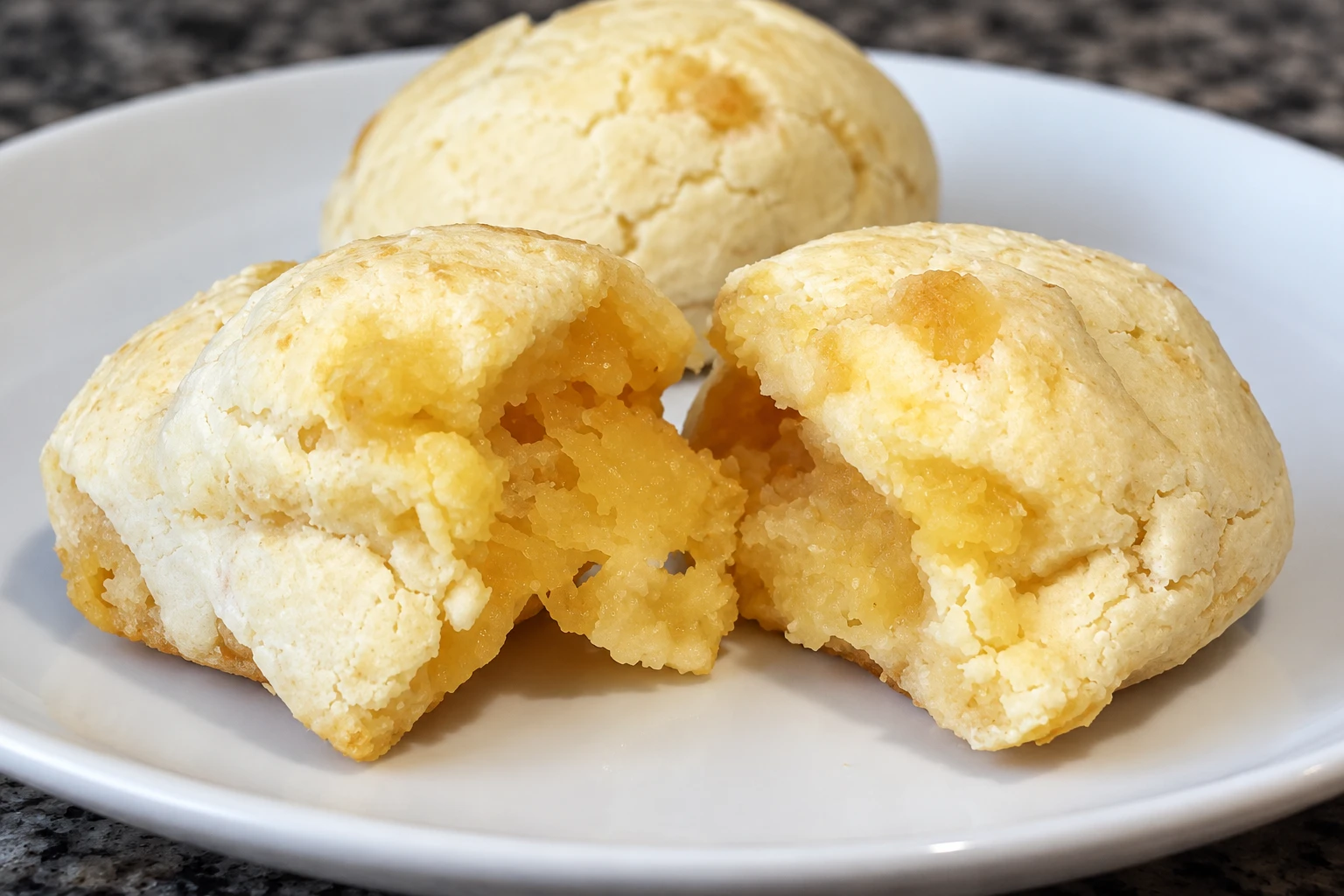
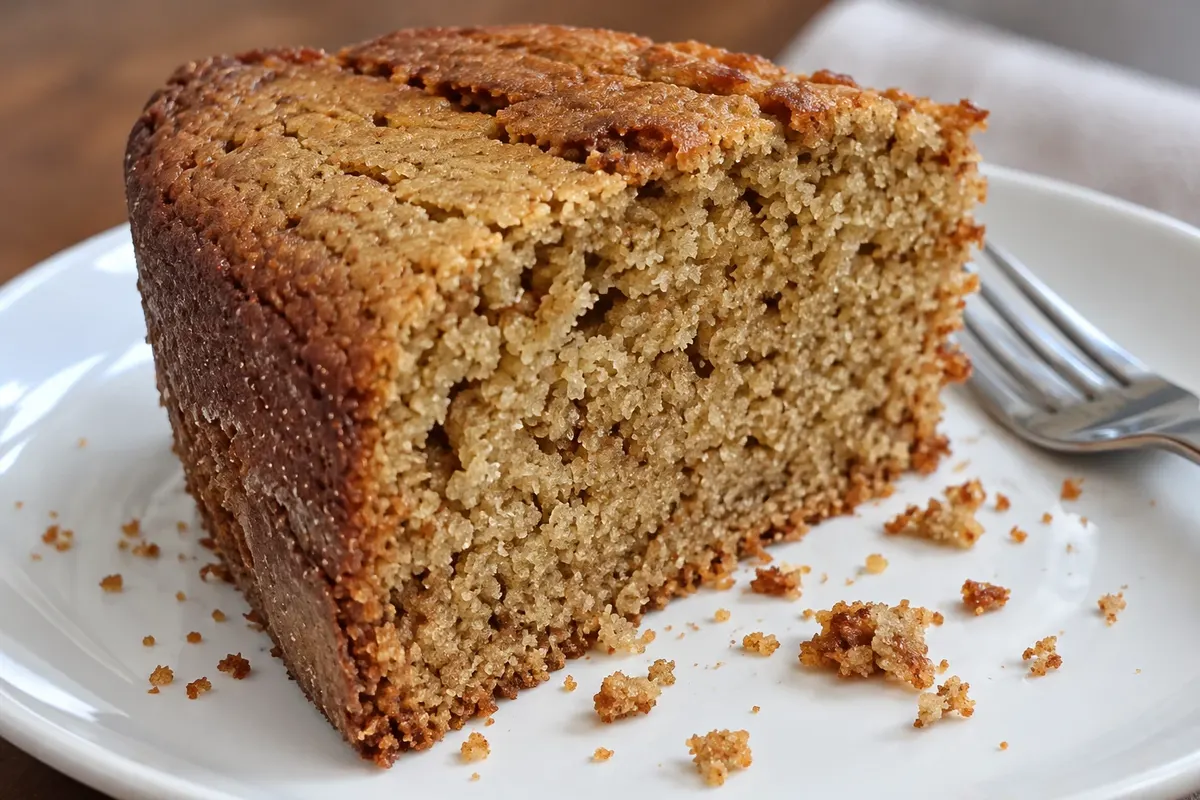
Chipa is a small bread made with starch, cassava starch, mixed with Paraguayan cheese, eggs, pork fat or butter, milk and salt, often with anise seeds. The dough is shaped into rings, balls or small crescents and baked until golden. The exterior becomes firm; the interior is soft and slightly elastic because of the starch.
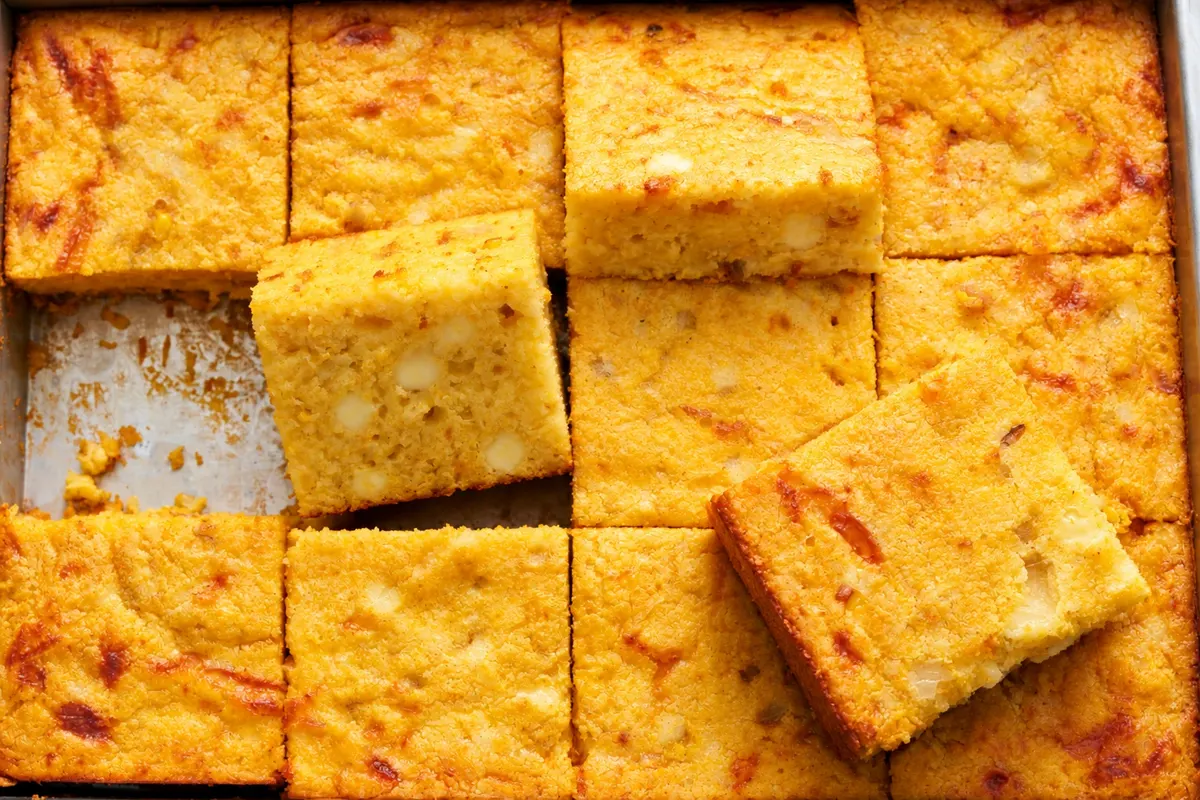
Its roots are Guaraní. Before Europeans arrived, chipa referred to raw grated cassava wrapped in a leaf and cooked under hot embers. The modern version likely appeared during the colonial period, when wheat was scarce and missionaries began using cassava starch with the cheese, eggs and fat brought by the Spaniards; this is the explanation most often given by Paraguayan sources, although some historians note that the Franciscans arrived before the Jesuits. There are dozens of variants, such as chipa so'o, stuffed with meat, and chipa guasu, made with fresh corn, which is a different dish.
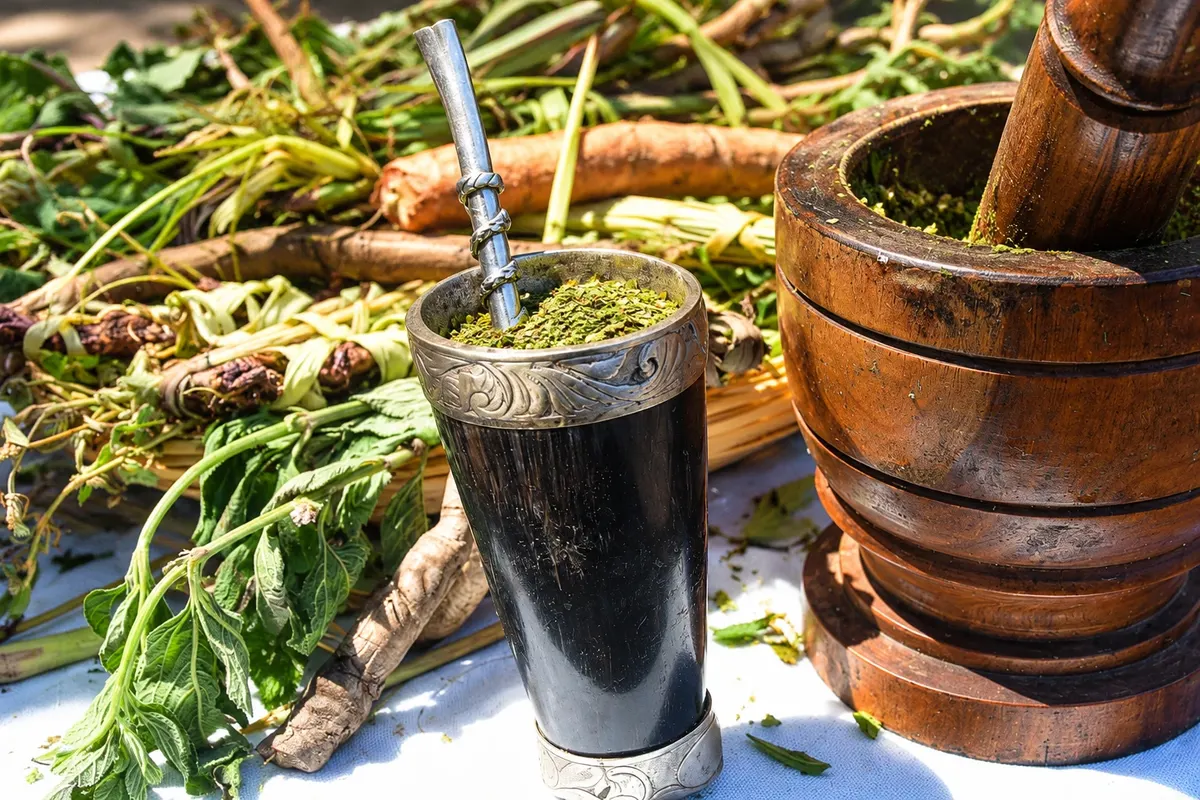
In 2014, a law declared chipa the national food of Paraguay and created the National Day of the Chipa, observed on the second Friday of August. It is eaten year-round, with cocido, toasted yerba mate served hot, at breakfast and as a snack, and it is a travel companion on the roads. During Holy Week, demand increases: families gather for chipa apo, the joint preparation, and bake chipas in the tatakua, the clay oven.
Coronel Bogado, in the department of Itapúa, about 45 km from Encarnación, is known as the chipa capital. In 2017 the National Directorate of Intellectual Property granted the city the official title of National Capital of the Chipa, and the municipality also registered the National Chipa Festival, which the city has organized for decades at the end of December. Along the urban stretch of the PY01 the chiperías line up, and chipa production and sale are one of the municipality’s main sources of work. According to Paraguayan press, the fame began with the arrival of the train that connected Asunción to Encarnación in the early 20th century.
The title was contested for years by Eusebio Ayala, formerly Barrero Grande, in the department of Cordillera, where chipa is also the city’s hallmark and where the Fiesta Nacional del Chipá takes place in August. Both traditions coexist: Coronel Bogado’s tradition has official recognition, while Eusebio Ayala maintains a national festival that has run for more than four decades.


 Brazilija
 Antarktika
 Argentina
 Bolivija
 Čile
 Kolumbija
 Ekvator
 Gvajana
 Francoska Gvajana
 Falklandski otoki (Malvini)
 Peru
 Surinam
 Urugvaj
 Venezuela
 Nemčija
 Avstrija
 Belgija
 Hrvaška
 Danska
 Slovaška
 Slovenija
 Španija
 Finska
 Francija
 Grčija
 Nizozemska
 Madžarska
 Irska
 Islandija
 Italija
 Luksemburg
 Norveška
 Poljska
 Portugalska
 Združeno kraljestvo
 Češka
 Švedska
 Švica
 Turčija
 Bermudi
 Kanada
 Združene države Amerike
 Grenlandija
 Mehika
 Sveta Peter in Mihael
 Dominikanska republika
 Japonska
 Južnoafriška republika
 Egipt
 Avstralija
 Fidži
 Nova Zelandija
 Papua Nova Gvineja