Pedra da Macela
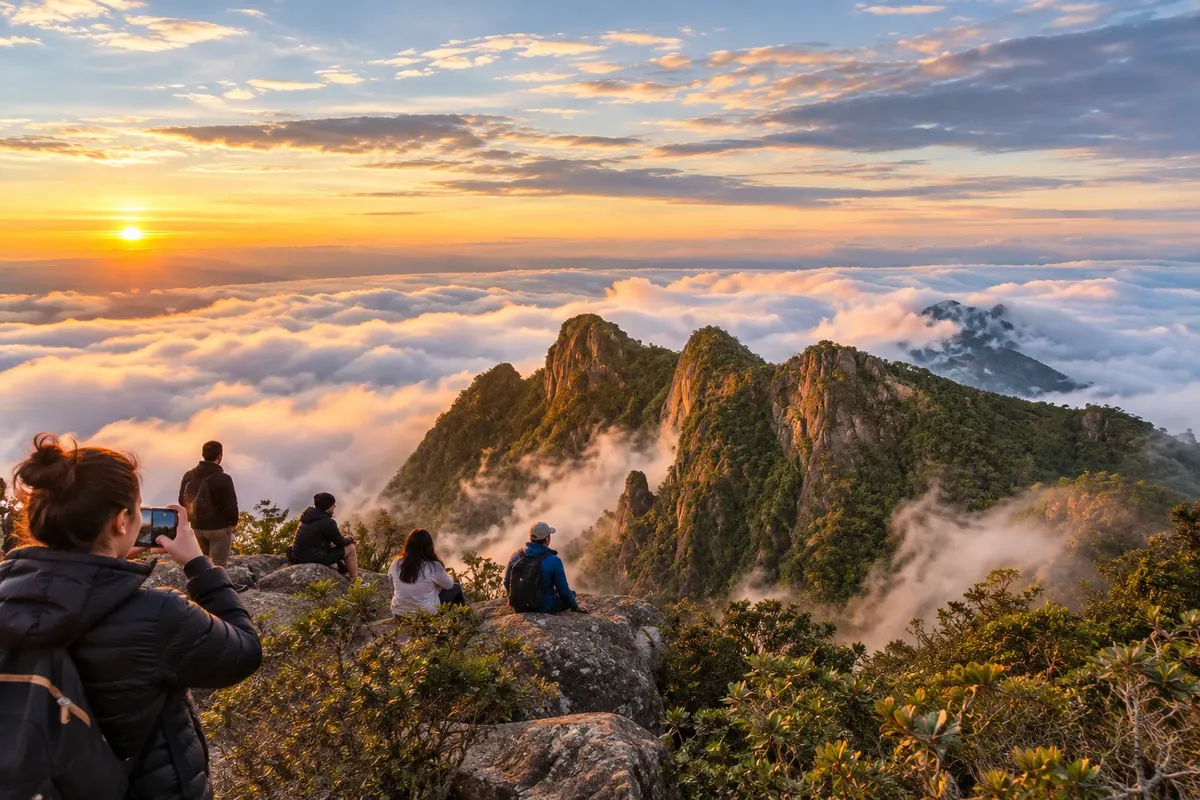
Pedra da Macela is a viewpoint within Parque Nacional da Serra da Bocaina, accessed from the Cunha side. In good visibility the panorama can reach the coast of Rio de Janeiro state and the surrounding mountain ranges.
Antarktika
São Paulo · Brazilija
Destinacija: Faith Tourist Region.
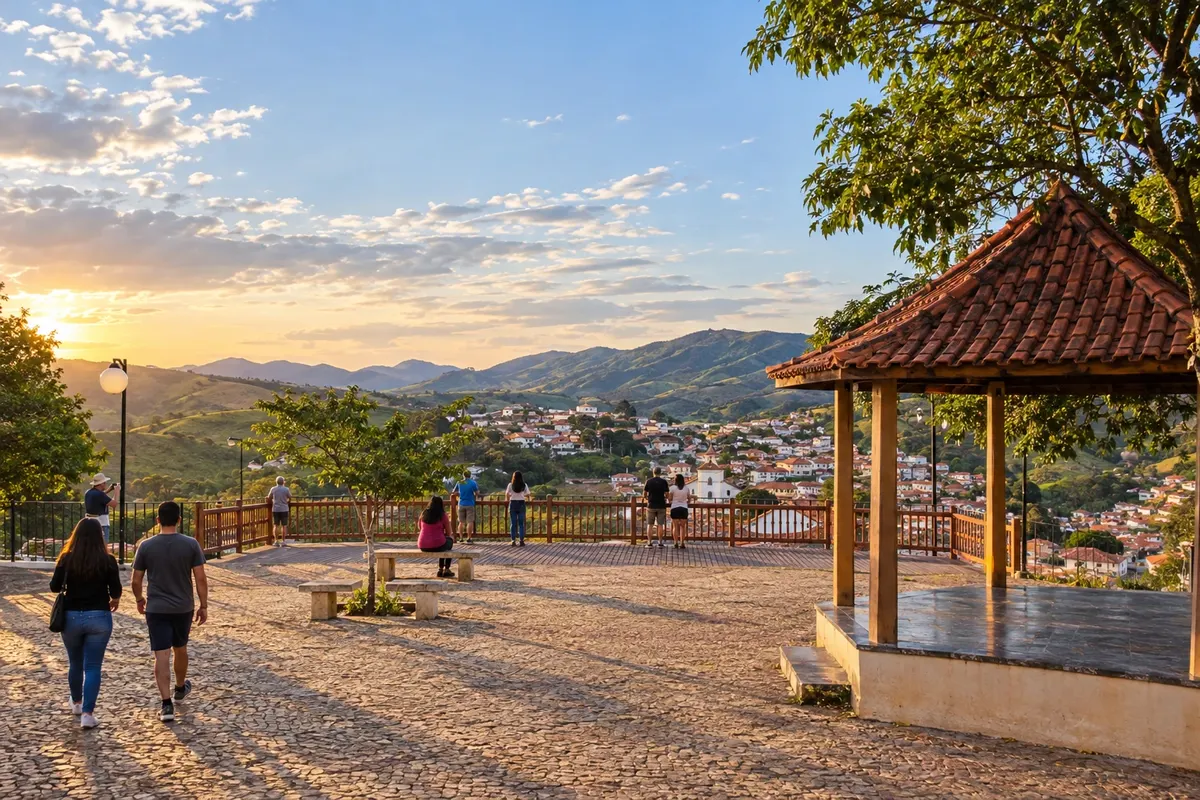
Na fotografiji: View of Cunha, in Cunha
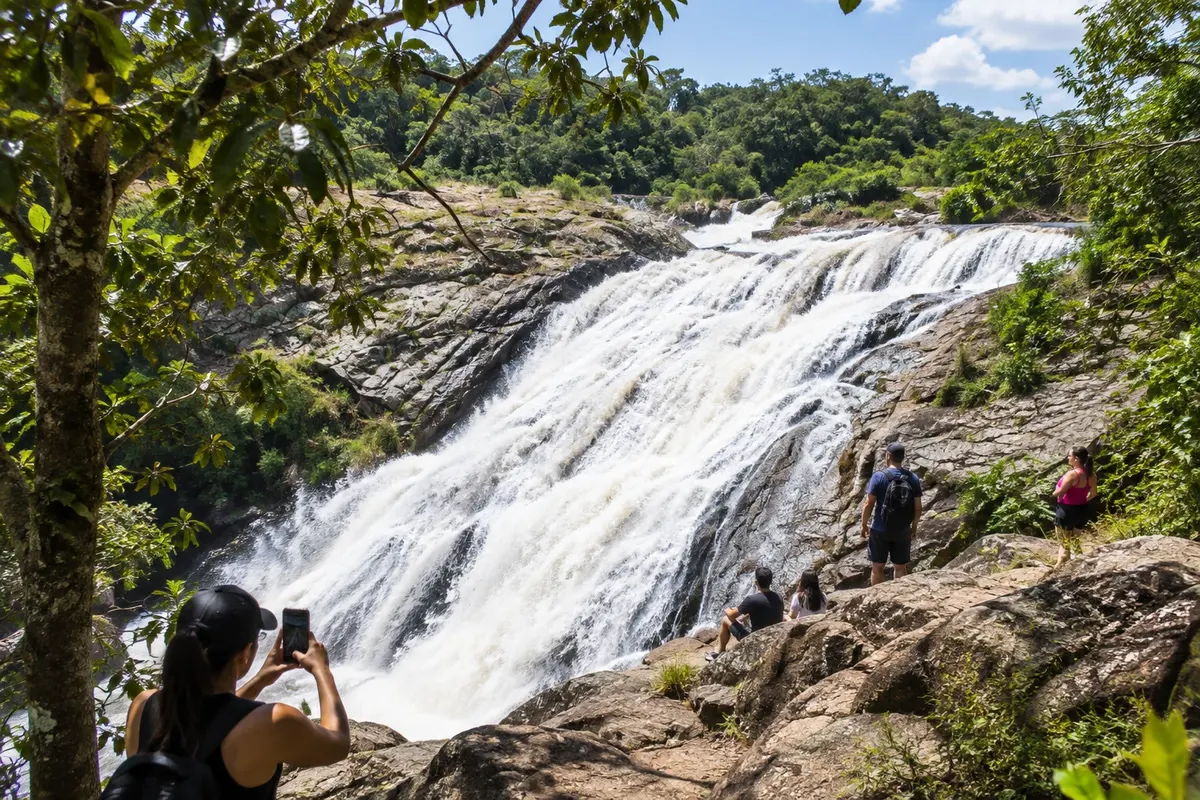
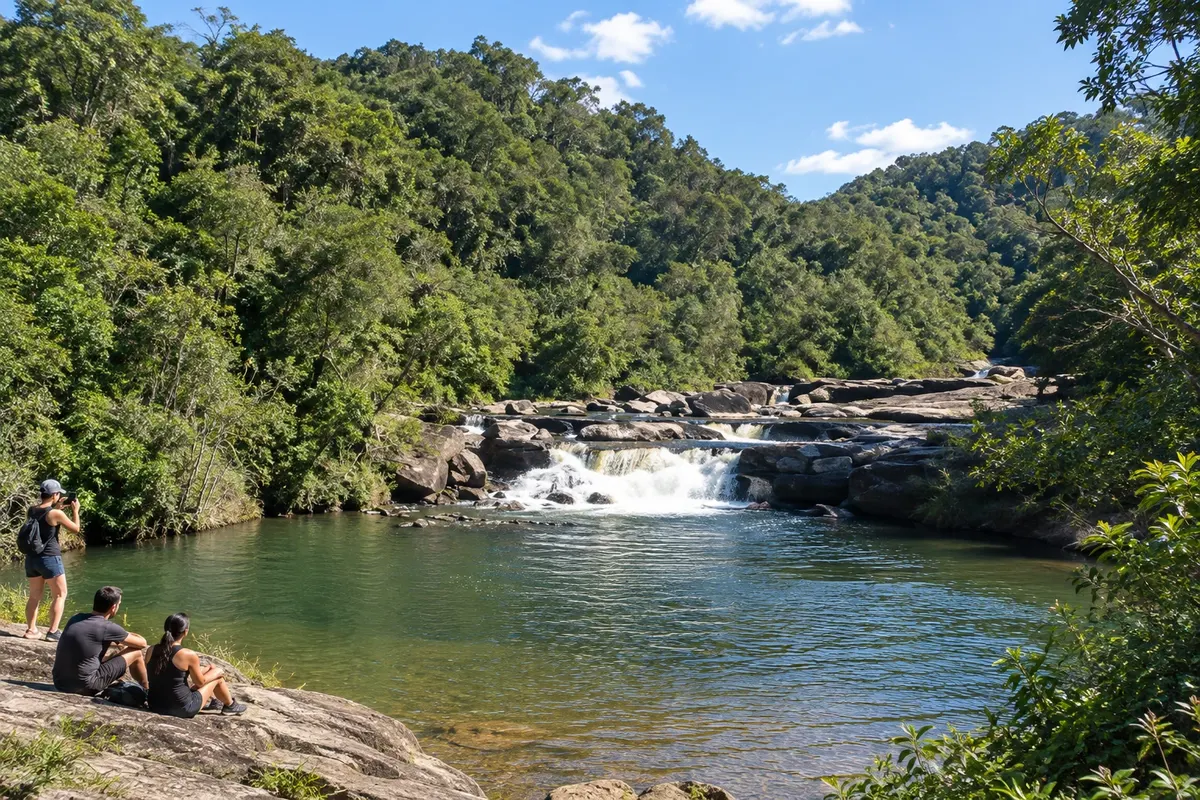
Illustrative images. The pictures in this guide are illustrations based on the real place, not photographs, and may differ from it.
Mesto
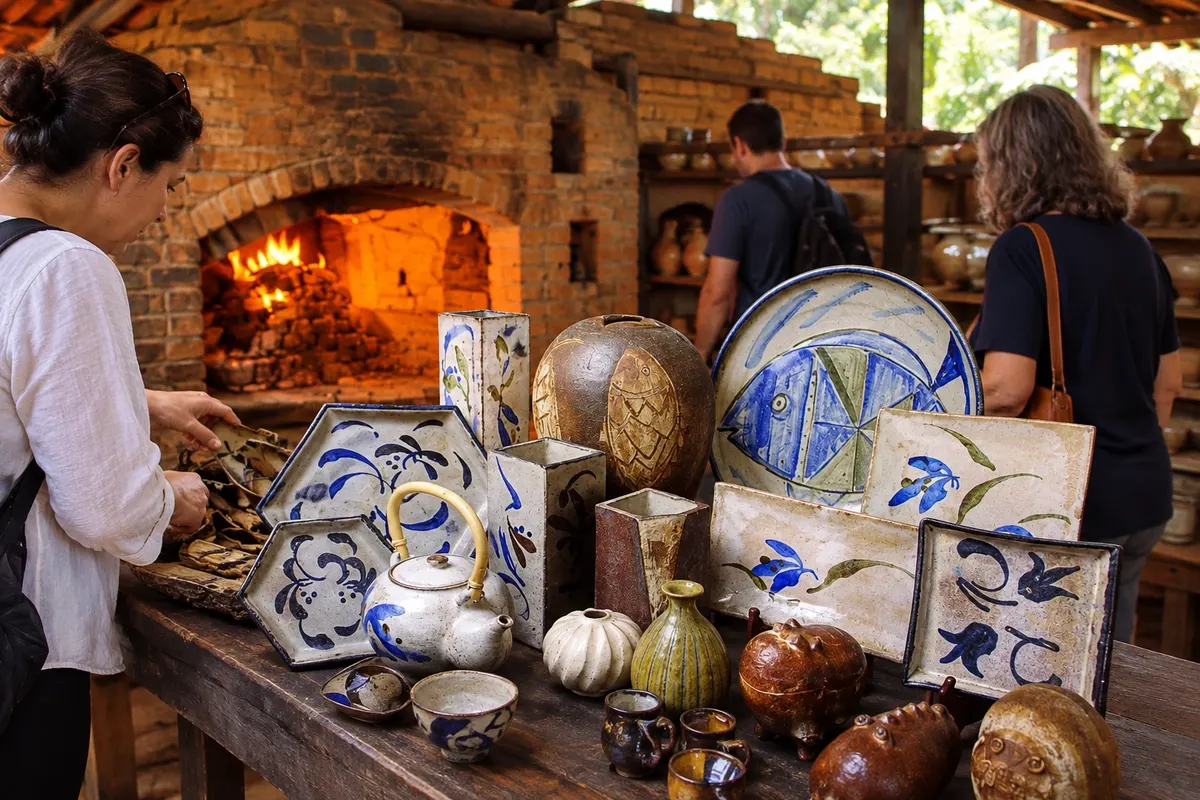
Cunha is a center of high-temperature ceramics, with a tradition of noborigama kilns and studio visits. Pedra da Macela and the Núcleo Cunha of Parque Estadual Serra do Mar add viewpoints and Atlantic Forest to the outing. Between Guaratinguetá and Paraty, the town combines artistic production and nature on the mountain section of the Caminho Velho.
Cunha sits high in the mountains of São Paulo state, between the Vale do Paraíba and the Paraty coast. The town center is at about 1,100 meters altitude, surrounded by the Serra do Mar, Serra da Bocaina and Quebra-Cangalha ranges, and the municipality is large and sparsely populated: just over 22,000 inhabitants spread across 1,407 km² of hills, pastures and forest. The settlement was founded in 1724 as Facão, serving as a stop for the troops that carried gold from Minas Gerais to the port of Paraty; the road that crosses the town follows that old Caminho do Ouro, part of the Estrada Real.
Two activities make the place famous. The first is ceramics: in 1975 a group of Japanese, Portuguese and Brazilian ceramists built a noborigama wood-fired kiln in the old municipal slaughterhouse. Other artists arrived later, and the town now has more than 20 studios open to visitors, plus the official title of National Capital of High-Temperature Ceramics. The second is cultivation: the highland cold favors pinhão, for which Cunha is the state’s largest producer, mushrooms, trout, olive trees and lavender fields that became a postcard image.
Visits split into two parts. The center is small and revolves around Praça da Matriz and the surrounding streets, with the church, old houses, studios and restaurants; you can walk it in a short time. The rest lies along SP-171, the road that descends to Paraty, and on rural roads, many unpaved: the lavender fields, the entrance to the state park, Pedra da Macela and the waterfalls. For that reason a car makes a difference, and distances are part of the day’s planning.
The climate is mountain-like, temperate and dry. From May to August it rains little, days are clear and nights cold, with temperatures that can approach zero on winter dawns; it is pinhão season and festival time. From October to March temperatures range between 15 °C and 25 °C and it rains a lot, almost always in the afternoon: waterfalls usually have more water, but fog often closes the viewpoints and dirt roads require care.
For a first visit, two days cover the studios, the lavender fields and Pedra da Macela. A third day is for the Park trails in Parque Estadual Serra do Mar or the waterfalls. A practical warning: many places in Cunha only open Friday to Sunday and on holidays, and some studios and parks close on weekdays. Check before planning your itinerary.
Cunha – število nastanitev: 75.
Cunha – število lokalov: 18.
Cunha – nazivi in posebnosti
Doživite kraj
Pedra da Macela is a viewpoint within Parque Nacional da Serra da Bocaina, accessed from the Cunha side. In good visibility the panorama can reach the coast of Rio de Janeiro state and the surrounding mountain ranges.
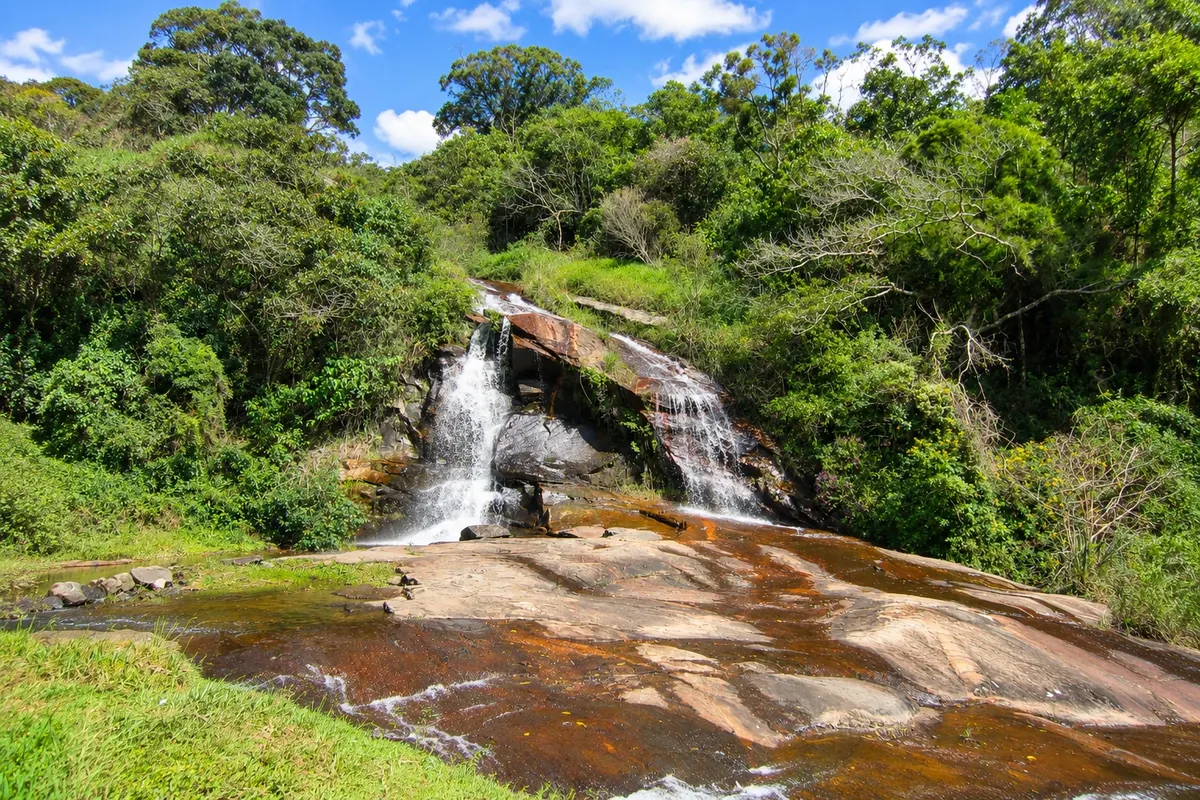
Cachoeira do Pimenta has consecutive drops and a connection with an old hydroelectric plant in Cunha. The water-and-rock landscape also offers a glimpse into a reference of the local energy history.
Raziščite Cachoeira do Pimenta
The Núcleo Cunha of Parque Estadual Serra do Mar protects high-altitude forests and offers trails starting at its visitor center. Visits require booking and may include observation of the Rio Paraibuna, vegetation and birds.
Raziščite Parque Estadual Serra do Mar — Núcleo Cunha
Cunha's ceramics are known for art studios and the tradition of high-temperature firing. Visits, exhibitions and noborigama openings bring the public closer to the pieces and processes, according to the schedule.
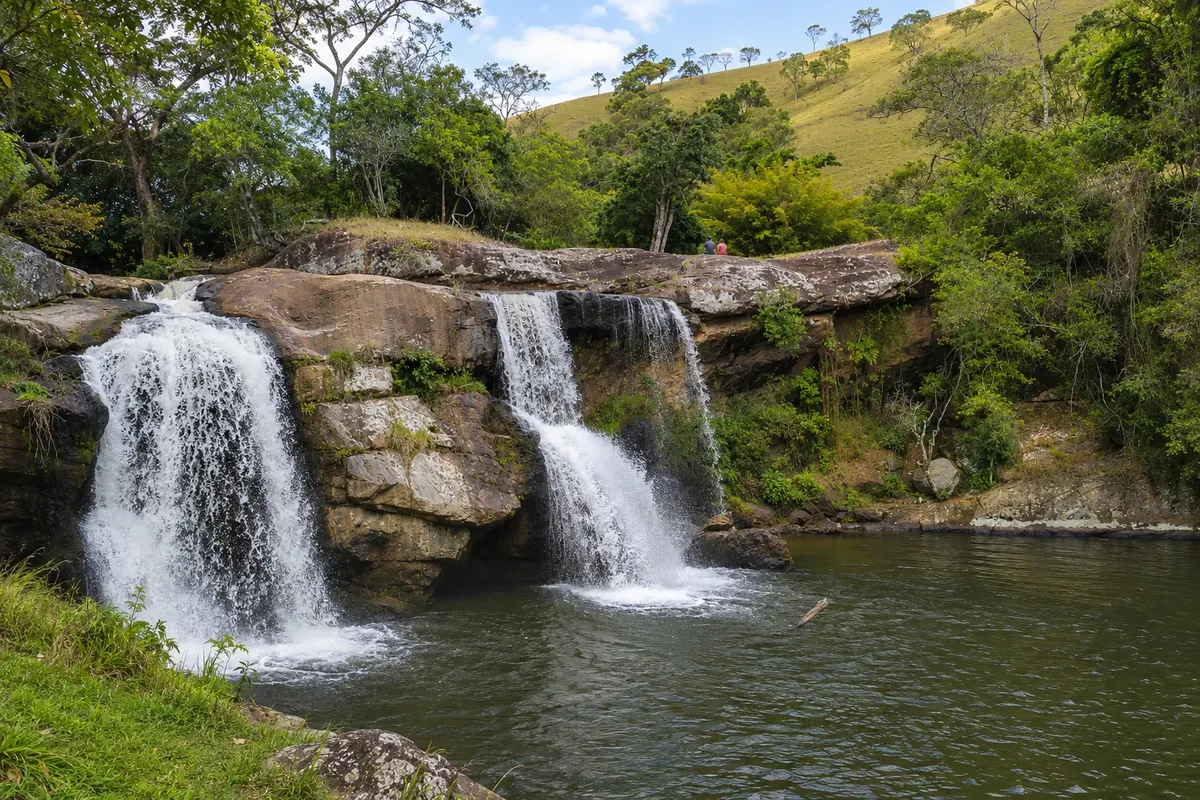
Waterfall in the rural area of Cunha, with two drops of about 12 meters and a cold-water pool, reached by a dirt road and a short trail along the river. It is on private property open to visits, with no tourist facilities.
Raziščite Desterro Waterfall (Cachoeira do Desterro Cunha)
Waterfall beside the Estrada Cunha–Paraty (SP-171), on the mountain stretch near the access road to Pedra da Macela. Visible from the road itself, it’s a short photo stop on the route between Cunha and the coast.
Raziščite Mato Limpo Waterfall
Kaj izbrati pred odhodom
Izhodišče, trajanje, potek, vključene storitve in okvirna cena vsakega izleta.
Ceramics are the reason many people go up the mountain. Clay was already worked in the region by indigenous peoples and later by paneleiras, women who made pots and water jars in kilns dug into riverbanks. The change came in 1975 when Portuguese architect Alberto Cidraes, the Japanese couple Toshiyuki and Mieko Ukeseki and the brothers Vicente and Antônio Cordeiro settled in the old slaughterhouse and built a noborigama kiln there. The noborigama is a wood-fired kiln of eastern origin, built on a slope with chambers connected in steps. Heat rises from one chamber to the next and exceeds 1,400 °C, in a firing that lasts 30 to 40 hours without interruption. wood ash adheres to the pieces and melts, so no two come out the same. The kiln opening, when pieces are removed, is scheduled in advance and open to the public. A good start is Casa do Artesão, which operates in the old slaughterhouse and brings together work from several studios and other local artisans. From there you can visit studios, each with its own style. Suenaga & Jardineiro, one of the oldest, maintains a four-chamber noborigama and opens its firings to visitors. In the center there are studios with shops, and others farther out. Ceramists usually receive visitors and explain the process; some offer workshops and courses. Once a year the town holds a ceramics festival with a fair, workshops, firings and kiln openings. Dates change from year to year.
Kraji na poti: Cunha ceramics, Casa do Artesão, Suenaga & Jardineiro studio.
Vključuje: Visits to the studios are usually self-guided; pieces are sold on site. Workshops and courses are paid separately and require booking: check with each studio.
Nasvet: Check studio kiln opening dates before booking the trip: each has scheduled days. Some close on certain weekdays. The Tourist Information Desk, at Praça Cônego Siqueira in the center, has the city map.
Najboljši čas za obisk: All year round. On rainy or foggy mountain days, it’s the program that does not depend on the weather.
Pedra da Macela is Cunha’s highest point, at 1,840 meters altitude, inside the Serra da Bocaina National Park. From the top, on a clear day, you can see Paraty, Ilha Grande Bay, part of Angra dos Reis and the surrounding ranges: it’s the place where you understand how the town is close to the sea and, at the same time, far above it. Access starts at km 66 of SP-171, the road that descends to Paraty, 20 km from Cunha’s center. From there, a dirt road leads to the park gate. The final section is a short but steep ascent of about 2 km on a wide track; if you’re not used to walking, go slowly and stop when you need to. There is no sale of water or food along the way. Sunrise is the most popular time. Guided groups start ascending in the early dawn. At the top it is windy and cold at any time of year. On the same road, near the access point, the Cachoeira do Mato Limpo can be seen from the road and makes a short stop on the return worthwhile.
Kraji na poti: Pedra da Macela, Cachoeira do Mato Limpo.
Vključuje: Self-guided outing; there is no admission fee. Bring water, snacks and a jacket.
Nasvet: The rules for driving up to the summit have changed more than once; plan on the final ascent on foot and confirm beforehand with the national park. Fog is common and can close the view within minutes: check in town how the weather is on the ridge before you leave.
Najboljši čas za obisk: May to August, with less rain and more clear mornings. From October to March fog frequently obscures the view.
The lavender fields are the most iconic image of Cunha. The well‑drained soil and mild mountain temperatures allow cultivation, and two properties along SP-171 open their fields to visitors. O Lavandário is at km 54.7, 10 km from the town gate, on top of a hill with views of the mountains. There are about 40,000 Lavandula dentata plants, a species with serrated leaves and purplish flowers that adapted to the local climate, plus beds of rosemary, basil, verbena and other herbs, grown organically. Visitors walk among the beds and climb to the viewpoint; the property distills the plants’ essential oil and has a shop and café. It welcomes visitors Friday through Sunday and on holidays, and late afternoon, when the sun drops behind the ridges, is many visitors’ favorite time. O Contemplário is further along at km 61.5, in the Taboão neighborhood. In addition to lavender, it grows rosemary, lemongrass and other aromatic plants, which it distills to make soaps, candles and diffusers. The fields are self‑guided, there are picnic tables scattered across the property, and a café with an open view. It is closed some days of the week. Lavender planted in Cunha blooms year‑round, in cycles of three to four months after each pruning; so there are always some beds in flower and others freshly cut. The plants do not like excess water, and the fields look best outside the rainy months.
Kraji na poti: O Lavandário, Contemplário.
Vključuje: The Lavandário charges admission at the gate, with a half‑price rate for those over 60; children up to 12 years old are free. Guided visits, café and products are paid separately. At the Contemplário, check whether there is an entrance fee.
Nasvet: At the Lavandário the gate closes before sunset: arrive with time to spare. The final climb is steep; buses and vans stay in the lower parking lot. Bring a hat and sunscreen and do not pick the plants. Dogs are allowed on a leash.
Najboljši čas za obisk: All year; from May to September, with less rain, the fields are more striking and evenings tend to be clear.
The Cunha Nucleus sits at the far north of Serra do Mar State Park and protects cloud forests at more than 1,000 meters of elevation, with araucarias, cedars, cinnamon trees and trees covered in bromeliads and orchids. It is one of the park's most biodiverse areas, home to monkeys such as the sauá and birds like the tinamou and the jacutinga, and shelters headwaters that supply cities in the Paraíba Valley. The trails depart from the Visitor Center in the Paraibuna neighborhood, about 25 to 30 km from the town. Access is at km 56.2 of SP-171 and from there about 20 km on unpaved road. The Paraibuna River Trail is the easiest: a circuit of up to 2 km, made in up to one hour, without a guide, along the riverbank and among araucarias, with picnic tables. The Rio Bonito Trail is 7 to 8 km, takes about four hours, is rated difficult and can only be done with a guide; it reaches Cachoeira da Laje, with a pool for swimming. The Waterfalls Trail, 14 to 15 km, follows an old decommissioned road along the Paraibuna River and passes several falls, including Ipiranguinha Waterfall, with four drops and pools; it requires more than five hours and an early start, and has a daily visitor limit. The nucleus is popular for birdwatching. It has parking, restrooms and a picnic area; domestic animals and alcoholic beverages are not allowed.
Kraji na poti: Serra do Mar State Park — Cunha Nucleus, Paraibuna River Trail, Rio Bonito Trail, Waterfalls Trail.
Vključuje: Park entrance fee, charged per person. Check at booking how to hire a guide for the Rio Bonito Trail. Bring snacks.
Nasvet: Visits require prior booking, online or at the headquarters, and the nucleus is not open every day: confirm before you go and ask about road conditions. Long trails only allow departures early in the morning. Bring water, snacks, a raincoat and closed shoes.
Najboljši čas za obisk: May to August, with less rain and firmer roads. From October to March the trails are wet and the rivers are fuller.
R$ 19 · per person, park entrance fee (price listed for Brazilians)· uradna cenaCunha’s rural area has waterfalls you can visit without entering parks. The two best known are on the same road and make for a half‑day outing. Cachoeira do Pimenta is a series of drops next to an old hydroelectric plant that now functions as an energy museum. Access is straightforward, via a road that alternates between paved and dirt sections, and the visit combines water-and-rock scenery with a slice of local history. On the same road, Cachoeira do Desterro is more voluminous: it has two falls of about 12 meters and a cold natural pool. It is on private property open to visitors, without tourist infrastructure, and is reached by a short trail along the river. In the warm months, from October to March, you can enter the water; in winter, the visit is for contemplation. Do not expect facilities at either site.
Kraji na poti: Cachoeira do Pimenta, Cachoeira do Desterro.
Vključuje: Self‑guided outing. Owners may charge admission or parking; check locally.
Nasvet: After heavy rain dirt roads become slippery and river levels rise quickly: do not enter the water when the upstream weather is bad. Ask in town about access conditions before leaving and bring snacks.
Najboljši čas za obisk: October to March for bathing, on mornings with stable weather; from May to August the roads firm up and the falls usually have less water.
Cunha’s downtown is small and moves at the pace of an inland town. Everything revolves around Praça da Matriz, where the Church of Our Lady of the Conception, the city’s patroness, is located. The first chapel dedicated to her opened on December 8, 1731, when the place was still called Facão and served as a stop for gold-trading troops; that date remains the patroness’s feast day. Around the square there are old buildings, shops and restaurants. The square is where the town holds its celebrations: the street Carnival, the Pinhão Festival between April and May, and the winter festival Acordes na Serra in July and sometimes into early August, with live music, food stalls and crafts. Local traditions include congada, moçambique and the Festa do Divino. Walking pairs well with dining. Cunha’s cuisine uses what the mountains produce: pinhão, harvested in autumn; trout raised in cold water; shiitake mushrooms; and lamb, plus cheeses, olive oils and craft beers made in the municipality. Several restaurants in the center and on the road to Paraty work with these ingredients, in wood-fired dishes or in more elaborate versions. The Tourist Information Desk operates at the headquarters of the Secretariat of Tourism and Culture, in Praça Cônego Siqueira, and is also open on weekends and holidays.
Kraji na poti: Praça da Matriz, Mother Church of Our Lady of the Conception.
Vključuje: Self-guided walk. Meals and shopping at visitor's expense.
Nasvet: On festival weekends and public holidays, the most sought-after restaurants fill up: reserve a table. Nights are cool even in summer; bring a jacket.
Najboljši čas za obisk: All year. From April to July, the pinhão season and festivals make the square busier.

Po dnevih
Predlogi za načrtovanje poti. Vrstni red dni prilagodite vremenu in razpoložljivosti izletov.
Arrive in the morning and start downtown. Stop at the Tourist Information Desk to pick up a map, see Praça da Matriz and head to the Casa do Artesão in the old slaughterhouse, where Cunha’s ceramics history began. From there, visit one or two studios with noborigama kilns. Have lunch in town, preferably a dish with trout, pinhão or shiitake. In the afternoon, take SP-171 toward Paraty. The Lavender Farm is 10 km from the town gate; arrive with time to spare, because the entrance closes before sunset, and stay to see the late light over the beds. If it’s a weekday when the Lavender Farm is closed, switch to the Contemplário, a little further on, checking in advance whether it is operating. Pedra da Macela doesn’t fit comfortably into this day. Those continuing to Paraty can sleep in Cunha and go up to the viewpoint the next morning, already on the way.
Morning in town: Praça da Matriz, Casa do Artesão and ceramic studios. If a kiln opening is scheduled for the weekend, plan the day around it. After lunch, follow SP-171 to the Contemplário and, on the return, stop at the Lavender Farm for late afternoon. In the evening, dine downtown; if it’s festival season, the program takes place at Praça da Matriz.
Leave early for Pedra da Macela, at km 66 of SP-171. Those who want to see sunrise should set off at dawn, preferably with a local guide; those who prefer more sleep should be at the gate early in the morning. On the way back, stop at Mato Limpo Waterfall. Have lunch on the road or downtown. In the afternoon, choose between Pimenta and Desterro waterfalls if the weather is good, or visit more workshops if it rains.
Arrival, lunch and an afternoon dedicated to the workshops: House of the Artisan, the noborigama kilns and the downtown shops. At the end of the day, a walk through Praça da Matriz and dinner with ingredients from the mountains.
Morning at Pedra da Macela, leaving early and with warm clothing in your backpack. Stop at Mato Limpo Waterfall. On the return to town via SP-171, the fields are along the way: have lunch there, visit the Contemplário and end the day at the Lavender Farm if it’s a Friday through Sunday or a holiday.
With a reservation made before the trip, head early to the Cunha Visitor Center; much of the route is on unpaved road. Do the Rio Paraibuna Trail, short and without a guide, with a picnic under the araucarias. Those who are fit and left very early can swap it for one of the longer trails. If the park is closed that day or the road is in poor condition, substitute with the Pimenta and Desterro waterfalls. After lunch, descend to the Paraíba Valley or continue to Paraty via the park road.
Najboljši čas za obisk
The seasons shown are the most usual ones; nature doesn't always follow the calendar.
Summer · Wettest month
Mountain summer: days between 15 °C and 25 °C and the year’s highest rainfall, almost always in the afternoon. Waterfalls usually have more flow, but dirt roads become slippery and fog often closes the view from Pedra da Macela. Leave outdoor outings for the morning and workshops for the afternoon. It’s Brazilian school holiday season, with inns busier than usual.
Street Carnival at Praça da Matriz, in February or March
Still warm for mountain standards and rainy. Cunha’s Carnival is a street party at Praça da Matriz, with several days of festivities; those seeking quiet find the town calm on other weekends. Waterfall swims only on mornings with stable weather.
End of summer
Rain remains frequent but weakens over the month, and nights start to cool. A good month for studios and dining, with little activity outside Holy Week when it falls in March.
Pinhão Festival, between April and May · Holy Week
The dry season begins, with clear days and cold nights. It’s the pinhão harvest period — Cunha is the state of São Paulo’s largest producer — and the Pinhão Festival takes place in Praça da Matriz, with concerts and dishes made with the seed; restaurants prepare special menus. Open mornings again favor Pedra da Macela.
End of the Pinhão Festival · Ceramics festival, on changing dates
Dry, cold days, good for trails and viewpoints; bring warm clothing for mornings and nights. The Pinhão Festival usually ends at the start of the month. The city’s ceramics festival, with a fair, workshops and kiln openings, has occurred between late May and early June and, in other years, in spring: check the dates.
Winter · Dry season
One of the driest and coldest months, with nights that can approach zero. Mornings usually clear, which helps those who climb Pedra da Macela for sunrise, and dirt roads firm up for the state park and the waterfalls. It’s pinhão season and time for hot food.
Acordes na Serra Winter Festival · School holidays
Coldest and busiest month. The Acordes na Serra winter festival fills Praça da Matriz on July weekends, sometimes into early August, with outdoor concerts, mountain food and crafts. Reserve accommodation and restaurants in advance.
End of Acordes na Serra · Serra Lamb Festival
Remains dry and cold, with clear skies. After the holidays the town is quieter during weekdays. It’s a good month for the long trails of Núcleo Cunha and for the viewpoints; waterfalls usually have less water. The gastronomic festival for cordeiro serrano typically takes place between August and September.
Spring
Temperature rises and rain starts returning, still light. Days get longer, which pays off in the lavender fields and on the road to Paraty. Good balance between settled weather and less crowded pousadas, except around the September 7 holiday.
Lavender Route
Afternoon downpours return strongly. In October the town began promoting the Lavender Route, which brings together pousadas, restaurants and fields in menus, workshops and visits around the plant; check whether there is an edition this year. Plan Pedra da Macela for early in the day and have a list of studios for rainy afternoons.
Rainy spring
Frequent rain and mild temperatures. Rivers gain volume and waterfalls are fuller, but dirt roads require care and fog is common in the mountains. Outside holidays, it is one of the calmest months of the year in town.
Feast of the patroness on Dec 8 · Christmas Lights
Start of summer, with days between 15 °C and 25 °C and showers. On the 8th the town celebrates Our Lady of the Conception, its patroness, and there is Christmas programming. Between Christmas and New Year’s the pousadas fill up: reserve ahead.
Načrtujte pot
Cunha has no airport. Visitors coming from far away arrive via São Paulo or Rio de Janeiro and complete the journey by road.
The town is about 230 km from São Paulo. São Paulo–Guarulhos International Airport receives flights from several countries and from across Brazil and is at the start of the route: from there follow the Via Dutra or the Ayrton Senna/Carvalho Pinto system to Guaratinguetá, and then SP-171.
From Rio de Janeiro it’s just over 300 km, via the Via Dutra to Guaratinguetá or via the Rio–Santos to Paraty, with the mountain ascent at the end.
In both cases, a rental car is the most practical solution, because in Cunha most attractions lie outside the center. Confirm routes and connections with the airline before buying your ticket.
There are no direct buses from the state capitals. The route is to go to Guaratinguetá, in the Paraíba Valley, and change buses there.
From São Paulo, buses to Guaratinguetá depart from the Tietê Bus Terminal, operated by Cometa and Pássaro Marron. From Rio de Janeiro, they depart from Novo Rio Bus Station. At Guaratinguetá station you board the Viação São José bus, the only company that goes up to Cunha, at a few times during the day.
Plan the connection before you leave so you don’t have to wait long in Guaratinguetá, and check the return schedule. The bus arrives in downtown Cunha; to reach the lavender fields, Pedra da Macela and the state park you’ll need a taxi or a booked tour.
The main access is via the Presidente Dutra Highway (BR-116), which links São Paulo to Rio de Janeiro. In Guaratinguetá, around km 65 of the Dutra, SP-171 begins and climbs the mountain to Cunha: the town center is at km 46 of that road. It is a single carriageway, paved and signposted, with many curves and a steep climb in the final section.
From São Paulo it’s about 230 km via the Dutra or the Ayrton Senna/Carvalho Pinto system, with tolls; check the current toll table. From Rio de Janeiro, a little over 300 km. Aparecida is 54 km from Cunha.
In rain or fog, common in the mountains, reduce speed and keep headlights on. Fill up before you head out for excursions, which are on the road and in rural areas.
Cunha and Paraty are neighbors: just under 50 km separate them, and many people combine the mountains and the coast in the same trip.
After Cunha’s center, SP-171 runs from km 46 to km 70, at the border between São Paulo and Rio de Janeiro. From there the road-park begins: a 9.4 km stretch paved with cobblestones that descends the Serra do Mar through the Serra da Bocaina National Park, along the route of the old Caminho do Ouro. The road is narrow, with sharp curves and points where only one car can pass at a time; there is no safe place to overtake. At the end of the descent the road continues for another 12 km to Paraty.
Descend slowly, in low gear, and avoid the stretch at night, in heavy rain or dense fog. Check in advance about conditions and about time and vehicle-type restrictions, which have changed more than once.
Along the way you’ll find the Lavandário, the state park entrance, the Contemplário and the access to Pedra da Macela.
In the center, everything is within walking distance: Praça da Matriz, the Casa do Artesão, shops, studios and restaurants are close together.
For the rest, you need a car. The main attractions line up along SP-171 toward Paraty, and kilometer markers help you locate yourself: the center is at km 46; the Lavandário at km 54.7; the exit to the Cunha sector of the state park at km 56.2, with about 20 km more of unpaved road; the Contemplário at km 61.5; the access to Pedra da Macela at km 66; and the border with the state of Rio de Janeiro at km 70.
The Pimenta and Desterro waterfalls and several studios and restaurants are on rural roads, some unpaved. A regular car works in dry weather; after heavy rain, ask about road conditions before going.
Without a car, the city’s taxis do trips to the lavender fields and Pedra da Macela, and local agencies and guides offer tours with transport. Cell signal fails on stretches of the road: agree your return before you leave.
Odgovori na vaša vprašanja
Yes: The studios display the local artistic production linked to high-temperature ceramics and noborigama kilns. Arrange visits directly; demonstrations and kiln openings depend on scheduled programming.
No: Macela is part of Parque Nacional da Serra da Bocaina, and Núcleo Cunha belongs to Parque Estadual Serra do Mar. Plan access and rules for each unit separately.
They are wood-fired kilns used for high-temperature firings, part of the city's ceramic tradition. To attend a kiln opening, check the schedule of the studio you choose.
The Trilha do Pau d’Alho is named for an example of that tree and departs from the Núcleo Cunha Visitor Center. Check the conditions and rules of the route before planning the walk.
Two days are enough for the essentials: the ceramics studios, the lavender fields and Pedra da Macela. With three days you can add the trails of the Cunha Center of the Parque Estadual Serra do Mar or the Pimenta and Desterro waterfalls. Prefer the Friday-to-Sunday period, when the Lavandário and most studios and restaurants are open.
The lavender cultivated in Cunha, species Lavandula dentata, blooms year-round, in cycles of three to four months after each pruning. There are always beds in flower and others freshly cut. The plants do not like excess water, so the fields look their best in the dry months, from May to September, when evenings also tend to be clearer.
Yes. The Lavandário charges an entrance fee per person, sold at the gate, with half-price for those over 60; children up to 12 years old do not pay. The guided visit is paid separately. It receives visitors from Friday to Sunday and on holidays, and the gate closes before sunset. Those arriving by car or motorcycle do not need to book. Check the current price list before you go.
Yes. The town is at about 1,100 meters altitude and has a temperate, dry climate. In winter, from June to August, temperatures range from near zero on the coldest early mornings to about 15 °C; in summer they range between 15 °C and 25 °C. Nights require warm clothing at any time of year, and on the top of Pedra da Macela it is windy and even colder.
The access is at km 66 of SP-171, the road to Paraty, 20 km from Cunha’s centre. A dirt road leads to the gate, and from there the final climb is about 2 km, short, wide and very steep. It takes around an hour for those who go slowly. Bring water and warm clothing, because there are no sales on the way and it is windy at the summit, at 1,840 meters. Confirm vehicle access rules with the national park.
Yes. The Cunha Center requires prior booking, made online or at the headquarters, charges an entrance fee and is not open every day of the week. The Rio Paraibuna Trail, up to 2 km, is done without a guide; the Rio Bonito Trail, 7 to 8 km, requires a guide; the Waterfalls Trail, 14 to 15 km, has a daily visitor limit. Long trails only allow departures early in the morning.
Because it hosts one of the largest artistic high-temperature ceramics centres in the country. The tradition began in 1975, when a group of Japanese, Portuguese and Brazilian potters built a noborigama kiln in the town’s former slaughterhouse. Today there are more than 20 studios open to visitors, and a 2022 federal law gave Cunha the title of National Capital of High-Temperature Ceramics.
Between April and May, at harvest time, with dates that change every year. The festival takes place at Praça da Matriz, with live shows and stalls serving dishes made with pinhão, and the town’s restaurants usually offer pinhão on their menus during the same period. Cunha is the largest producer of pinhão in the state of São Paulo. Check the dates for the year before you travel.
Local cuisine uses ingredients from the mountains: pinhão, trout, shiitake mushroom and lamb, prepared on wood-fired stoves or in more elaborate recipes. Cheeses, olive oil and craft beers produced in the municipality also feature, as well as sweets and ice creams made with lavender. Pinhão appears on menus mainly from April to July.
Yes. It’s just under 50 km via SP-171 and, after the state border, a 9.4-km park road paved with cobblestones that descends the Serra do Mar through the Serra da Bocaina National Park. The road is narrow and very twisty: descend slowly and avoid night driving, heavy rain and fog. Check conditions and any road restrictions beforehand.
Yes, from Guaratinguetá in the Paraíba Valley, operated by Viação São José, with a few departures a day. Guaratinguetá receives buses from São Paulo, Rio de Janeiro and other cities. The bus stops in downtown Cunha; the lavender fields, Pedra da Macela and the state park are along the road and require a taxi or a booked tour.
It’s 54 km by road, about an hour by car, with a mountain climb on SP-171 from Guaratinguetá. You can combine both towns in the same trip: Aparecida for the Santuário Nacional and Cunha for the mountains, ceramics and viewpoints. Since Cunha’s attractions are spread out, it’s worth staying at least one night.
Brazilske poti
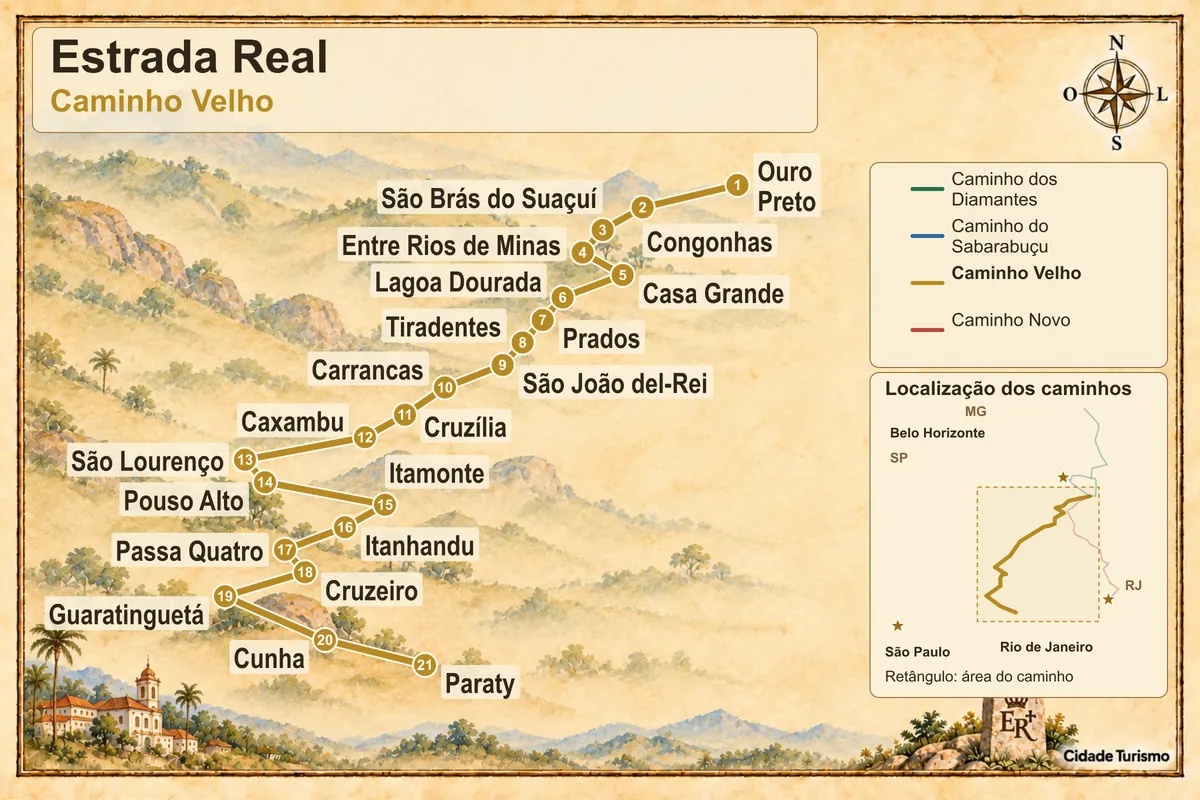
From Ouro Preto to Paraty, the oldest route of the Estrada Real passes through historic towns, mineral-water spa towns, and the Mantiqueira mountain range.
Več kot vodnik