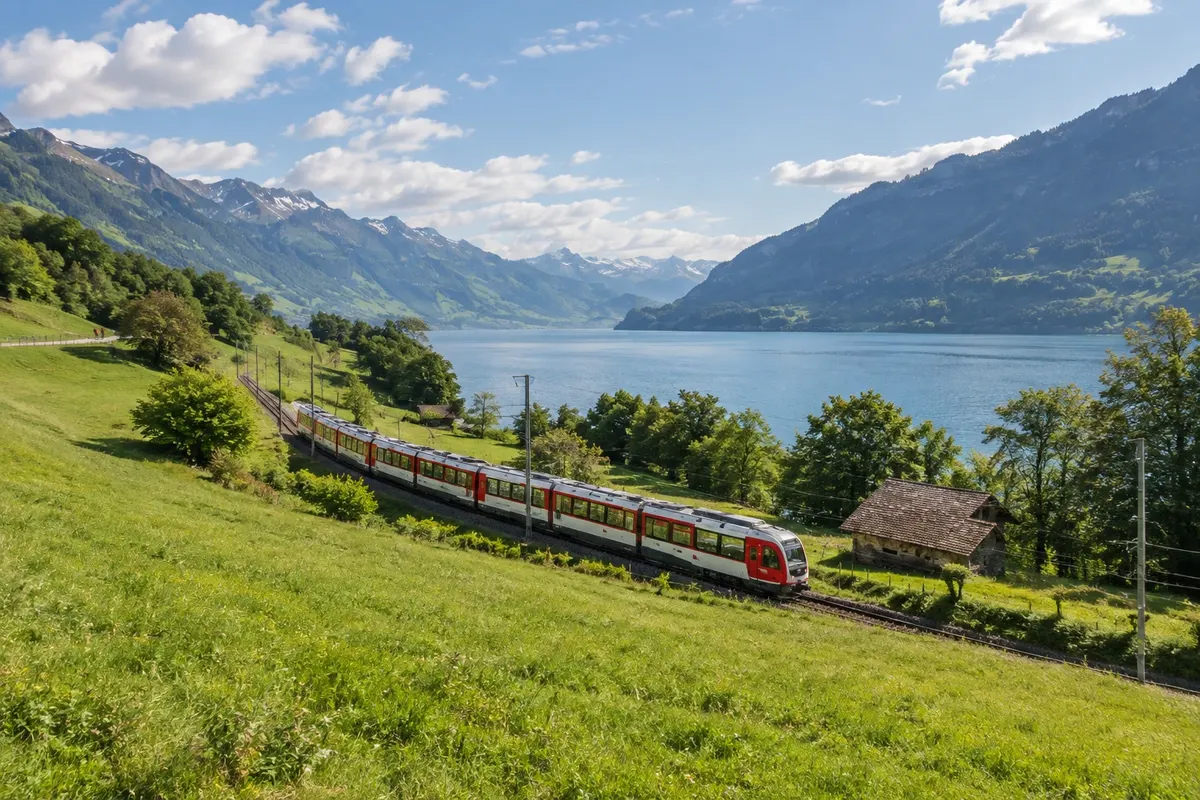
Lucerna and the mountains

Lucerna · Obwalden · Switzerland

Lucerna and the mountains

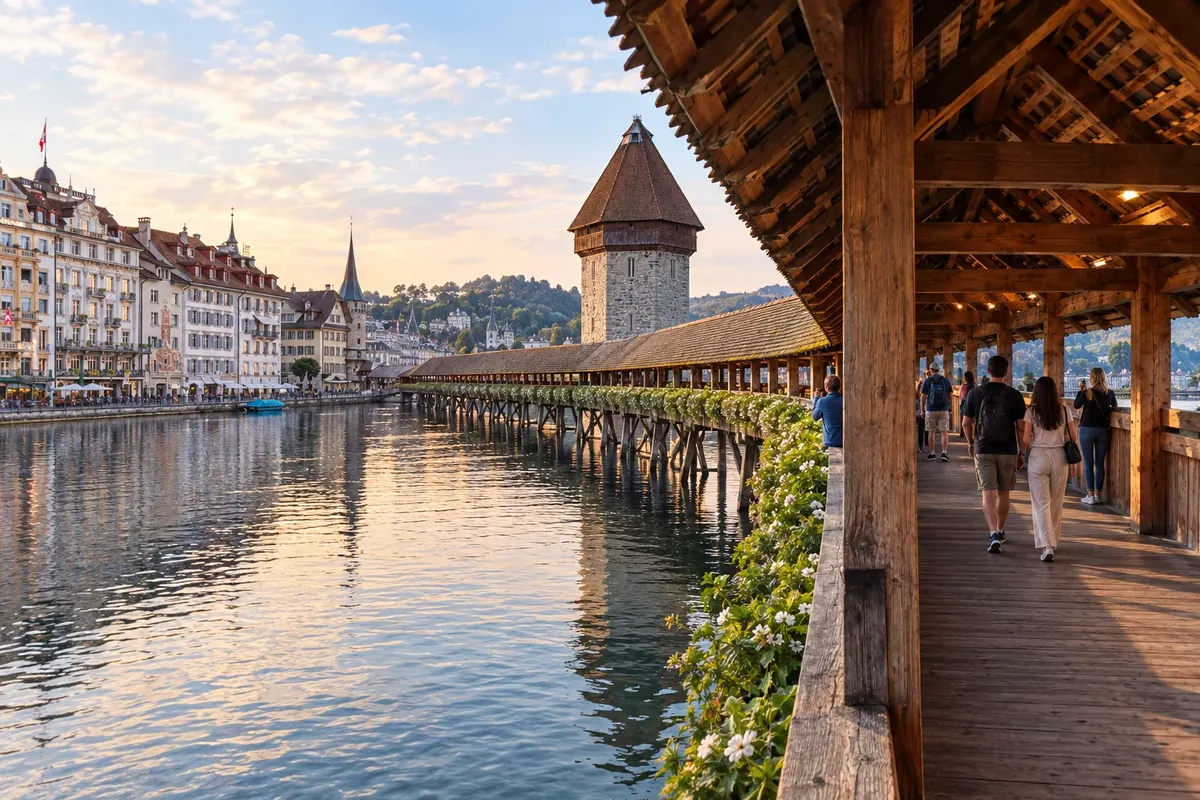
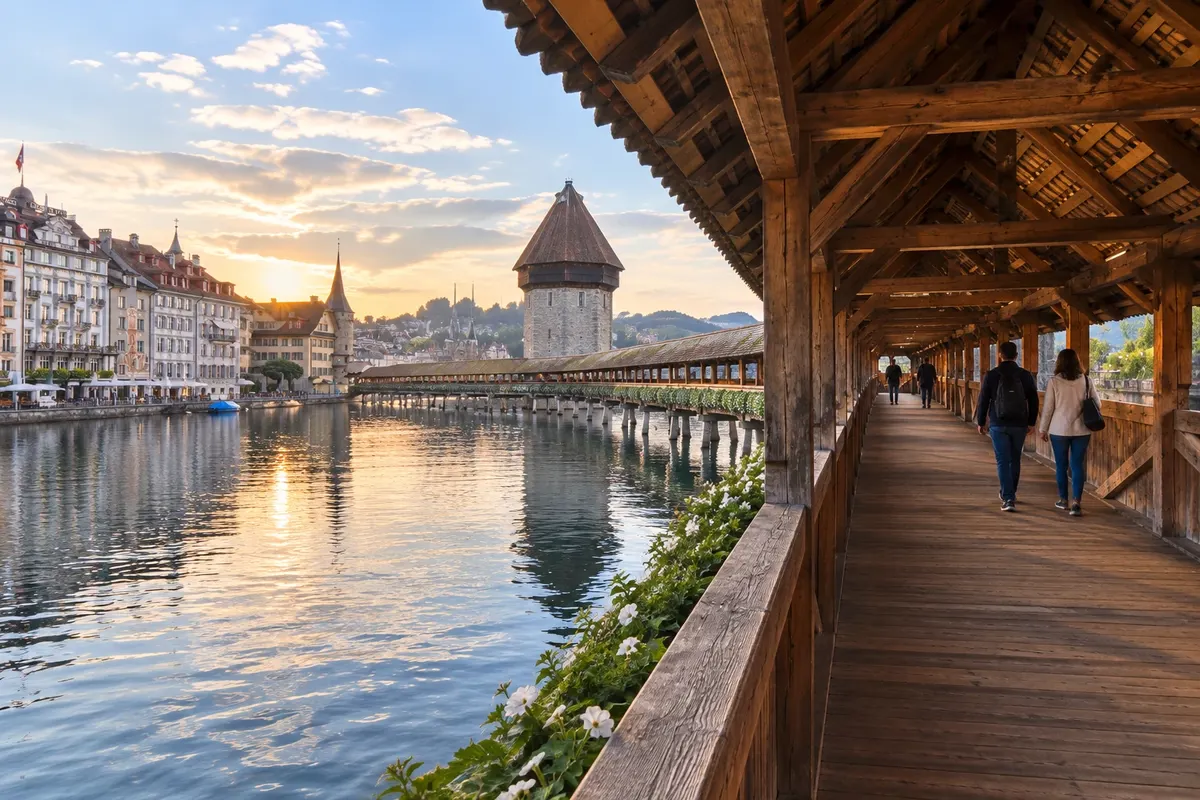
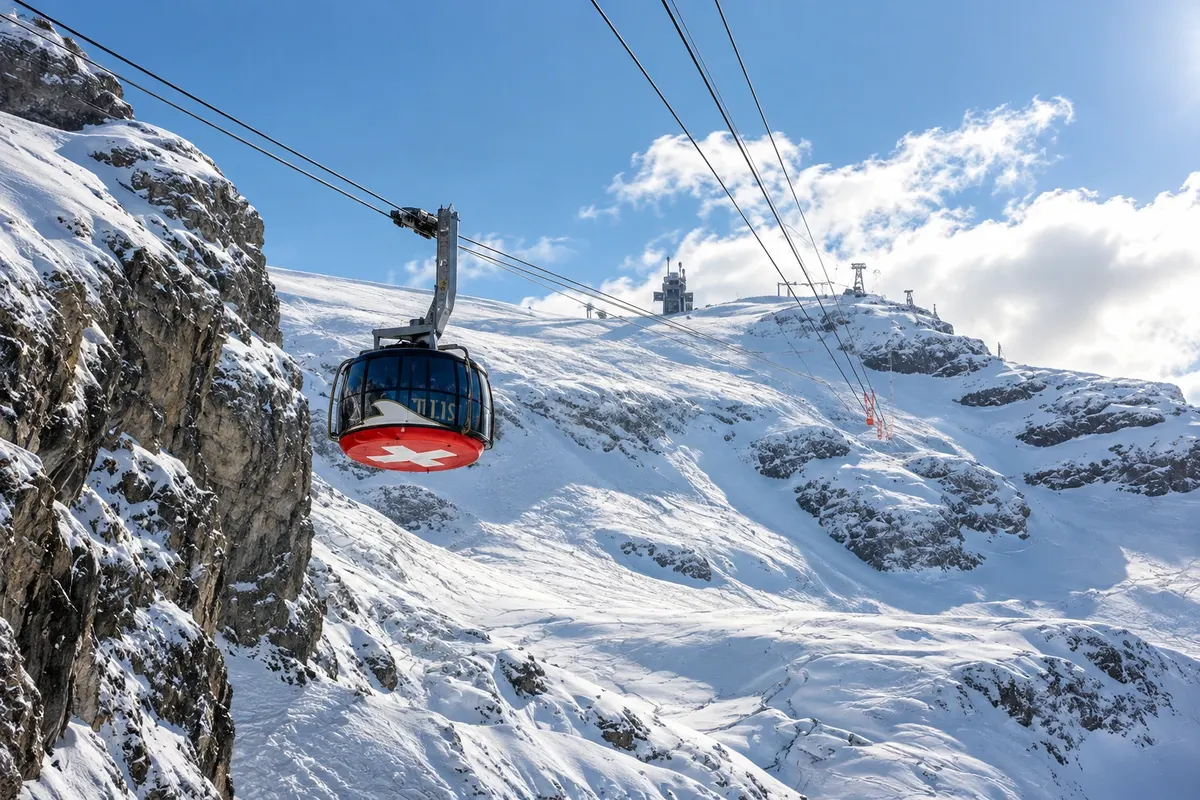
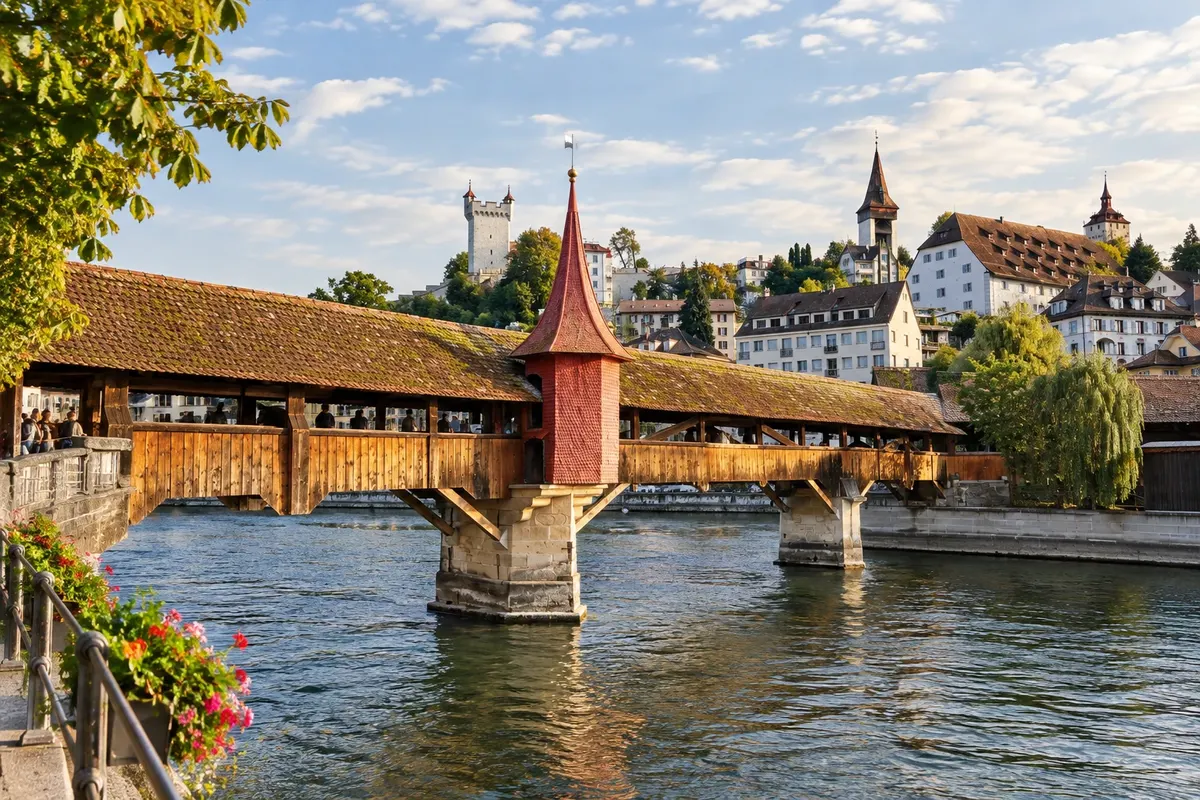
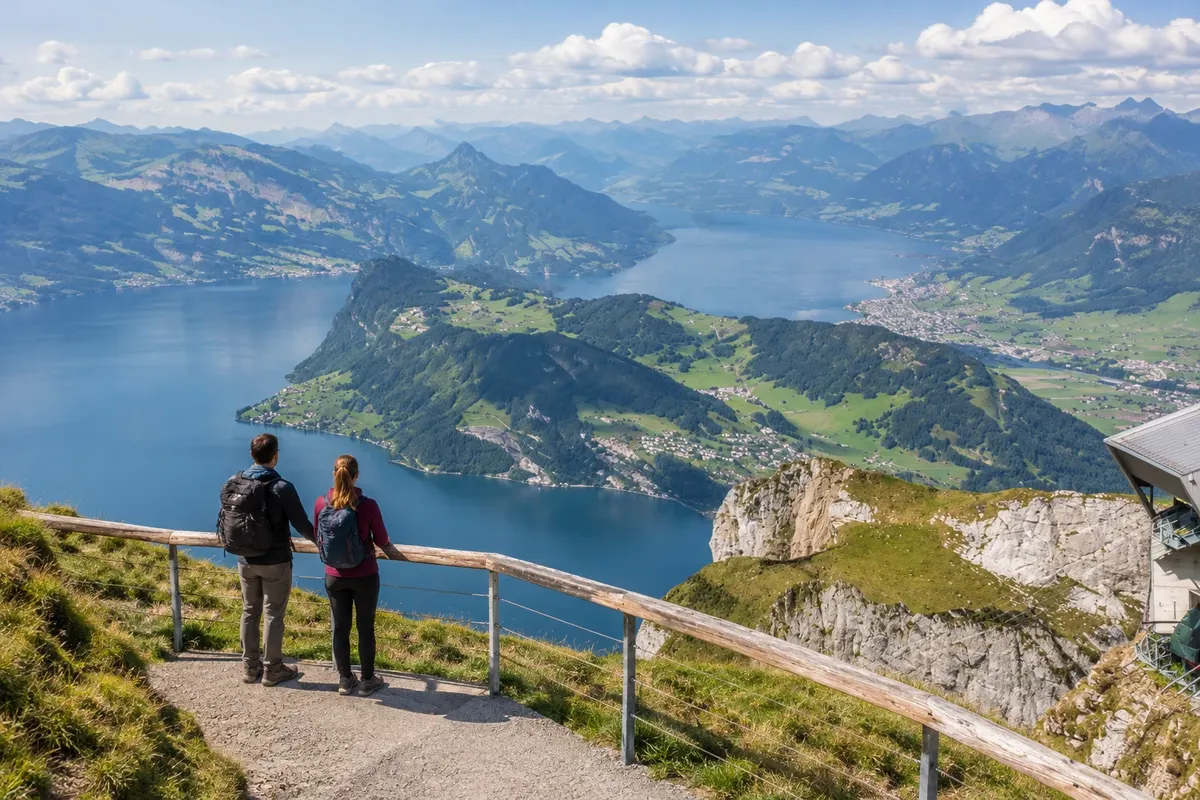
Lucerna, with wooden bridges over the Reuss River and the Lake of the Four Cantons, and the surrounding mountains: Pilatus, Rigi and, in Engelberg, the Titlis with a glacier at 3,020 m.

Suíça alemã

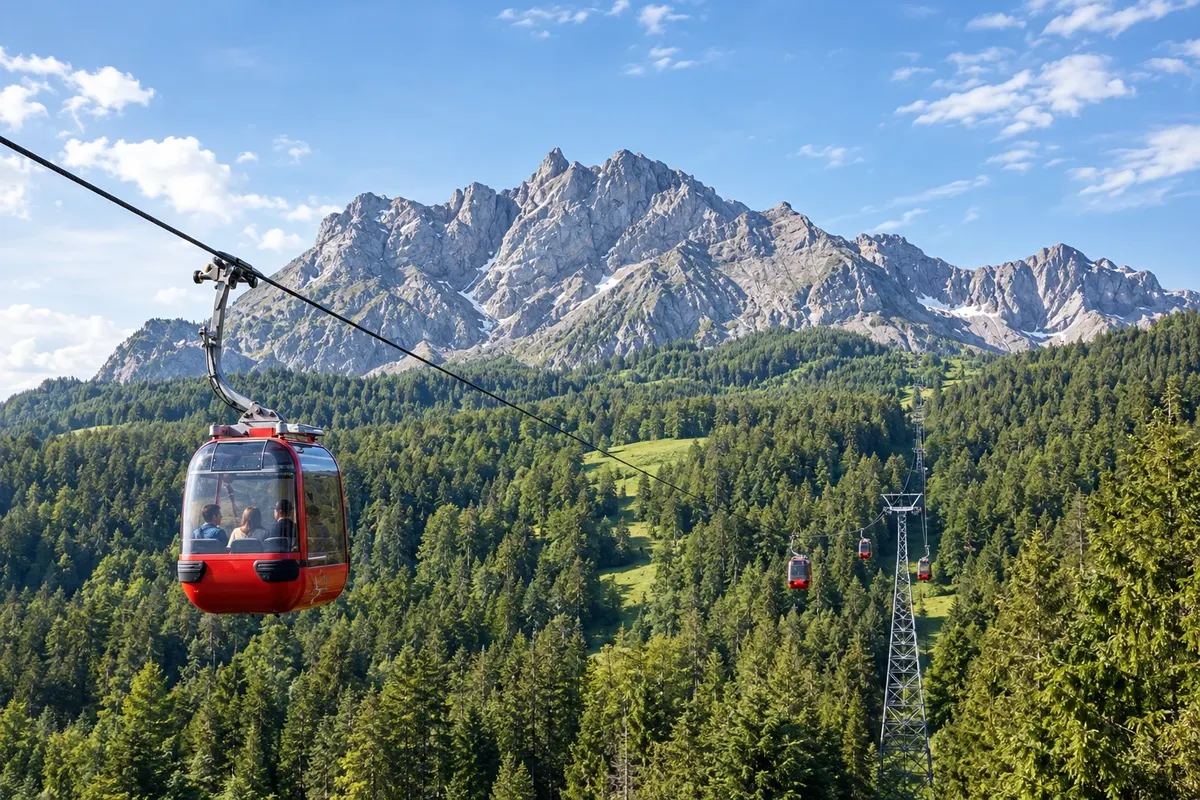
In the photo: Pilatus, Lucerna region

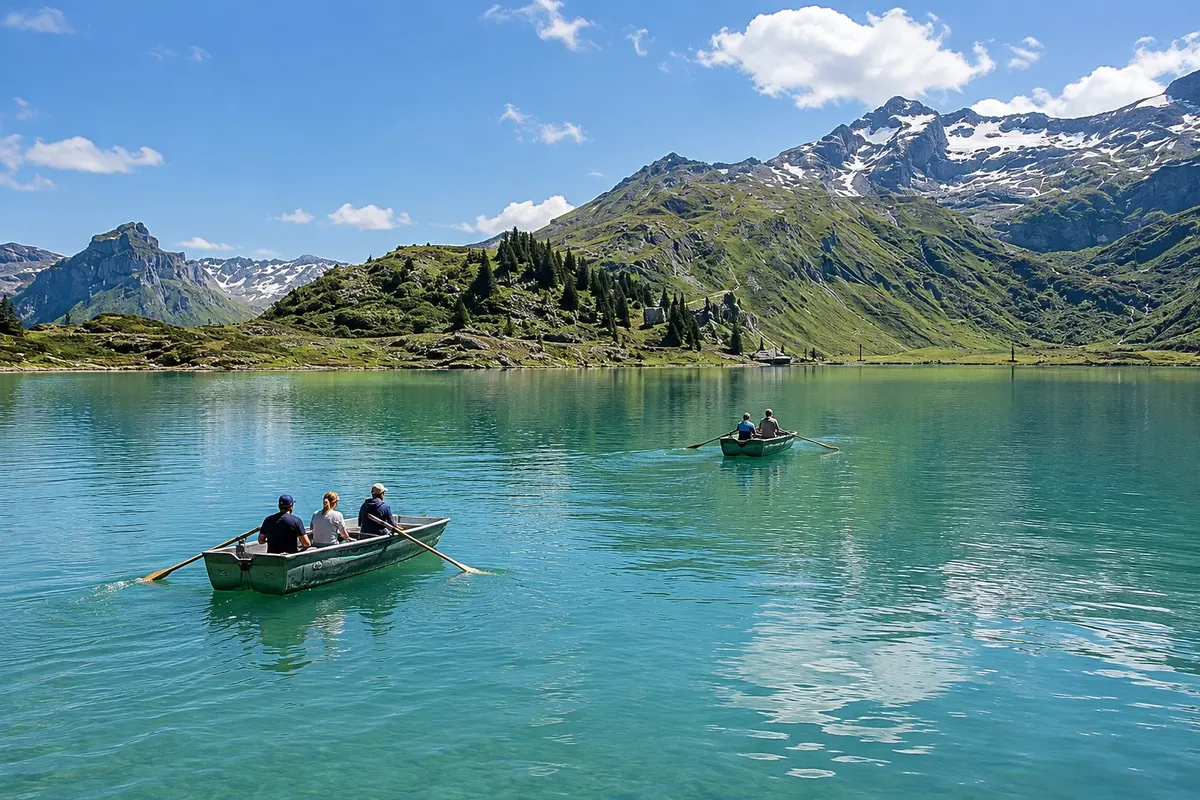
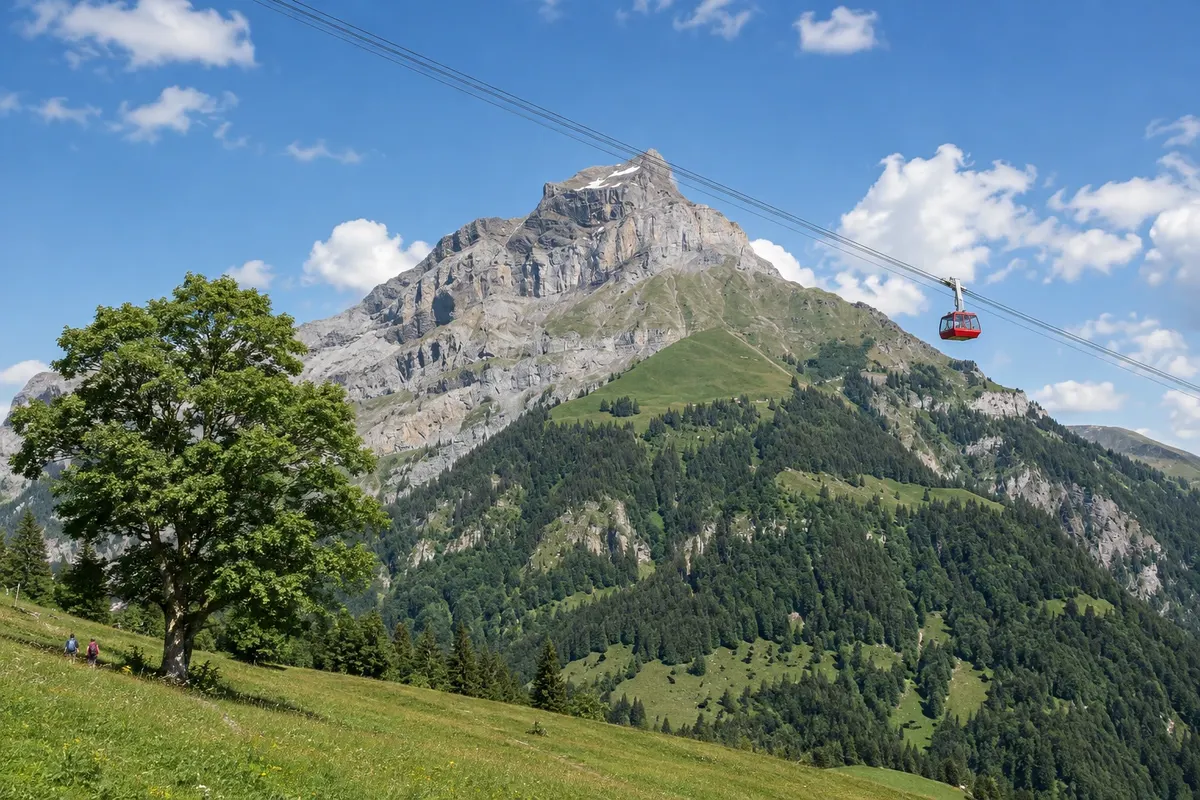
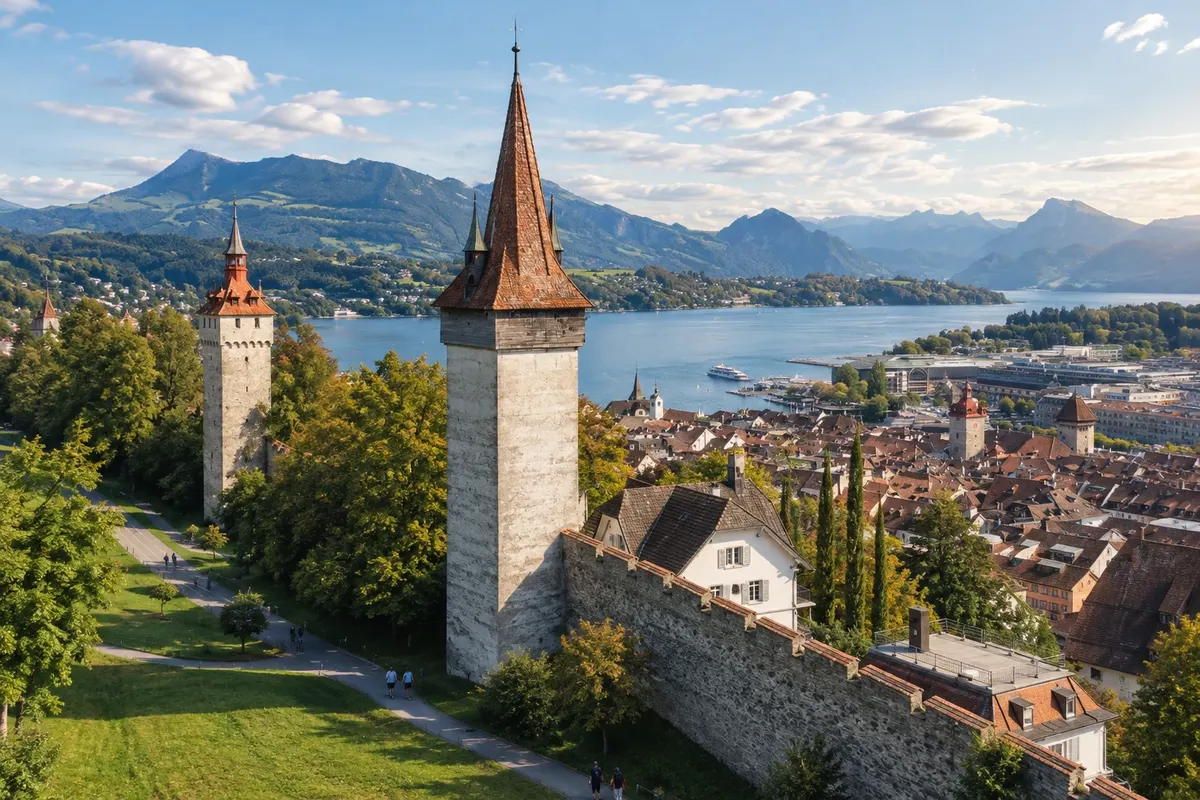
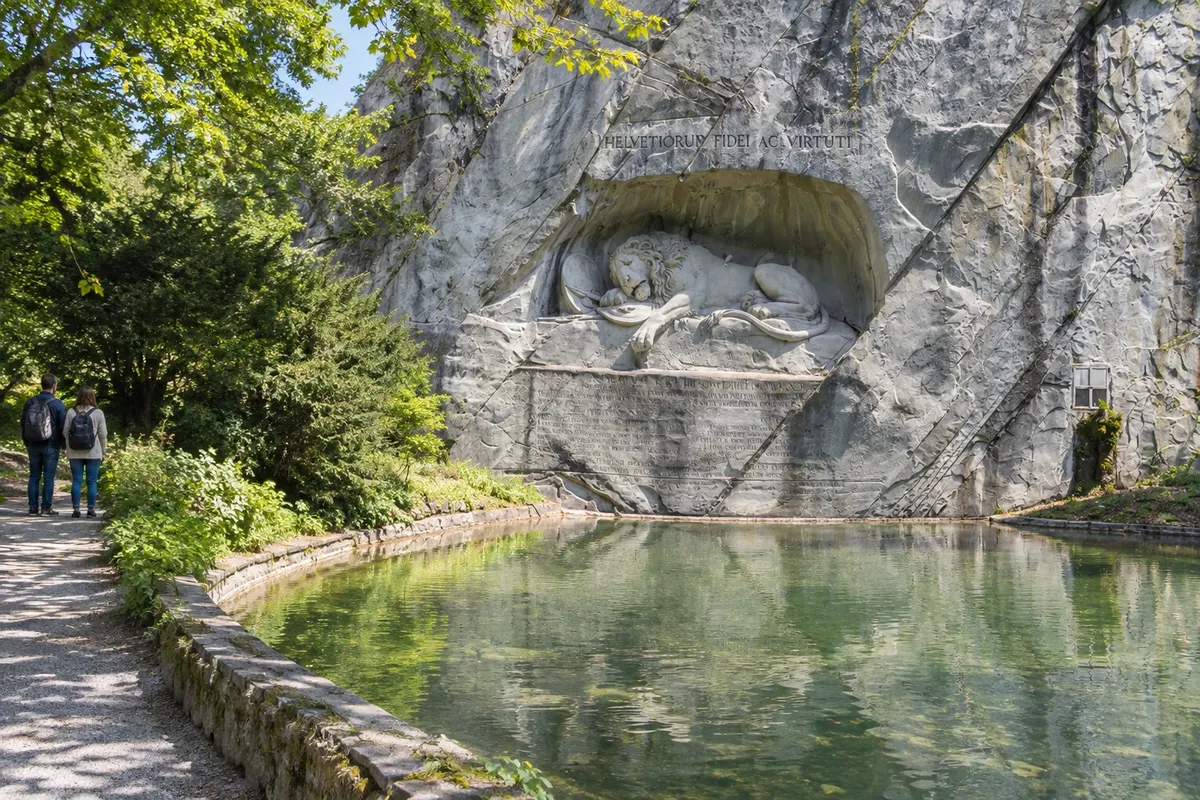
Illustrative images. The pictures in this guide are illustrations based on the real place, not photographs, and may differ from it.

Get it on Google Play Send your photos

Get to know the place

A region to enjoy
at your own pace.

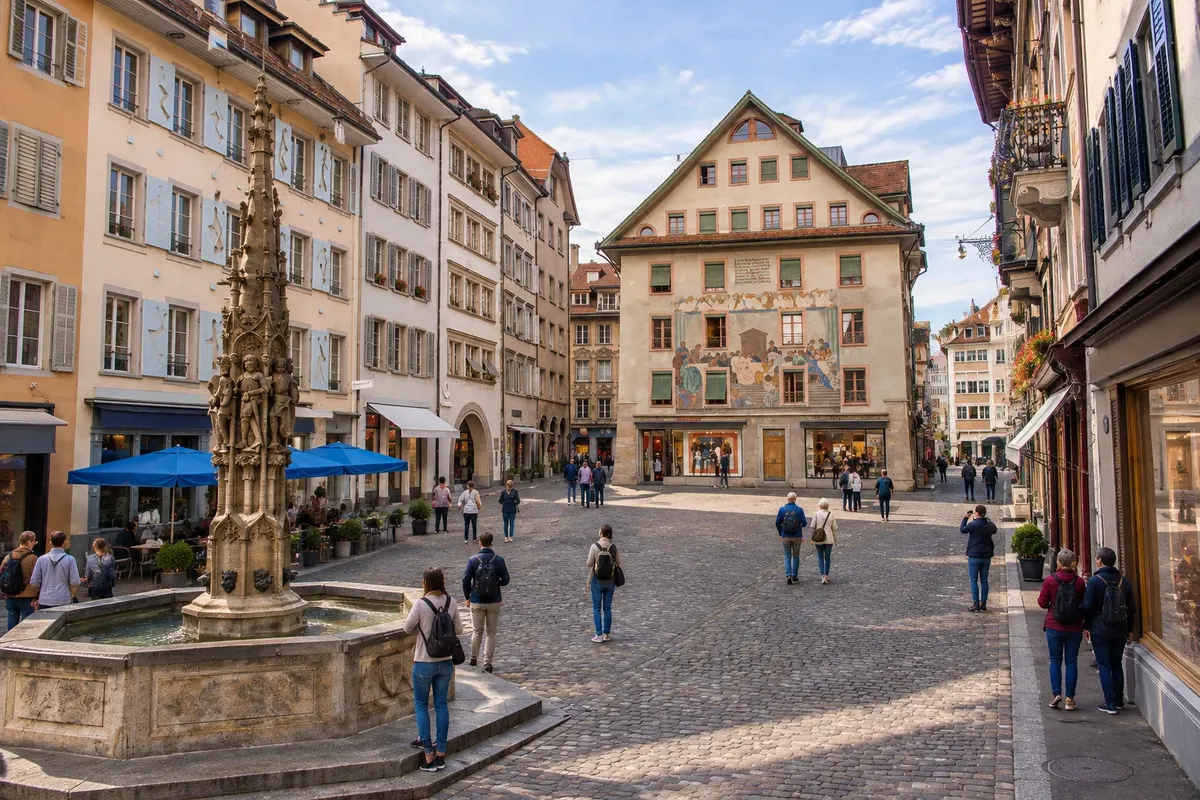
Lucerna is in central Switzerland, at the point where the Reuss River flows out of the Vierwaldstättersee, the Lake of the Four Cantons. The city joined the Swiss Confederation in 1332 and grew as a stop on the Gotthard trade route. The medieval center preserves the Kapellbrücke, the Spreuerbrücke, the Musegg wall and squares with painted façades.

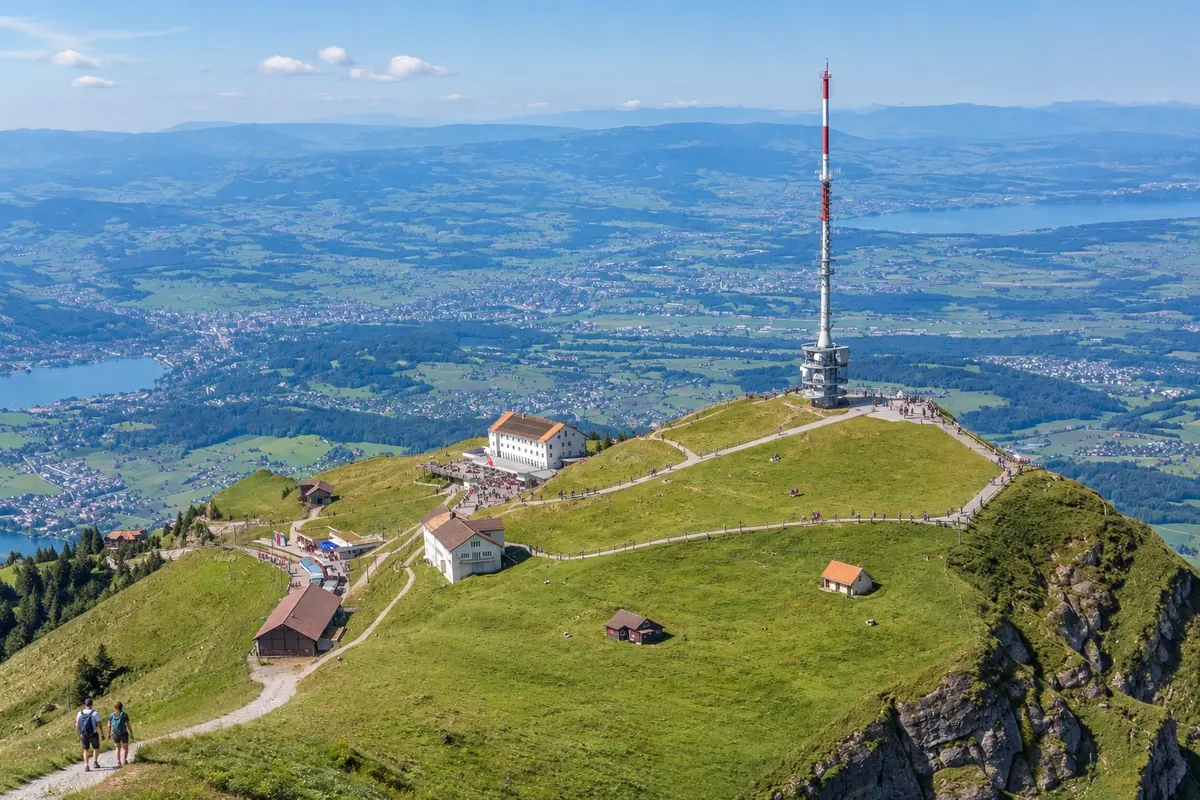
Around the lake rise the mountains that made the region famous as a tourist destination in the 19th century. The Pilatus, to the south, has a cogwheel railway with gradients of up to 48%. The Rigi, on the other side of the lake, received Europe's first mountain railway in 1871. Closer to Stans are the Stanserhorn and the Bürgenstock, with the Hammetschwand elevator.

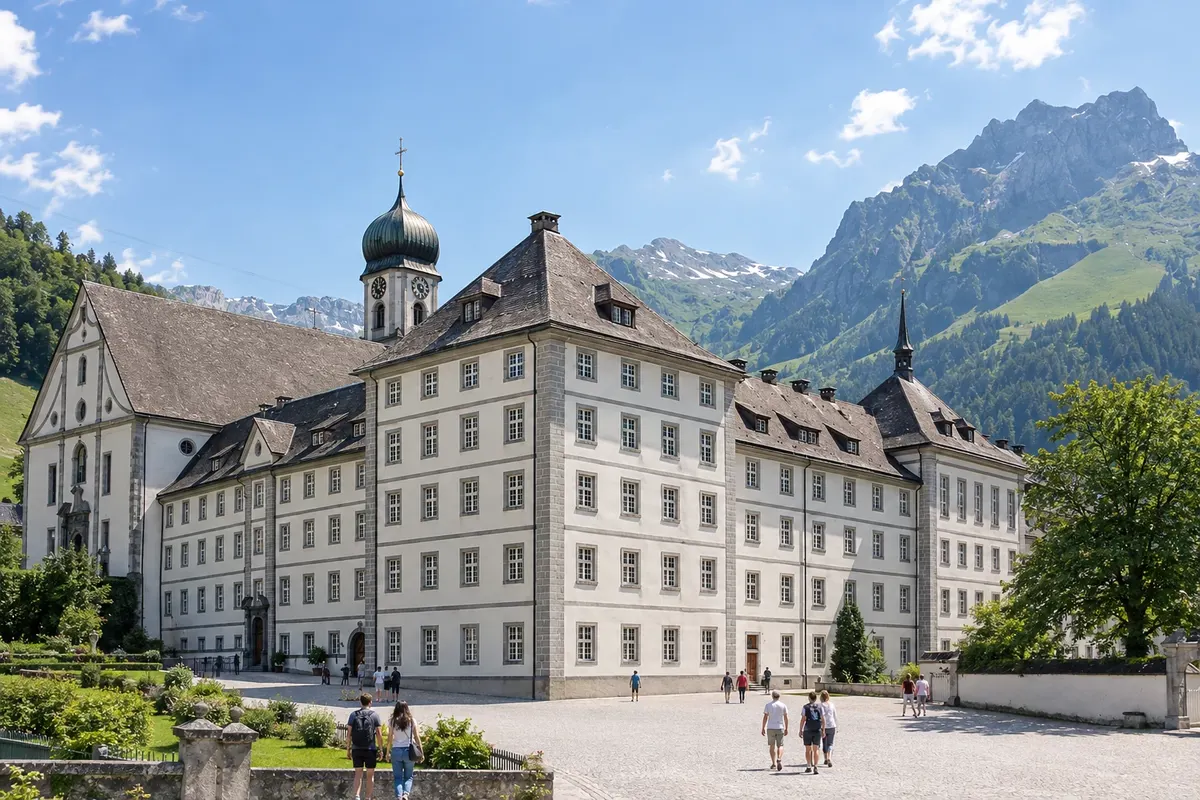
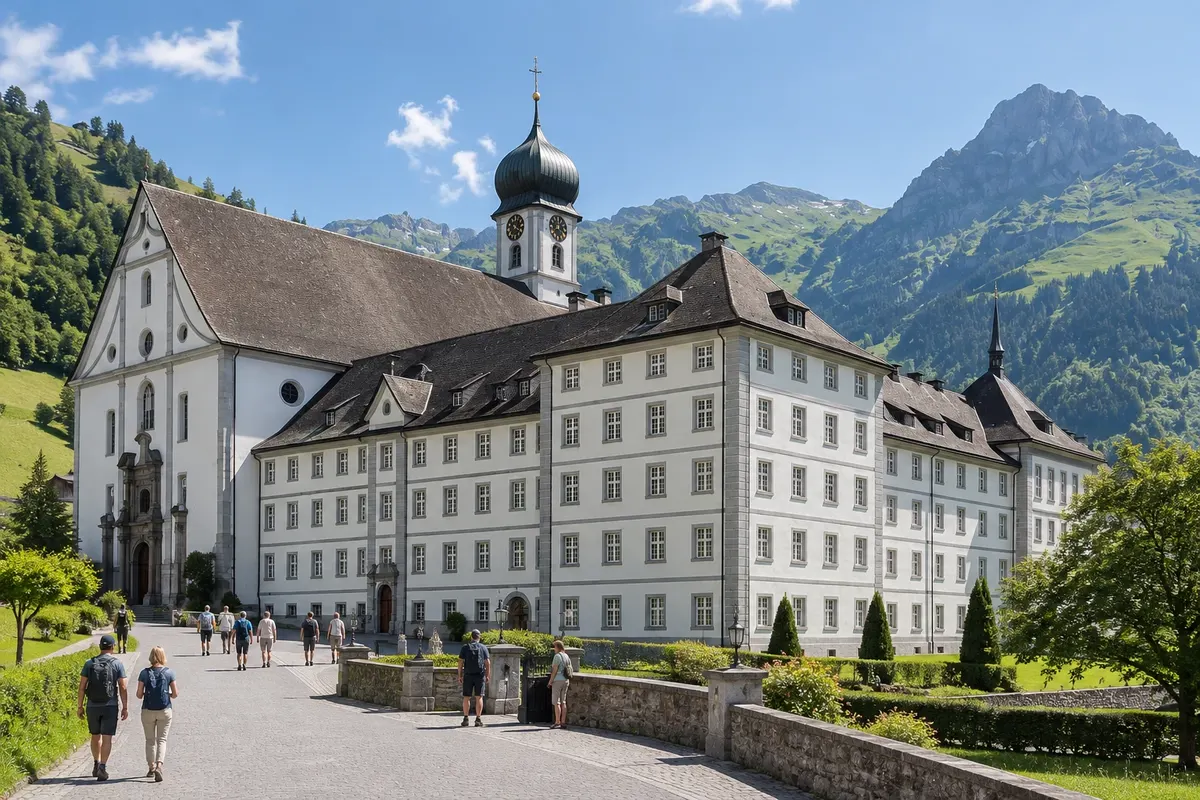
Engelberg is a mountain village about 45 minutes by train from Lucerna, in a valley of the canton of Obwalden. It grew around a Benedictine monastery founded in 1120 and is the base for ascending the Titlis, which has a year-round glacier, the Cliff Walk and the ice cave. On the other side of the valley are Lake Trübsee and the Brunni area.

German is spoken, and in daily life the Swiss-German dialect; English is widely used in tourism. The currency is the Swiss franc, and Switzerland does not use the euro.

This destination brings together 2 cities: Lucerna, Engelberg.

Share: WhatsApp
Traveler, share your experiences through photos Up to 5 photos of each place you visited.

One destination, many paths

The cities on this trip

Start with one city or combine several in your itinerary.

Where Lucerna and the mountains is
LucernaEngelberg

Contornos: ©swisstopo. Adaptação do Cidade Turismo.

How to get there: Lucerna and the mountains

✈ Aeroporto de Zurique (ZRH), in Zurique · 70 km to Lucerna

The nearest airport is Zurich (ZRH), about 70 km from Lucerna, with a train to the main station. Confirm before purchasing. From Zurich, Bern and Interlaken there are direct trains to Lucerna; from Lucerna, Zentralbahn trains continue to Engelberg.

Suggested arrival point: Lucerna

The local experience

Things to do in Lucerna and the mountains

Kapellbrücke
Lucerna · Lucerna · Historic monument

Kapellbrücke

Covered wooden bridge over the river Reuss, built around 1365, with 17th-century paintings on the ceiling and the octagonal Wasserturm tower beside it.

Titlis
Engelberg · Obwalden · Mountain

Titlis

Mountain of 3,238 m above Engelberg, with a year-round glacier, a station at 3,020 m reached by the rotating Titlis Rotair cable car, the Cliff Walk, the Glacier Cave and the Ice Flyer.

Altstadt Luzern
Lucerna · Lucerna · Historic center

Altstadt Luzern

The medieval centre on the right bank of the Reuss, with the Kornmarkt and the old Rathaus, the Weinmarkt and its 1481 fountain, the Hirschenplatz and streets of painted façades.

Kloster Engelberg
Engelberg · Obwalden · Monastery

Kloster Engelberg

Benedictine monastery founded in 1120, rebuilt after the 1729 fire, with a baroque church, an organ with 137 stops and a cheese dairy open to visitors in the courtyard.

See 18 more places in Lucerna and the mountains
Spreuerbrücke
Lucerna · Lucerna · Historic monument

Spreuerbrücke

Lucerne’s second covered bridge, 81 m long, with the Totentanz (Dance of Death) painting series made in the 17th century by Kaspar Meglinger and a small chapel in the middle.

Trübsee
Engelberg · Obwalden · Mountain lake

Trübsee

Lake at about 1,760 m, at the intermediate station on the way up to Titlis, with a path around it, views of the glacier and access to the Jochpass at 2,207 m.

Brunni
Engelberg · Obwalden · Mountain area

Brunni

Mountain area on the north slope of the valley, facing Titlis, with a cable car to Ristis at about 1,600 m, a chairlift to the Härzlisee and the Brunnihütte refuge at 1,860 m.

Museggmauer
Lucerna · Lucerna · Fortification

Museggmauer

Section of Lucerne's old city wall, about 870 m long with nine towers, four of them open from April to October, offering views over the roofs, the lake and the Alps.

Löwendenkmal
Lucerna · Lucerna · Monument

Löwendenkmal

Wounded lion carved in 1820 and 1821 into a rock wall, 10 m long, in memory of the Swiss Guards killed at the Palácio das Tulherias in Paris in 1792.

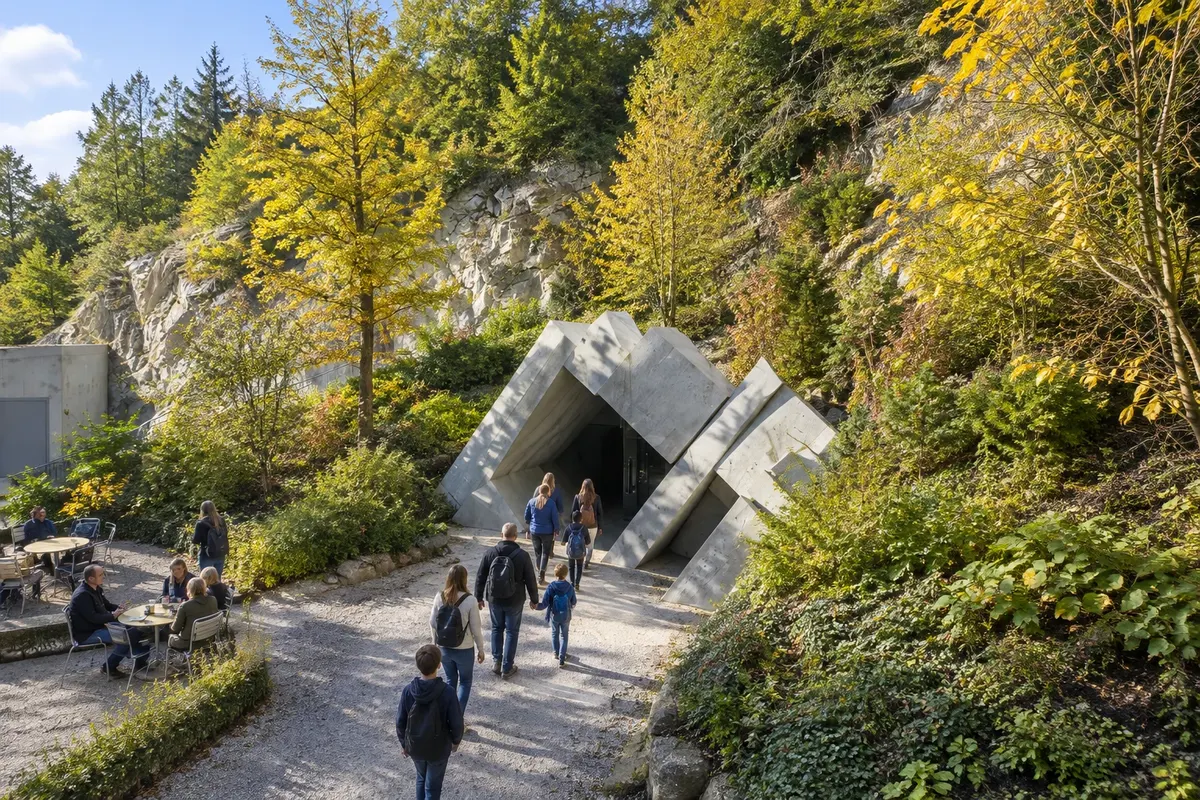
Gletschergarten Luzern
Lucerna · Lucerna · Museum

Gletschergarten Luzern

Stone kettles carved by a glacier about 20,000 years ago, discovered in 1872, with a museum, a mirror maze, rock galleries and an observation tower.

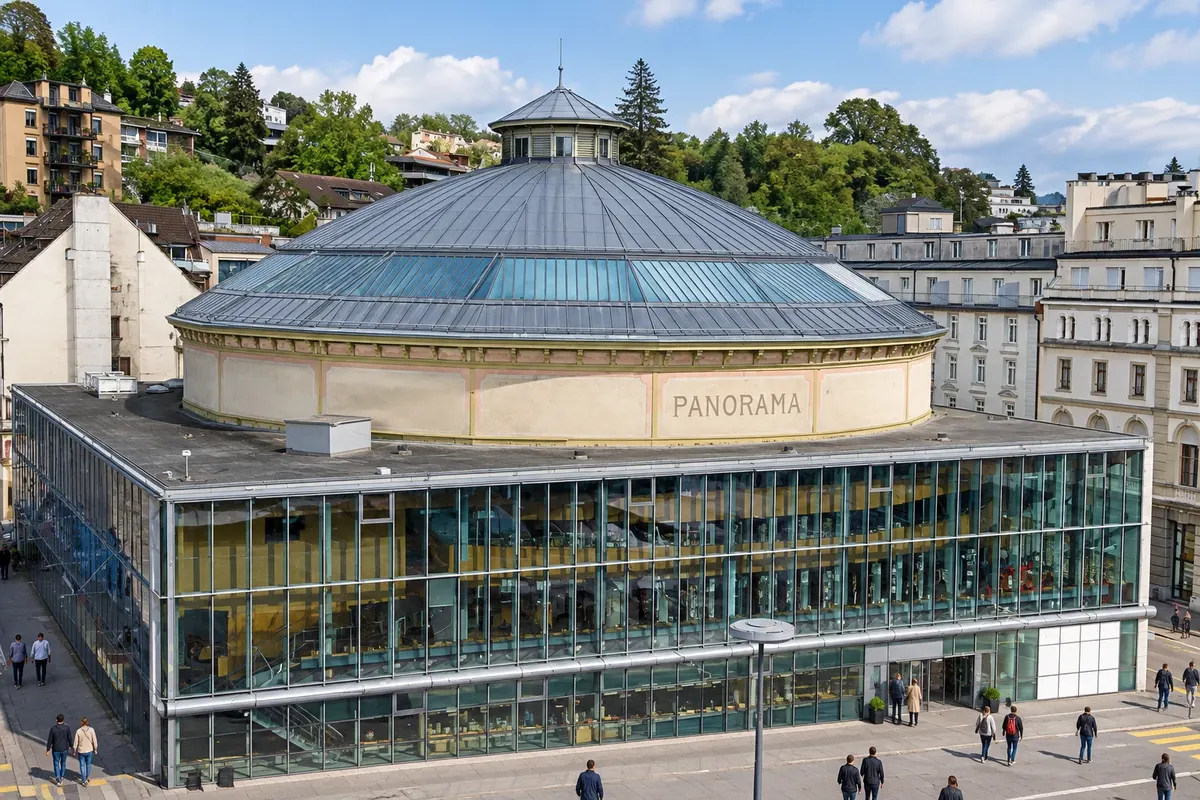
Bourbaki Panorama
Lucerna · Lucerna · Museum

Bourbaki Panorama

A 112 m circular painting by Édouard Castres from 1881, showing the arrival in Suíça of General Bourbaki's French army in 1871, in a round building near the Leão.

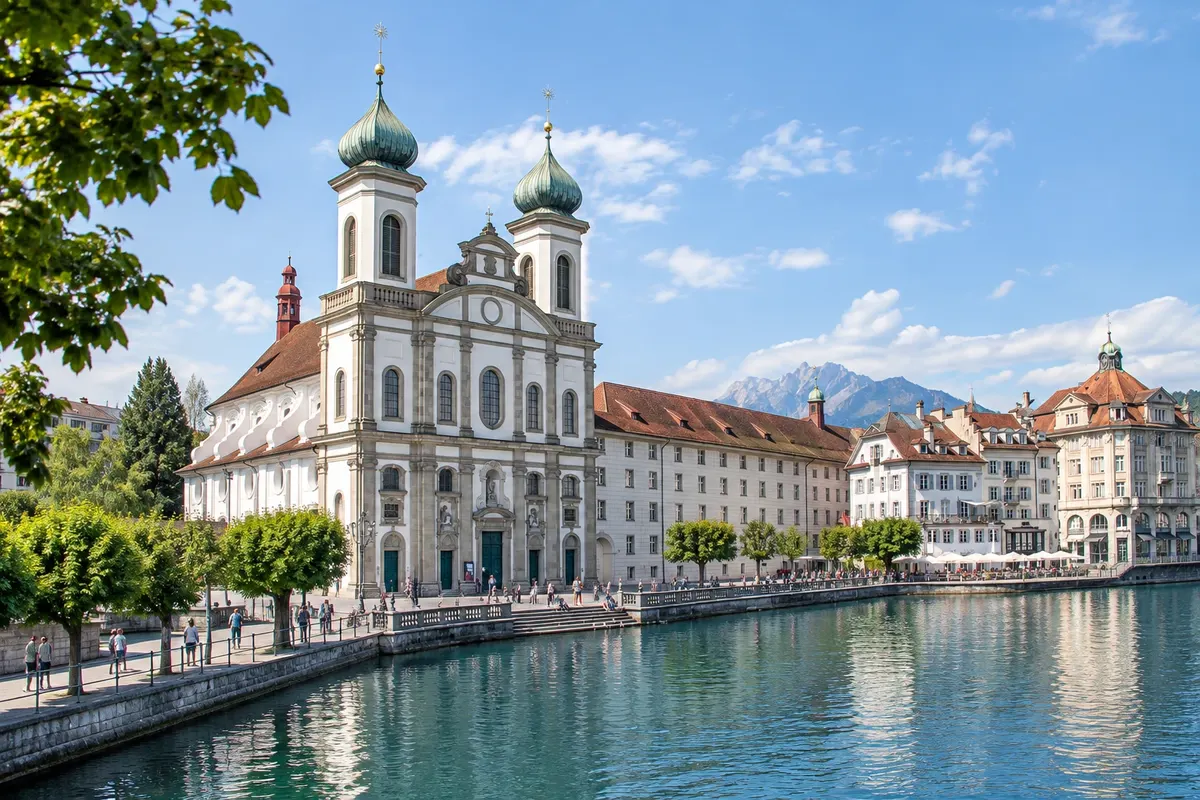
Jesuitenkirche
Lucerna · Lucerna · Church

Jesuitenkirche

Jesuit church built from 1666 to 1677 on the left bank of the Reuss, the first large Baroque church in Suíça, with a white and gold interior and two domed towers.

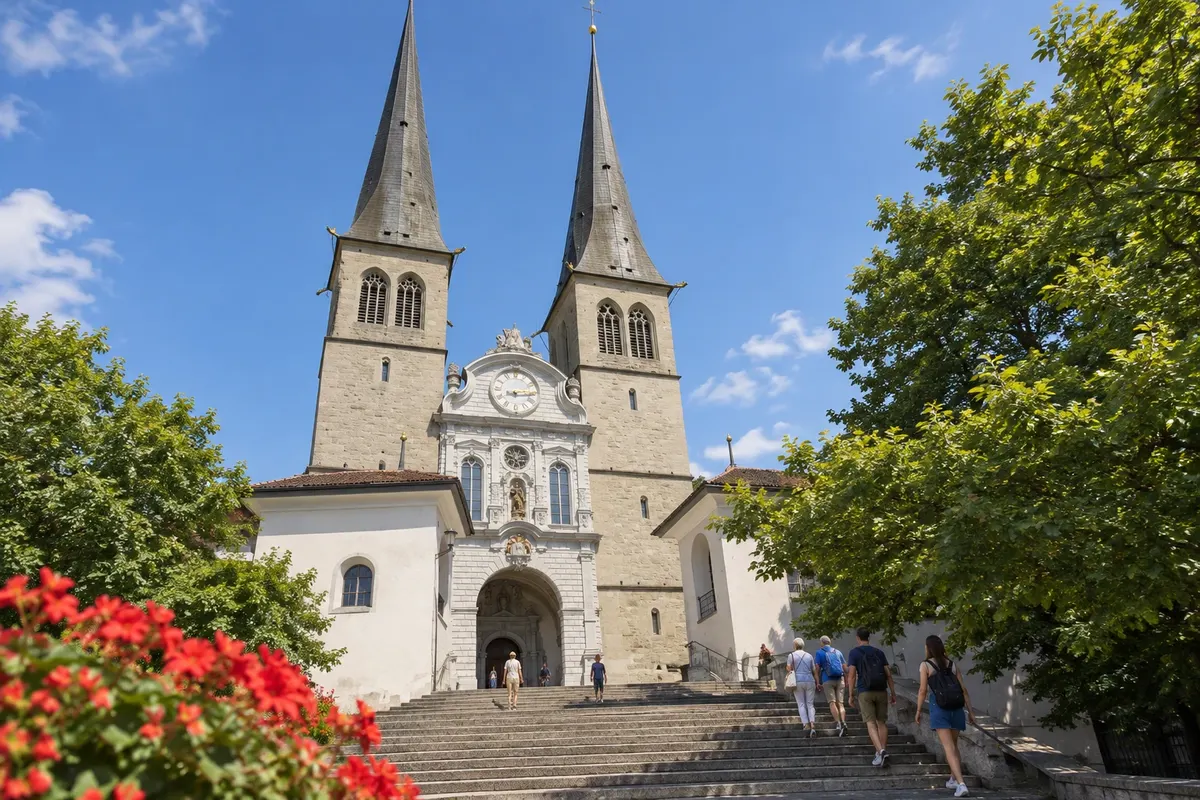
Hofkirche St. Leodegar
Lucerna · Lucerna · Church

Hofkirche St. Leodegar

Church of São Leodegário, rebuilt from 1633 to 1639 in Renaissance style after a fire, with medieval towers of 69 m, an arcaded cemetery and a large 17th‑century organ.

KKL Luzern
Lucerna · Lucerna · Architecture

KKL Luzern

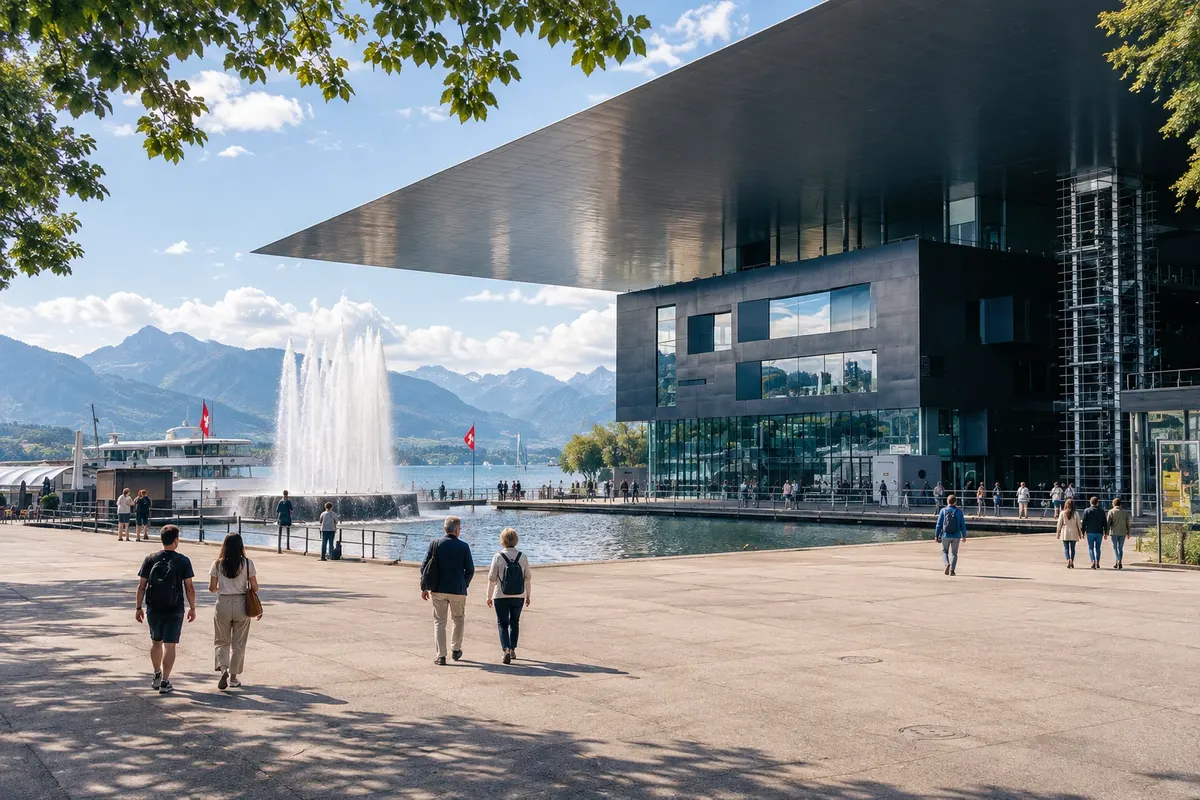
Culture and congress center designed by Jean Nouvel, on the lakeside, with a 45 m cantilevered roof, a concert hall with acoustics by Russell Johnson and the Kunstmuseum Luzern.

Verkehrshaus der Schweiz
Lucerna · Lucerna · Museum

Verkehrshaus der Schweiz

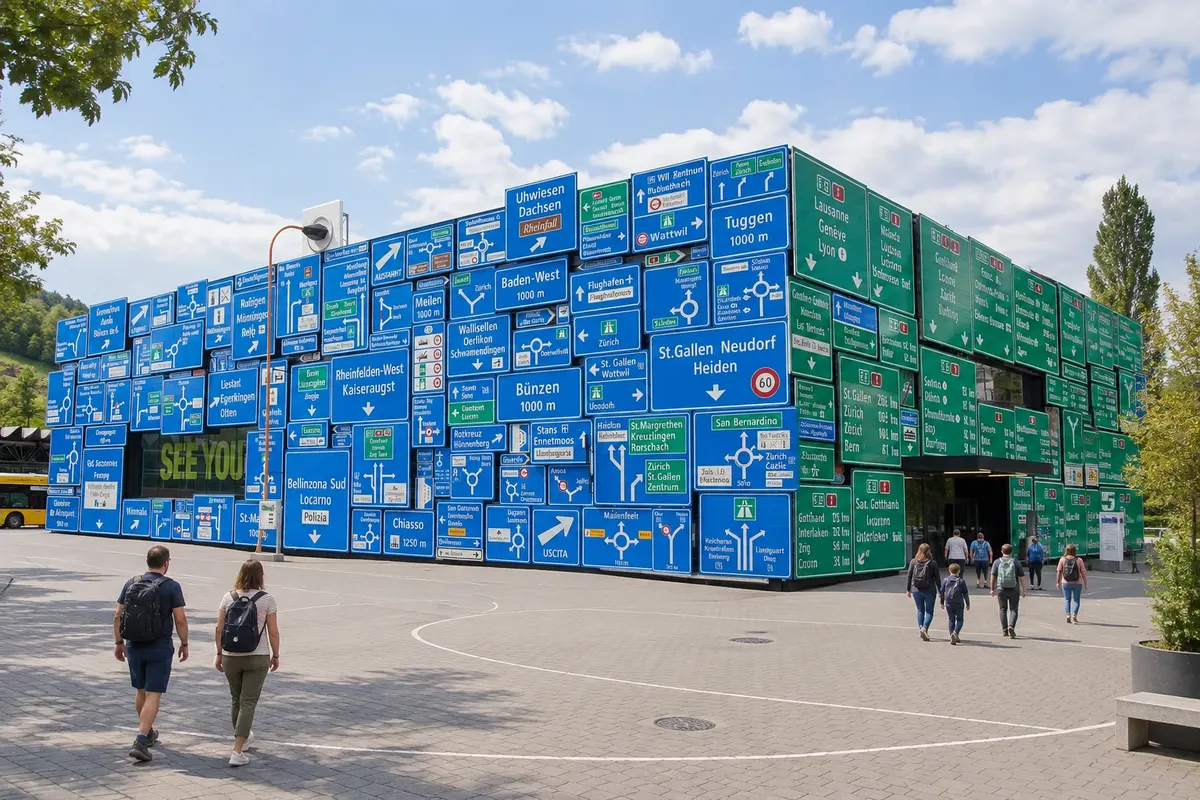
Museu Suíço dos Transportes, opened in 1959 on the lakefront, with trains, cars, airplanes, boats and cable cars, a planetarium, a large-screen cinema and an exhibition about chocolate.

Sammlung Rosengart
Lucerna · Lucerna · Museum

Sammlung Rosengart

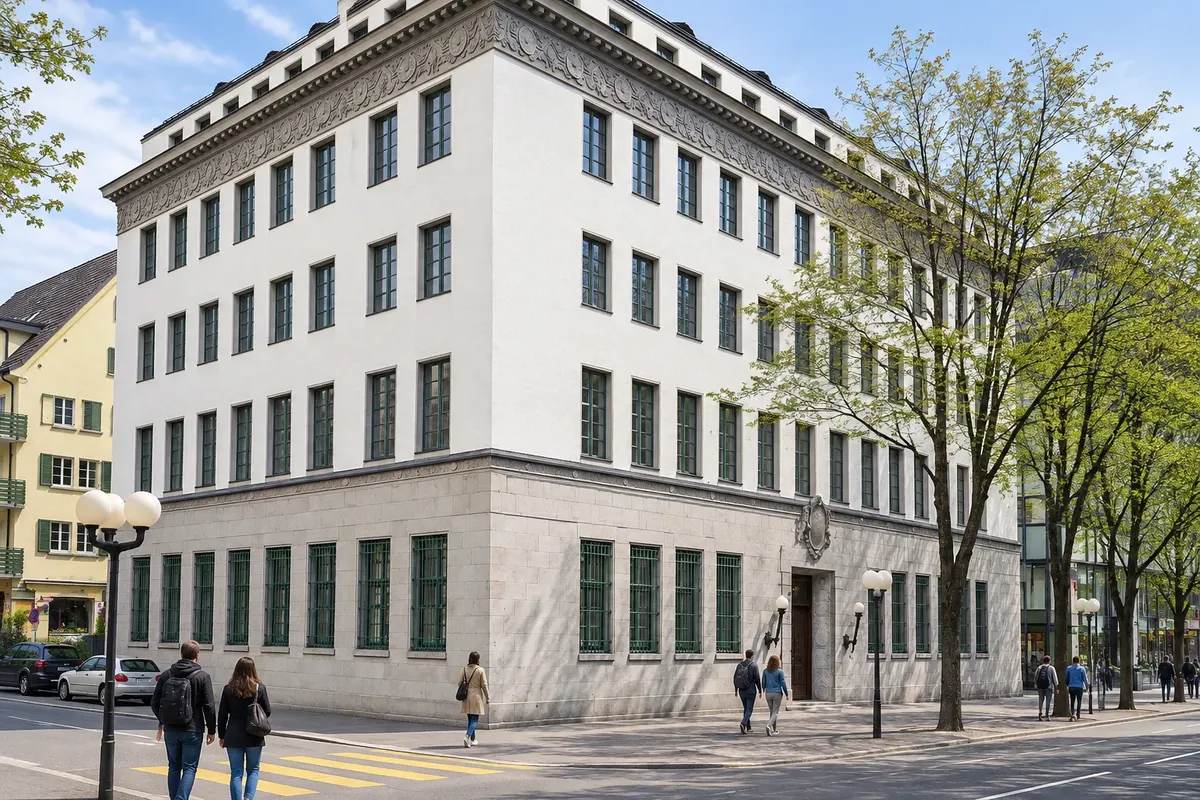
Modern art museum in a former 1922 bank, with around 180 works by Picasso and 125 by Paul Klee, as well as Monet, Pissarro, Seurat and others, gathered by Siegfried and Angela Rosengart.

Vierwaldstättersee
Lucerna · Lucerna · Lake and boat trip

Vierwaldstättersee

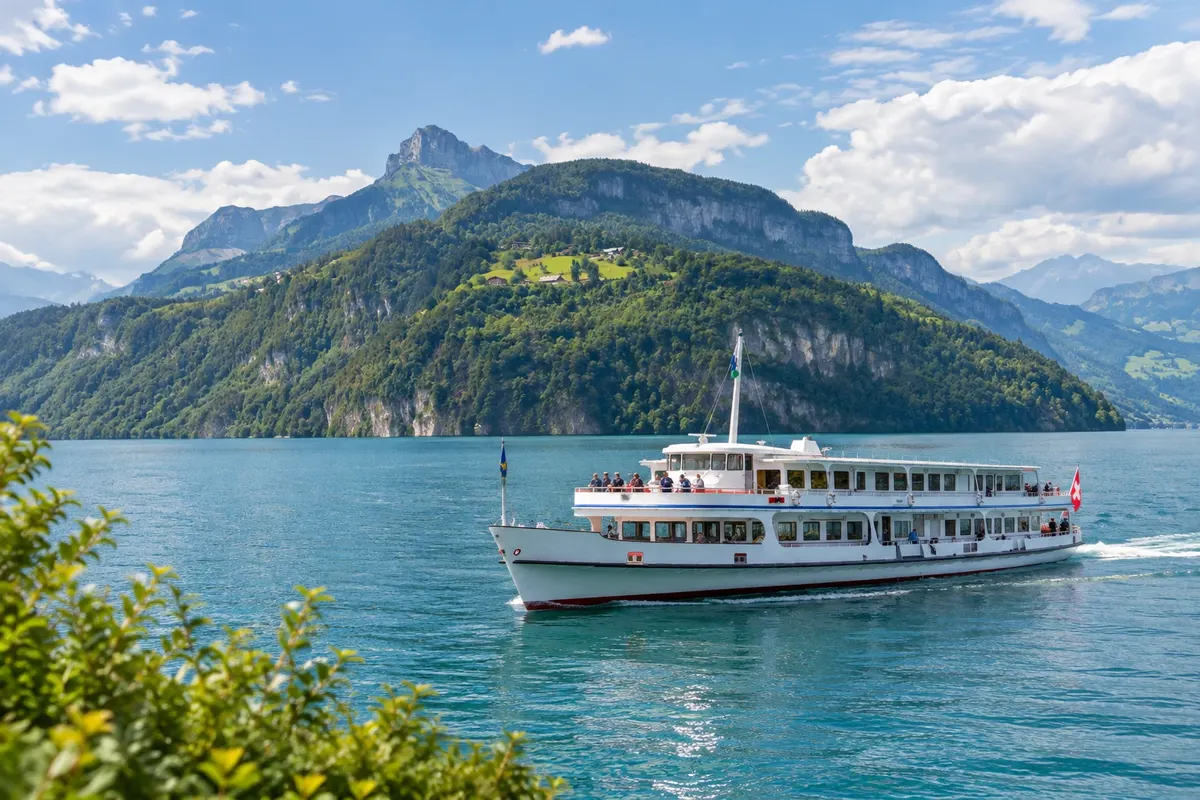
The Lake of the Four Cantons, with indented shores among mountains, is navigated by SGV boats, including five paddle steamers built between 1901 and 1928.

Pilatus
Lucerna · Lucerna · Mountain

Pilatus

Mountain south of Lucerna, with a cogwheel railway dating from 1889 and gradients up to 48%, the Dragon Ride cable car and a gondola to Kriens; at the top, viewpoints and trails above 2,000 m.

Rigi
Lucerna · Lucerna · Mountain

Rigi

Massif between the lakes of Lucerne, Zug and Lauerz, with its summit at Rigi Kulm, 1,797 m, served by the first mountain railway in Europe, opened in 1871.

Stanserhorn
Lucerna · Lucerna · Mountain

Stanserhorn

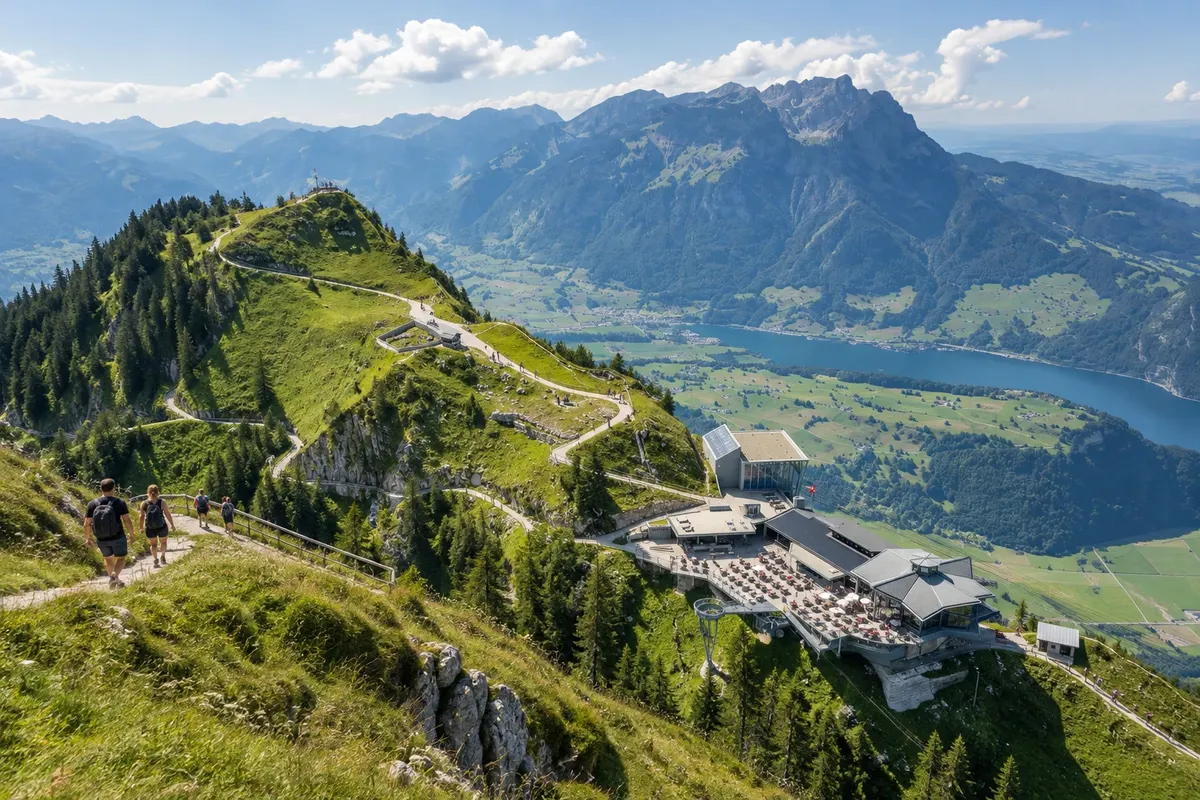
Mountain of 1,898 m above Stans, with a wooden-wagon funicular from 1893 and the CabriO cable car, two-storey with an open top, that reaches the summit where a rotating restaurant is located.

Bürgenstock e Hammetschwand-Lift
Lucerna · Lucerna · Observation deck

Bürgenstock e Hammetschwand-Lift

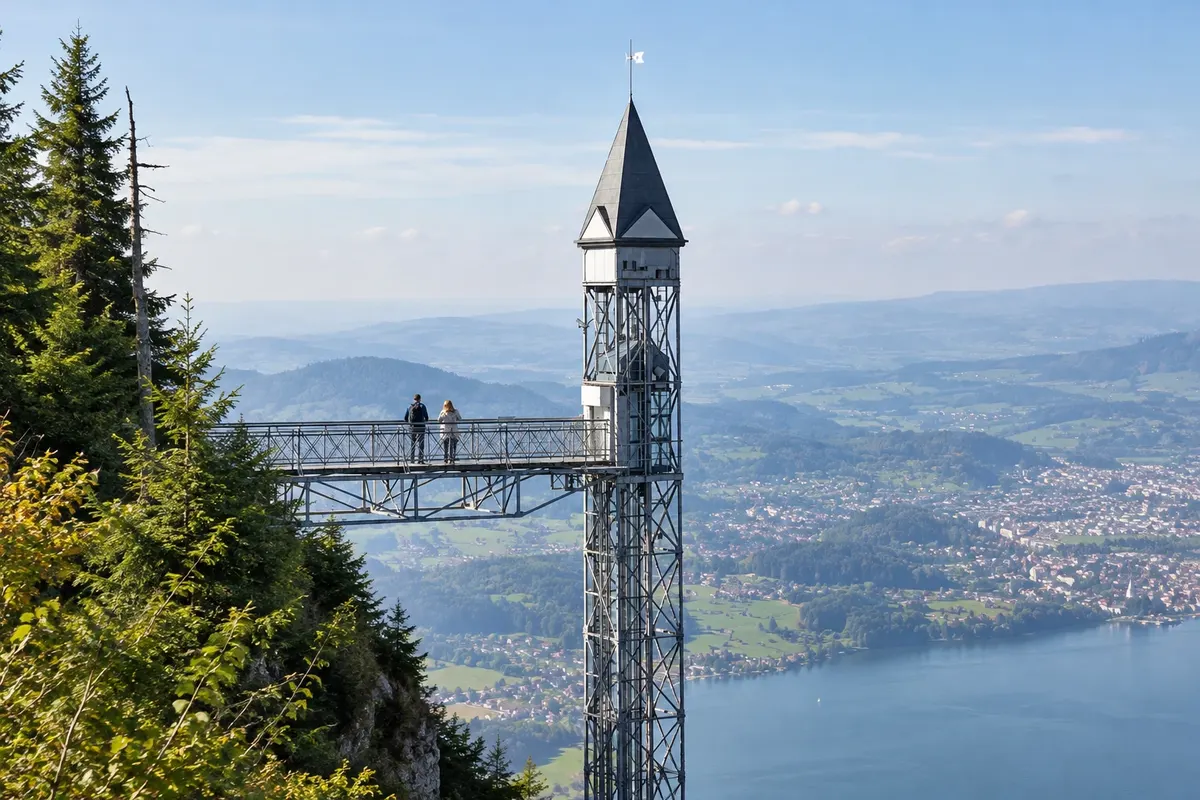
Promontory over the lake, reached by boat and an 1888 funicular, with the Felsenweg path on the slope and the Hammetschwand elevator, which rises 153 m outdoors to 1,132 m.

Luzern–Interlaken Express
Lucerna · Lucerna · Panoramic train

Luzern–Interlaken Express

Zentralbahn train that links Lucerne to Interlaken in about 1 hour 50 minutes, climbing the Brünig Pass at 1,008 m and passing Lakes Sarnen, Lungern and Brienz.

Before you go

Practical information

A little planning leaves more time to enjoy the journey.

When to go

From June to September, the European summer, all trains and cable cars usually operate and the days are long. May and October have fewer visitors, but some ascents close for maintenance. From December to March it is cold, the days are short and Engelberg becomes a ski resort. At altitude, the weather changes quickly: check operating status before going up.

The seasons shown are the most usual ones; nature doesn't always follow the calendar.

How many days to stay

Three days in Lucerna are enough for the historic center, museums and two ascents, such as Pilatus and Rigi. Engelberg and the Titlis require an extra day, or two to include Trübsee and Brunni. With four or five days the destination is complete, unhurried and with room for a bad-weather day.

Which city to stay in

In Lucerna, the Altstadt, on the right bank of the Reuss, keeps everything within walking distance, with car-free streets. The area near the station and the quay has direct access to trains and boats. The lake shores, such as Haldenstrasse and the Tribschen neighborhood, are quieter. In Engelberg, the village center is close to the station and the gondolas; lakeside villages like Weggis and Vitznau suit those who prefer to stay outside the city.

Respect the place

Take your trash with you, follow the signs and support local businesses. In natural areas, follow the visiting guidelines.

Get your questions answered

Frequently asked questions about Lucerna and the mountains

How many days to stay in Lucerna and Engelberg?

Four or five days: three in Lucerna, covering the center and two mountains, and one or two in Engelberg for the Titlis and the valley lakes. With less time, choose one mountain near Lucerna and the Titlis.

Do you need a car?

No. Trains, boats and buses reach all points, with coordinated schedules. The mountains are reached by cogwheel trains, cable cars and funiculars. Tourist train passes cover much of these journeys; check what each pass includes.

Can you do a day trip from Zurich?

Yes. Lucerna is about 45 minutes by train from Zurich, and you can see the center and go up a mountain in the same day. Engelberg and the Titlis are also possible as a day trip, but it makes for a long day.

What's the best time to go up the mountains?

From June to September all ascents are usually open. The Pilatus cogwheel railway operates only from May to November. In winter, the Rigi, the Titlis and the Kriens gondola to Pilatus continue to run. There's never a guarantee of clear views: check the webcams and the forecast beforehand.

What language is spoken in Lucerna?

German, with the Swiss-German dialect in everyday life. Signs and menus are in German, and English is widely spoken in hotels, trains and attractions.

Explore other destinations Search by state and city
Back