Sintra and Cascais

Lisboa · Portugal

Sintra and Cascais

The Sintra hills, with romantic palaces and gardens in the mist, and the coast of Cascais, a former fishing village turned seaside resort, less than an hour from Lisboa.

Lisboa e Sul

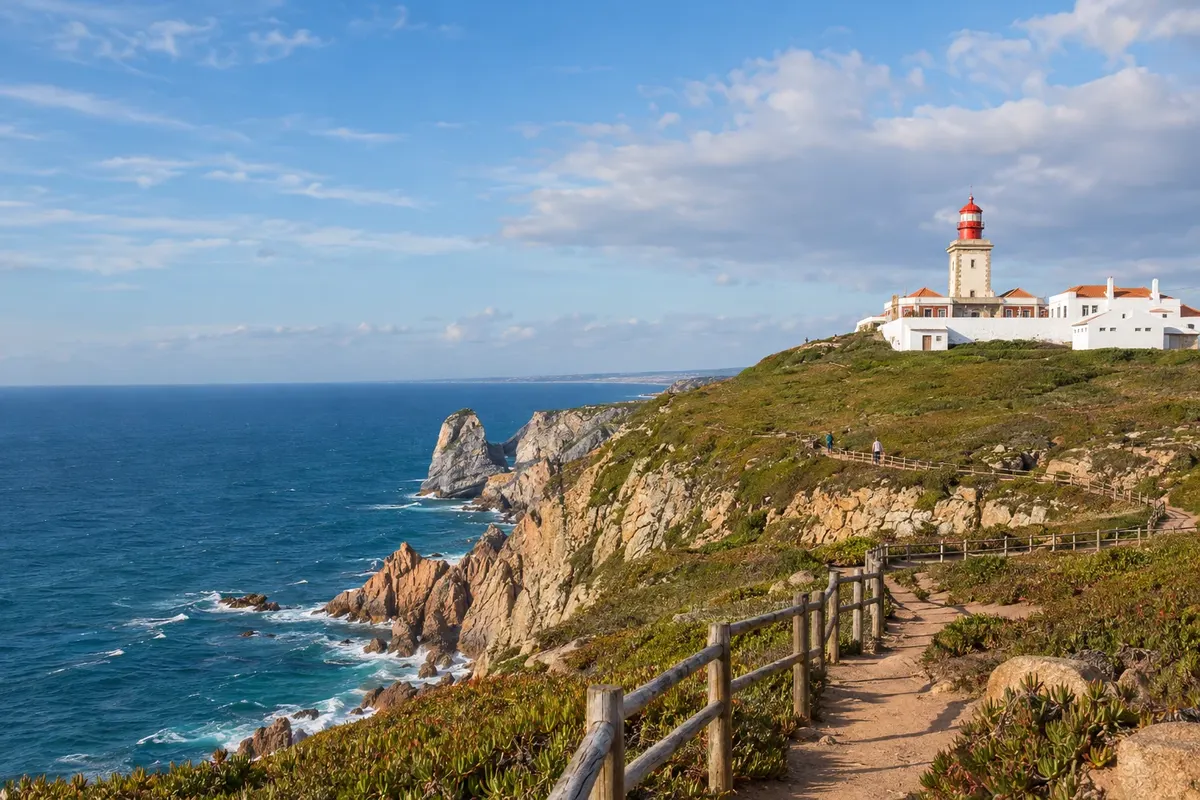
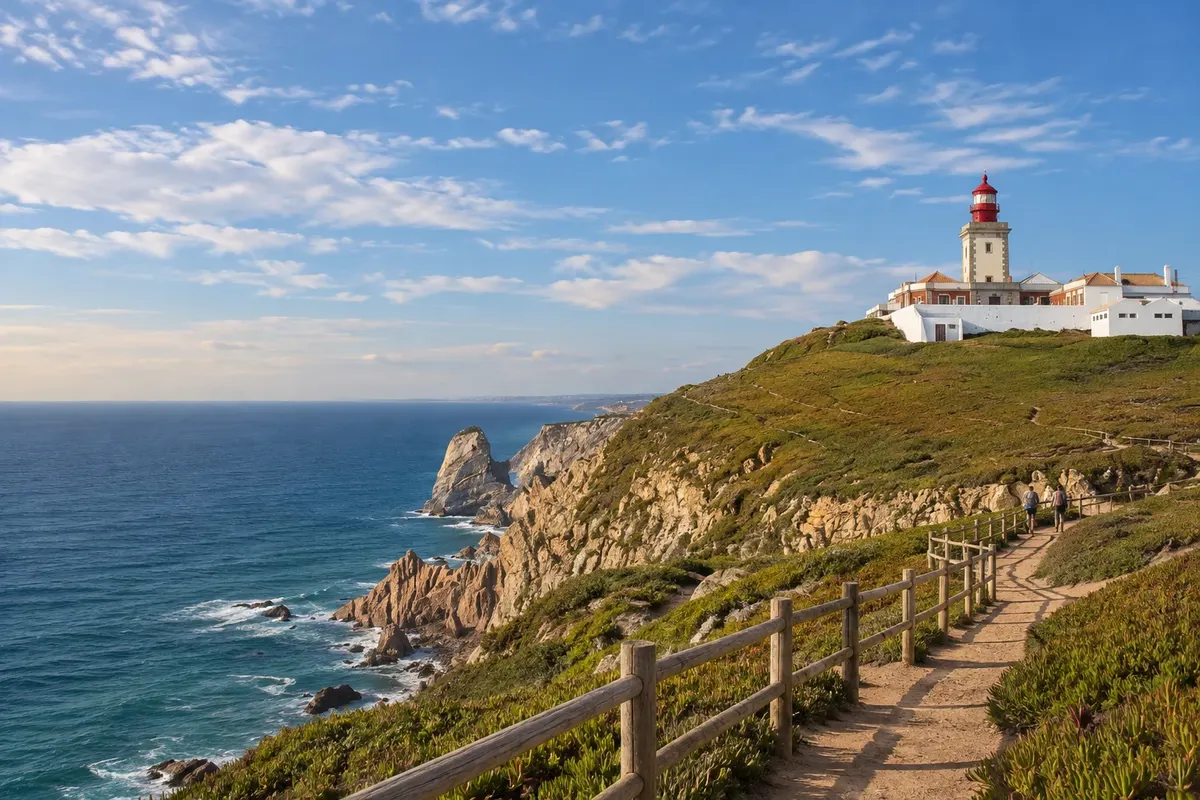
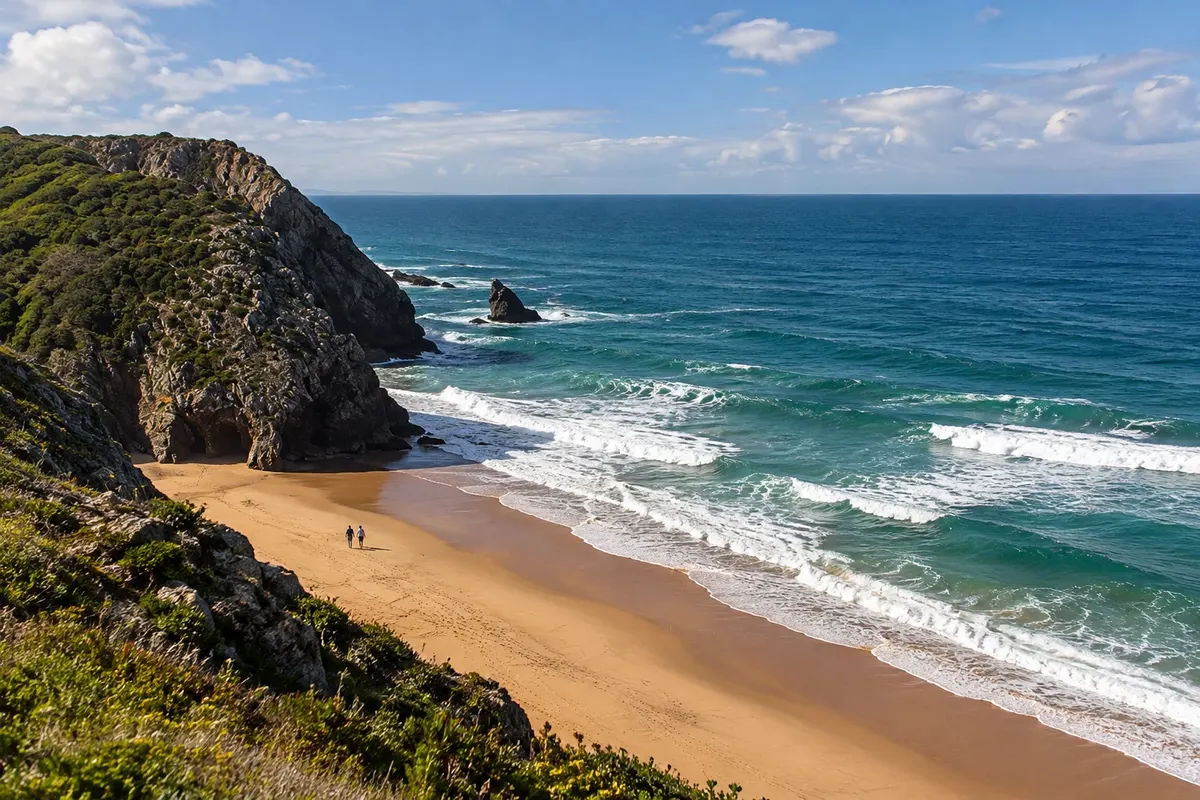
In the photo: Cabo da Roca

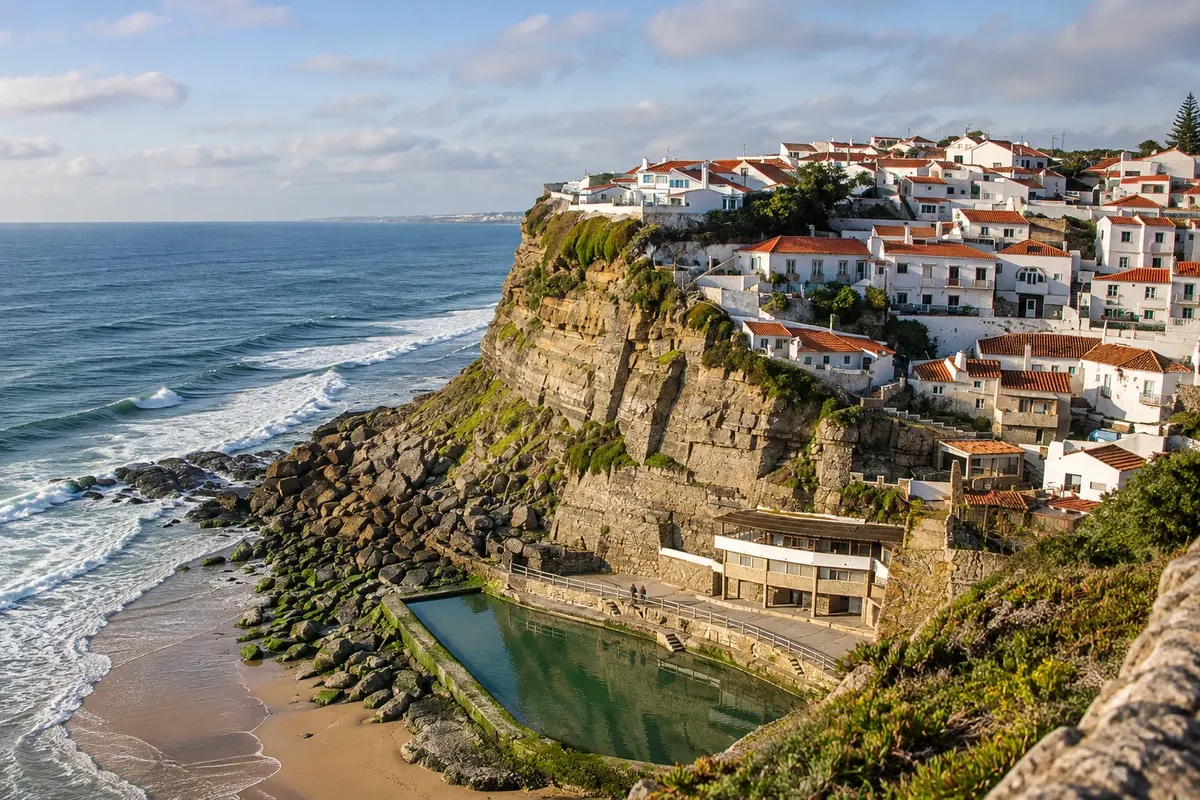
Illustrative images. The pictures in this guide are illustrations based on the real place, not photographs, and may differ from it.

Get it on Google Play Send your photos

Get to know the place

A region to enjoy
at your own pace.

Sintra and Cascais lie west of Lisboa, at the tip of the European continent. Between them stretches the Serra de Sintra, covered in woodland and protected by the Parque Natural de Sintra-Cascais, which slopes down to the Atlantic at the Cabo da Roca, the westernmost point of continental Europe.

For centuries Sintra was a summer retreat for kings and aristocrats. The Cultural Landscape of Sintra has been a UNESCO World Heritage Site since 1995 and includes the Palácio Nacional de Sintra in the town centre, the Palácio da Pena high on the hills, the Castelo dos Mouros, the Quinta da Regaleira, Monserrate and the Convento dos Capuchos. The hills create a humid microclimate, with frequent mist and temperatures lower than in Lisboa.

Cascais was a fishing village until the late 19th century, when King D. Luís I began to spend summers at the Cidadela and the aristocracy followed. Today the town has a bay with boats, a historic centre of cobbled streets, museums such as the Casa das Histórias Paula Rego and a seafront promenade to the Estoril. To the west the coast becomes wilder, with the Boca do Inferno and the Praia do Guincho.

A road over the hills and along the coast connects the two towns.

This destination brings together 2 cities: Sintra, Cascais.

Share: WhatsApp
Traveler, share your experiences through photos Up to 5 photos of each place you visited.

One destination, many paths

The cities on this trip

Start with one city or combine several in your itinerary.

Where Sintra and Cascais is
SintraCascais

Contornos: Direção-Geral do Território, CAOP 2025, CC BY 4.0. Adaptação do Cidade Turismo.

How to get there: Sintra and Cascais

✈ Aeroporto Humberto Delgado (LIS), in Lisboa · 30 km to Sintra

From Lisboa, the train departs Rossio for Sintra and Cais do Sodré for Cascais, taking about 40 minutes each. The nearest airport is the aeroporto de Lisboa (LIS). Check before booking.

Suggested arrival point: Sintra

The local experience

Things to do in Sintra and Cascais

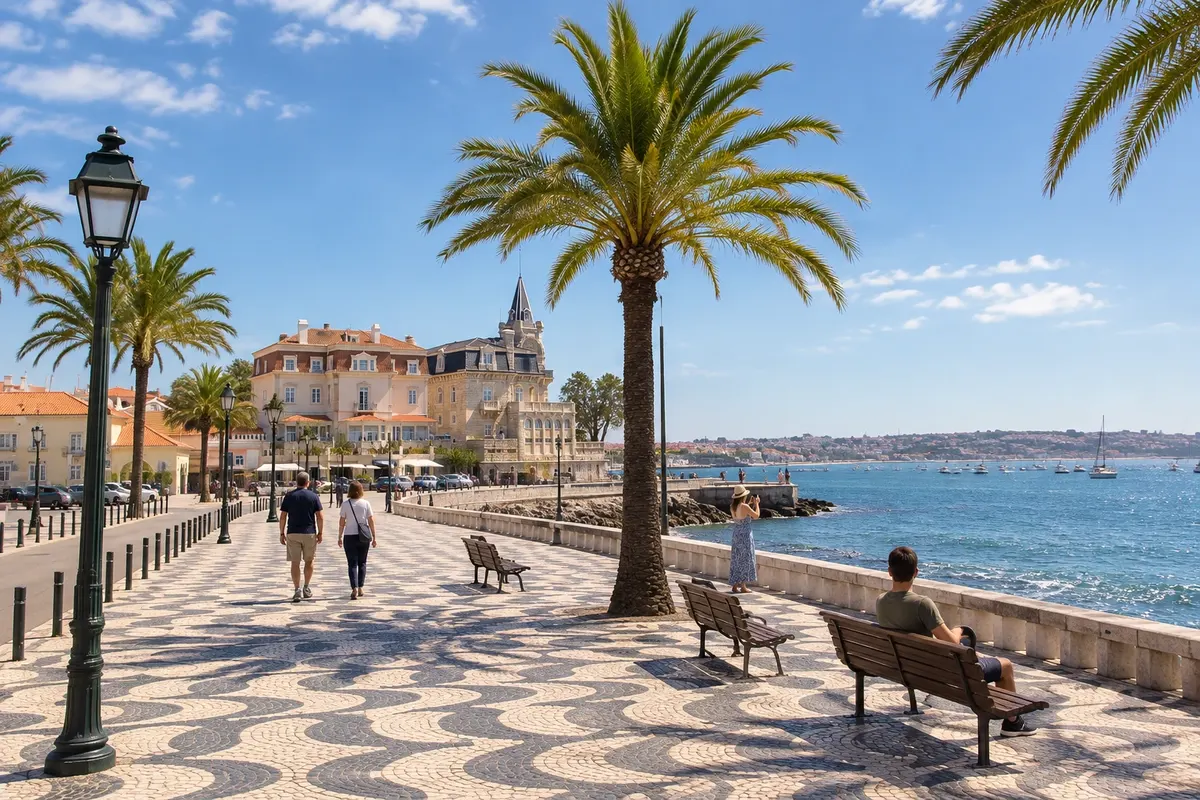
Baía de Cascais e centro histórico
Cascais · Lisboa · Historic center

Baía de Cascais e centro histórico

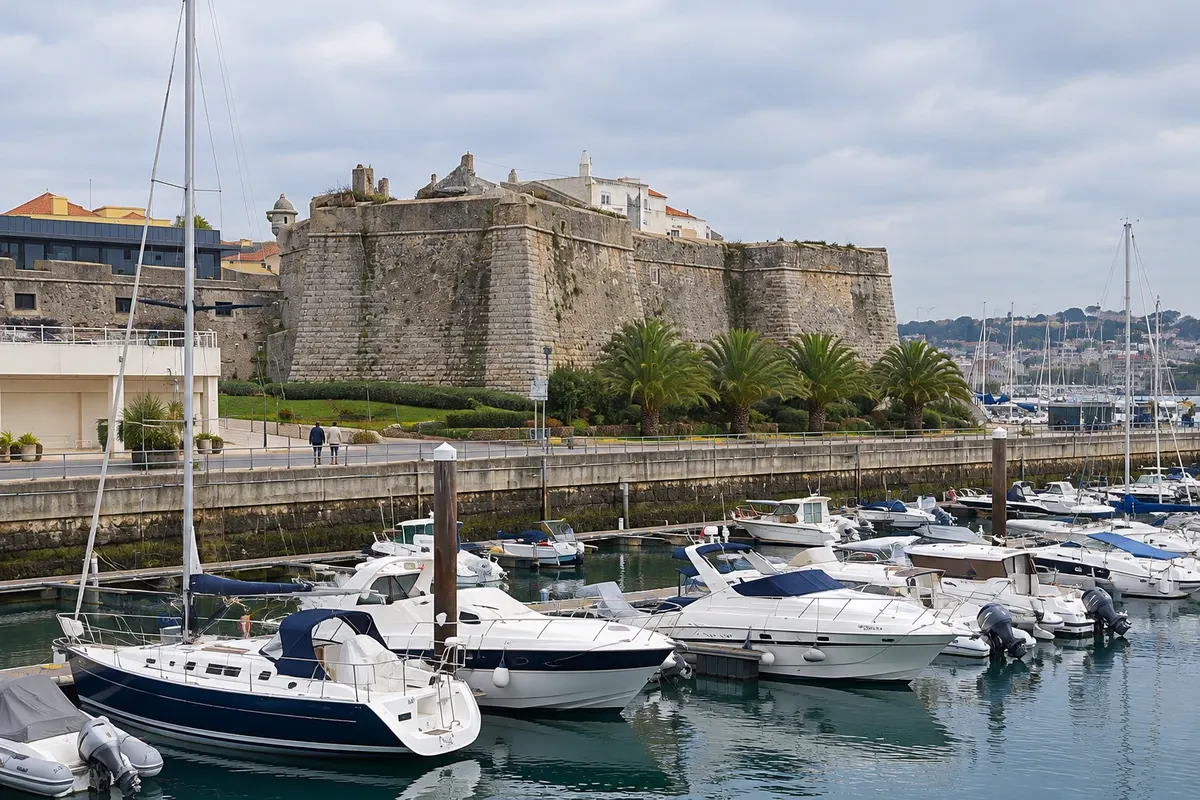
The bay where fishing boats share space with the village's beaches, surrounded by the center's stone streets, the Câmara Municipal with tiled panels, and Praia da Rainha.

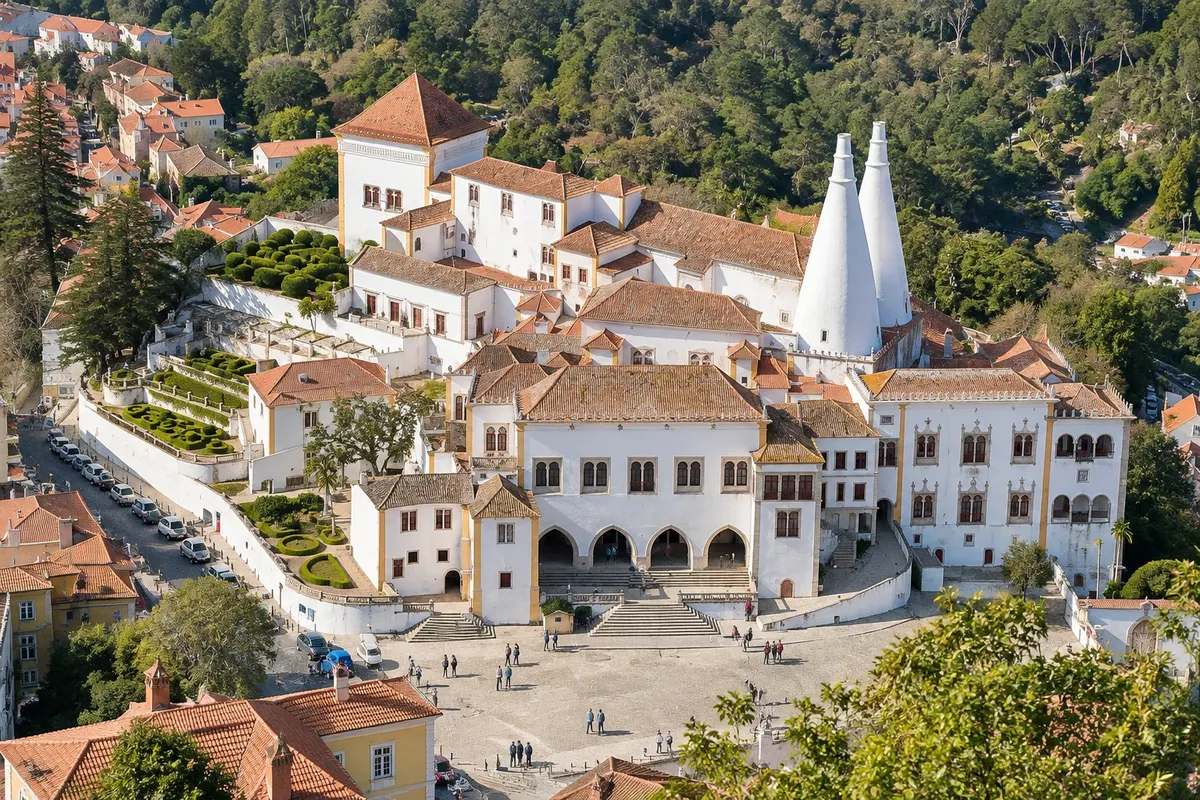
Palácio Nacional de Sintra
Sintra · Lisboa · Palace

Palácio Nacional de Sintra

Royal palace of medieval origin in the center of the village, with two large white conical chimneys. It was used by the royal family from the 15th to the 19th century and houses rooms with Mudéjar tiles and painted ceilings.

Cidadela de Cascais
Cascais · Lisboa · Fortress

Cidadela de Cascais

A group of fortifications from the 16th and 17th centuries on the edge of the bay, which was the royal family's summer residence and today houses a pousada, art galleries and studios.

Palácio Nacional da Pena
Sintra · Lisboa · Palace

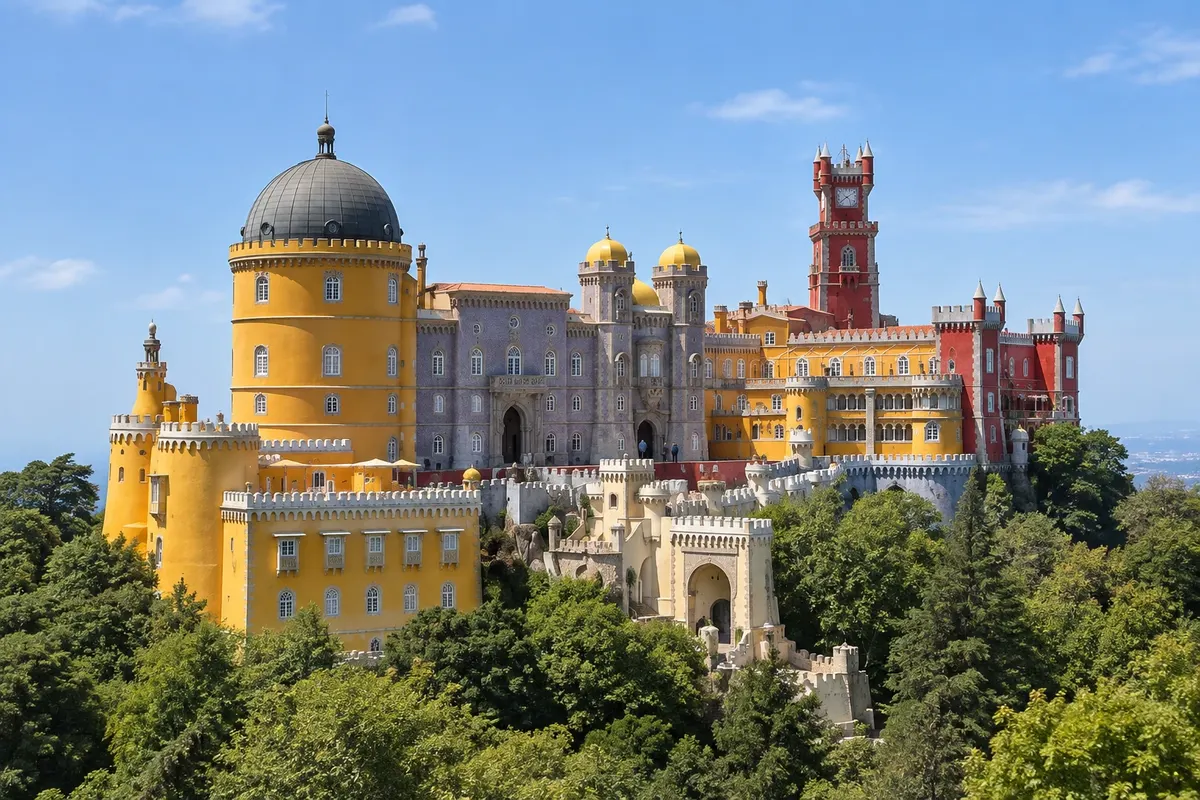
Palácio Nacional da Pena

19th-century romantic palace high on the sierra, painted yellow and red, built by King D. Fernando II over an old convent. Around it, the Parque da Pena has lakes, trails and viewpoints.

See 12 more places in Sintra and Cascais
Casa das Histórias Paula Rego
Cascais · Lisboa · Museum

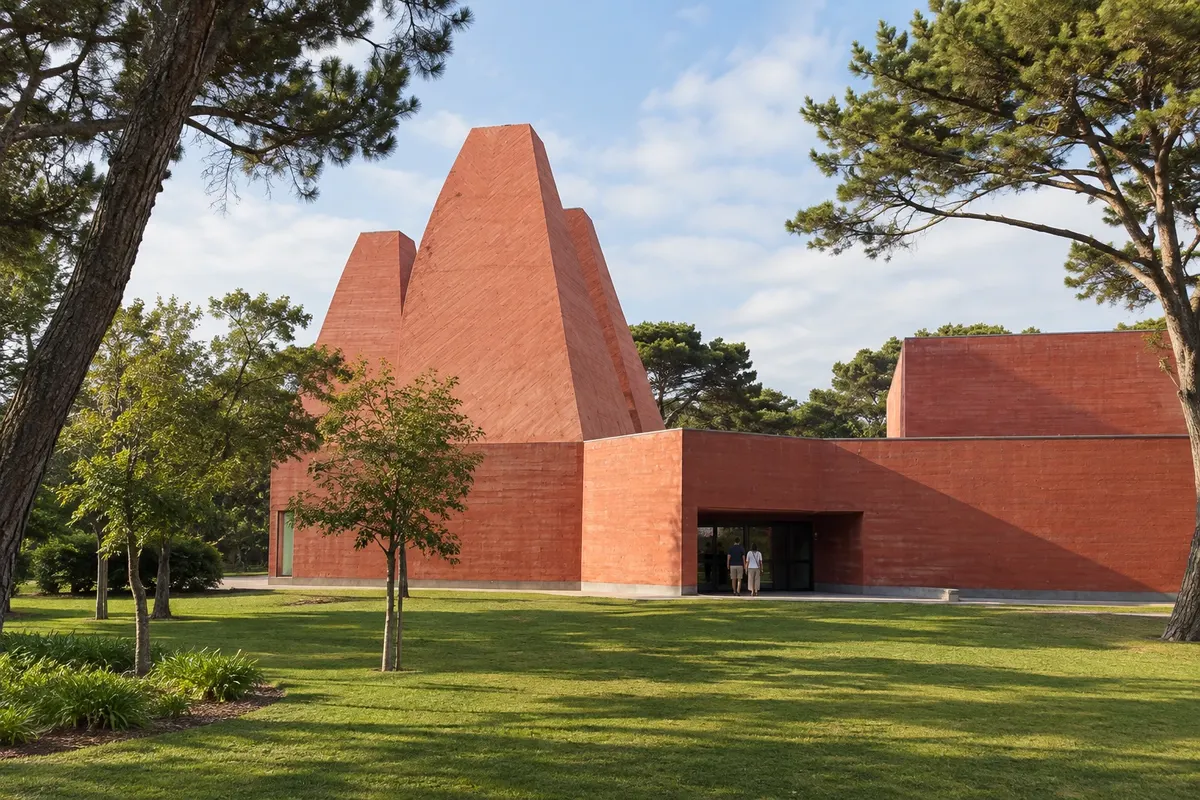
Casa das Histórias Paula Rego

Museum dedicated to the painter Paula Rego, in a 2009 building with two red pyramidal towers designed by Eduardo Souto de Moura, winner of the Pritzker Prize.

Castelo dos Mouros
Sintra · Lisboa · Castle

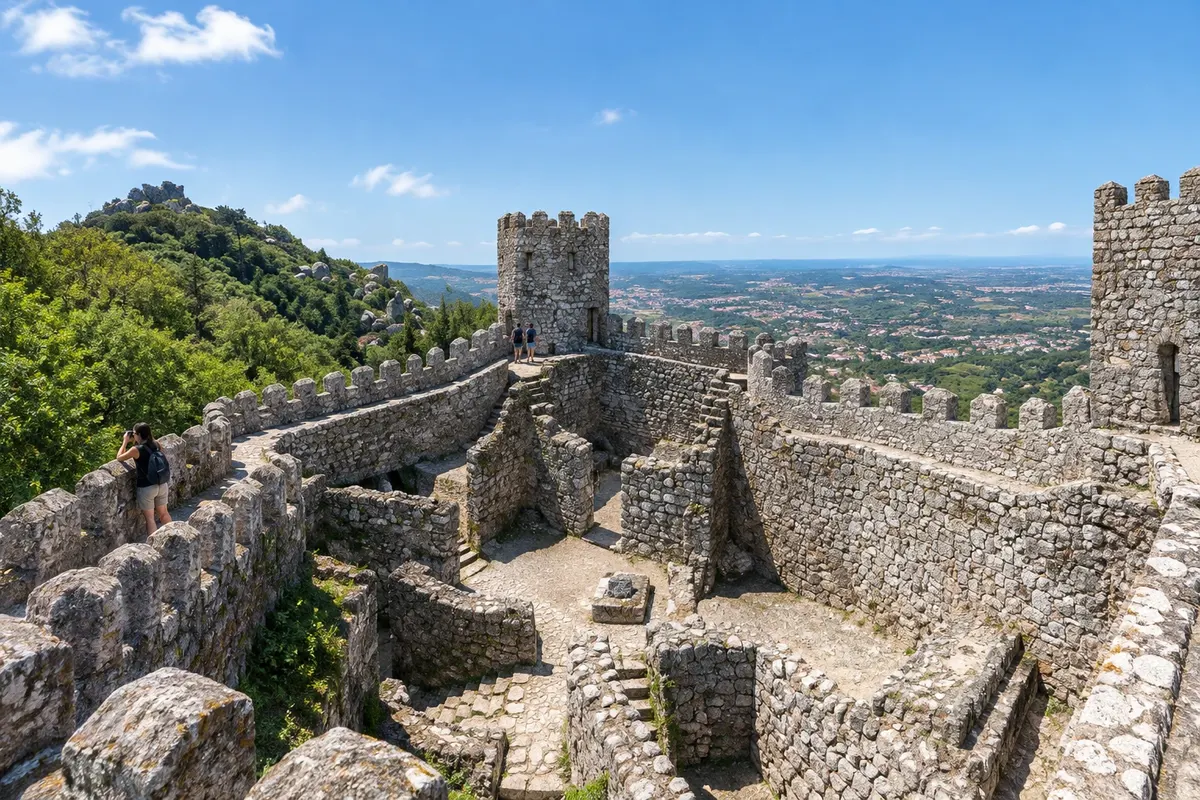
Castelo dos Mouros

Walls of a castle built by the Muslims between the 9th and 10th centuries, winding along the ridge of the hills with views over the village, the Pena and the sea.

Farol-Museu de Santa Marta
Cascais · Lisboa · Museum

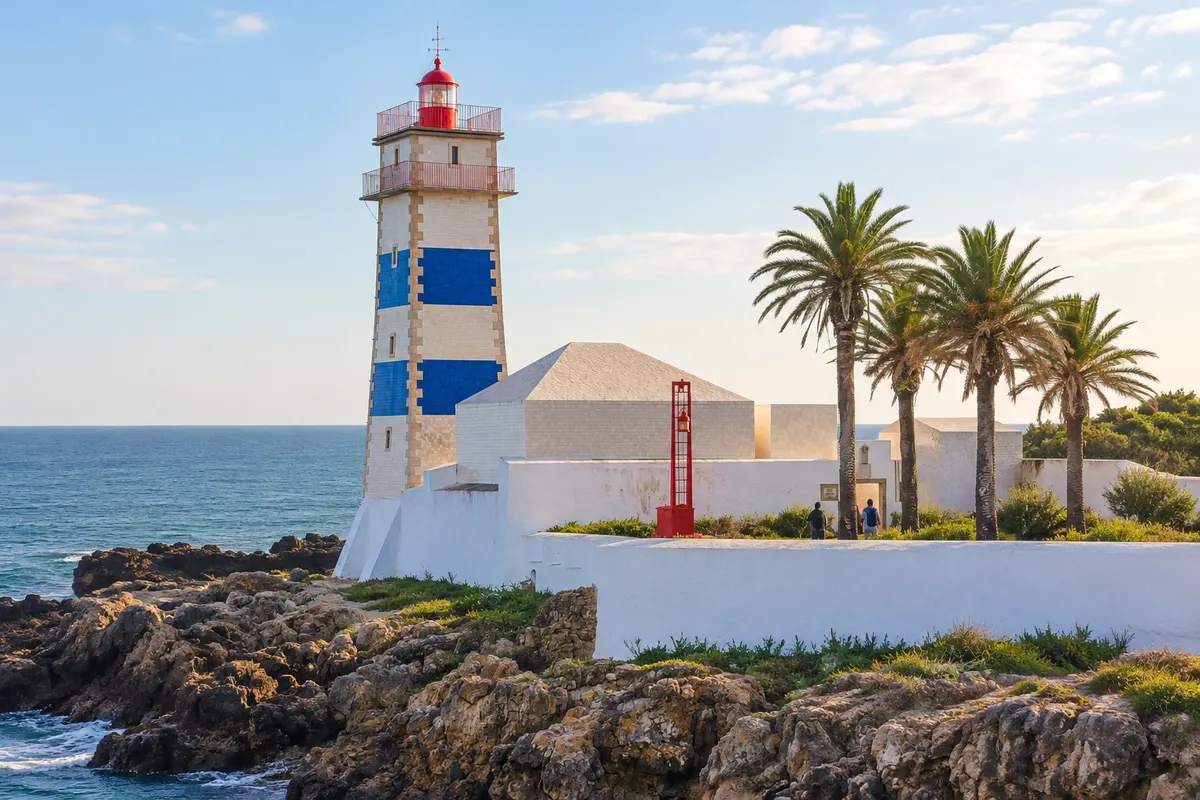
Farol-Museu de Santa Marta

The Farol de Santa Marta, built in 1868 on the Santa Marta cove, with blue and white stripes, converted into a museum of Portuguese lighthouses. Beside it is the Museu Condes de Castro Guimarães.

Quinta da Regaleira
Sintra · Lisboa · Palace

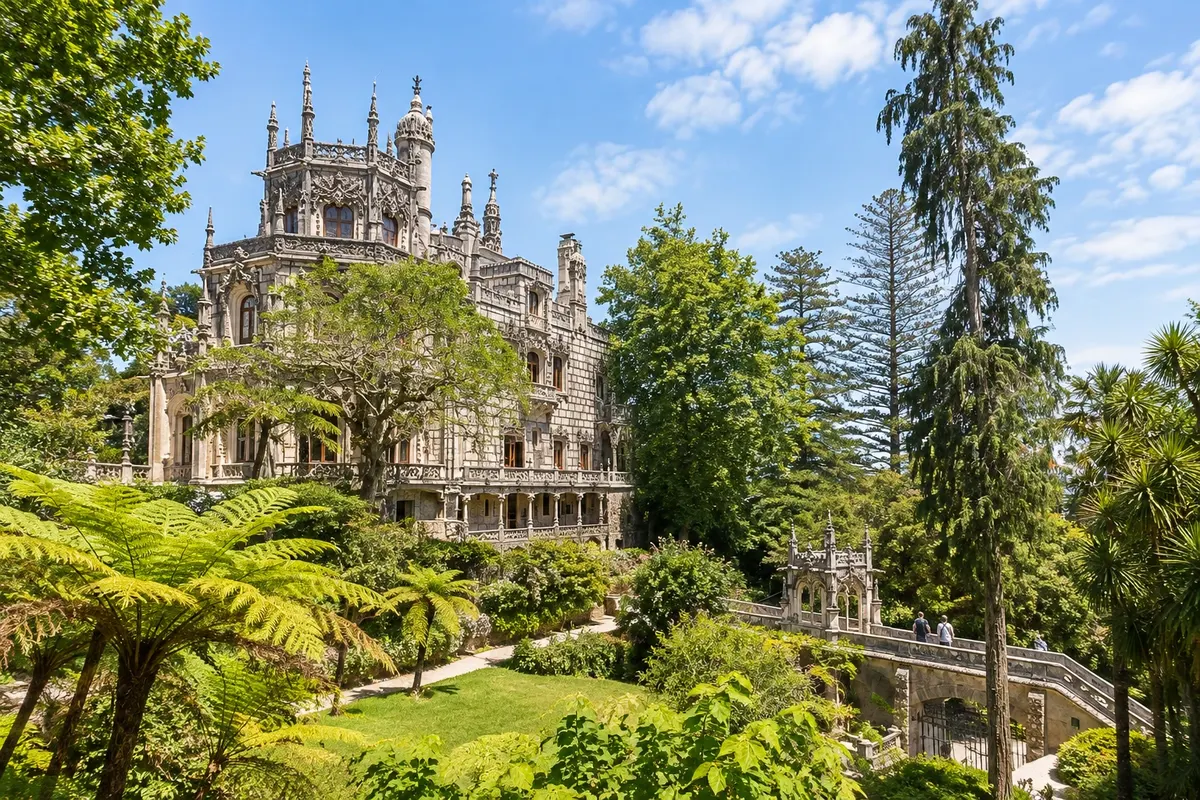
Quinta da Regaleira

Early 20th-century palace and garden, created by the millionaire Carvalho Monteiro and the architect Luigi Manini, with grottoes, lakes and the Poço Iniciático, a spiral staircase that descends about 27 meters.

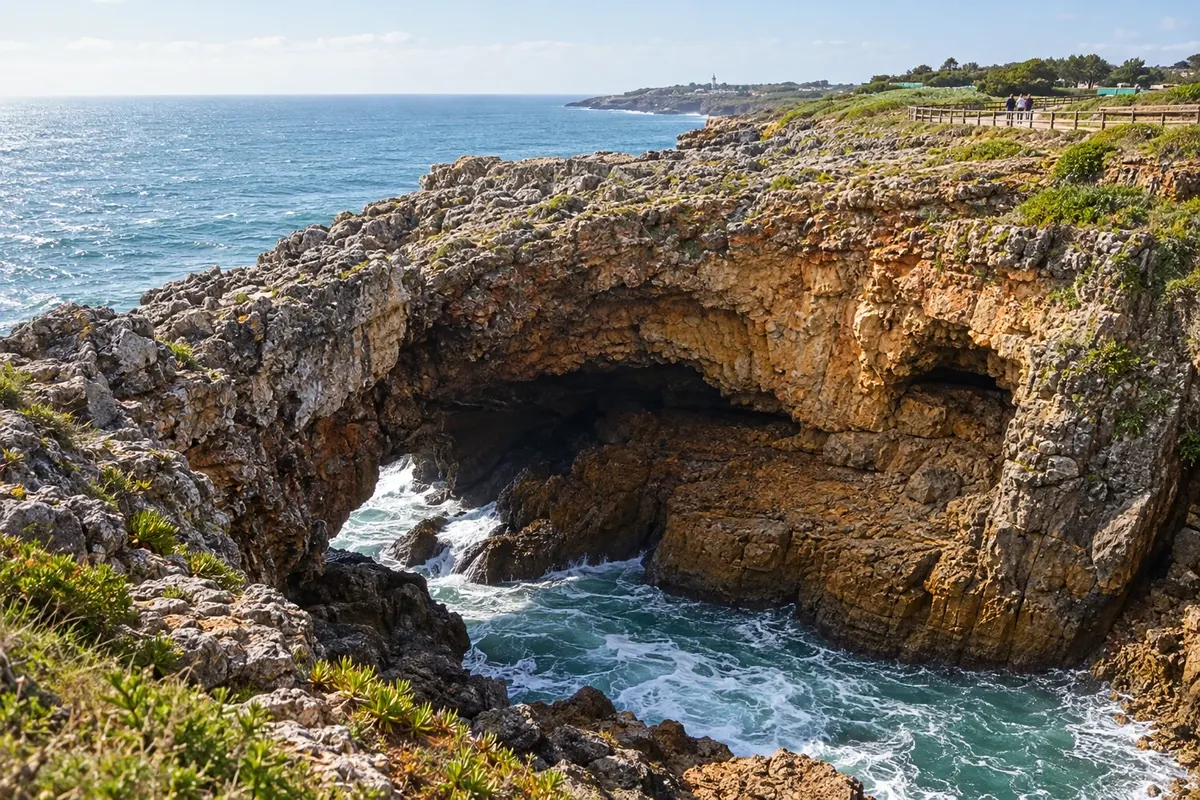
Boca do Inferno
Cascais · Lisboa · Observation deck

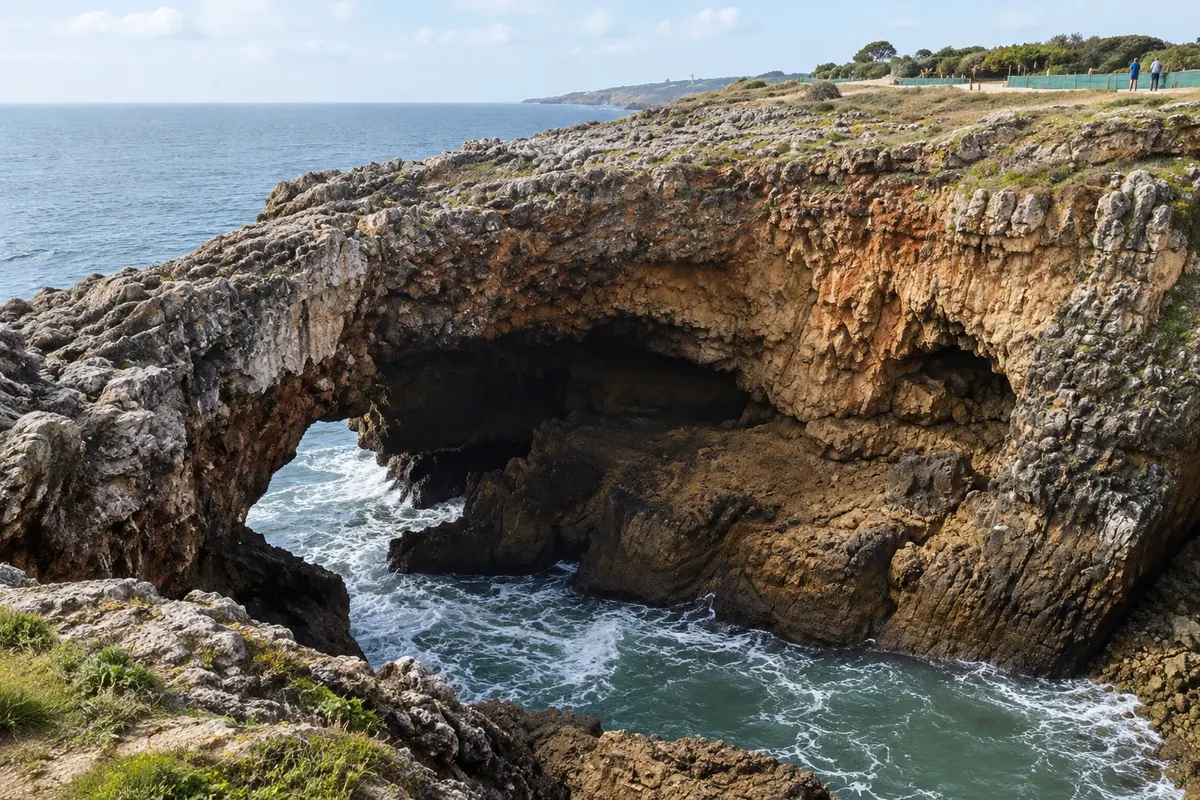
Boca do Inferno

An opening in the cliff west of Cascais, where the sea enters a collapsed cave and, with strong waves, sprays water between the rocks. There are viewpoints and a coastal walkway.

Palácio e Jardins de Monserrate
Sintra · Lisboa · Palace

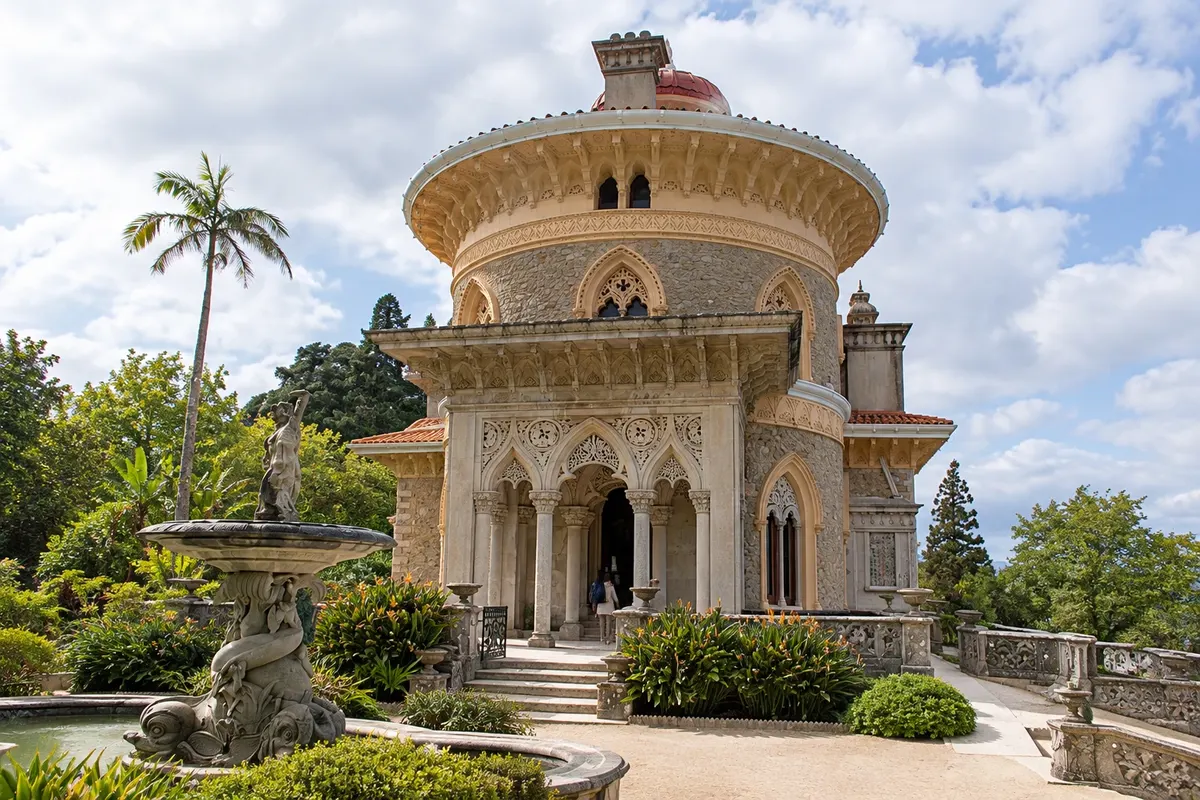
Palácio e Jardins de Monserrate

A 19th-century palace of Oriental inspiration, built by the Englishman Francis Cook, surrounded by a garden with plants from several continents, lakes and the ruins of a chapel.

Convento dos Capuchos
Sintra · Lisboa · Convent

Convento dos Capuchos

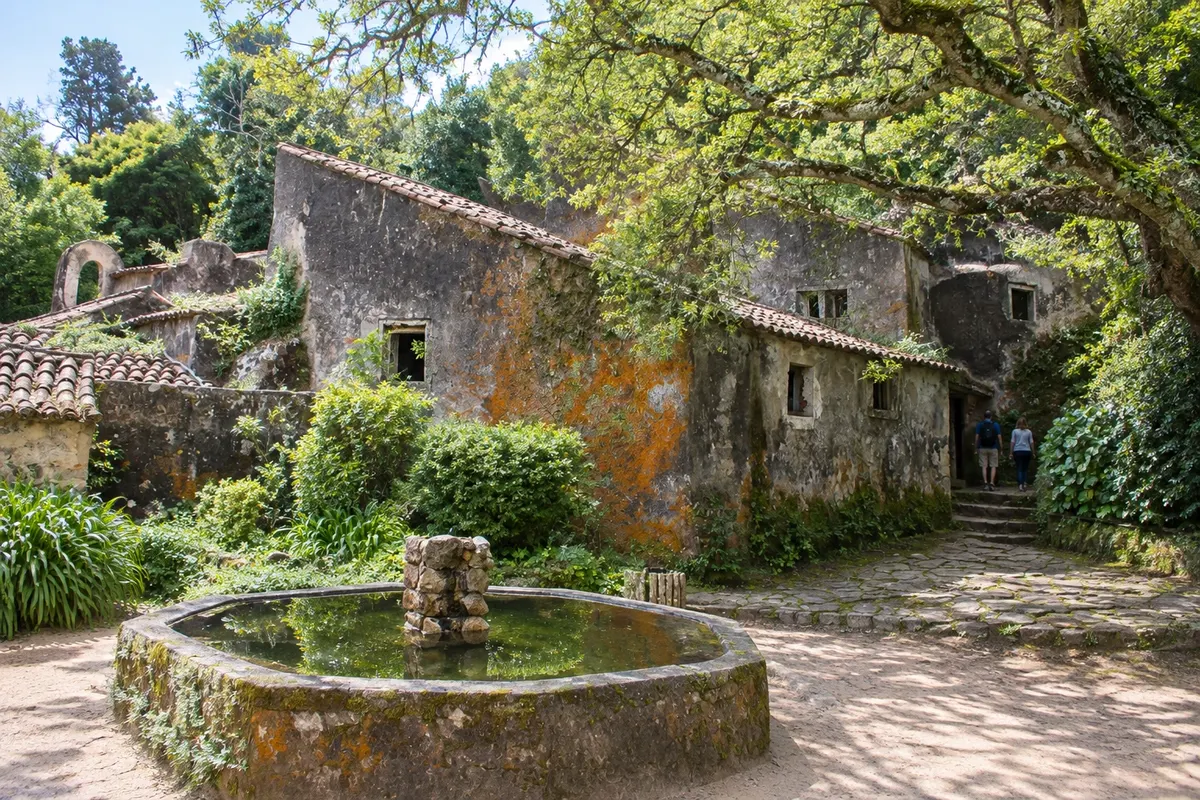
Small Franciscan convent from 1560 hidden in the mountain woodland, with tiny cork-lined cells and paths among rocks, showing the austere life of the friars.

Praia do Guincho
Cascais · Lisboa · Beach

Praia do Guincho

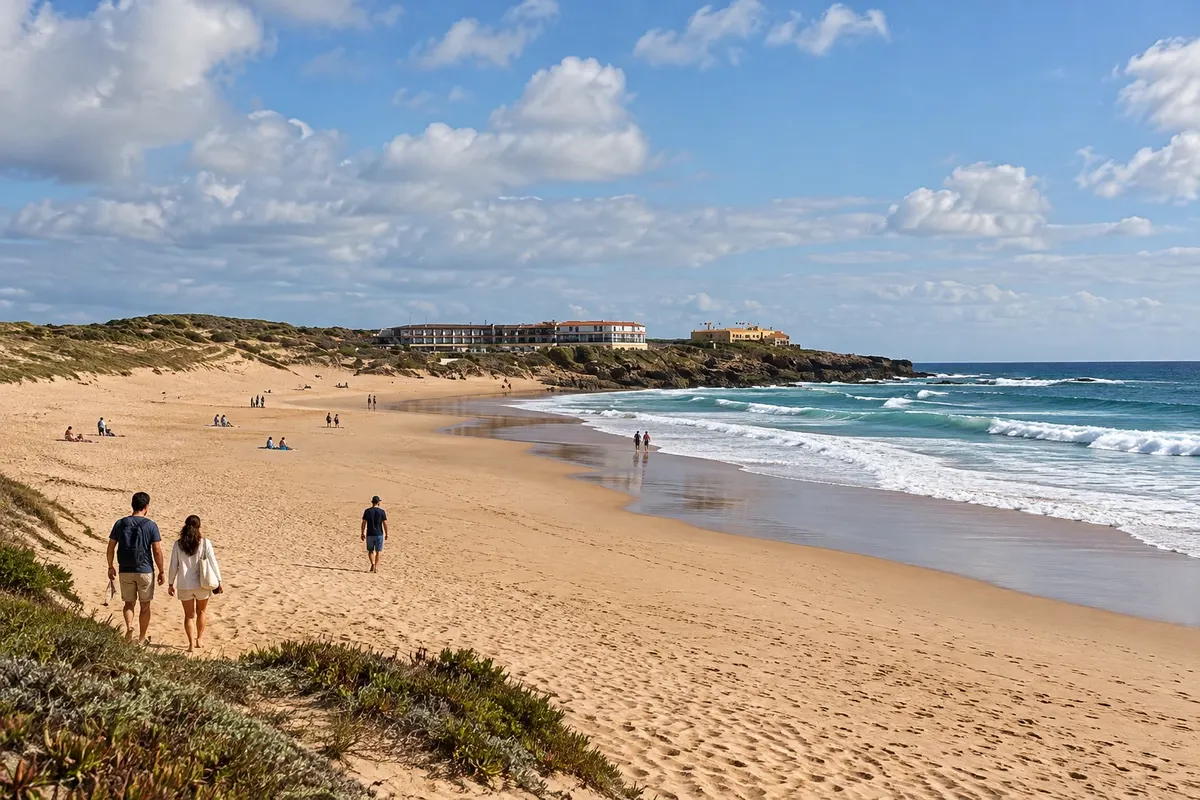
A wide sandy beach with dunes on the Atlantic coast west of Cascais, with the Serra de Sintra in the background. The steady wind and waves make it one of the region's main spots for surfing, windsurfing and kitesurfing.

Cabo da Roca
Sintra · Lisboa · Observation deck

Cabo da Roca

The westernmost point of continental Europe, with cliffs about 140 meters above the Atlantic, an 18th-century lighthouse and a monument with a verse by Camões.

Estoril e o Casino
Cascais · Lisboa · Neighborhood

Estoril e o Casino

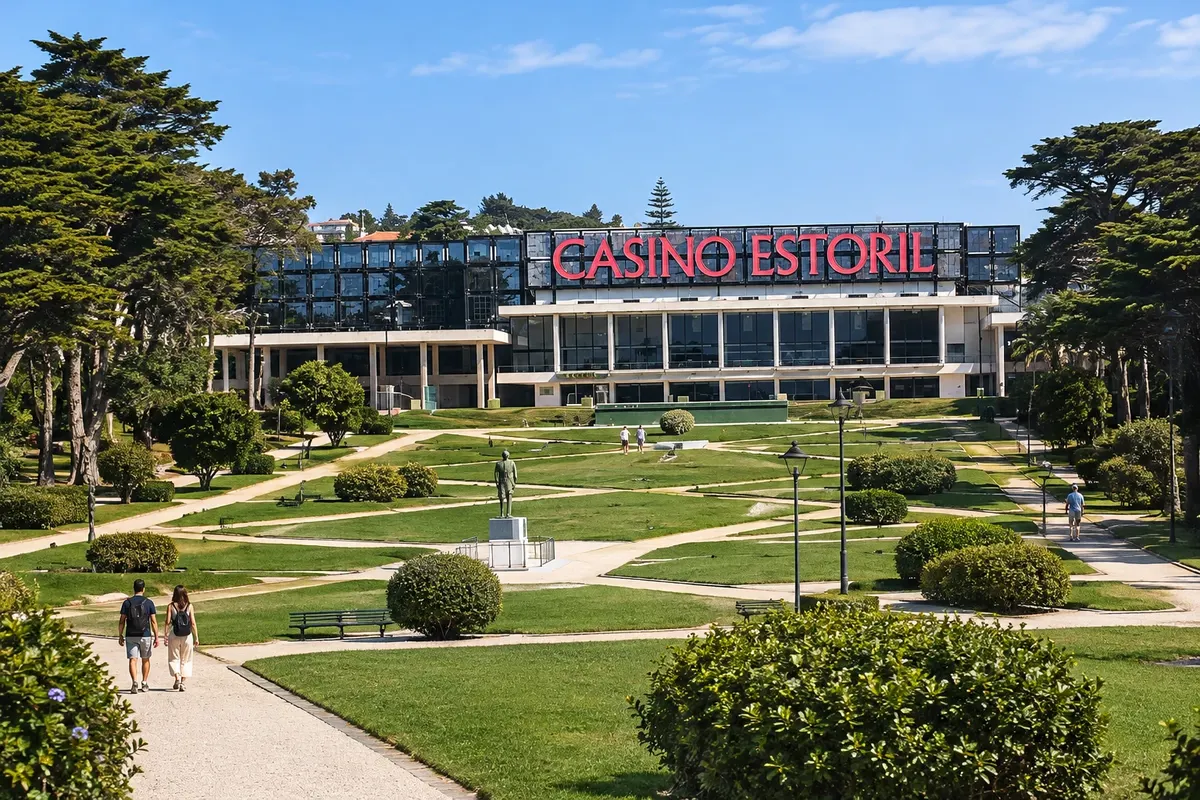
Seaside resort neighbouring Cascais, connected by the seafront promenade, with the Praia do Tamariz, gardens and the Casino Estoril, which inspired Ian Fleming to write the first James Bond novel.

Praia da Adraga
Sintra · Lisboa · Beach

Praia da Adraga

Sandy beach between high cliffs on the Sintra coast, with arches and caves carved by the sea, near Almoçageme. It is one of the best-known beaches on the mountain coastline.

Azenhas do Mar
Sintra · Lisboa · Village

Azenhas do Mar

Village of white houses perched on a cliff above the Atlantic, north of Colares, with an ocean pool at the base of the rocks.

Before you go

Practical information

A little planning leaves more time to enjoy the journey.

When to go

From April to June and in September and October the weather is usually pleasant for walking in the hills. In the European summer, from June to August, Cascais has a beach season and Sintra becomes very crowded. From November to March it rains more, and mist in the hills is common; bring a coat at any time of year.

The seasons shown are the most usual ones; nature doesn't always follow the calendar.

How many days to stay

One day in Sintra is enough for two palaces and the town centre; two days allow you to see the Pena, the Castelo dos Mouros, the Regaleira, Monserrate and the Cabo da Roca. Cascais needs one day for the town, the Boca do Inferno and the Guincho. For both places, three days is ideal.

Which city to stay in

Many people stay in Lisboa and make day trips. In Sintra, the historic centre near the Palácio Nacional puts the Regaleira and the buses up to the Pena within reach; the quintas in the hills are more isolated. In Cascais, the centre and the bay have restaurants and the train station. The Estoril, a few kilometres away, has seafront hotels on the promenade.

Respect the place

Take your trash with you, follow the signs and support local businesses. In natural areas, follow the visiting guidelines.

Get your questions answered

Frequently asked questions about Sintra and Cascais

Can you visit Sintra and Cascais on a day trip from Lisboa?

Yes. The train takes about 40 minutes from Lisboa to each. Each town warrants a full day; doing both in the same day is possible by car or on an organized tour, but it will be rushed.

Can you go from Sintra to Cascais without returning to Lisboa?

Yes. There are buses linking Sintra to Cascais via the coastal road, passing near the Cabo da Roca, and by car the route over the hills takes less than an hour.

Do you need a car in Sintra and Cascais?

No. The train reaches both, and in Sintra buses run up to the hilltop palaces. Traffic in Sintra's historic centre and on the road up to the Palácio da Pena is regulated, and parking is difficult.

Do you need to buy tickets in advance for the palaces of Sintra?

It is recommended, especially for the Palácio da Pena, which uses timed-entry tickets. In the European summer the queues are usually long.

What's the best time to go?

Spring and autumn usually have mild weather. In the European summer Sintra gets very crowded and Cascais is in beach season. In winter it rains more and mist is common in the hills.

Explore other destinations Search by state and city
Back