

 Brazil
 Argentina
 Chile
Chile Colombia
 Peru
Peru Uruguay
 Germany
 Belgium
 Spain
Spain France
 Greece
 the Netherlands
 Ireland
 Portugal
 the United Kingdom
 Switzerland
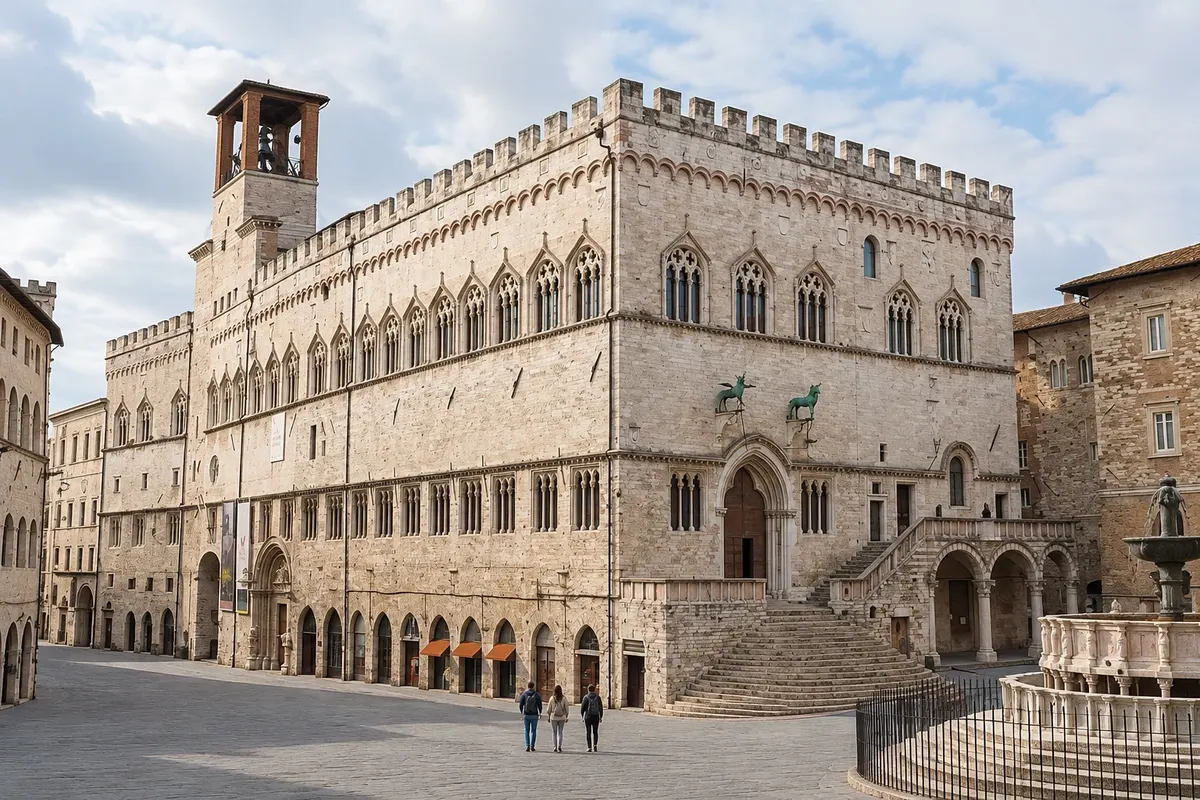
Palace
Palazzo dei Priori
Gothic palace of medieval government in Perúgia, between Piazza IV Novembre and Corso Vannucci. It houses the Sala dei Notari, the Galleria Nazionale dell'Umbria and the Collegio del Cambio.
Úmbria · Italy Capital
In the destination Úmbria.
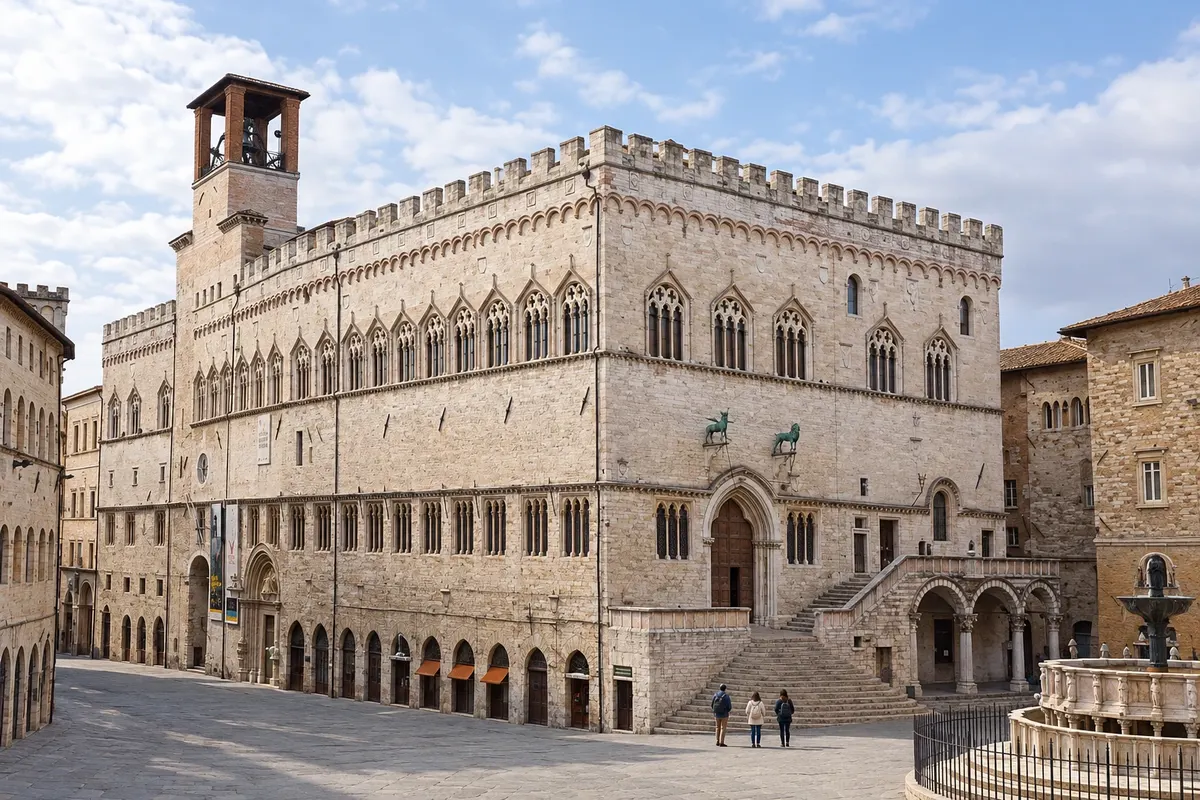
In the photo: Palazzo dei Priori and Piazza IV Novembre, Perúgia
Illustrative images. The pictures in this guide are illustrations based on the real place, not photographs, and may differ from it.
The city
Perúgia, capital of Úmbria, sits atop a hill about 450 metres above sea level, with views over the Tiber valley and Assis. It is a university city of Etruscan origin: the Arco Etrusco and the Pozzo Etrusco recall that past. In the centre, the Fontana Maggiore stands between the Cattedrale di San Lorenzo and the Palazzo dei Priori, which houses the Galleria Nazionale dell'Umbria and the Collegio del Cambio. Under the city, the Rocca Paolina shelters medieval streets.
There's no accommodation in the guide yet in Perúgia.
There are no restaurants in the guide yet in Perúgia.
Know a good one? Recommend it to ushow to get there · how many days · itinerary · questions
The local experience
Gothic palace of medieval government in Perúgia, between Piazza IV Novembre and Corso Vannucci. It houses the Sala dei Notari, the Galleria Nazionale dell'Umbria and the Collegio del Cambio.
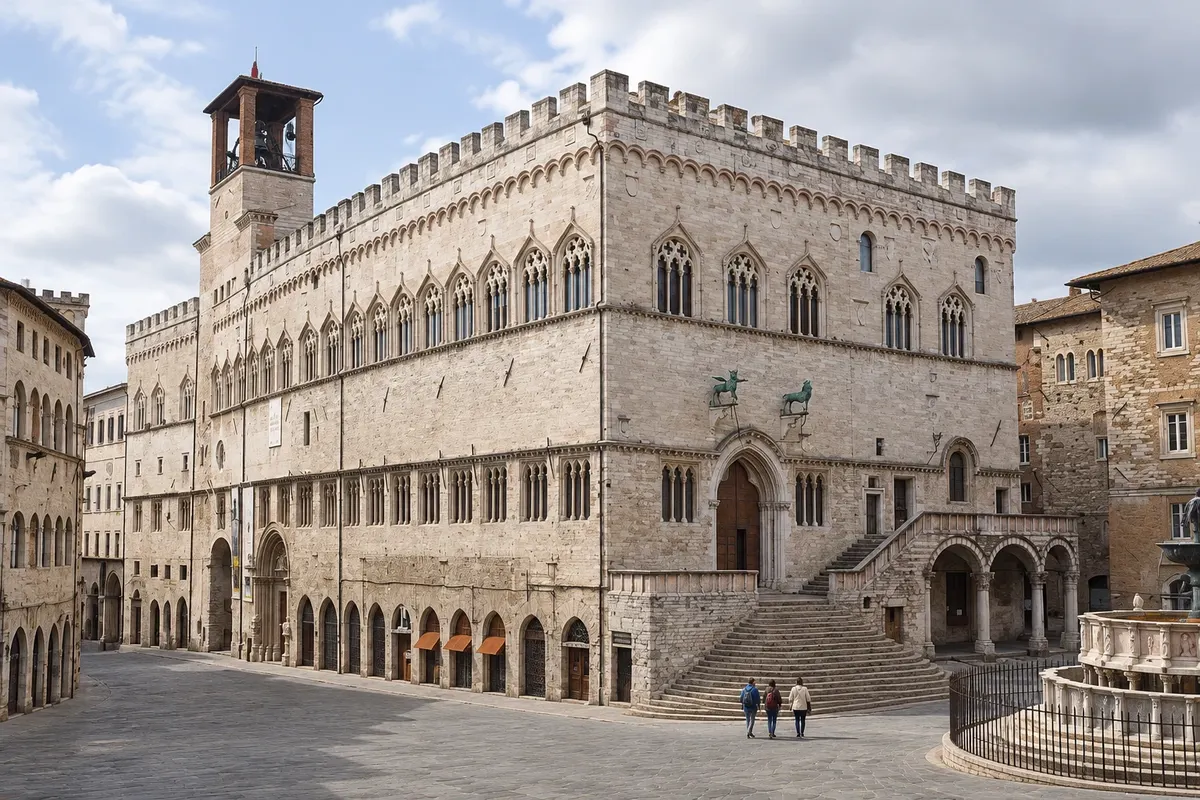
The main art museum of Úmbria, in the Palazzo dei Priori, with paintings from the 13th to the 19th century: Perugino, Pinturicchio, Piero della Francesca, Beato Angelico and Duccio.
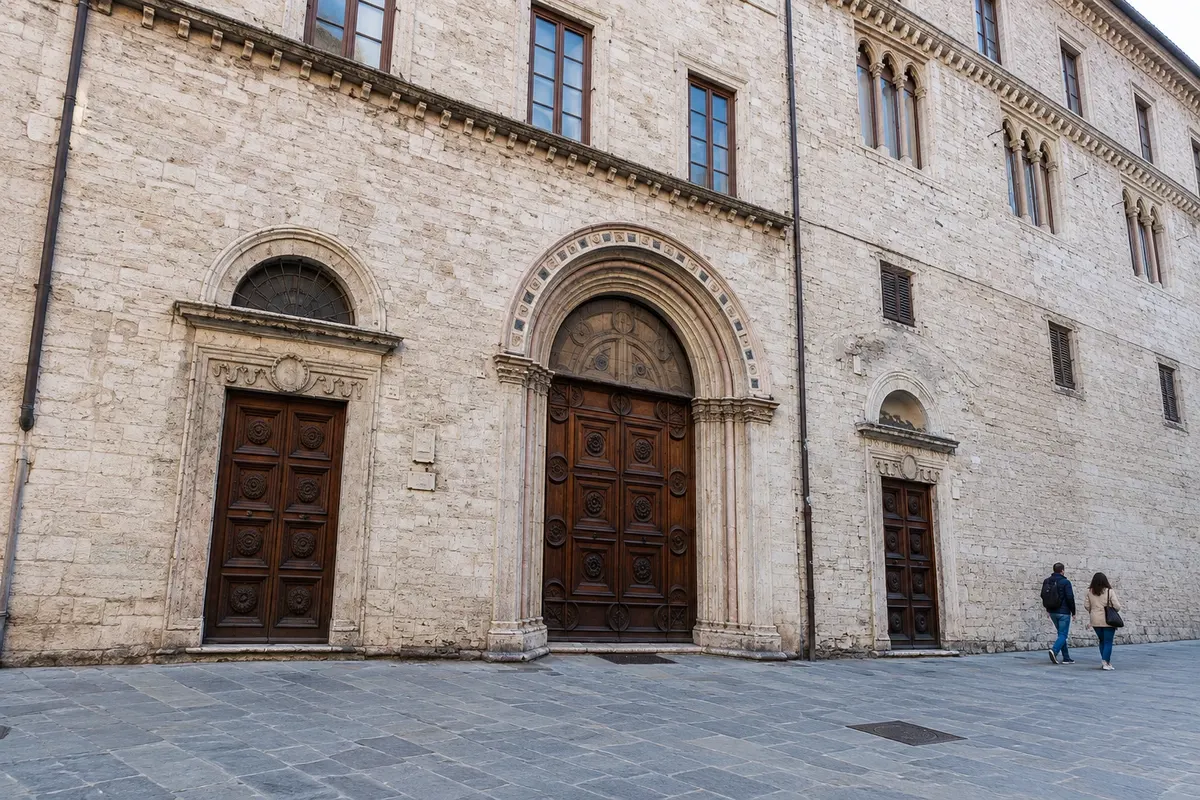
Headquarters of Perúgia's former bankers, in the Palazzo dei Priori, with the Sala delle Udienze entirely painted by Perugino around 1500, including a self-portrait of the artist.
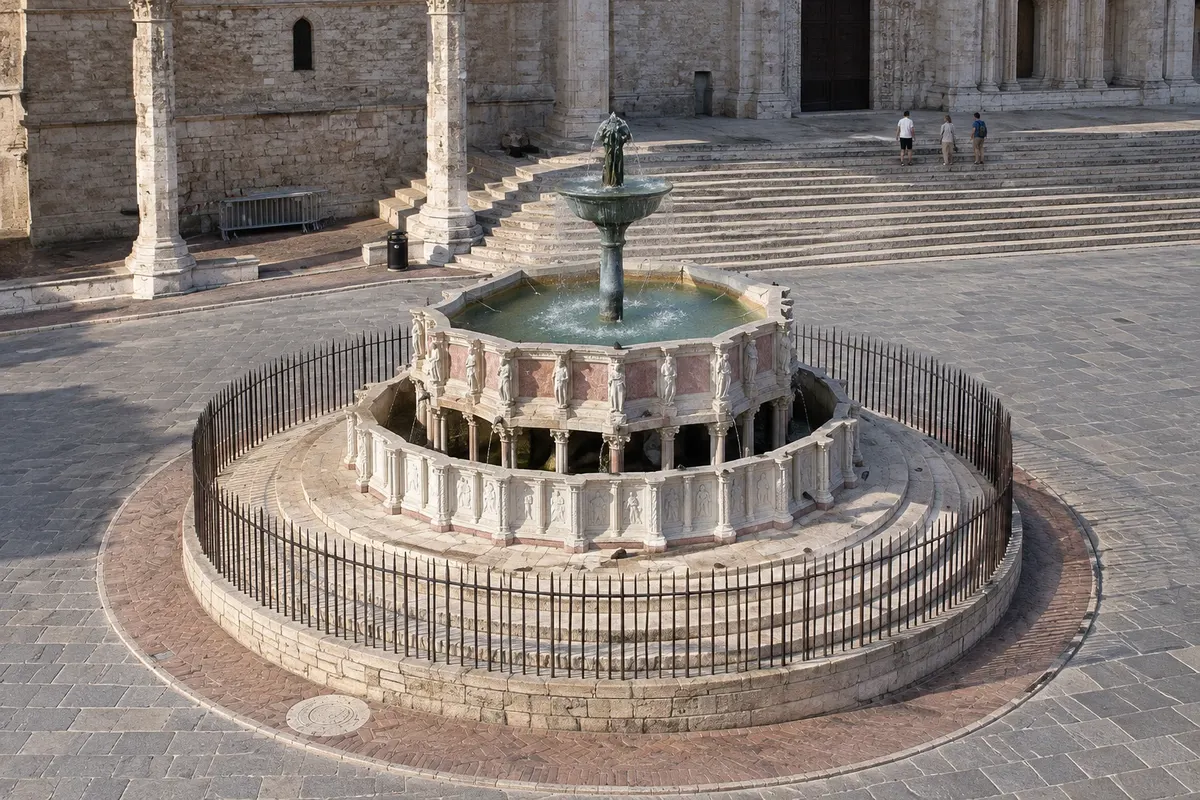
Medieval marble fountain in the center of the Piazza IV Novembre, a symbol of Perúgia, with reliefs by Nicola and Giovanni Pisano depicting the months, the arts and the history of the city.
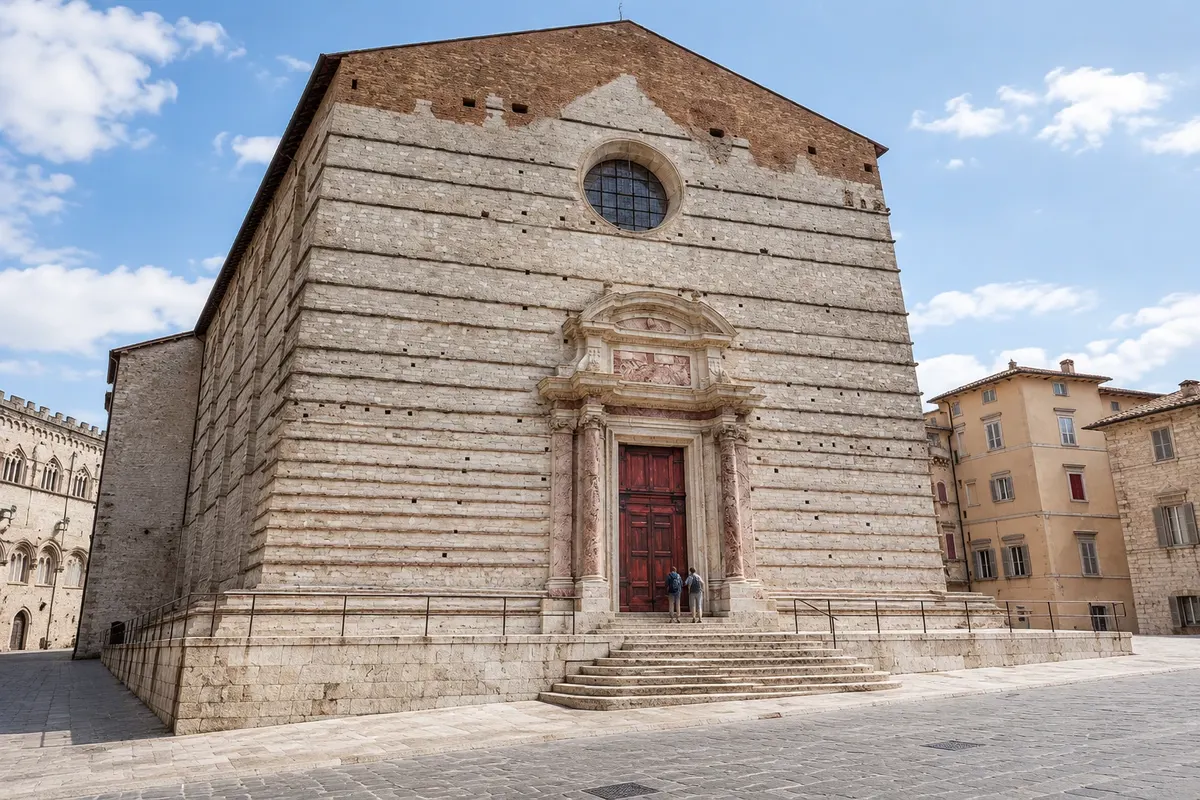
Gothic cathedral of Perúgia on the Piazza IV Novembre, with an unfinished pink-and-white marble side, the external pulpit of São Bernardino and the chapel of the Santo Anel.
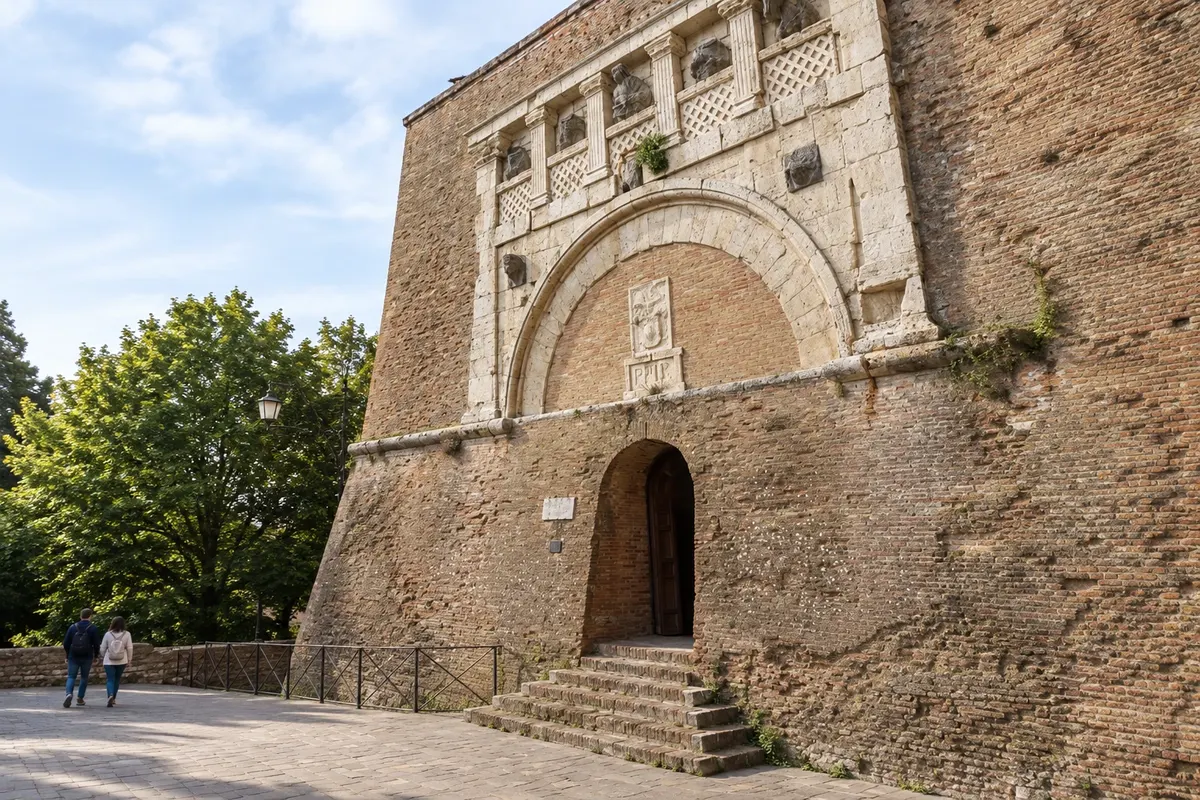
Remains of the 16th-century papal fortress that swallowed an entire medieval neighborhood. Escalators run through the covered old streets, linking the lower part to Piazza Italia.
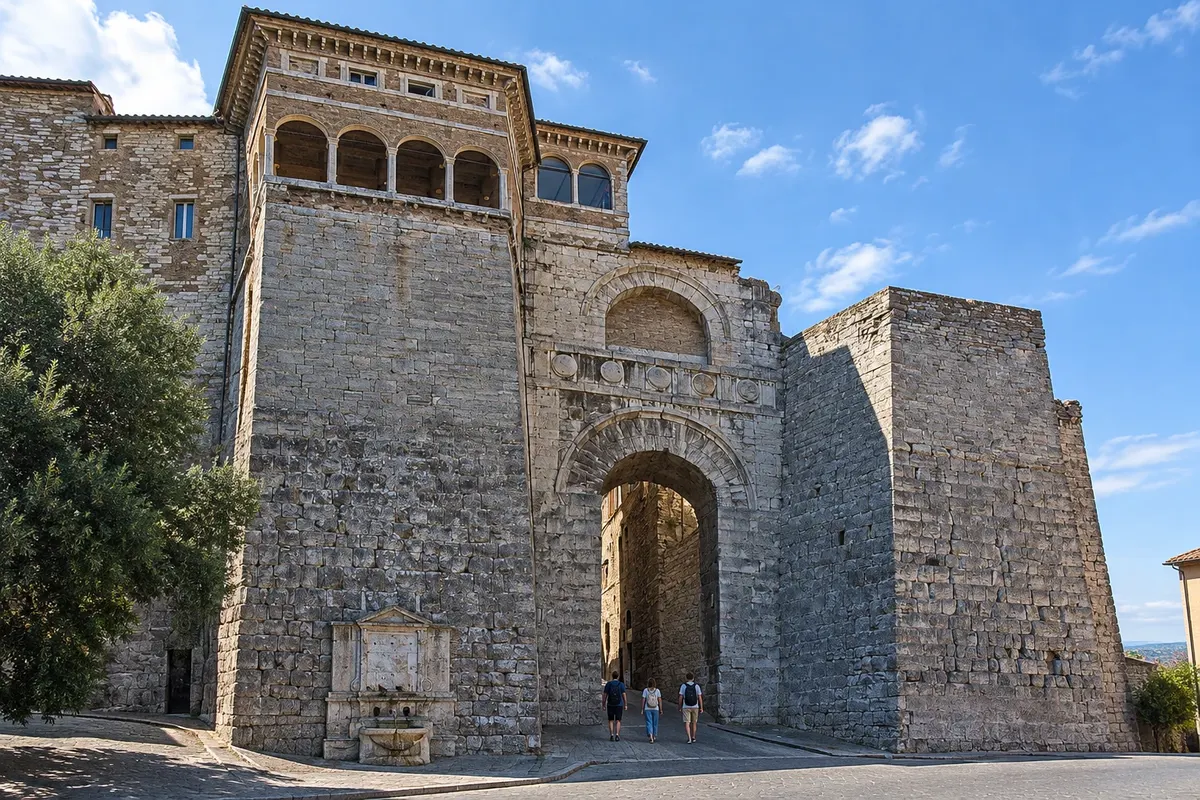
The most intact gate of Perúgia's Etruscan wall, made of large stone blocks, restored in the time of Augustus, who left the inscription AUGUSTA PERUSIA.
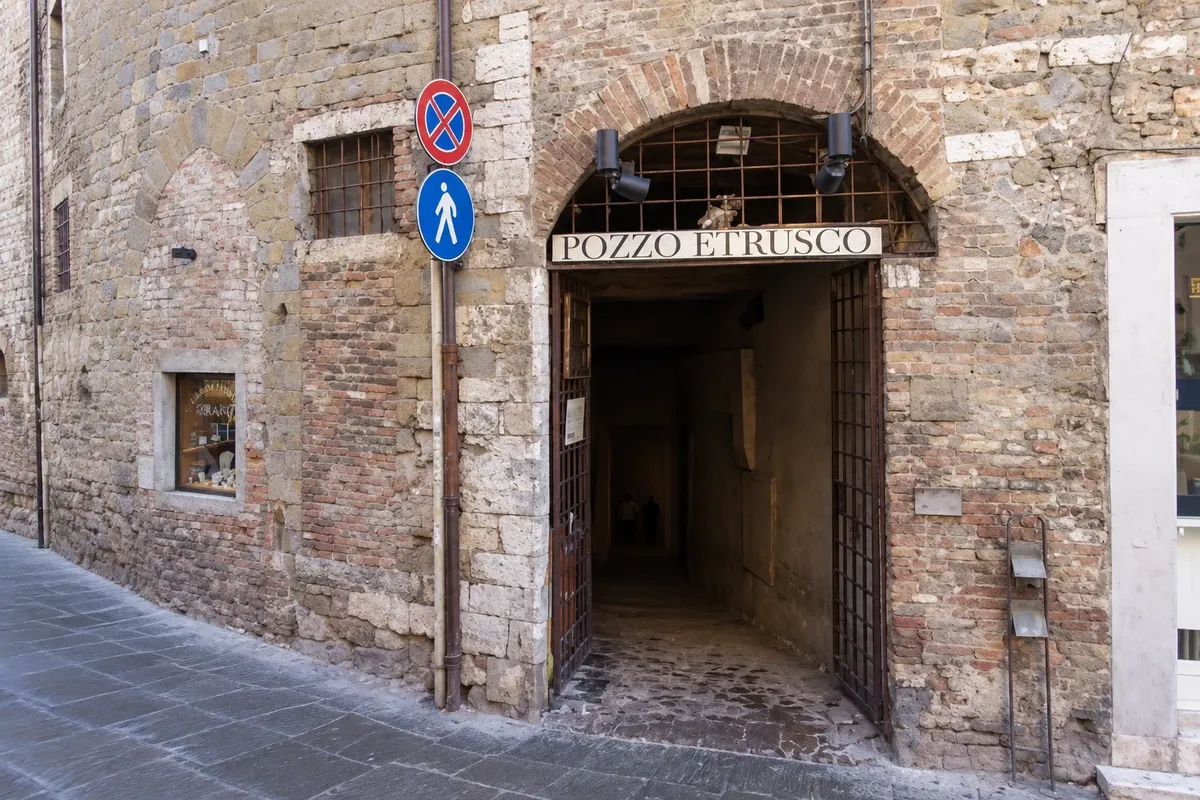
Etruscan cistern from the 3rd century BC excavated beneath the center of Perúgia, about 37 meters deep. A walkway crosses the well from inside.
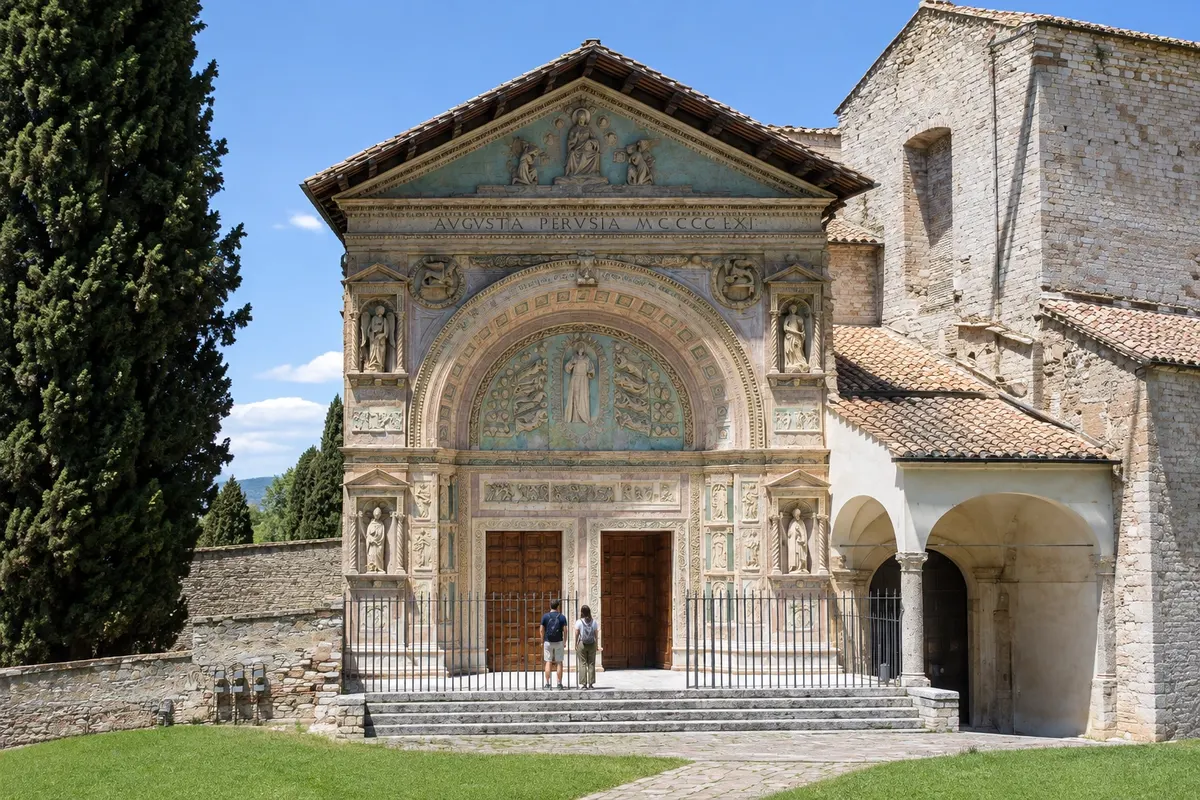
Small 15th-century oratory with a Renaissance façade by Agostino di Duccio, in colored marble and delicate reliefs, next to the church of San Francesco al Prato.
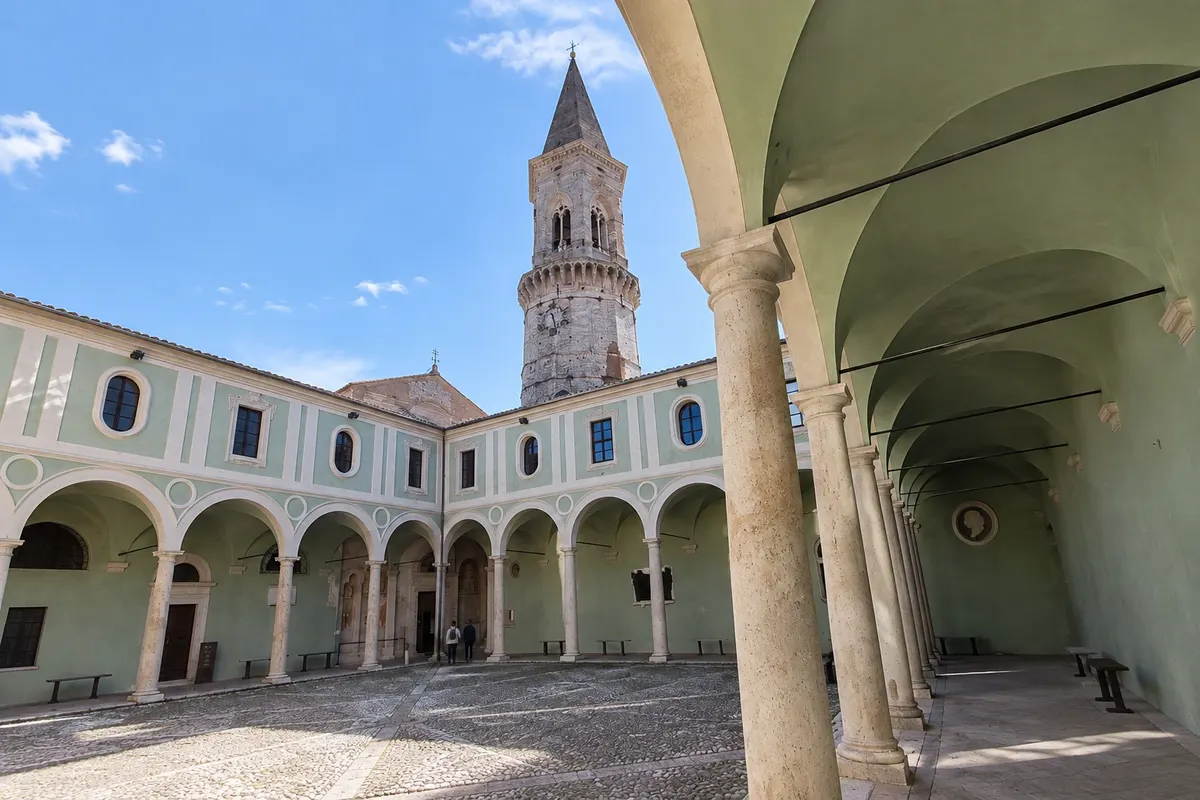
Benedictine abbey founded around the year 1000, with a 70-metre bell tower, an interior covered in paintings and a carved wooden choir. Behind it there is a medieval garden.
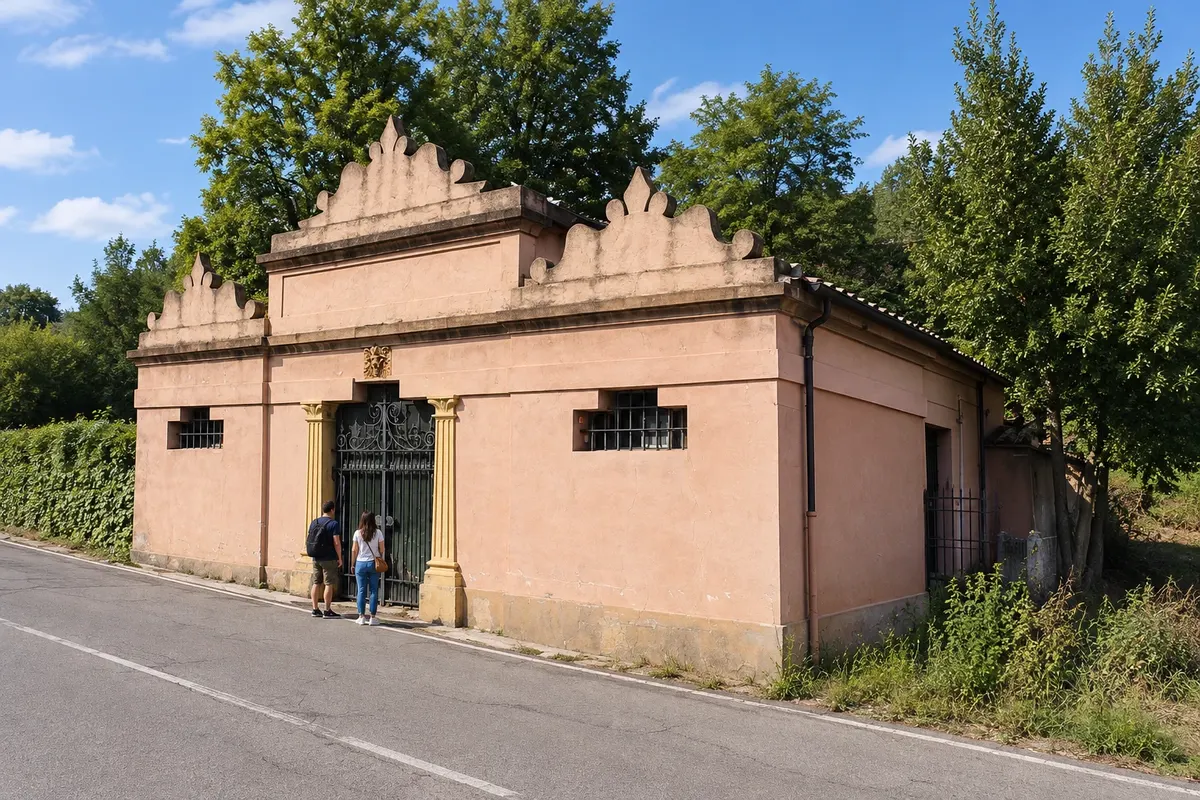
Underground Etruscan tomb of the Velimna family, from the 2nd century BC, carved into the rock like a house, with travertine urns. It is located in the Necropoli del Palazzone, about 5 km from the centre.