

 Brazil
 Argentina
 Chile
Chile Colombia
 Peru
Peru Uruguay
 Germany
 Belgium
 Spain
Spain France
 Greece
 the Netherlands
 Ireland
 Portugal
 the United Kingdom
 Switzerland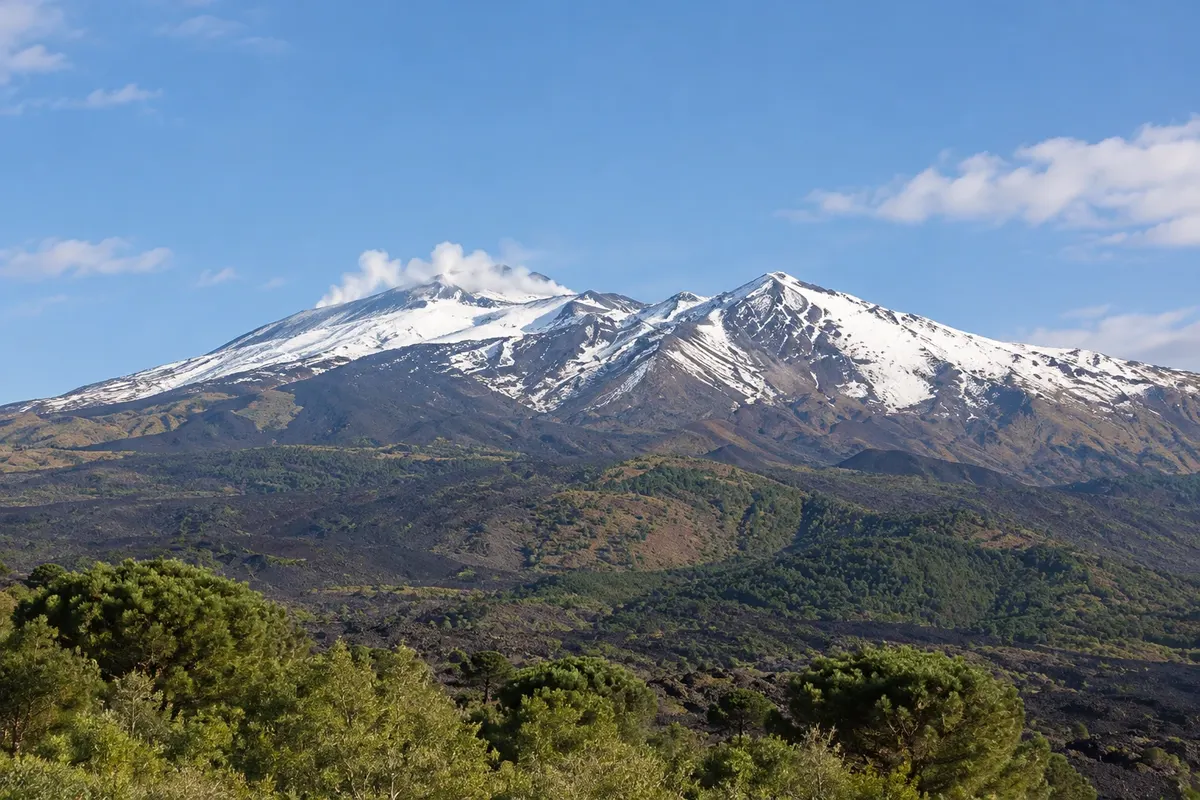
Volcano · Catânia, Sicília
Etna
The highest active volcano in Europe, a UNESCO World Heritage site. On the southern side: Rifugio Sapienza, the Crateri Silvestri and the cable car; access to the summit craters follows the rules set by the authorities.
Illustrative images. The pictures in this guide are illustrations based on the real place, not photographs, and may differ from it.

Discover
About Etna
Etna is the largest active volcano in Europe, at around 3,300 metres in height, which changes with eruptions. It dominates the landscape of Catania and the entire eastern coast of Sicily. The area is part of the Parco dell'Etna and was declared a UNESCO World Heritage Site in 2013.
The southern side is the most developed for visitors. The road climbs to Rifugio Sapienza, at about 1,900 metres, where there are restaurants, shops and the cable car station. Nearby are the Crateri Silvestri, older craters that can be walked around in a short time. The cable car rises to around 2,500 metres, and from there 4x4 vehicles and guides take you higher. On the northern side, the base is Piano Provenzana, near Linguaglossa.
Access to the higher areas and to the summit craters is regulated by orders from the municipalities and civil protection. Above a certain altitude you may only go up with an authorized mountain or volcanology guide, and during periods of volcanic activity these areas are closed. What is allowed can change from one day to the next.
Besides the craters, the slope has woodlands, lava caves, vineyards and villages such as Nicolosi and Zafferana Etnea. Etna DOC wine is produced on these slopes.
Before you go
Practical information
Cidade Turismo reviews its information regularly, but something may have changed. Check with the place before planning your trip.
How much time to set aside
Half a day for Rifugio Sapienza and the Crateri Silvestri; a full day to take the cable car and go on a guided excursion.
Best time
Set out early, when the sky is usually clearer. The hiking season generally runs from April to October; in winter there may be snow and closed roads. Check the volcano conditions and whether the cable car is operating on the day.
How to get there
By car, about 1 hour from Catânia to the Rifugio Sapienza, passing through Nicolosi. A daily bus departs Catânia in the morning and returns in the afternoon. Agencies in Catânia and Taormina sell tours that include transport.
Tip
Bring a warm layer, a windbreaker and closed shoes with thick soles: even in summer it can be cold and windy up there. For the higher areas, hire an authorized guide and accept if they change the route because of the volcano.
Official website
Get your questions answered
Frequently asked questions about Etna
Can you get up to the summit craters?
It depends on the volcano's conditions and the authorities' rules. Above a certain altitude you may only go with an authorized alpine or volcanology guide, and during periods of activity access is closed. Check with the guides on the day.
Can you visit Etna without a guide?
Yes, in the lower areas: the Rifugio Sapienza, the Crateri Silvestri and the cable-car ascent. To go higher you need an authorized guide.
Is it cold on Etna?
Yes. Even in summer temperatures drop a lot near 3,000 meters, and the wind is strong. Bring warm clothes and a windbreaker.
Which side of Etna should you visit?
The south side, from the Rifugio Sapienza, has a cable car and more facilities. The north side, from Piano Provenzana, is quieter and is visited with guides and 4x4 vehicles.
Is Etna erupting?
Etna is active and has frequent episodes. When there's activity, the high areas close and flights at Catânia airport can be affected. Check the situation close to the date.