

 Brazil
 Argentina
 Chile
Chile Colombia
 Peru
Peru Uruguay
 Germany
 Belgium
 Spain
Spain France
 Greece
 the Netherlands
 Ireland
 Portugal
 the United Kingdom
 Switzerland
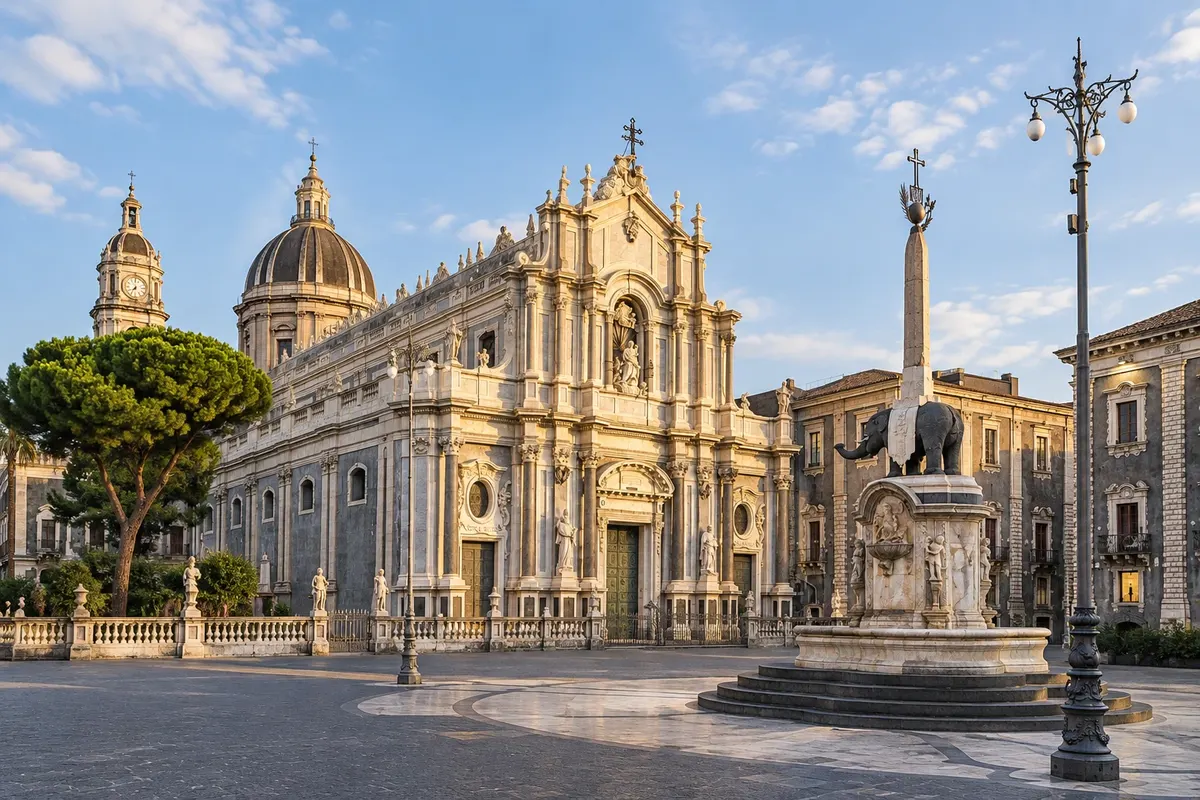
Square
Piazza del Duomo e Fontana dell'Elefante
The main square of Catânia, surrounded by Baroque buildings, with the Fontana dell'Elefante, the lava-stone elephant that is the symbol of the city.
Sicília · Italy
In the destination Sicília.
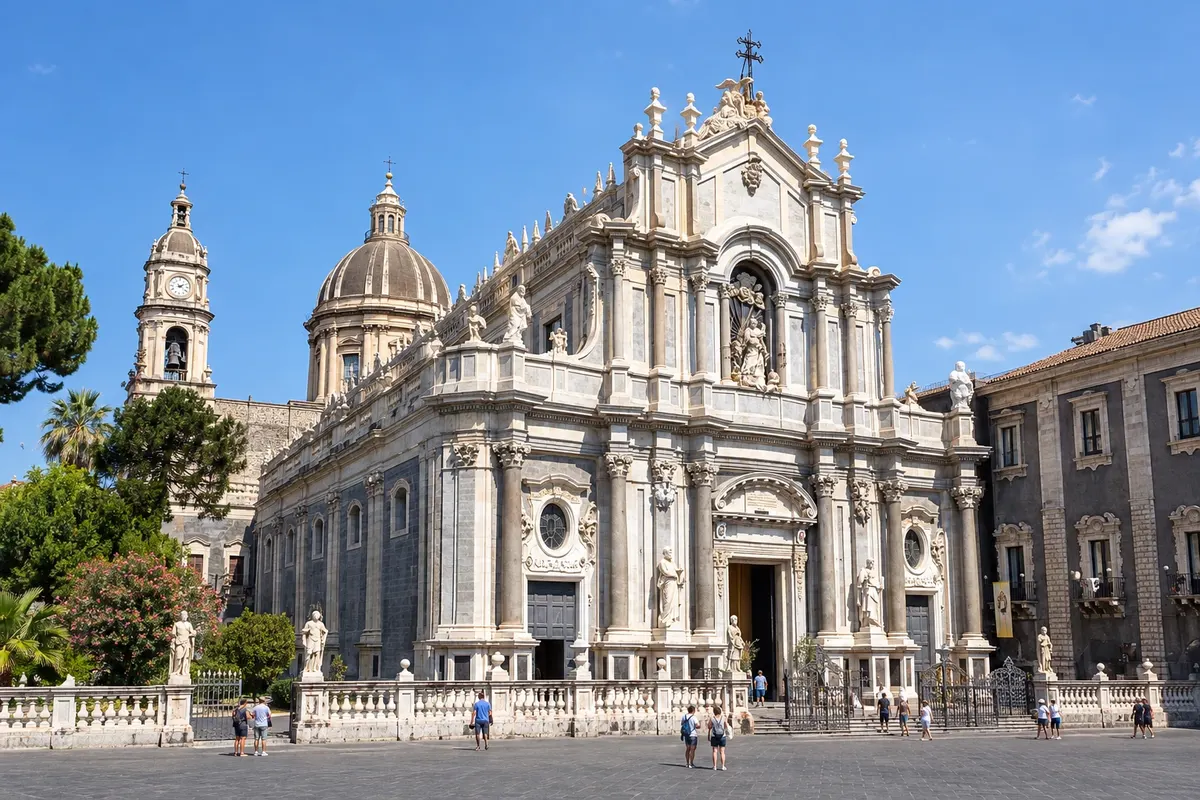
In the photo: Cattedrale di Sant’Agata, Catania
Illustrative images. The pictures in this guide are illustrations based on the real place, not photographs, and may differ from it.
The city
Catânia is the second-largest city in Sicily, on the east coast at the foot of Mount Etna. The center was rebuilt in Baroque style after the 1693 earthquake, using a lot of dark lava stone. It has the Piazza del Duomo with the Fontana dell'Elefante and the Cattedrale di Sant'Agata, the fish market La Pescheria, the Via Etnea, the Monastero dei Benedettini, the Roman theatre and the Castello Ursino. It is the gateway to Etna.
There's no accommodation in the guide yet in Catânia.
There are no restaurants in the guide yet in Catânia.
Know a good one? Recommend it to ushow to get there · how many days · itinerary · questions
The local experience
The main square of Catânia, surrounded by Baroque buildings, with the Fontana dell'Elefante, the lava-stone elephant that is the symbol of the city.
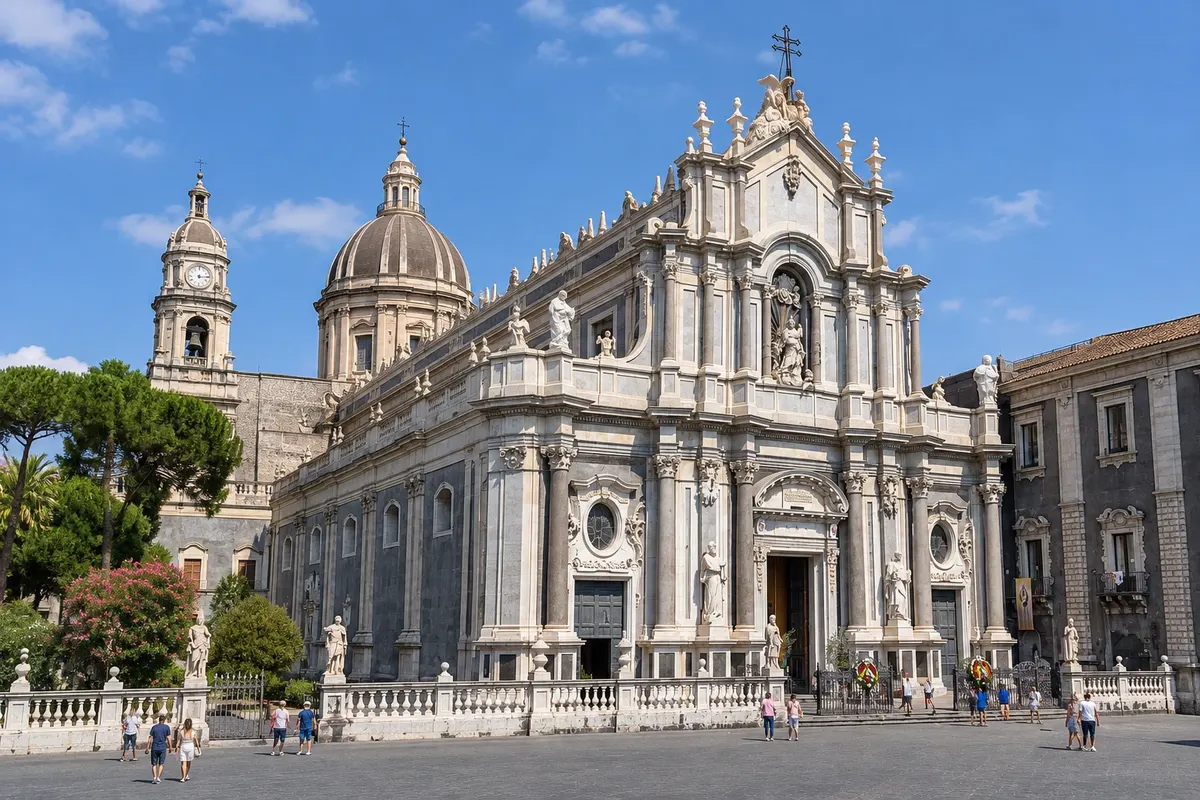
The cathedral of Catania, dedicated to the patron saint Santa Águeda. Baroque façade by Vaccarini, Norman apses of lava stone and the tomb of Vincenzo Bellini.
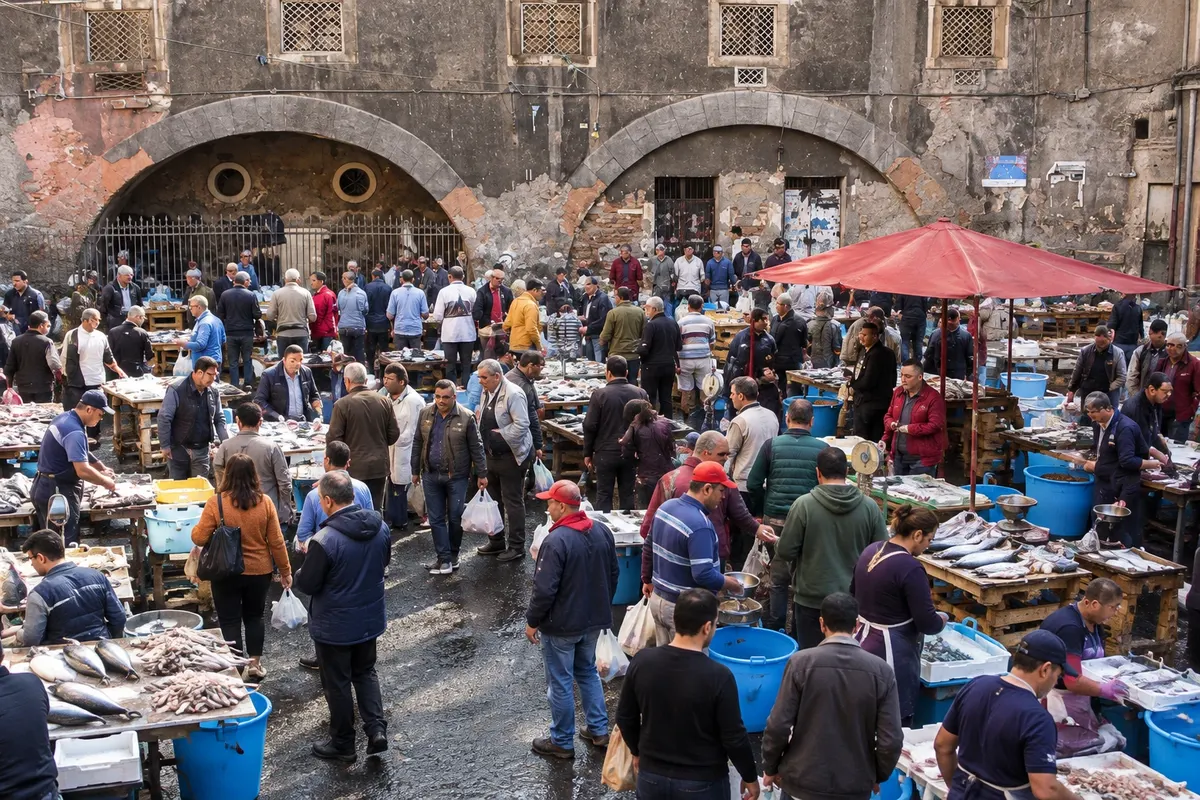
Catania's fish market, next to the Piazza del Duomo, with noisy stalls selling fish, seafood, fruits and vegetables in the surrounding alleys.
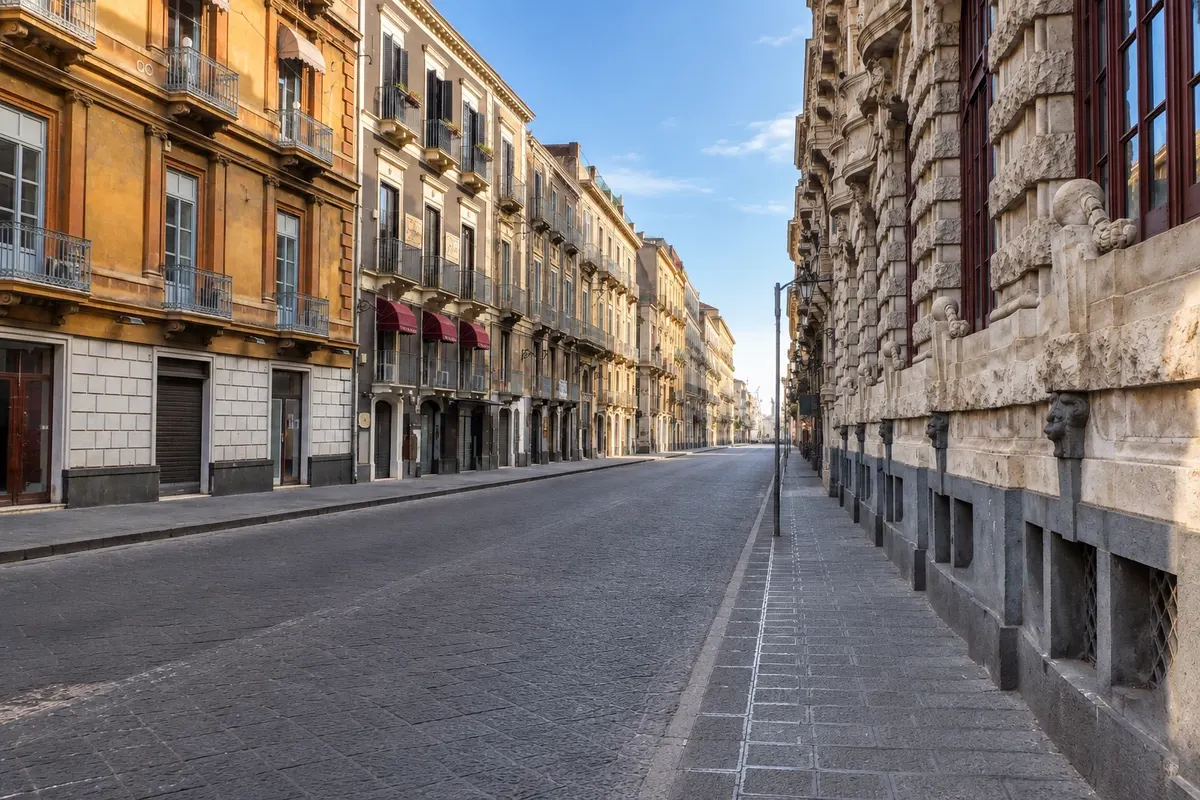
Catania's main street, which starts at the Piazza del Duomo and climbs straight toward the Etna, with Baroque churches, shops, cafés and the garden of the Villa Bellini.
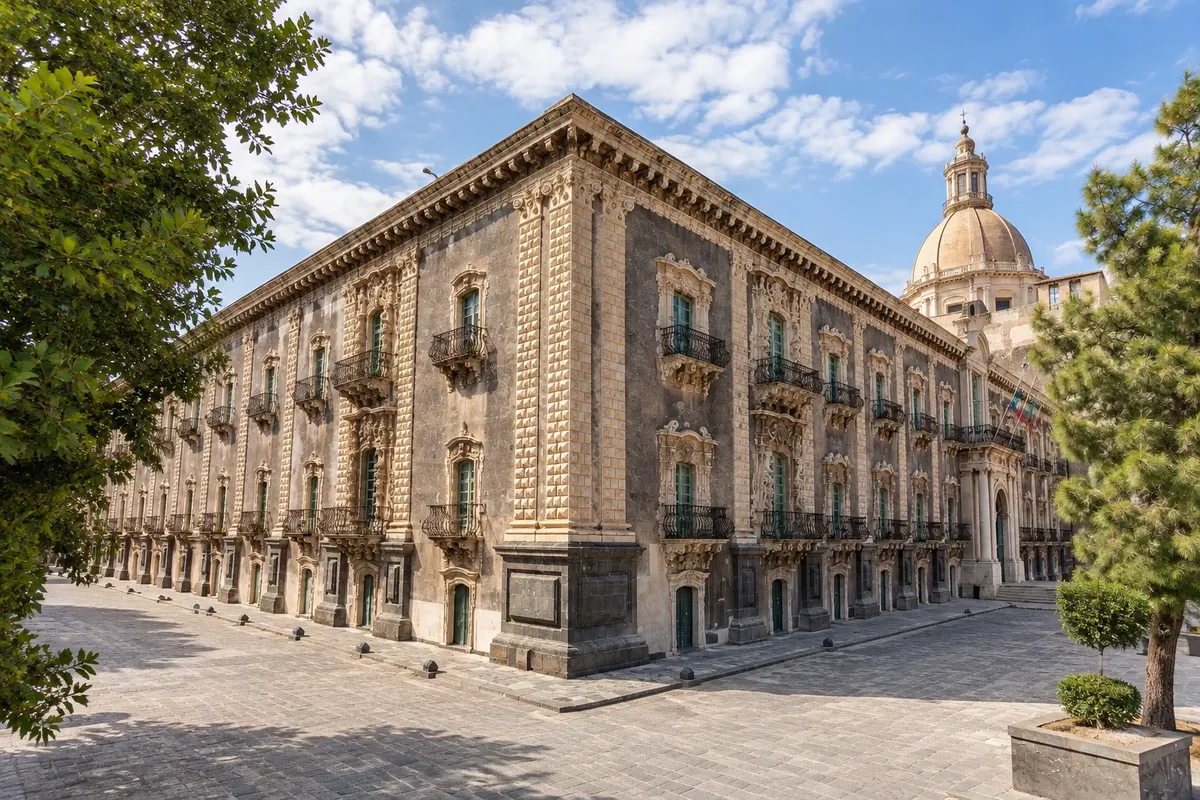
One of the largest monastic complexes in Europe, rebuilt in Baroque style after the 1669 lava flow and the 1693 earthquake. Today it houses faculties of the University of Catania.
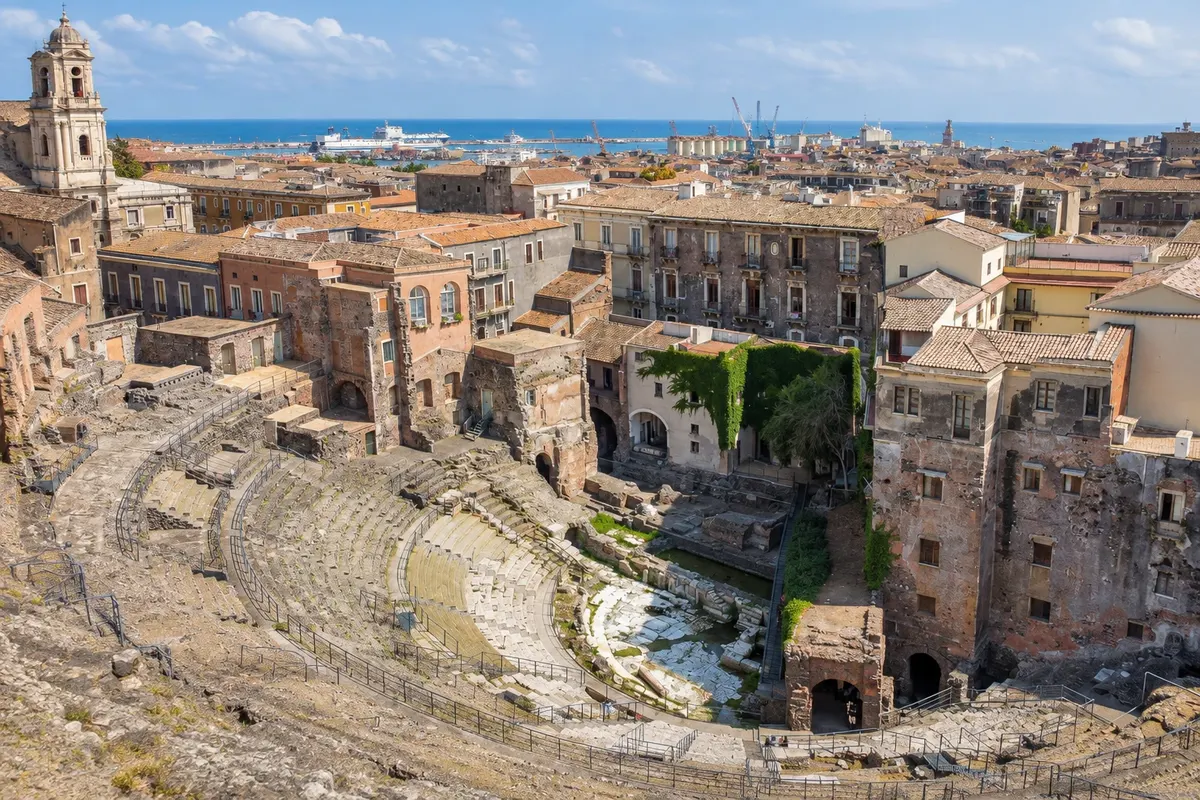
Greco-Roman theatre in the middle of the historic centre, with lava stone seating surrounded by houses, and the small Odeon next to it.
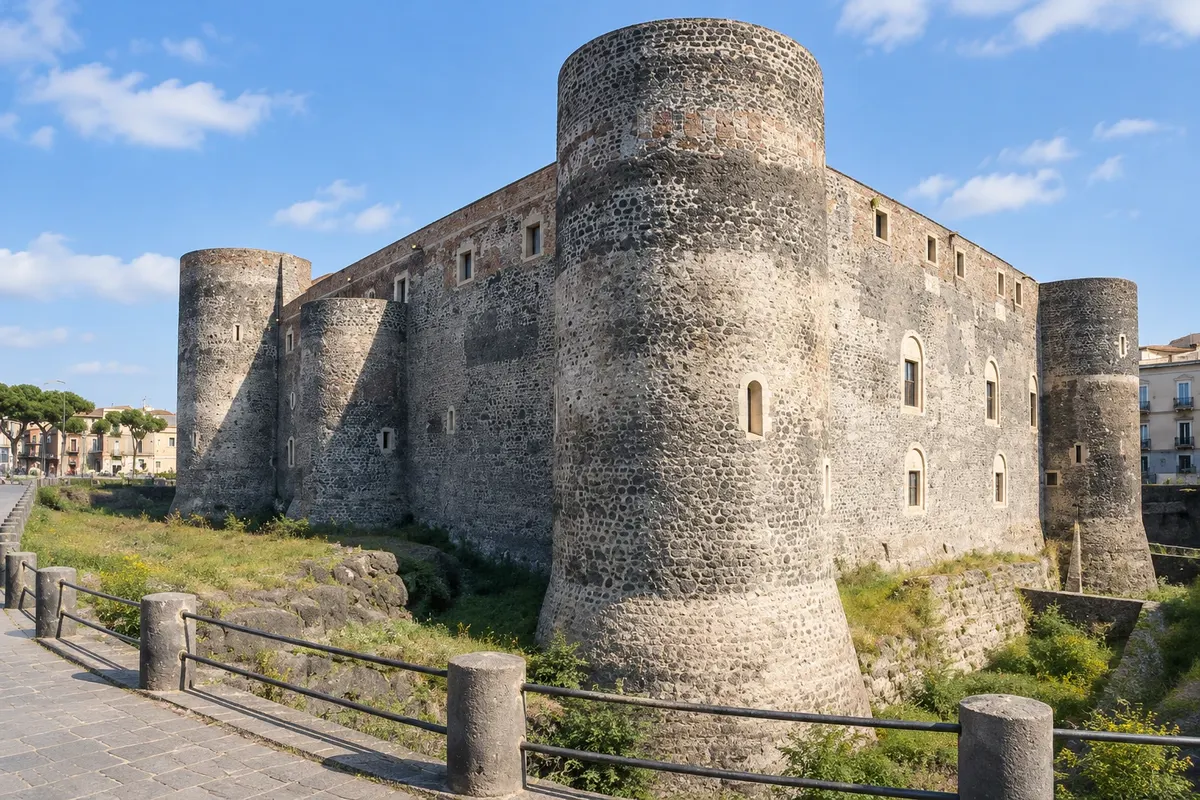
Castle built by Frederick II in the 13th century, surrounded by the lava of 1669. It houses the Museo Civico, with archaeology, sculptures and paintings.
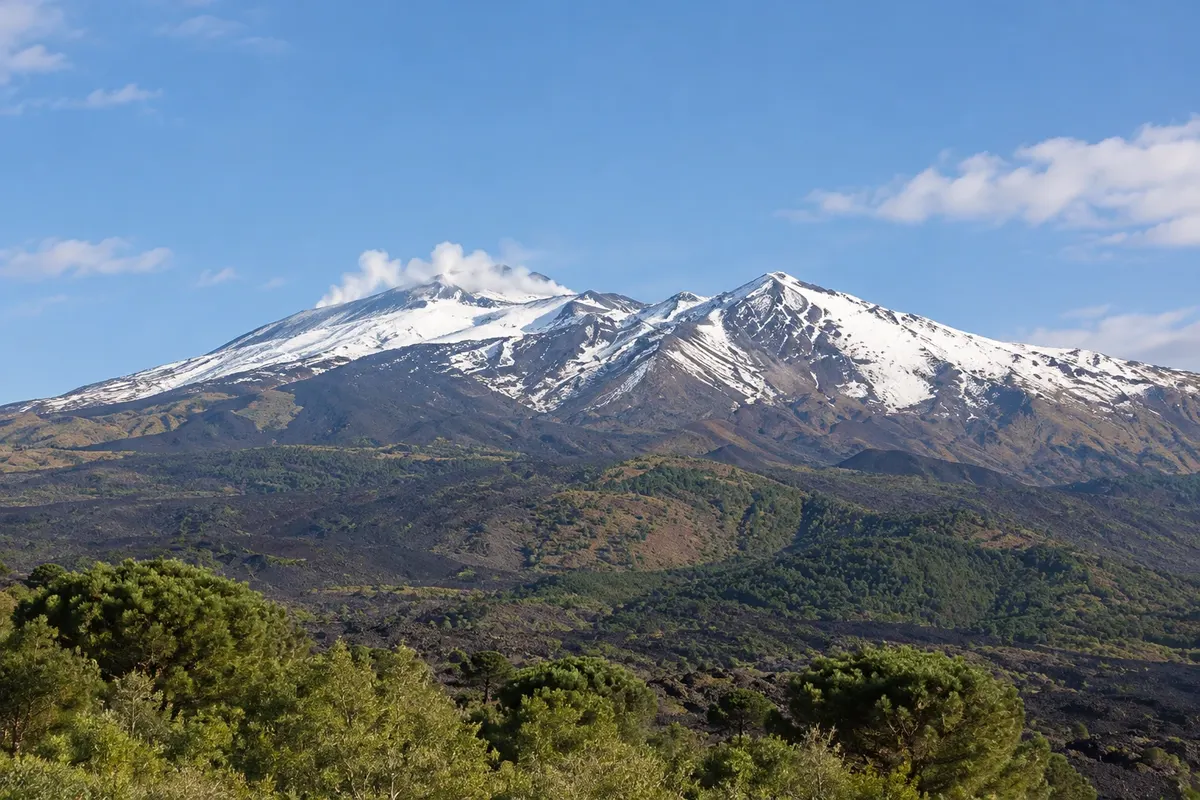
The highest active volcano in Europe, a UNESCO World Heritage site. On the southern side: Rifugio Sapienza, the Crateri Silvestri and the cable car; access to the summit craters follows the rules set by the authorities.