

 Brazil
 Argentina
 Chile
Chile Colombia
 Peru
Peru Uruguay
 Germany
 Belgium
 Spain
Spain France
 Greece
 the Netherlands
 Ireland
 Portugal
 the United Kingdom
 Switzerland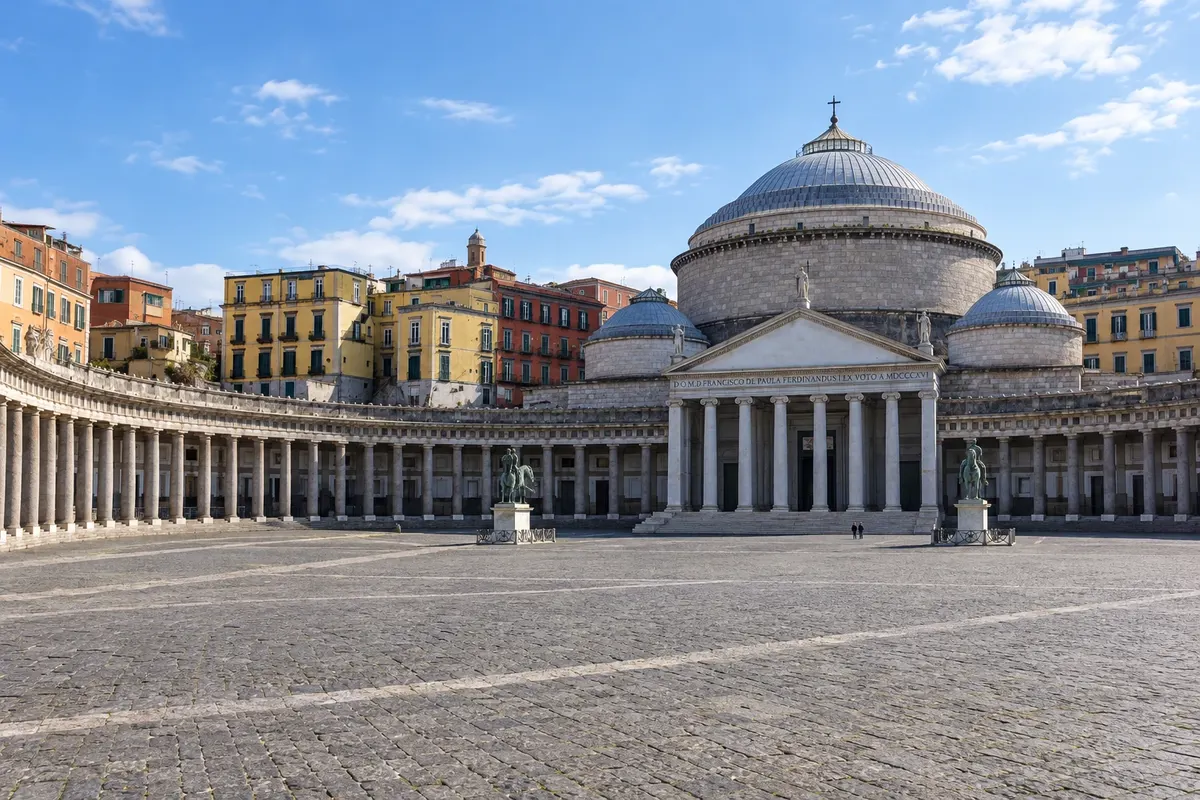
Before you go
Your trip to Nápoles.
Illustrative images. The pictures in this guide are illustrations based on the real place, not photographs, and may differ from it.

Nápoles – Campânia Destination Nápoles, Pompeia and Capri Capital
How to get there
-
Aeroporto Internazionale di Napoli (Capodichino) (NAP) 7 km
-
Napoli Centrale 3 km
Approximate road distances. Check flights and bus schedules before you travel.
Check before buying. The most common option is to fly to Rome and continue by high-speed train to Napoli Centrale, in about 1 h 10. Naples airport (NAP) receives flights connecting through Europe and is linked to the central station and the port by the Alibus bus.
How many days
Two days allow you to see the historic center, the Cappella Sansevero, the MANN, the Napoli Sotterranea and the waterfront. With three days you can add the Vomero (Castel Sant'Elmo and Certosa di San Martino) and Capodimonte. Including Pompeia and Capri, plan on four to five days based in Nápoles.
When to go
April to June and September to October are usually the most pleasant months. July and August are hot, with days above 30 °C. Winter is mild, rainy, and good for museums. The city fills up on 19 September, the feast of San Gennaro, and at Christmas because of the nativity scenes.
The seasons shown are the most usual ones; nature doesn't always follow the calendar.
Do you need a car?
No. The historic center is a limited traffic zone (ZTL), closed to non-local cars, and traffic is heavy. Metro, funiculars and buses serve the main points, and much can be done on foot. For Pompeia, Herculano and Sorrento use the Circumvesuviana; for Capri, a boat.
Suggested itinerary
An order that works
Built with the places on this page. No rush: it's paced so you have time to see them.
One day in Nápoles
-
Morning
Historic center and Cappella Sansevero
Start at the Piazza del Gesù and follow the Spaccanapoli, passing Santa Chiara and the Piazza San Domenico Maggiore. Enter the Cappella Sansevero to see the Veiled Christ at your reserved time and continue to Via San Gregorio Armeno, the nativity-scene street.
-
Afternoon
Pizza, Napoli Sotterranea and the Duomo
Have a pizza for lunch on Via dei Tribunali, as the locals do. Then go down to the Napoli Sotterranea at Piazza San Gaetano, and finish at the Duomo, with the Chapel of the Treasure of San Gennaro.
-
Late afternoon
Plebiscito and Galleria Umberto I
Take the metro to Toledo or Municipio. Cross the Galleria Umberto I, view the Teatro di San Carlo from outside and arrive at the Piazza del Plebiscito, between the Palazzo Reale and the colonnade of San Francesco di Paola.
-
Evening
Waterfront and Castel dell'Ovo
Walk down to Via Partenope and stroll along the waterfront with the Vesúvio in the background. Cross the bridge to the Borgo Marinari, at the foot of the Castel dell'Ovo, to dine near the fishing boats.
2 days in Nápoles
Day 1
-
Morning
Spaccanapoli and Cappella Sansevero
Walk the Spaccanapoli starting at the Piazza del Gesù, stopping at Santa Chiara and the Piazza San Domenico Maggiore. Enter the Cappella Sansevero at your reserved time and continue to Via San Gregorio Armeno.
-
Afternoon
Napoli Sotterranea and the Duomo
After lunch on Via dei Tribunali, take the guided tour of the Napoli Sotterranea. Continue to the Duomo, with the chapel of San Gennaro and the baptistery of San Giovanni in Fonte.
-
Late afternoon
Quartieri Spagnoli and Via Toledo
Walk along Via Toledo and climb the alleys of the Quartieri Spagnoli up to Largo Maradona and the player's mural. Descend to the Toledo metro station to see the blue mosaics.
-
Evening
Lungomare
Dine near Via Partenope and walk along the waterfront to the Borgo Marinari, with the Castel dell'Ovo lit up and the gulf ahead.
Day 2
-
Morning
Museo Archeologico Nazionale
Start the day at the MANN: Farnese sculptures, the Alexander mosaic, Pompeia frescoes and the model of the ruins. If you're going to Pompeia afterwards, this visit prepares your view.
-
Afternoon
Vomero: Sant'Elmo and San Martino
Take the funicular up to the Vomero. Visit the Certosa di San Martino, with the Cuciniello nativity, and the terraces of Castel Sant'Elmo, with 360-degree views over the city and the gulf.
-
Late afternoon
Plebiscito and Palazzo Reale
Descend to the Piazza del Plebiscito. If time allows, visit the Palazzo Reale and its hanging garden; then cross the Galleria Umberto I.
-
Evening
Chiaia and Mergellina
Follow Via Caracciolo and the Villa Comunale to Mergellina, from where you can see the city lit up climbing the Posillipo hill. Finish with a pizza or a Neapolitan pastry, such as the sfogliatella.
Check before you go. Opening hours and days change, and places may close for renovations, holidays or events. This itinerary is a suggestion from Cidade Turismo, not a commitment: plan yours by checking directly with each place you intend to visit.
Before you go
Frequently asked questions
How many days to stay in Nápoles?
Two days cover the historic center, the main museums and the waterfront. As Nápoles is a base for Pompeia and Capri, many people stay four to five nights and do the day trips from the city.
How to get from the airport to the center?
The Alibus connects the airport (NAP) to Napoli Centrale station at Piazza Garibaldi and to the port near Molo Beverello. Taxis have fixed fares for the main city destinations; confirm the price before getting in.
Where to eat Neapolitan pizza?
The historic center, especially Via dei Tribunali, concentrates traditional pizzerias, many with queues at lunch and dinner. The art of the Neapolitan pizzaiolo is an intangible UNESCO heritage, and the margherita and marinara are the classic flavors.
Is Nápoles a good base for Pompeia and Capri?
Yes. The Circumvesuviana departs from Garibaldi station next to Napoli Centrale for Pompei Scavi in about 35–40 minutes, and boats to Capri leave from Molo Beverello in the center.
What precautions to take when walking around the city?
The same as in any big city: be aware of your belongings in crowded places like the metro, the station and the busy streets of the center. In the narrow alleys, walk along the sides, because motorcycles circulate there.