

 Brazil
 Argentina
 Chile
Chile Colombia
 Peru
Peru Uruguay
 Germany
 Belgium
 Spain
Spain France
 the Netherlands
 Ireland
 Italy
Italy Luxembourg
 Portugal
 the United Kingdom
 Switzerland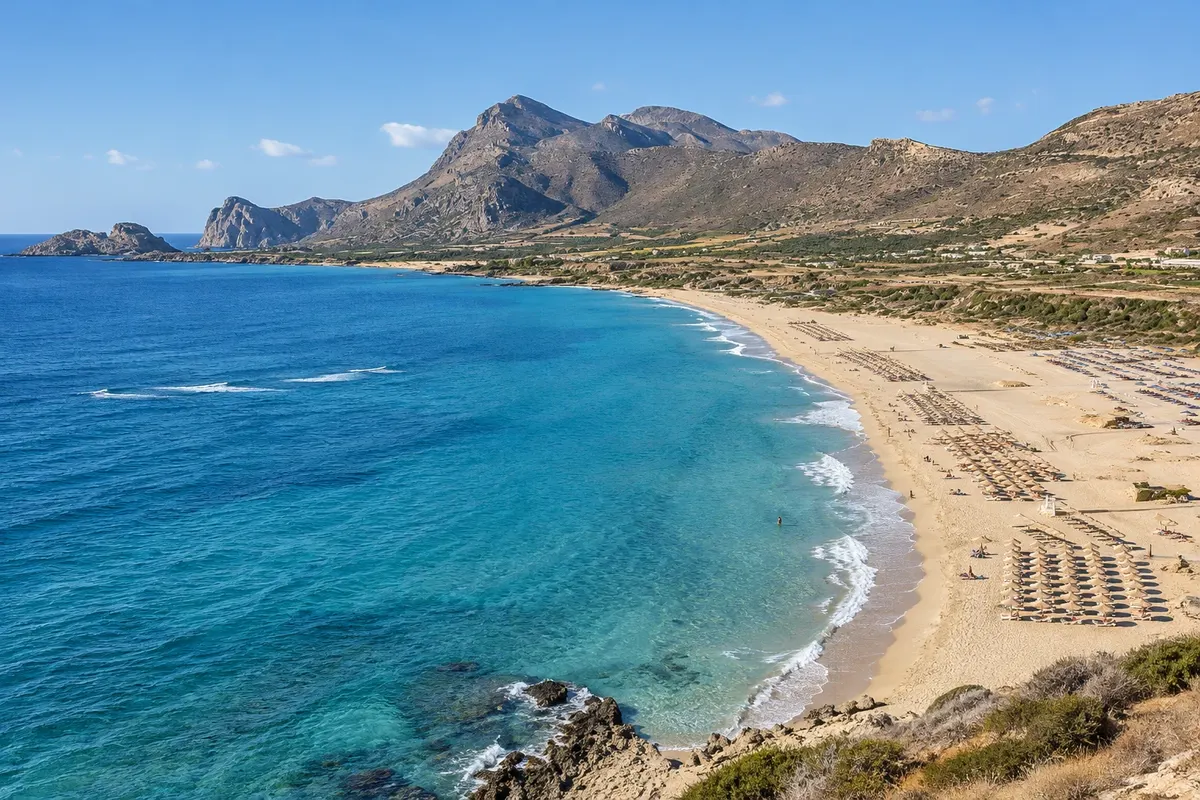
Beach · Chania, Creta
Praia de Falasarna
Wide pale-sand beach on the west coast of Crete, 60 km from Chania, with open sea and, on the hill to the north, the ruins of the ancient city of Falasarna, including a harbor that uplifted terrain has left away from the sea.
Illustrative images. The pictures in this guide are illustrations based on the real place, not photographs, and may differ from it.

Discover
About Praia de Falasarna
Falasarna (or Phalasarna) is one of the large beaches in western Crete: a wide strip of light, fine sand over a kilometre long, facing west toward the open sea, with mountains behind. Because it faces the sunset, it’s one of the island’s most sought-after spots for watching the sun go down. The main beach has umbrellas and a few tavernas on the upper part; the smaller coves to the north and south are quieter. On west-wind days the surf can get strong.
On the hill to the north lie the ruins of ancient Falasarna, a city and port from the 4th century BC that dominated the area until it was destroyed by the Romans in 69 BC. The curious thing is the harbour: an earthquake in 365 AD lifted the west coast of Crete by several metres, and the harbour basin, with its towers and stone quays, now sits a hundred metres from the sea, out in the fields. The site is open to visitors and has the so-called throne, a carved stone block at the road’s edge.
The plain between the beach and the road is covered with greenhouses and olive groves. Falasarna pairs well with Balos on the same day: it’s about half an hour from the start of the dirt road at Kaliviani.
Before you go
Practical information
Cidade Turismo reviews its information regularly, but something may have changed. Check with the place before planning your trip.
How much time to set aside
From two hours to a full day at the beach; half an hour for the ruins.
Best time
From May to October for swimming. Late afternoon is the most beautiful time, because of the sunset facing the sea. On days with a strong west wind the beach can have waves and blowing sand; choose the sheltered coves or another day.
How to get there
It’s about 60 km from Chania, roughly 1 hour 15 minutes by car via Kissamos and then along a road that climbs the hills and descends to the plain. In summer there are few KTEL buses from Chania and Kissamos; check the season schedule.
Tip
Stop first at the viewpoint on the descent, from where you can see the whole beach. The ruins are at the end of the dirt road, past the beach, with free entry; bring water and a hat. The tavernas on the upper part of the beach serve fish and Cretan dishes with sunset views.
Get your questions answered
Frequently asked questions about Praia de Falasarna
Is Falasarna good for swimming?
Yes — it has fine sand and clear water, but it is open sea: on days with a west wind the waves can be strong. In the morning the sea is usually calmer.
What are the ruins of Falasarna?
A Greek city and port from the 4th century BC destroyed by the Romans. An earthquake in 365 AD lifted the coast, leaving the ancient port a hundred meters from the sea, stranded in the fields.
Can you combine Falasarna and Balos?
Yes. Both are on the Kissamos peninsula, about half an hour's drive apart. The most common plan is Balos in the morning and Falasarna in the late afternoon.