

 Brazil
 Argentina
 Chile
Chile Colombia
 Peru
Peru Uruguay
 Germany
 Belgium
 Spain
Spain Greece
 the Netherlands
 Ireland
 Italy
Italy Portugal
 the United Kingdom
 Switzerland
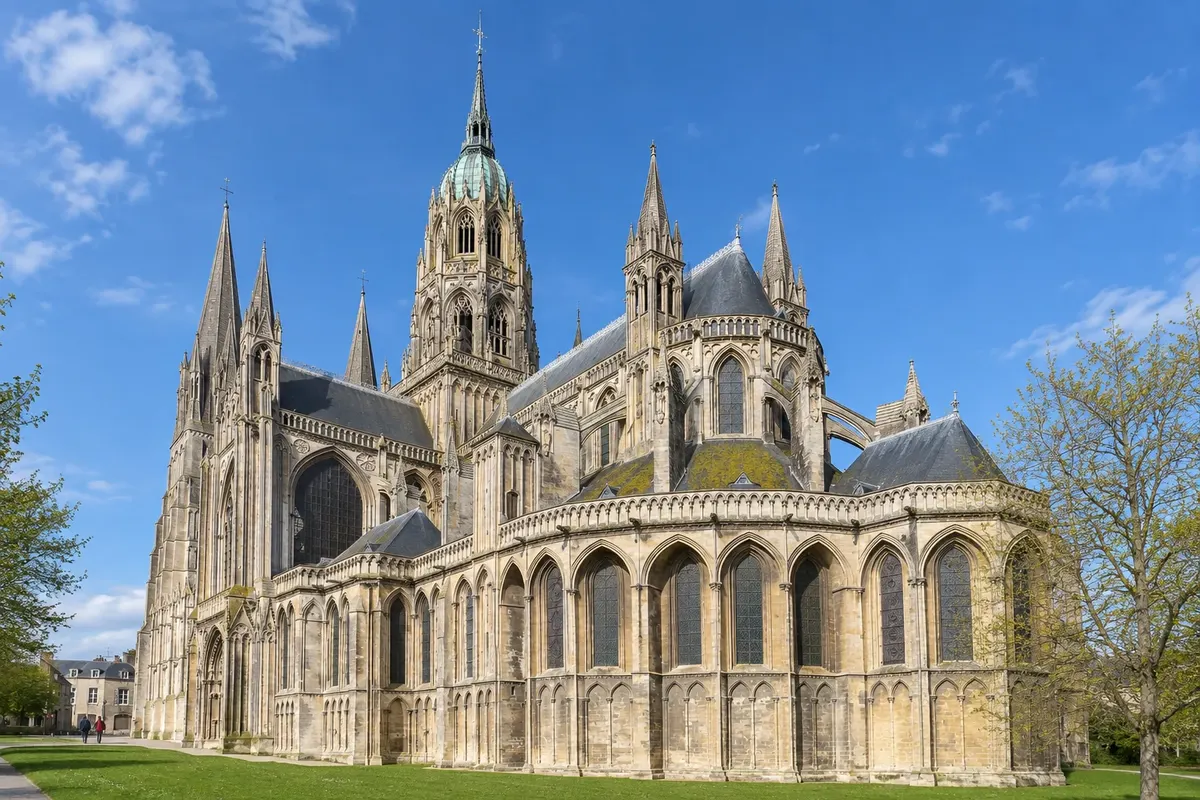
Cathedral
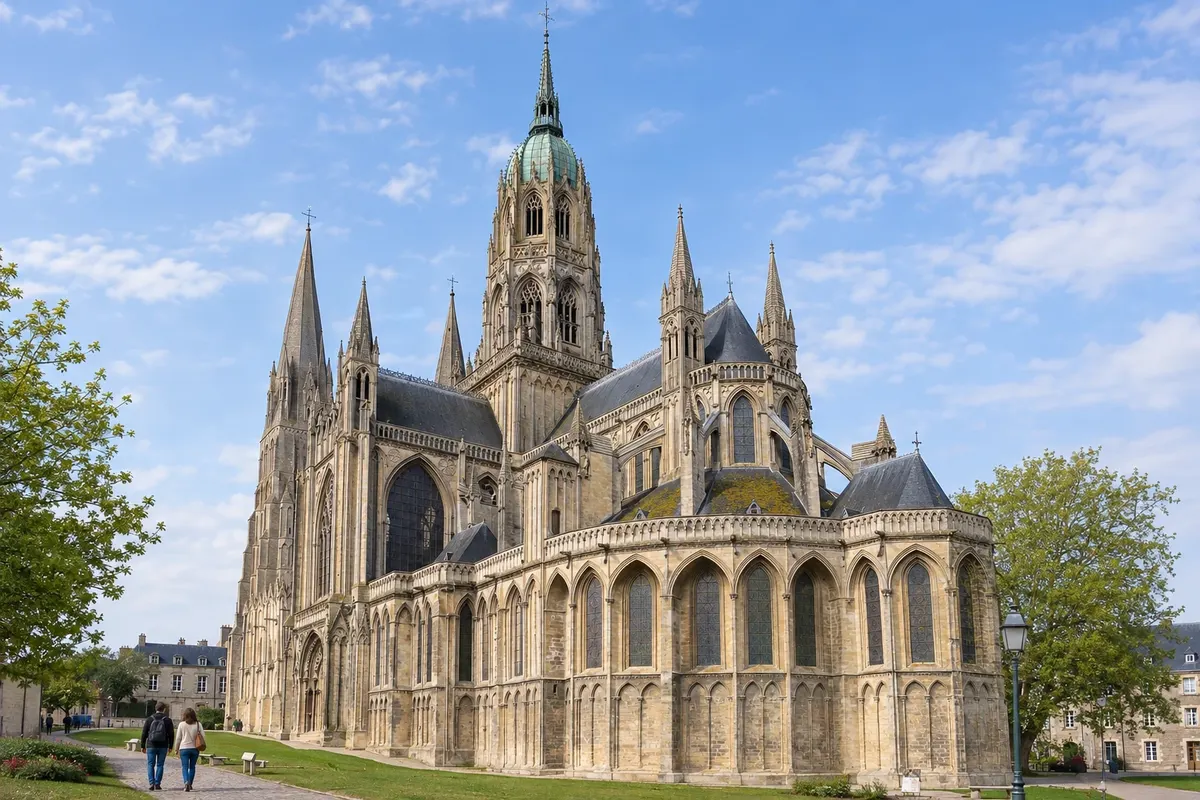
Cathédrale Notre-Dame de Bayeux
Romanesque and Gothic cathedral consecrated in 1077 in the presence of William the Conqueror. For centuries it housed the Tapeçaria de Bayeux.
Normandia · France
In the destination Normandy and Mont-Saint-Michel.
In the photo: Cathédrale Notre-Dame de Bayeux
Illustrative images. The pictures in this guide are illustrations based on the real place, not photographs, and may differ from it.
The city
A medieval town that escaped the 1944 bombings, Bayeux has a Romanesque and Gothic cathedral and the Musée Mémorial de la Bataille de Normandie, and is the most practical base for the D-Day beaches: Omaha Beach, the American Cemetery at Colleville-sur-Mer, Pointe du Hoc, the Musée du Débarquement in Arromanches, the Centre Juno Beach and the Mémorial de Caen.
There's no accommodation in the guide yet in Bayeux.
There are no restaurants in the guide yet in Bayeux.
Know a good one? Recommend it to ushow to get there · how many days · itinerary · questions
The local experience
Romanesque and Gothic cathedral consecrated in 1077 in the presence of William the Conqueror. For centuries it housed the Tapeçaria de Bayeux.
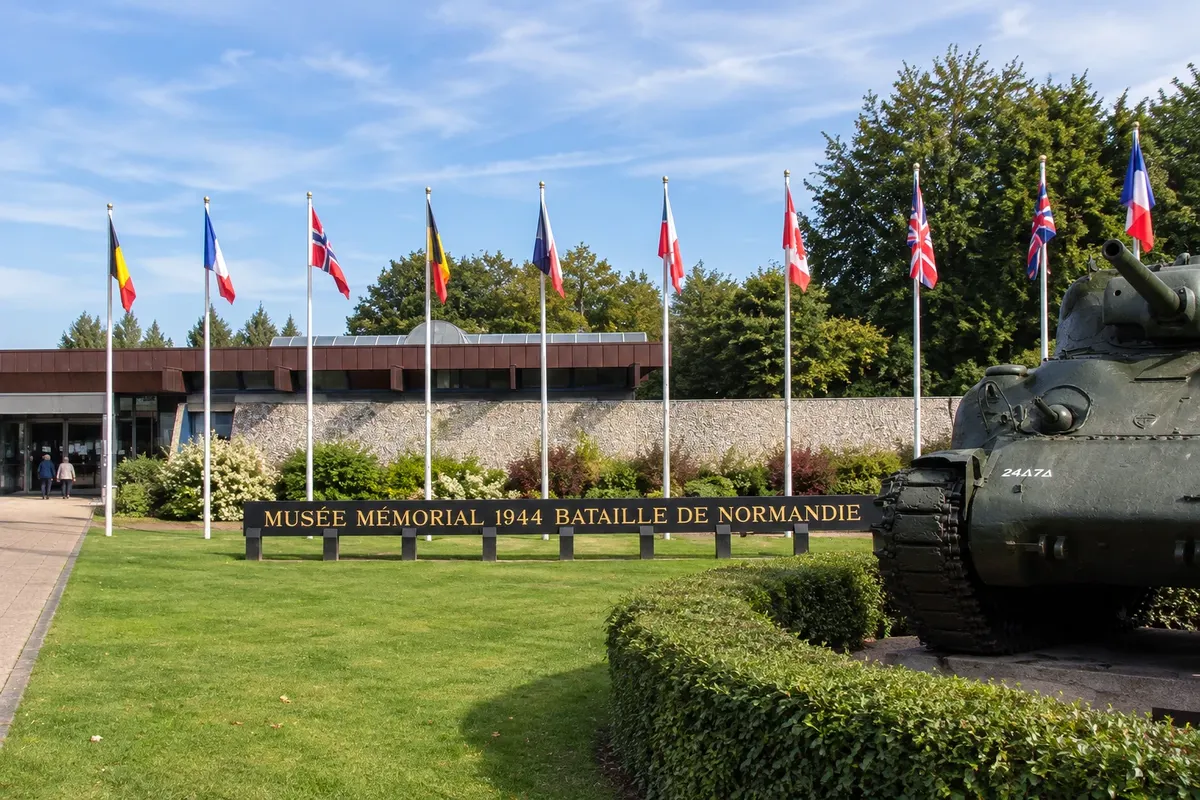
Bayeux's municipal museum about the Battle of Normandia, from June to August 1944, with vehicles, uniforms and an archival film. It is opposite the British military cemetery.
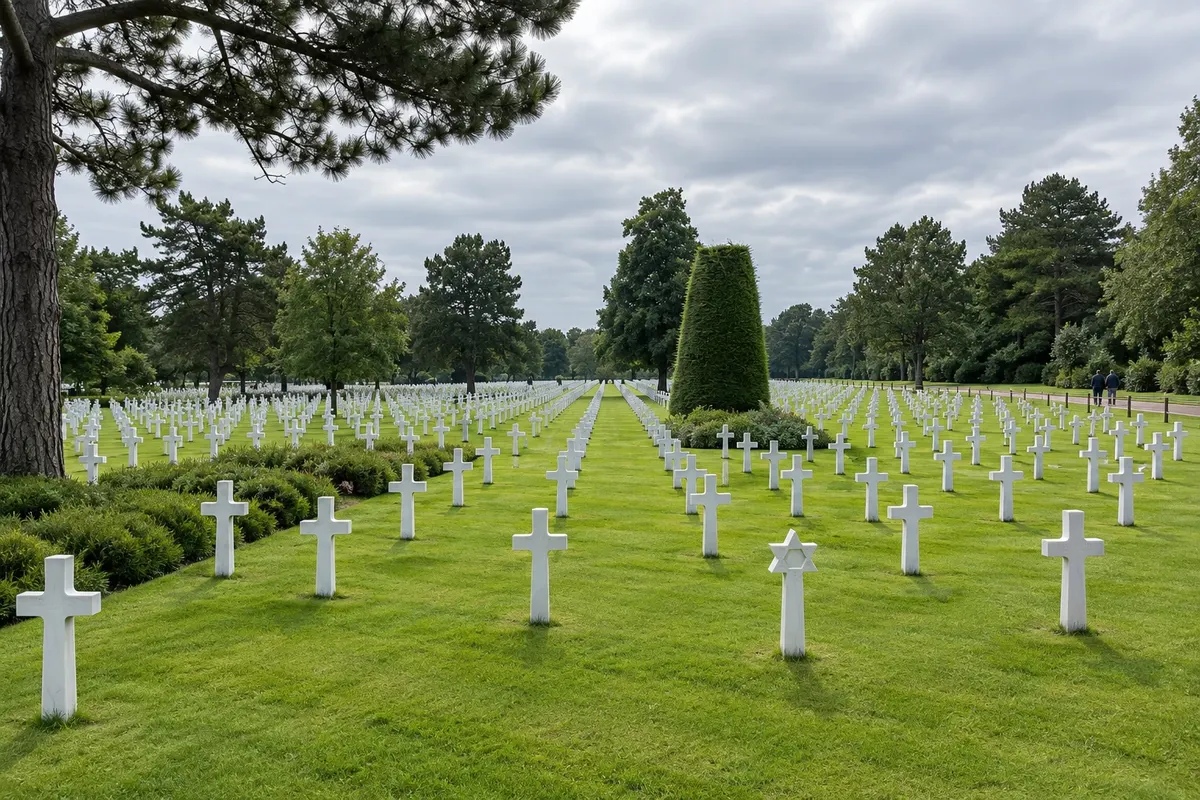
American military cemetery above Omaha Beach, in Colleville-sur-Mer, with about 9,400 graves of soldiers killed on D-Day and in subsequent operations. Entry is free.
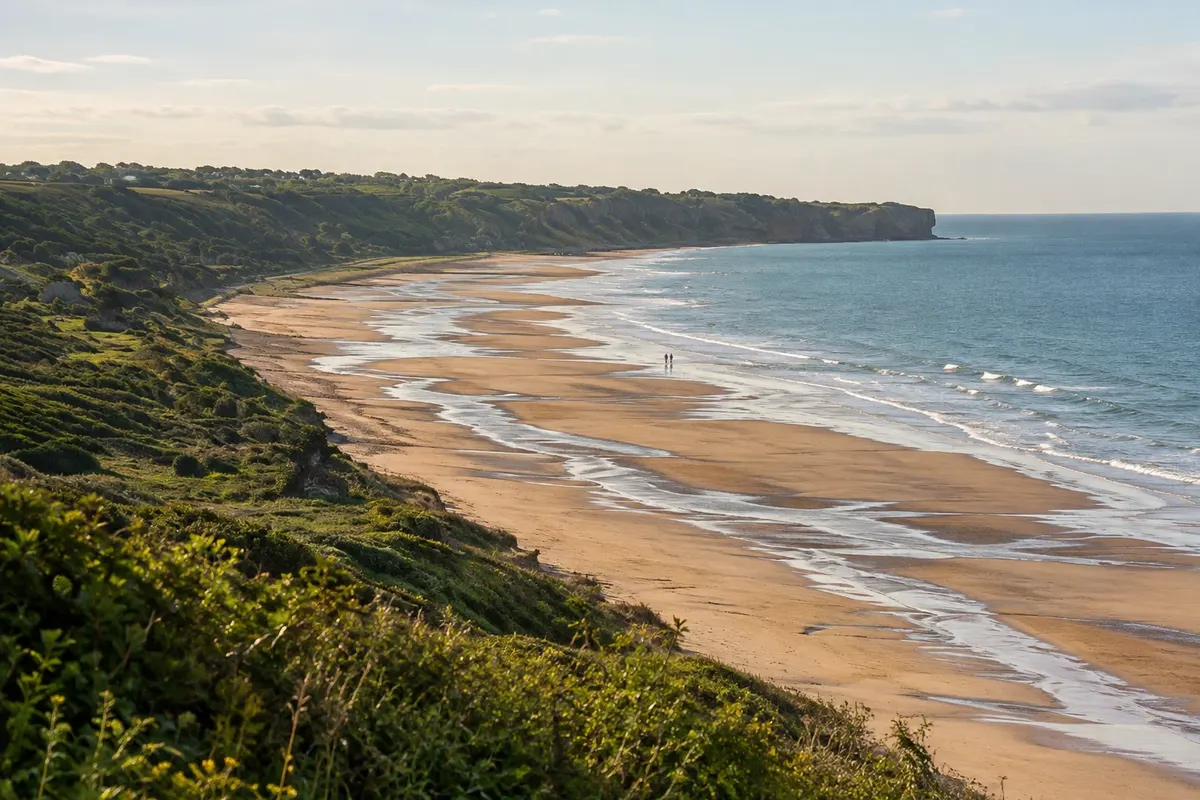
One of the five landing beaches of 6 June 1944, between Vierville-sur-Mer and Colleville-sur-Mer, where American troops suffered the heaviest losses on D-Day.
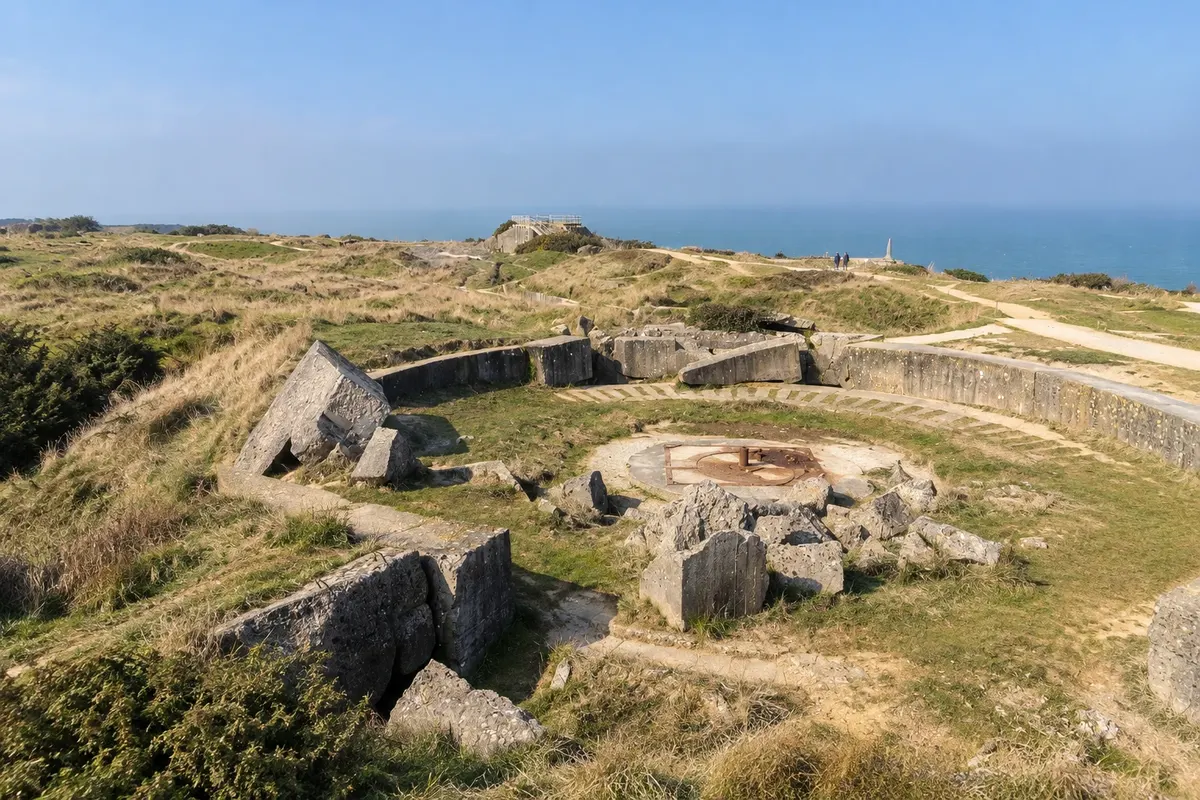
Cliff of about 30 meters scaled by American Rangers on D-Day to neutralize a German battery. The terrain still bears bomb craters and bunkers.
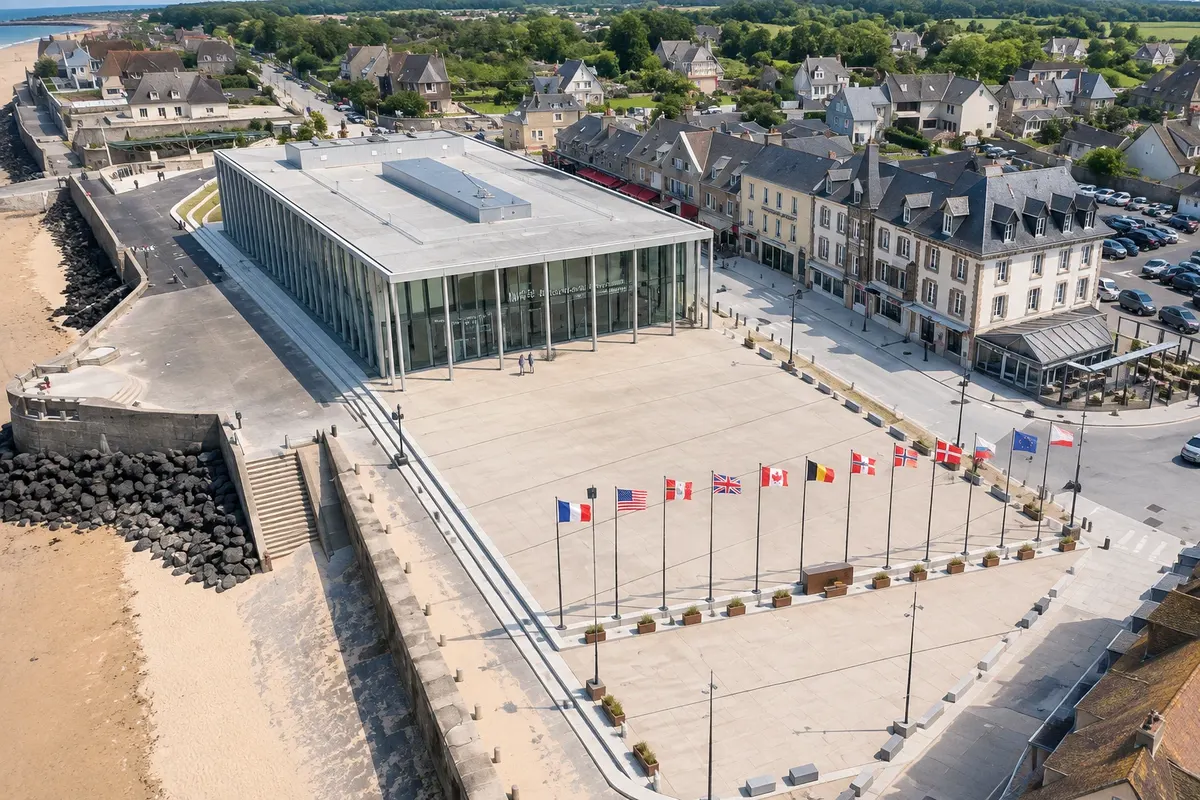
The first museum created about D-Day, in Arromanches-les-Bains, facing the remains of the Mulberry artificial harbor assembled by the Allies at sea in June 1944.
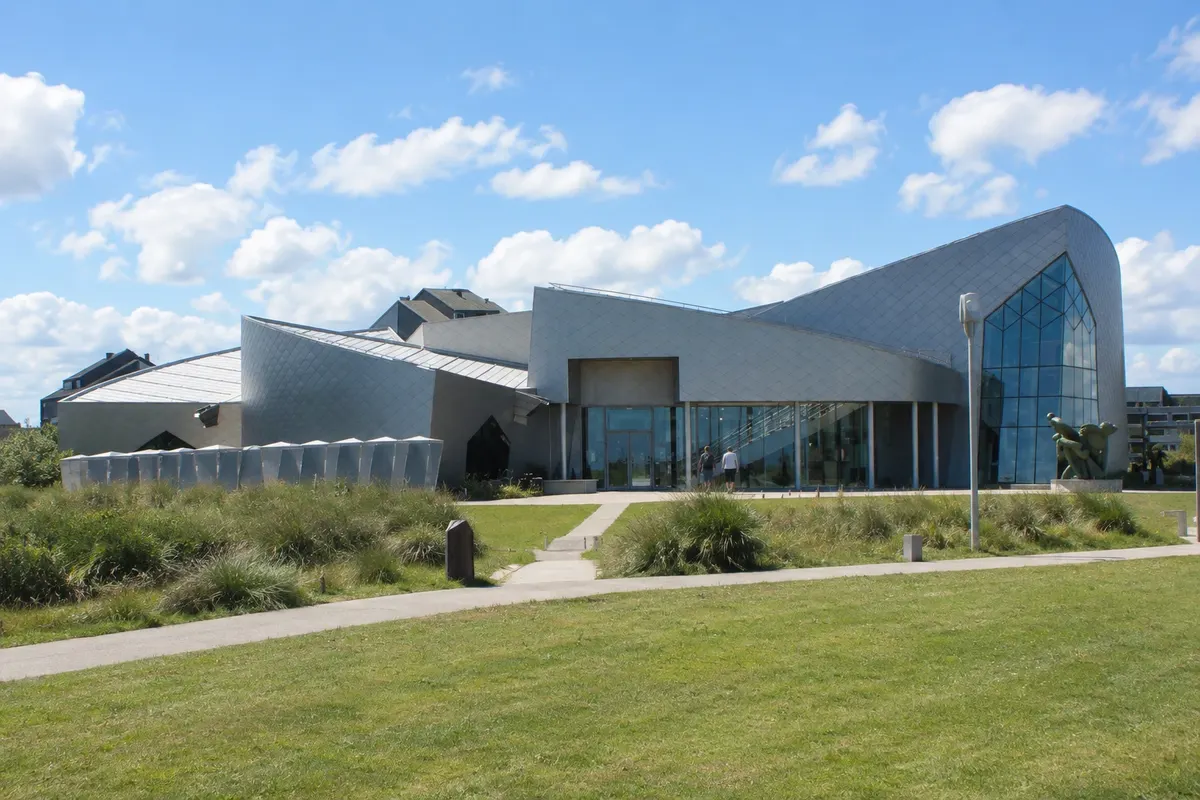
Museum in Courseulles-sur-Mer about the Canadians in World War II, on Juno Beach itself, where Canadian troops landed on 6 June 1944.
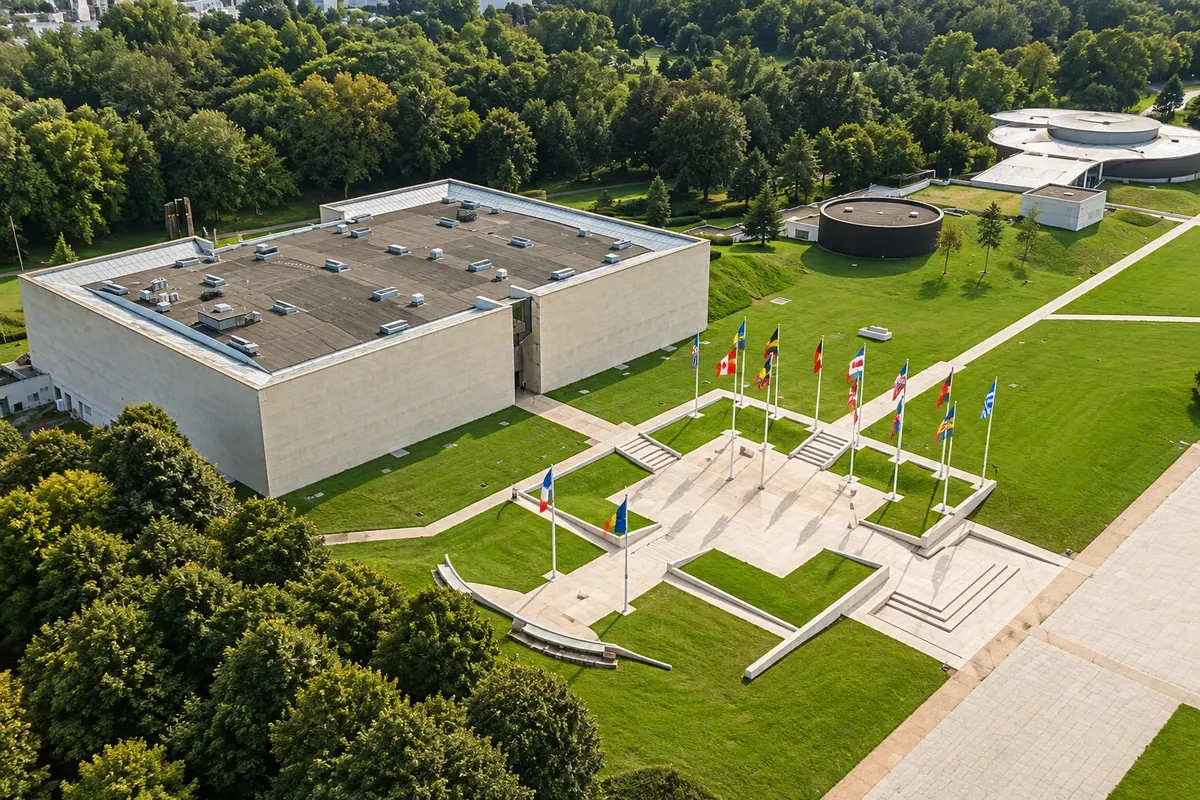
Large museum about 20th-century history, from the First World War to the fall of the Berlin Wall, with a whole section dedicated to D-Day and the Battle of Normandy.