

 Brazil
 Argentina
 Chile
Chile Colombia
 Peru
Peru Uruguay
 Germany
 Belgium
 Spain
Spain Greece
 the Netherlands
 Ireland
 Italy
Italy Portugal
 the United Kingdom
 Switzerland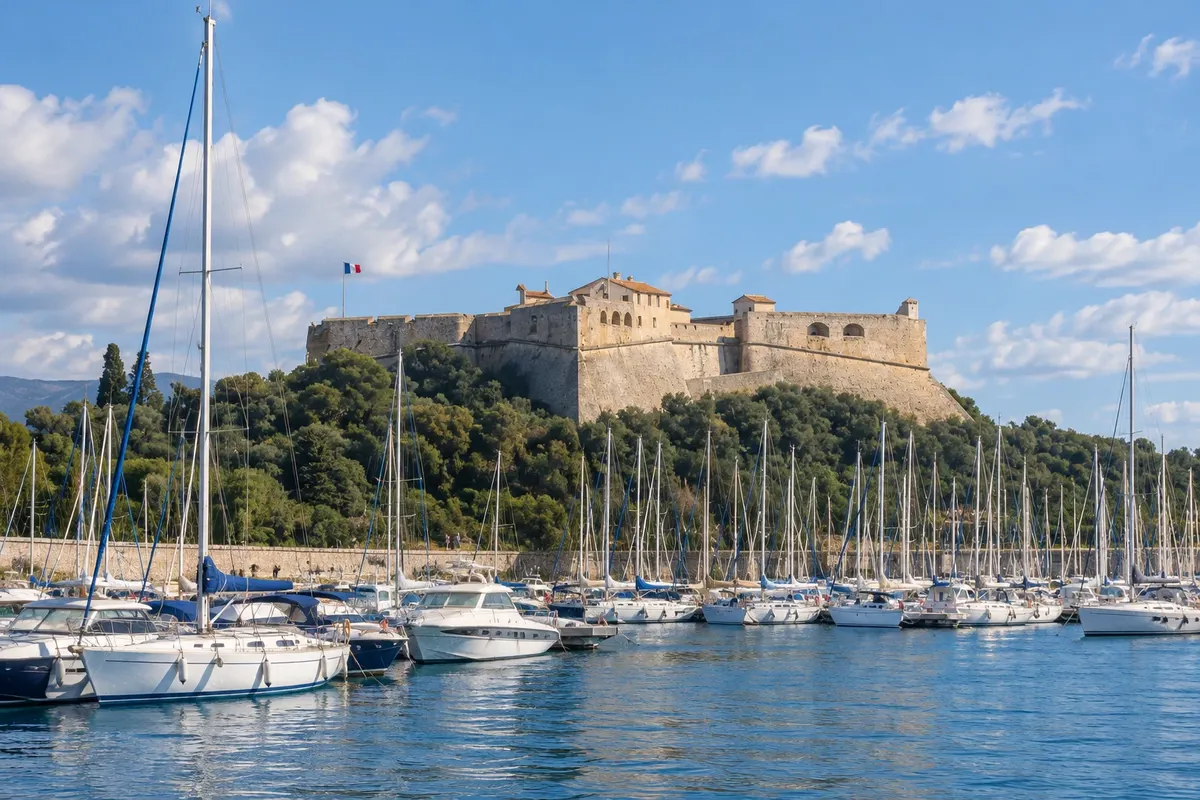
Fort · Antibes, Provença-Alpes-Costa Azul
Fort Carré
16th-century star-shaped fort on a rocky outcrop above the sea north of Port Vauban, with views over Antibes and the Alps.
Illustrative images. The pictures in this guide are illustrations based on the real place, not photographs, and may differ from it.

Discover
About Fort Carré
Fort Carré was built in the 16th century, under the reign of Henry II, atop a 26 m cliff above the sea on the Saint-Roch peninsula, to defend Antibes, then a border town between the kingdom of France and the duchy of Saboia. Despite the name, which means square fort, its layout is a four-pointed star.
Vauban, in the 17th century, strengthened the complex. Napoleon Bonaparte was even held there for a few days in 1794. Today the fort is a historic monument and belongs to the city.
The visit, which can be self-guided or guided depending on the day, goes through the bastions, the chapel and the former soldiers' quarters. From the top, the view includes Port Vauban, the old town, the Baie des Anges and, on clear days, the Alps capped with snow in winter.
Before you go
Practical information
Cidade Turismo reviews its information regularly, but something may have changed. Check with the place before planning your trip.
How much time to set aside
One to one and a half hours.
Best time
In the morning, with good light over the port. Guided tours take place at fixed times and there are days when it closes without notice; check before you go.
How to get there
It's about a 20-minute walk from the center, skirting Port Vauban to the north. There is parking near the fort.
Tip
Booking by phone is recommended by the tourist office. Combine it with the walk along the Quai des Milliardaires.
Official website
Get your questions answered
Frequently asked questions about Fort Carré
Is Fort Carré open to visitors?
Yes, with self-guided or guided visits depending on the day. It can close without notice for events; check before you go.
Why is it called Fort Carré if it has a star shape?
Carré means square. The name comes from the set of four bastions, which form a four-pointed star.
Is it true that Napoleon was imprisoned there?
Yes, Napoleon Bonaparte was detained at the fort for a few days in 1794.