

 Brazil
 Argentina
 Chile
Chile Colombia
 Peru
Peru Uruguay
 Germany
 Belgium
 Spain
Spain Greece
 the Netherlands
 Ireland
 Italy
Italy Portugal
 the United Kingdom
 Switzerland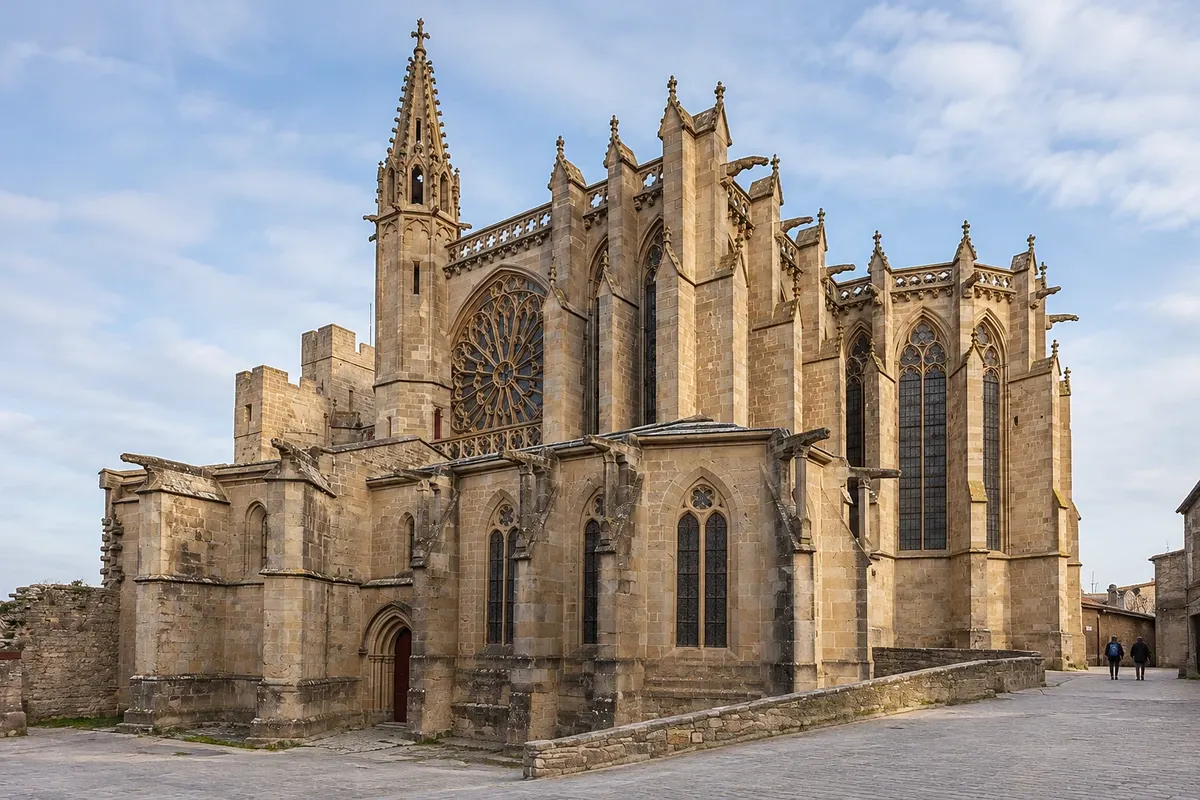
Church · Carcassonne, Occitânia
Basilique Saint-Nazaire
Former cathedral inside the Cité, with a Romanesque nave and a Gothic choir lit by stained glass windows from the 13th and 14th centuries.
Illustrative images. The pictures in this guide are illustrations based on the real place, not photographs, and may differ from it.

Discover
About Basilique Saint-Nazaire
The Basilique Saint-Nazaire-et-Saint-Celse was Carcassonne's cathedral until the early 19th century and is located inside the Cité, near the Porte Narbonnaise. It has held the title of basilica since 1898.
Construction spans the 11th to the 14th centuries and shows two styles side by side: the Romanesque nave, darker with thick walls, and the Gothic transept and choir, tall and full of light.
The 13th- and 14th-century stained glass windows, depicting scenes from the life of Christ and the apostles, are among the oldest in southern France. The two rose windows in the transept are the highlight of the visit.
The Romanesque portal seen today was redone in the 19th century during Viollet-le-Duc's restoration.
Before you go
Practical information
Cidade Turismo reviews its information regularly, but something may have changed. Check with the place before planning your trip.
How much time to set aside
20 to 40 minutes.
Best time
Mid-morning or mid-afternoon on a sunny day, when the choir's stained glass is at its most vivid. Avoid mass times.
How to get there
It is inside the Cité de Carcassonne, a few minutes' walk from the castle.
Tip
Sit for a moment in the Romanesque nave before going to the choir: the change in light between the two styles is what makes the church special.
Get your questions answered
Frequently asked questions about Basilique Saint-Nazaire
Is Saint-Nazaire a cathedral?
It was Carcassonne's cathedral until the early 19th century. Today it is a basilica; the cathedral is in the lower town.
What is there to see inside the basilica?
The Romanesque nave, the Gothic choir and the 13th- and 14th-century stained glass, with the transept rose windows.
Is it inside the walls?
Yes, inside the Cité, near the castle.