

 Brazil
 Argentina
 Chile
Chile Colombia
 Peru
Peru Uruguay
 Germany
 Belgium
 Spain
Spain Greece
 the Netherlands
 Ireland
 Italy
Italy Portugal
 the United Kingdom
 Switzerland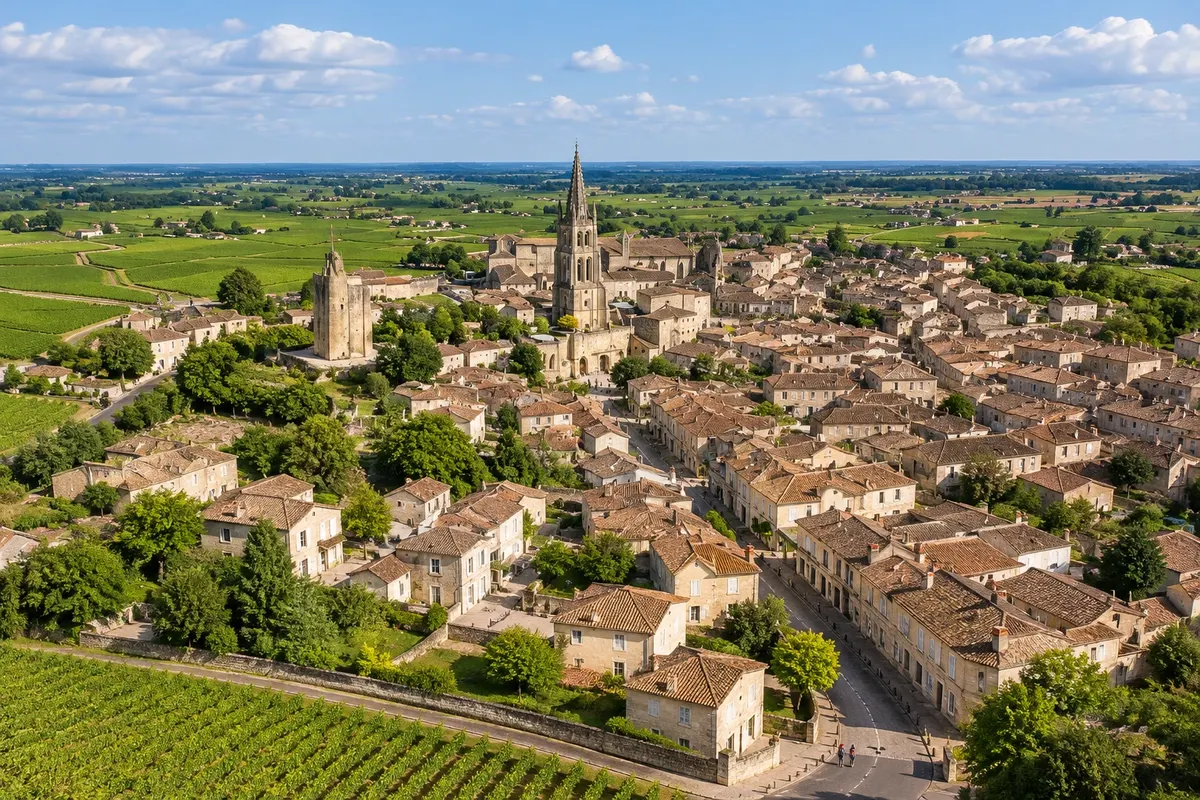
Historic neighborhood · Saint-Émilion, Nova Aquitânia
Cité médiévale de Saint-Émilion
Medieval limestone village on a hill above the vineyards, with sloping streets called tertres, ramparts and monuments from the 12th to the 15th centuries.
Illustrative images. The pictures in this guide are illustrations based on the real place, not photographs, and may differ from it.

Discover
About Cité médiévale de Saint-Émilion
Saint-Émilion grew up around the grotto of Émilion, a Breton monk who, according to tradition, settled there in the 8th century. Pilgrimage to the saint's tomb caused the village to expand in the Middle Ages, and by the early 13th century it was already surrounded by walls. The limestone quarried from beneath the town was used to build the houses and left kilometres of galleries under the city.
The village is divided into an upper part around the Collégiale and a lower part around the Place de l'Église monolithe, linked by steep, cobbled alleyways called tertres. Along the way you find the Porte Brunet, one of the gates of the ramparts, the remains of the Grandes Murailles, the washhouses and the Palais Cardinal.
The village and seven other communes form the Jurisdição de Saint-Émilion, inscribed as a World Heritage Site in 1999 as an example of a historic, still-active wine landscape. The vineyards reach the ramparts, and many properties (châteaux) receive visitors by reservation. In the centre's shops, almond macarons and wine cellars share the shopfronts.
The tourist office, next to the Collégiale, sells the guided tours of the village and the Église monolithe and helps to book visits to the estates.
Before you go
Practical information
Cidade Turismo reviews its information regularly, but something may have changed. Check with the place before planning your trip.
How much time to set aside
2 to 3 hours to walk around the village, not counting guided tours and visits to estates.
Best time
Early in the morning or late in the afternoon, when the tour groups have left. From April to October all monuments are open. During the harvest, in September and October, the vineyards are in full activity.
How to get there
From Saint-Émilion station, about 2 km on foot along the road through the vineyards, or by taxi. By car there are paid parking lots at the village entrances; the centre has restricted vehicle access.
Tip
Wear sturdy footwear: the tertres are slippery when wet. Start at the tourist office to book the time for the underground visit. Try the macarons de Saint-Émilion at the pastry shops in the centre.
Official website
Get your questions answered
Frequently asked questions about Cité médiévale de Saint-Émilion
Why is Saint-Émilion a World Heritage Site?
The Jurisdiction of Saint-Émilion, including the village and seven other communes, was inscribed by UNESCO in 1999 as a historic vineyard landscape that remains in use, with grape cultivation in an area delimited for centuries.
What are the tertres?
They are the steep cobbled lanes that connect the upper and lower parts of the village. Some are quite steep and become slippery when it rains.
Can you see the village in half a day?
You can walk the streets and take the guided tour of the Église monolithe. To include a winery visit at a relaxed pace, reserve the whole day.