

 Brazil
 Argentina
 Chile
Chile Colombia
 Peru
Peru Uruguay
 Germany
 Belgium
 Spain
Spain Greece
 the Netherlands
 Ireland
 Italy
Italy Portugal
 the United Kingdom
 Switzerland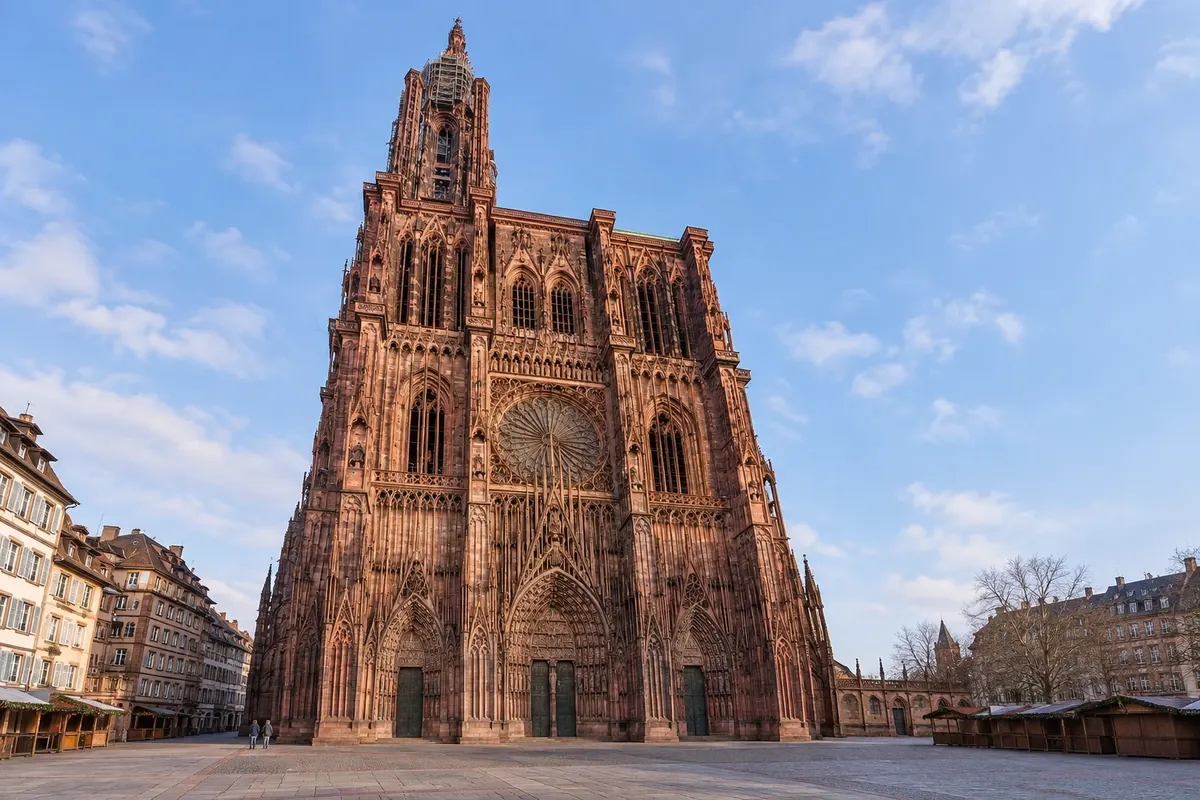
Cathedral · Estrasburgo, Grande Leste
Cathédrale Notre-Dame de Strasbourg
Gothic cathedral of pink Vosges sandstone, with a single 142-meter tower, an astronomical clock with automatons and a platform high on the façade that is reached on foot.
Illustrative images. The pictures in this guide are illustrations based on the real place, not photographs, and may differ from it.

Discover
About Cathédrale Notre-Dame de Strasbourg
The Cathédrale Notre-Dame de Strasbourg was built between the 12th and 15th centuries using pink sandstone from the Vosges mountains, which gives the façade its reddish color. The single tower, at 142 metres, made it the tallest building in the world for more than two centuries, until the end of the 19th century. The second planned tower was never built, and that is what gives the asymmetrical silhouette seen from a distance.
Inside, the most sought-after attraction is the astronomical clock, a Renaissance work with a mechanism from 1842. Every day, in the early afternoon, the automatons move and the twelve apostles parade before Christ; to see the full parade up close you must buy a separate ticket, which includes a short film presentation beforehand. The medieval stained glass windows and the Pillar of the Angels in the south transept also deserve attention.
The viewing platform is 66 metres high and is reached by a staircase of 332 steps, with entrance via the Place du Château on the right side of the cathedral. From up there you can see the roofs of the Grande Île, the Floresta Negra on the other side of the Reno and, on clear days, the Vosges.
On the square in front stands the Maison Kammerzell, a 16th-century house with a carved wooden façade, one of the best-known examples of the Alsatian half-timbered house (the exposed timber frame). It now operates as a restaurant, and the façade can be seen from the square at any time.
The cathedral is a place of worship: during Mass visiting is limited, there is bag control at the entrance and men are asked to remove their hats.
Before you go
Practical information
Cidade Turismo reviews its information regularly, but something may have changed. Check with the place before planning your trip.
How much time to set aside
About 45 minutes to 1 hour for the interior; another 45 minutes to climb to the platform. Add roughly 1 hour if you plan to watch the astronomical clock presentation.
Best time
Early in the morning the nave is quieter. The platform has longer opening hours from April to September and shorter ones from October to March. During the Christmas market the astronomical clock presentation does not take place and the square becomes very crowded. Check schedules before you go.
How to get there
It is located in the centre of the Grande Île, about 1.5 km from the Gare de Strasbourg: roughly a 20-minute walk. By tram, the Langstross/Grand'Rue and Broglie stops are a few minutes away. The visitor entrance is through the south portal, and the entrance for the platform and the clock is via the Place du Château.
Tip
Buy the astronomical clock ticket early in the day, as space is limited. Visitors who buy the platform ticket receive a discount at the Musée de l'Œuvre Notre-Dame, which is on the other side of the square and houses the original statues from the façade.
Official website
Get your questions answered
Frequently asked questions about Cathédrale Notre-Dame de Strasbourg
Is there an entrance fee for the cathedral?
Entrance to the nave is free. The climb to the platform and the presentation of the astronomical clock require a separate ticket. Check prices and times before you go.
How many steps are there to the platform?
There are 332 stone steps up to the platform, at 66 metres high. There is no elevator, so wear comfortable shoes.
When can you see the automata of the astronomical clock?
The full procession of the automata takes place once a day in the early afternoon, and access requires a ticket. There is no performance during the Christmas market. Check the time on the day.
What is the wooden house in front of the cathedral?
It is the Maison Kammerzell, from the 16th century, with a façade entirely carved in wood. It operates as a restaurant, and the façade can be viewed freely from the square.