

 Brazil
 Argentina
 Chile
Chile Colombia
 Peru
Peru Uruguay
 Germany
 Belgium
 France
 Greece
 the Netherlands
 Ireland
 Italy
Italy Portugal
 the United Kingdom
 Switzerland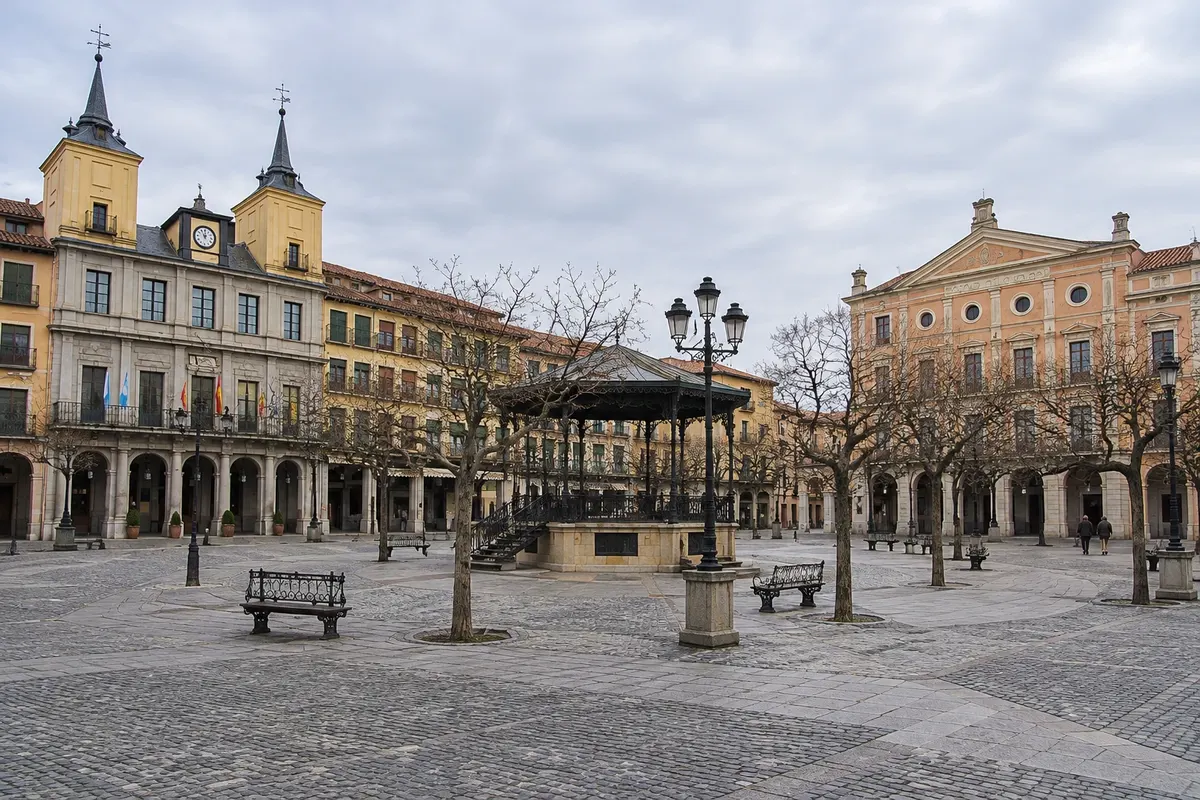
Square · Segóvia, Castela e Leão
Plaza Mayor de Segovia
Main square of the old town, with the Cathedral's apse in the background, the town hall, the Teatro Juan Bravo and the Iglesia de San Miguel. It was there that Isabella the Catholic was proclaimed Queen of Castile in 1474.
Illustrative images. The pictures in this guide are illustrations based on the real place, not photographs, and may differ from it.

Discover
About Plaza Mayor de Segovia
The Plaza Mayor is the centre of old Segóvia. For centuries it was called Plaza de San Miguel, after the church that occupied part of the space and where the market took place. It was there, on 13 December 1474, that Isabella the Catholic was proclaimed Queen of Castile. The church was demolished in 1532 and rebuilt a few meters away to open up the square.
It is almost rectangular, with a bandstand in the middle and houses with balconies around. On one side is the Casa Consistorial, the town hall; on another, the Teatro Juan Bravo. In the background appears the Cathedral’s apse with its Gothic pinnacles. Bars and restaurants with pavement seating occupy much of the perimeter.
The classic route from the Aqueduct climbs via Calle Cervantes and Calle Juan Bravo, known together as Calle Real. Along the way you pass the Casa de los Picos, a fortified house from the late 15th century with 617 granite spikes on the façade, now home to the School of Art. Higher up, the Iglesia de San Martín, a 12th‑century Romanesque church, has a columned gallery around it and one of the largest Romanesque portals in Spain.
Near the square is also the Casa‑Museo de Antonio Machado, the boarding house where the poet lived while teaching French in the city from 1919 to 1932.
Before you go
Practical information
Cidade Turismo reviews its information regularly, but something may have changed. Check with the place before planning your trip.
How much time to set aside
Half an hour for the square. Add about 30 to 45 minutes to walk up Calle Real at a leisurely pace, stopping at the Casa de los Picos and San Martín.
Best time
In the late afternoon and evening the square livens up with bars. Lunch usually starts after 2:00 pm and dinner after 9:00 pm.
How to get there
It sits on the upper part of the historic centre, about a 10–15 minute walk from the Aqueduct along Calle Real. The Cathedral adjoins the square.
Tip
Calle Real is steep at the start; wear comfortable shoes. Roast lamb and suckling pig (cochinillo) and the Segovian sweet ponche segoviano are local specialties and appear on menus around the square. Book a table for lunch at weekends.
Get your questions answered
Frequently asked questions about Plaza Mayor de Segovia
What happened in Segóvia's Plaza Mayor?
On December 13, 1474, Isabel the Catholic was proclaimed queen of Castile there, when the place was still called Plaza de San Miguel.
What is the Casa de los Picos?
It is a fortified house from the late 15th century on Calle Juan Bravo, on the route between the Aqueduct and the Plaza Mayor. The façade is covered by 617 granite points. Today it houses the Escuela de Arte de Segóvia.
Which Romanesque churches are on the way to the square?
The Iglesia de San Martín, from the 12th century, on Calle Juan Bravo, with a porticoed gallery and a large portal. Near the Aqueduct, outside the wall, is the Iglesia de San Millán.
What to eat near the Plaza Mayor?
Segóvia's best-known dish is roast suckling pig (cochinillo), and roast lamb is also common. For dessert, the ponche segoviano, a cake with cream and a toasted sugar topping.