

 Brazil
 Argentina
 Chile
Chile Colombia
 Peru
Peru Uruguay
 Germany
 Belgium
 France
 Greece
 the Netherlands
 Ireland
 Italy
Italy Portugal
 the United Kingdom
 Switzerland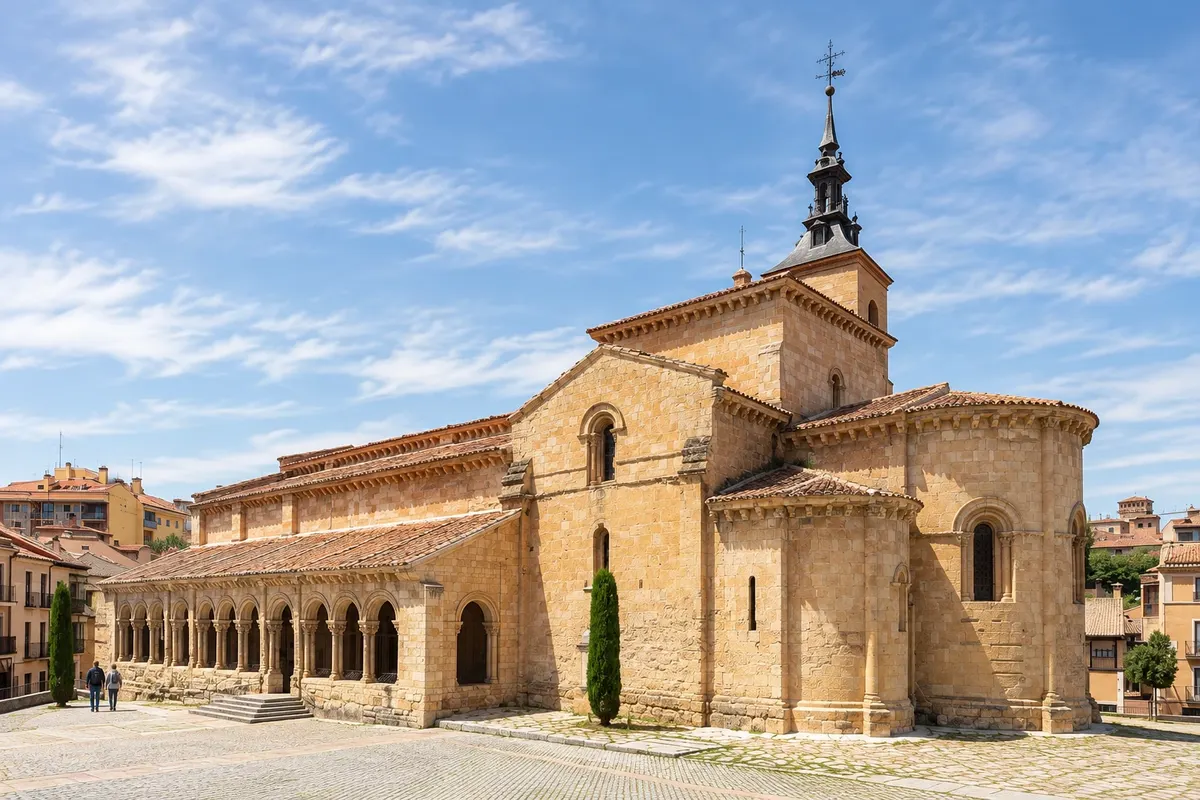
Church · Segóvia, Castela e Leão
Iglesia de San Millán
Romanesque church from 1111 to 1126, outside the city wall, near the Aqueduto. It has an 11th-century tower, arcaded galleries and a floor plan inspired by the cathedral of Jaca in Aragão.
Illustrative images. The pictures in this guide are illustrations based on the real place, not photographs, and may differ from it.

Discover
About Iglesia de San Millán
Segóvia is, together with Zamora, the Spanish city with the most Romanesque churches. San Millán's is located in the neighborhood of the same name, outside the wall, a few minutes from the Aqueduto, and is one of the oldest. The body of the church was built between 1111 and 1126, when Afonso I, o Batalhador, king of Aragão, ruled Castile through his marriage to Queen Urraca.
The tower is the oldest part: it dates from the 11th century and has mudéjar features. The plan reproduces on a smaller scale that of the cathedral of Jaca, in Aragão. There are three naves, four apses (one added later for the sacristy), three portals and two galleries of arcaded arches, a hallmark of Segovian Romanesque.
Inside, the columns and capitals are large for the size of the building. Two capitals depict scenes from the Gospel: the Magi on the way to Bethlehem and the Flight into Egypt. The main altar has a Romanesque crucifix. The church houses Holy Week images of Segóvia donated by the sculptor Aniceto Marinas.
The view from the arcaded gallery over the upper town, with the Catedral in the background, clearly shows how San Millán stood in a suburb below the rock.
Before you go
Practical information
Cidade Turismo reviews its information regularly, but something may have changed. Check with the place before planning your trip.
How much time to set aside
Between 15 and 30 minutes to see the exterior, the galleries and, if it's open, the interior.
Best time
In the morning, combined with the Aqueduto, which is about a 5-minute walk away. As it is a parish church, the interior opens for services and visiting hours that vary: confirm before you go.
How to get there
It is on Avenida del Acueducto, in the San Millán neighborhood, about 500 meters from the arc of the Aqueduto, heading south.
Tip
Even with the church closed, you can walk around and see the arcaded galleries and the tower. To learn about more Romanesque churches, the diocese has a Segóvia temples app, promoted by the tourist office.
Official website
Get your questions answered
Frequently asked questions about Iglesia de San Millán
Is San Millán the oldest church in Segóvia?
It is among the oldest. The tower dates from the 11th century and the remainder was built between 1111 and 1126.
What are the porticoed galleries?
They are exterior corridors with arches, attached to the church walls, typical of Segóvia's Romanesque. They served as shelter and as a meeting place for the community.
Why does San Millán resemble the cathedral of Jaca?
The church was built in the period when Alfonso I of Aragon governed Castile, and its plan reproduces on a smaller scale that of the cathedral of Jaca, in Aragon.