

 Brazil
 Argentina
 Chile
Chile Colombia
 Peru
Peru Uruguay
 Germany
 Belgium
 France
 Greece
 the Netherlands
 Ireland
 Italy
Italy Luxembourg
 Portugal
 the United Kingdom
 Switzerland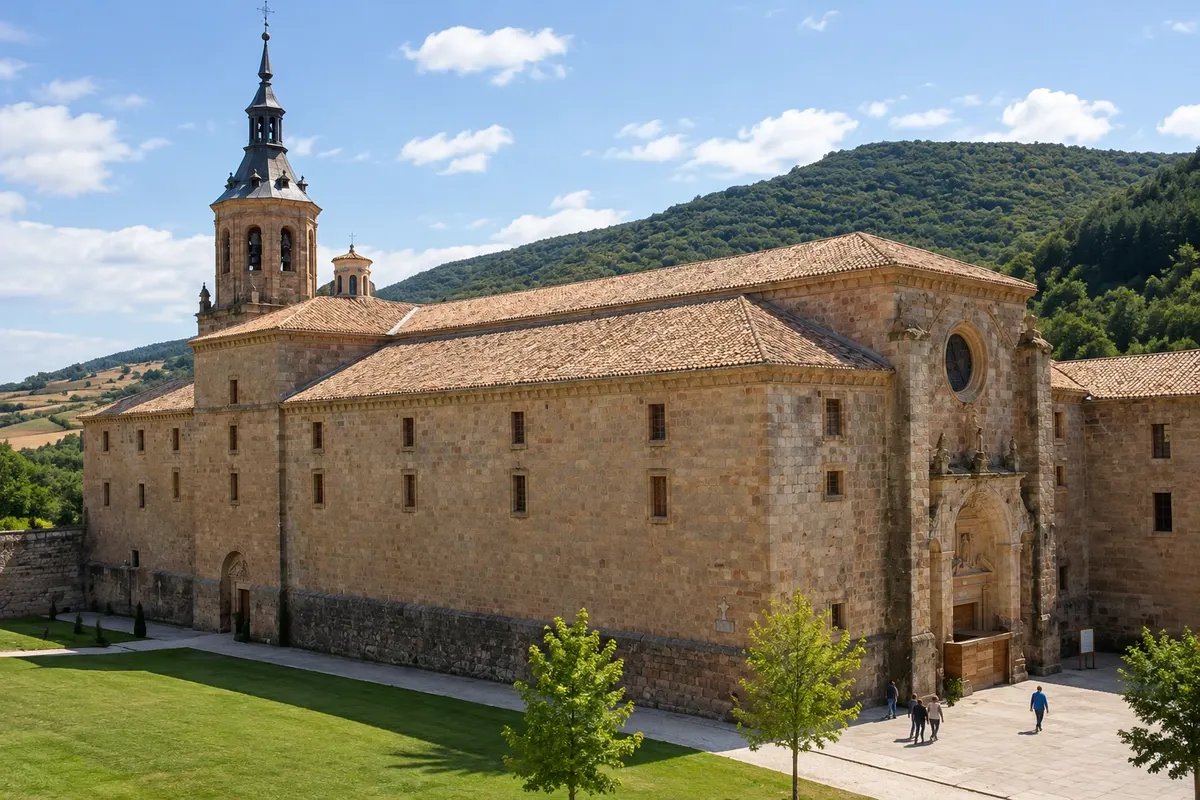
Monastery · Logroño, La Rioja
Monasterios de San Millán de Yuso y de Suso
Two monasteries in San Millán de la Cogolla, 45 km from Logroño, a World Heritage Site: Suso, carved into the hillside, and Yuso, in the valley, where the Glosas Emilianenses were written, the earliest written records of Spanish.
Illustrative images. The pictures in this guide are illustrations based on the real place, not photographs, and may differ from it.

Discover
About Monasterios de San Millán de Yuso y de Suso
San Millán de la Cogolla is a village in the Cárdenas river valley, about 45 km west of Logroño, with two monasteries declared a World Heritage Site in 1997. The story begins with São Milão, a shepherd who became a hermit and died in 574, over a hundred years old, in a cave on the hillside. Around the cave the first monastery arose, Suso, which means 'above'.
Suso is a small complex of churches and caves cut into the rock, with horseshoe arches in the Mozarabic style and the saint's tomb. It was there that, around the 10th or 11th century, a monk wrote in the margins of a Latin text notes that explained words: the Glosas Emilianenses, considered the earliest written records of a peninsular Romance language, Spanish, and also of phrases in Basque. For that reason San Millán is called the cradle of the Spanish language.
The monastery of Yuso, the lower one, was founded in 1053 by King García of Navarre when, according to legend, the oxen carrying the saint's remains stopped in the valley and refused to continue. The current building dates from the 16th to the 18th centuries, with a church, cloister, decorated sacristy and a library of giant choir books. Augustinian monks live there.
The visit is guided. To reach Suso you take a minibus that departs from Yuso at scheduled times.
Before you go
Practical information
Cidade Turismo reviews its information regularly, but something may have changed. Check with the place before planning your trip.
How much time to set aside
About 3 hours for both monasteries.
Best time
From spring to autumn. Visits are at set times and have limited availability, especially at Suso; book before you go. The monastery is closed on Mondays for much of the year; check.
How to get there
It's about 45 km from Logroño, roughly 45 minutes by car via the N-120 to Nájera and then the valley road. There are buses with limited schedules. The visit to Suso departs from Yuso by minibus.
Tip
Book both visits, Yuso and Suso, in advance—they are separate. Combine it with Nájera on the way, where the monastery of Santa María la Real is located.
Official website
Get your questions answered
Frequently asked questions about Monasterios de San Millán de Yuso y de Suso
Why is San Millán considered the cradle of the Spanish language?
Because the Glosas Emilianenses were written in the monastery of Suso—notes in the margins of a Latin text—considered the earliest written records of Spanish.
What's the difference between Suso and Yuso?
Suso, the upper one, is the original monastery—small, with caves cut into the hillside. Yuso, the lower one, is the large monastery in the valley, with a building dating from the 16th to the 18th centuries.
How do you get from Logroño to San Millán de la Cogolla?
By car, about 45 minutes, roughly 45 km. There are buses with limited schedules and organized tours.
Do you need to reserve the visit?
It's recommended. Visits are guided, at set times, and Suso has limited capacity.