Jijoca de Jericoacoara
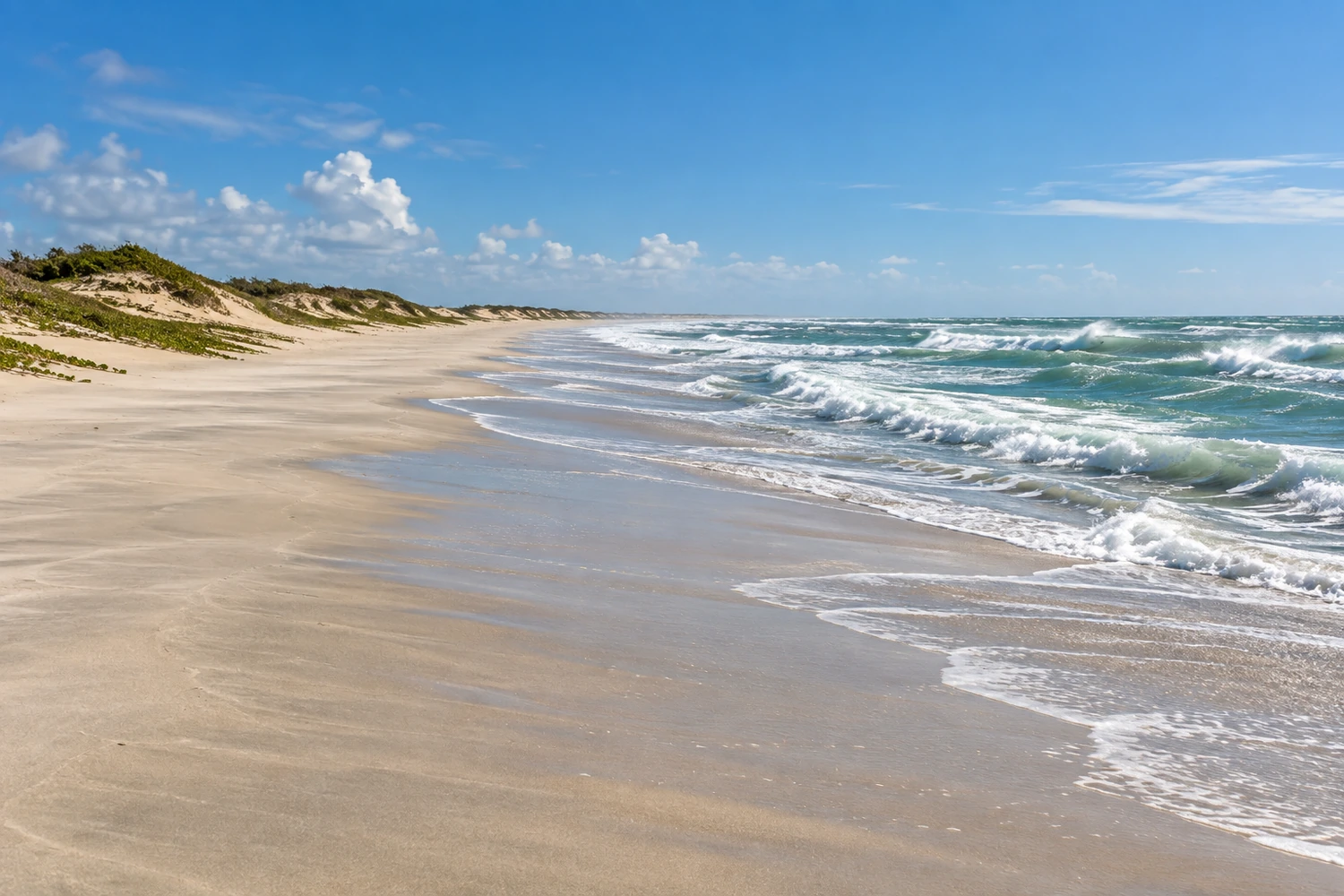
Jijoca de Jericoacoara brings together lagoons, dunes and the village of sand streets by the sea. Pedra Furada and the beaches of the national park reveal landscapes carved by wind and water on the Ceará coast.
CE · Brazil
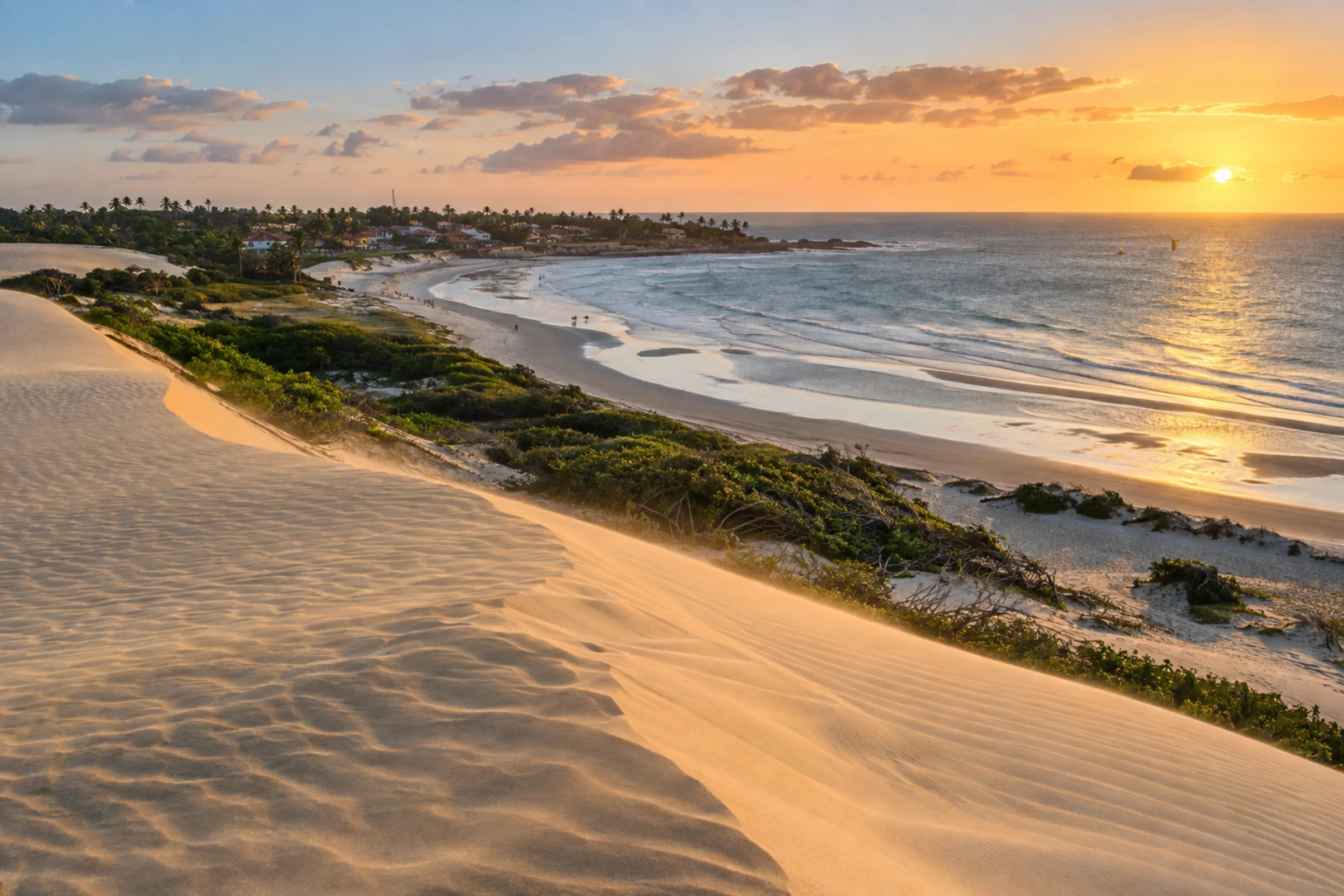
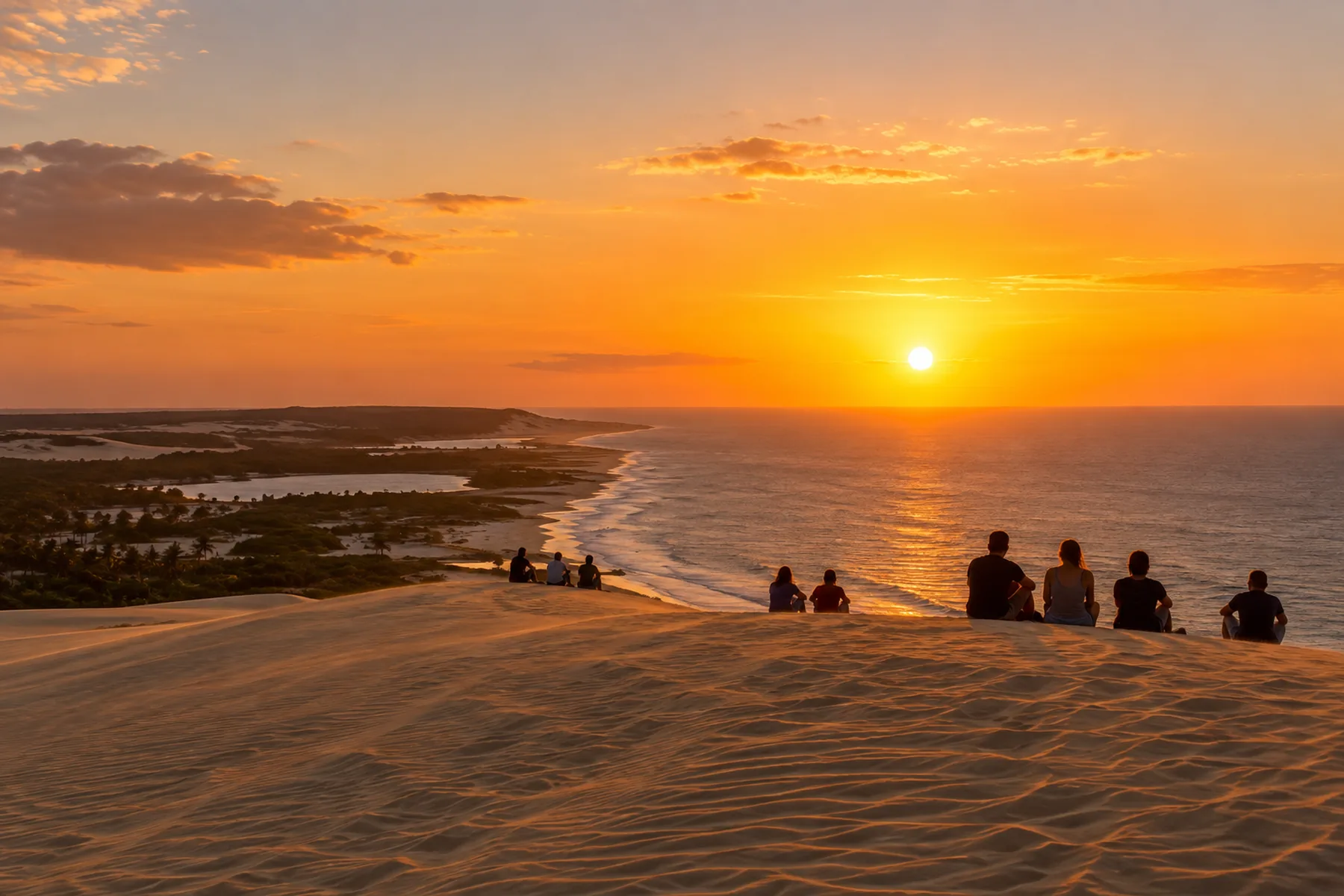
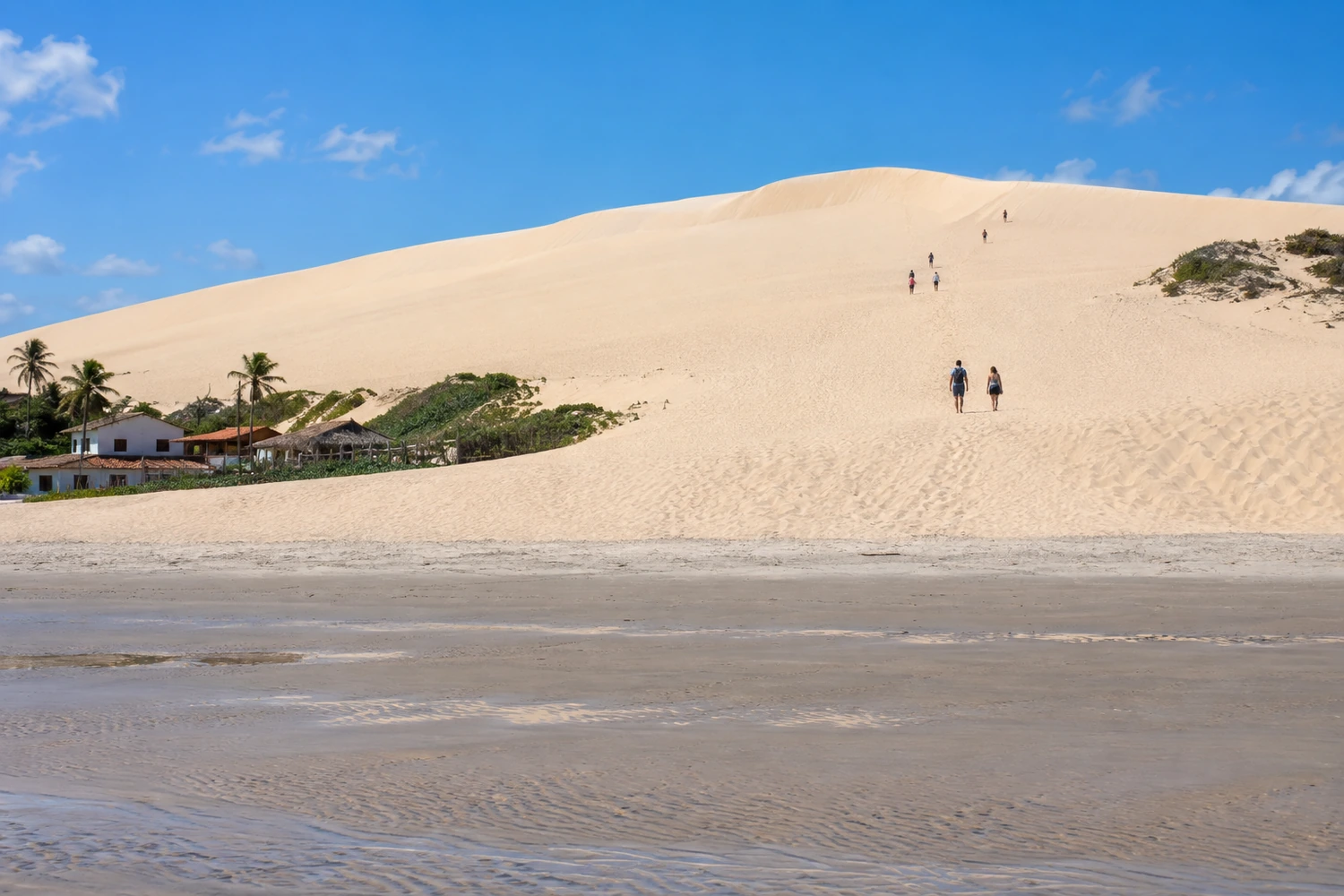
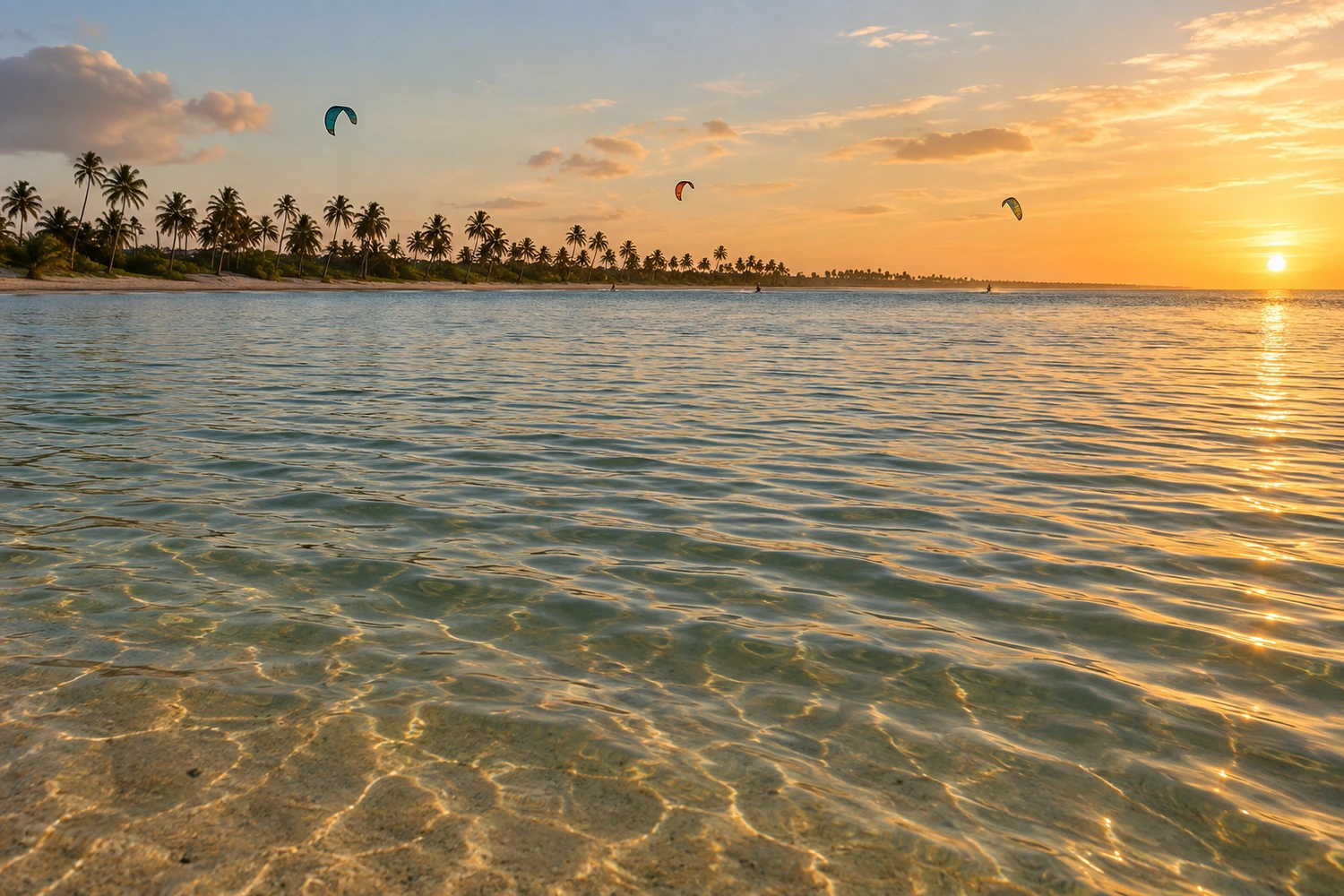
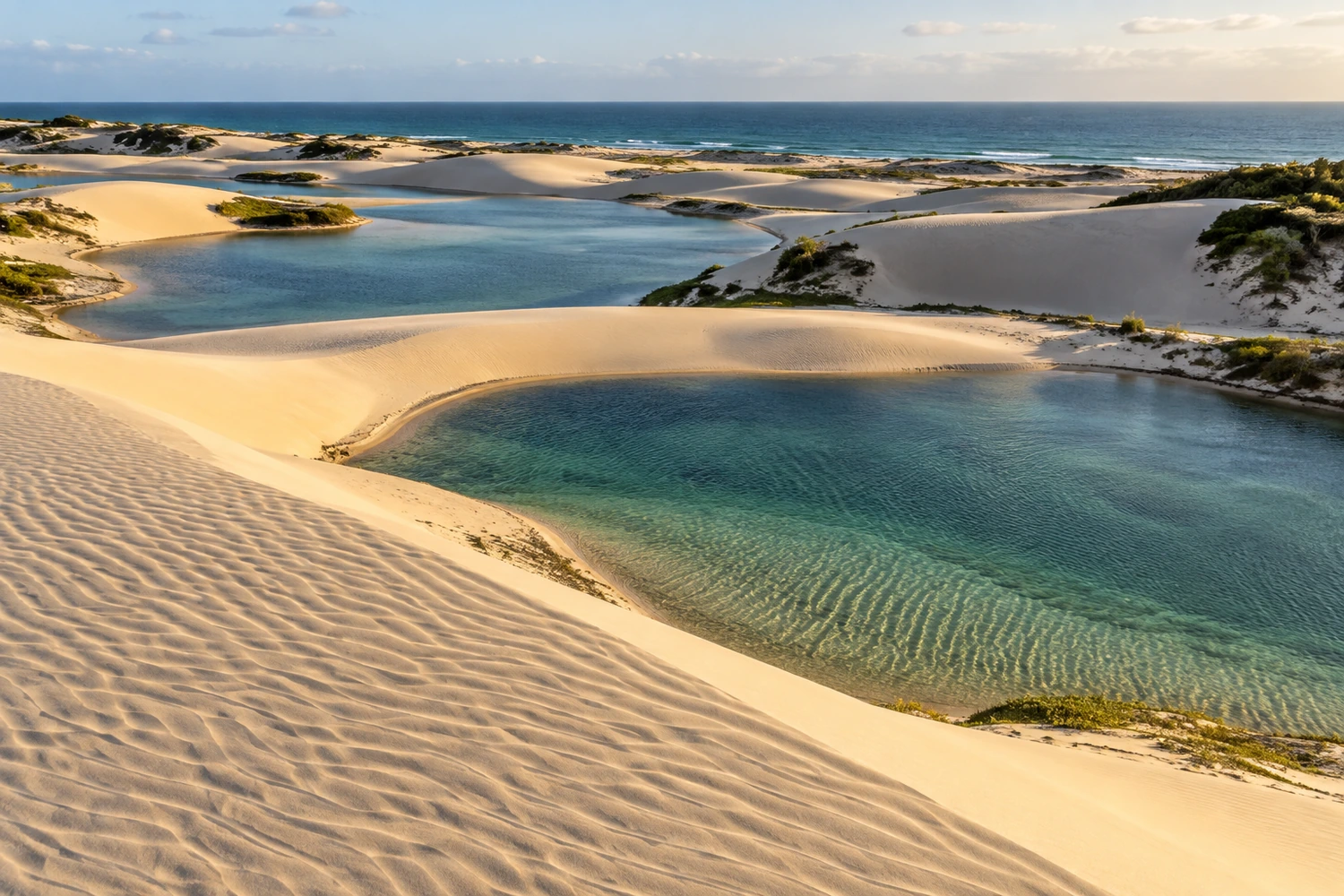
Dunes, freshwater lagoons and sunset from the top of the dune.
Illustrative images. The pictures in this guide are illustrations based on the real place, not photographs, and may differ from it.
Get to know the place
Jericoacoara is still a village of sand streets, but it is surrounded by a national park of dunes, lagoons and cliffs. You spend the day hopping from lagoon to lagoon, lounging in hammocks set in the water, learn kitesurfing in the steady wind and end the day on a dune watching the sun sink into the sea.
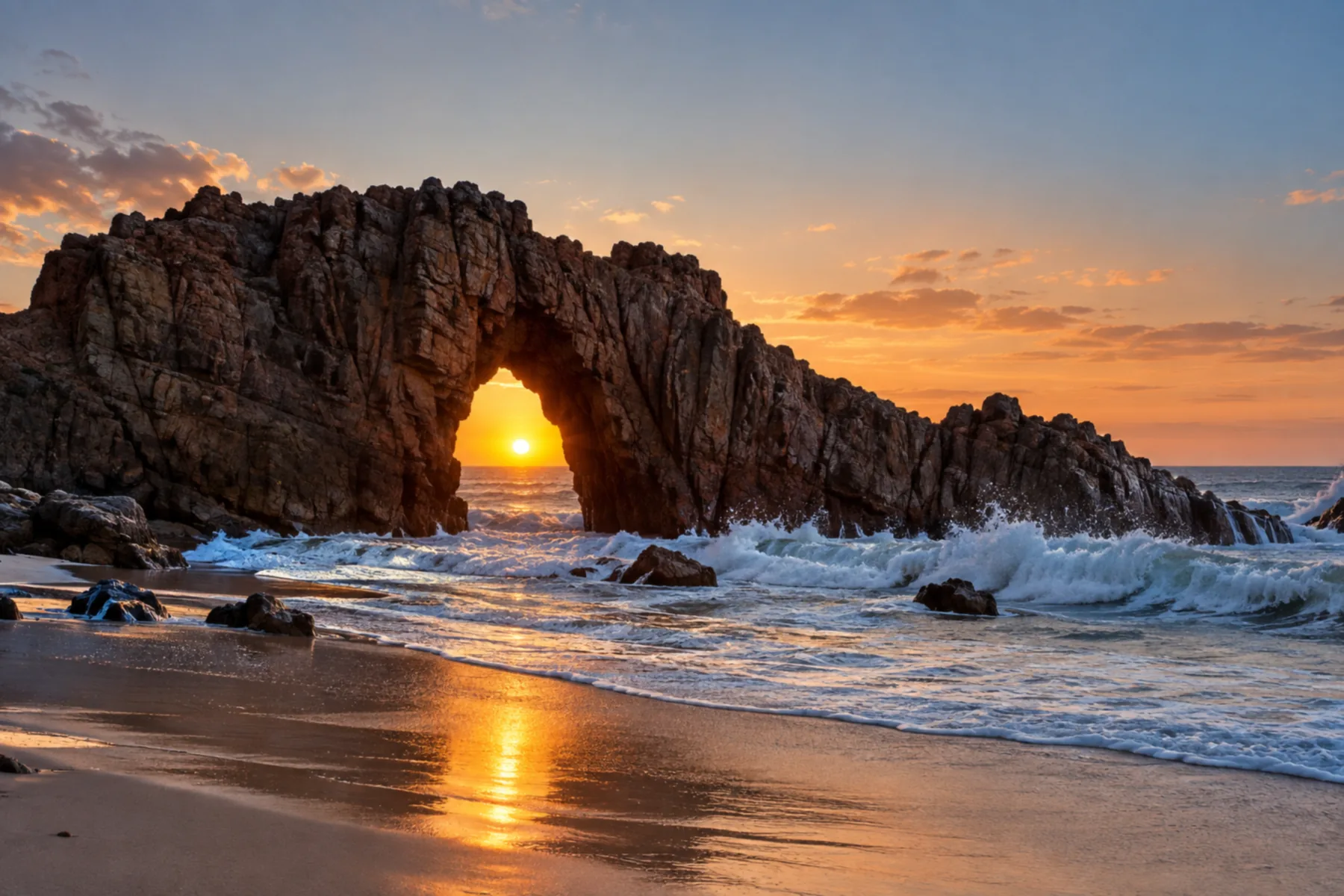
Inside Parque Nacional de Jericoacoara are Pedra Furada, the rock arch that became the village's symbol, Serrote hill with its lighthouse and Árvore da Preguiça (the "Lazy Tree"), shaped by the wind. Lagoa Azul and Lagoa do Paraíso (lagoons) are in the municipality of Jijoca, a short buggy ride away. On the other side, to the east, Praia do Preá (beach), in Cruz, is one of the favorite kitesurfing spots, and Buraco Azul, in Caiçara, is a lagoon of very blue water in an old quarry area.
To the west, the buggy or 4x4 trip to Tatajuba and Camocim crosses dunes, rivers by ferry and lagoons, and is an attraction in itself. Along the coast, Acaraú and Itarema have fishing-village beaches and the best wind conditions in Ceará. Jeri is the start of the Rota das Emoções (Route of Emotions), which continues to the Parnaíba Delta and Lençóis Maranhenses.
This destination brings together 5 cities: Jijoca de Jericoacoara, Cruz, Camocim, Acaraú, Itarema.

A look at the place
These pictures are illustrations based on the real place, not photographs. They may differ from the place.
Click the picture to enlarge it.
One destination, many paths
Start with one city or combine several in your itinerary.
Jijoca de Jericoacoara brings together lagoons, dunes and the village of sand streets by the sea. Pedra Furada and the beaches of the national park reveal landscapes carved by wind and water on the Ceará coast.
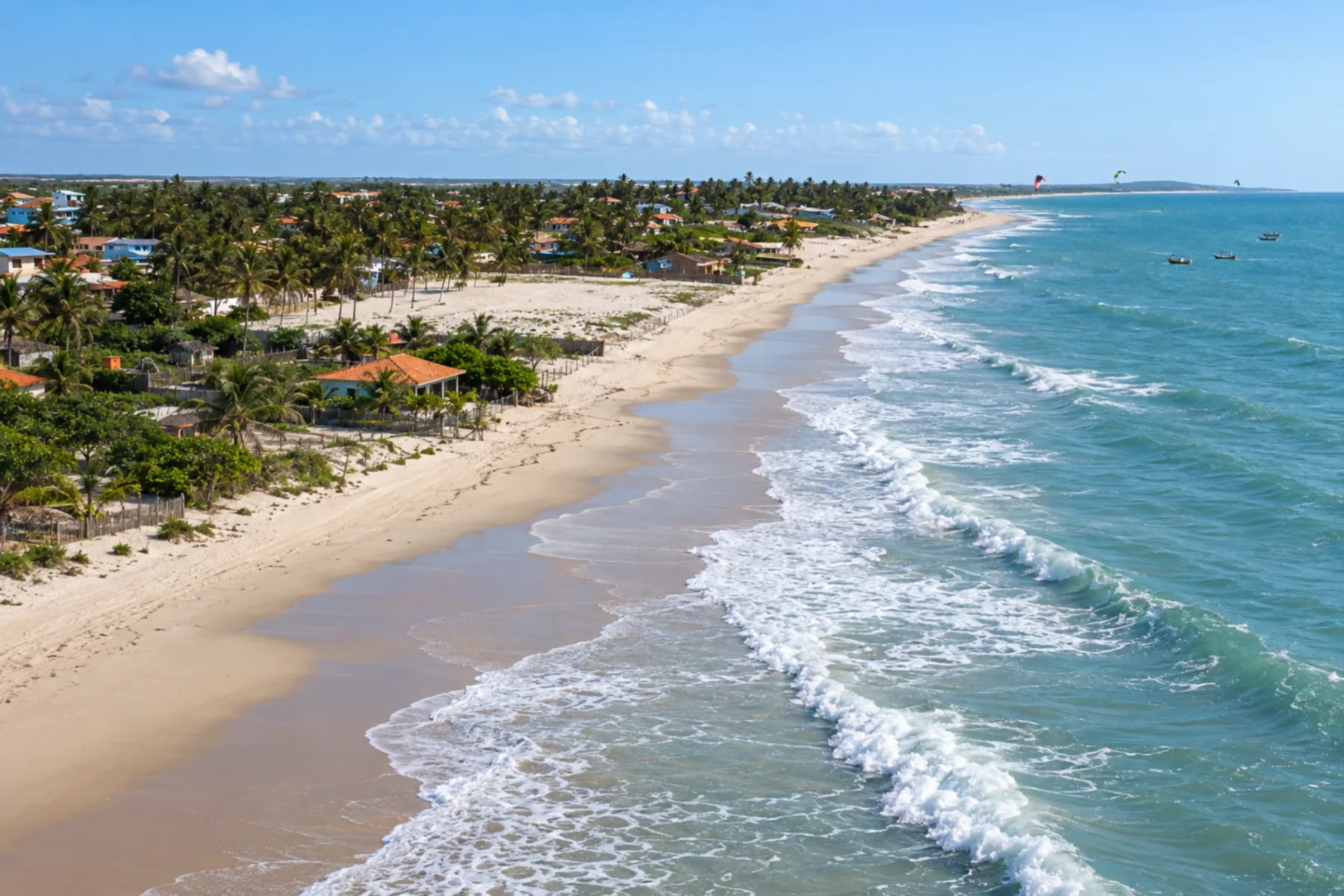
Cruz is home to Praia do Preá, shaped by fishing and by the winds of Ceará's west coast. The long stretch of sand and the kitesurfers make up the landscape, among boats and the life of the coastal community.
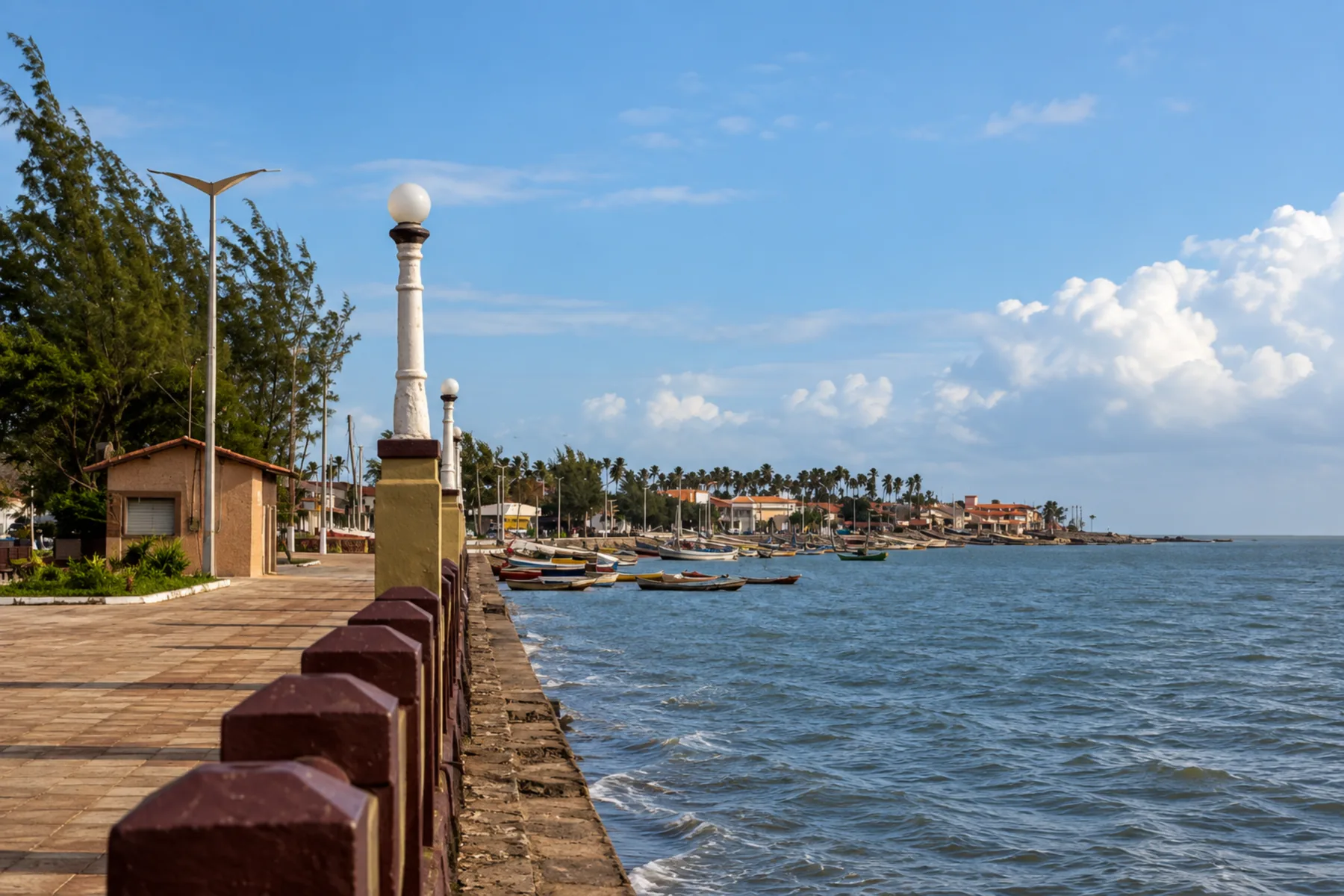
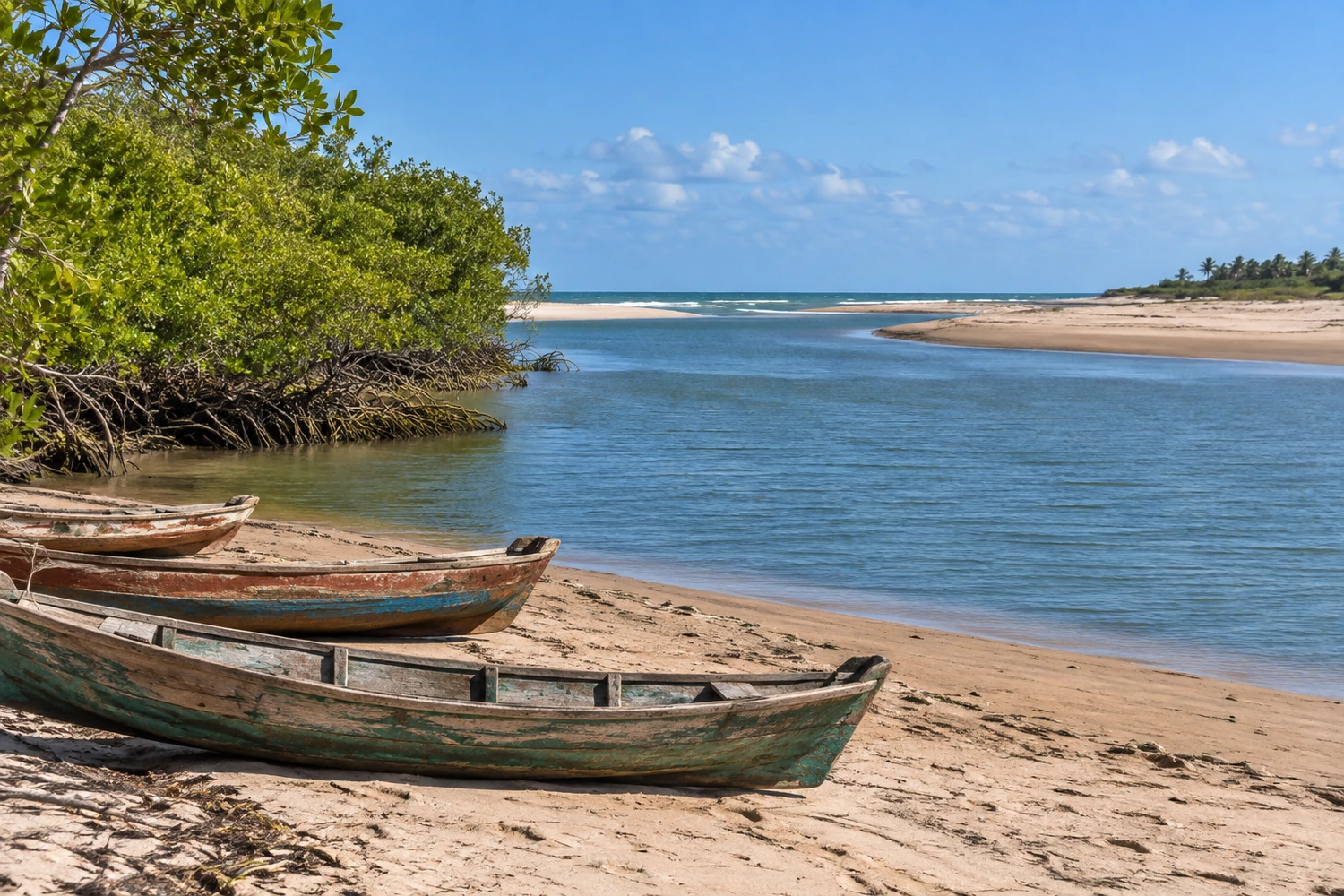
Camocim opens onto the estuary of the Coreaú River, among fishing boats and dune landscapes. The town's waterfront and the routes to beaches and lagoons show different sides of Ceará's west coast.
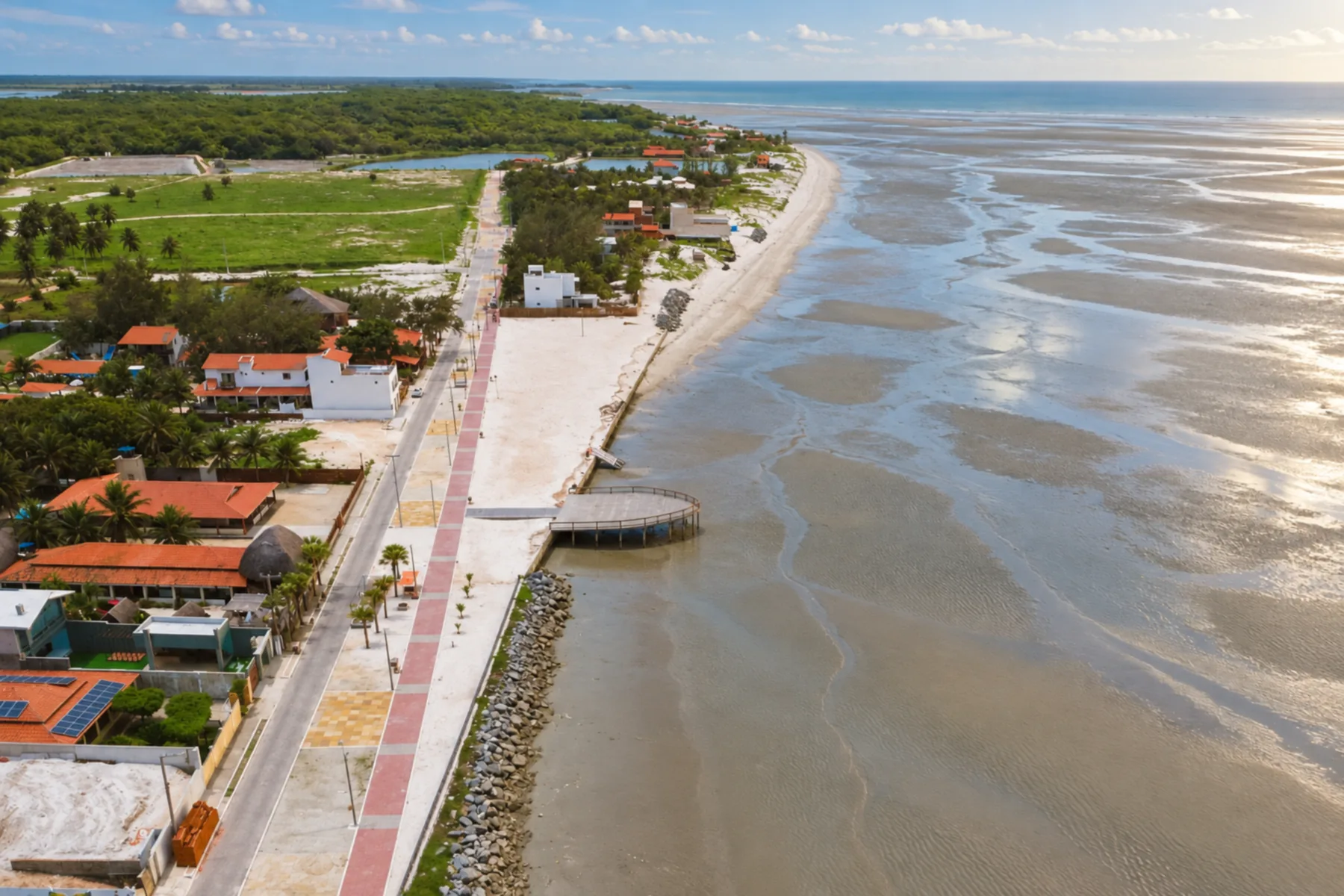
Acaraú combines a fishing tradition, mangroves and beaches on the west coast of Ceará. In Arpoeiras, low tide reveals a wide strip of sand and transforms the landscape next to the coastal community.
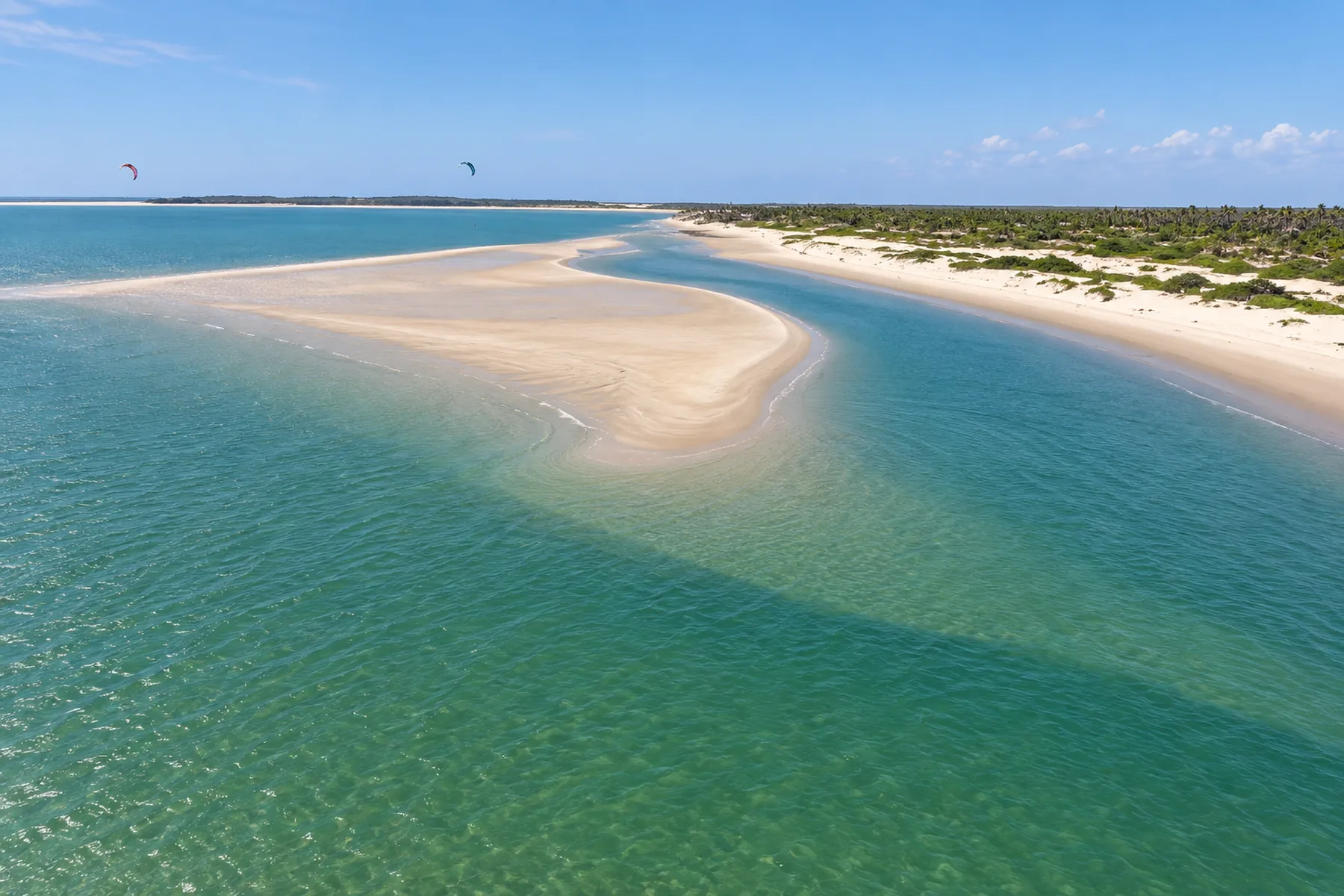
Itarema brings together fishing communities and landscapes of mangroves, beaches and sandbanks. On Ilha do Guajiru, the sheltered waters and the winds draw kitesurfers to the Ceará coast.
The local experience
The big dune next to the village is the late-afternoon meeting point, with an open view of the sea. The climb is quick and the way down usually involves some sliding in the sand.
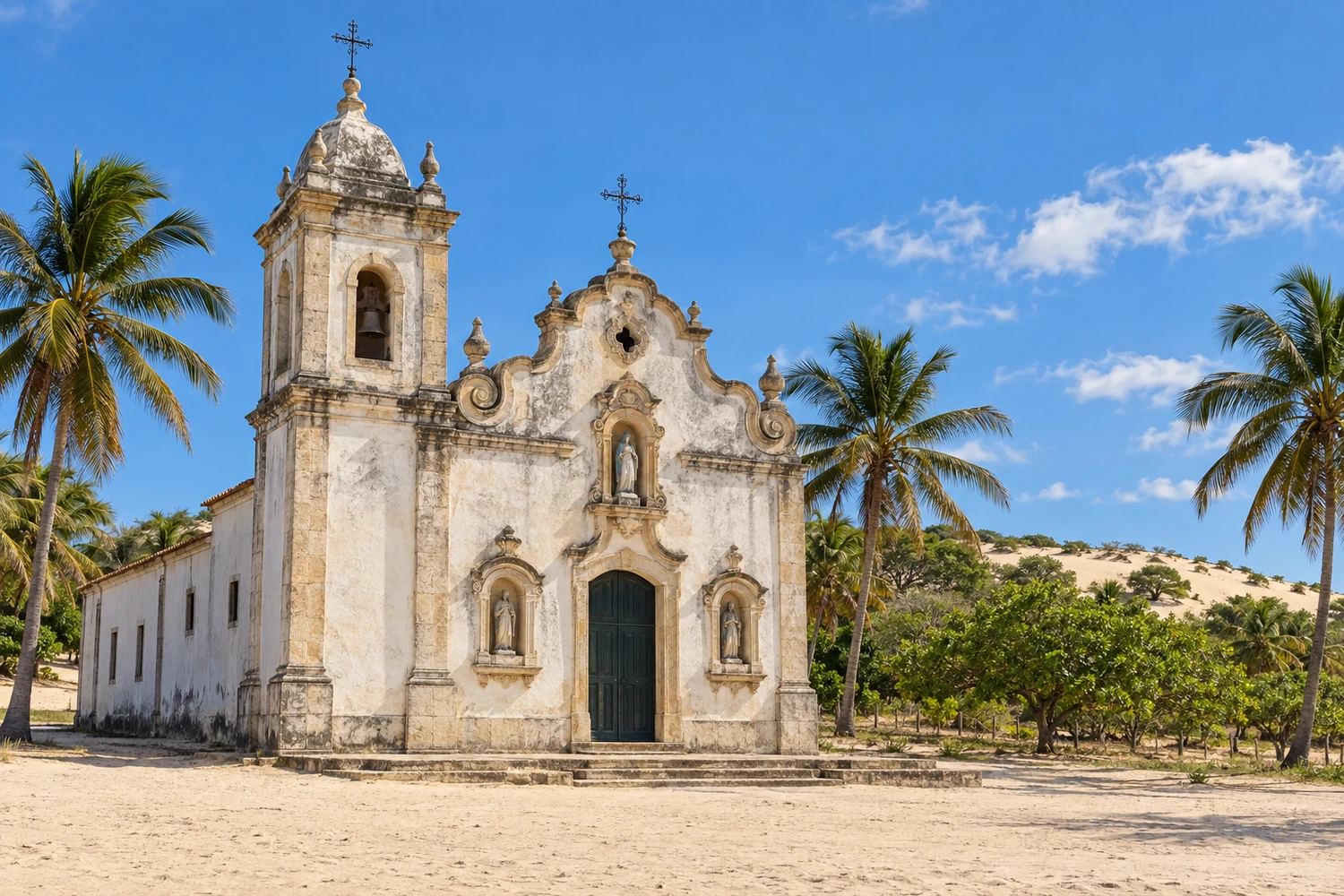
Built in the early 18th century on the lands of the Tremembé Indigenous people, it was buried by the dunes from 1897 and only came back into view in the 1940s. Protected by Iphan (the national heritage institute) in 1980, it is in the district of Almofala.
Discover Igreja de Nossa Senhora da Conceição de Almofala
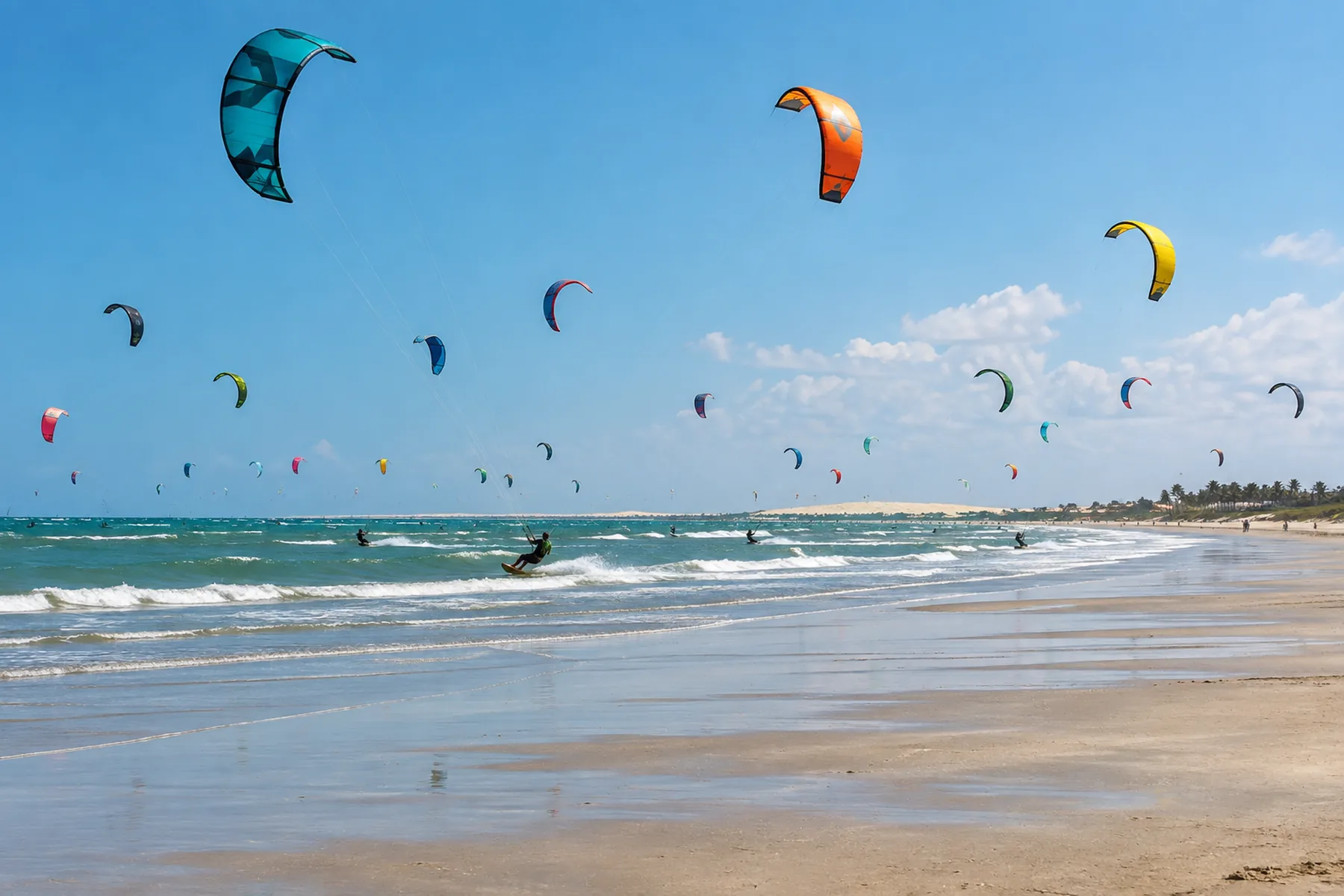
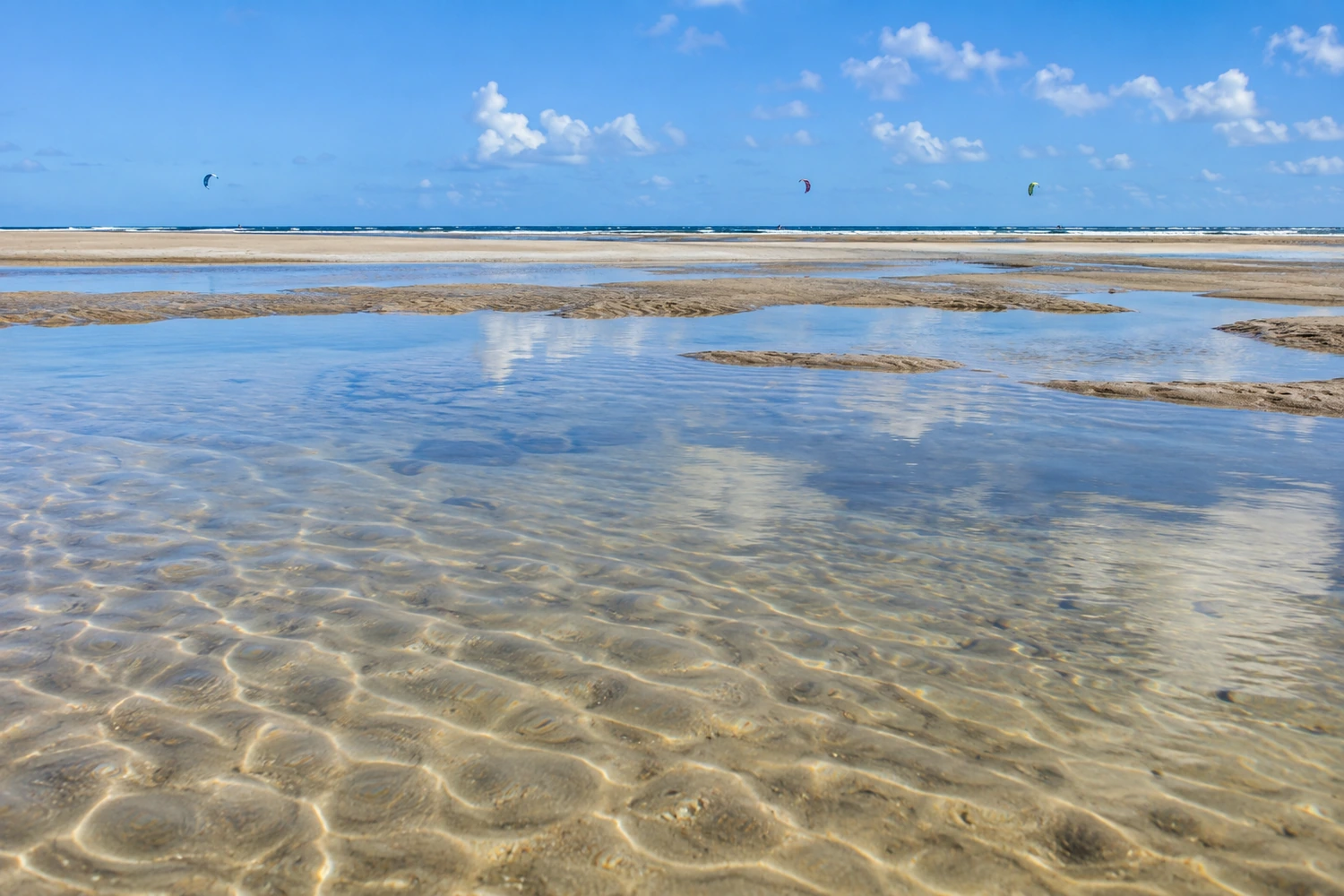
It is about 20 kilometers from downtown, with a long strip of sand and warm water. At low tide natural pools form, and the steady wind makes the beach a popular spot for kitesurfers.
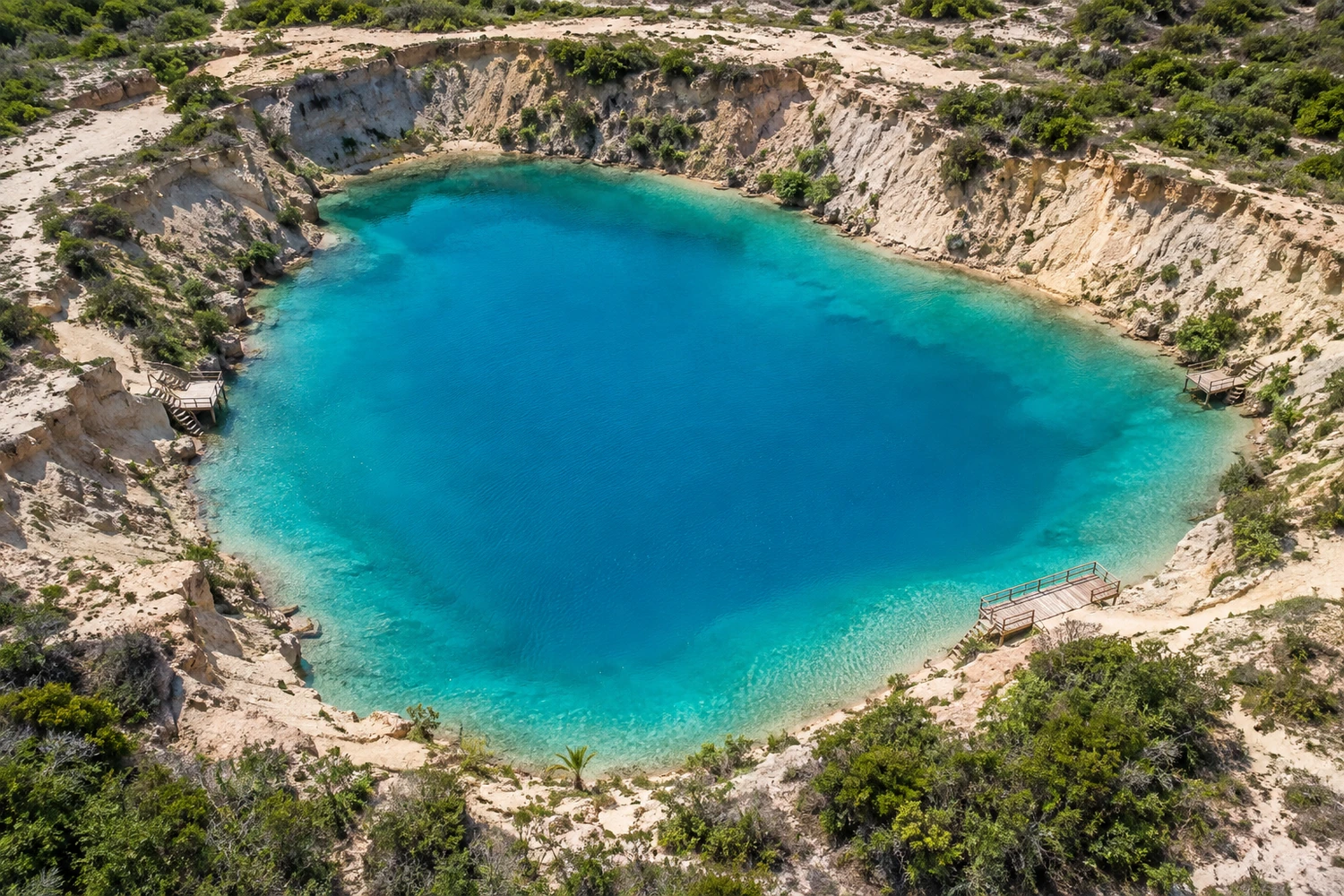
It was created in the district of Caiçara from an excavation to remove soil used to build a highway, which filled with rainwater. The limestone-rich soil gives the water its turquoise color, and the site works as a swimming spot.
Discover Buraco Azul de Caiçara
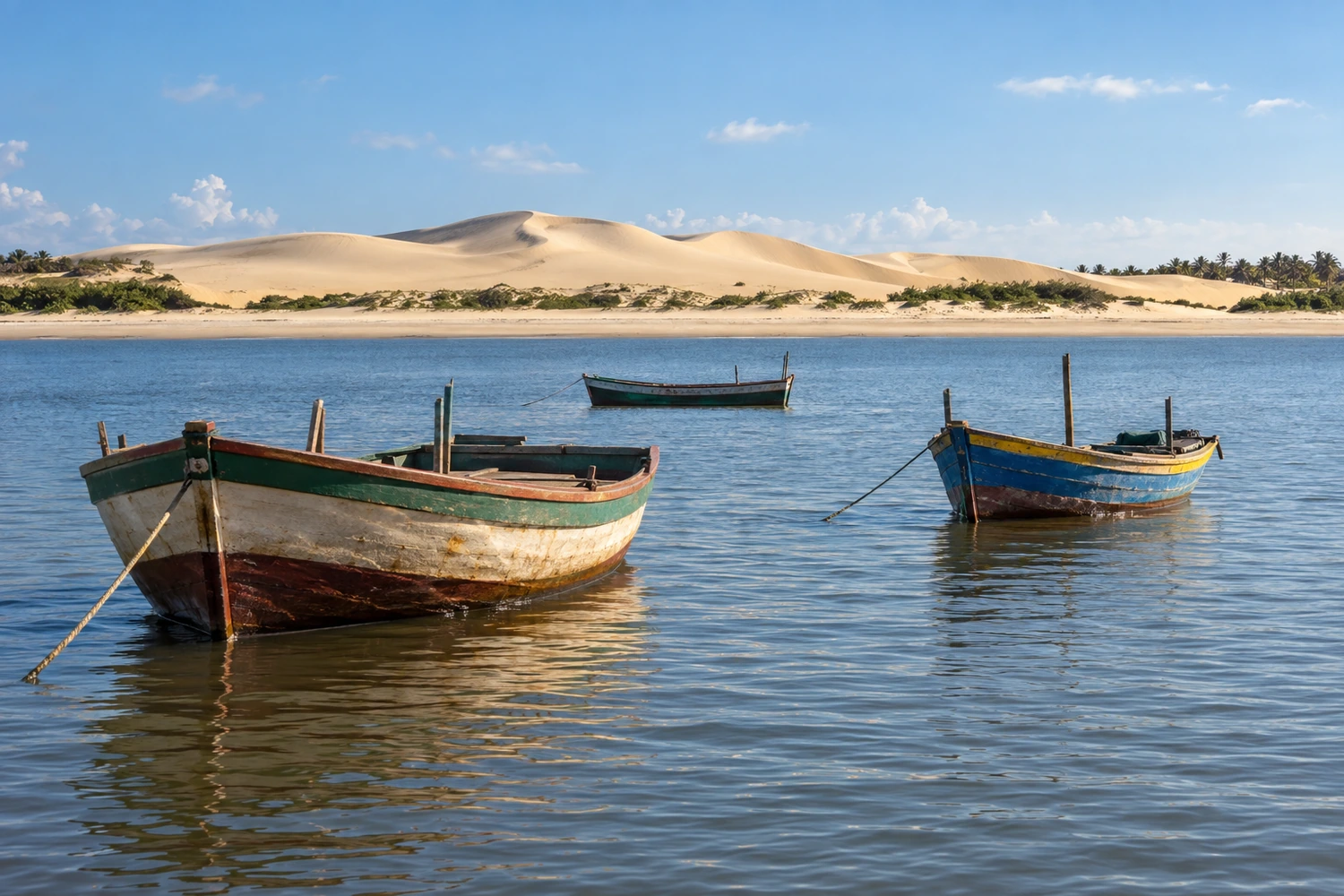
Also called Ilha da Testa Branca, it lies across from town, on the other side of the Coreaú River, and is reached by ferry. It brings together mangroves, dunes and beaches, with views of the riverside houses, the anchored boats and the reddish cliffs.
At high tide, a shallow lagoon forms here that is considered one of the world's good kitesurfing spots, for both beginners and experienced riders. It has sunsets over the sea.
Discover Ilha do Guajiru (Praia da Barra)
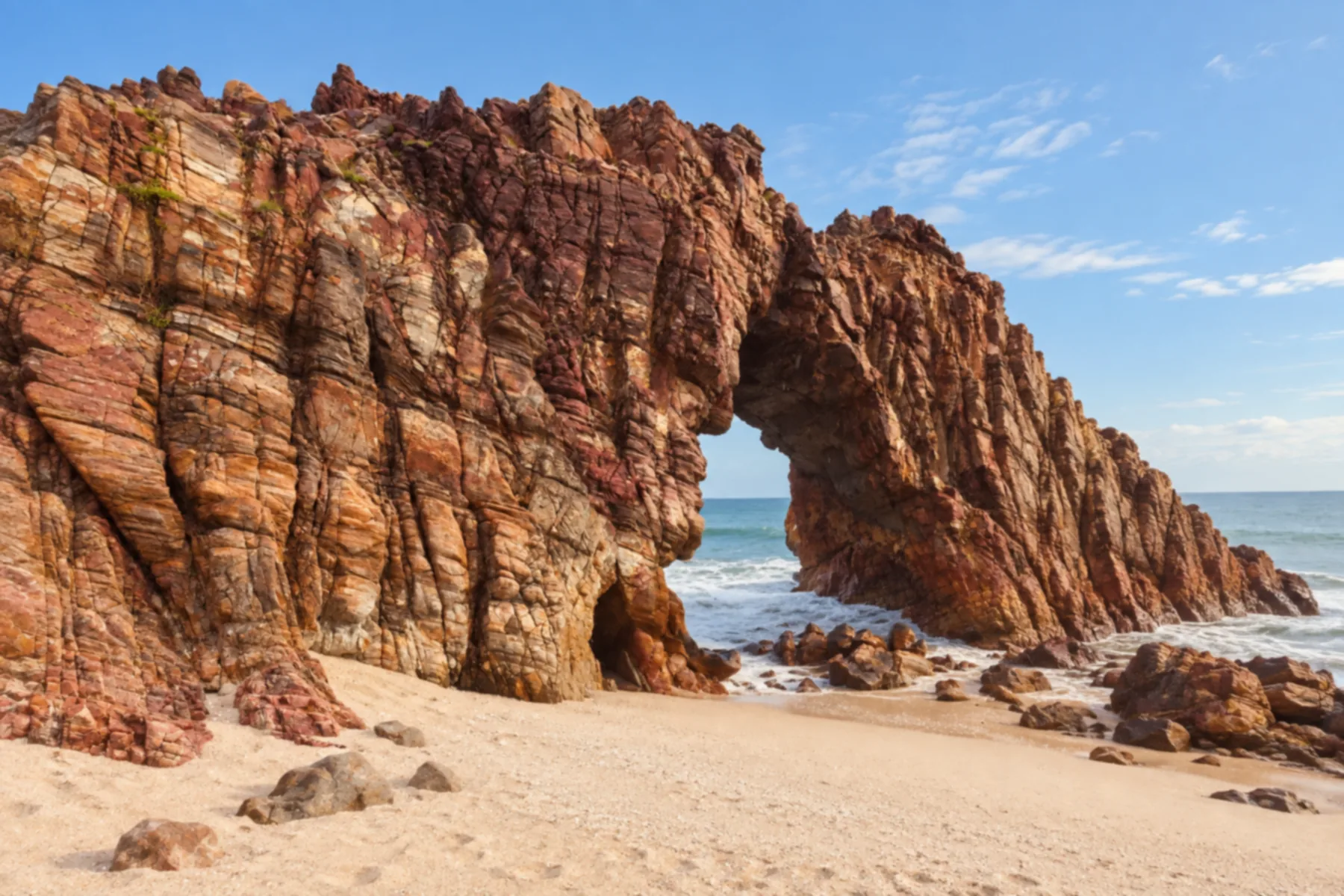
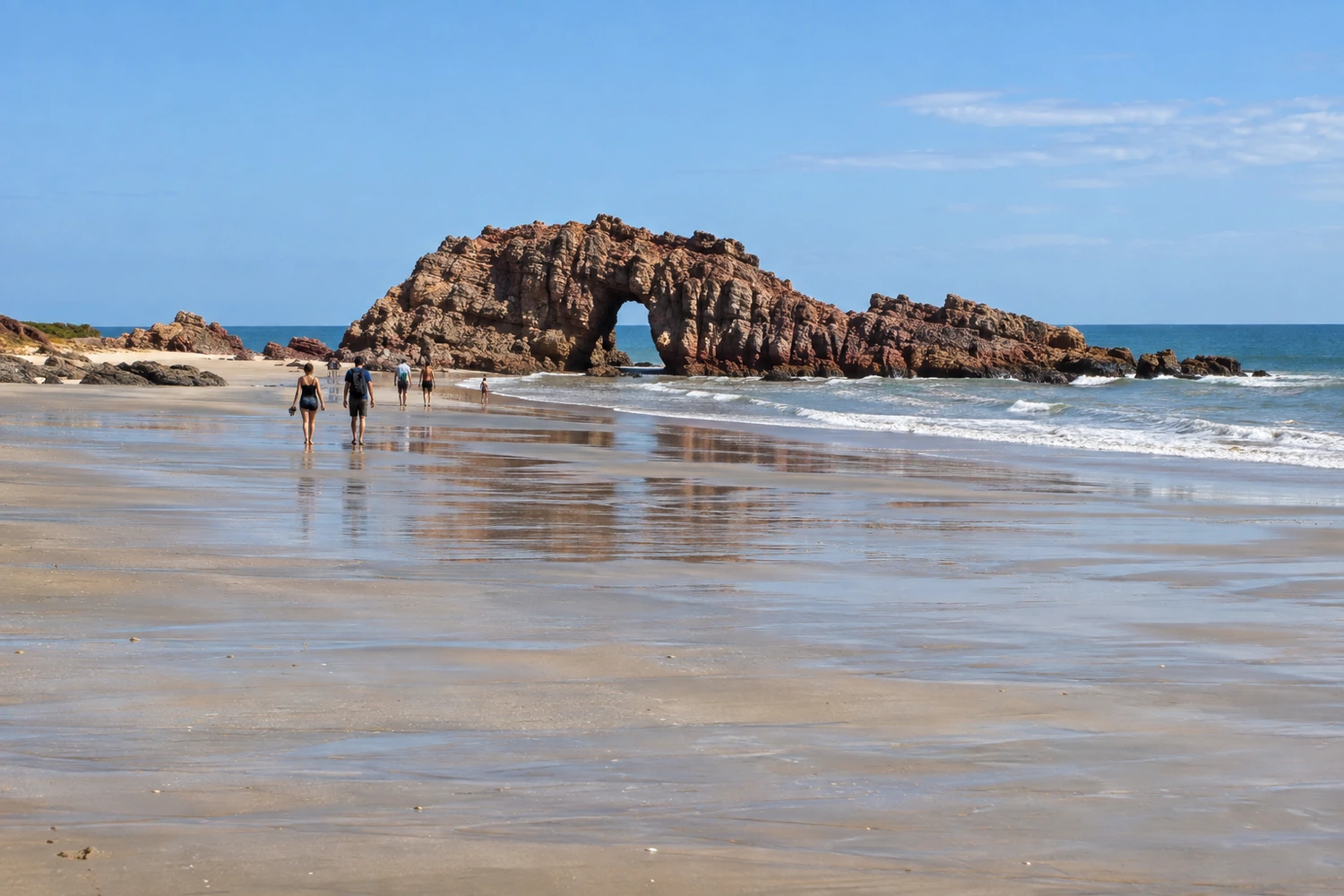
A rock arch carved by the sea, the symbol of Jeri, reached by a walk along the beach at low tide. Between mid-July and August the sun sets right inside the opening.
Located at the mouth of the Acaraú River, where the river meets the sea, it is home to a fishing village that keeps up traditional fishing and shellfish gathering. Boat trips leave from here to see the mangroves and local wildlife.
Discover Praia da Volta do Rio
An old fishing village swallowed by the dunes, about 27 kilometers from Jericoacoara. Shallow lagoons of warm water form between the sand hills, and access along the beach depends on low tide.
Inaugurated on December 20, 1884, it marked the first organized religious presence in the area and is dedicated to the municipality's patron saint. Between September and October, it hosts the São Francisco festivities, which draw worshippers from across the region.
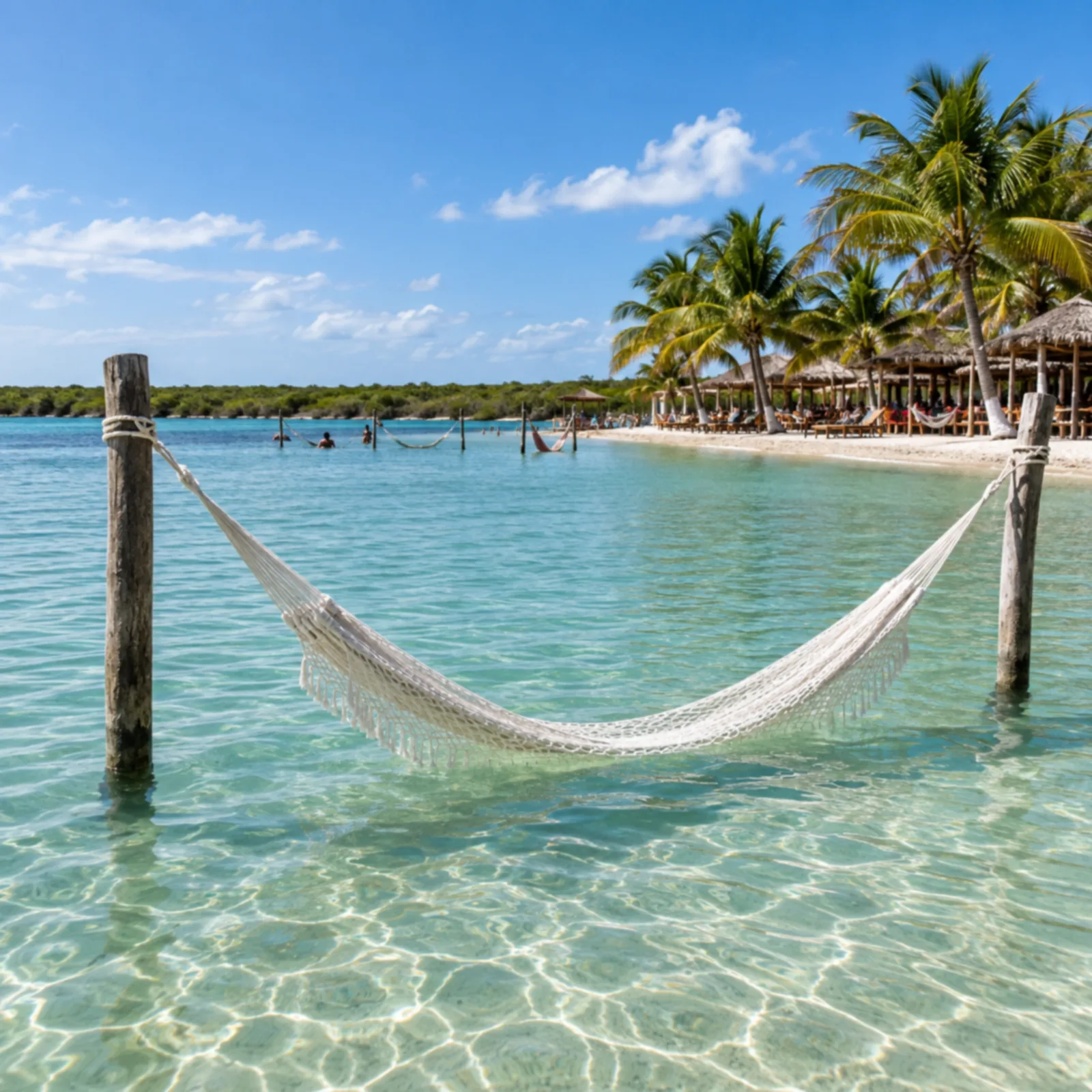
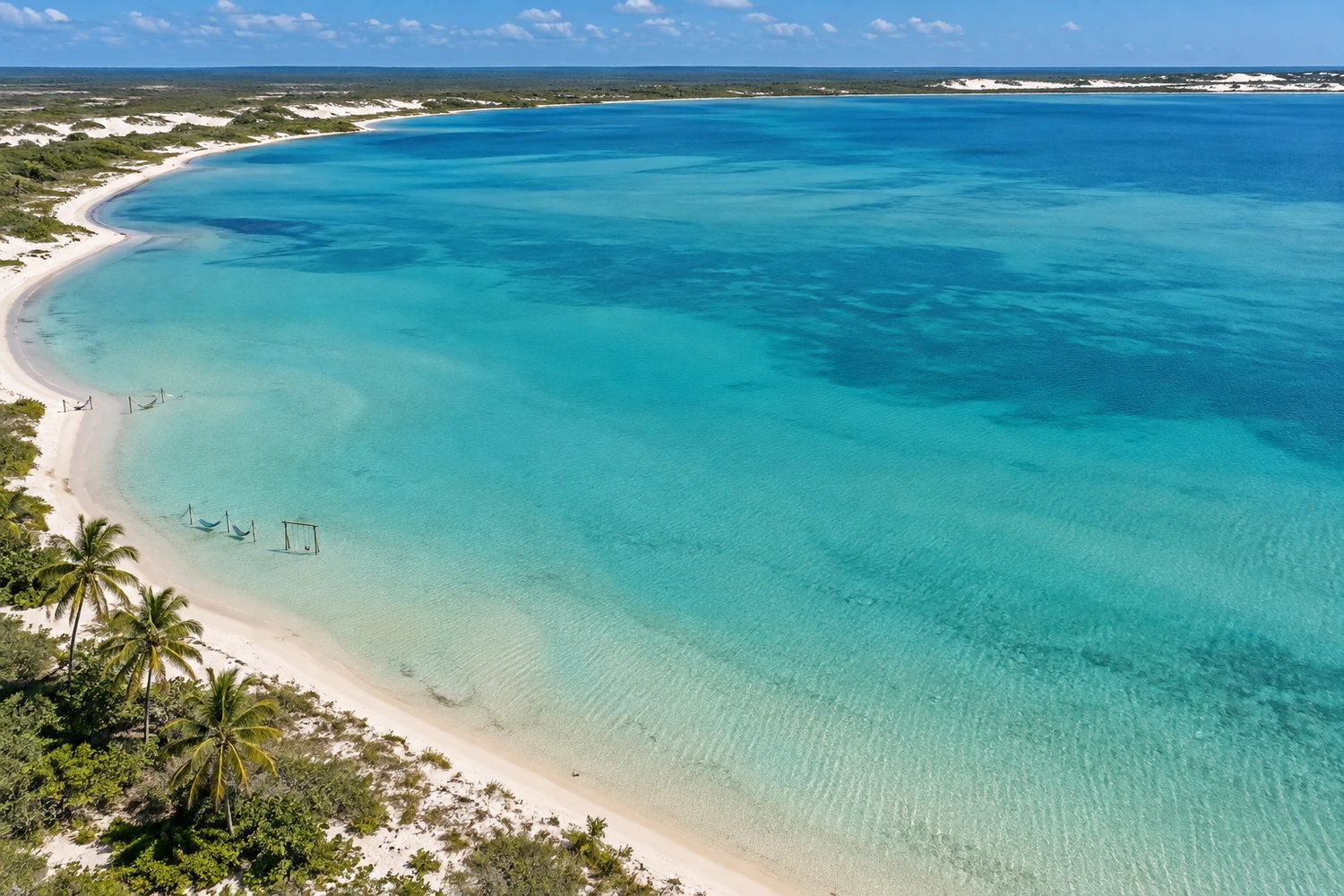
A huge lagoon of shallow fresh water, with hammocks and swings in the water and stalls on the shore. It makes for a full-day outing.
It is 12 kilometers from downtown, with dunes, coconut groves and an emerald-green sea with clean, calm water. It is in the same district as the historic Almofala church and about 4 kilometers from Praia de Torrões.
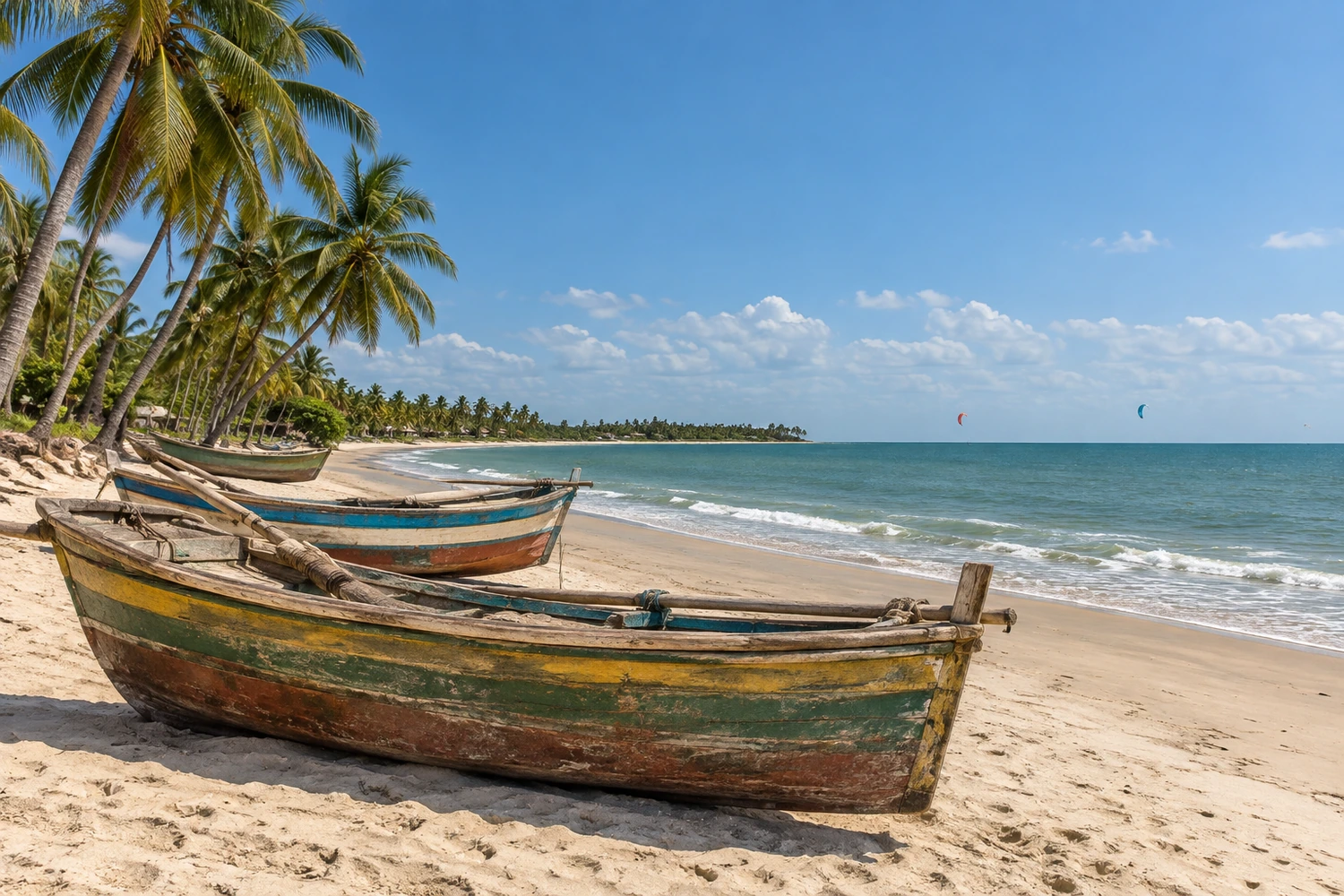
A fishing village about 15 kilometers from downtown, with low waves, dunes, coconut palms and cliffs. The strong wind is great for kitesurfing and windsurfing, and traditional fishing boats sit on the sand.
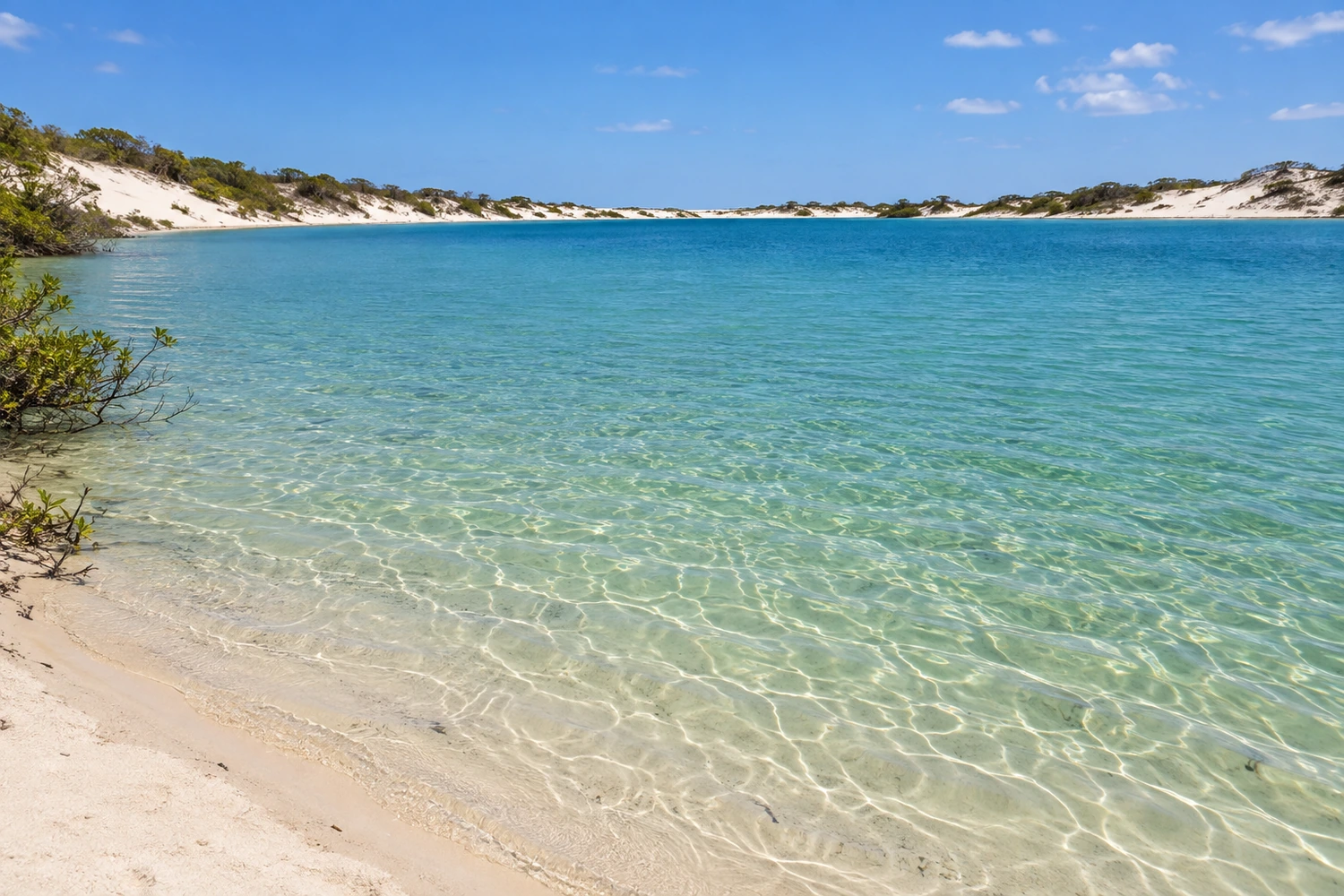
Next to Lagoa do Paraíso, it is smaller and usually calmer, good if you want to escape the crowds. Both fit into the same buggy tour.
It is 12 kilometers from town, between Praia do Farol do Trapiá and Praia de Maceió, with access along the shore. It is little visited and known for its strong, steady wind, which draws water sports enthusiasts.
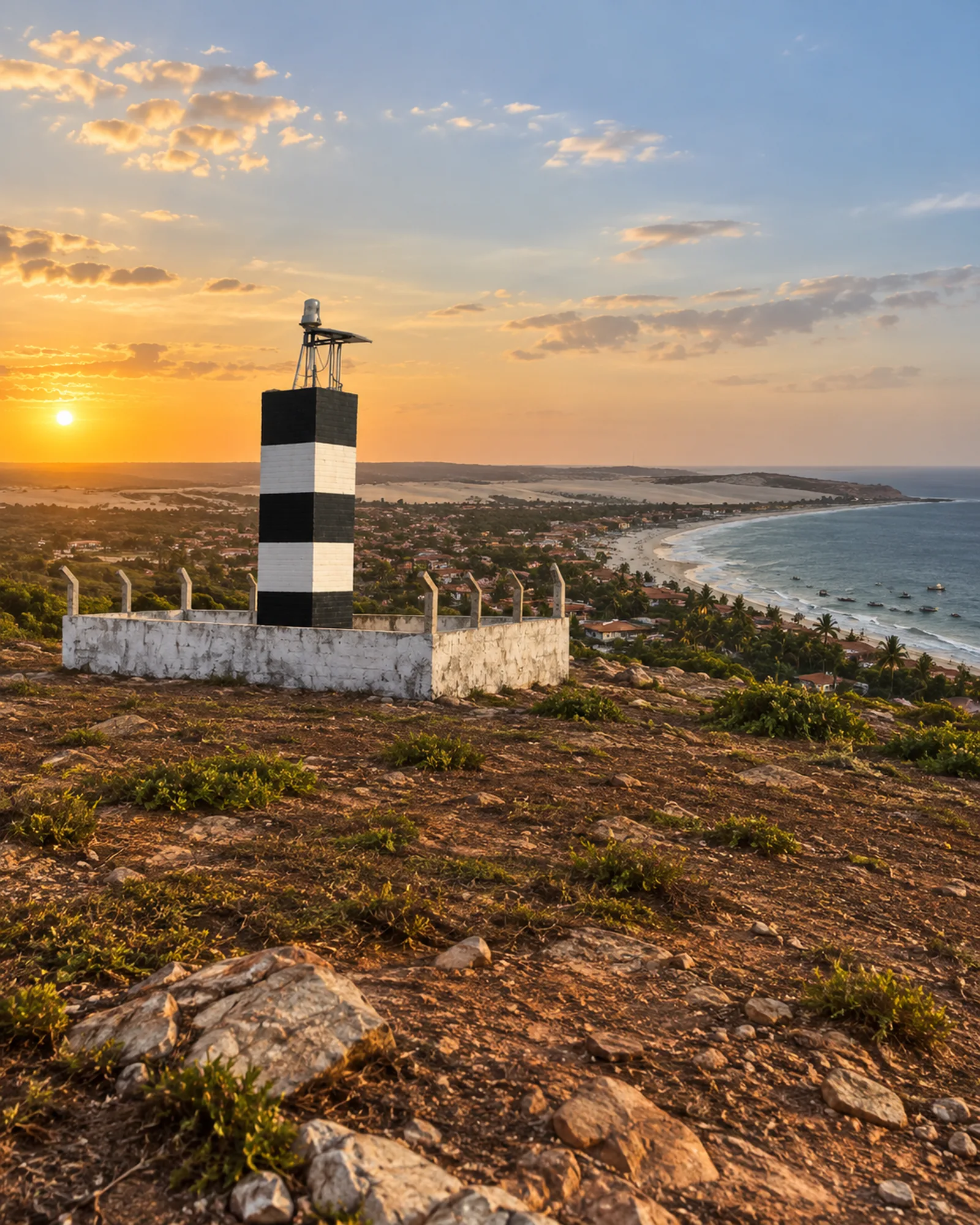
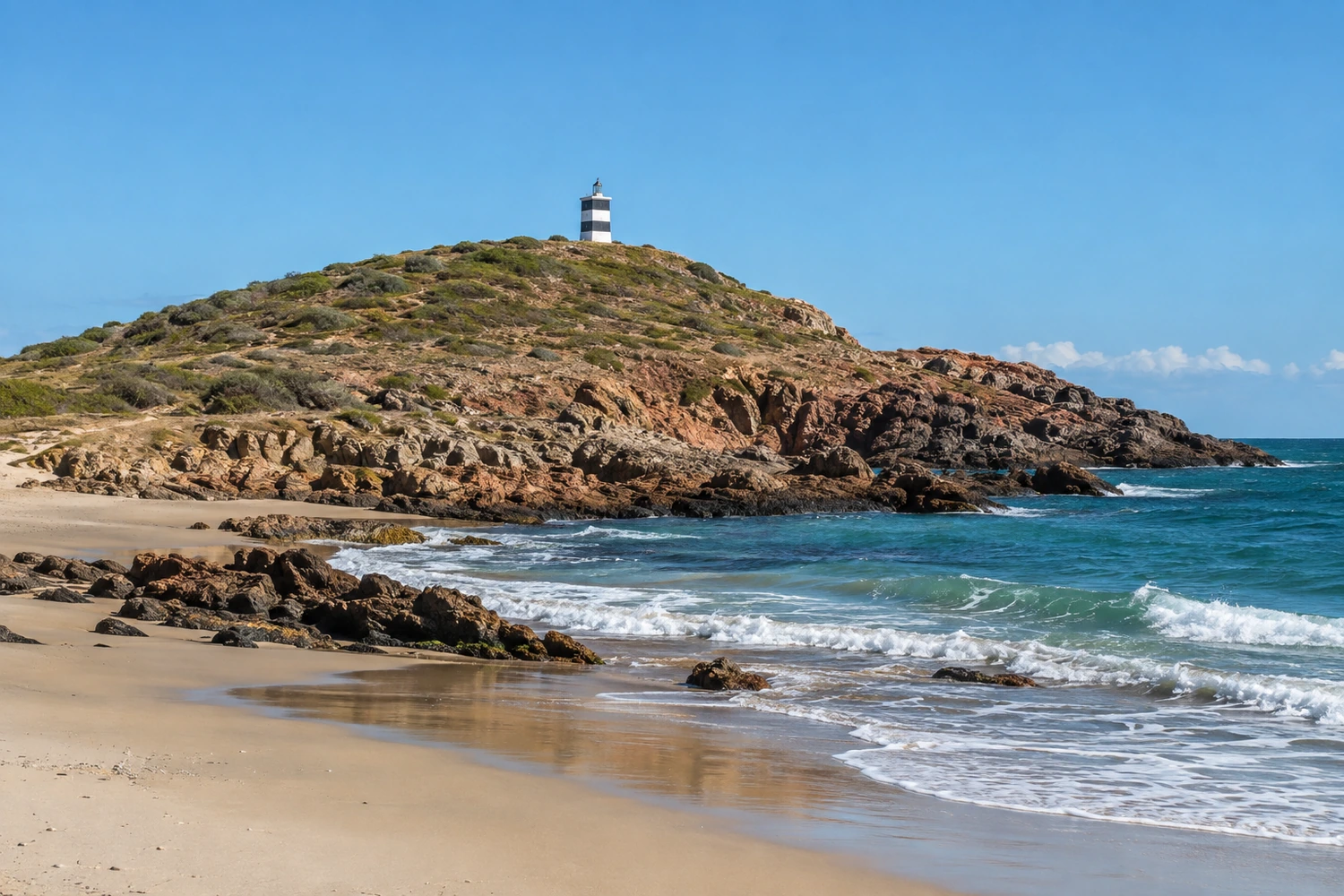
The highest point in the park, with a lighthouse on top and views of the village, the dunes and the coast. The climb is short, but tough in the sun.
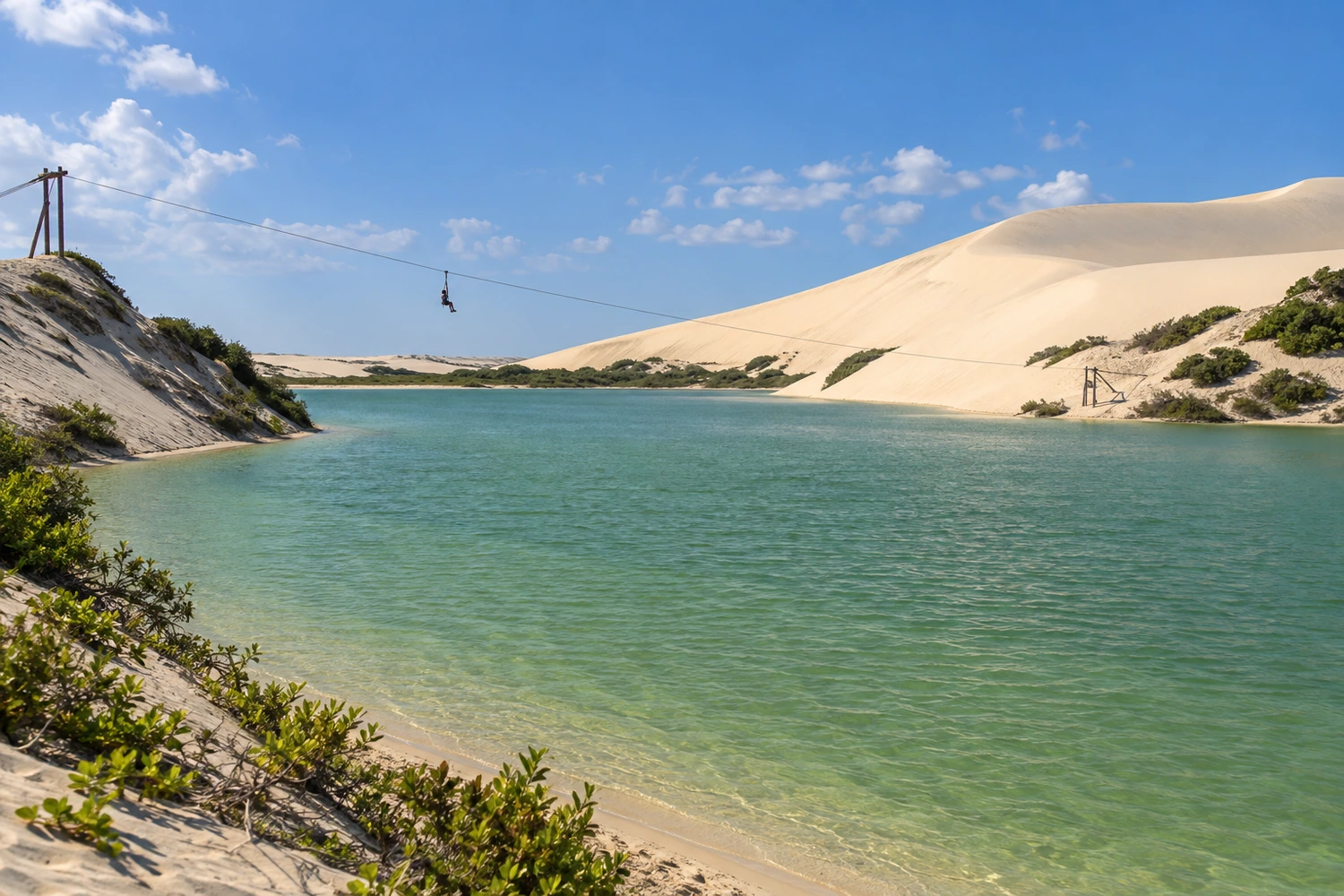
A fishing village reached by a 4x4 ride through the dunes and a ferry crossing, with a freshwater lagoon next to the beach. It has a zip line and rustic bars by the water.
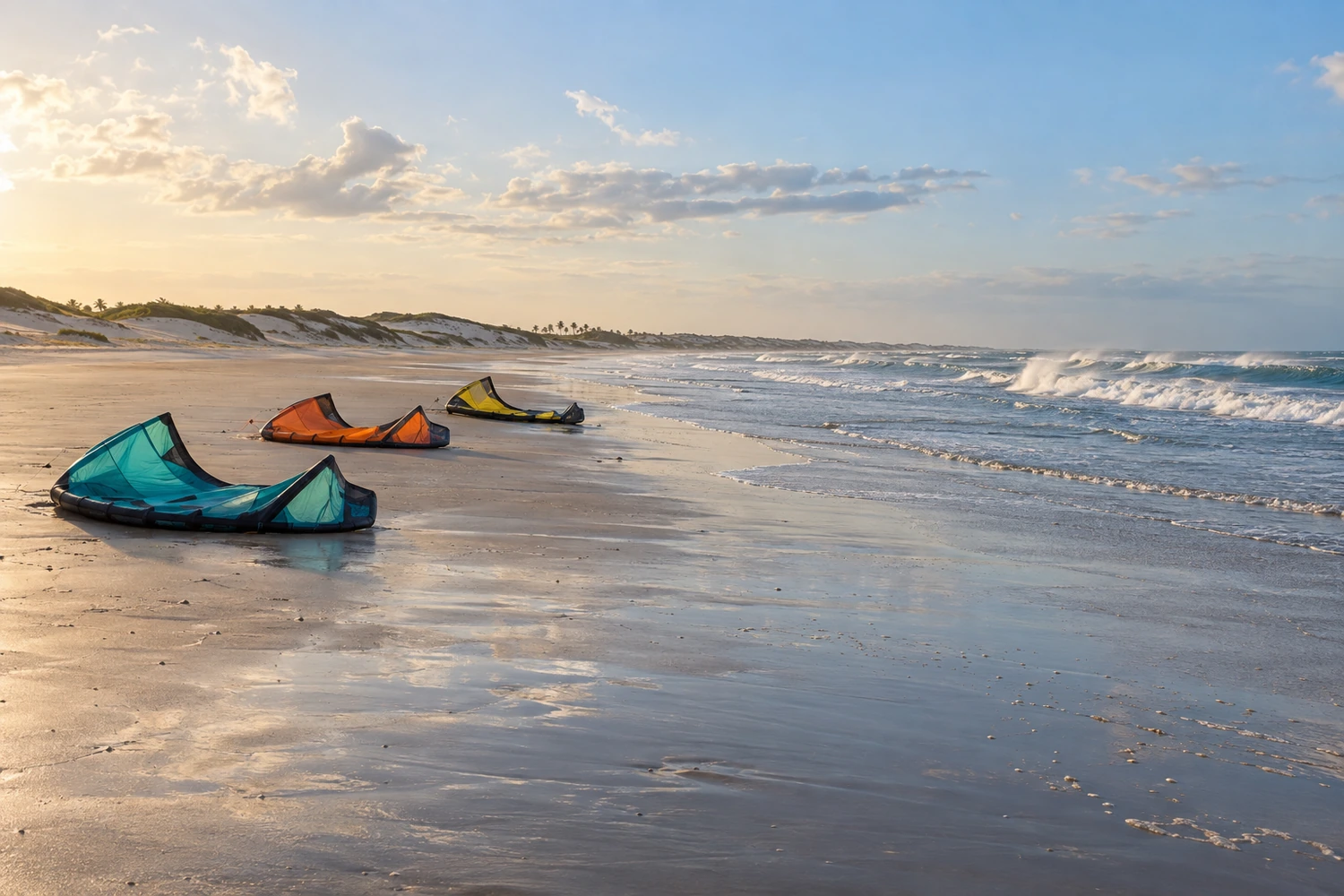
A long, windy beach, one of the most popular in the country for kitesurfing. It is on the way between the airport and the village of Jericoacoara.
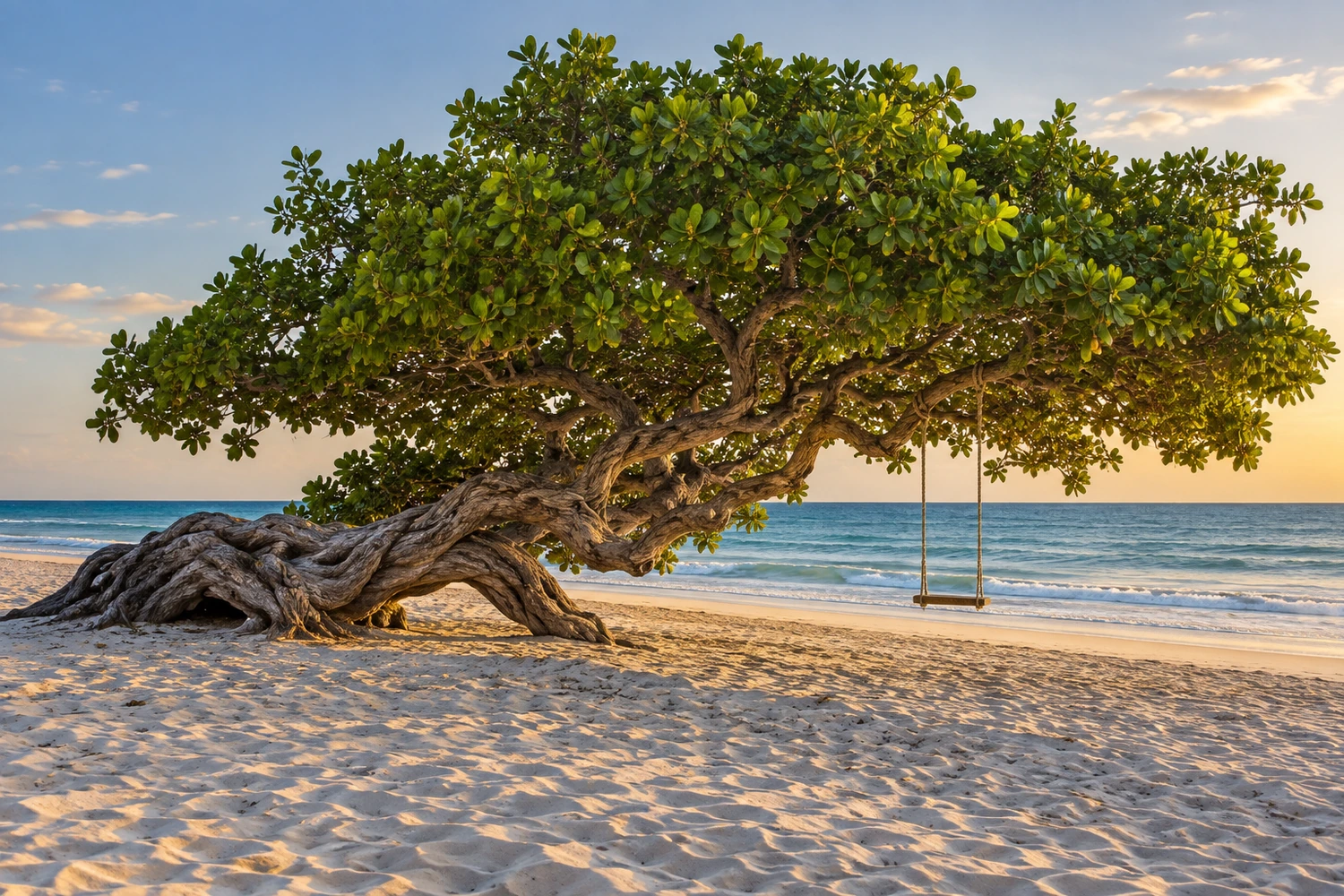
A mangrove tree bent over by the wind, with its trunk leaning almost flat against the sand. It is outside the village, on the way to Preá.
Your base to explore
Where you stay is part of the trip. Choose the area that best fits your itinerary.
A property of seven glamping-style bungalows, right on the sand at Praia das Caraúbas, in Camocim. It has a pool, a restaurant with tables on the beach, bicycles and massages, and draws couples and kitesurfers looking for a quiet place.
A hotel on Rua Firmino Alves Nascimento, in Castelhano, a kitesurfing area between Barrinha and Preá. It has a pool with direct access from the rooms, a restaurant and air conditioning, and mainly caters to people who come to the region to ride.
A pousada on Avenida Costeira, on Ilha do Guajiru, with beach access and spacious suites. It has a pool with sea views, a kitesurfing school, a Mediterranean restaurant and a bar, and suits travelers who come to Guajiru to ride and relax.
A beachfront pousada on Rua das Dunas, at Praia do Preá, with naturally ventilated wooden bungalows and balconies with hammocks. It has a pool, spa, restaurant, bar, yoga classes and a kitesurfing school, and suits travelers who come to Preá for the wind and the peace and quiet.
A 24-bungalow pousada on Rua das Dunas, facing the sea, at the far end of the village beach and close to the little center. It has a lagoon-shaped pool, a restaurant, yoga classes and a water sports center, and appeals to travelers looking for peace and contact with nature.
A property on Rua da Praia, on Ilha do Guajiru, with wood and bamboo buildings, a natural swimming pool and a rooftop Jacuzzi. It offers suites and entire houses, a restaurant, spa, yoga and a kitesurfing school, and suits couples and riders looking for a charming retreat.
A six-room boutique pousada with a beach club at Praia do Guriú, a Camocim village next to Jericoacoara, with direct access to the sand. It has a pool, a restaurant and a bar, and suits travelers who want a secluded, quiet place, ideally arriving by car.
A themed pousada shaped like a medieval castle in downtown Acaraú, with a pool, restaurant and bar. It is often a stopover for travelers heading to Jericoacoara and the kitesurfing beaches of the west coast.
A 14-suite pousada on Rua do Ibama, on the waterfront of the village beach, next to the national park. It has a pool, a restaurant, a spa and suites with balconies and sea views, and suits couples looking for a quiet stay with a view of the sunset.
A pousada right on the sand on Rua São José, at Praia do Preá, in a rustic-modern style, with sea-view rooms and breakfast. It suits travelers who want to stay on the beach with streamlined facilities.
A 22-suite pousada on Rua do Forró, in the center of the village, a few minutes' walk from the beach, restaurants and shops. It has a pool with a hot tub, a children's pool and breakfast with tapioca and corn cake, and works well for families and travelers who want everything close by.
A pousada right on the sand at Praia do Farol, in Itarema, away from downtown and reached along the beach at low tide, with a beachfront bar and restaurant. It appeals to travelers looking for peace and privacy on Ceará's west coast.
A pousada on Rua SDO 102, in the Praia das Barreiras subdivision, a few steps from the beach. It has a pool, suites with private pools, a restaurant and a bar, and suits couples and families looking for a quiet place outside downtown.
A boutique hotel on Avenida Beira-Mar at Praia do Preá, with a few rooms facing the sea and the infinity pool. It has a spa, a kitesurfing school and a French-influenced restaurant, and suits couples and kiters looking for comfort.
Casa de São José is in the historic center of Camocim. It has a pool, a garden and a Pilates space.
Nomad's Lagoa is across from Lagoa do Paraíso, in Jijoca de Jericoacoara. It has air conditioning, Starlink internet, breakfast, games, a gym, a private lagoon beach, a restaurant and a pizzeria.
Flavors of the destination
A café on Avenida João Batista Rios, in the town of Itarema, in a simple, airy room. It serves a northeastern Brazilian breakfast with tapioca crepes, cuscuz (steamed cornmeal), sandwiches, juices and homemade cakes, and caters to families and people passing through town.
A beach restaurant on a stabilized dune in Barrinha de Baixo, with sea views, lounge chairs and a bar. It specializes in octopus, lobster and fish, such as octopus rice, and caters to people spending the day at the beach.
A restaurant on Rua São Francisco, at the corner of Beco Doce, in the center of the village, run by businesswoman Sônia Cavalcante, with tables on the sand. The cooking is seafood and regional dishes, with moquecas (stews), stuffed crab shells and snook, and suits travelers who want fish and shellfish in the little center.
A restaurant on Avenida Beira Mar, downtown, with a view of the beach. It serves a self-service buffet at lunch, plus barbecue, pizzas and à la carte snacks, and caters to families and people strolling along the town's waterfront.
A beachfront restaurant on Rua da Saúde, at Praia do Preá, with outdoor tables. The menu mixes seafood and pasta, such as fisherman's risotto, octopus à lagareiro (roasted with olive oil and garlic) and seafood spaghetti, and suits travelers who want a more elaborate dinner after a day at the beach.
A restaurant on Ilha do Guajiru, in Itarema, with a menu that changes with the day's fresh produce: fish and seafood, meats, vegetarian options and homemade pasta. It is more upscale and popular with kitesurfers and couples staying on the island.
A restaurant on Rua São Francisco run by Belgian chef Hervé Witmeur, who also owns La Cozinha in Barra Grande, Piauí. He uses European techniques with regional ingredients, many from his farm in Parnaíba, on a tasting menu or à la carte, with dishes such as crab with bottarga and cashew fruit; recommended for a special dinner.
An Italian restaurant in Sande Open Mall, on Avenida Beira-Mar at Praia do Preá, run by an owner from Bolzano. It serves pasta, risottos, bresaola carpaccio and tiramisù with imported ingredients and a wine list from small producers, and suits travelers looking for an intimate dinner.
A beach club in Baixa Grande, near Praia do Guriú, with a clear-water lagoon, a bar and a restaurant serving seafood, grilled meats and cocktails at breakfast and lunch. It suits travelers doing the tours on the west side of Jericoacoara who want to spend the day with good facilities.
A restaurant on Avenida Voluntários da Pátria, in Morada Nova, in the town of Acaraú, in a spacious, airy room. It serves fish and shrimp in generous portions, such as fish in shrimp sauce and breaded shrimp, and caters to people in town on vacation or for work.
A burger joint on Rua da Praia, on Ilha do Guajiru, in Itarema, with artisanal burgers on house-made buns and sauces, snacks, beer and cocktails. A relaxed vibe, good for the late afternoon after kiting.
A restaurant on Beco do Forró, with low lighting, decor of antique objects and a wood-fired oven. The menu mixes Mediterranean cooking and northeastern Brazilian flavors, with ceviche with sweet potato chips, octopus, wood-oven ribs and fresh pasta, and suits a quiet dinner in the center of the village.
A restaurant on Rua José Maria Veras, in Camocim, serving Brazilian food focused on fish and shrimp, plus meats such as picanha (top sirloin cap) and filet. The dishes are generous and usually serve more than one person, in an open, simple setting popular with locals and tourists.
A simple restaurant on Avenida Beira-Mar, in the fishermen's stretch of Praia do Preá, with tables facing the sea. It serves octopus, lobster, grilled fish, moqueca and fish in shrimp sauce with homestyle seasoning, and suits travelers who want unfussy seafood.
A beachfront bar and restaurant in Barrinha de Baixo, with a relaxed atmosphere, open from lunch into the evening. It serves contemporary Brazilian cuisine and cocktails such as the cashew caipirinha, and caters to people staying in the kite area.
Before you go
A little planning leaves more time to enjoy the journey.
Jericoacoara Airport (JJD), in Cruz, about an hour from the village. By road, Jijoca is about 300 km from Fortaleza, via the CE-085. The final stretch, from Jijoca to the village, is done in a 4x4 or jardineira (open-sided truck), because regular cars are not allowed inside Jericoacoara.
From July to January, when the wind is strong and steady for kitesurfing and windsurfing and rain is rare. The lagoons are fullest in the middle of the year, after the rains, which run from February to May. If you don't practice wind sports, June to August combines full lagoons and less wind.
Plan 4 to 5 days: one for the east tour, with the lagoons and Pedra Furada; one for the west tour, to Tatajuba; and the rest for the beach, the sunset and, if you like, kitesurfing lessons. If you continue along the Rota das Emoções, you need another week for the Parnaíba Delta and Lençóis Maranhenses.
Most pousadas (guesthouses) and restaurants are inside the village of Jericoacoara, where you can do everything on foot. If you are going to kitesurf, Praia do Preá, in Cruz, has pousadas facing the wind areas. Jijoca, outside the park, has simpler options and is close to the lagoons.
Take your trash with you, follow the signs and support local businesses. In natural areas, follow the visiting guidelines.
Get your questions answered
The village is inside a national park, and regular cars are not allowed in. From Jijoca, the final stretch, about 20 km on sand, is done by jardineira (open-sided truck), 4x4 or buggy. If you drive your own car, you leave it at an authorized parking lot. From the Cruz airport and from Fortaleza, there are transfers that already include the change of vehicle.
Yes. The Jijoca city government charges a Sustainable Tourism Fee to all visitors to the village. You can pay on the city government's official website before your trip or at the service posts at the entrance. The fee covers a set number of days and is charged per additional day after that.
The east tour stops at Pedra Furada, Lagoa do Paraíso, Lagoa Azul and Buraco Azul. The west tour crosses dunes and rivers to Tatajuba and Lagoa da Torta. Both are done by buggy or 4x4, with a licensed driver, and take up much of the day.
From July to January, when the trade winds blow strong and steady, peaking between September and November. Jericoacoara, Praia do Preá and the beaches of Itarema and Acaraú have schools and equipment rental, and the shallow lagoons are good for beginners.
The traditional spot is Duna do Pôr do Sol (Sunset Dune), at the edge of the village, where people gather in the late afternoon. Another option is to walk to Pedra Furada, which lines up with the setting sun for part of the year. To reach Pedra Furada along the beach, check the tide table: you can only get through at low tide.