

 Brazil
 Argentina
 Colombia
 Peru
Peru Uruguay
 Germany
 Belgium
 Spain
Spain France
 Greece
 the Netherlands
 Ireland
 Italy
Italy Portugal
 the United Kingdom
 Switzerland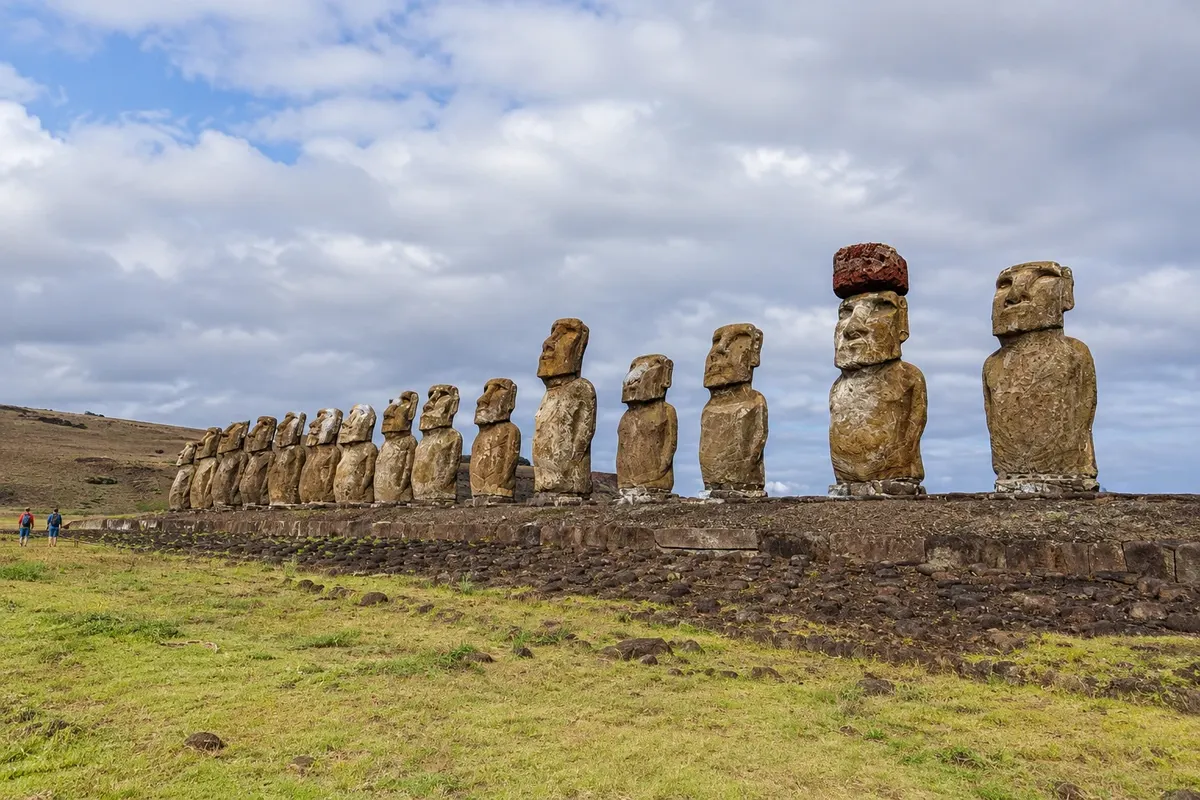
Archaeological site · Hanga Roa, Valparaíso
Ahu Tongariki
Largest ahu on Easter Island, with fifteen moai lined up with their backs to the sea, at the foot of the volcano Rano Raraku. It is the classic spot to watch the sunrise on the island.
Illustrative images. The pictures in this guide are illustrations based on the real place, not photographs, and may differ from it.

Discover
About Ahu Tongariki
Ahu Tongariki is on the southeast coast of the island, in an open bay between the volcanoes Rano Raraku and Poike. It is the largest ceremonial platform of Rapa Nui, with fifteen moai standing side by side, facing inland. One of them weighs about 86 tons, the heaviest ever raised on the island. It was the center of the Hotu Iti clan.
The statues were toppled during clan conflicts, and in 1960 a tsunami caused by the Valdivia earthquake dragged the blocks inland. In the 1990s, a team led by archaeologists Claudio Cristino and Patricia Vargas re-erected the moai in five years of work, with support from the Chilean government, the Universidad de Chile and a Japanese crane manufacturer.
Because the moai have their backs to the east, the sun rises behind them, and the area opens early for those who want to see the dawn. At the site's entrance there is a solitary moai that traveled to Japan for an exhibition and returned. About 1 km away is the quarry of Rano Raraku, and it is common to combine both sites in the same morning.
Before you go
Practical information
Cidade Turismo reviews its information regularly, but something may have changed. Check with the place before planning your trip.
How much time to set aside
About an hour; longer if the visit includes the sunrise.
Best time
Dawn is the most sought-after time, with the sky brightening behind the statues. From December to March the sun rises earlier and the day warms up quickly; in winter, from June to September, sunrise is later and the wind from the southeast coast is usually cold.
How to get there
It's about 20 km from Hanga Roa via the paved road along the south coast, a 25–30 minute drive. Visits are conducted with an accredited guide, who usually takes the group by van.
Tip
Take a jacket for dawn, because the wind blows strongly there. Stay behind the ropes and do not climb on the ahu. Schedule Rano Raraku for right after.
Get your questions answered
Frequently asked questions about Ahu Tongariki
How many moai are at Ahu Tongariki?
There are fifteen moai standing on the platform, the largest group on the island, plus a single moai near the site entrance.
Can you see the sunrise at Tongariki?
Yes, the moai face away from the east and the sun rises behind them. The site opens early for that; arrange with your guide and confirm before going.
Why were the moai of Tongariki restored?
The statues had been toppled during clan conflicts, and the 1960 tsunami scattered the blocks across the bay. A Chilean team with Japanese support re-erected them in the 1990s.