

 Brazil
 Argentina
 Colombia
 Peru
Peru Uruguay
 Germany
 Belgium
 Spain
Spain France
 Greece
 the Netherlands
 Ireland
 Italy
Italy Portugal
 the United Kingdom
 Switzerland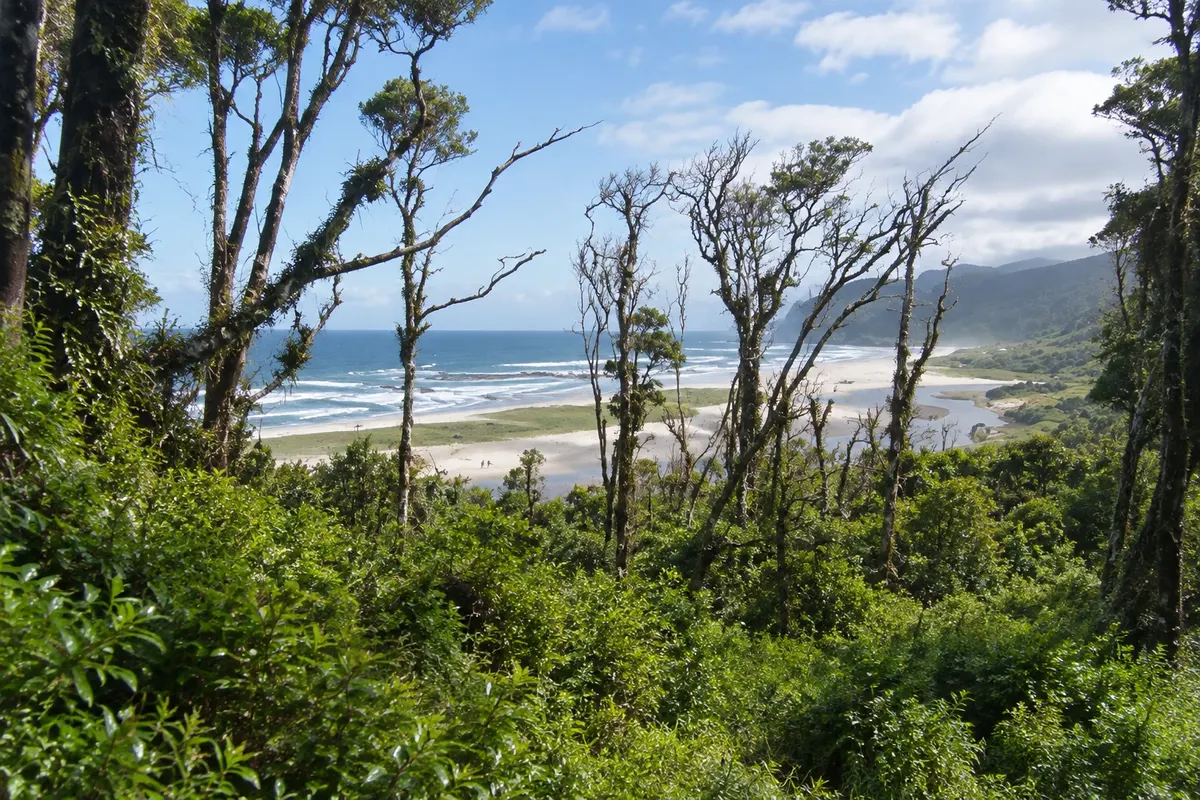
National park · Castro, Los Lagos
Parque Nacional Chiloé
Protected area on the Pacific coast with humid forest, dunes, Lago Cucao and deserted beaches. The most used entrance is the Chanquín sector, in Cucao, about 58 km from Castro.
Illustrative images. The pictures in this guide are illustrations based on the real place, not photographs, and may differ from it.

Discover
About Parque Nacional Chiloé
Parque Nacional Chiloé protects more than 42,000 hectares on the west coast of Isla Grande, between the comunas of Ancud, Dalcahue, Castro and Chonchi. It was created in the early 1980s and is administered by CONAF, the Chilean forestry service.
The easiest access is via Cucao, a village on the shore of the lake of the same name. On the other side of the bridge is Chanquín, where the visitor center is located. An elevated boardwalk of about 200 meters crosses the forest and ends at a viewpoint over Lago Cucao; other paths lead to the dunes and the Pacific beach.
The forest is evergreen, with tepa, olivillo, coigüe, luma and arrayán. Tepa forms dense stands called tepuales. Among the animals are the pudú, one of the smallest deer in the world, Darwin's fox, known as zorro chilote, and birds such as the chucao.
Huilliche communities live around the park and offer camping and services in Chanquín. The beaches have strong currents and are not suitable for swimming.
Before you go
Practical information
Cidade Turismo reviews its information regularly, but something may have changed. Check with the place before planning your trip.
How much time to set aside
Half a day for the short trails in Chanquín and the beach. A full day if you want to add the Muelle de las Almas.
Best time
From November to March, when the days are longer. Even in summer rain can appear: bring waterproof clothing and footwear that can handle mud.
How to get there
From Castro, follow 24 km on Ruta 5 south to the Notuco junction and then 34.5 km on paved road to Cucao, in about an hour and a half. There are buses from Castro to Cucao.
Tip
Check the park's conditions and opening hours before you go. There is little commerce in Cucao: bring snacks and water. Do not feed the animals and stay on marked trails.
Get your questions answered
Frequently asked questions about Parque Nacional Chiloé
Where is the entrance to Parque Nacional Chiloé?
The most used entrance is the Chanquín sector, next to the village of Cucao, on the Pacific coast, about 58 km from Castro.
What animals live in the park?
Among others, the pudú, Darwin's fox, the marine otter and birds like the chucao. Seeing them depends on luck and staying quiet on the trail.
Can you swim in the sea in the park?
Not recommended. The Pacific beaches have strong currents and cold water.
Can you camp in the park?
Yes. There are camping areas in Chanquín, some managed by the local huilliche community. Check availability before you go.