

 Brazil
 Argentina
 Colombia
 Peru
Peru Uruguay
 Germany
 Belgium
 Spain
Spain France
 Greece
 the Netherlands
 Ireland
 Italy
Italy Portugal
 the United Kingdom
 Switzerland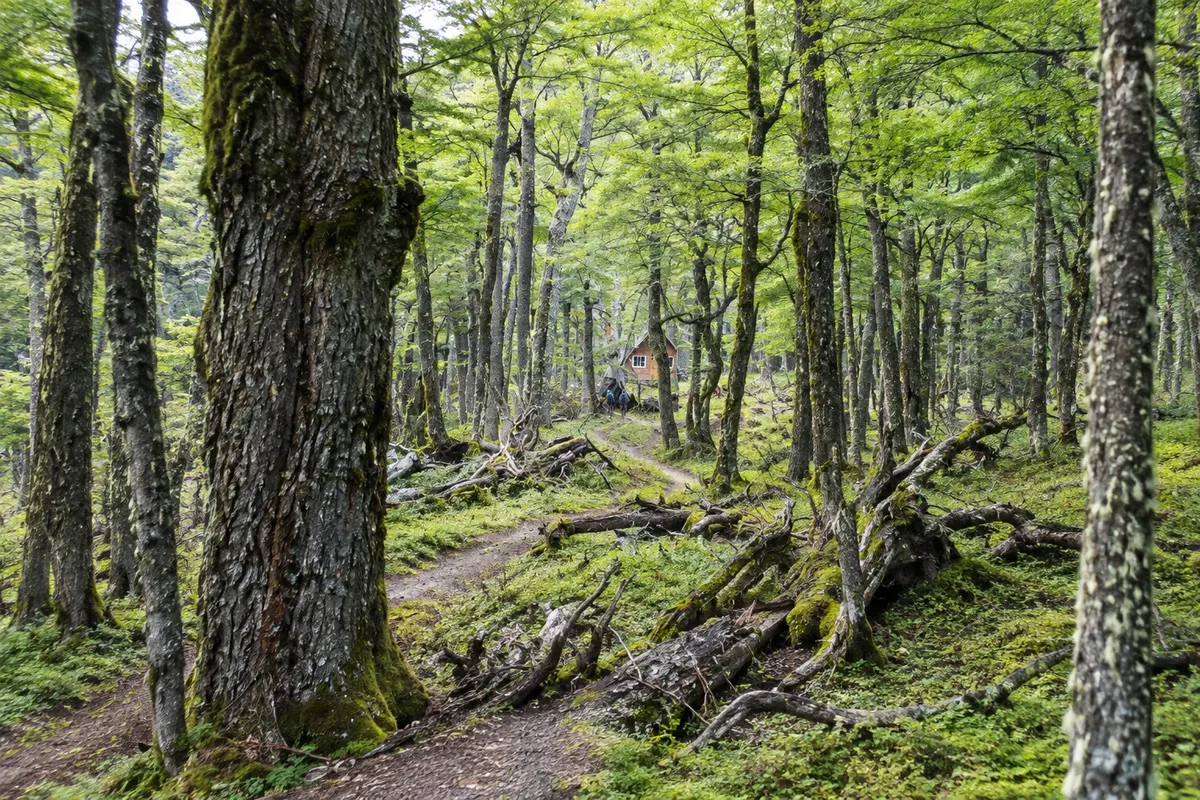
National park · Coyhaique, Aysén do General Carlos Ibáñez del Campo
Parque Nacional Cerro Castillo
Park south of Coyhaique, cut through by the Carretera Austral, featuring Cerro Castillo at 2,318 meters, with rock towers that resemble a castle, glacial lagoons, mountain trails and a huemul population.
Illustrative images. The pictures in this guide are illustrations based on the real place, not photographs, and may differ from it.

Discover
About Parque Nacional Cerro Castillo
Parque Nacional Cerro Castillo extends over more than 140,000 hectares between the communes of Coyhaique and Río Ibáñez. It began as a forest reserve in 1970 and was later reclassified as a national park, administered by CONAF. The name comes from Cerro Castillo, a 2,318-meter mountain whose summit is formed by basalt spires that, from a distance, look like the towers of a fortress.
The Carretera Austral runs through the park, and the paved route from Coyhaique already reveals the massif and the Río Ibáñez valley. The village of Villa Cerro Castillo, almost touching the park boundary, is the base for hikes and has simple lodgings, campsites and small stores.
The best-known multi-day trail is Las Horquetas, which crosses the canyon of the same name up to the base of Cerro Castillo. Many people do the climb to the glacial lagoon at the foot of the mountain in one day; the lagoon features ice and rock walls right above the water. It is a long, steep hike for those who are fit. Some trails charge an entrance fee and others cross private land outside the park.
The park hosts one of the largest populations of the huemul, the Andean deer that appears on Chile’s coat of arms and is endangered; because it is shy and rare, it is hard to see. Guanacos and pumas also live there, and condors often fly over the ridges. Near the village, about 3.5 km away and outside the park, the Paredón de las Manos preserves hand paintings made by the tehuelches, protected as a national monument.
Before you go
Practical information
Cidade Turismo reviews its information regularly, but something may have changed. Check with the place before planning your trip.
How much time to set aside
A full day to see the roadside scenery and do a hike. The Las Horquetas crossing generally takes three to four days.
Best time
The trekking season generally runs from November to March, when the higher trails are usually free of snow. In April and May the lenga forest turns reddish, with shorter, colder days. In winter snow covers the high areas and mountain trails are closed or require equipment; the road section remains passable with care.
How to get there
Villa Cerro Castillo is about 95 km south of Coyhaique via Ruta 7, paved on this stretch, in a little under two hours by car; confirm the distance before you leave. There are buses from Coyhaique heading south that stop in the village, and agencies in Coyhaique run day tours.
Tip
For the trail to the lagoon, start early, bring water, food, rain gear and layered clothing for the cold up high, and register at the park entrance station. Weather changes quickly in the mountains: if wind or rain pick up, turn back. Do not approach huemules if you see one.
Get your questions answered
Frequently asked questions about Parque Nacional Cerro Castillo
Can you visit Cerro Castillo in a day from Coyhaique?
Yes. It’s about 95 km via Ruta 7 to Villa Cerro Castillo. You can go, do a hike and return the same day, but the climb to the lagoon takes most of the time; those who want to do it at a relaxed pace usually stay overnight in the village.
Is the trail to the Cerro Castillo lagoon difficult?
It is demanding: long, with a steep final ascent over loose rocky terrain. It requires good fitness, proper hiking boots and an early start. Check access rules and the entry cutoff time with CONAF.
What is the Paredón de las Manos?
It is a roughly 35-meter rock wall with handprints painted by the tehuelches, near Villa Cerro Castillo. It is outside the park, about 3.5 km from the village, and is a national monument.
Is it possible to see the huemul in Cerro Castillo?
The park has one of the largest populations of huemul, but the animal is rare and avoids people. Seeing one is a matter of luck. If it happens, keep your distance and do not try to approach it.