Mirador del Valle and the bridges of San Martín and Alcántara
Odhod: Puente de San Martín, Toledo, on the west side of the old town on foot along the riverside, urban bus 71 or tourist train Približno 2 uri in pol late afternoon moderate (ascent to the viewpoint)
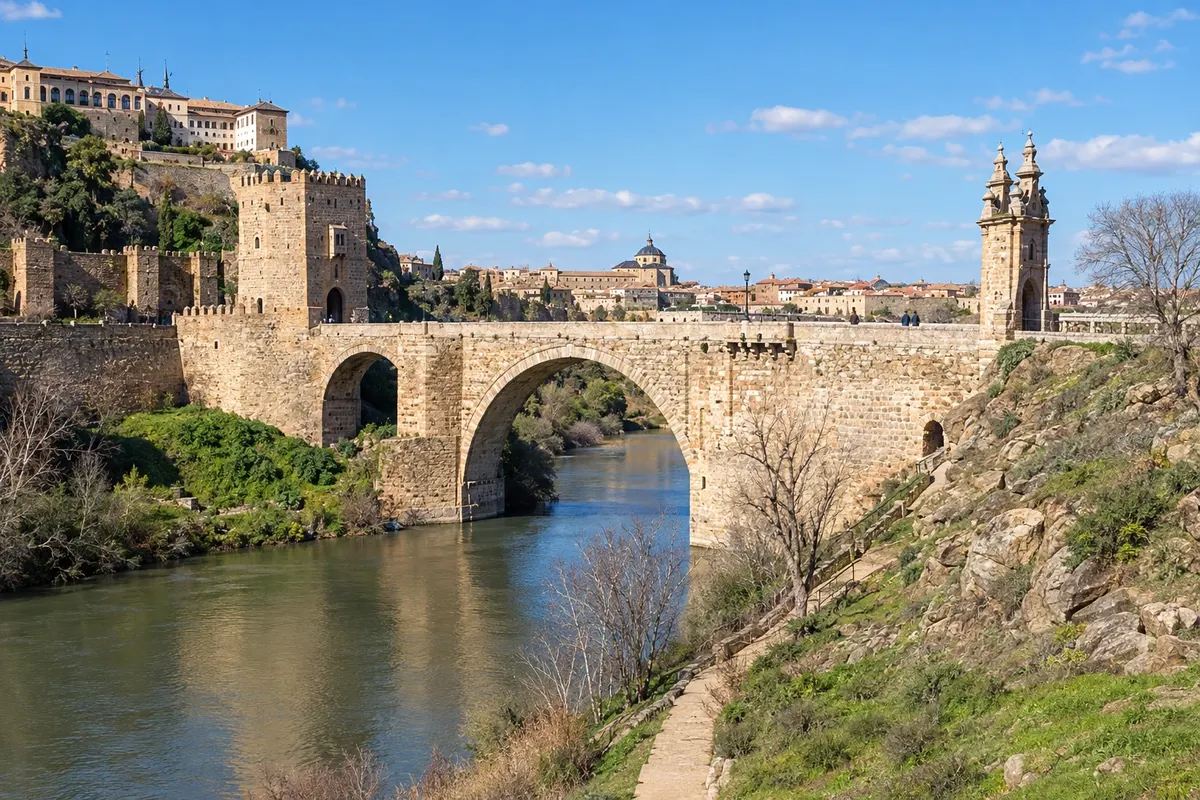
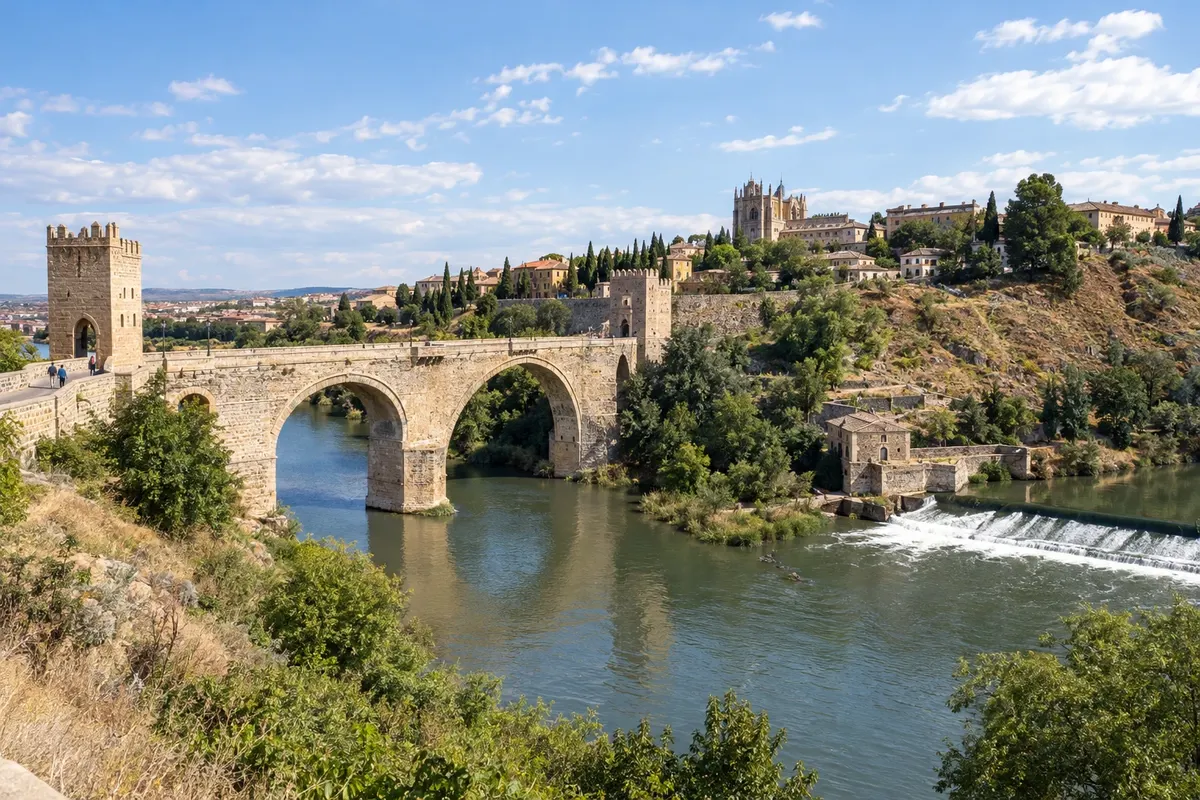
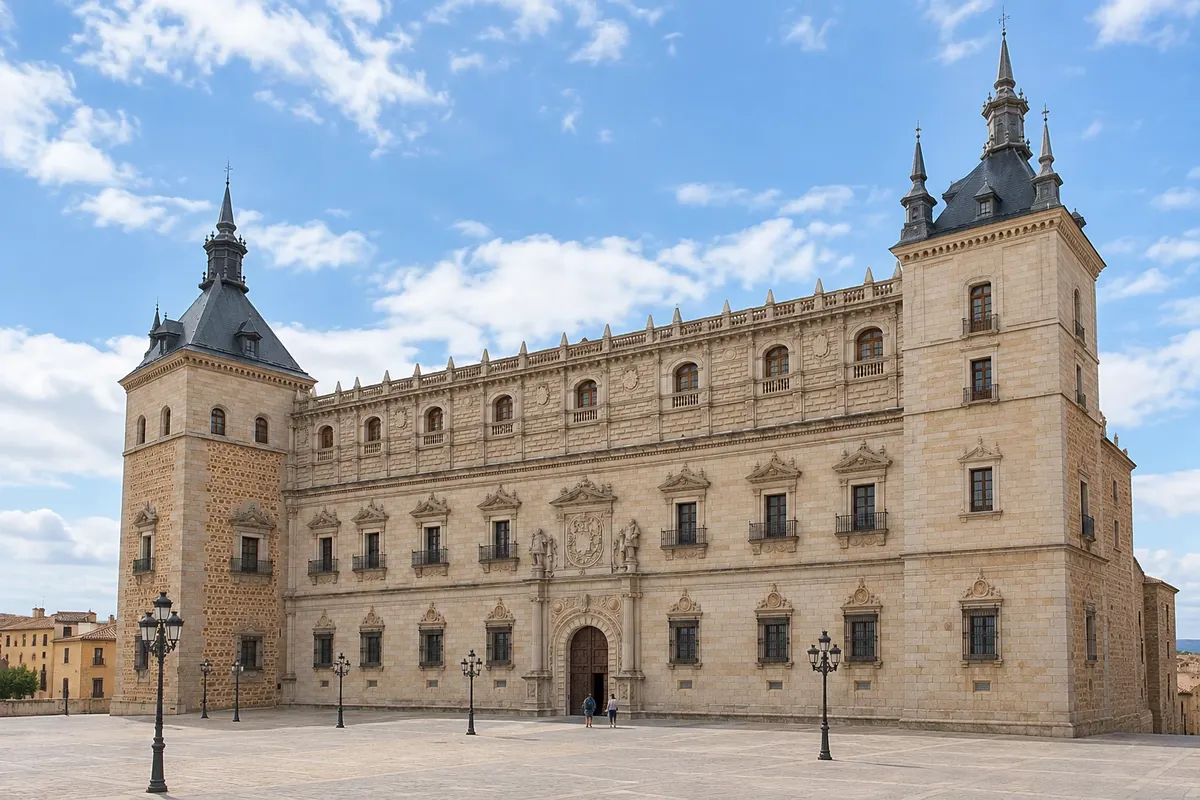
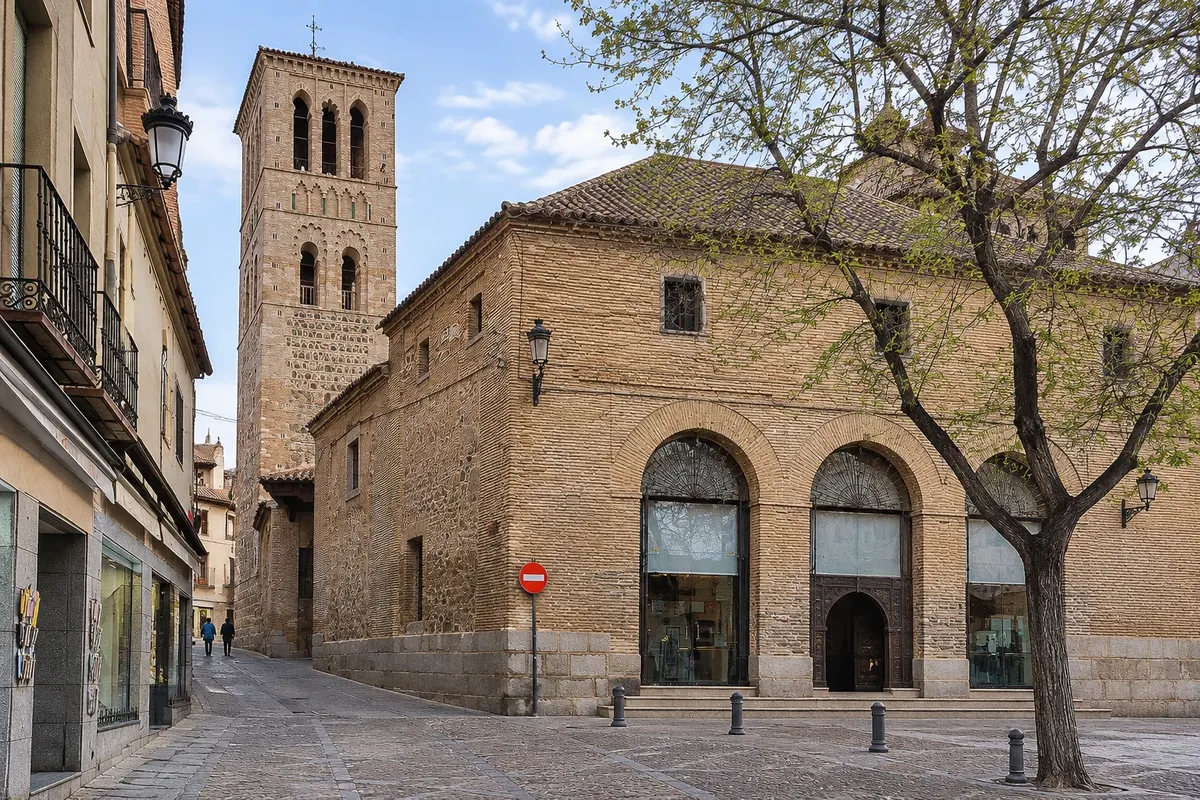
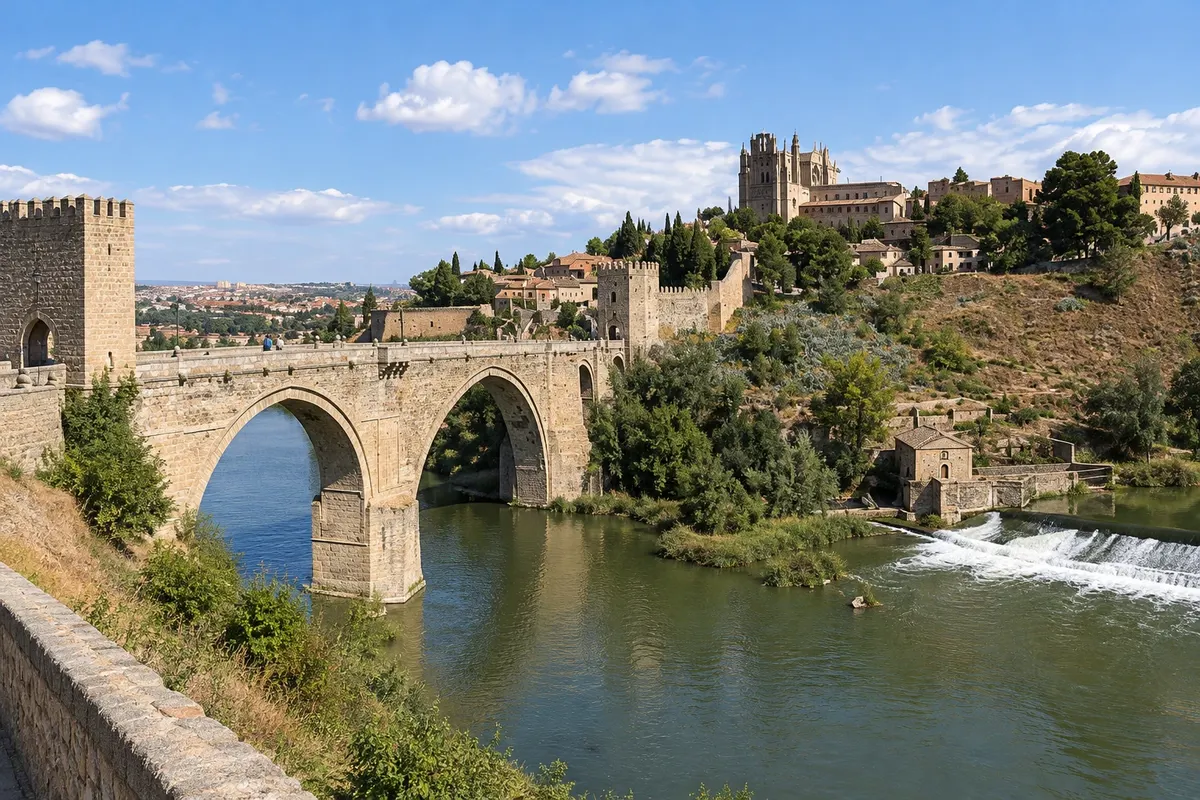
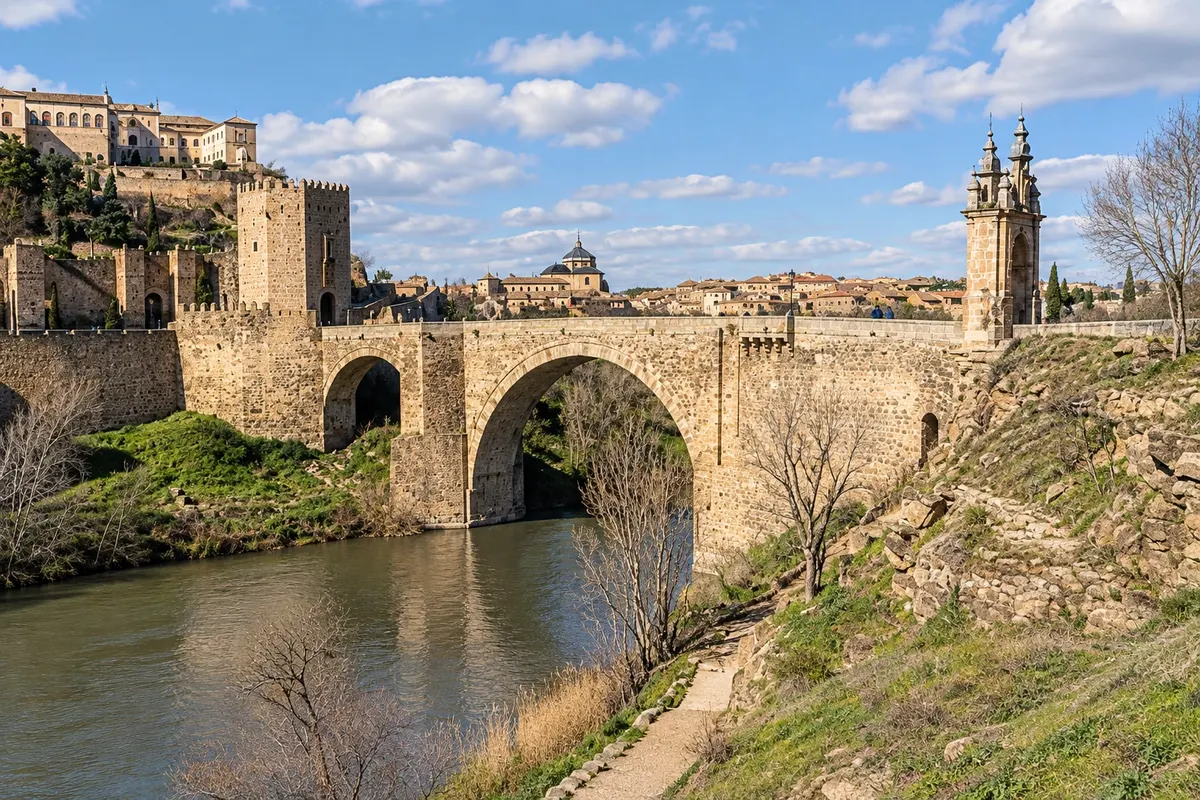
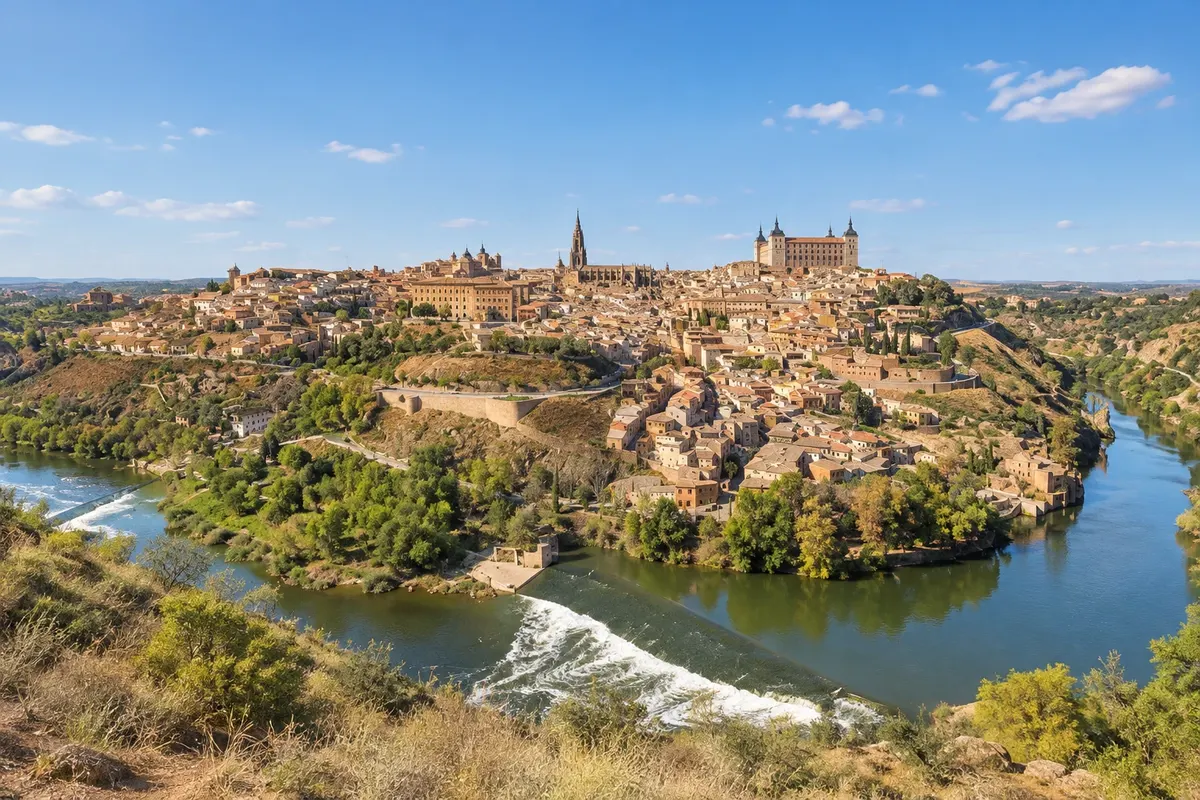
Toledo sits on a hill surrounded by the Tagus River, and the full view of the city is from the opposite bank. The Puente de San Martín, medieval and with towers at both ends, leads out of the Jewish Quarter and crosses the river to the west; the Puente de Alcántara, of Roman origin, does the same to the east, below the Alcázar. Between them, along the far bank, runs the ring road with the Mirador del Valle, the classic spot to see the entire city with the cathedral and the Alcázar on the hill. On foot, it is about a forty-minute uphill walk from Puente de San Martín to the viewpoint; city bus 71 and the tourist train that departs near Zocodover cover the route with no effort. The viewpoint’s shoulder fills up before sunset. To complete the circuit, descend to Puente de Alcántara and return to the old town via Puerta de Alcántara.
Kraji na poti: Puente de San Martín, Mirador del Valle, Puente de Alcántara, Tagus River.
Vključuje: Outdoor walk, no entry fee. Tourist train and urban bus are paid separately.
Nasvet: Go for sunset, but arrive early. Bring water and sturdy shoes if you walk; in August prefer the bus or tourist train. The town is illuminated at night.
Najboljši čas za obisk: Spring and autumn for the climate. In winter the sun sets early, around 18:00.
Acueducto de Segovia and Plaza del Azoguejo
Odhod: Plaza del Azoguejo, Segovia, at the entrance to the old town on foot; bus 11 from Segovia-Guiomar station for those arriving by train Približno 1 uro Dopoldne ali pozno popoldne Lahko
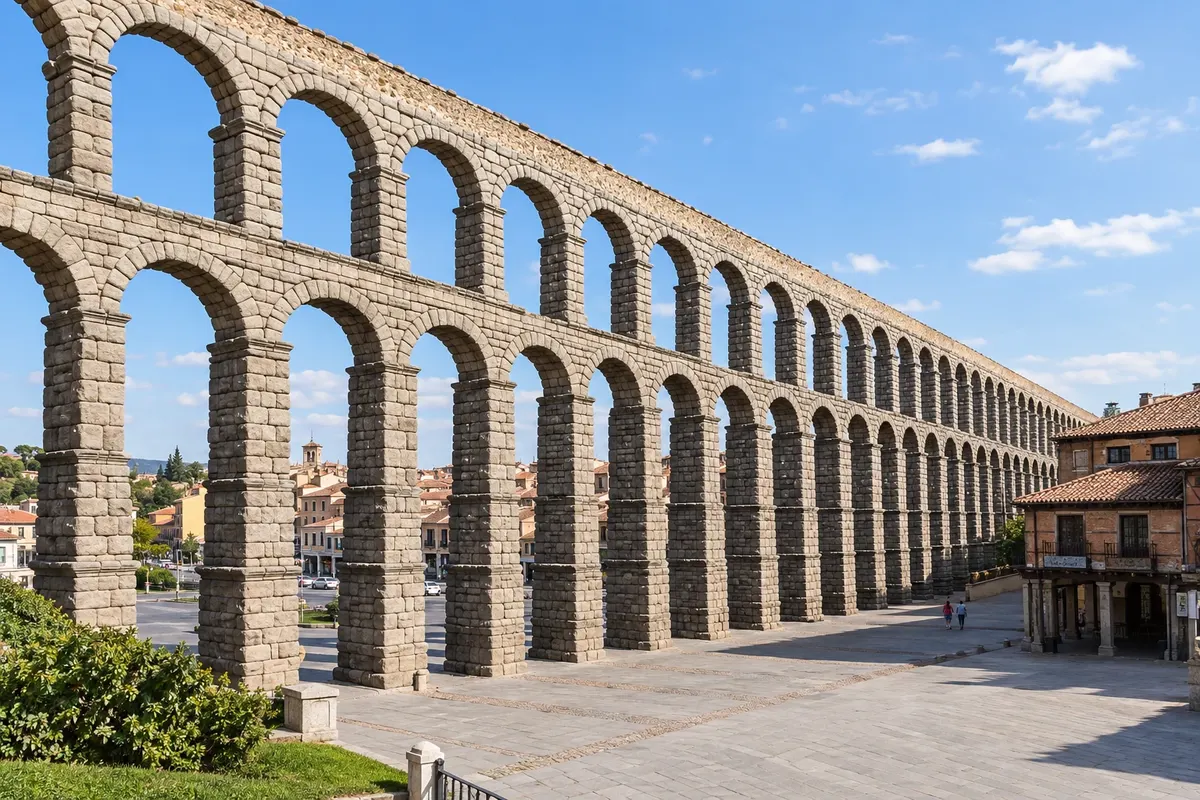
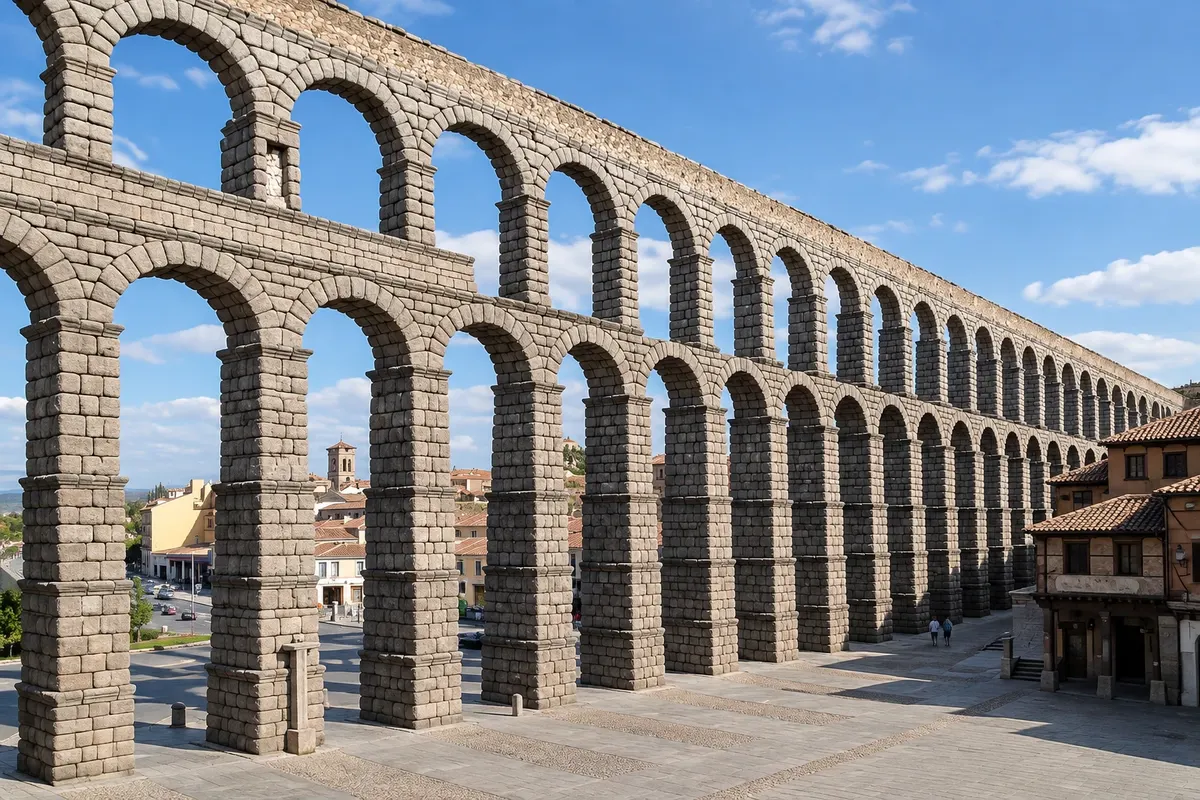
The Roman aqueduct is the first thing you see in Segovia and the city’s emblematic image. Built around the 1st and 2nd centuries, it carried water from the mountains to the upper town, and the monumental section crosses the Plaza del Azoguejo with 167 granite arches fitted without mortar, in two tiers at the highest point, near 28 meters. The visit is outdoors and free: the square gives the view from below; the stairs of the Postigo del Consuelo beside it lead up to the wall and allow you to see the arches at the height of the second tier; and the Plaza de Día Sanz on the opposite side shows the sequence of descending arches. It’s worth walking along the aqueduct until the arches get low, toward the mountains. At night the aqueduct is illuminated. The aqueduct is the natural start of any walk: from there Calle Real rises to the Plaza Mayor and the Alcázar.
Kraji na poti: Acueducto de Segovia, Plaza del Azoguejo, Postigo del Consuelo, Plaza de Día Sanz.
Vključuje: Outdoor walk, no ticket. The Tourist Office is located in the Plaza del Azoguejo itself.
Nasvet: Arrive early for an empty square or return at dusk to see it lit up. Climb the stairs of the Postigo del Consuelo for the view from above. If you come by train you get off bus 11 right next to it.
Najboljši čas za obisk: All year. In winter, with snow on the mountains in the background, the view changes; in summer the square fills up at midday.
Alcázar of Segovia
Odhod: Plaza de la Reina Victoria Eugenia, Segovia, at the western end of the old town on foot, about 20 minutes from the aqueduct along Calle Real Približno 1 uro in 30 minut Dopoldne ali popoldne easy (tower: moderate)
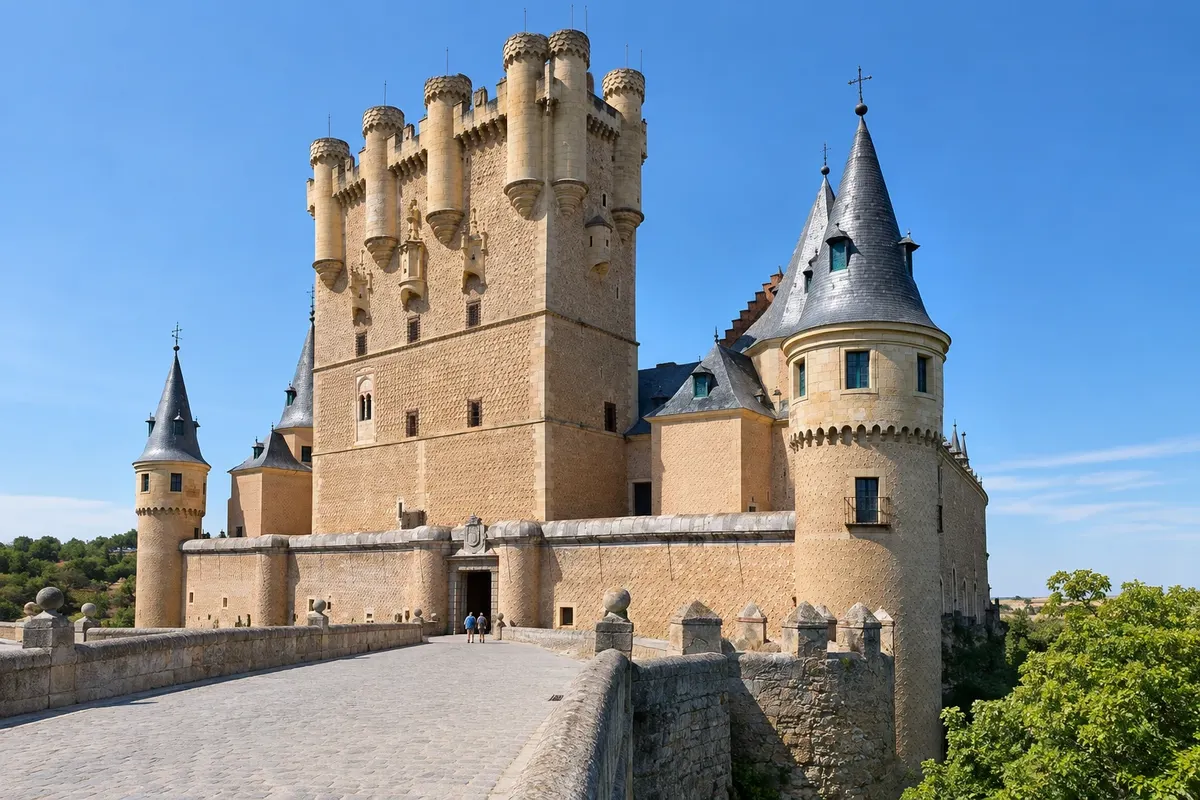
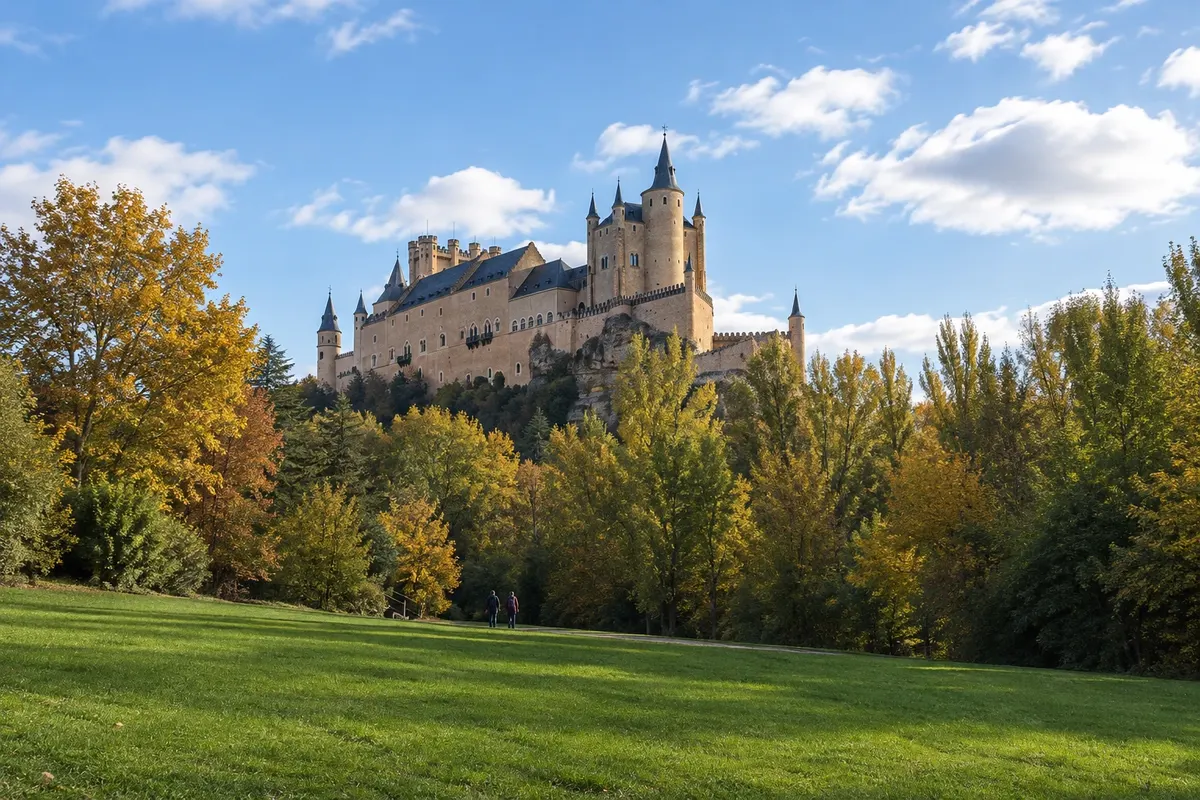
The Alcázar stands on the tip of the rocky spur where the town ends, between the valleys of the Eresma and Clamores rivers, shaped like a ship’s bow with pointed slate roofs. It was the palace of the kings of Castile and, according to tradition, inspired Snow White’s castle. The visit goes through the palace rooms, with gilded Mudéjar ceilings, the Sala de Reyes with the frieze of all the monarchs of Castile and León, the chapel and the Museo de Artillería, from the former military academy housed in the building. With a separate ticket you can climb the Torre de Juan II by 152 spiral steps, and from the top you can see the cathedral, the whole town and the mountain range. The palace visit takes about an hour; the tower, another 25 minutes. It is open every day except for a few dates. Outside, the square’s gardens and the viewpoint on the other side of the valley complete the visit.
Kraji na poti: Alcázar of Segovia, Torre de Juan II, Sala de Reyes, Museo de Artillería.
Vključuje: Palace and museum (separate paid admission). Juan II tower sold separately, chosen at time of purchase.
Nasvet: Buy in advance on the official website, especially for the tower, whose time slots often sell out on weekends and holidays. The tower is not accessible for people with reduced mobility. Decide about the tower before purchasing: it cannot be added later.
Najboljši čas za obisk: All year. On clear winter days the mountains can be seen with snow.
Segovia Cathedral and Plaza Mayor
Odhod: Plaza Mayor, Segovia on foot, in the upper old town Približno 1 uro in 30 minut Dopoldne ali popoldne easy (tower: moderate)
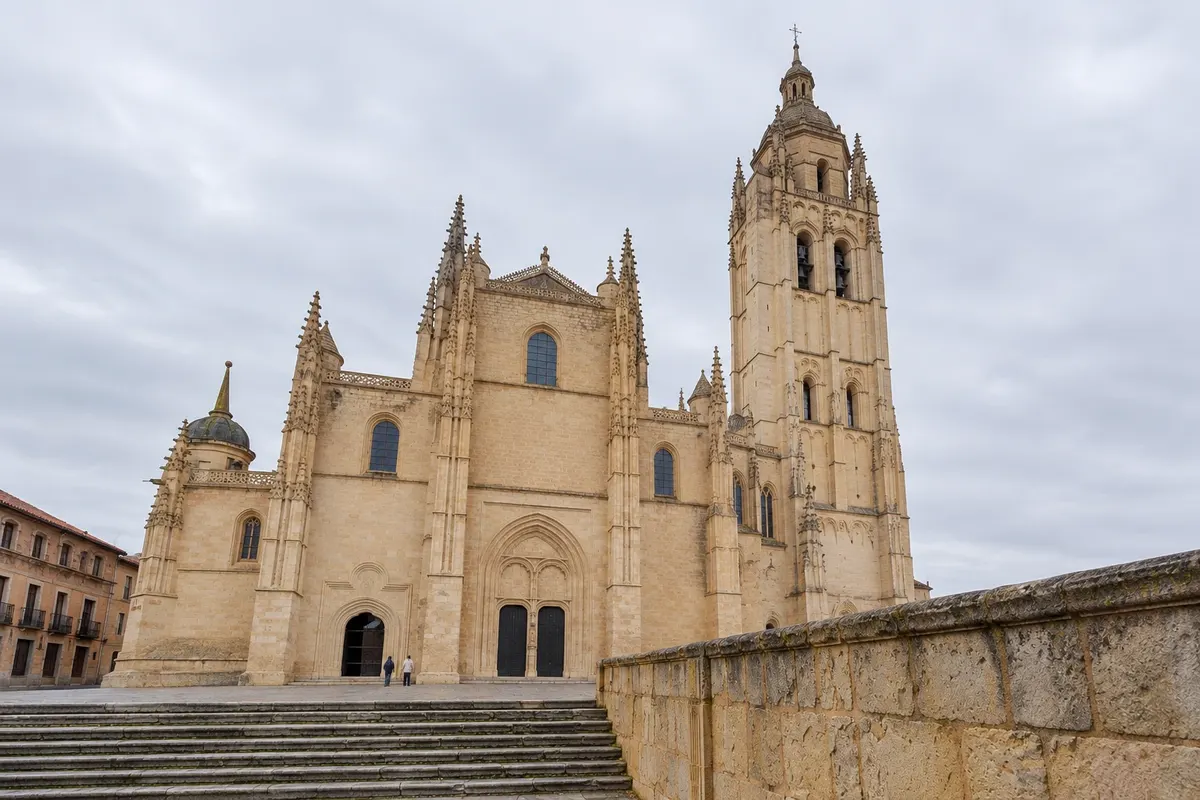
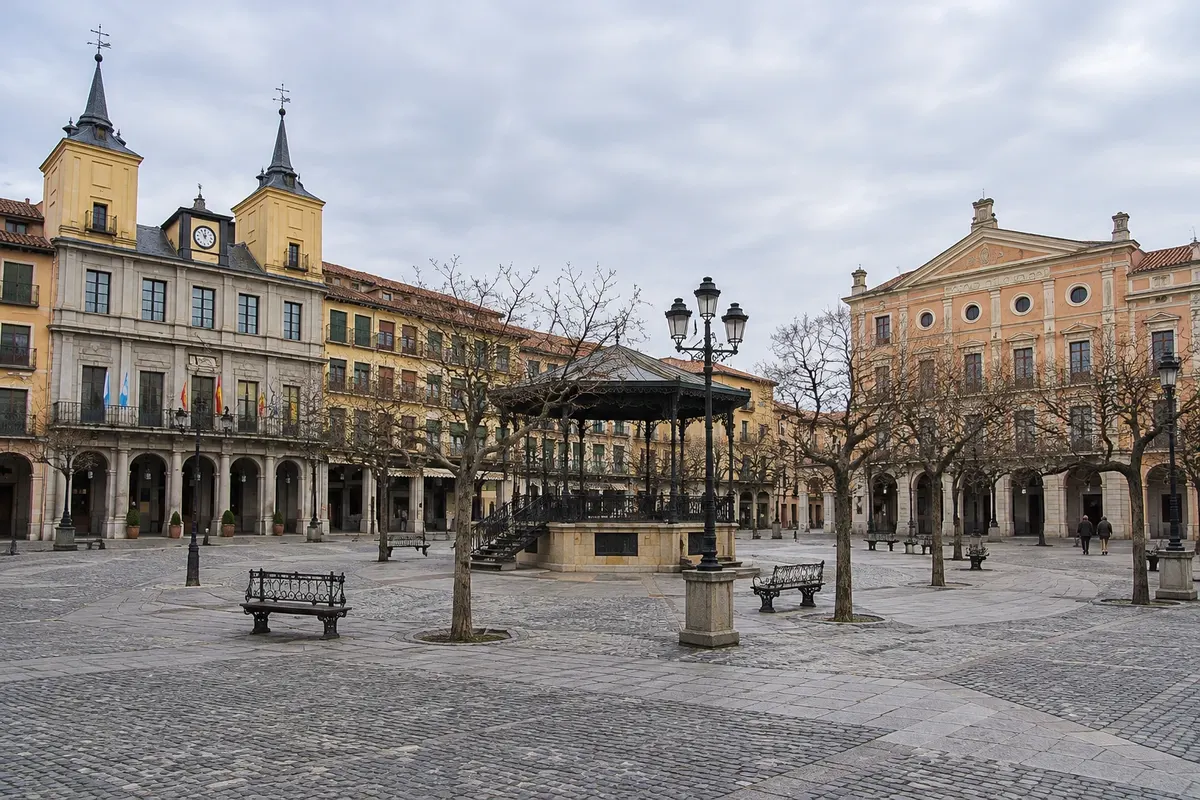
Segovia Cathedral was the last great Gothic cathedral in Spain, begun in the 16th century, with a light stone façade and a tower of nearly 90 meters; it is called the lady of cathedrals for its slender silhouette. It stands on the Plaza Mayor, the main square of the old town, with the Juan Bravo Theater, cafés with outdoor seating and the town hall. Inside, the general visit covers the side chapels, the choir, the cloister—reassembled stone by stone from the old cathedral that stood near the Alcázar—and the chapter house with tapestries. The tower ascent is in a timed group and passes through the bell ringer’s house up to the top, with views over the city and the valley. The Plaza Mayor is also the spot between the aqueduct and the Alcázar: from there the streets of the Judería and Calle Real radiate.
Kraji na poti: Segovia Cathedral, Plaza Mayor, Cloister, Cathedral Tower, Juan Bravo Theater.
Vključuje: General visit, guided tour and tower ascent each require a separate paid ticket; combined packages are available at the ticket office. On Sundays the visit only starts in the afternoon.
Nasvet: Combine the general visit in the morning with the tower visit, which has fixed times: ask at the ticket office. On Sundays go after lunch. Plaza Mayor often has a market and events on festival dates.
Najboljši čas za obisk: Vse leto.
Calle Real, Casa de los Picos, Judería and San Millán
Odhod: Plaza del Azoguejo, Segovia, at the foot of the aqueduct on foot Približno 2 uri in pol Dopoldne ali popoldne moderate (hill)
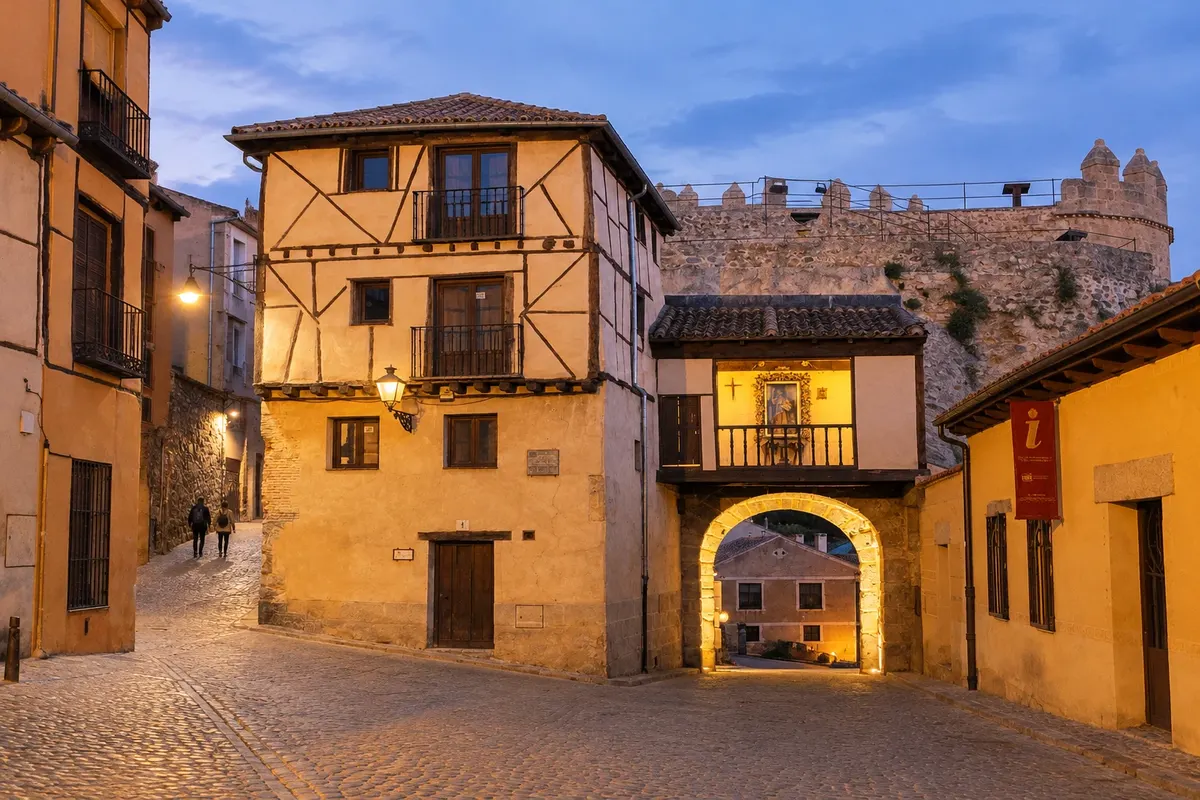
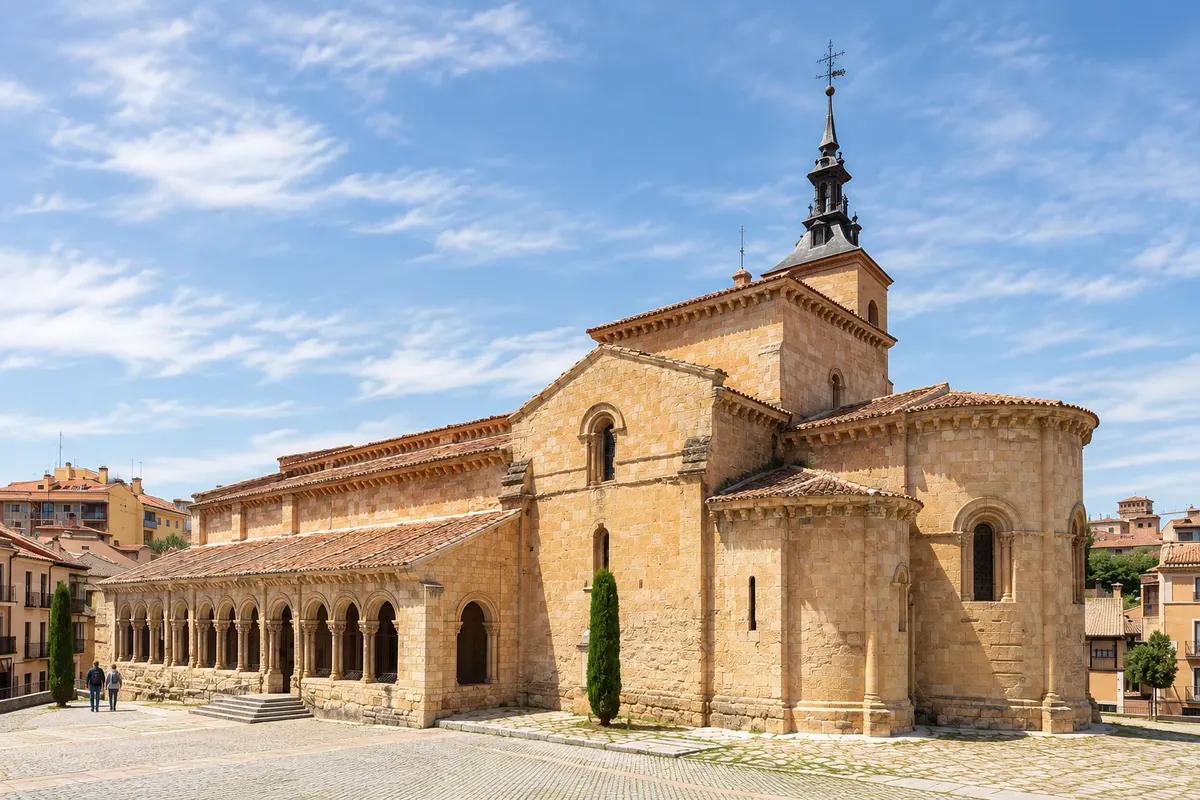
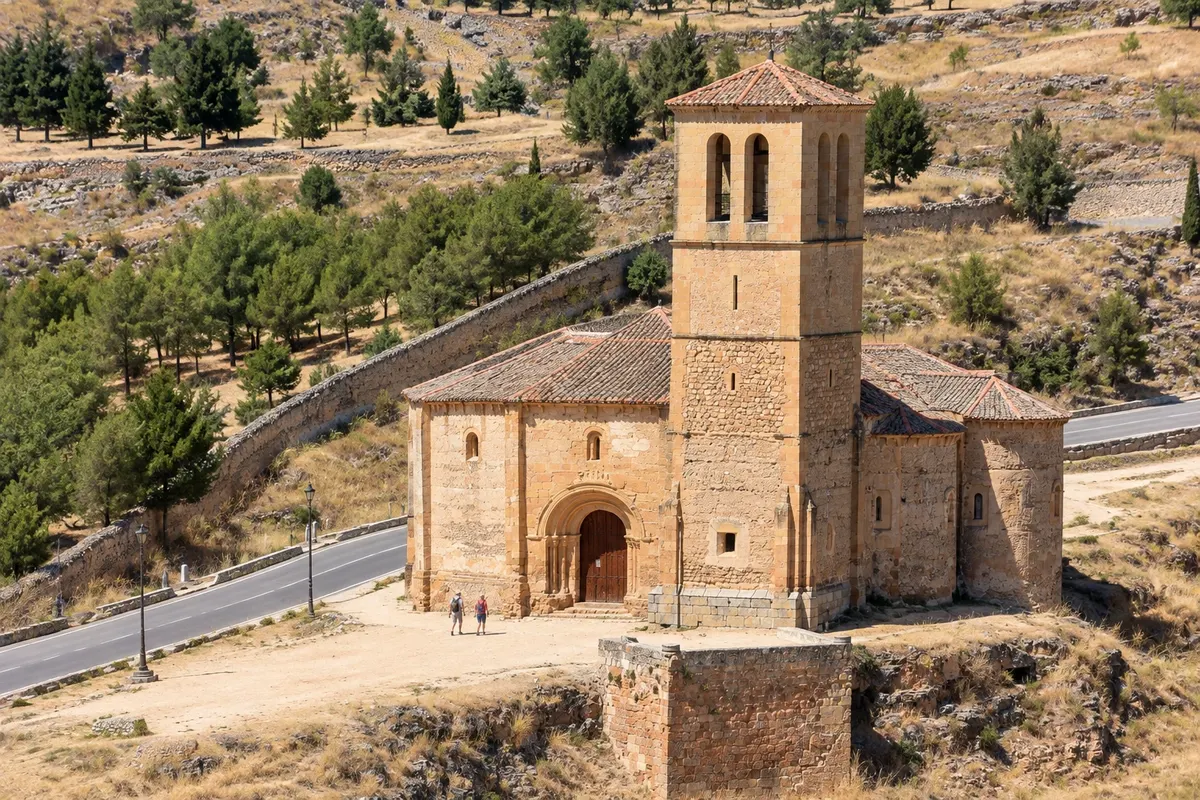
Calle Real is the main axis that climbs from the aqueduct to the Plaza Mayor and brings together the old town’s palaces and Romanesque churches. Right at the start is the Casa de los Picos, its facade covered with stone points shaped like diamonds; the building houses an art school and is viewed from the outside, with the entrance hall and courtyard open on some days. Higher up, the Plaza de Medina del Campo contains the Iglesia de San Martín, with a Romanesque columned portico, the Torreón de Lozoya and the statue of Juan Bravo. From the Plaza Mayor, the streets of the Judería descend to the Puerta de San Andrés, where a stretch of the wall can be walked on in the morning. The Judería Teaching Center explains the neighborhood’s life. Outside the wall, in the Clamores valley, is the 12th-century Romanesque Iglesia de San Millán, with arcaded side galleries and a Mudejar tower: the surrounding low houses show Segovia’s suburban side.
Kraji na poti: Calle Real, Casa de los Picos, Plaza de Medina del Campo, Iglesia de San Martín, Judería, Puerta de San Andrés, Iglesia de San Millán.
Vključuje: Walking tour. Wall at the Puerta de San Andrés and the Judería Teaching Center require a separate paid ticket. Churches open during worship times or visiting hours.
Nasvet: The Puerta de San Andrés only opens in the morning: do the Judería first. San Millán lies outside the wall, about a ten-minute walk from the aqueduct. Bring the map from the Tourist Office.
Najboljši čas za obisk: All year round. Spring and autumn are best for comfortable walking.
Palace and gardens of La Granja de San Ildefonso
Odhod: Segovia Bus Station, Paseo de Ezequiel González regular bus (about 11 km) or car via the CL-601 Pol dneva Popoldne Lahko
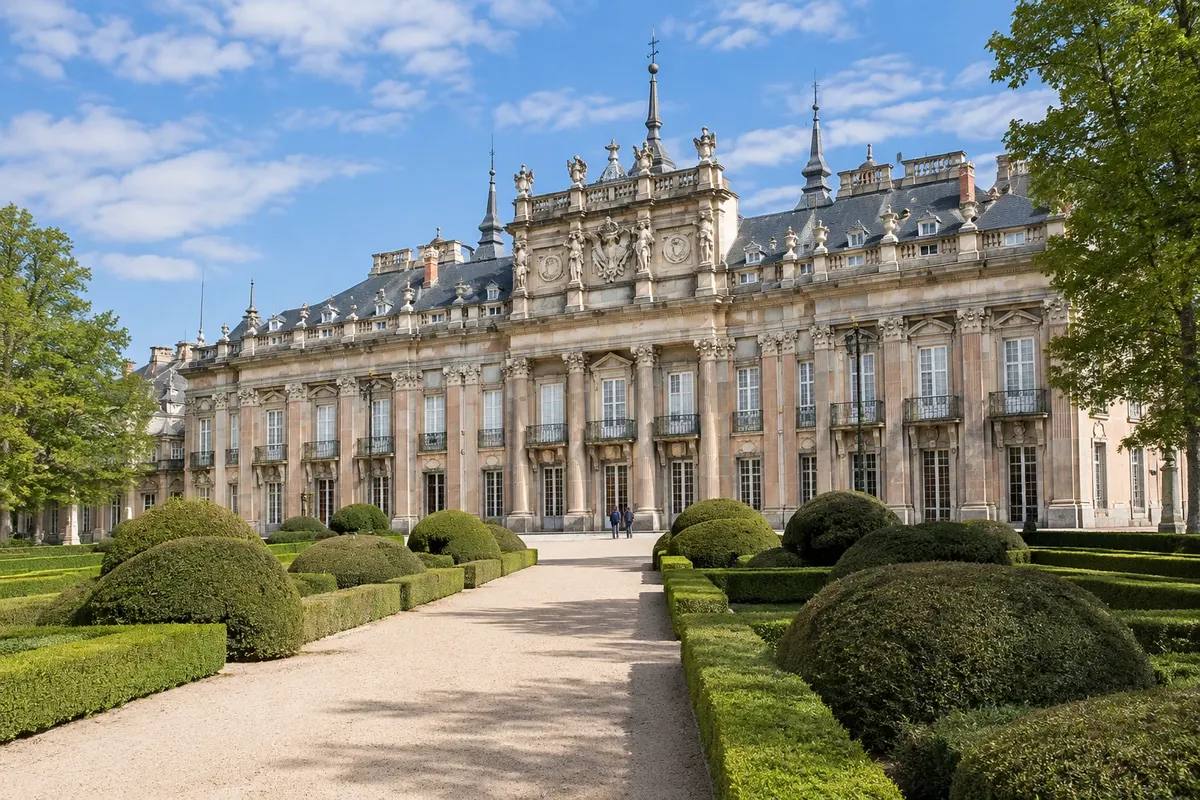
La Granja de San Ildefonso is the palace that Philip V, the first Bourbon of Spain, ordered built at the foot of the Guadarrama mountain range, about 11 km from Segovia, modeled on Versailles. The palace is closed on Mondays and is visited inside: halls, tapestries and the glass collection of the royal factory. What makes the place famous are the gardens: a park of pines and promenades with 26 monumental bronze and lead fountains, driven only by gravity from a lake above. The fountains do not operate every day: there is a water season that usually runs from spring to summer, with a calendar per fountain published each year, and three dates when generally all are activated, May 30, July 25 and August 25. On non-fountain days the gardens can be walked without a ticket. In the village, the Real Fábrica de Cristales houses a glass museum.
Kraji na poti: Royal Palace of La Granja de San Ildefonso, Gardens of La Granja, Fuente de la Cascada, Baños de Diana, Real Fábrica de Cristales.
Vključuje: Palace (separate paid entry, closed on Mondays). Gardens free to access, except on fountains days, which are charged separately. Night sessions of the Baños de Diana on summer dates, paid separately.
Nasvet: Check the Patrimonio Nacional website for the fountains calendar of the year before choosing a date. The bus departs from Segovia’s bus station, five minutes from the aqueduct; check the schedules, which change with the season. Bring a coat: it is higher and colder than the city.
Najboljši čas za obisk: From spring to summer, on fountain days; autumn for the park colors.
Walls of Ávila: walk along the battlement walk
Odhod: Casa de las Carnicerías, Calle de San Segundo, Ávila, next to the cathedral on foot Približno 1 uro in 30 minut Dopoldne ali pozno popoldne moderate (stairs)
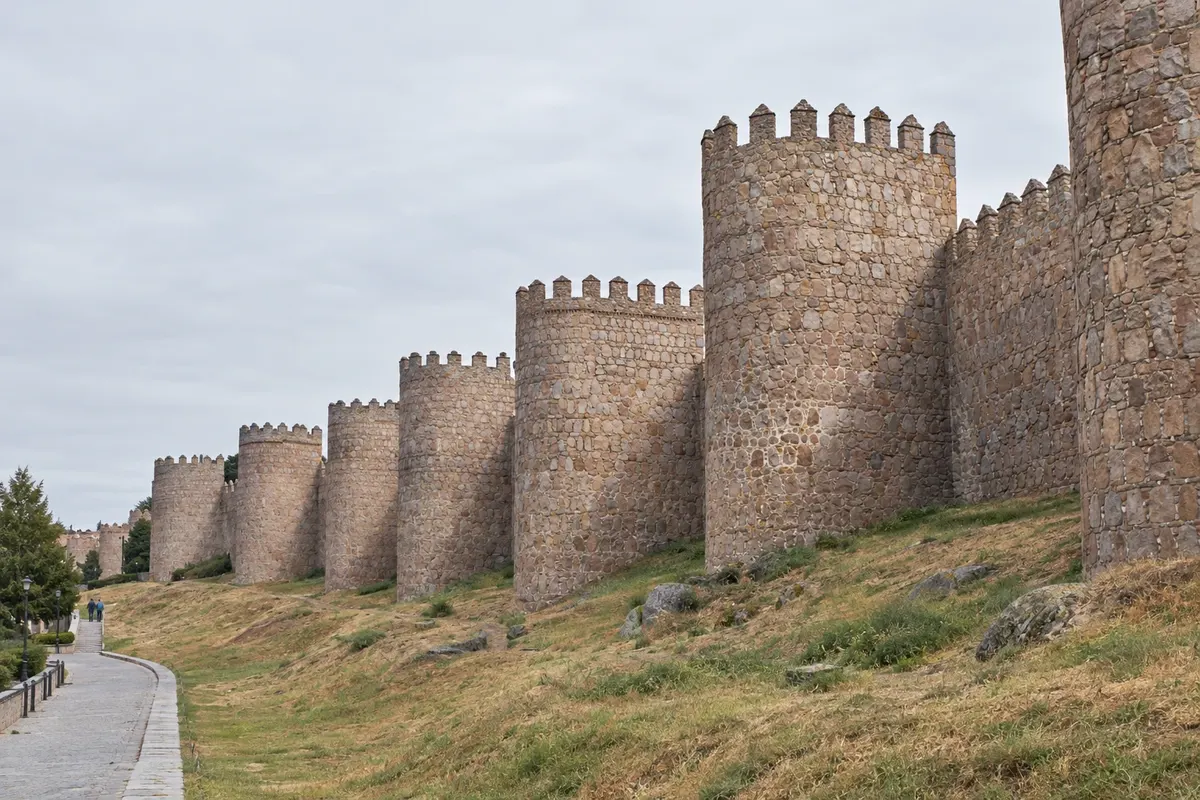
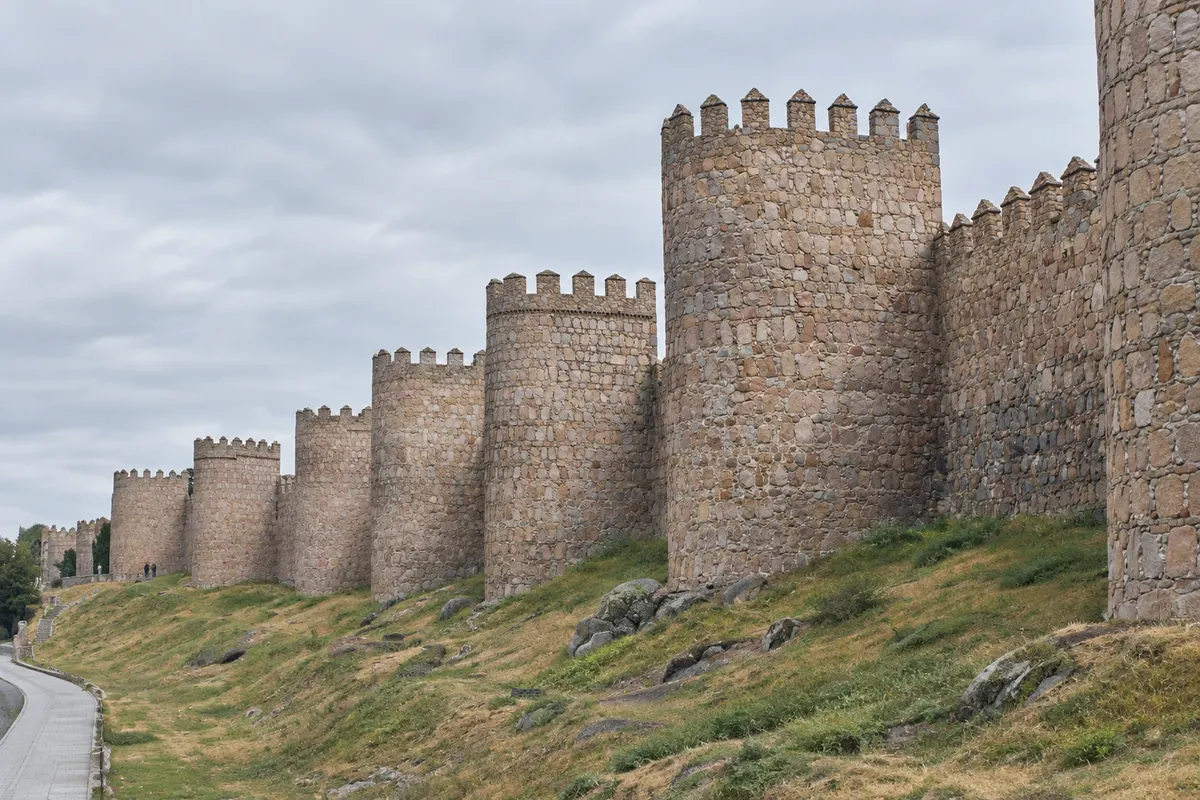
The walls of Ávila are a fully preserved medieval enclosure: about 2.5 km in perimeter, 87 turrets and nine gates, built from the late 11th century in granite. The walk along the adarve, the battlement path on top, covers about 1.7 km in sections open to the public, with access via the Casa de las Carnicerías, the Puerta del Alcázar and the Puerta del Carmen. From above you can see the roofs of the old town, the cathedral apse, which is part of the wall, the Plaza del Mercado Grande and, on the other side, the Adaja valley and the mountain range. In the highest sections the wind is constant. Entry is by ticket, with winter closure days; at other times it is open every day. Outside, the path at the foot of the wall, between the Puerta de San Vicente and the Paseo del Rastro, is free to access and completes the visit.
Kraji na poti: Walls of Ávila, Puerta del Alcázar, Casa de las Carnicerías, Puerta del Carmen, Puerta de San Vicente.
Vključuje: Open sections of the wall walk (separate paid entry; included on the Ávila tourist card). Main entrance and audio guide at the Casa de las Carnicerías.
Nasvet: Go up at late afternoon, when the light hits the towers, and finish at Los Cuatro Postes to see the illuminated wall. In winter check the closing day. High steps: sturdy footwear.
Najboljši čas za obisk: Spring and autumn. In winter there is frost and wind; in summer go up early or at the end of the day.
Ávila Cathedral
Odhod: Plaza de la Catedral, Ávila on foot, inside the wall Približno 1 uro Dopoldne ali popoldne Lahko
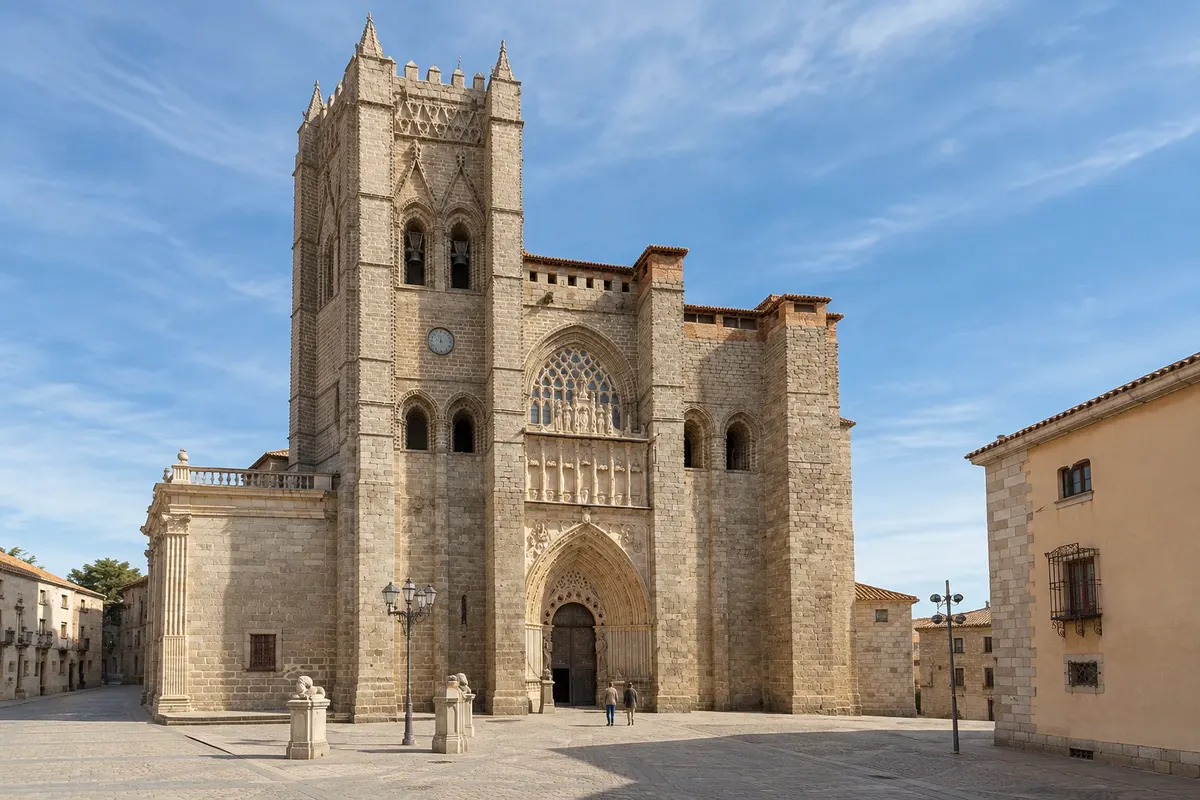
Ávila Cathedral is regarded as the first Gothic cathedral in Spain, begun in the 12th century, and was also designed as a fortress: the apse, called the cimorro, is a tower of the city wall itself. Inside, the red-and-white sandstone of the ambulatory, known as the bleeding stone, colors the girola. The visit includes the Main Chapel with the altarpiece by Pedro Berruguete, the carved wooden choir, the alabaster tomb of Bishop El Tostado, the cloister and the museum, which houses a silver monstrance by Juan de Arfe. In the cloister is the tomb of Adolfo Suárez, the first president of Spanish democracy, who was born in the province. The visit is self-guided, with audio guide. The visit does not include access to the towers. On Sundays the visit starts later, after the masses.
Kraji na poti: Ávila Cathedral, Cimorro, Cloister, Main Chapel.
Vključuje: Nave, Main Chapel, choir, cloister and museum (separate paid admission; included on the Ávila tourist card).
Nasvet: First view the apse from outside, from Calle de San Segundo, to understand how the cathedral fits into the wall. On Sundays go in the afternoon. There are no visits during worship.
Najboljši čas za obisk: Vse leto.
Basilica of San Vicente
Odhod: Plaza de San Vicente, Ávila, outside the Puerta de San Vicente on foot, just outside the city wall Približno 45 minut Dopoldne Lahko
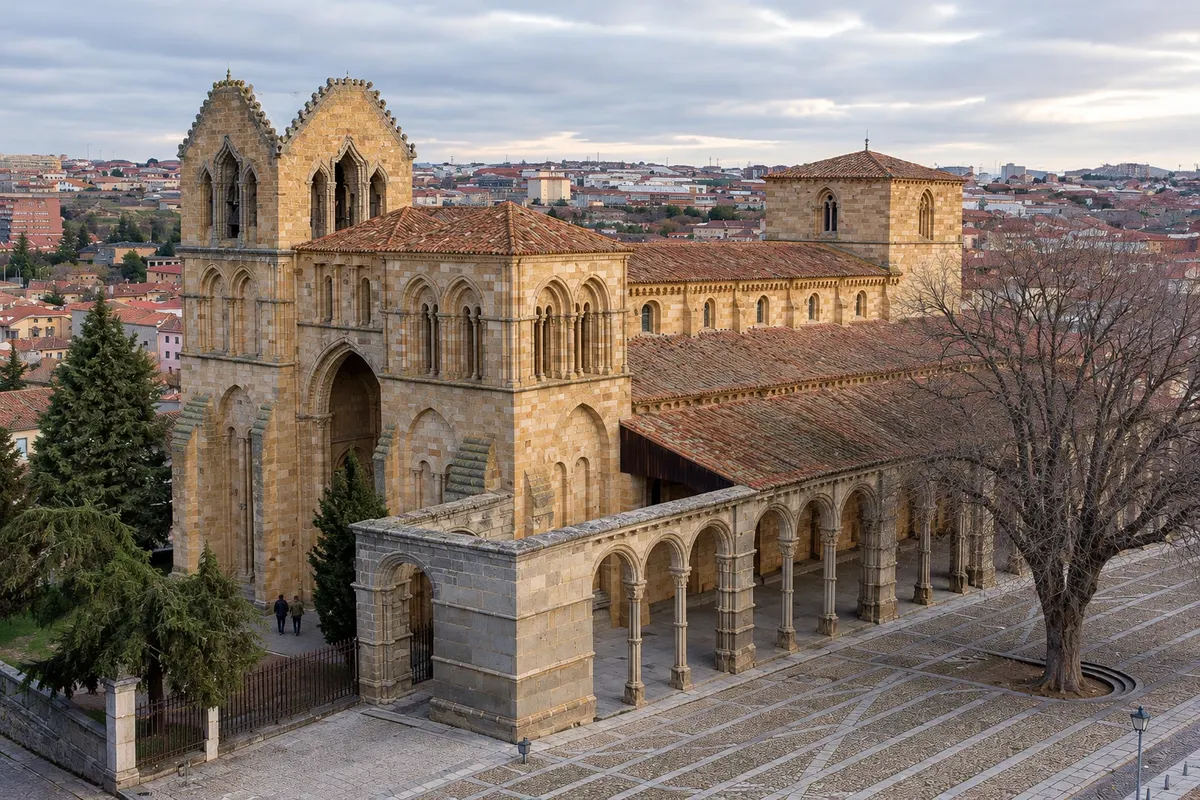
The basilica is a few steps from the Puerta de San Vicente, outside the city wall, and is Ávila’s main Romanesque church. It was built beginning in the 12th century on the site where, according to tradition, Vicente, Sabina and Cristeta were martyred in the 4th century. The southern granite portico, with an arcade, and the western portal, with statues of the apostles, are the most photographed parts. Inside, the 12th-century cenotaph of the three martyrs is a stone chest with polychrome reliefs depicting the martyrdom, protected by a baldachin. The crypt holds the rock where, by legend, the bodies were left. The visit is short and peaceful; there are no visits during Masses. From the square in front you can see a long stretch of the wall with its towers.
Kraji na poti: Basilica of San Vicente, Cenotaph of the Holy Martyrs, Puerta de San Vicente.
Vključuje: Church, cenotaph and crypt (separate ticket; included in the Ávila tourist card).
Nasvet: Do the visit in the morning, together with the walk outside the city wall. In winter the church closes at midday on some weekdays; check at the Tourist Office.
Najboljši čas za obisk: Vse leto.
Convent of Saint Teresa and Los Cuatro Postes
Odhod: Plaza de la Santa, Ávila, next to the Puerta de la Santa on foot; to Los Cuatro Postes, 15 minutes via the Puente Adaja Približno 2 uri late afternoon Lahko
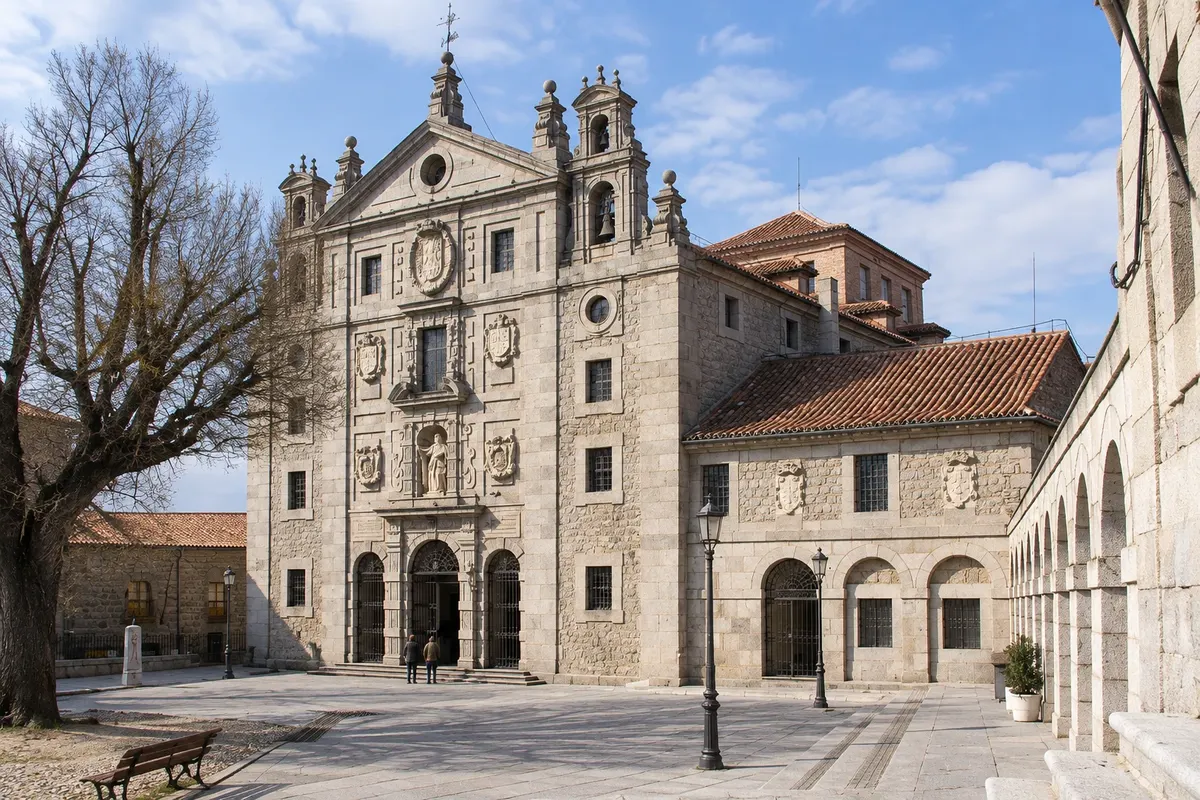
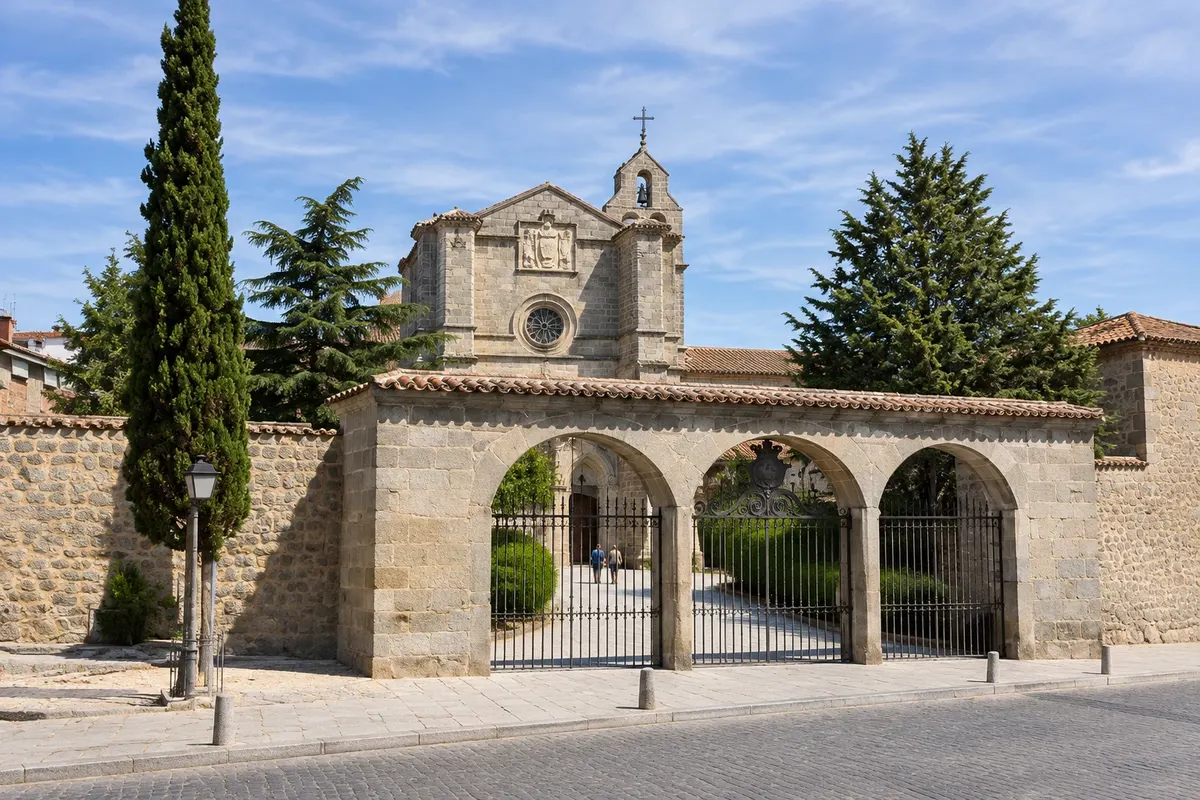
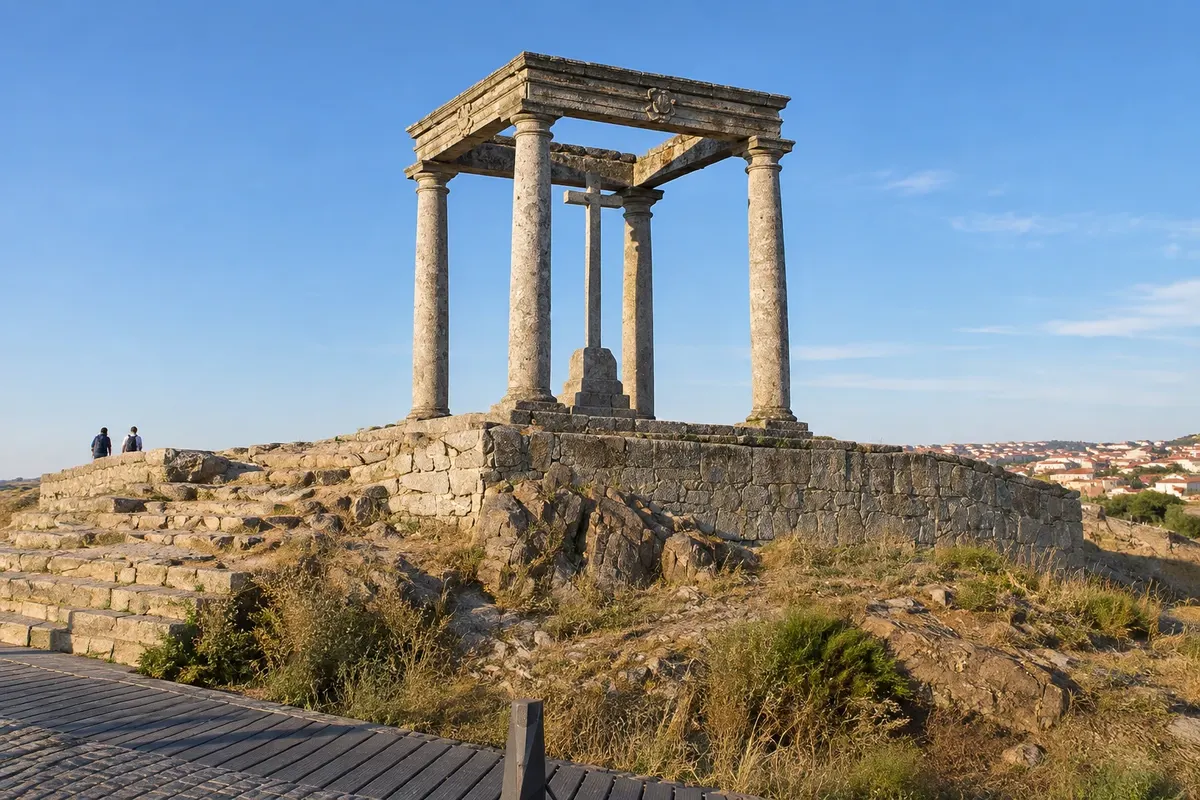
Teresa of Jesus was born in Ávila in 1515, and the city revolves around her. The 17th‑century Convent of Saint Teresa was built over the saint’s birthplace, next to the section of the city wall that bears her name: the Baroque church has its chapel where Teresa’s bedroom once stood, and beside it is a relic room and a Teresian museum in the crypt that tells the life and foundations of the saint with objects and documents. The church and relic room are free to enter; the museum requires a ticket. From there, exiting by the Puerta del Puente and crossing the bridge over the Adaja River, a short climb leads to Los Cuatro Postes — four granite columns with a cross on a rock outcrop — the classic viewpoint of Ávila with the full wall facing you. Legend says it was there that Teresa, as a child, was found by her uncle after running away from home. At late afternoon the light hits the wall and, after dark, it remains illuminated.
Kraji na poti: Convent of Saint Teresa, Teresian Museum, Puerta de la Santa, Adaja Bridge, The Four Posts.
Vključuje: Church and relic room with free access; Teresian Museum with a separate paid ticket. Los Cuatro Postes are outdoors, no ticket office.
Nasvet: Go to the convent at late afternoon and walk to Los Cuatro Postes for the sunset. The return is uphill. In October, on Saint Teresa’s feast day (the 15th), the city often holds a procession and its own program.
Najboljši čas za obisk: All year. In winter the sun sets early; bring a coat for the wait at the viewpoint.
Real Monasterio de Santo Tomás
Odhod: Plaza de Granada, Ávila, south of the old town on foot, about 15 minutes from the city wall približno uro in četrt Dopoldne ali popoldne Lahko
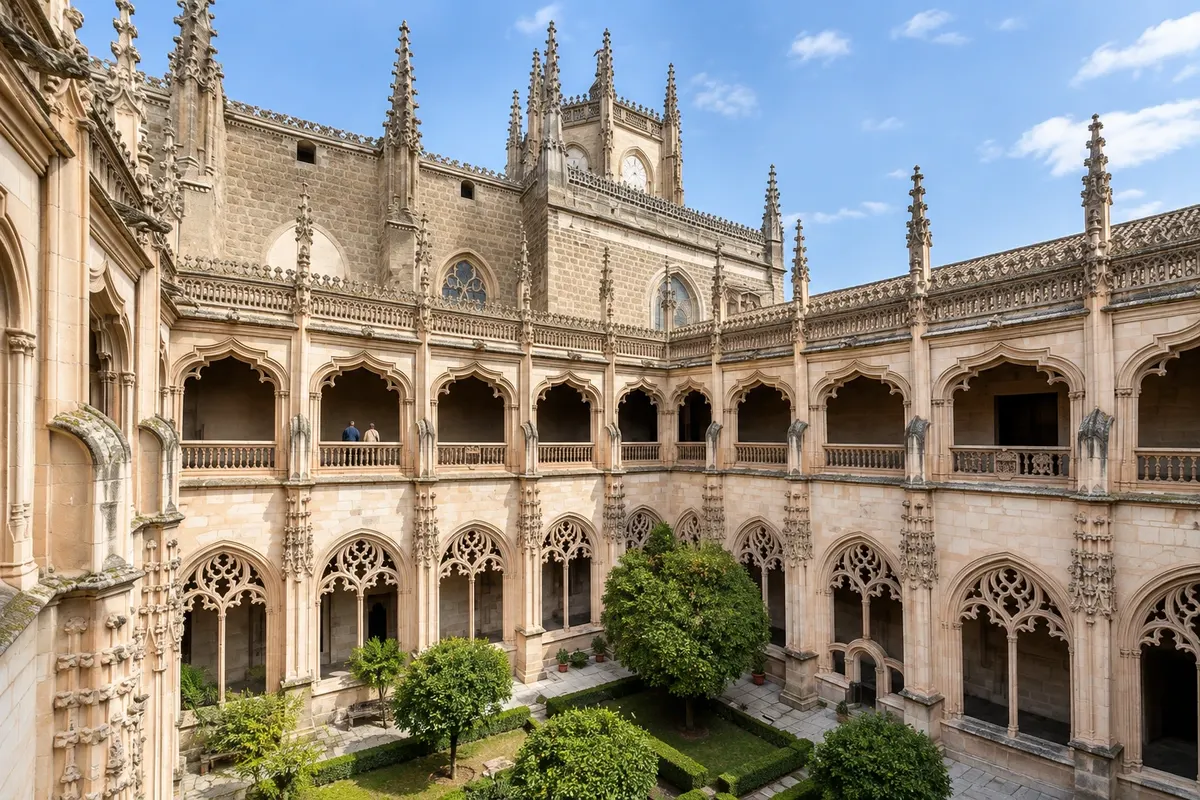
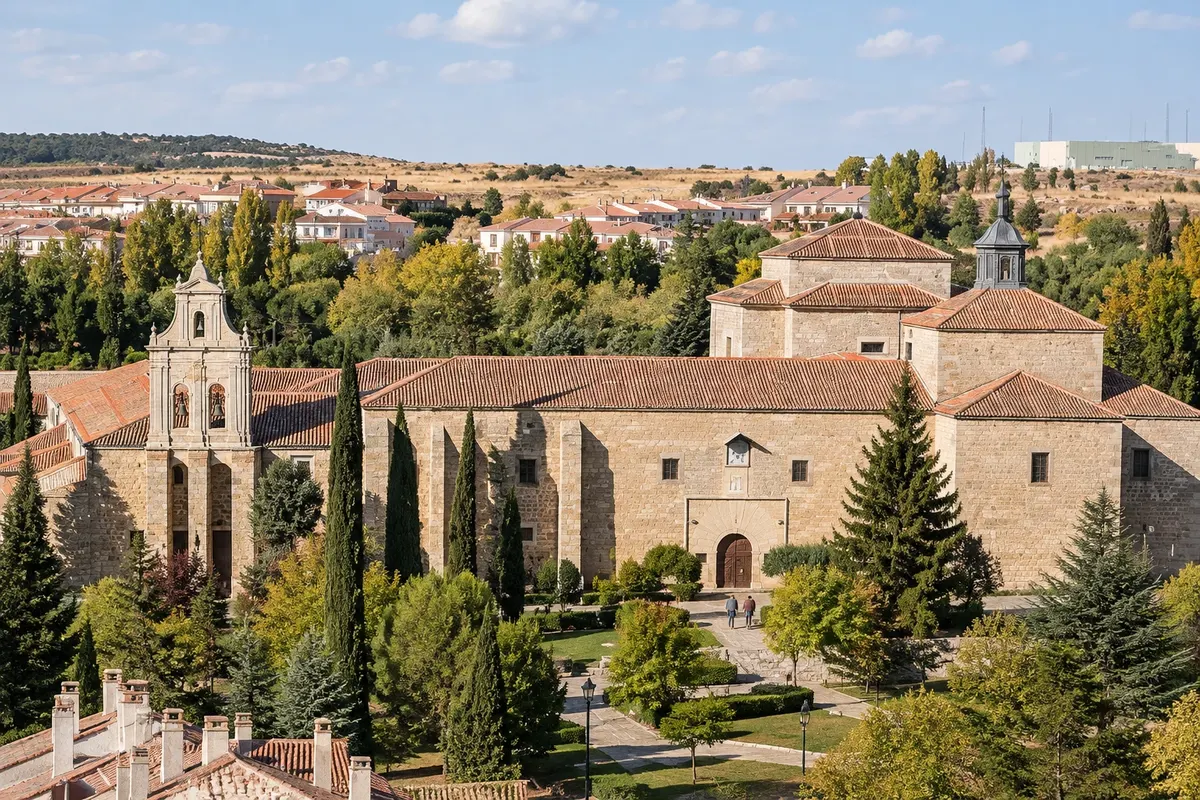
The Dominican monastery was founded in 1482 under the protection of the Catholic Monarchs, who used it as a summer residence. It sits outside the wall to the south, in an open plaza. The Gothic church houses, in front of the altar, the alabaster tomb of Infante Don Juan, the only son of Isabel and Ferdinand, who died at 19, a work by Domenico Fancelli, and the altarpiece by Pedro Berruguete on the life of Saint Thomas Aquinas. The visit covers the three cloisters — the Noviciado, the Silencio and the Reyes cloister, the latter the largest with two tiers of arches — and the Museum of Oriental Art, made up of pieces brought by Dominican missionaries from Asia. The monastery was also the seat of the University of Ávila and a tribunal of the Inquisition; the inquisitor Tomás de Torquemada is buried there. The visit with audio guide takes a little over an hour.
Kraji na poti: Real Monasterio de Santo Tomás, Claustro de los Reyes, Sepulcro del Infante Don Juan, Museo de Arte Oriental.
Vključuje: Church, three cloisters and museums (separate paid admission with audio guide; included on the Ávila tourist card).
Nasvet: Combine it with the return via Paseo del Rastro, which offers views of the valley on the way back to the wall. The Gothic portico can be seen from the outside, from the churchyard.
Najboljši čas za obisk: Vse leto.
El Escorial, on the route from Madrid to Ávila or Segovia
Odhod: Monasterio de San Lorenzo de El Escorial, about 50 km from Madrid Madrid commuter train (Cercanías) to El Escorial, bus from Moncloa or car via the A-6 half day to full day Dopoldne Lahko
San Lorenzo de El Escorial lies in the Sierra de Guadarrama, between Madrid and Ávila, and is a natural stop for those driving or looking for a day trip. The granite monastery-palace was built by Philip II in the 16th century and combines a basilica, palace, monastery, library and royal pantheon in a single rectangular block of courtyards and towers. The visit includes Philip II’s apartments, the Pantheon of the Kings, the marble crypt where Spain’s monarchs are buried, the library with a painted ceiling and wooden shelves, the basilica, the Patio de los Evangelistas with its central temple and beds, and the painting and architecture museums. The terraced gardens and the Silla de Felipe II, a viewpoint in the sierra, round out the visit. It is closed on Mondays. You can reach it by Madrid Cercanías, getting off at El Escorial station and walking up or taking a bus to the monastery, or by buses 661 and 664 from Moncloa.
Kraji na poti: Royal Monastery of San Lorenzo de El Escorial, Basilica, Pantheon of the Kings, Library, Patio de los Evangelistas, Gardens.
Vključuje: Monastery, palace, pantheons, library, basilica, museums and gardens (separate paid entry, closed on Mondays). Casitas del Príncipe and Casita del Infante are visited on a separate guided tour.
Nasvet: Allow at least three hours for the complex. Buy tickets in advance on the Patrimonio Nacional website on weekends. If you’re driving to Ávila you can stop here in the morning and continue via the AP-6 and AP-51.
Najboljši čas za obisk: Year-round. Spring and autumn are best for the gardens; in winter the mountains may have snow.


 Brazilija
 Antarktika
 Argentina
 Bolivija
 Čile
 Kolumbija
 Ekvator
 Gvajana
 Francoska Gvajana
 Falklandski otoki (Malvini)
 Paragvaj
 Peru
 Surinam
 Urugvaj
 Venezuela
 Nemčija
 Avstrija
 Belgija
 Hrvaška
 Danska
 Slovaška
 Slovenija
 Finska
 Francija
 Grčija
 Nizozemska
 Madžarska
 Irska
 Islandija
 Italija
 Luksemburg
 Norveška
 Poljska
 Portugalska
 Združeno kraljestvo
 Češka
 Švedska
 Švica
 Turčija
 Bermudi
 Kanada
 Združene države Amerike
 Grenlandija
 Mehika
 Sveta Peter in Mihael
 Dominikanska republika
 Japonska
 Južnoafriška republika
 Egipt
 Avstralija
 Fidži
 Nova Zelandija
 Papua Nova Gvineja