

Obzidje
Walls of Ávila
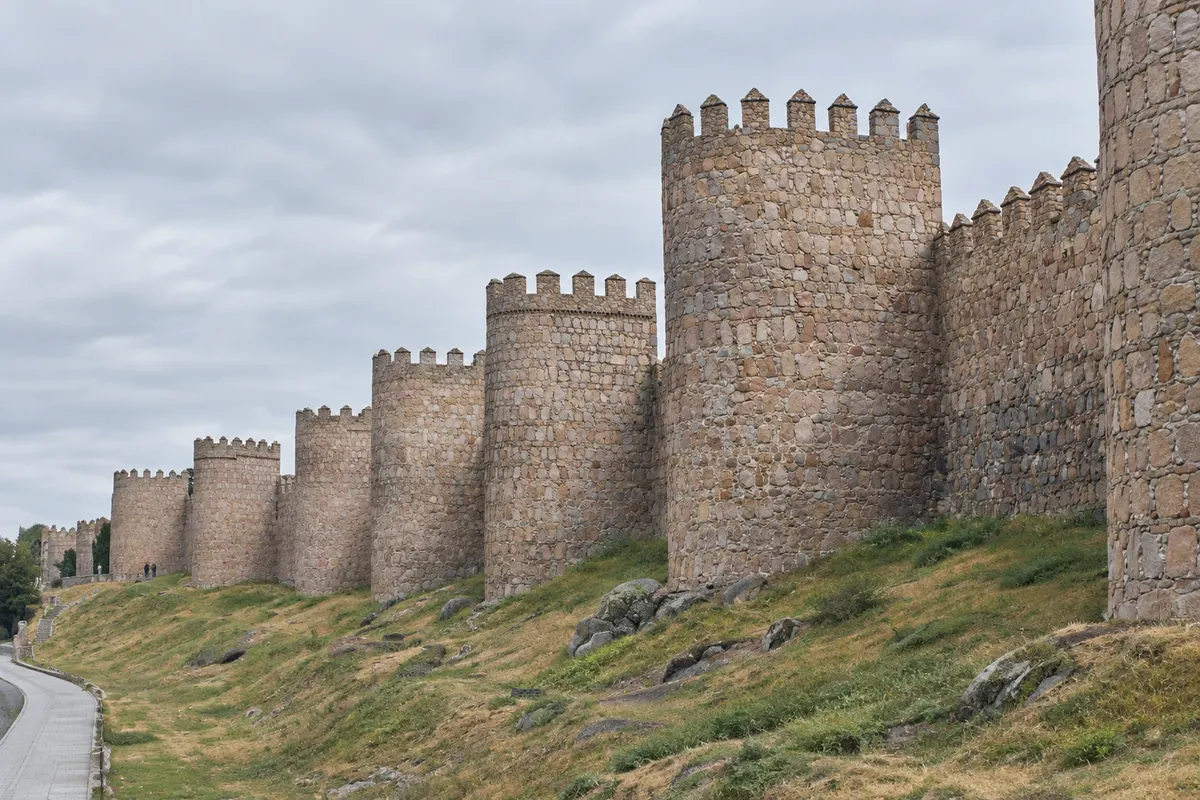
Medieval wall enclosing the historic center, with 2,515 meters of perimeter, 87 towers and 9 gates. Several sections of the adarve, the walkway along the top of the wall, are open to visitors.

 Išči
 Brazilija
 Antarktika
 Argentina
 Bolivija
 Čile
 Kolumbija
 Ekvator
 Gvajana
 Francoska Gvajana
 Falklandski otoki (Malvini)
 Paragvaj
 Peru
 Surinam
 Urugvaj
 Venezuela
 Nemčija
 Avstrija
 Belgija
 Hrvaška
 Danska
 Slovaška
 SlovenijaŠpanija
 Finska
 Francija
 Grčija
 Nizozemska
 Madžarska
 Irska
 Islandija
 Italija
 Luksemburg
 Norveška
 Poljska
 Portugalska
 Združeno kraljestvo
 Češka
 Švedska
 Švica
 Turčija
 Bermudi
 Kanada
 Združene države Amerike
 Grenlandija
 Mehika
 Sveta Peter in Mihael
 Dominikanska republika
 JaponskaTurčija
 Južnoafriška republika
 Egipt
 Avstralija
 Fidži
 Nova Zelandija
 Papua Nova Gvineja
Castela e Leão · Španija
Destinacija: Toledo, Segovia and Ávila.
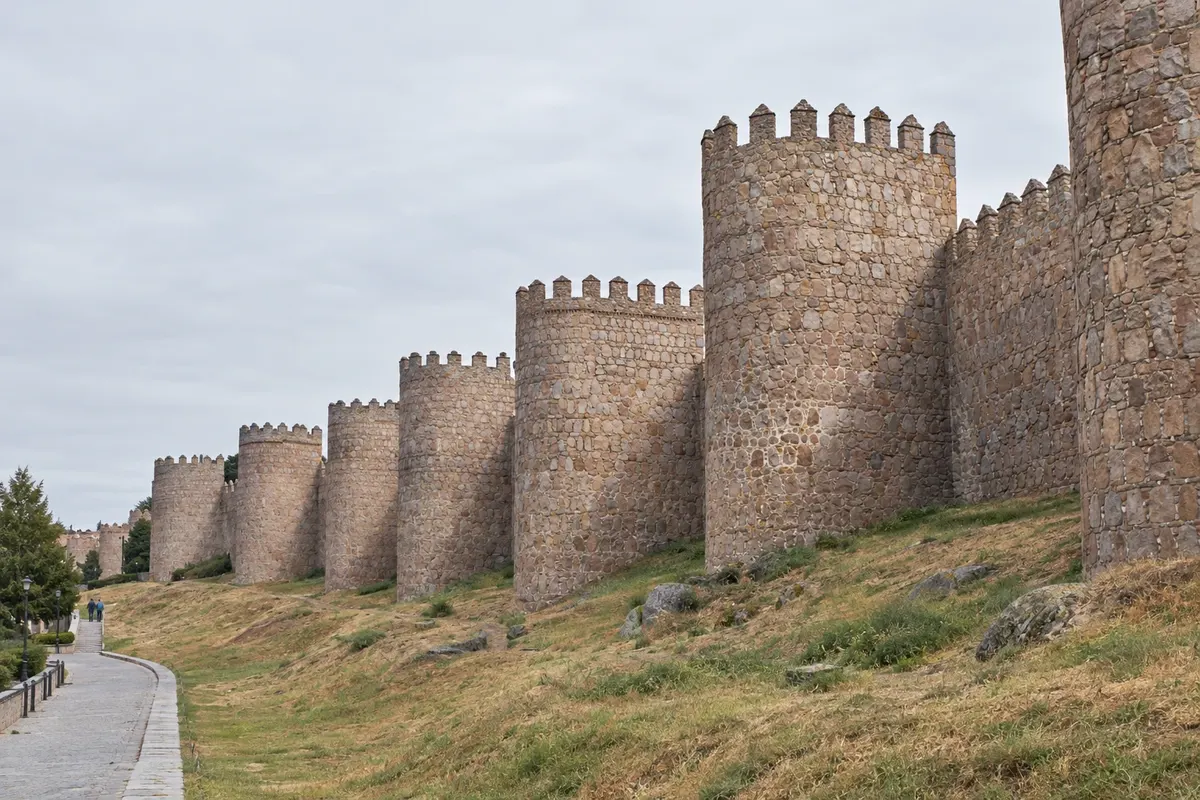
Na fotografiji: Walls of Ávila
Illustrative images. The pictures in this guide are illustrations based on the real place, not photographs, and may differ from it.
Mesto
Ávila, in Castela y Leão, is the highest provincial capital in Spain, over 1,100 metres above sea level. The old town is enclosed by a complete medieval wall, with 87 towers, and is a World Heritage site. Inside and around it are the Cathedral, the Basilica of San Vicente, the Monastery of Santo Tomás and the places associated with Santa Teresa: the convent where she was born and the Convent of the Encarnación. The language is Spanish.
V vodniku še ni nastanitev – Ávila.
kako do tja · koliko dni · načrt poti · vprašanja
Doživite kraj
Medieval wall enclosing the historic center, with 2,515 meters of perimeter, 87 towers and 9 gates. Several sections of the adarve, the walkway along the top of the wall, are open to visitors.
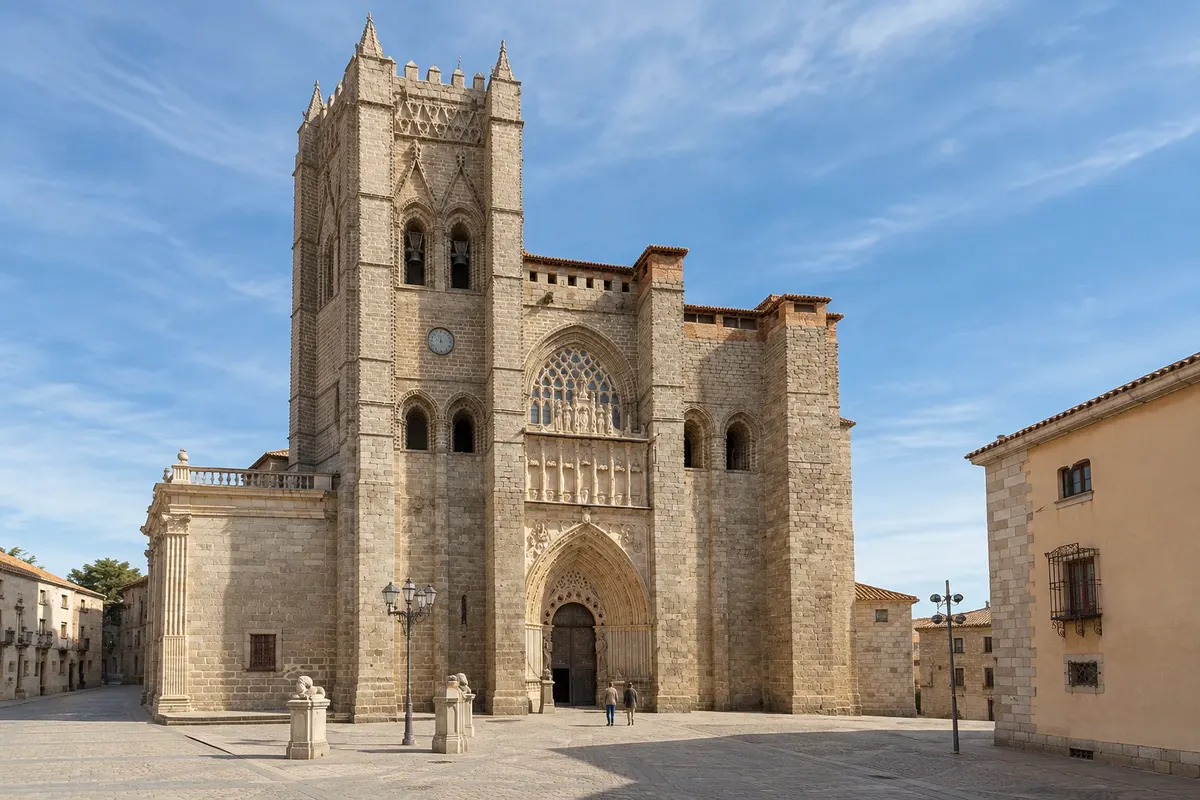
Cathedral-fortress whose apse, the cimorro, is one of the towers of the wall. It is considered the first Gothic cathedral in Spain, with works beginning in 1172 under the French master Fruchel.
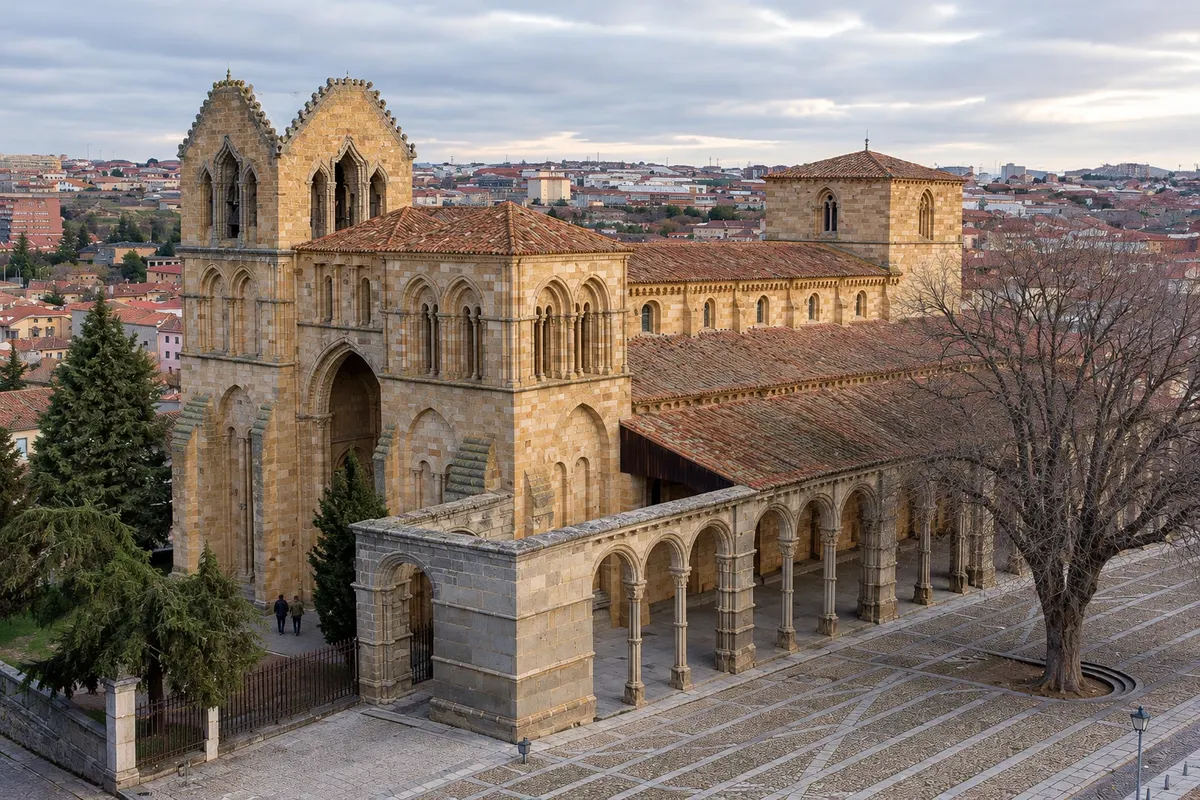
Large Romanesque church outside the wall, begun around 1120 on the site where, by tradition, the siblings Vicente, Sabina and Cristeta were martyred. It houses the sculpted cenotaph of the saints.
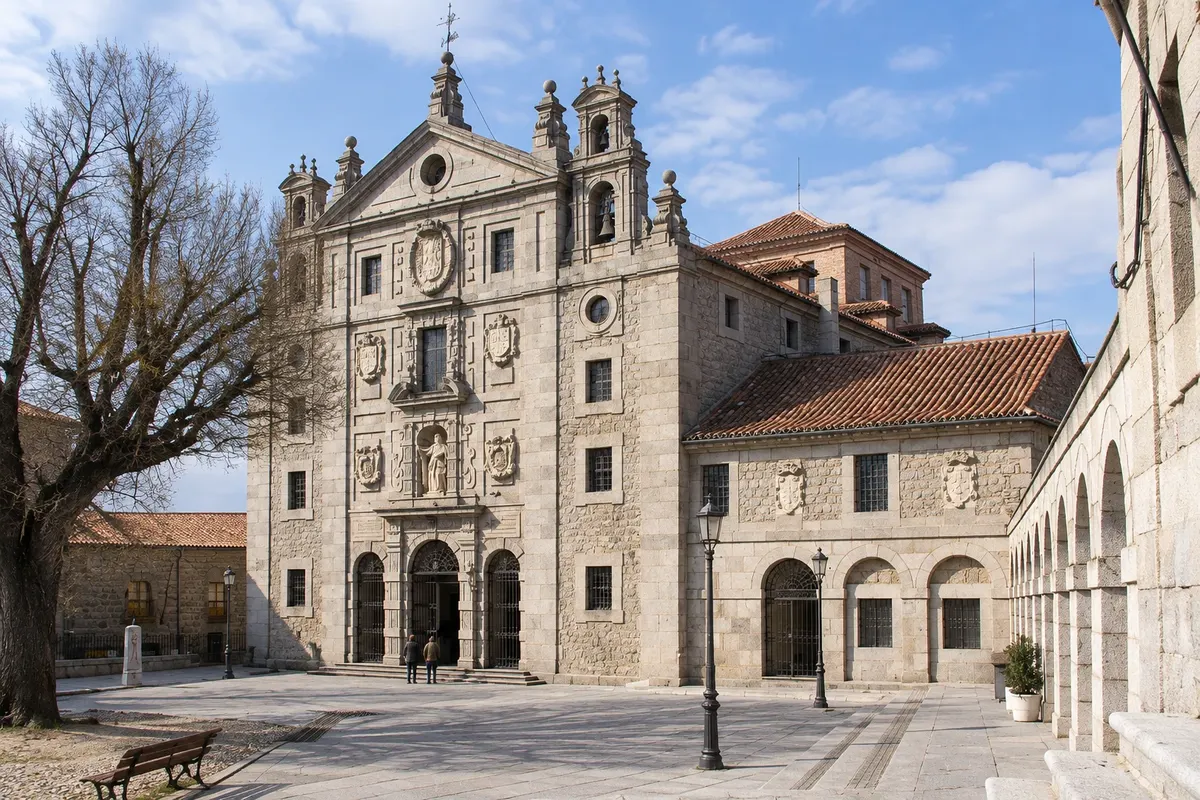
Baroque Carmelite church and convent built between 1629 and 1636 over the house where Santa Teresa de Jesús was born. It has the chapel on the site of the saint's room and a Teresian museum in the crypt.
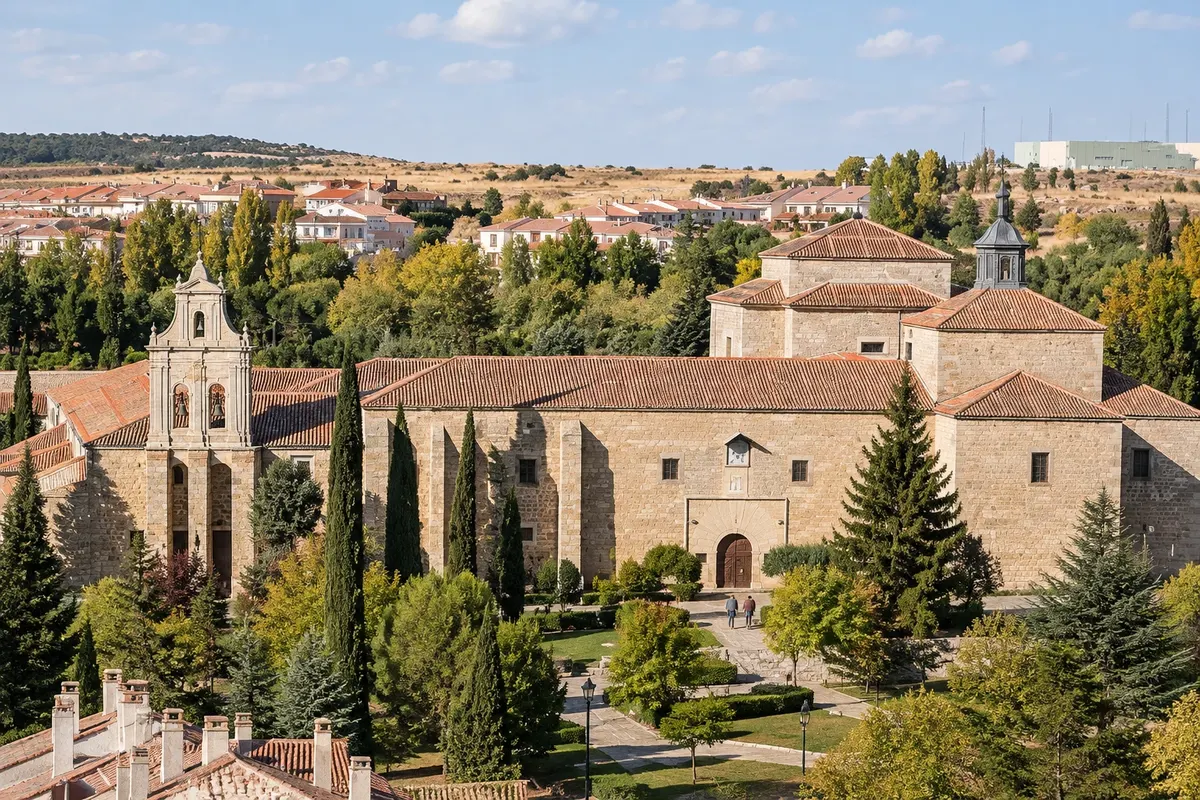
Carmelite monastery outside the wall where Santa Teresa lived from 1535 to 1574 and prepared the reform of the order. It preserves the chapel on the site of her cell and a museum with a drawing by Saint John of the Cross.
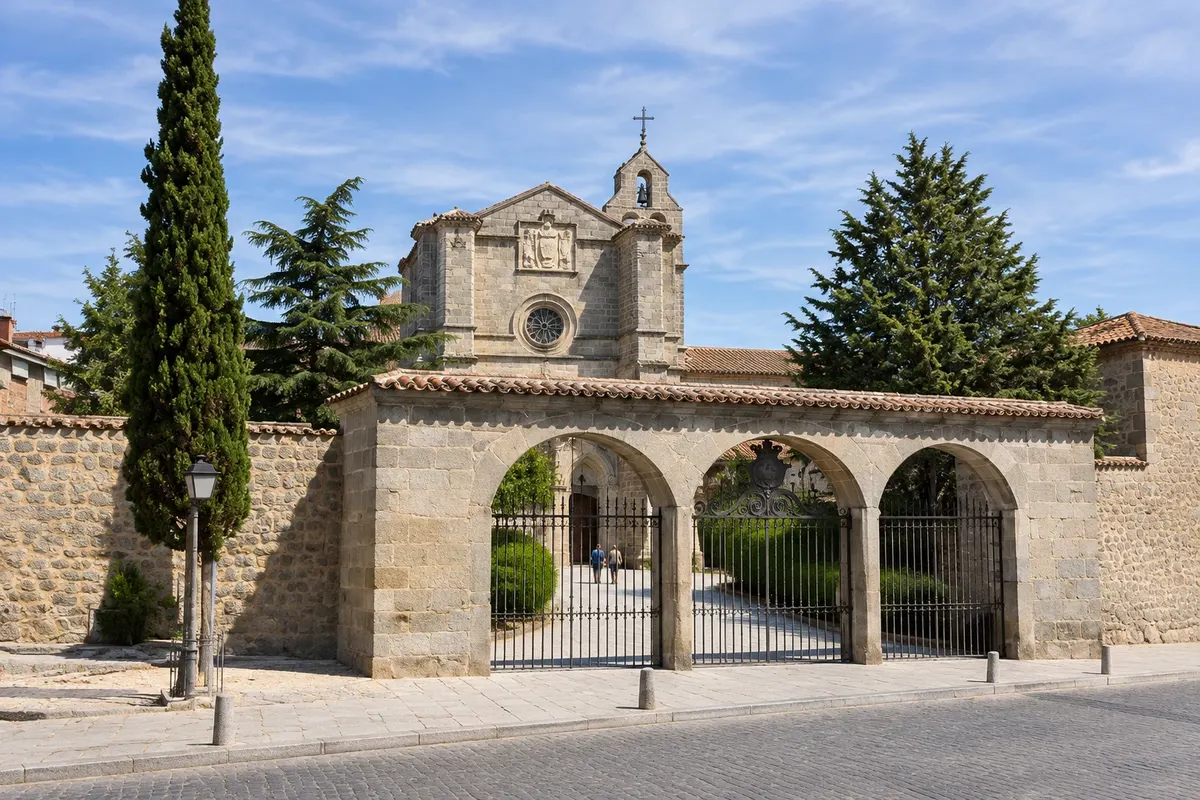
Gothic Dominican monastery from 1482 to 1493, associated with the Reyes Católicos and Torquemada. It has three cloisters, the tomb of Prince Dom João and a church with a façade sculpted by Gil de Siloé.
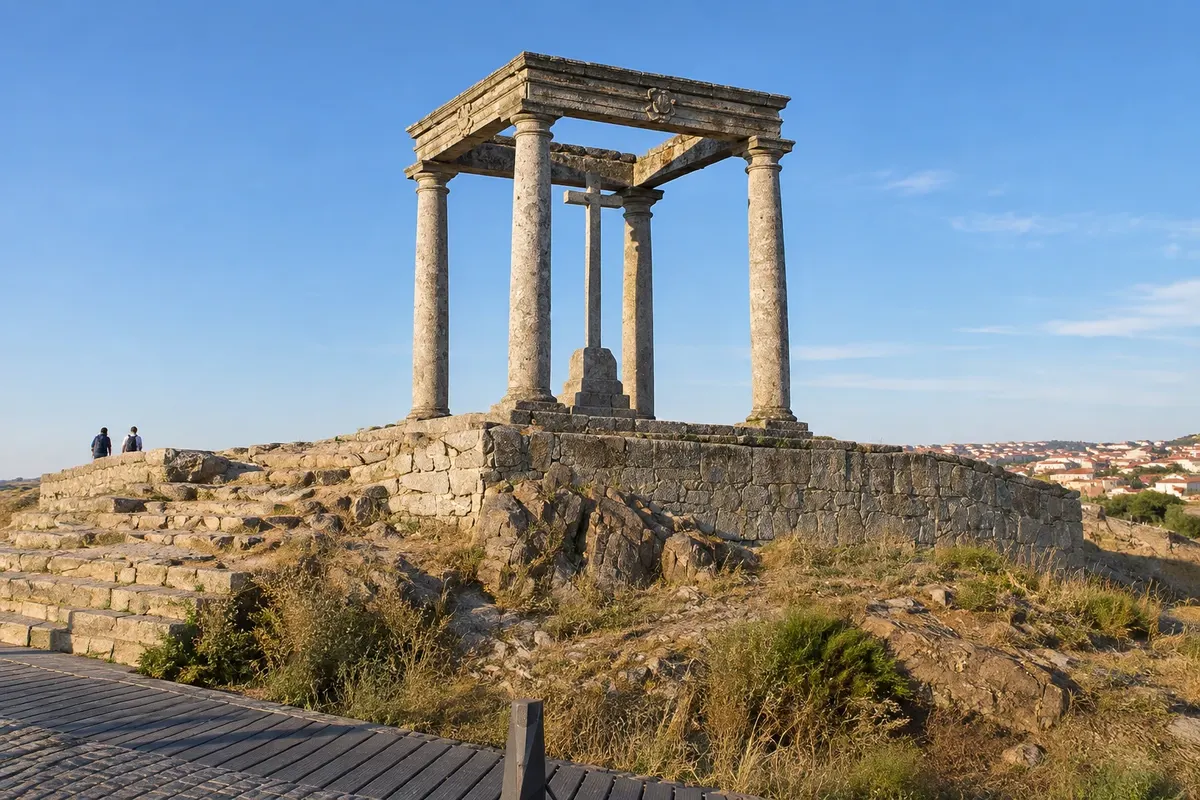
Small monument from 1566, with four Doric columns and a granite cross, on the other side of the Adaja river. It is the classic spot to view the whole wall of Ávila.
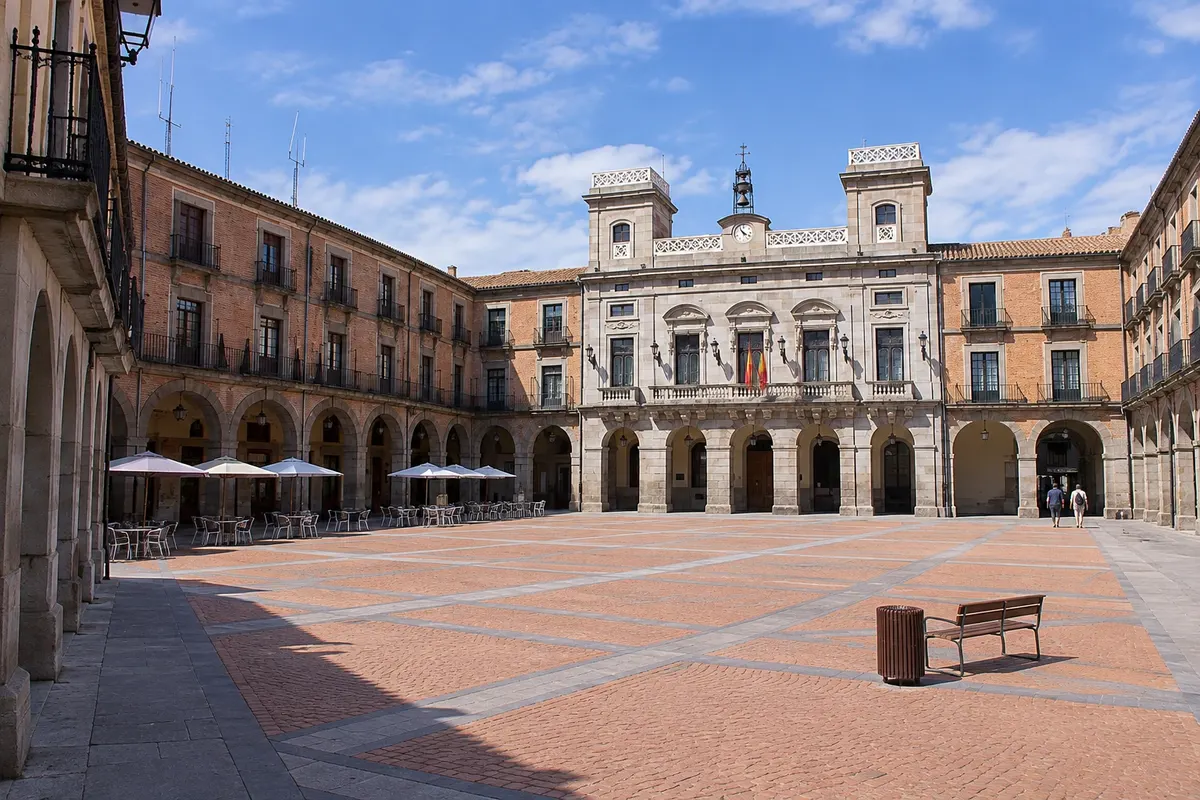
Ávila's main square, inside the wall, with arcades on three sides, the 19th-century town hall and the Iglesia de San Juan Bautista. It is the meeting point of the old town.
Pred odhodom
Ávila – Castile and León Destinacija Toledo, Segovia and Ávila
Razdalje so približne. Pred potovanjem preverite lete in vozne rede avtobusov, vlakov ali ladij.
From Madri there is a conventional, non-high-speed train to Ávila station, about 2 km from the centre, and buses to the coach station near the railway station. The journey is longer than to Toledo or Segóvia: check the duration when buying tickets. The nearest airport is Madri-Barajas, about 130 km away. Check before purchasing.
One day is enough for the wall walk, the Cathedral, San Vicente, the Convent of Santa Teresa and the view from the Cuatro Postes. Two days allow you to include the Monastery of Santo Tomás and the Encarnación at a relaxed pace and to see the wall illuminated at night.
May to June and September to October are usually the most pleasant months. From December to February it is very cold, with frosts and sometimes snow, and it gets dark early. In mid-October the festivities of Santa Teresa take place.
The seasons shown are the most usual ones; nature doesn't always follow the calendar.
No. The walled center is explored on foot, and the train station and bus terminal are a 20-minute walk away. A car is only useful to link Ávila to Segóvia, about 75 km, or to Salamanca, or to explore the serra de Gredos.
Predlog poti
Pot povezuje znamenitosti na tej strani. Za oglede boste imeli dovolj časa.
Start at the Plaza de Santa Teresa and climb onto the adarve at the Puerta del Alcázar. Walk the open sections along the top of the wall and go down to view the Puerta de San Vicente from the outside.
Visit the Cathedral and the museum. Have lunch at the Mercado Chico, bearing in mind that lunch begins around 14:00. Afterwards, leave the wall to go to the Basílica de San Vicente and the crypt.
Pass by the Convento de Santa Teresa on the south side of the wall. Exit through the Puerta del Puente, cross the Adaja and climb up to Los Cuatro Postes to see the wall in the low light.
Return to the center and have dinner near the Mercado Chico; dinner service begins after 21:00. Those returning to Madri the same day should check the last train or bus.
Dan 1
Climb onto the adarve at the Puerta del Alcázar and walk the open sections at a leisurely pace. See the Iglesia de San Pedro, in the Plaza de Santa Teresa.
Have lunch at the Mercado Chico. Afterwards, visit the Cathedral, the cloister and the museum, which houses works by El Greco and Ribera.
Exit via the Puerta de San Vicente and enter the basilica to see the cenotaph of the saints and the crypt of the Soterraña.
Take a walk outside the illuminated wall before dinner.
Dan 2
Go down to the Mosteiro de Santo Tomás and explore the three cloisters, the church with the tomb of Prince Dom João, and the museums.
Visit the Convento de Santa Teresa and the crypt museum. Then walk to the Monasterio de la Encarnación, outside the wall to the north.
Cross the river Adaja and climb up to Cuatro Postes to see the entire wall at the end of the day.
Dine at the Mercado Chico. Order the chuletón de Ávila and yemas de Santa Teresa for dessert.
Check before you go. Opening hours and days change, and places may close for renovations, holidays or events. This itinerary is a suggestion from Cidade Turismo, not a commitment: plan yours by checking directly with each place you intend to visit.
Pred odhodom
There is a conventional train from Madri to the Ávila station and buses to the bus terminal, which is near the station. There is no high-speed train, and the journey takes longer than to Segóvia or Toledo. Check the duration and schedules when buying.
Yes. In one day you can walk the adarve of the wall and visit the Cathedral, San Vicente and the Convento de Santa Teresa. Leave early, because the outbound trip is long.
The city is over 1,100 meters above sea level; it is the highest provincial capital in Spain. In winter, from December to February, frosts are common and it sometimes snows.
Teresa of Jesus was born in Ávila in 1515 and lived for nearly forty years at the Monasterio de la Encarnación, from where she prepared the reform of the Carmelites. The convent built over her birthplace and the Encarnação are the main sites associated with her.
Yes. The two are about 75 km apart by road. By car the link is straightforward; by public transport there are buses between the two cities. To see them properly, ideally spend a day in each.
Več kot vodnik


