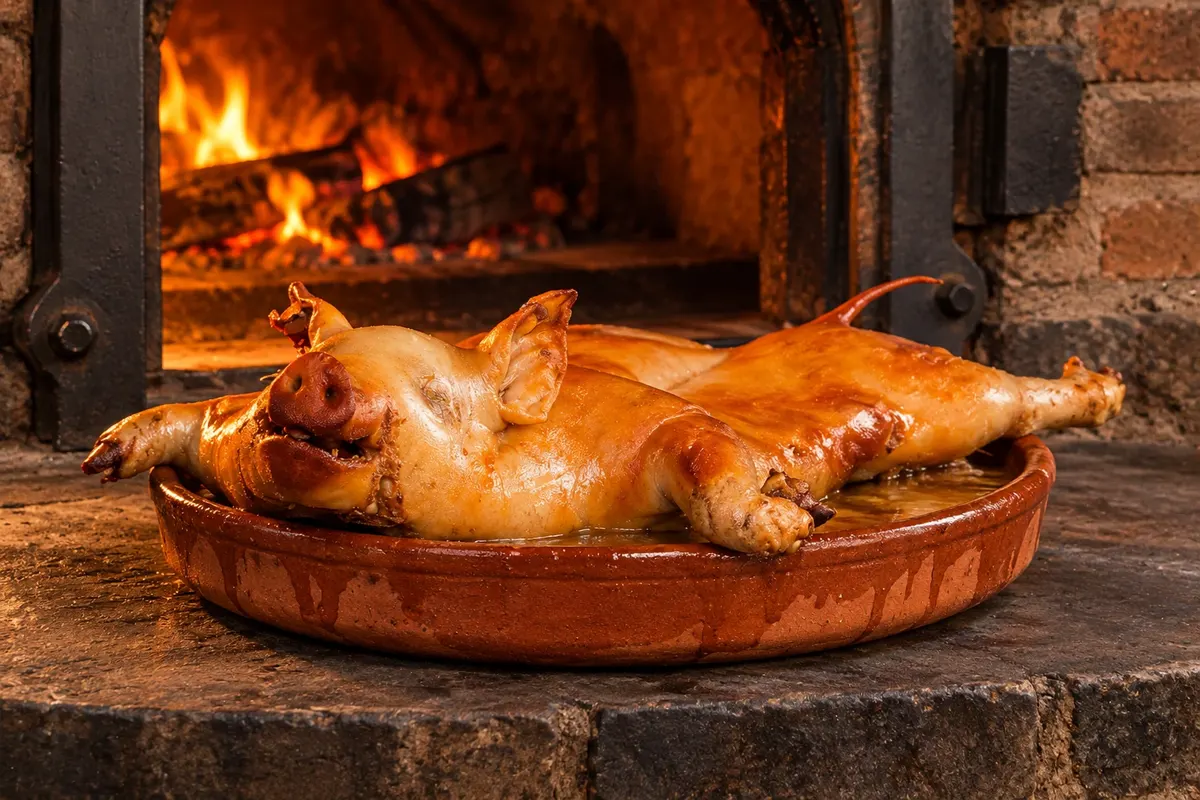
Cochinillo asado
Suckling pig fed only on mother's milk, roasted whole in a wood-fired oven until the skin is crispy. It is Segovia’s signature dish, with a quality mark since 2002, and is often carved with the edge of a plate.
Antarktika
Castela e Leão · Španija
Destinacija: Toledo, Segovia and Ávila.
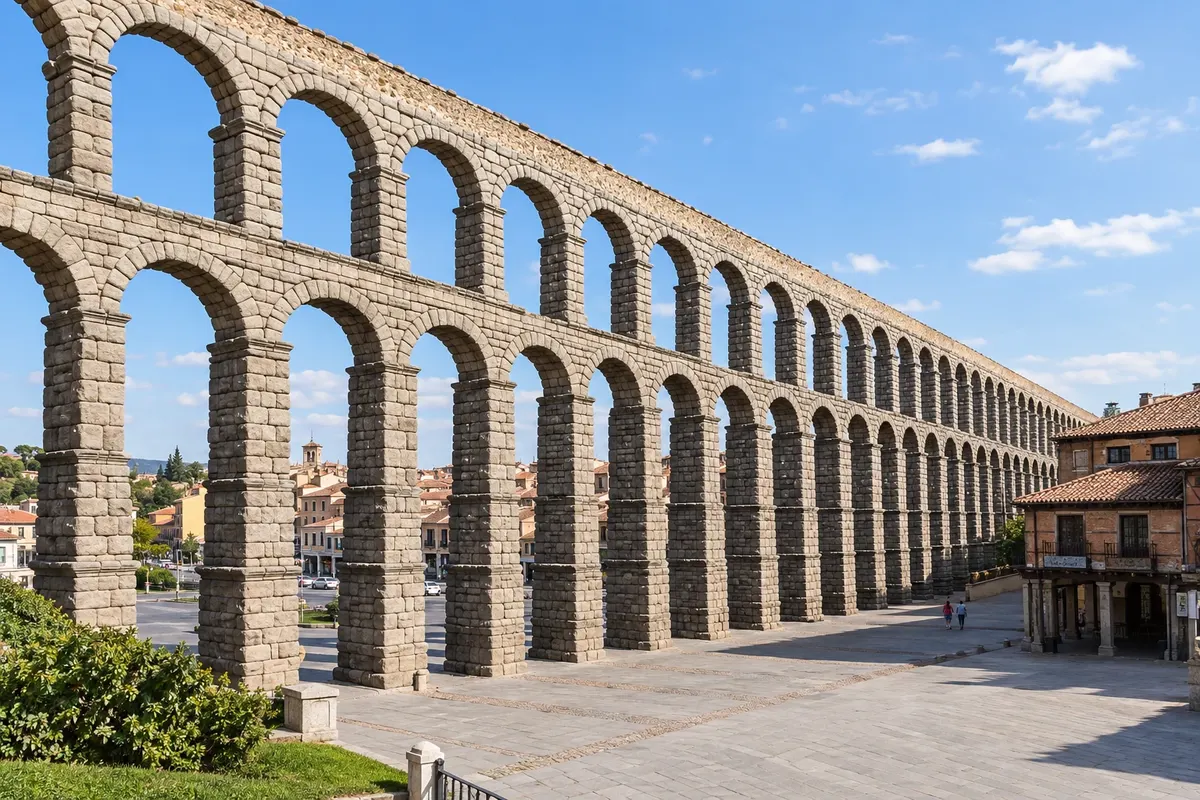
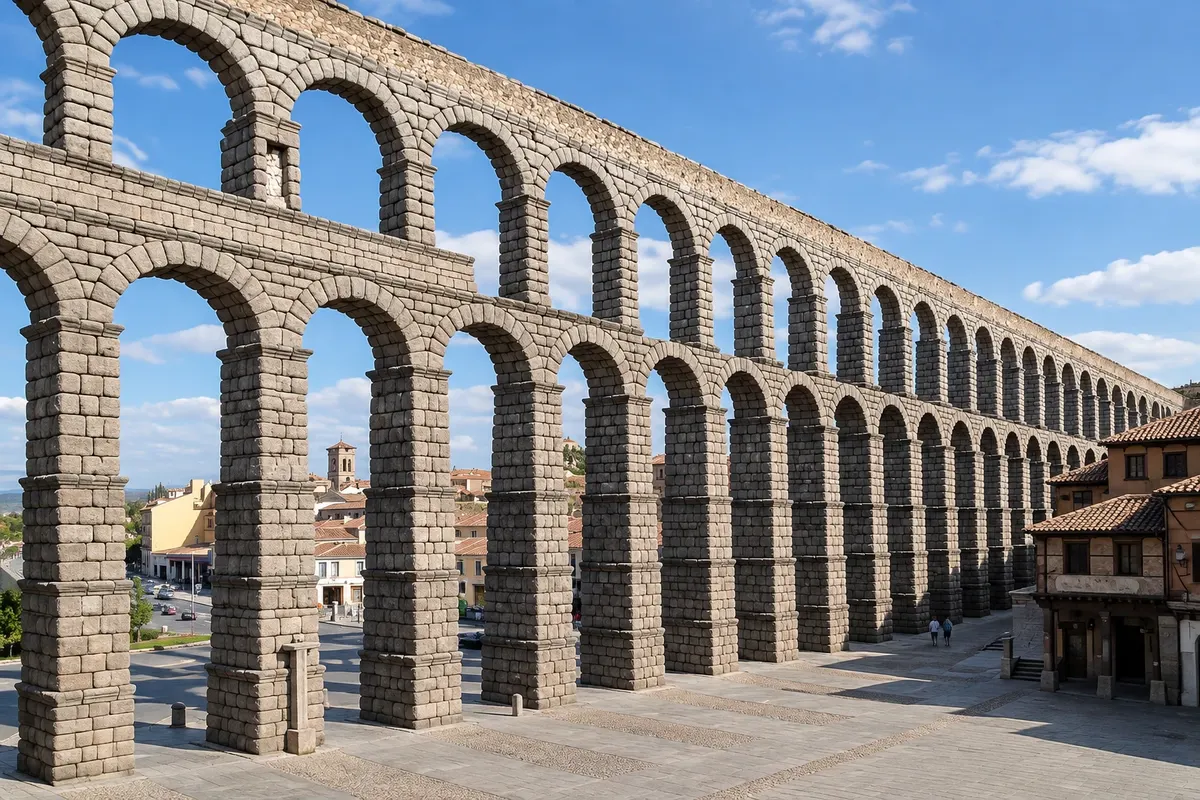
Na fotografiji: Aqueduto de Segóvia
Illustrative images. The pictures in this guide are illustrations based on the real place, not photographs, and may differ from it.
Mesto
Segóvia, in Castela e Leão, sits on a rocky outcrop about 1,000 meters above sea level, north of the serra de Guadarrama. The historic center and the Aqueduto romano are a World Heritage Site. Besides the Aqueduto, the city has the Alcázar, the Gothic Cathedral, the Plaza Mayor, the Judería and Romanesque churches such as San Millán. In the valley lie the monastery of El Parral, the Casa de Moneda and the Vera Cruz; 13 km away is the Palácio de La Granja. The language is Spanish.
V vodniku še ni nastanitev – Segovia.
kako do tja · koliko dni · načrt poti · vprašanja
Lokalni okusi – of Španija
Doživite kraj
Roman Aqueduto from the early 2nd century, with 167 granite arches assembled without mortar. The arcade crosses the Plaza del Azoguejo and reaches 28 meters at its highest point.
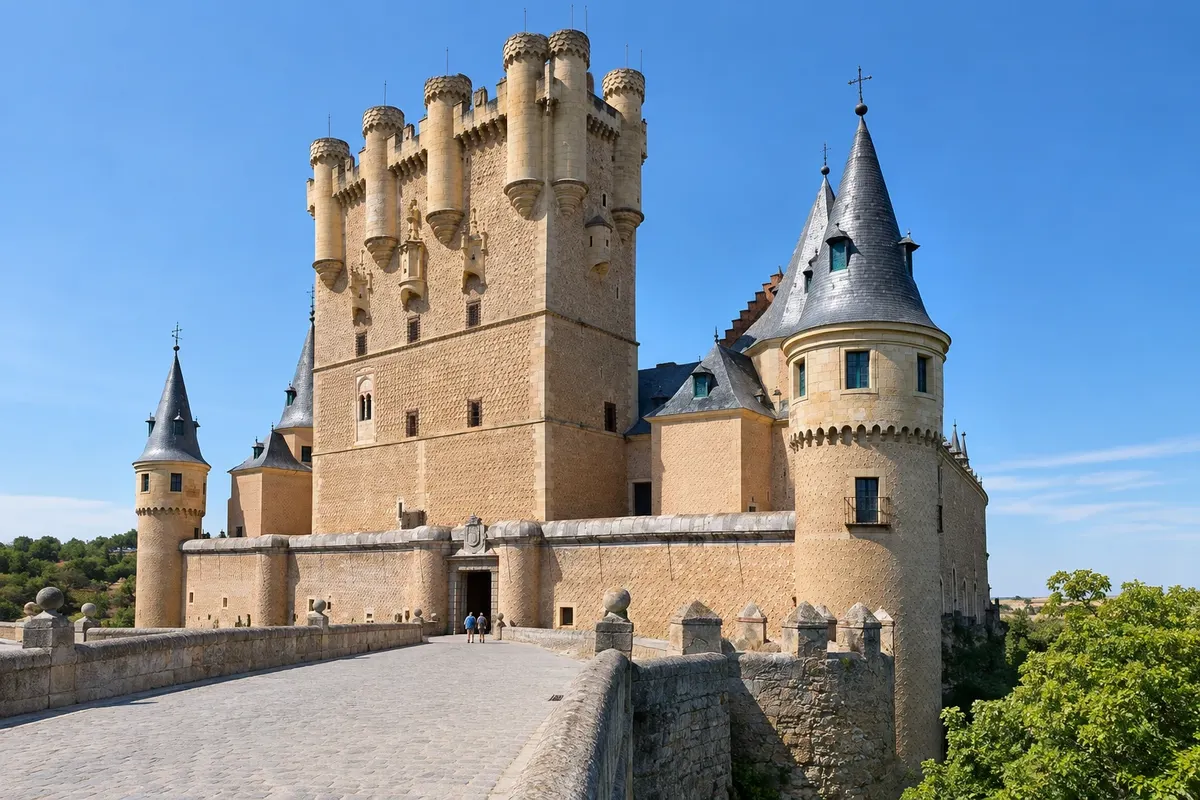
Castle-palace on the rocky spur of Segóvia, between the Eresma and Clamores valleys. It was a residence of the kings of Castile, a state prison and the Real Colegio de Artillería, and it has the Torre de Juan II open to visitors.
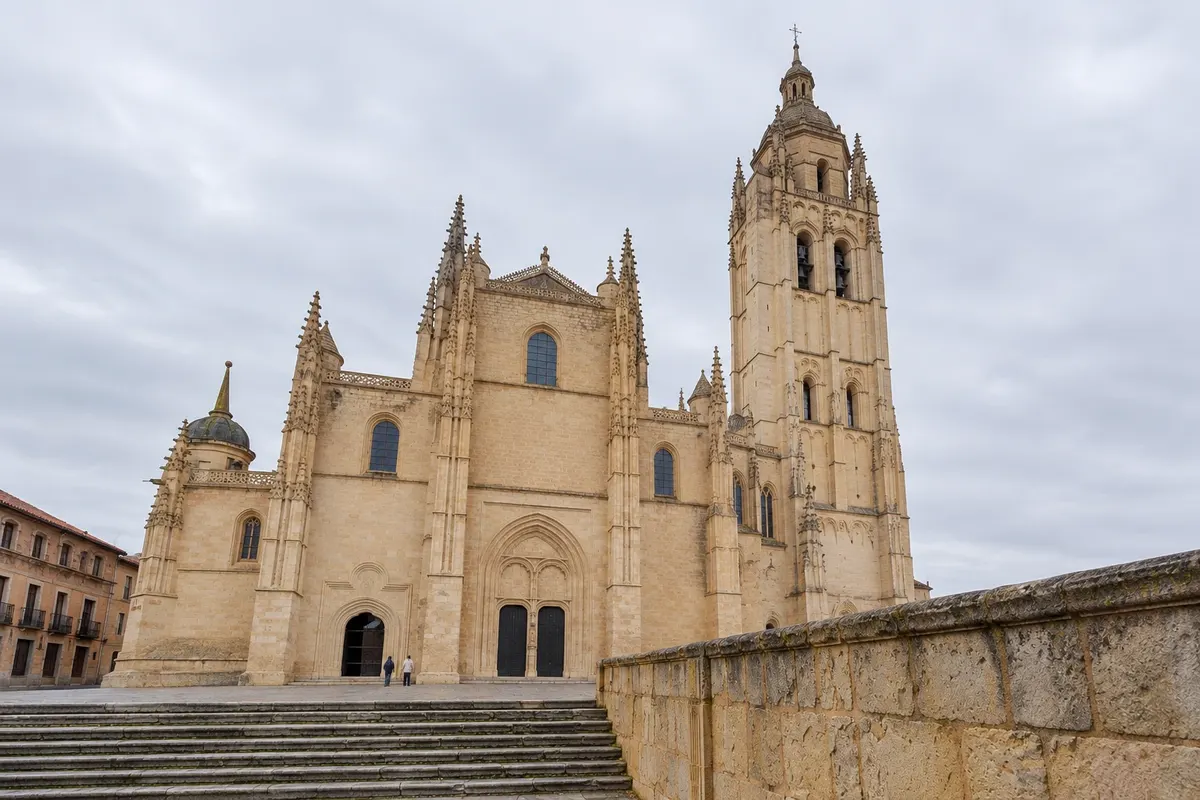
Late Gothic cathedral begun in 1525 by Juan Gil de Hontañón, at the highest point of the city. It has a tower of about 88 metres with guided visits and a cloister brought from the old cathedral.
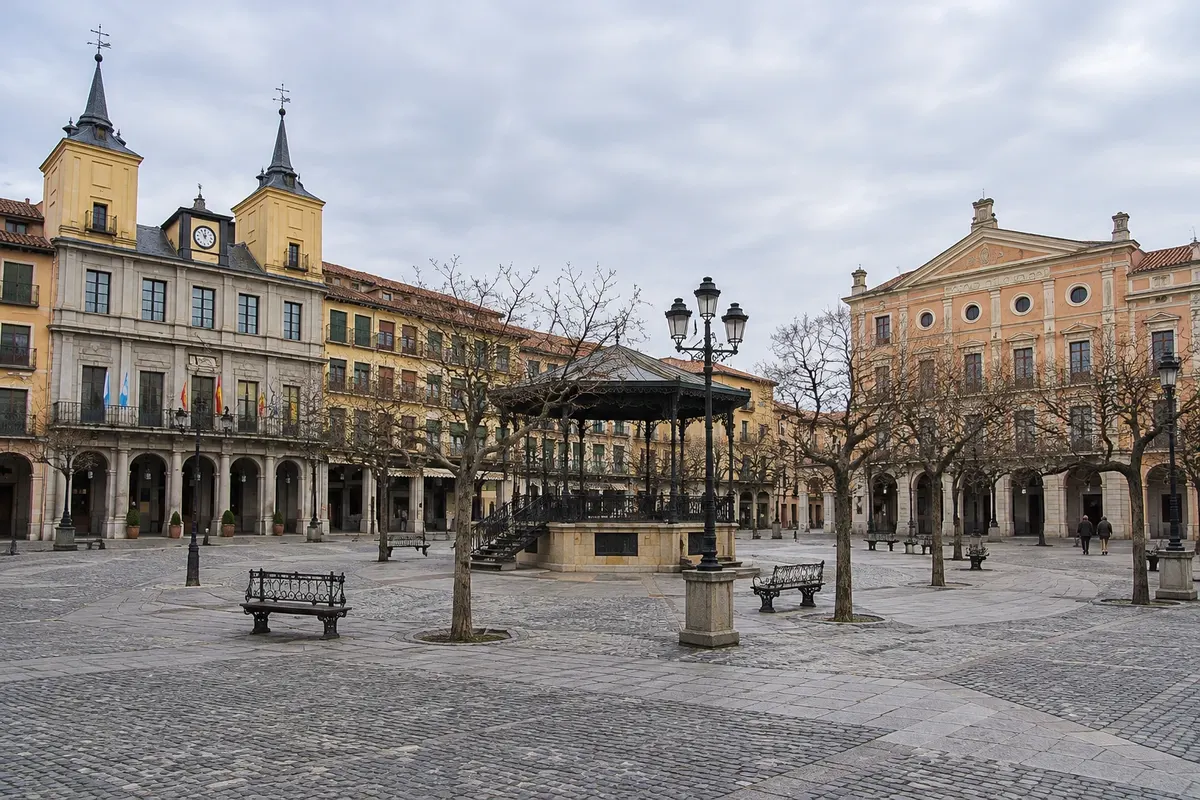
Main square of the old town, with the Cathedral's apse in the background, the town hall, the Teatro Juan Bravo and the Iglesia de San Miguel. It was there that Isabella the Catholic was proclaimed Queen of Castile in 1474.
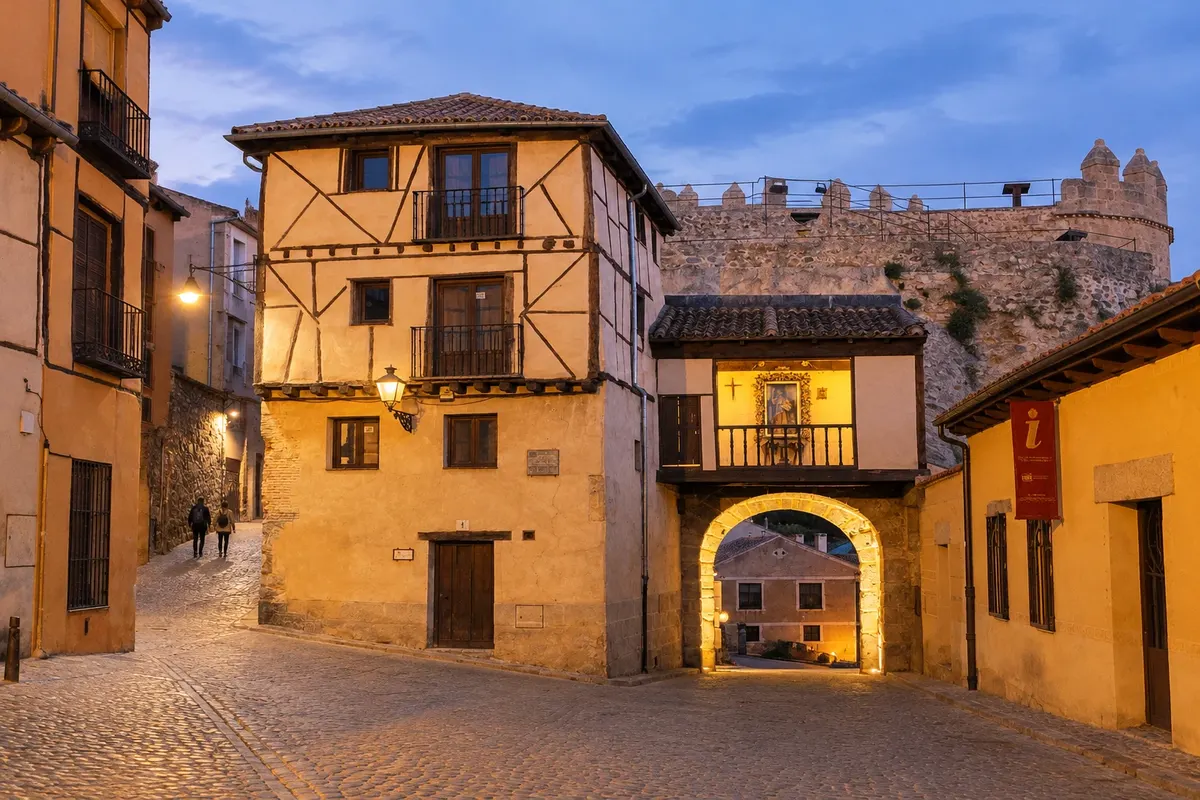
Former Jewish quarter in the southern part of the historic centre, between the Cathedral and the city wall. It has narrow streets, the old Sinagoga Mayor and the Puerta de San Andrés, one of the medieval gates of the city.
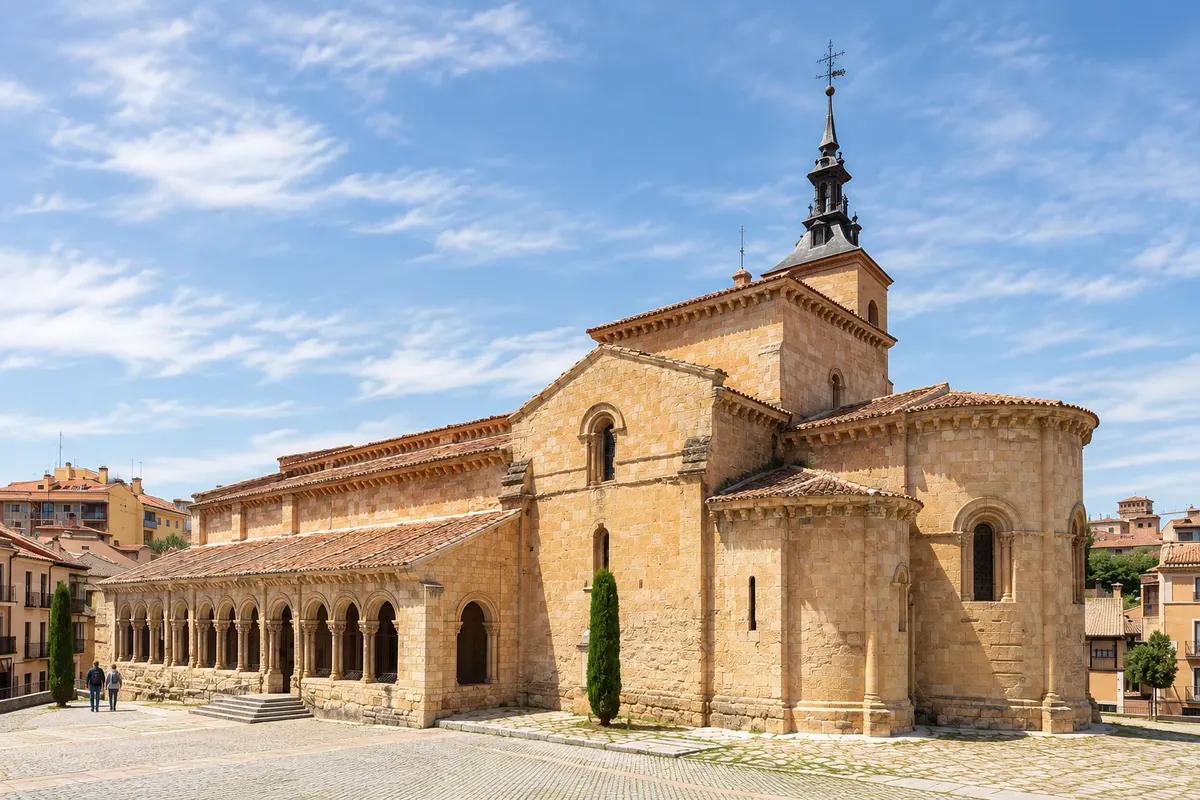
Romanesque church from 1111 to 1126, outside the city wall, near the Aqueduto. It has an 11th-century tower, arcaded galleries and a floor plan inspired by the cathedral of Jaca in Aragão.
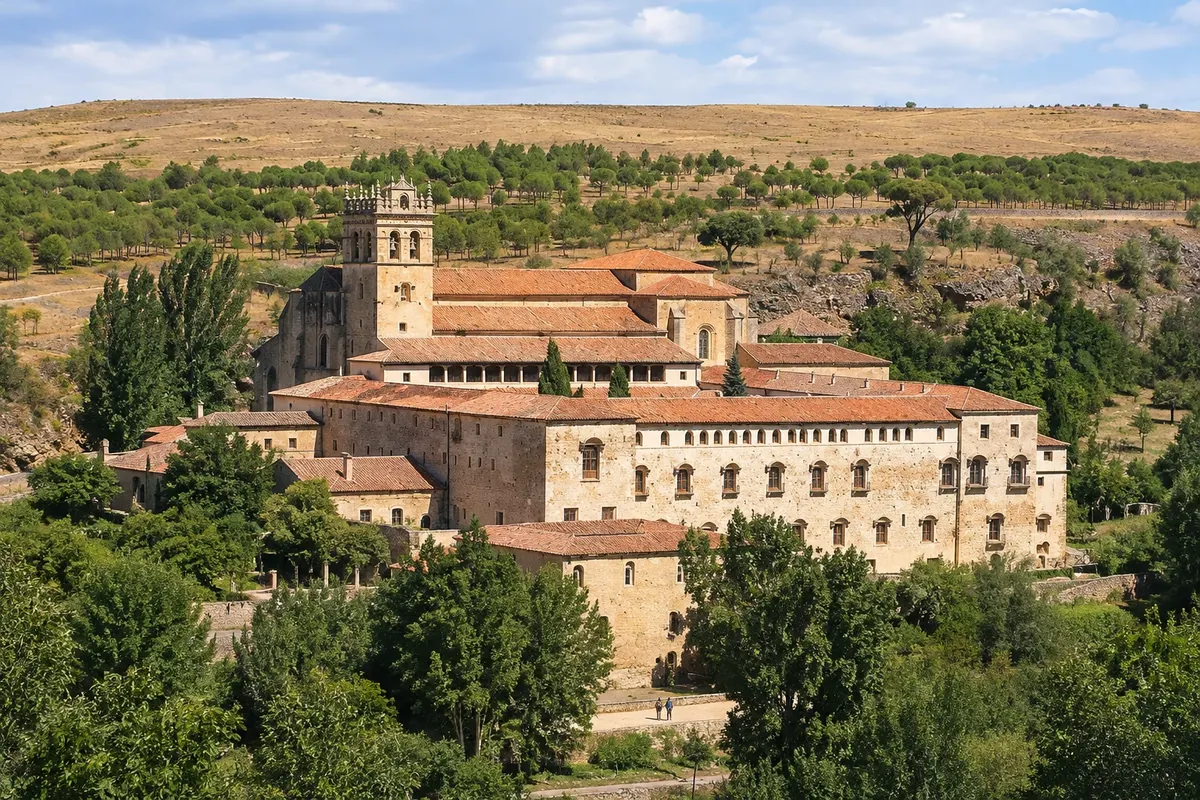
Hieronymite monastery founded in 1447 by Henrique IV, in the Eresma valley, below the Alcázar. It is still inhabited by monks, and visits are guided at a few fixed times.
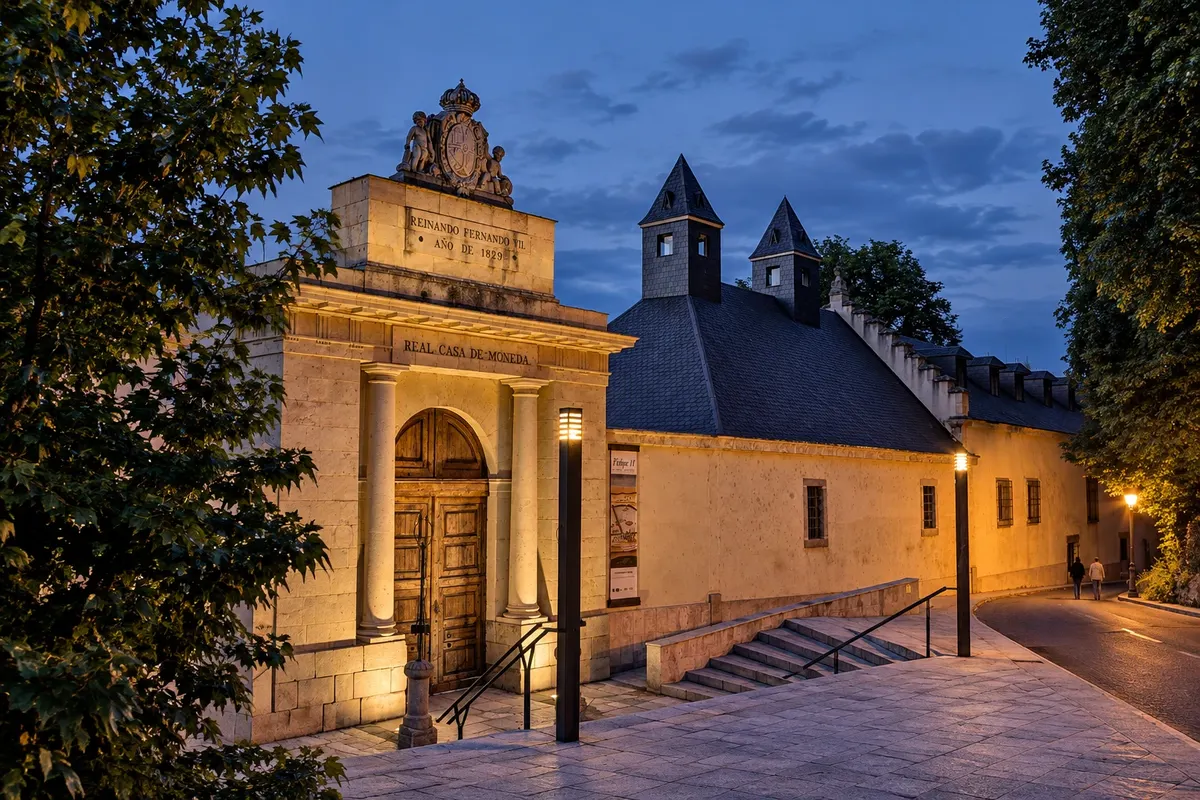
Coin factory commissioned by Filipe II between 1583 and 1588, designed by Juan de Herrera, on the banks of the Eresma. Today it is a museum, with a hydraulic wheel and the Centro de Interpretación del Acueducto.
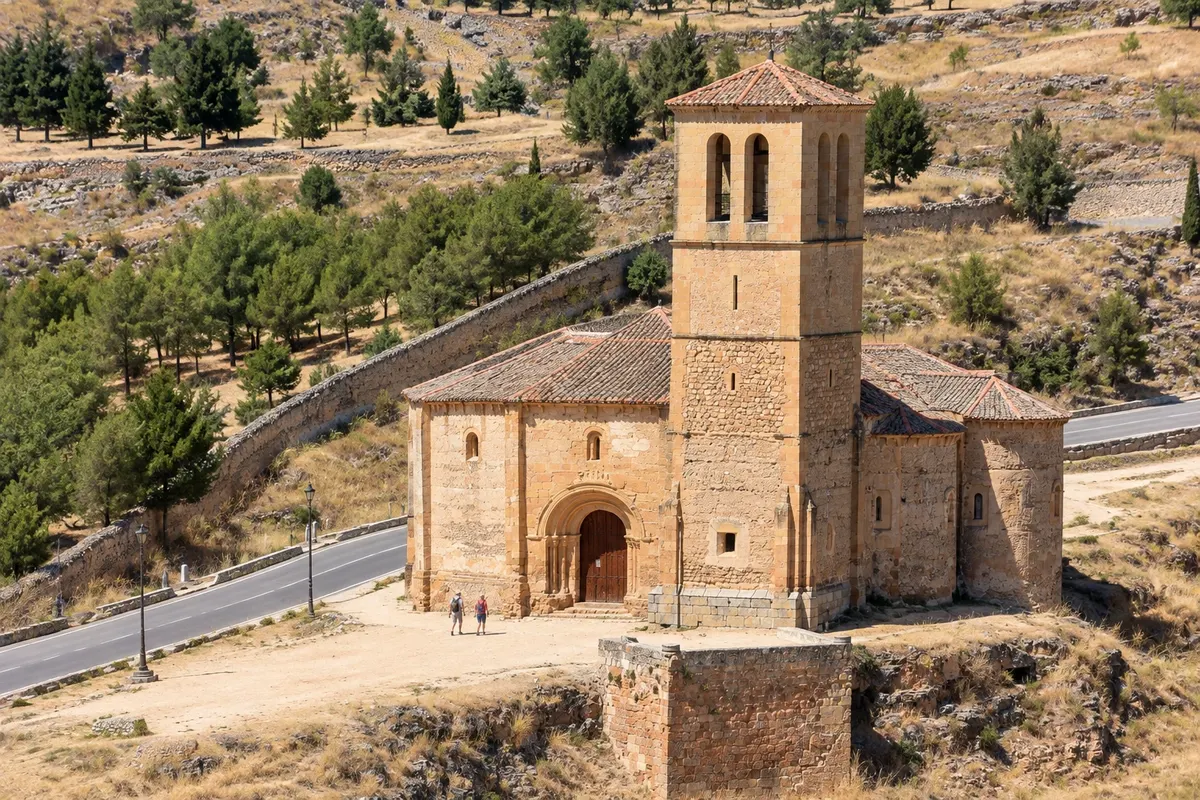
Romanesque twelve-sided church, consecrated in 1208, on the road to Zamarramala, facing the Alcázar. In the center it has a small two-story shrine inspired by the Holy Sepulchre of Jerusalem.
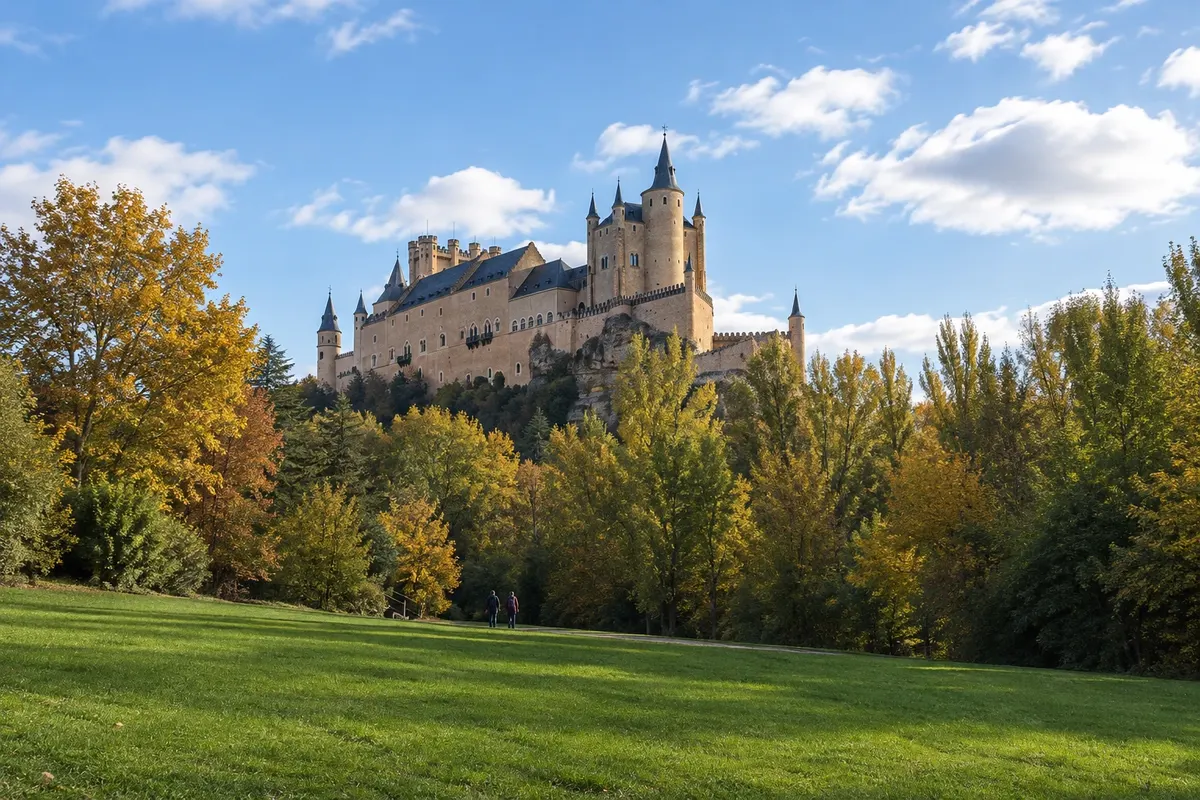
Lawn on the banks of the Eresma, below the Alcázar, from where you can see the bow-like front of the castle on the rock. It's the classic spot to photograph the Alcázar from the north side.
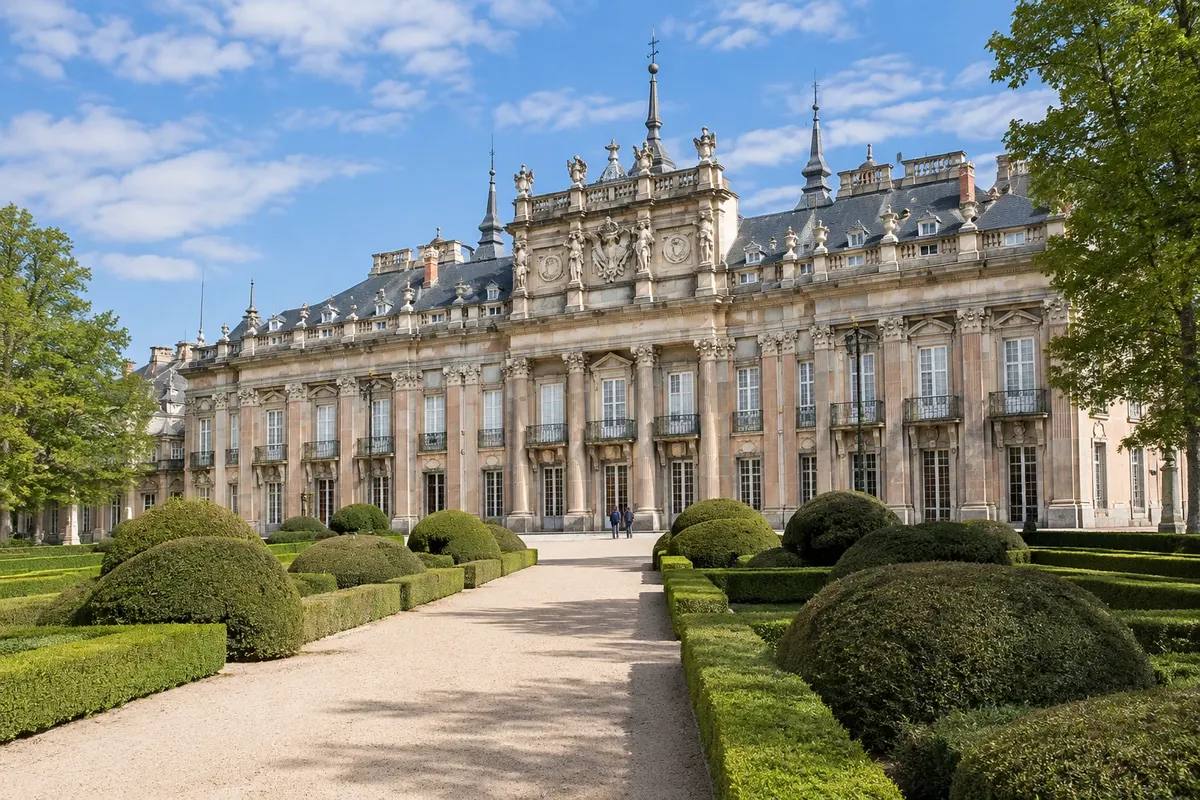
Summer palace of Filipe V, about 13 km from Segóvia, at the foot of the Sierra de Guadarrama. The French-style gardens have monumental fountains with lead sculptures.
Pred odhodom
Segovia – Castile and León Destinacija Toledo, Segovia and Ávila
Razdalje so približne. Pred potovanjem preverite lete in vozne rede avtobusov, vlakov ali ladij.
From Madri, the high-speed train takes about 30 minutes to Segovia-Guiomar station, roughly 7 km from the center, connected to the Aqueduto by urban bus. There are also direct buses from Madri that arrive at the bus station near the center. The nearest airport is Madri-Barajas, about 110 km away. Confirm before buying.
One day is enough for the Aqueduto, the Plaza Mayor, the Cathedral, the Judería and the Alcázar, as a day trip from Madri. With two days you can include the Eresma valley (El Parral, Casa de Moneda, Vera Cruz and the viewpoint at the Pradera de San Marcos) and the Palácio de La Granja.
April to June and September to October usually have the most pleasant weather. From December to February it is very cold, sometimes with snow, and it gets dark early.
The seasons shown are the most usual ones; nature doesn't always follow the calendar.
You don't need a car for the city: the center is walked on foot, and there is an urban bus between the train station and the Aqueduto. A car helps to get to La Granja and Riofrío, or to continue on to Ávila, about 75 km away. On-street parking in the historic center is paid and limited.
Predlog poti
Pot povezuje znamenitosti na tej strani. Za oglede boste imeli dovolj časa.
Start at the Aqueduto, in the Plaza del Azoguejo, and climb the side stairs to see the channel. Follow Calle Real, passing the Casa de los Picos and the Iglesia de San Martín, to the Plaza Mayor.
Visit the Cathedral and the cloister of Juan Guas. Have lunch near the Plaza Mayor, noting that lunch starts around 14:00. Afterwards, go down through the Judería to the Puerta de San Andrés.
Proceed to the Alcázar, see the rooms and, if you have the stamina, climb the 152 steps of the Torre de Juan II. From the small square in front you can see the Eresma valley and the Vera Cruz.
Dine in the area of the Plaza Mayor or the Azoguejo; dinner usually starts after 21:00. Anyone returning to Madri the same day should check the time of the last train at Guiomar and the bus to the station.
Dan 1
See the Aqueduto at a relaxed pace and walk to the Iglesia de San Millán. Return to the Azoguejo and go up Calle Real to the Plaza Mayor, stopping at the Casa de los Picos and San Martín.
After lunch, enter the Cathedral; if you have a reservation, go up the tower with the guide. Finish the afternoon in the streets of the Judería and at the Puerta de San Andrés.
Visit the Alcázar in the late afternoon, when tour groups have decreased, and climb the Torre de Juan II to see the city from above.
Dine near the Plaza Mayor and then walk by the illuminated Aqueduto.
Dan 2
Take the bus early or drive to San Ildefonso. Visit the palácio and walk through the gardens; in season, see the fountains. Remember that the palácio is closed on Mondays.
Back in Segóvia, descend to the Eresma valley for the afternoon guided tour of El Parral. Then head to the Real Casa de Moneda and the Centro de Interpretación del Acueducto.
Walk to the Iglesia de la Vera Cruz and descend to the Pradera de San Marcos to see the Alcázar from below, in the late-day light.
Ascend into the city via the Puerta de Santiago and dine in the center. Try the roast suckling pig (cochinillo) or at least the ponche segoviano for dessert.
Check before you go. Opening hours and days change, and places may close for renovations, holidays or events. This itinerary is a suggestion from Cidade Turismo, not a commitment: plan yours by checking directly with each place you intend to visit.
Pred odhodom
The quickest option is the high-speed train from Madri, about 30 minutes to Segovia-Guiomar. The station is outside the city, and urban buses connect to the Aqueduto. There are also direct buses from Madri that arrive at the bus station near the center.
Yes. In one day you can see the Aqueduto, the Plaza Mayor, the Cathedral, the Judería and the Alcázar. Leave early and buy your return train ticket in advance.
Yes, in winter, from December to February: the city is at about 1,000 meters altitude and can have snow. Even in summer, from June to August, nights are usually cool.
The roast suckling pig (leitão assado / cochinillo) is the best-known dish, and roast lamb is also traditional. The typical sweet is the ponche segoviano. Restaurants usually serve lunch after 14:00 and dinner after 21:00.
Yes, but with little time in each. The two are about 75 km apart by road, just over an hour by car. Without a car, the simplest is to visit each on a separate day from Madri.
Več kot vodnik