By plane: via São Paulo’s airports
Guarujá has no airport with commercial flights. Arrival by air is via São Paulo, and the journey always finishes by road.
Congonhas Airport (CGH) in the city, serving domestic flights, is the closest: it is about 90 km from Guarujá. International arrivals usually land at São Paulo–Guarulhos International Airport (GRU) in the metropolitan area, which is farther away.
From the airports you continue by rental car, prebooked transfer or bus. Buses to Guarujá depart from Terminal Jabaquara in São Paulo’s south zone. Allow plenty of time for connections: traffic leaving the city varies greatly, especially on Fridays and holiday eves.
By bus: from Terminal Jabaquara, São Paulo
Buses from São Paulo to Guarujá depart from the Jabaquara Intermunicipal Terminal in the city’s south zone. Trips are direct, with several departures per day, and arrive at Guarujá’s bus terminal. The journey takes 1h25 to 1h45, depending on traffic descending the mountain. The companies operating the route are Viação Ultra and Rápido Brasil.
Another option is to take a bus to Santos, which has more lines and connections with other state capitals, and cross the ferry on foot from Ponta da Praia.
Between Guarujá and Bertioga there is a metropolitan bus that runs by road: the Bertioga channel ferry does not carry buses.
On holidays and summer weekends tickets sell out. Buy in advance, including the return, and confirm boarding and arrival points with the carrier.
By car: Anchieta or Imigrantes and Cônego Domênico Rangoni
From São Paulo it’s about 90 km. You descend the mountain via the Anchieta–Imigrantes system, via Rodovia Anchieta (SP-150) or Rodovia dos Imigrantes (SP-160), then follow Rodovia Cônego Domênico Rangoni, a 33 km stretch also known as Piaçaguera–Guarujá, which reaches the island by land. The system has tolls: check the current rates with the operator.
The other option is to go to Santos and cross by ferry from Ponta da Praia; this is worth it when the ferry line is short.
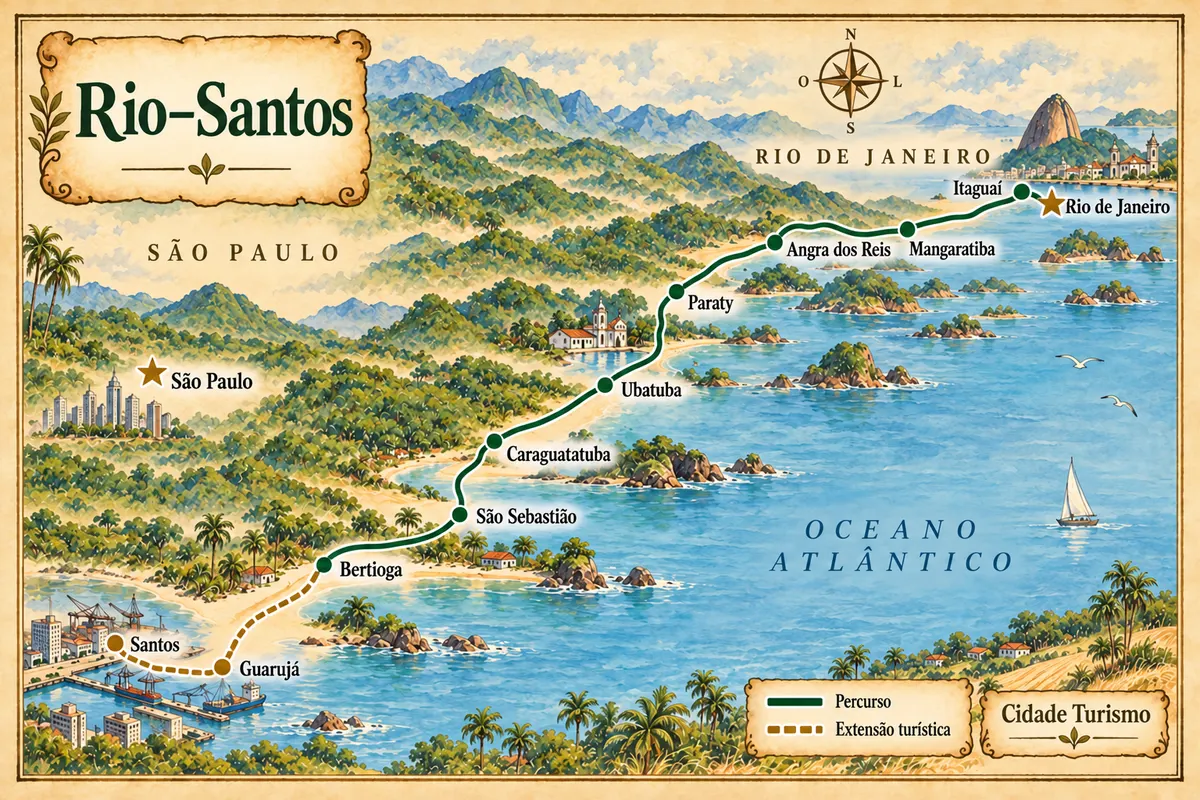
Those coming from Rio de Janeiro and São Paulo’s northern coast reach Bertioga via the Rio-Santos and then continue by road or by the Bertioga channel ferry, which lands on the north of the island.
On long holiday weekends and summer Sundays, the mountain ascent on the return often becomes congested. Leave early or plan to return at night.
Guarujá has a law creating an environmental preservation fee for visitor vehicles, charged per day of stay. The charge depends on whether the system is in operation: check the city hall’s page before you travel.
Ferry between Santos and Guarujá
The ferry links Ponta da Praia in Santos to Guarujá and carries cars, motorcycles, cyclists and pedestrians. It runs day and night every day; for most of the day departures follow demand, with intervals up to 30 minutes, and at night they are more spaced. Waiting times vary by day and hour.
Vehicle fares are charged in one direction only, at boarding in Guarujá, and cover both the outbound and return. Pedestrians and cyclists do not pay. Cash, debit and credit cards, instant payment and electronic-tag automatic charging are accepted. There is a paid, scheduled service for boarding with a reservation.
For pedestrians there are also boats between Santos city center and Vicente de Carvalho, a Guarujá district on the port side, for pedestrians and cyclists only, with a separate fare.
Buses do not make the crossing. On public holidays, compare the ferry wait with the road route via Rodovia Cônego Domênico Rangoni.
R$ 12,30 · by car or pickup, charged only at boarding in Guarujá, valid for both directions· uradna cena Ferry between Guarujá and Bertioga
At the island’s far north, at the end of the Guarujá–Bertioga road, a ferry crosses the channel to downtown Bertioga. It carries cars, motorcycles, cyclists and pedestrians and runs every day, with departures every 20 minutes during busy periods and every 40 minutes otherwise.
Unlike the Santos ferry, here vehicles pay when boarding in both directions, with higher fares on Saturdays, Sundays and public holidays. Pedestrians and cyclists do not pay. Cash, cards, instant payment and automatic charging are accepted.
The ferry does not carry buses or heavy vehicles. The queue grows on summer weekends and holidays. The operator reports the wait time on each side; when it is high, the road route via Cônego Domênico Rangoni and the Rio-Santos may be faster.
The Guarujá-side boarding is next to the start of the Prainha Branca trail.
R$ 6,15 do R$ 9,20 · by car or pickup, per crossing (charged both ways; lowest fare on weekdays, highest on Saturdays, Sundays and public holidays)· uradna cena How to get around Guarujá
The center is walkable: Pitangueiras, Píer Tony Villela and Astúrias are side by side, and Enseada begins on the other side of Morro da Campina.
For the southern beaches, Tombo and Guaiúba, about 5 km from the center, and for Enseada, Pernambuco and Perequê, there are urban buses, taxis and ride-hailing apps.
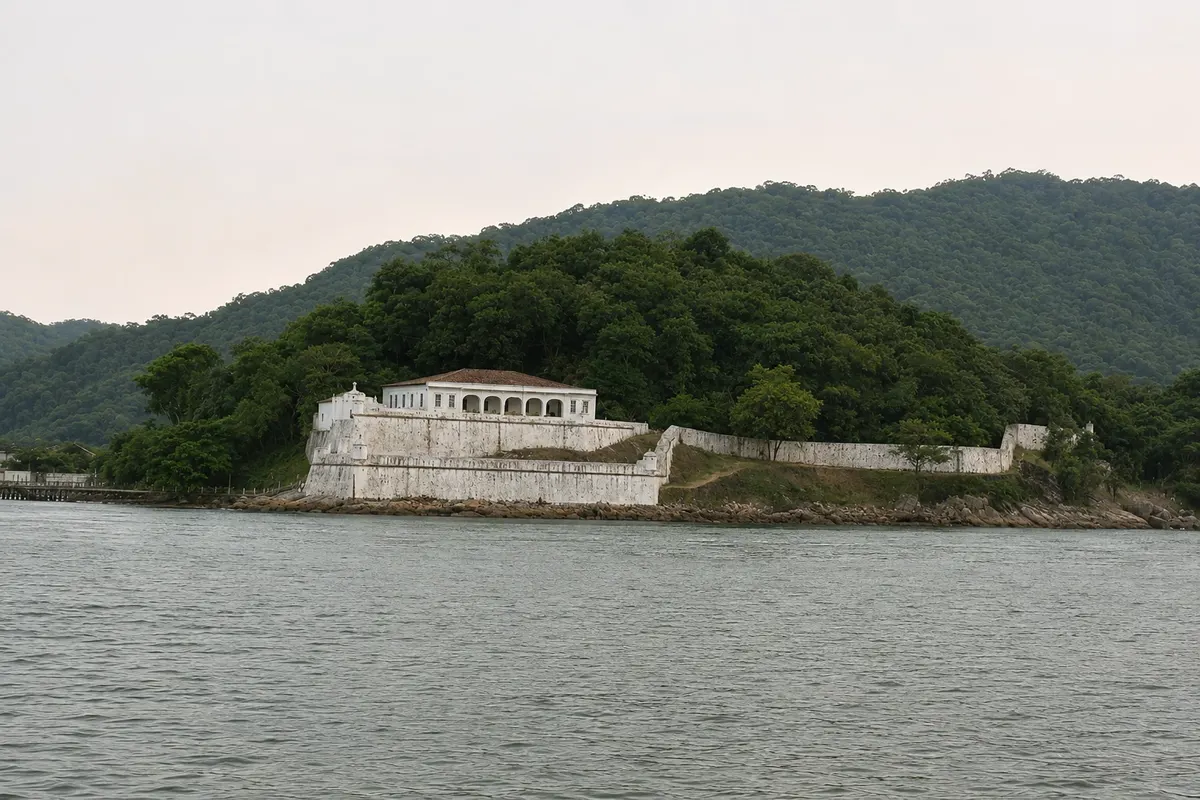
A car makes a difference at the ends of the island. Santa Cruz dos Navegantes, where the fortress is, the beaches of Serra do Guararu and the Bertioga ferry, about 28 km from the center, are far away and it can be hard to get a ride-hail on the return. Without a car, arrange your return with a driver beforehand.
In Iporanga and São Pedro you can only enter by car while there is space in the condominiums’ internal parking. In the central beaches, during summer, street parking fills up early: leave the car at your accommodation and walk.


 Antarktika
 Argentina
 Bolivija
 Čile
 Kolumbija
 Ekvator
 Gvajana
 Francoska Gvajana
 Falklandski otoki (Malvini)
 Paragvaj
 Peru
 Surinam
 Urugvaj
 Venezuela
 Nemčija
 Avstrija
 Belgija
 Hrvaška
 Danska
 Slovaška
 Slovenija
 Španija
 Finska
 Francija
 Grčija
 Nizozemska
 Madžarska
 Irska
 Islandija
 Italija
 Luksemburg
 Norveška
 Poljska
 Portugalska
 Združeno kraljestvo
 Češka
 Švedska
 Švica
 Turčija
 Bermudi
 Kanada
 Združene države Amerike
 Grenlandija
 Mehika
 Sveta Peter in Mihael
 Dominikanska republika
 Japonska
 Južnoafriška republika
 Egipt
 Avstralija
 Fidži
 Nova Zelandija
 Papua Nova Gvineja