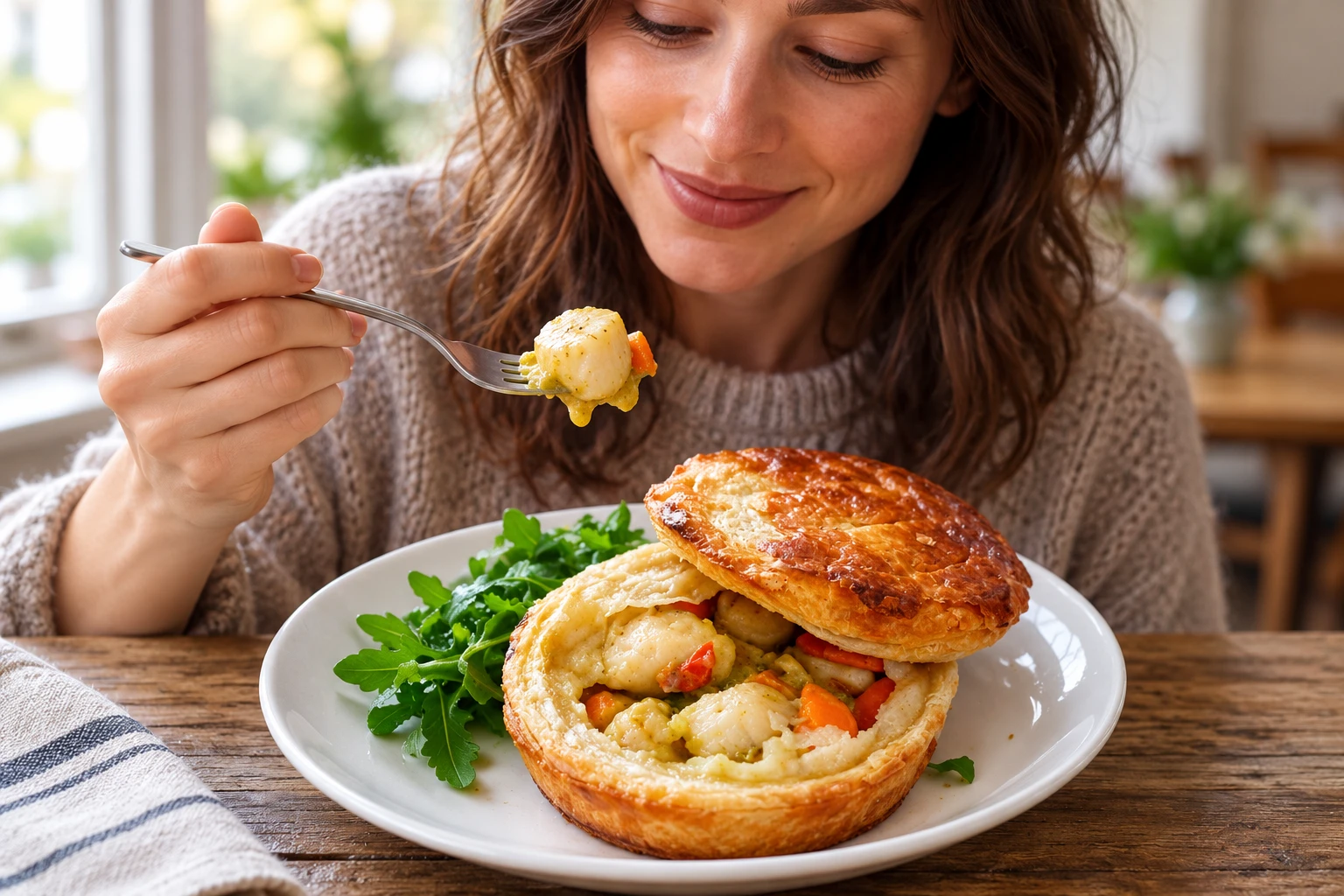
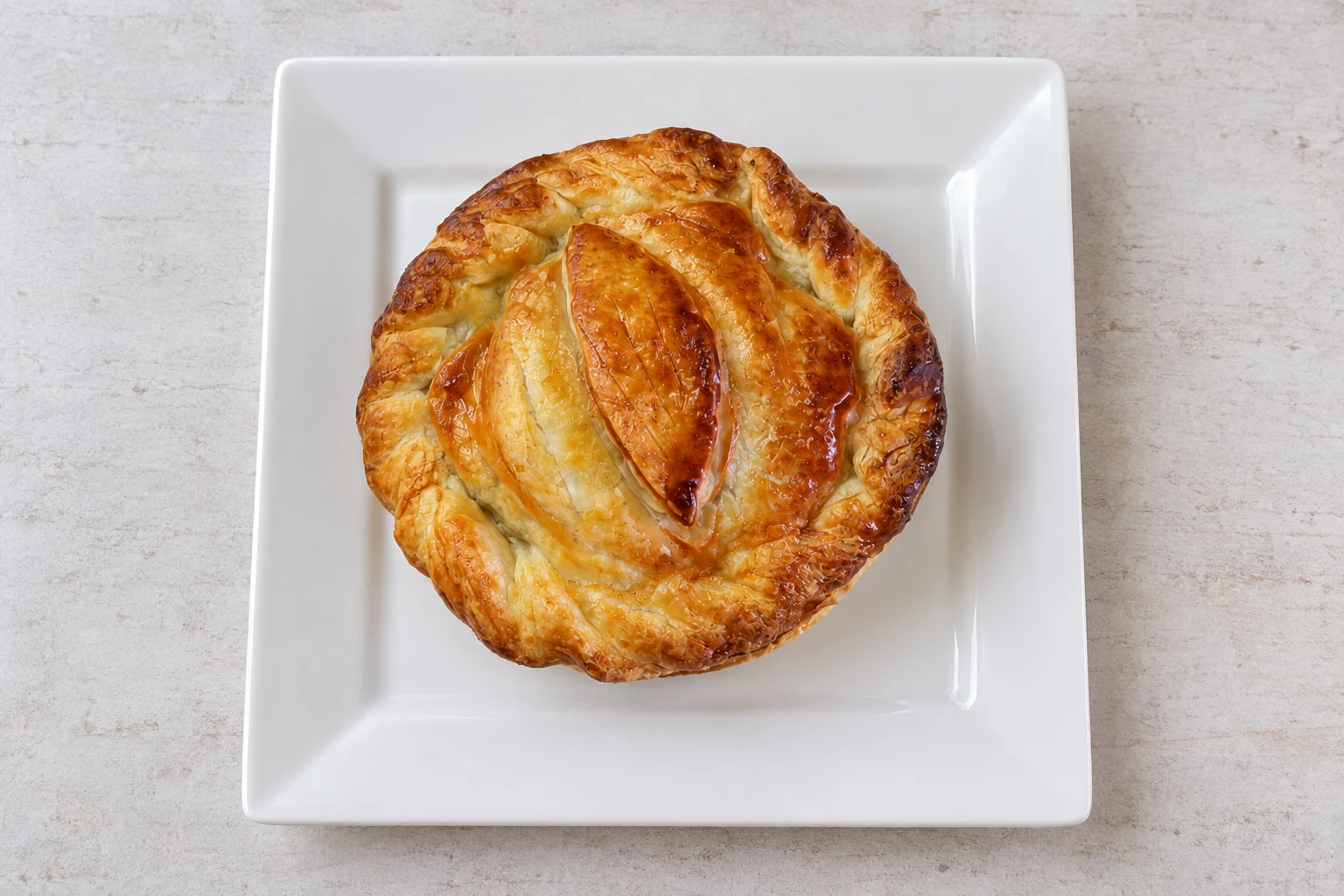
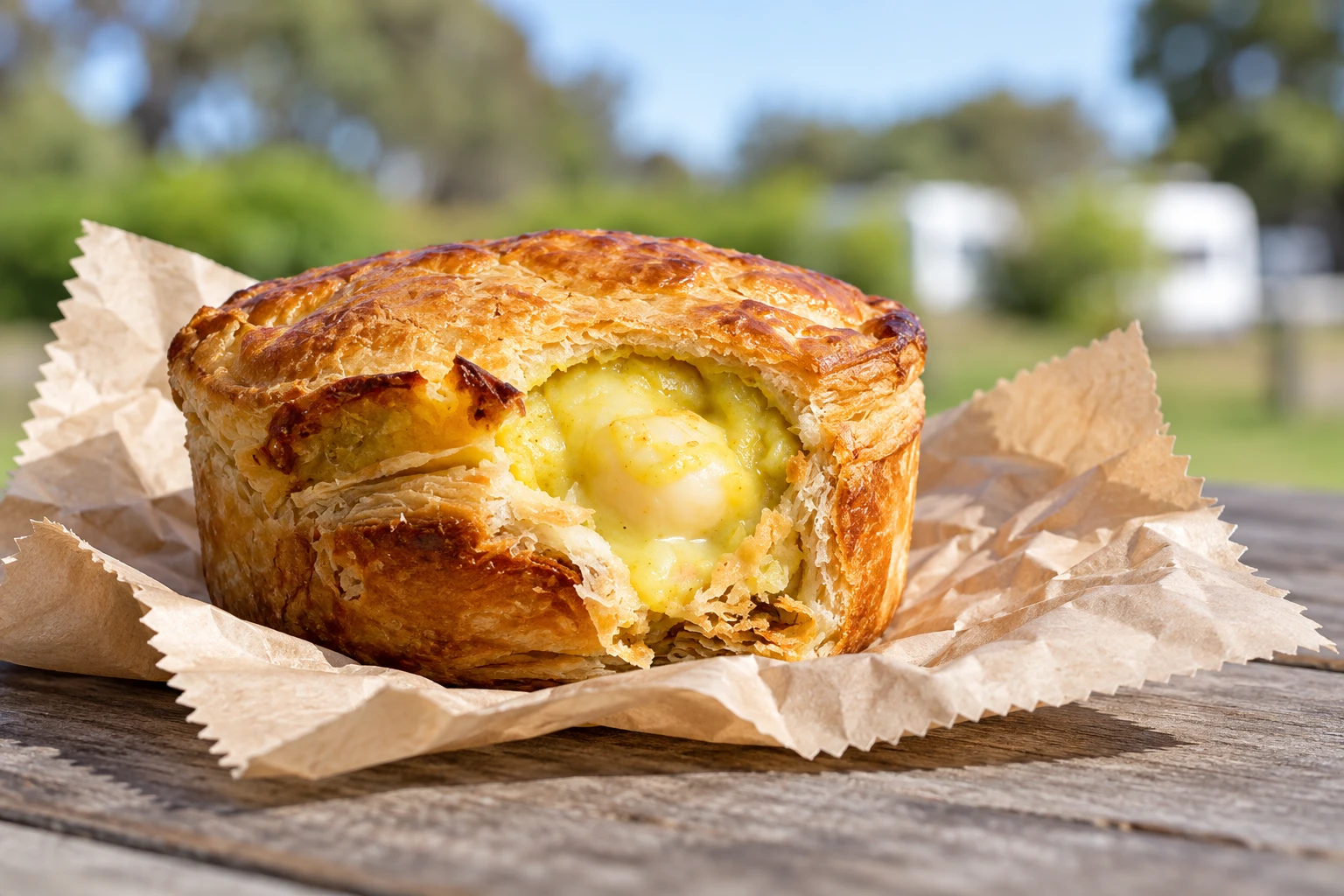
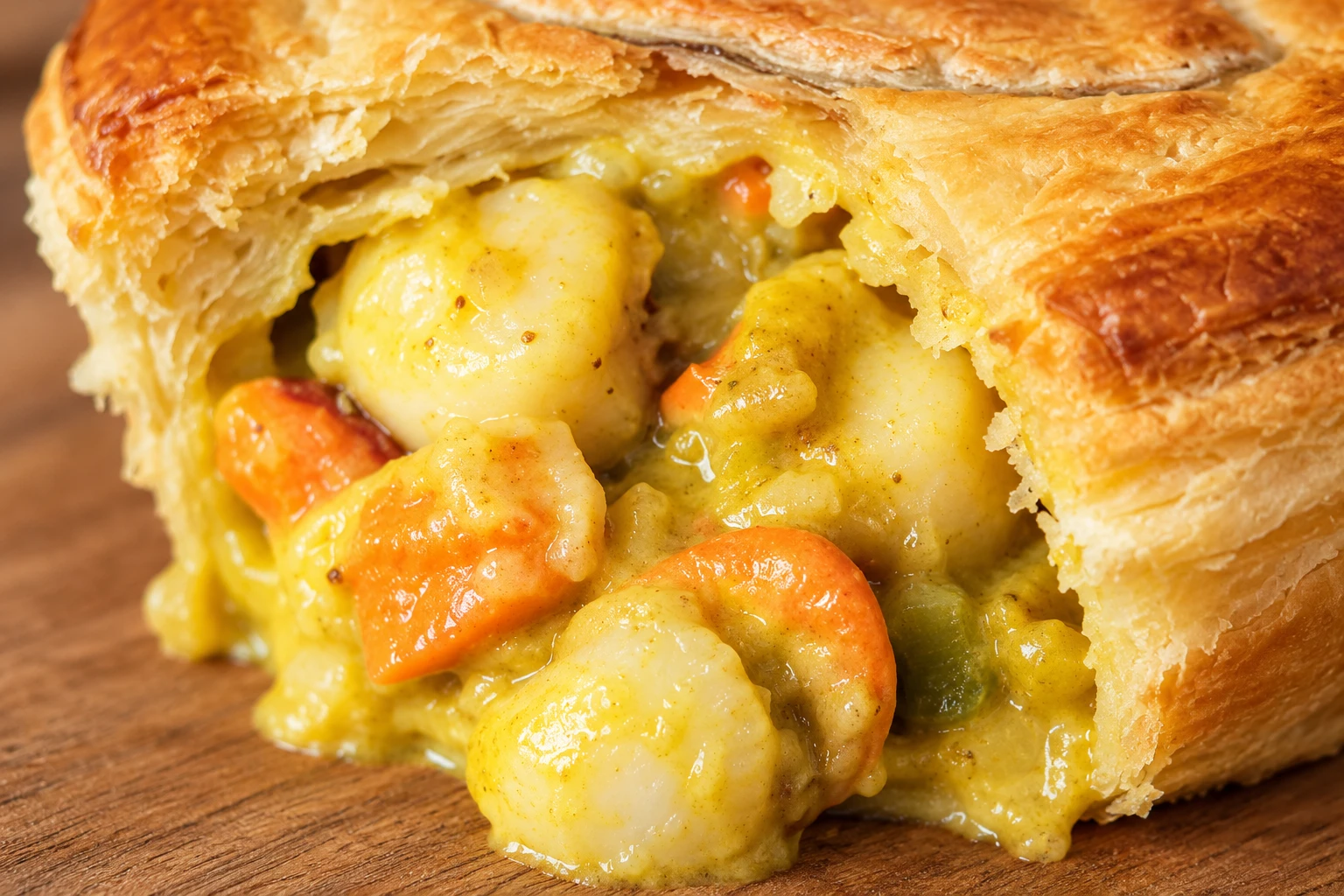
The scallop pie is an individual hand-sized puff pastry pie filled with whole scallops in a béchamel sauce seasoned with curry. The traditional curry is mild: the powder used on the island, produced in Tasmania since the 19th century, contains no cumin. Some bakeries prefer their own spice blends so as not to overpower the scallop’s flavor, and there is also a mornay version with a cheese sauce.
The scallop used is the commercial southern Australian scallop (Pecten fumatus), called lupa in palawa kani, the language of the Tasmanian Aboriginal people. Fishing began as an amateur activity in the Derwent River estuary in the early 20th century and became commercial in 1919. Since then, scallop beds have undergone long closures for recovery, and today the opening of each area depends on annual surveys. Fresh scallops typically appear in winter.
No one knows who created the pie or exactly when. scallop dishes with curry, without pastry, were already common in Tasmania in the 1920s, and recipes for the pie were sent to local newspapers in the 1930s. Some of those older recipes used bread or breadcrumbs instead of pastry. The combination in the puff pastry version brings together the British savory pie tradition, the island’s scallops, and the mild curry.
The scallop pie is sold in bakeries, cafés, markets and food trailers all around the island, from Hobart to inland towns and the east and northwest coasts. It is eaten hot, by hand as a snack, or as a meal served with chips and salad. At the Tassie Scallop Fiesta, the annual scallop festival held in Bridport in the island’s northeast, a contest chooses the best curry scallop pie.


 Brazilija
 Antarktika
 Argentina
 Bolivija
 Čile
 Kolumbija
 Ekvator
 Gvajana
 Francoska Gvajana
 Falklandski otoki (Malvini)
 Paragvaj
 Peru
 Surinam
 Urugvaj
 Venezuela
 Nemčija
 Avstrija
 Belgija
 Hrvaška
 Danska
 Slovaška
 Slovenija
 Španija
 Finska
 Francija
 Grčija
 Nizozemska
 Madžarska
 Irska
 Islandija
 Italija
 Luksemburg
 Norveška
 Poljska
 Portugalska
 Združeno kraljestvo
 Češka
 Švedska
 Švica
 Turčija
 Bermudi
 Kanada
 Združene države Amerike
 Grenlandija
 Mehika
 Sveta Peter in Mihael
 Dominikanska republika
 Japonska
 Južnoafriška republika
 Egipt
 Fidži
 Nova Zelandija
 Papua Nova Gvineja