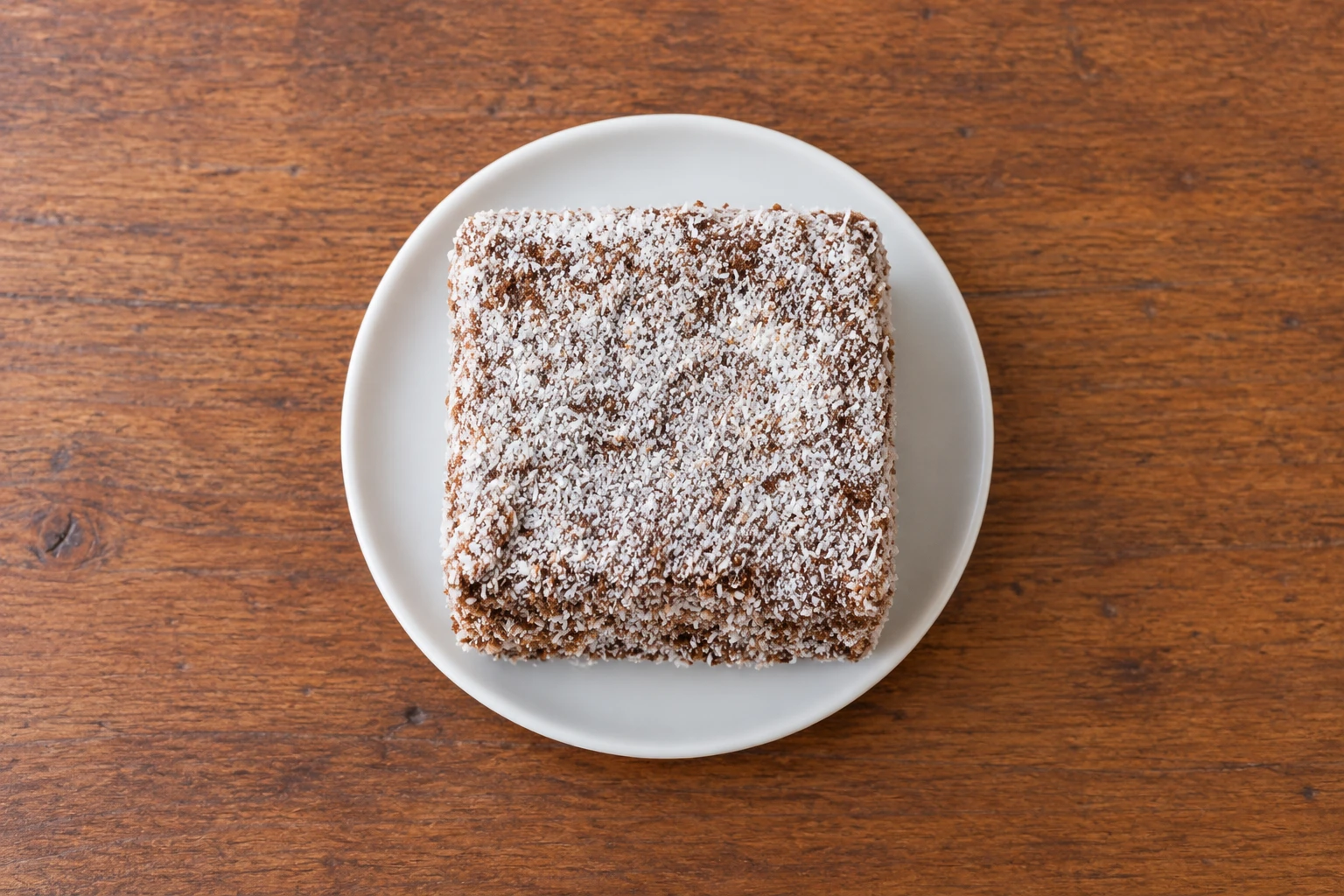
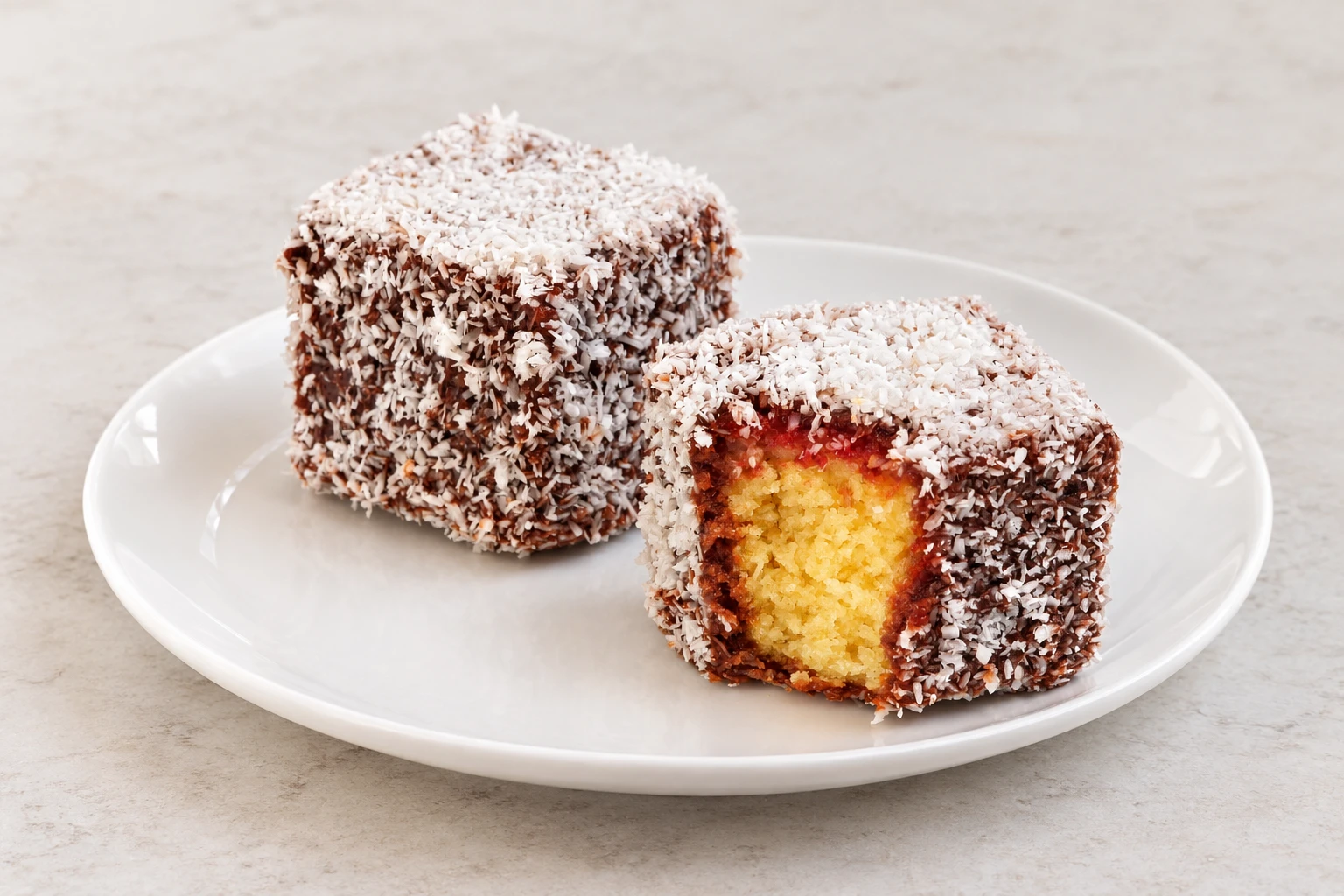
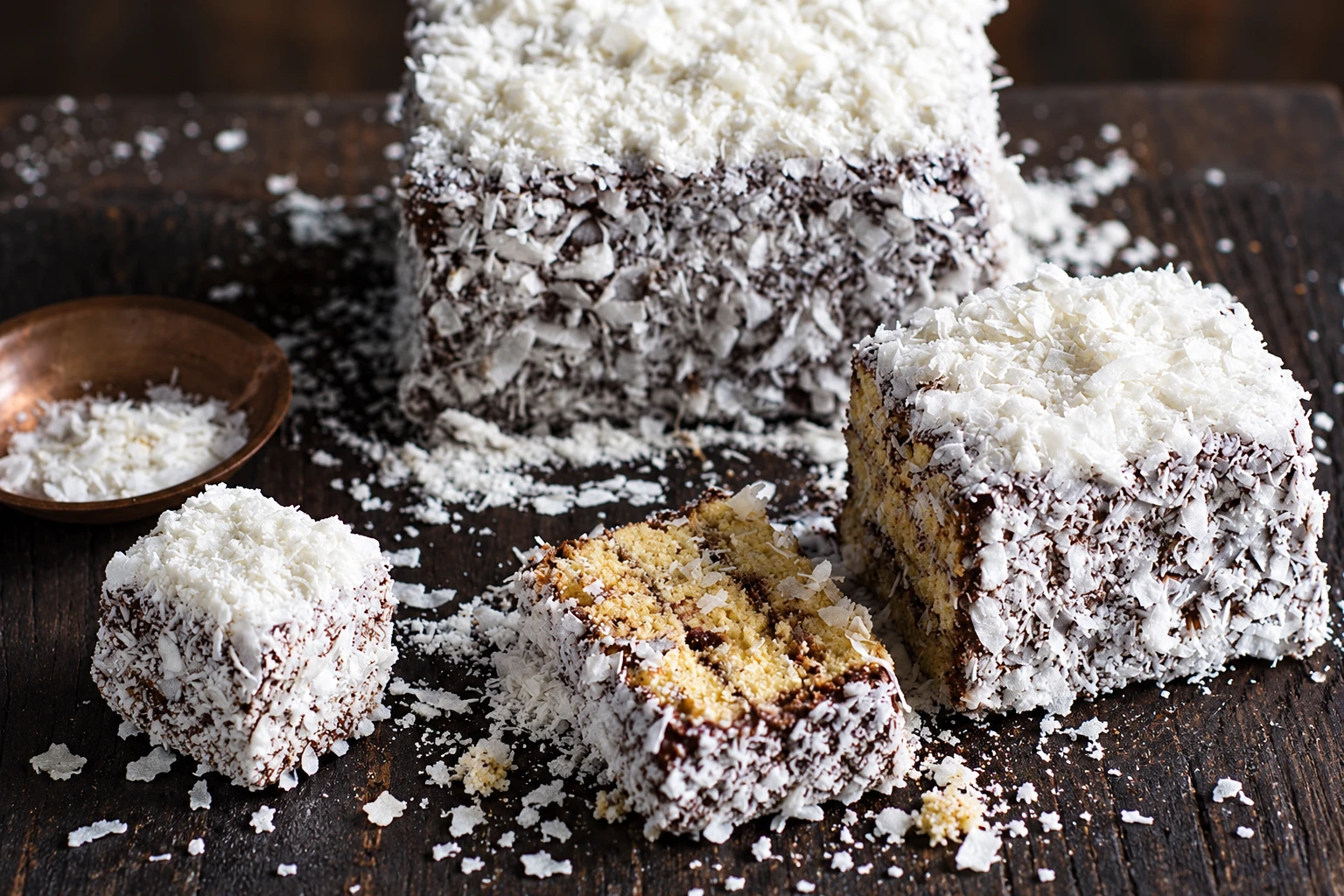
The lamington is a square piece of sponge cake dipped in a thin chocolate coating and rolled in dry shredded coconut, which sticks to the chocolate and forms a crust. The result is a soft little cake inside, with chocolate-and-coconut flavor on the outside. There are versions cut in half and filled, but the classic is just cake, chocolate, and coconut.
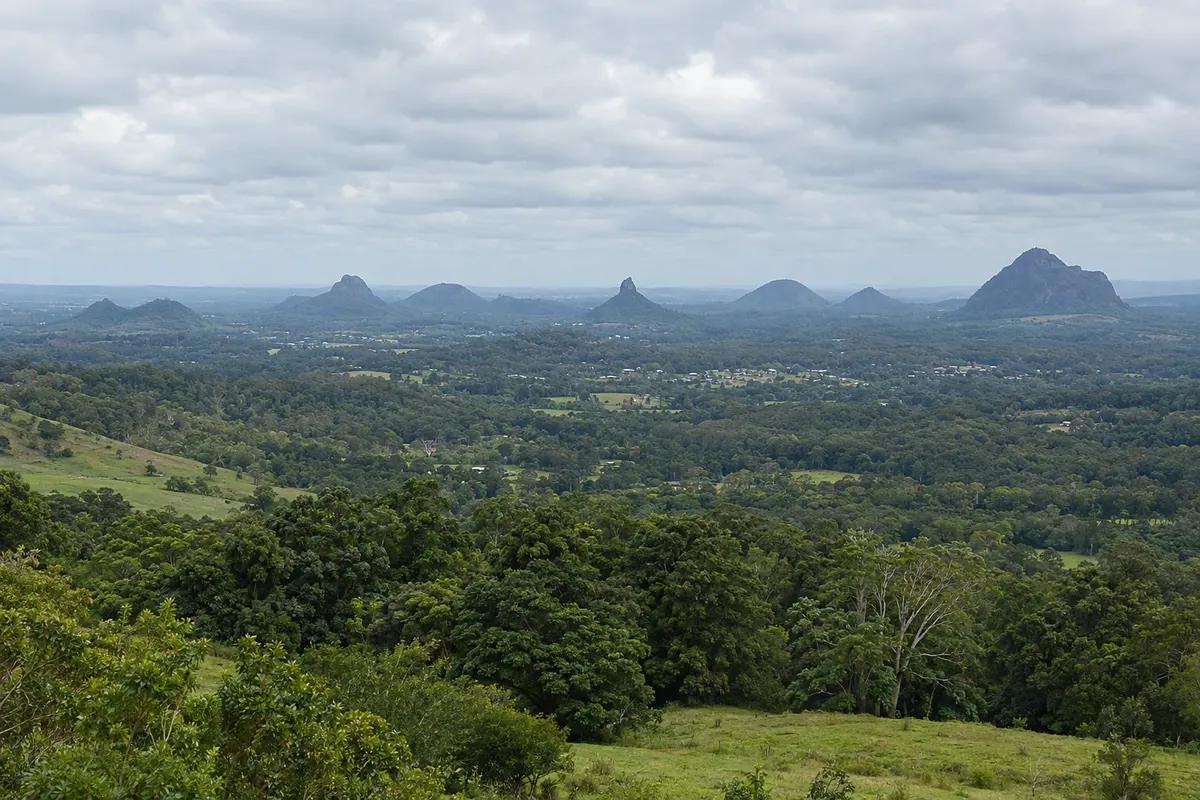
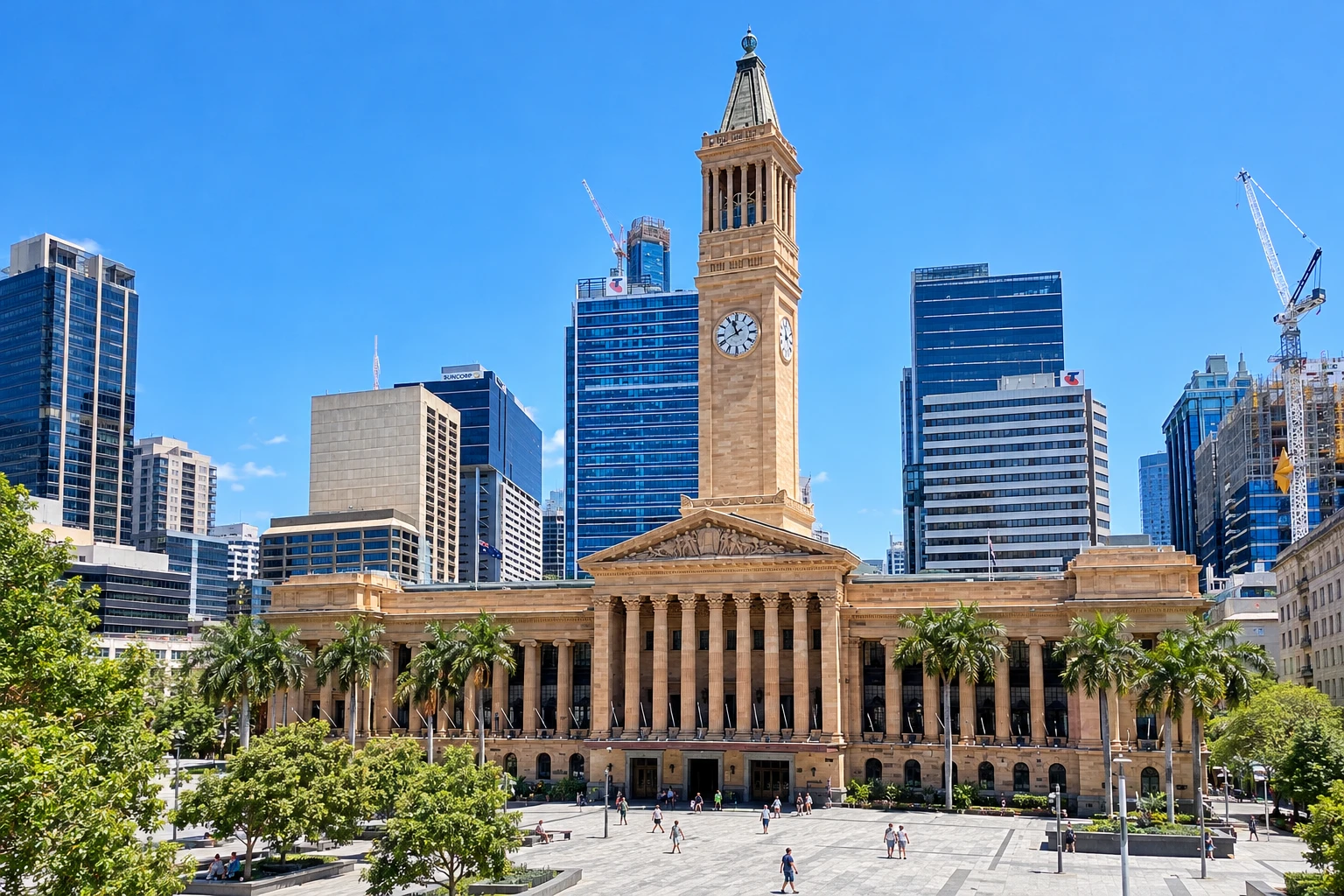
The name comes from Lord Lamington, governor of Queensland from 1896 to 1901, who lived with his family at the government’s official residence in Brisbane, the Government House, today Old Government House. The most supported version, backed by the house’s curatorship, attributes the cake to the French chef Armand Galland, who cooked for the Lamingtons: he is said to have prepared it in June 1900 for a reception hosted by Lady Lamington with hundreds of guests. In 1990, two of the governor’s granddaughters, visiting Queensland, said the cake had been created by the Government House cook and was their grandfather’s favorite, hence the name.
There are other versions. In Toowoomba, where the Lamingtons rented a house between late 1900 and early 1901, local tradition credits the cake to a house cook; Ipswich also claims the origin. The State Library of Queensland considers the matter unresolved. The first known recipe, under the name “Lamington Cakes,” appeared in the newspaper Queensland Country Life on December 17, 1900. At the time, shredded coconut was an uncommon ingredient in the country.
The lamington became associated with school fetes and fundraising drives, the lamington drives, in which volunteers prepare and sell trays of the cake. In 2009, it was listed among the icons for Queensland’s 150th anniversary in the innovations and inventions category, and July 21 is celebrated as National Lamington Day.


 Brazilija
 Antarktika
 Argentina
 Bolivija
 Čile
 Kolumbija
 Ekvator
 Gvajana
 Francoska Gvajana
 Falklandski otoki (Malvini)
 Paragvaj
 Peru
 Surinam
 Urugvaj
 Venezuela
 Nemčija
 Avstrija
 Belgija
 Hrvaška
 Danska
 Slovaška
 Slovenija
 Španija
 Finska
 Francija
 Grčija
 Nizozemska
 Madžarska
 Irska
 Islandija
 Italija
 Luksemburg
 Norveška
 Poljska
 Portugalska
 Združeno kraljestvo
 Češka
 Švedska
 Švica
 Turčija
 Bermudi
 Kanada
 Združene države Amerike
 Grenlandija
 Mehika
 Sveta Peter in Mihael
 Dominikanska republika
 Japonska
 Južnoafriška republika
 Egipt
 Fidži
 Nova Zelandija
 Papua Nova Gvineja