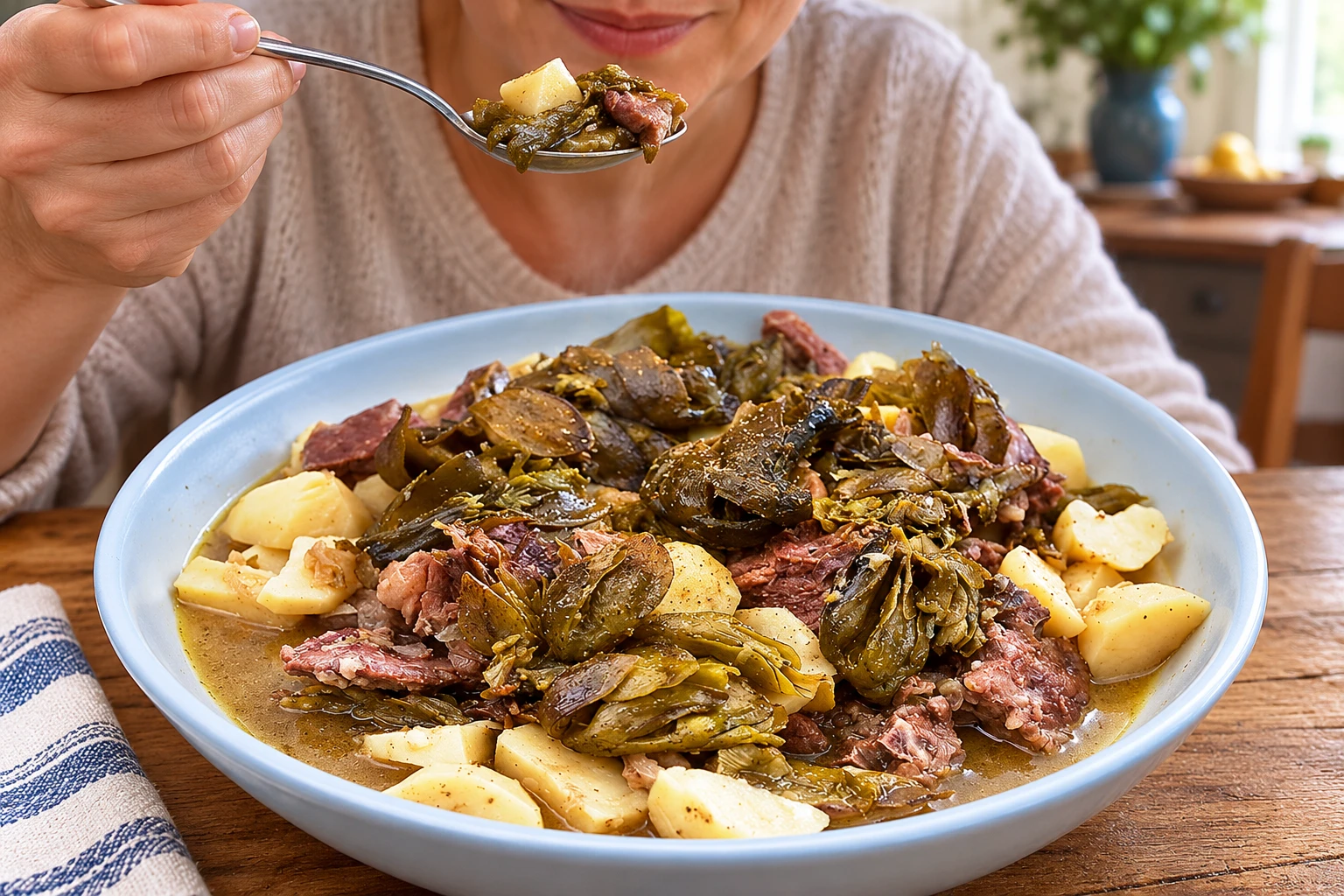
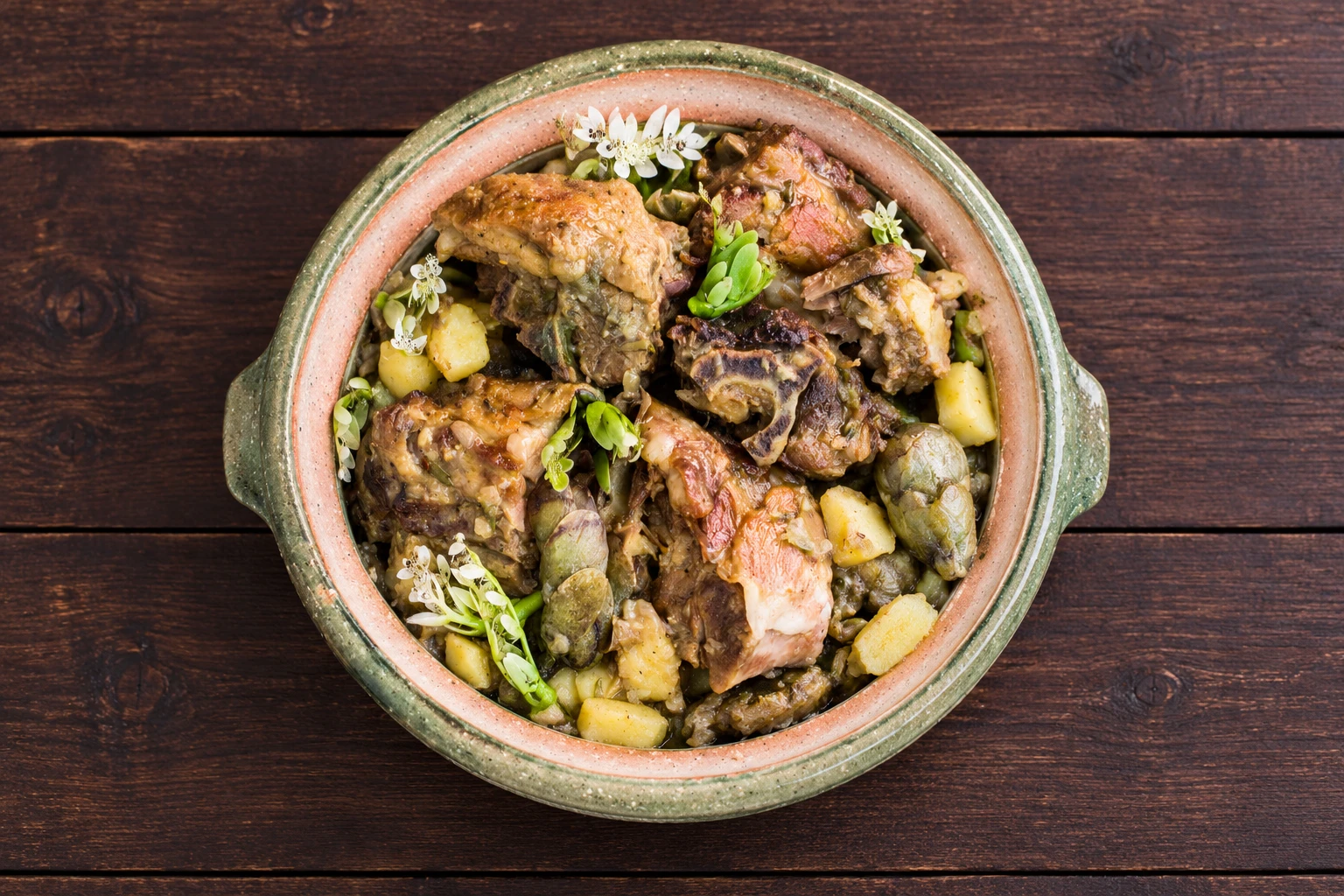
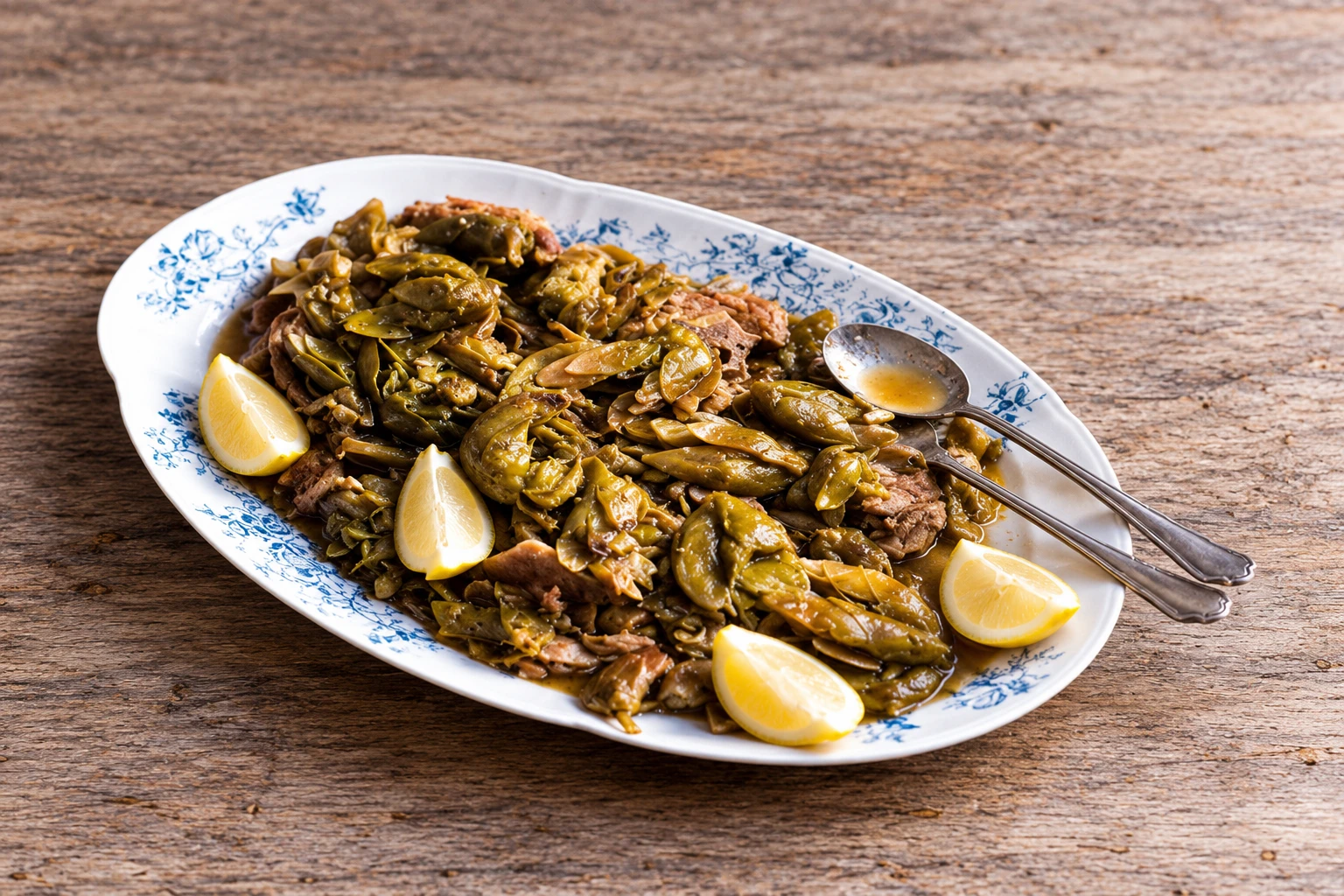
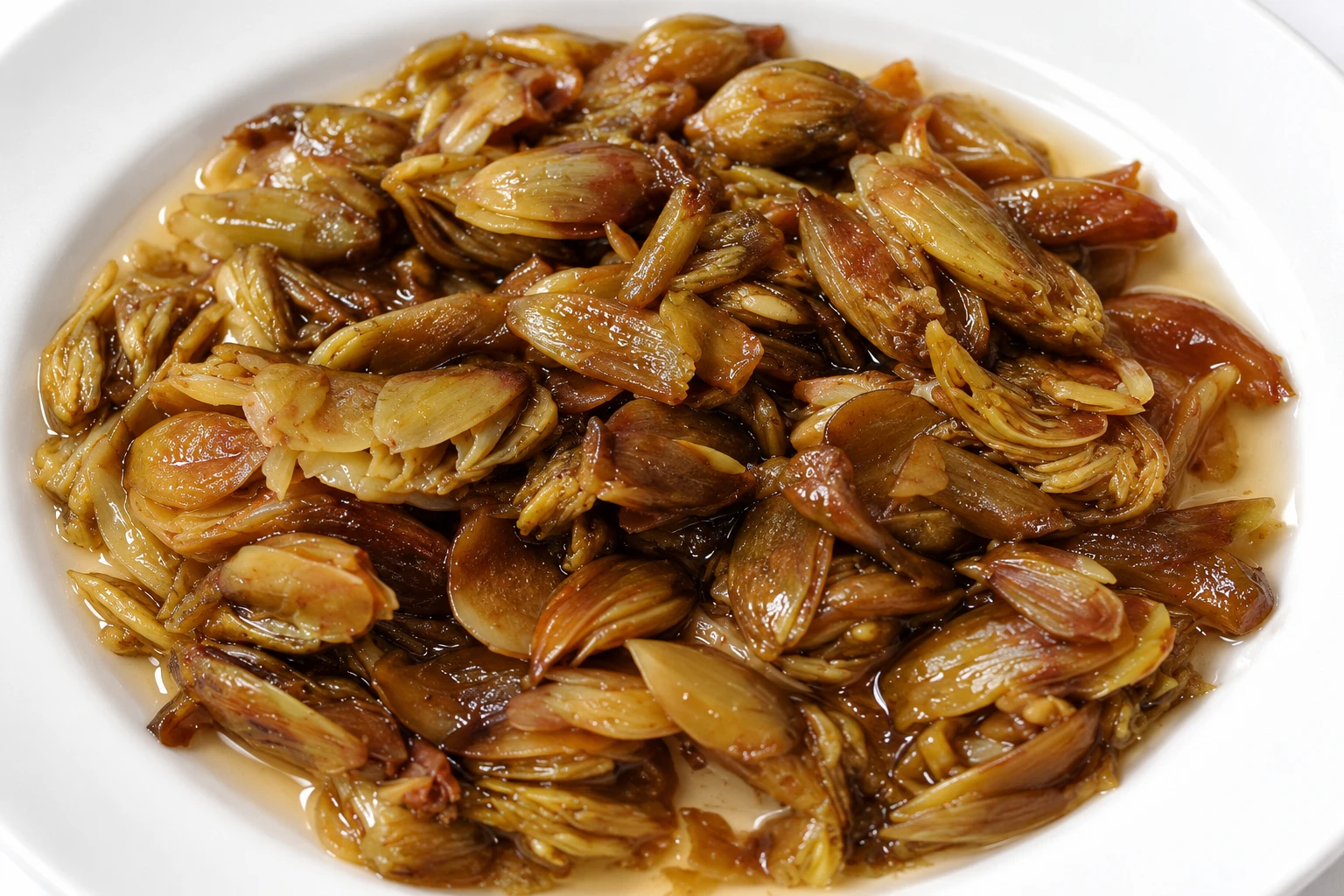
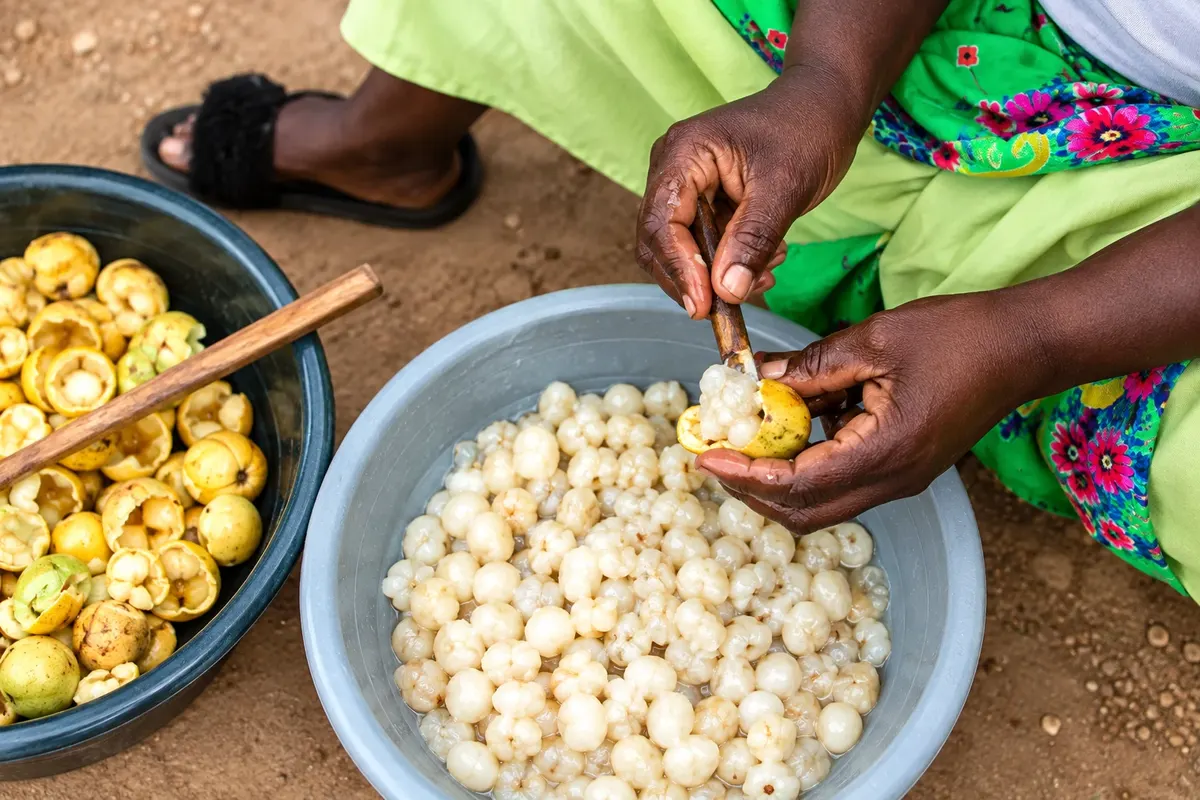
Bredie is the Afrikaans word for stew, and waterblommetjie means little water flower. Waterblommetjiebredie is a stew of mutton or lamb, slowly cooked with onion, potato and the flowers and buds of Aponogeton distachyos, an aquatic plant native to the Cape. The flowers serve the role of a green vegetable.
To add acidity, the traditional recipe uses suring, the region's wild sorrel; many households use lemon, vinegar or white wine.
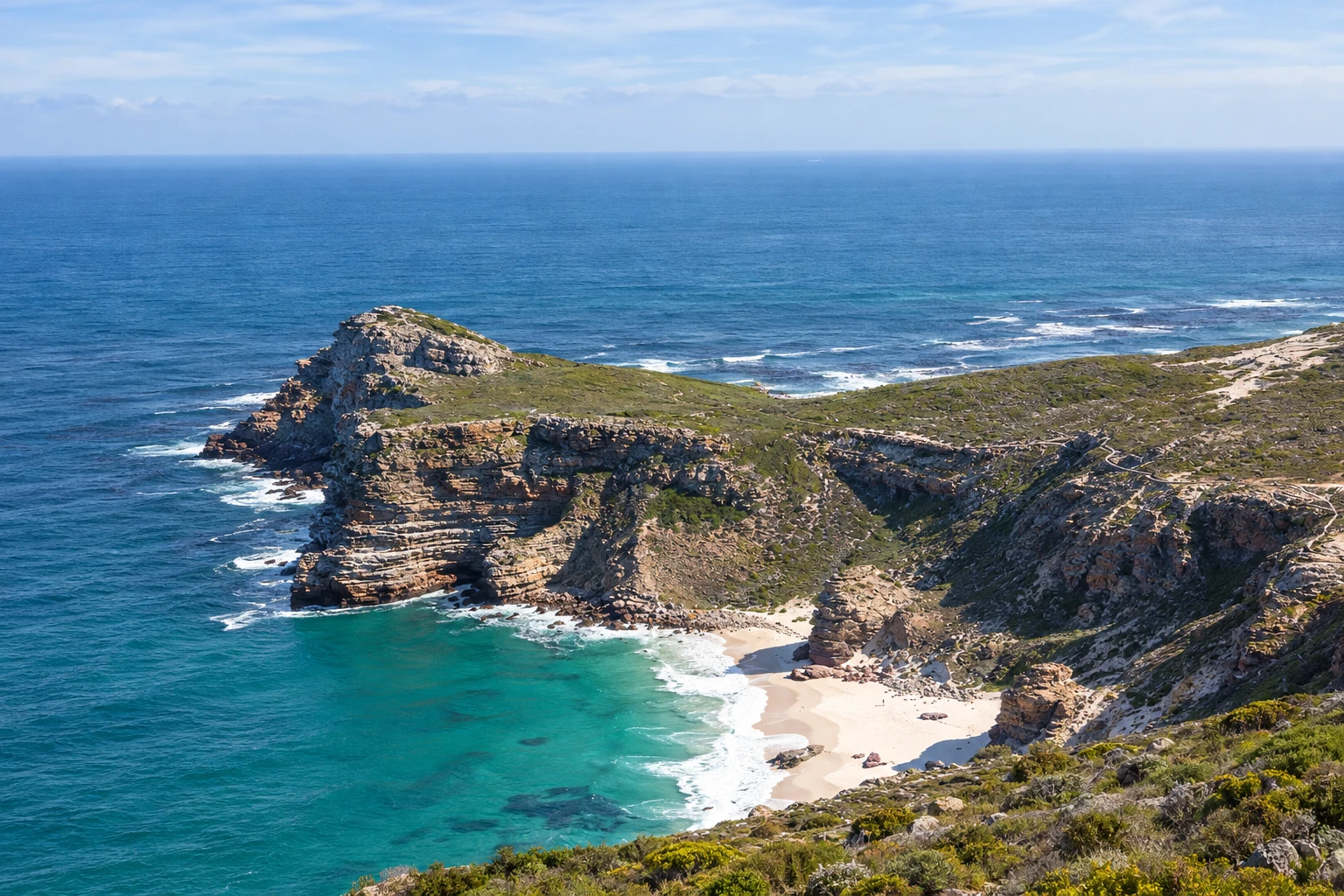
The plant grows in shallow lakes and marshes that fill with the Western Cape's winter rains and dry out in summer. The fragrant white flowers appear in winter and spring, and can only be harvested while the plant is in bloom, generally from June to mid-October depending on the year. That's why the dish is seasonal: fresh flowers appear at the province's fairs and markets in winter, and out of season preserved or frozen flowers are used.
The recipe appears in Cape cookbooks from the mid-20th century. In the Boland area around Paarl, wineries and restaurants put the dish on their menus in August, and there is an annual waterblommetjie festival in early September.
The flavour of the flowers is mild and is often compared to green bean or asparagus, with a slight tang. The stew is served with rice, usually in a deep dish, with the cooking broth.


 Brazilija
 Antarktika
 Argentina
 Bolivija
 Čile
 Kolumbija
 Ekvator
 Gvajana
 Francoska Gvajana
 Falklandski otoki (Malvini)
 Paragvaj
 Peru
 Surinam
 Urugvaj
 Venezuela
 Nemčija
 Avstrija
 Belgija
 Hrvaška
 Danska
 Slovaška
 Slovenija
 Španija
 Finska
 Francija
 Grčija
 Nizozemska
 Madžarska
 Irska
 Islandija
 Italija
 Luksemburg
 Norveška
 Poljska
 Portugalska
 Združeno kraljestvo
 Češka
 Švedska
 Švica
 Turčija
 Bermudi
 Kanada
 Združene države Amerike
 Grenlandija
 Mehika
 Sveta Peter in Mihael
 Dominikanska republika
 Japonska
 Egipt
 Avstralija
 Fidži
 Nova Zelandija
 Papua Nova Gvineja