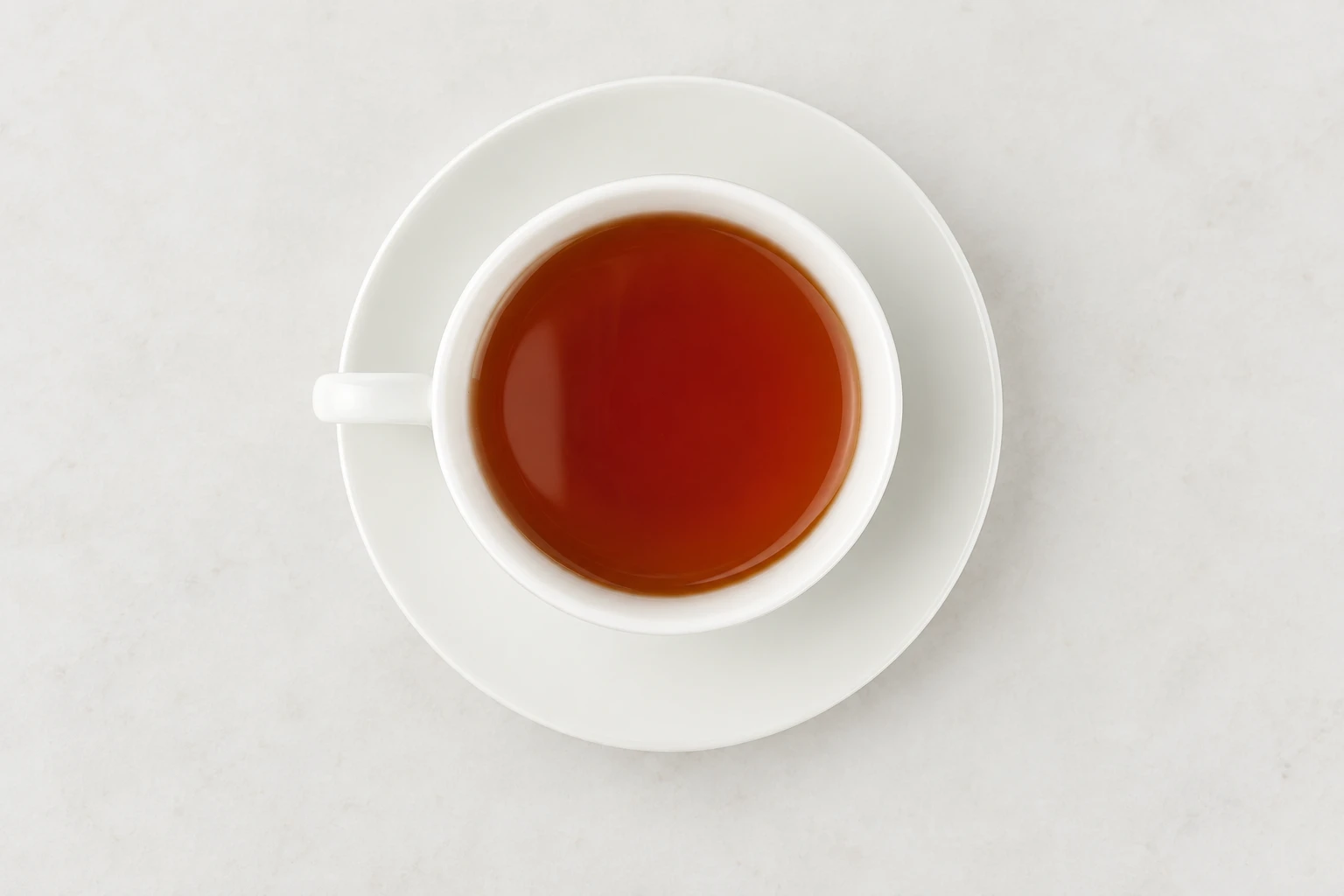
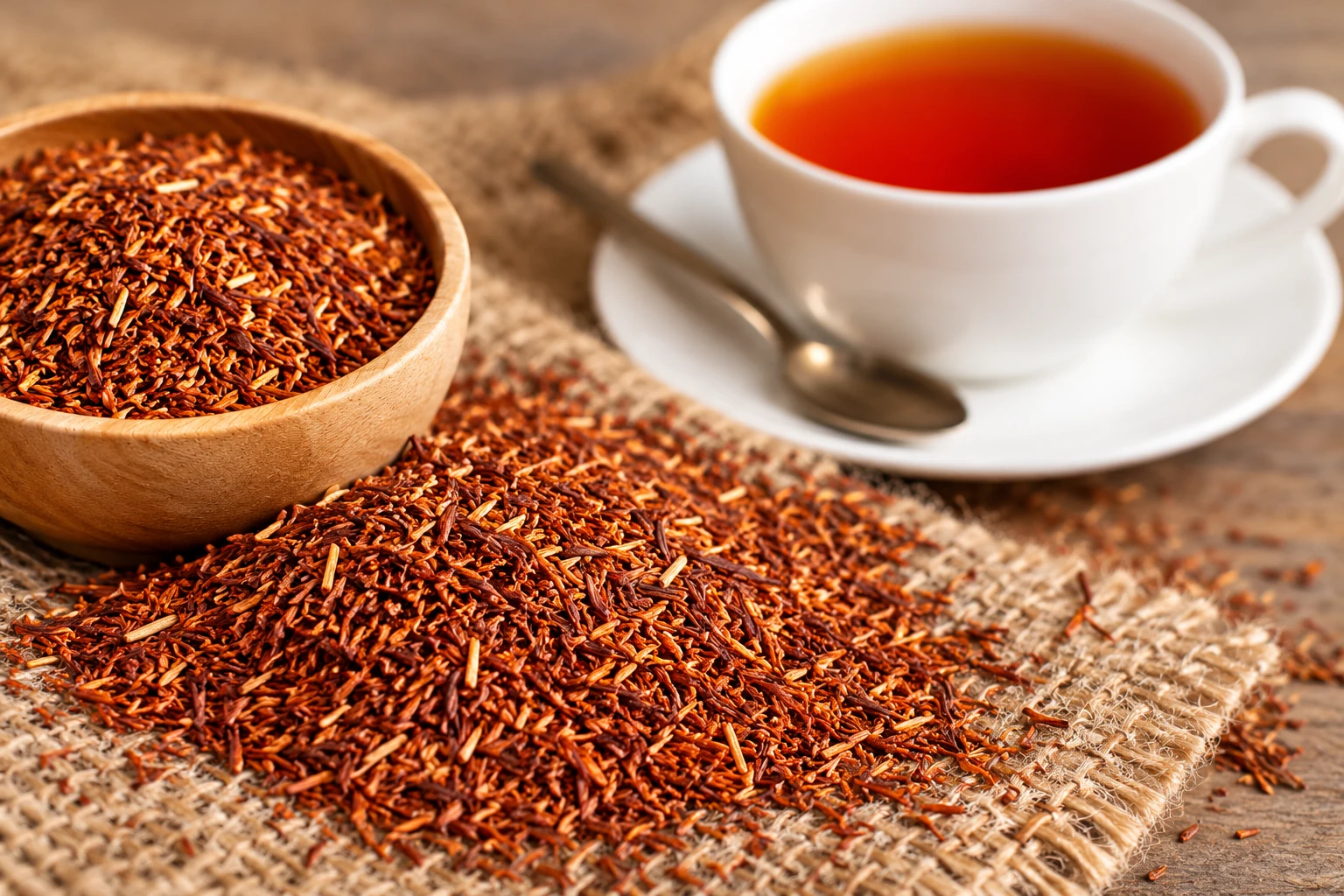
Rooibos is an infusion made from the needle‑like leaves and stems of Aspalathus linearis, a fynbos shrub native to the Cederberg mountains in the Western Cape. The name means red bush in Afrikaans: after cutting, the branches are bruised, moistened and piled to oxidize, in a process traditionally called fermentation, and the leaves change from green to reddish‑brown. They are then sun‑dried on large patios. The drink is amber in color, has a mild, slightly sweet taste and contains no caffeine.
The khoi and san, the region’s indigenous peoples, were the first to use the plant, and settlers learned the preparation from them. In the early 20th century, merchant Benjamin Ginsberg began buying rooibos gathered in the wild by Cederberg communities and selling it commercially. Around 1930, doctor and botanist Pieter le Fras Nortier of Clanwilliam conducted the first cultivation experiments, and farmers began planting the shrub. In 1948 producers formed the Clanwilliam tea cooperative.
The shrub requires winter rains, a dry summer and the region’s sandy soils, at altitudes between 200 and 1,000 meters. Since 2014, the name rooibos has been a geographical indication in South Africa, and since 2021 it is also a protected designation of origin in the European Union: only rooibos grown in the recognized area, which stretches from the Cederberg to the south of the Northern Cape, may use the name. Harvesting occurs mainly in summer and early autumn, usually from January to April, but can begin in November and run until May, and Clanwilliam concentrates the farms and processing facilities.
In South Africa, rooibos is an everyday drink, served hot, plain or with milk and sugar, and also iced. There is also green rooibos, which is unoxidized and has a more herbaceous flavor. In Clanwilliam and in Wupperthal, in the Cederberg, you can see the plantations and, on some farms, the fermentation and drying process.


 Brazilija
 Antarktika
 Argentina
 Bolivija
 Čile
 Kolumbija
 Ekvator
 Gvajana
 Francoska Gvajana
 Falklandski otoki (Malvini)
 Paragvaj
 Peru
 Surinam
 Urugvaj
 Venezuela
 Nemčija
 Avstrija
 Belgija
 Hrvaška
 Danska
 Slovaška
 Slovenija
 Španija
 Finska
 Francija
 Grčija
 Nizozemska
 Madžarska
 Irska
 Islandija
 Italija
 Luksemburg
 Norveška
 Poljska
 Portugalska
 Združeno kraljestvo
 Češka
 Švedska
 Švica
 Turčija
 Bermudi
 Kanada
 Združene države Amerike
 Grenlandija
 Mehika
 Sveta Peter in Mihael
 Dominikanska republika
 Japonska
 Egipt
 Avstralija
 Fidži
 Nova Zelandija
 Papua Nova Gvineja