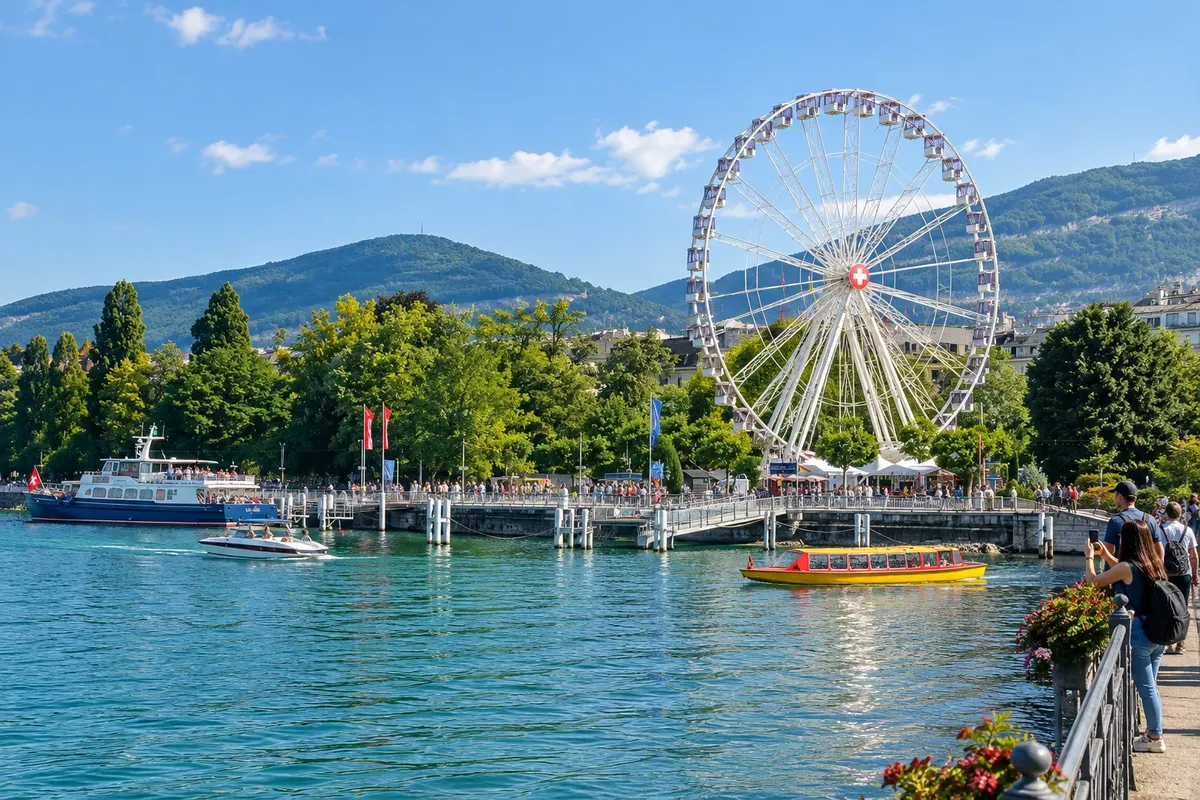
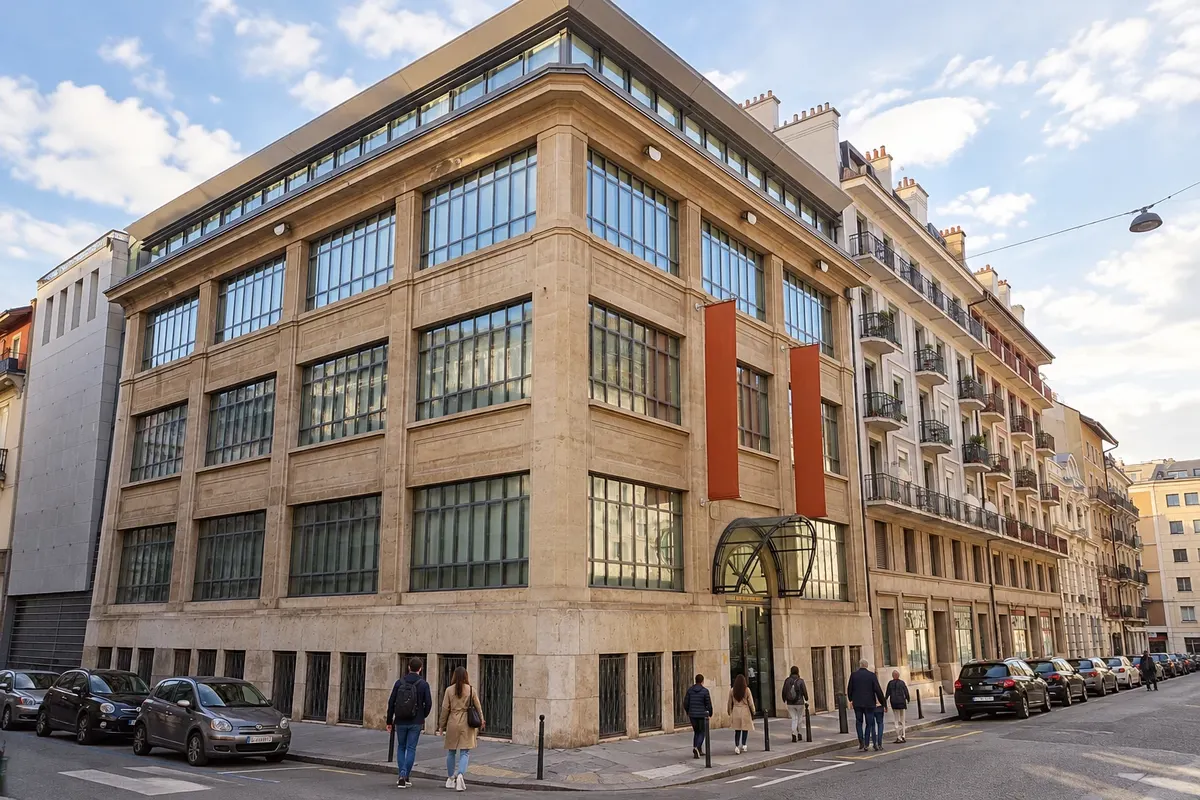
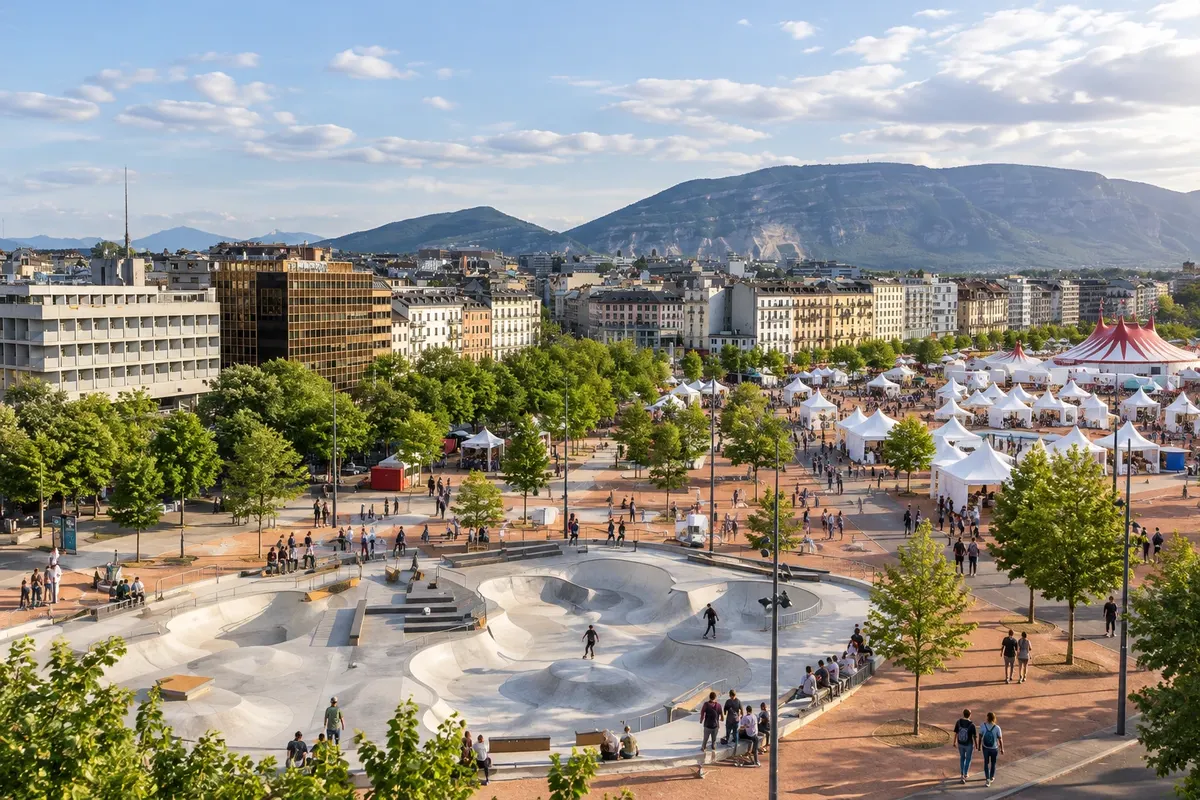
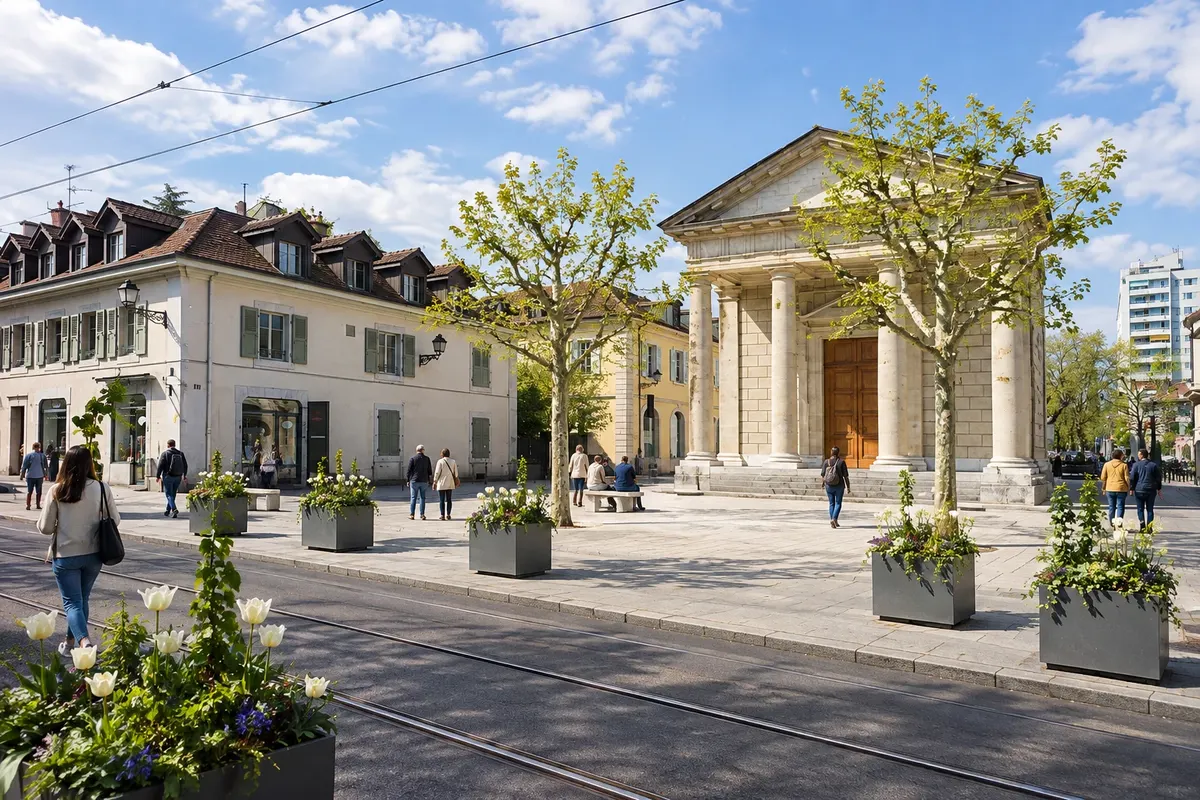
Genebra lies at the extreme southwest of Switzerland, where the Rhône leaves Lake Léman. The canton is nearly surrounded by France, and from the quays you can see the Salève and, on clear days, the Mont Blanc massif. French is spoken; English is widely used because of the international organizations.
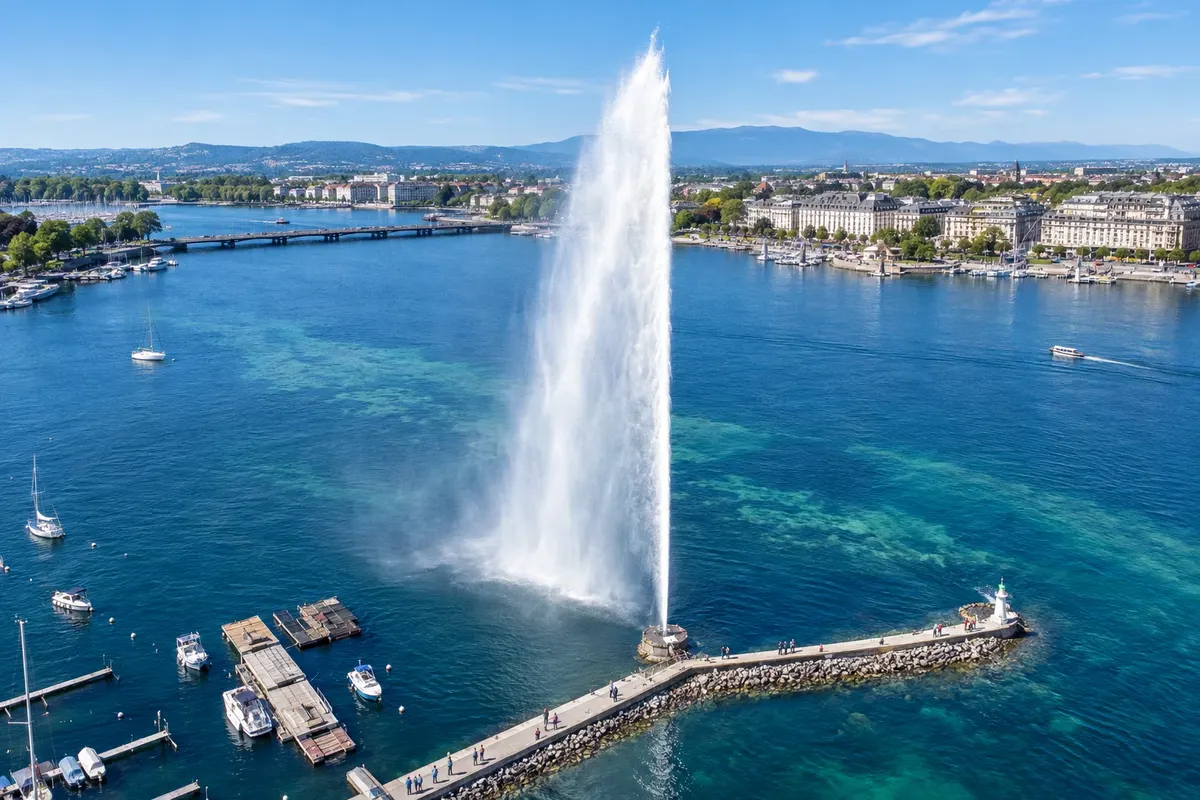
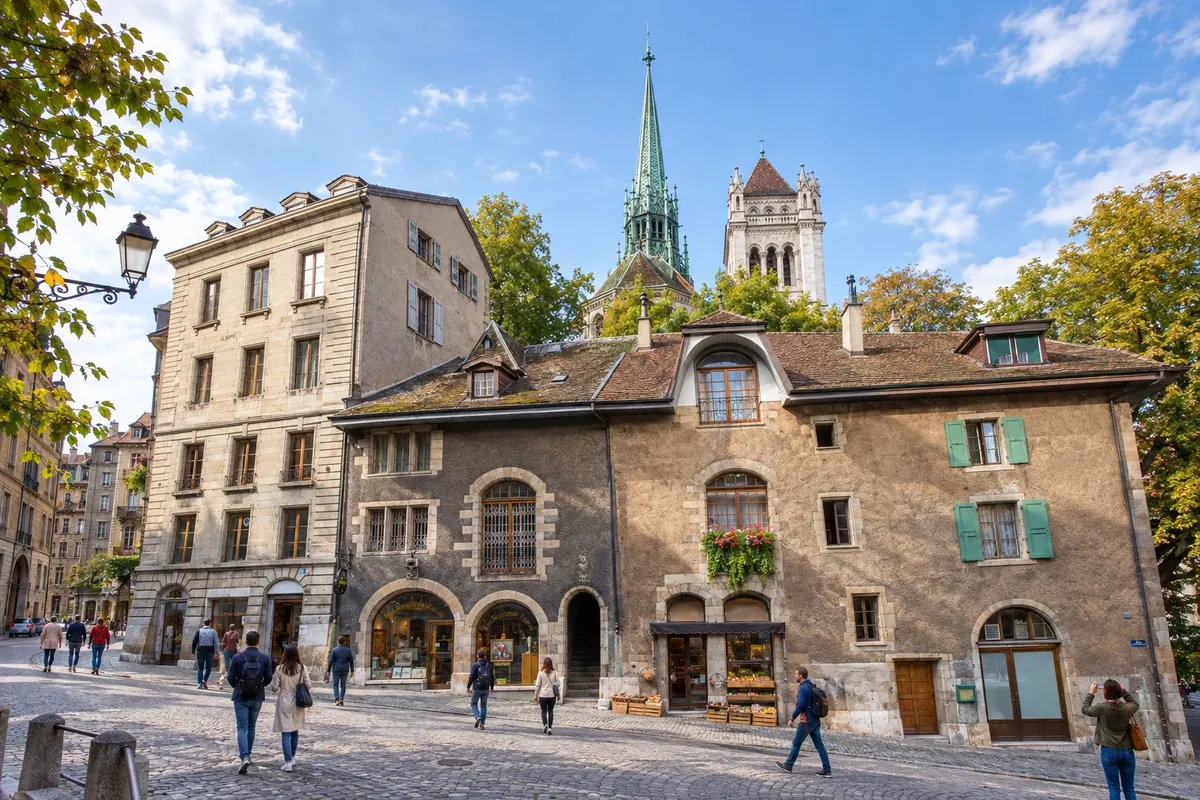
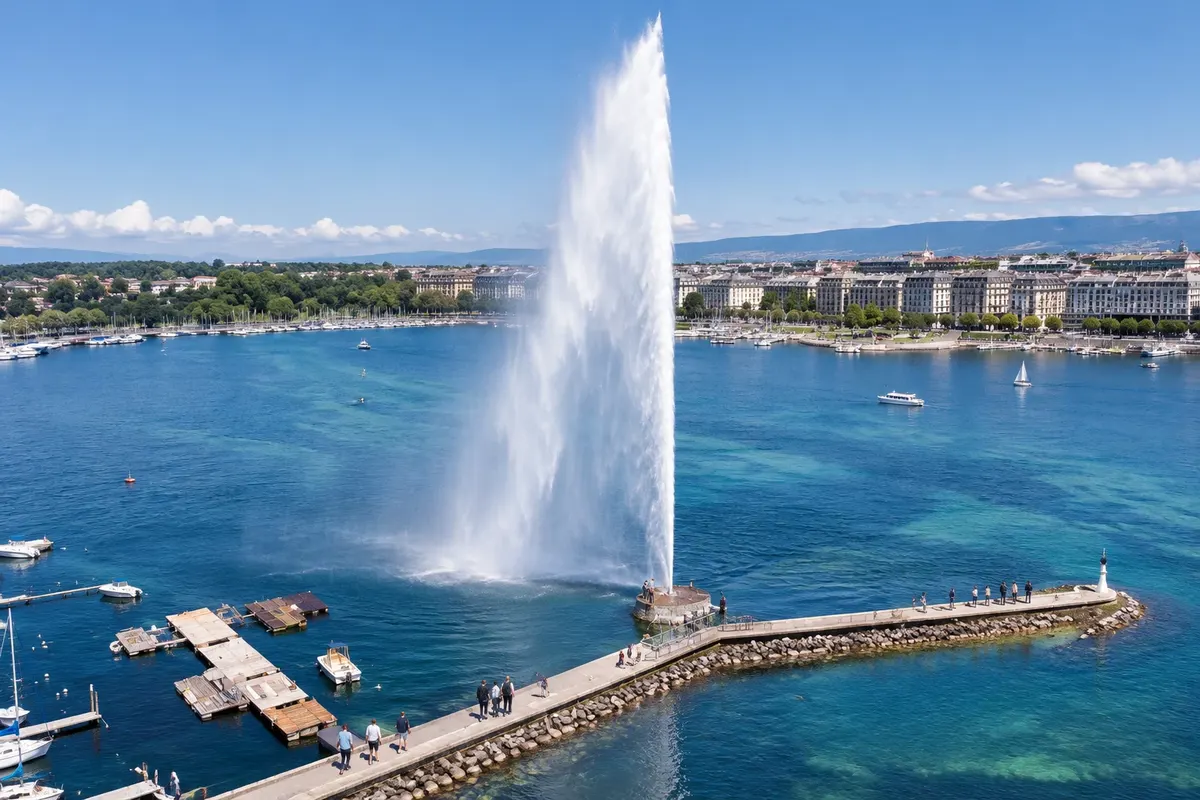
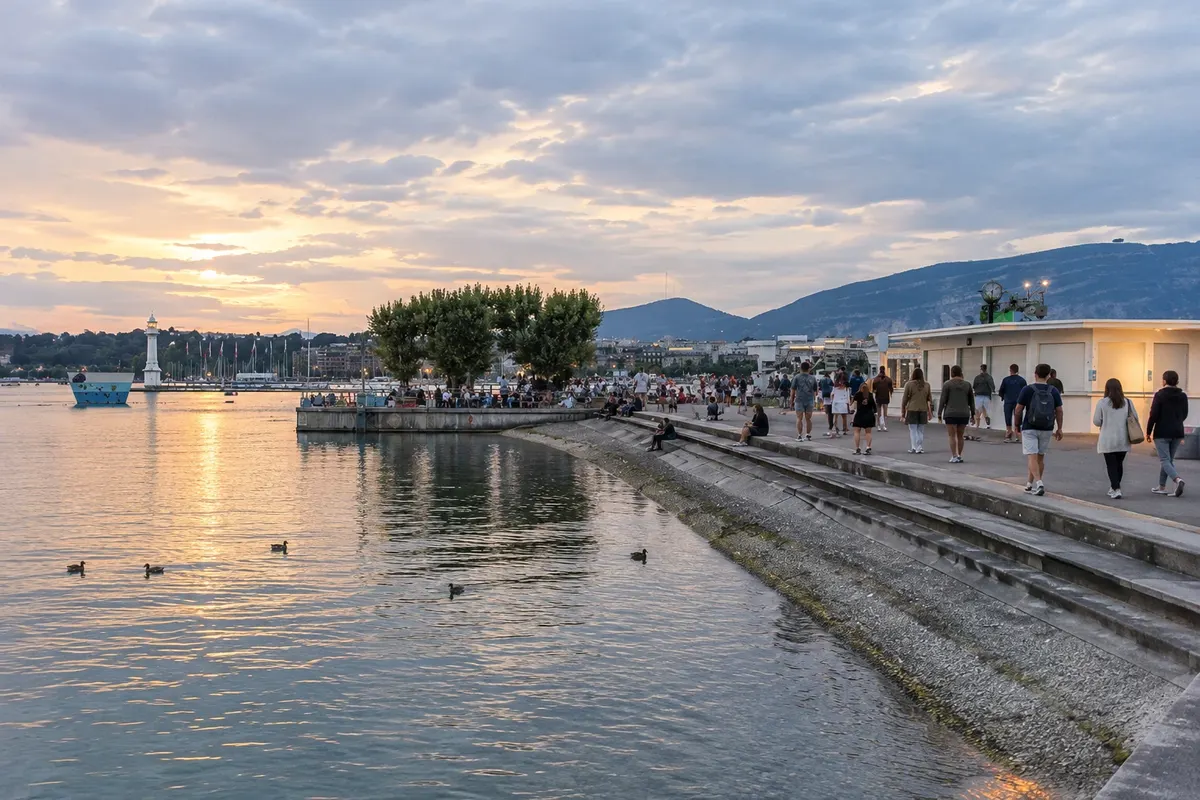
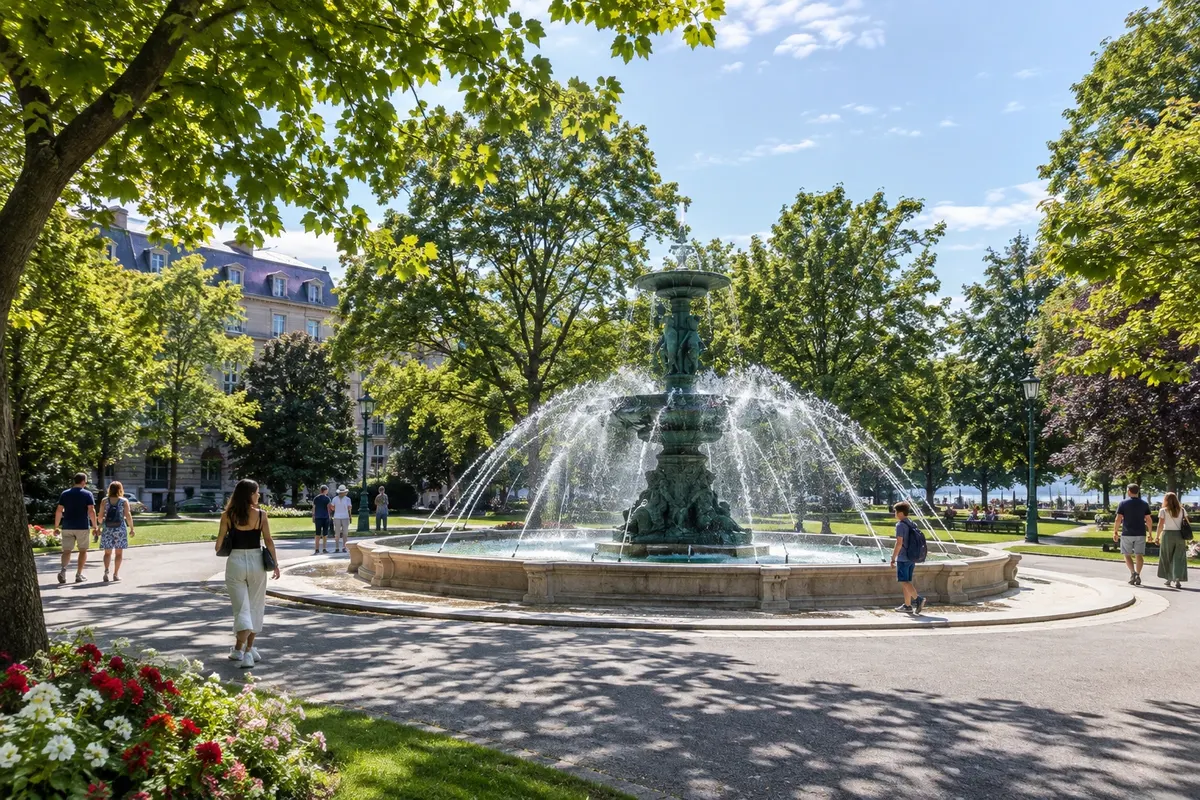
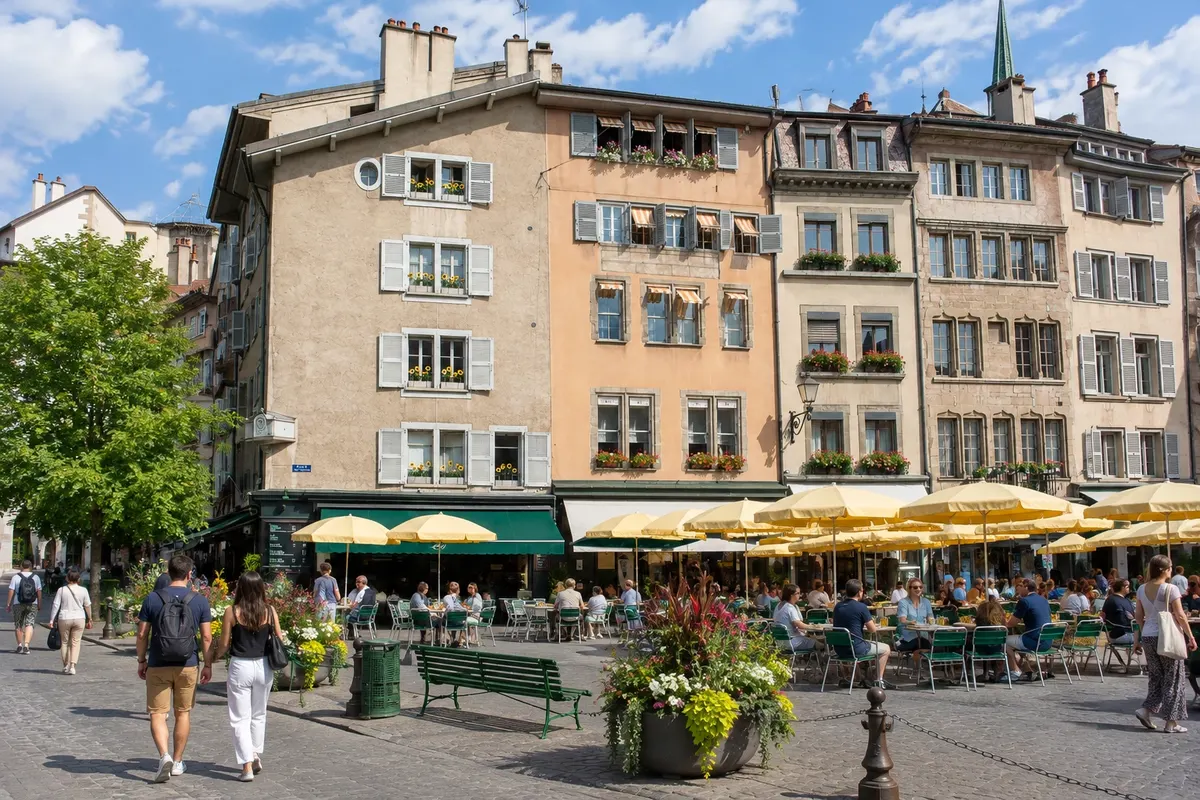
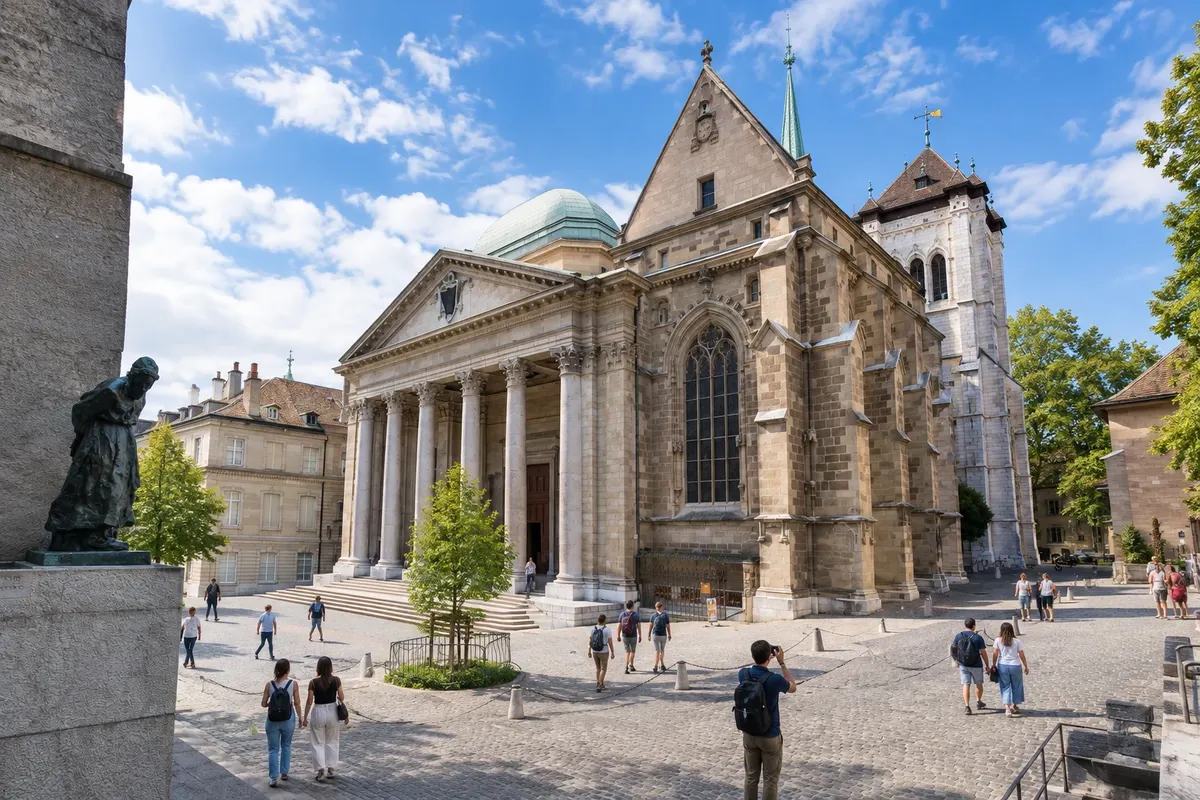
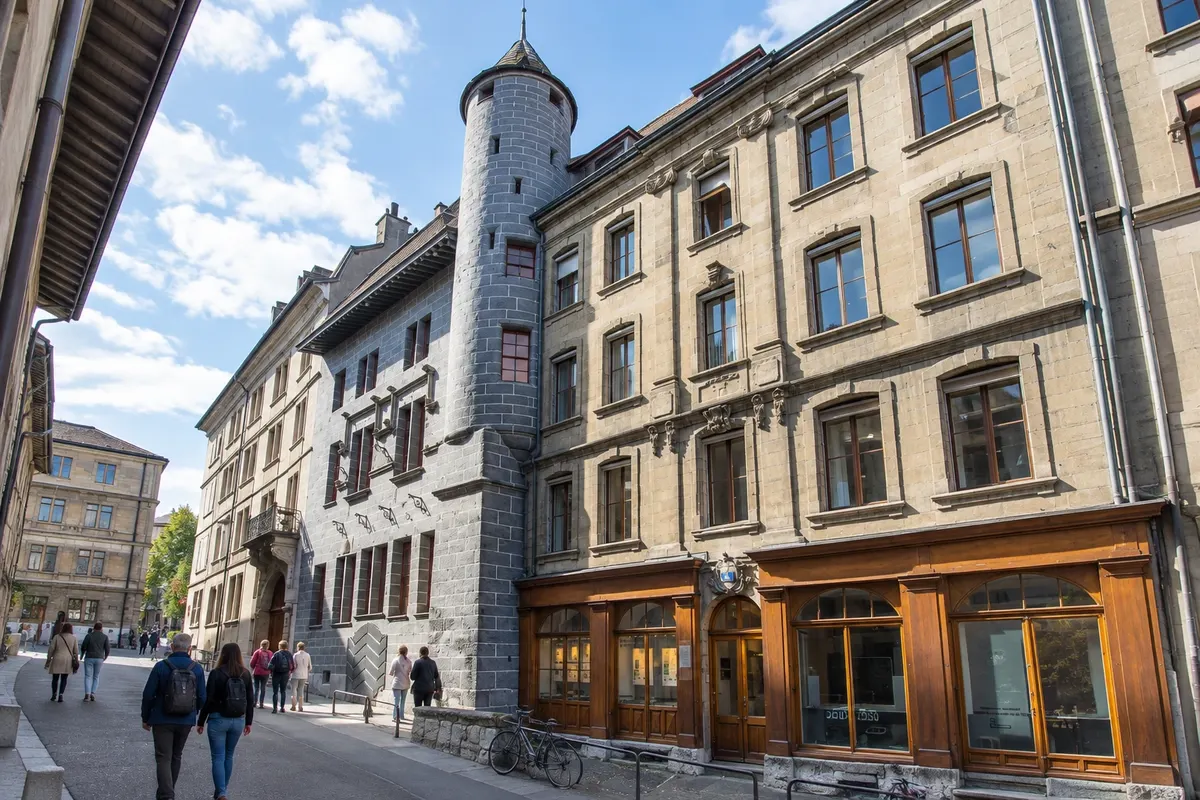
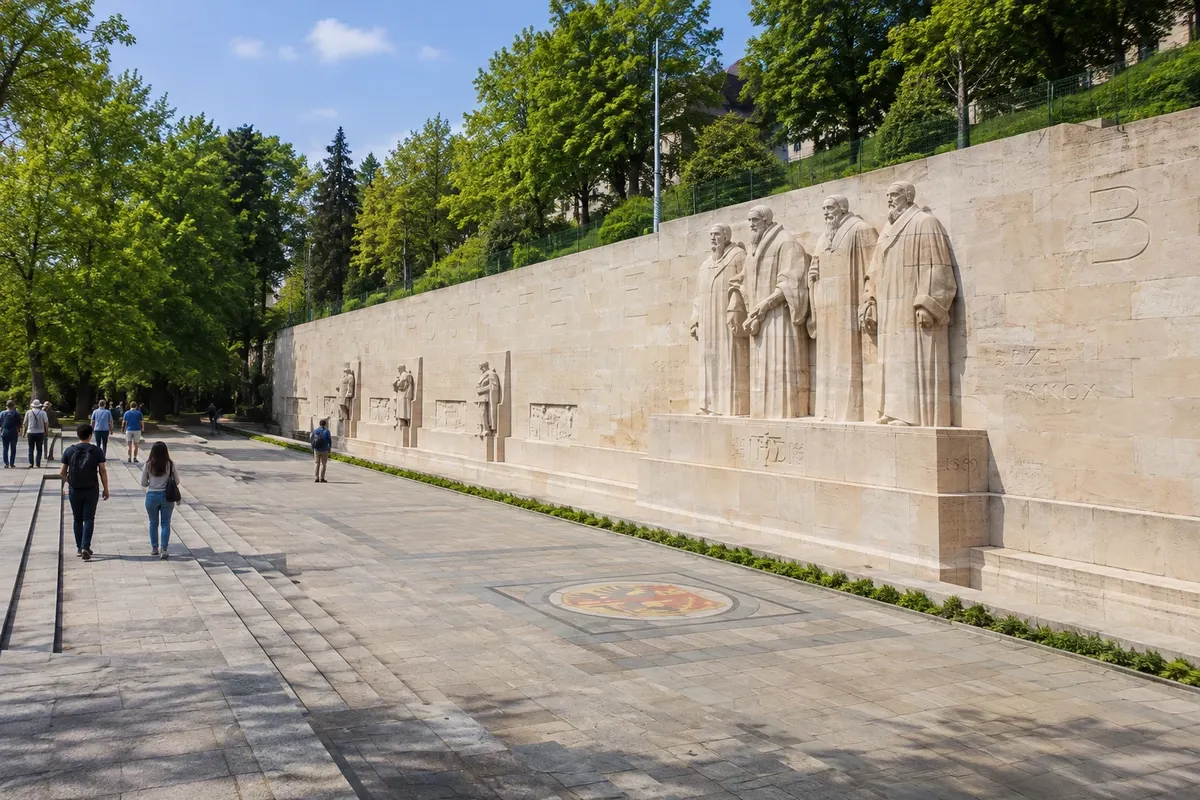
On top of the hill is the Vieille-Ville, with the Cathédrale Saint-Pierre, the Maison Tavel and the Place du Bourg-de-Four. In the 16th century John Calvin made the city a center of the Protestant Reformation, commemorated at the Mur des Réformateurs in the Parc des Bastions. Down by the lake are the Jardin Anglais with the flower clock, the Bains des Pâquis and the Jet d'Eau, the jet that became the city's symbol.
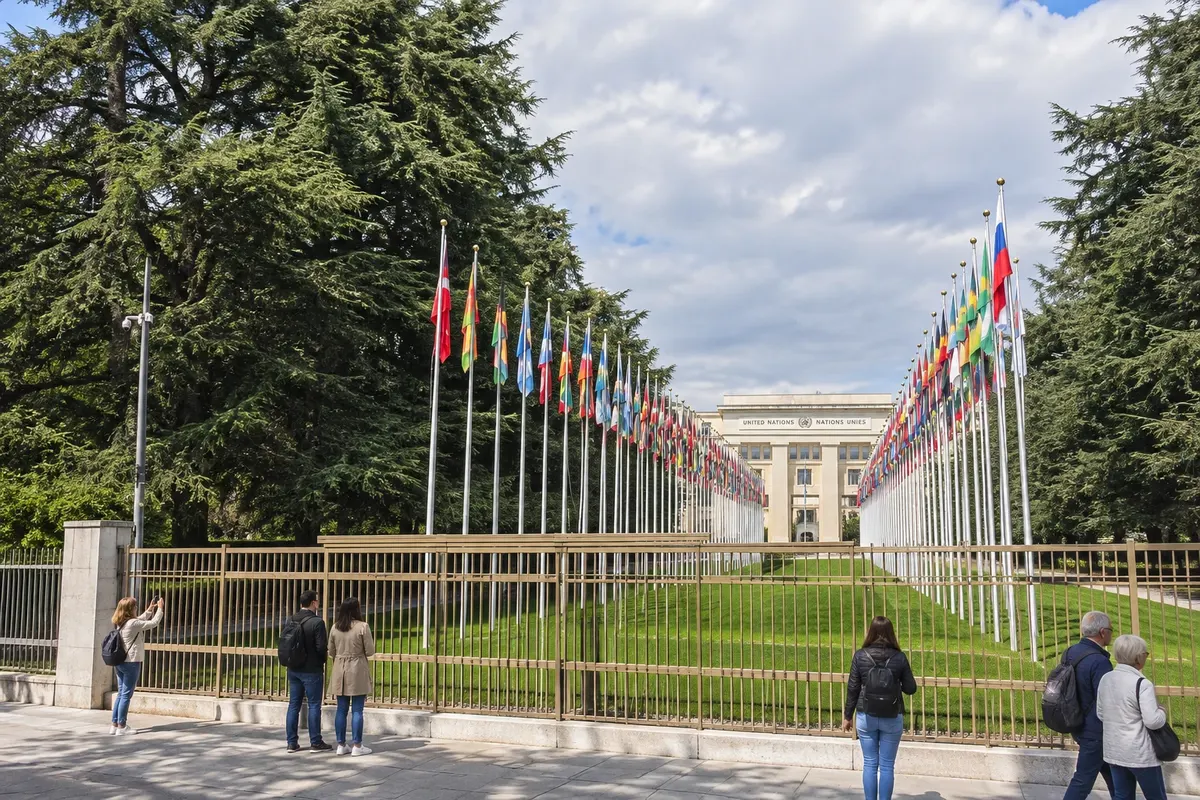
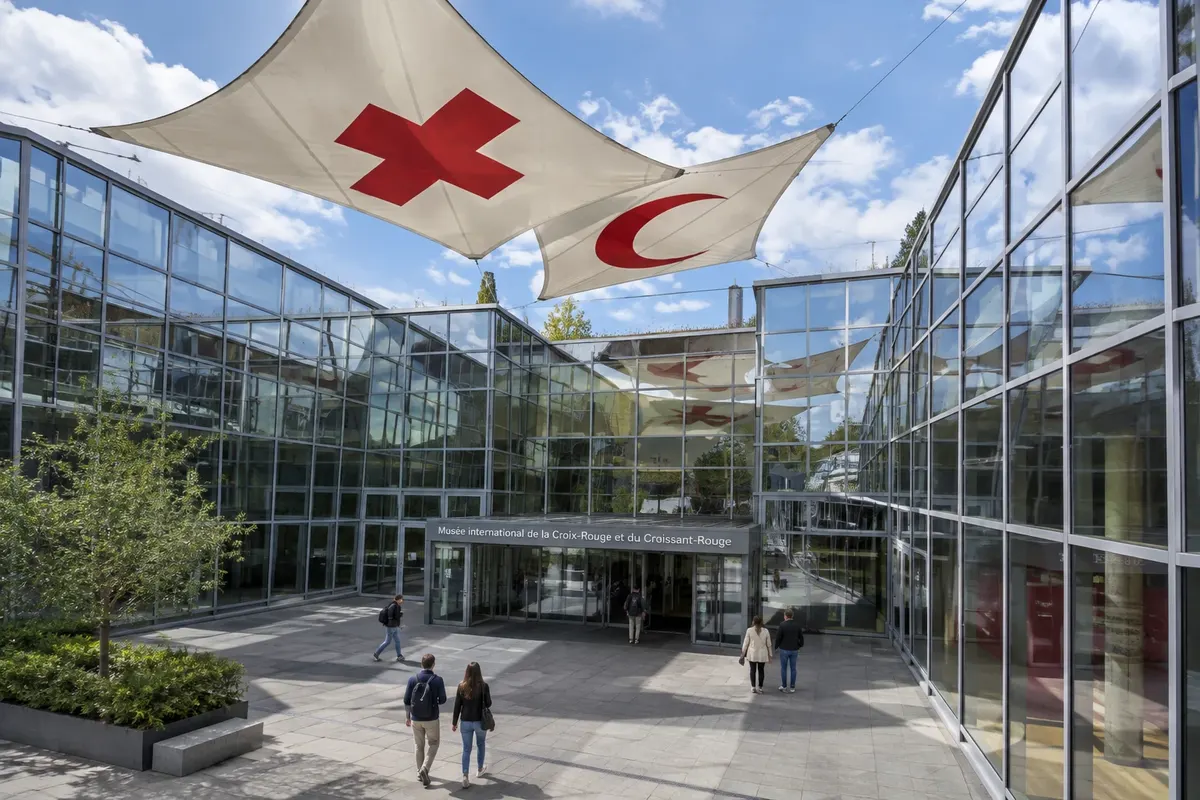
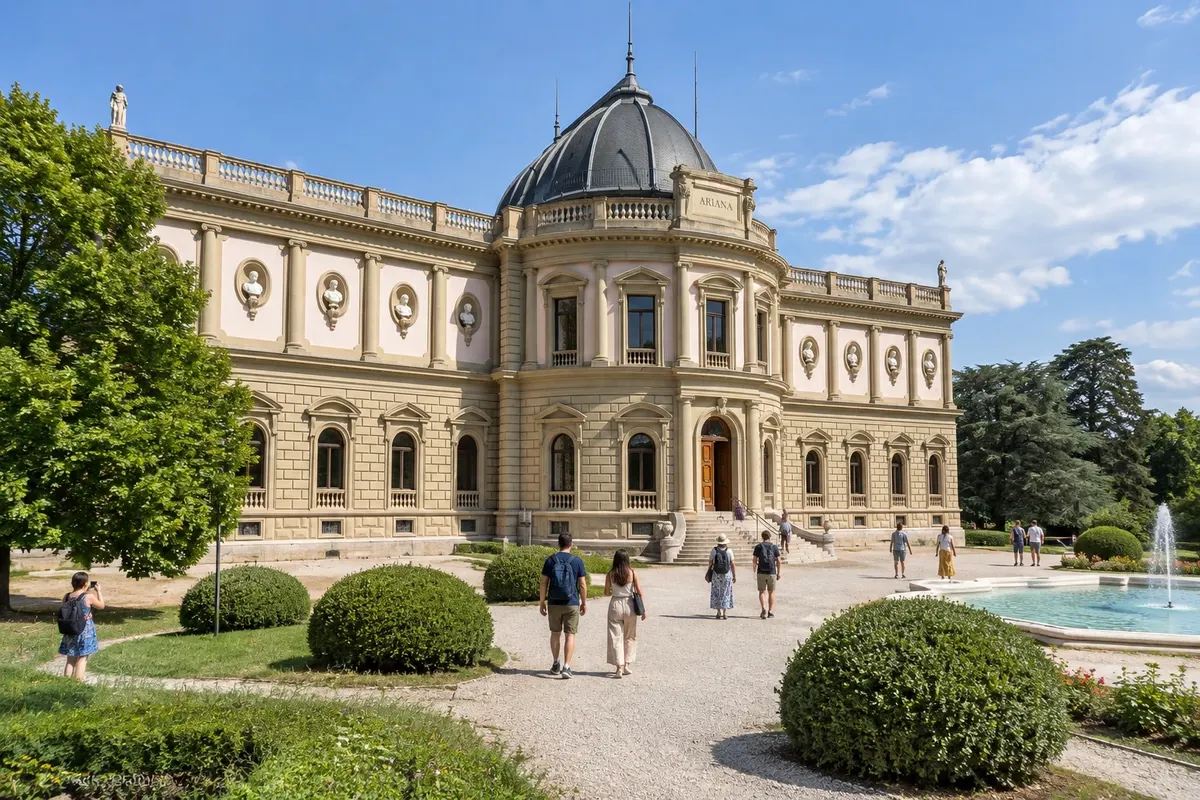
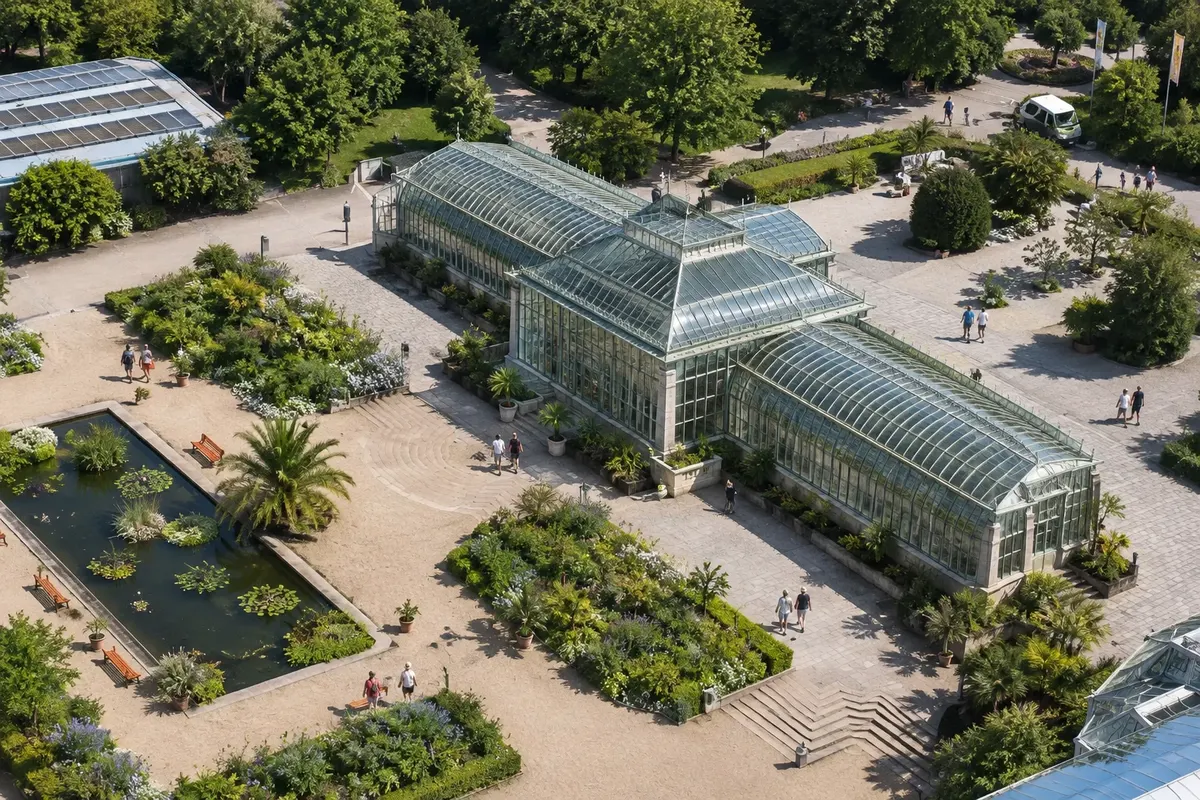
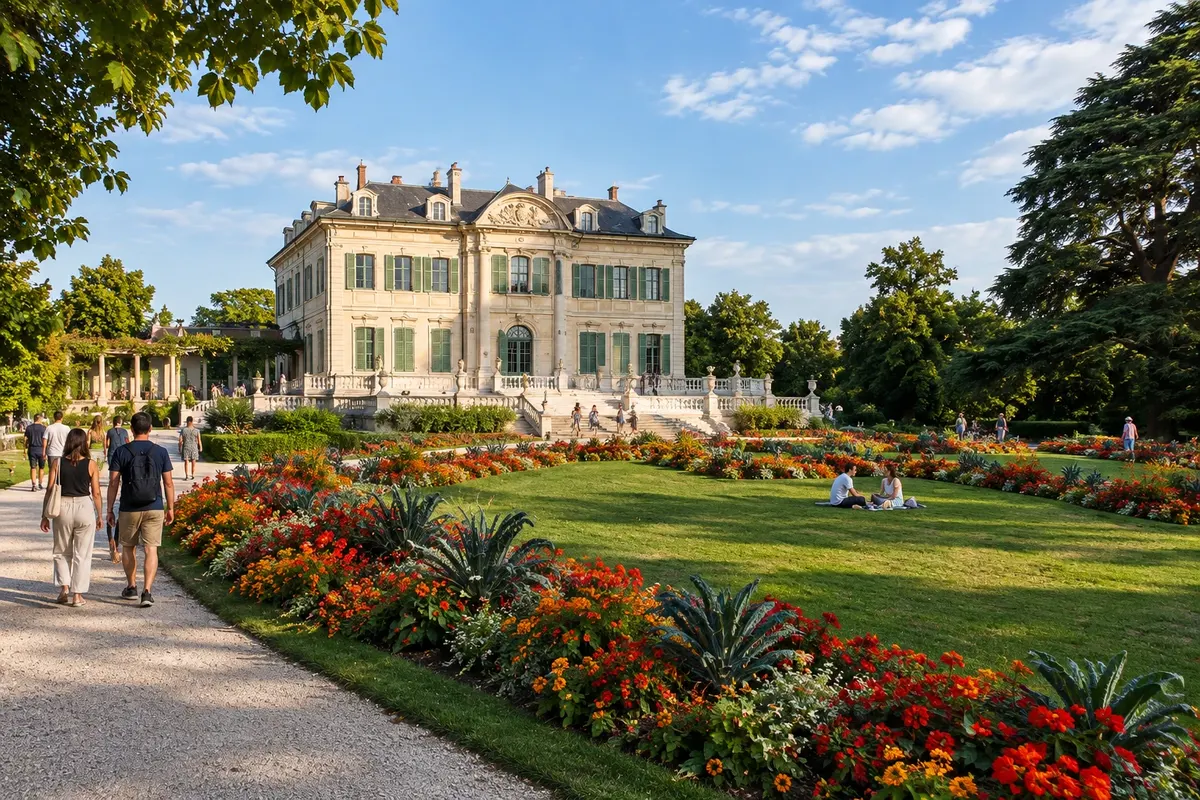
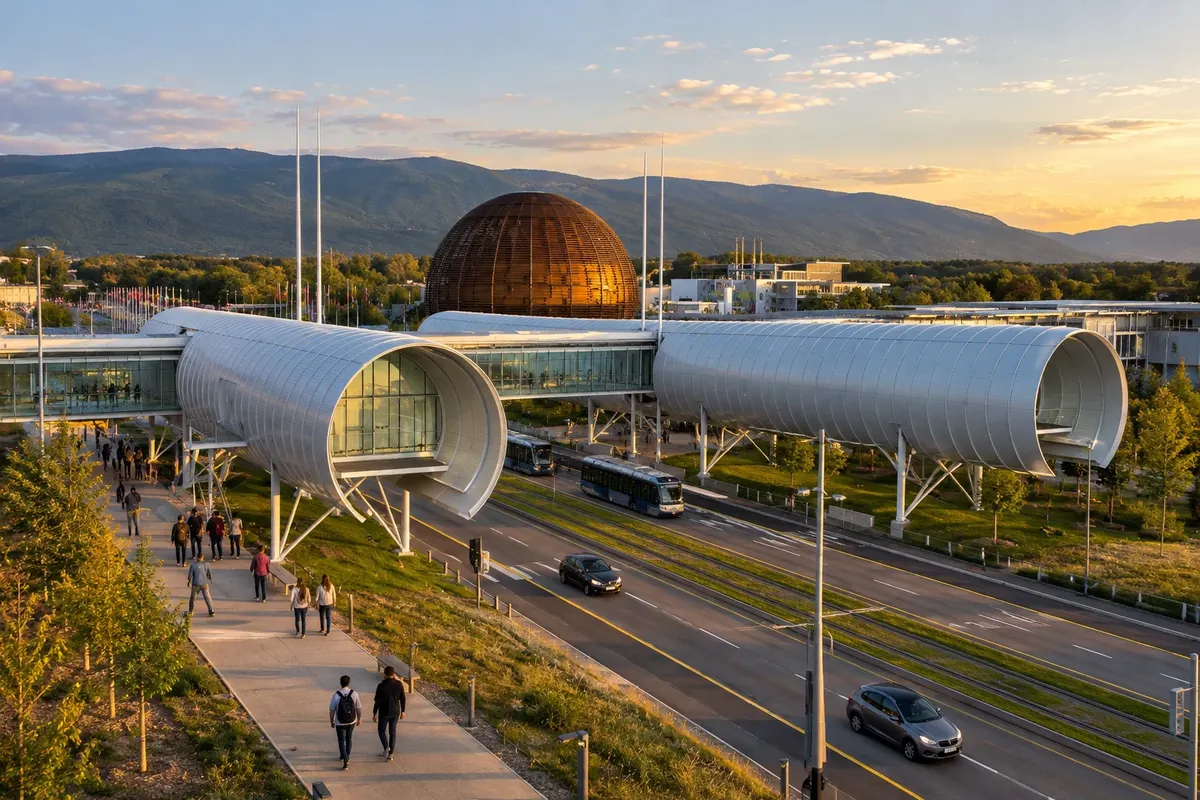
On the right bank, the international organizations district includes the Palais des Nations, the UN's European headquarters, the Broken Chair, the Musée international de la Croix-Rouge et du Croissant-Rouge and the Musée Ariana. Farther on are the Jardin botanique, the Parc La Grange with its rose garden, and in Meyrin the CERN – Science Gateway, the visitor center of the particle physics laboratory.
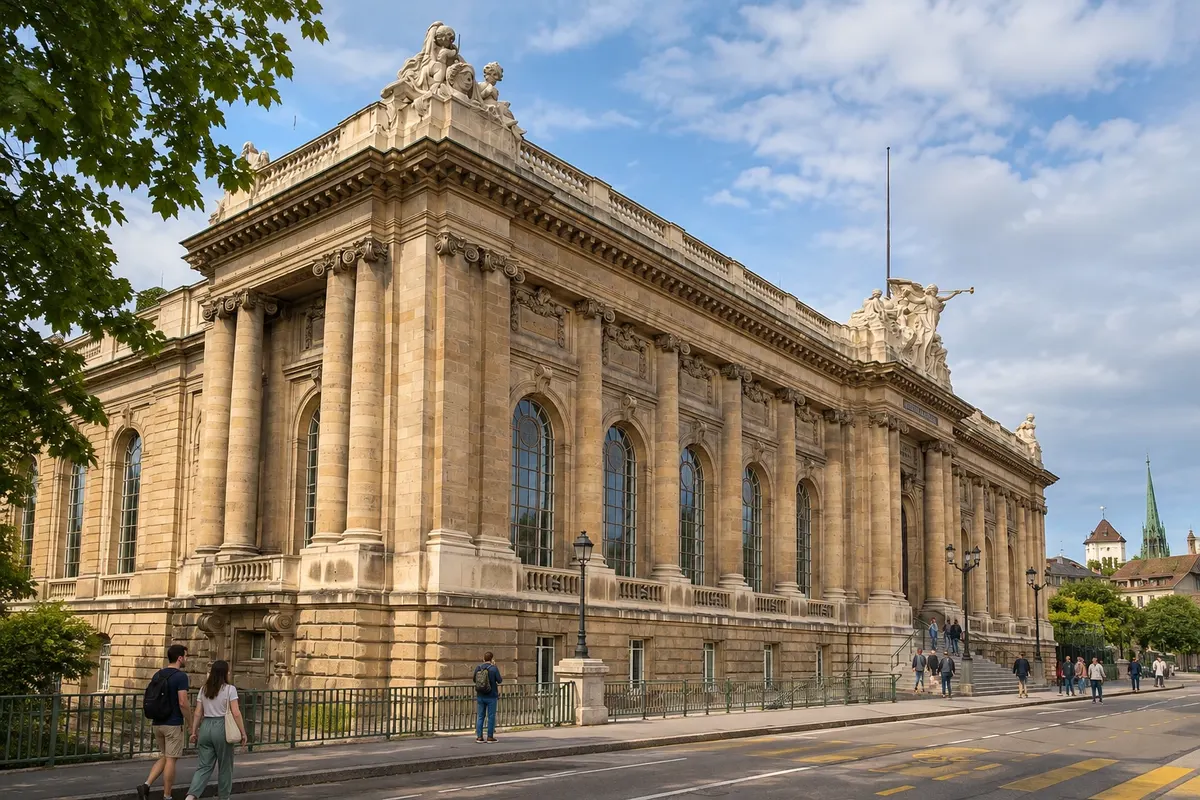
Watchmaking tradition appears at the Patek Philippe Museum, near the Plaine de Plainpalais, where a secondhand market runs twice a week, and in the collections of the Musée d'art et d'histoire. Across the Arve river, Carouge preserves the layout of a town built by the Kingdom of Sardinia in the 18th century.
The currency is the Swiss franc: Switzerland does not use the euro, although France is only a few kilometres away.
This destination brings together 1 city: Genebra.


 Brazil
 Argentina
 Chile
Chile Colombia
 Peru
Peru Uruguay
 Germany
 Belgium
 Spain
Spain France
 Greece
 the Netherlands
 Ireland
 Italy
Italy Portugal
 the United Kingdom