Berna

Berna · Switzerland

Berna

The federal city of the Suíça, seat of the government and parliament, with a medieval centre of arcades, fountains and towers on a bend of the Aare river, listed by UNESCO.

Suíça alemã

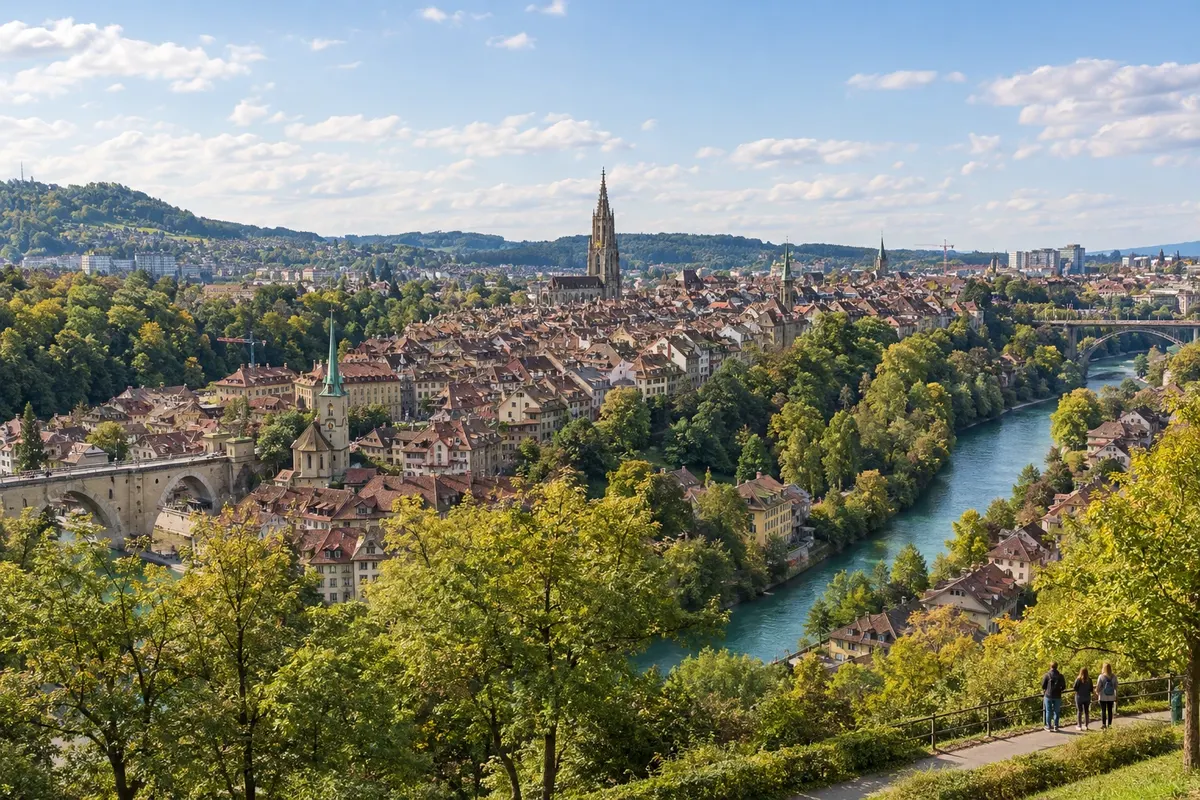
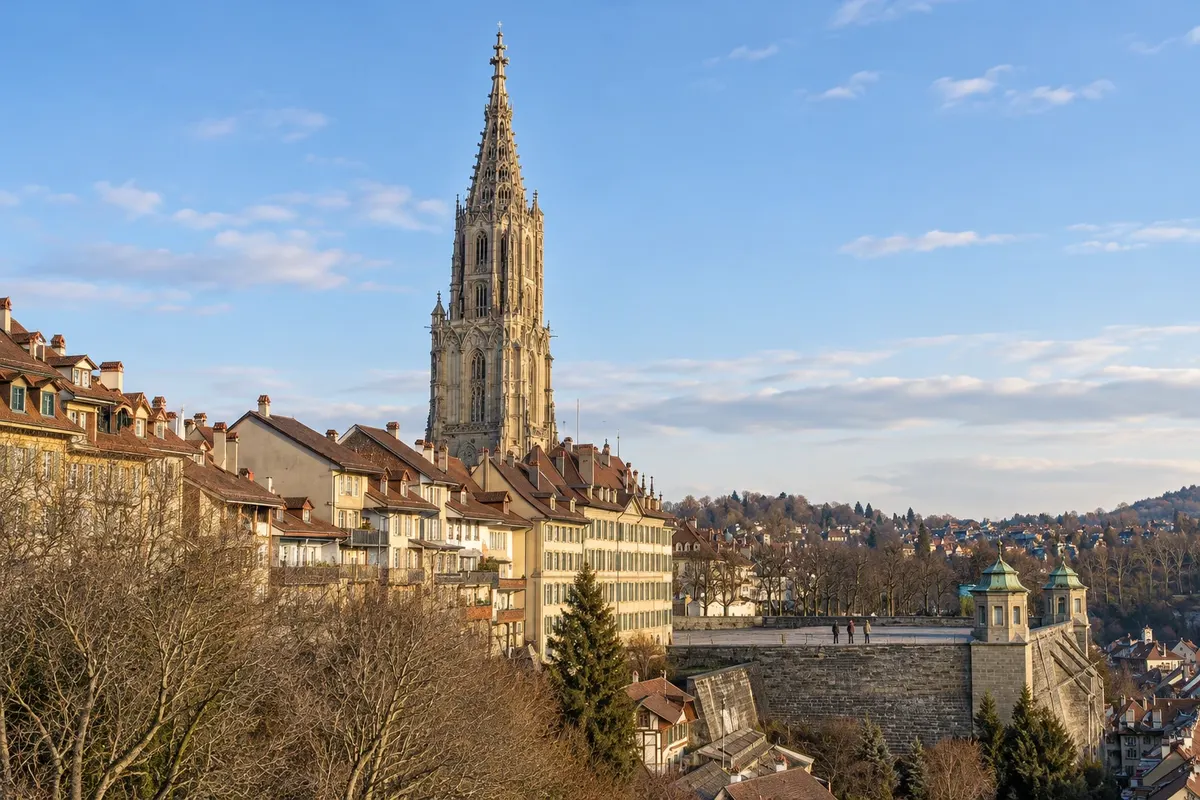
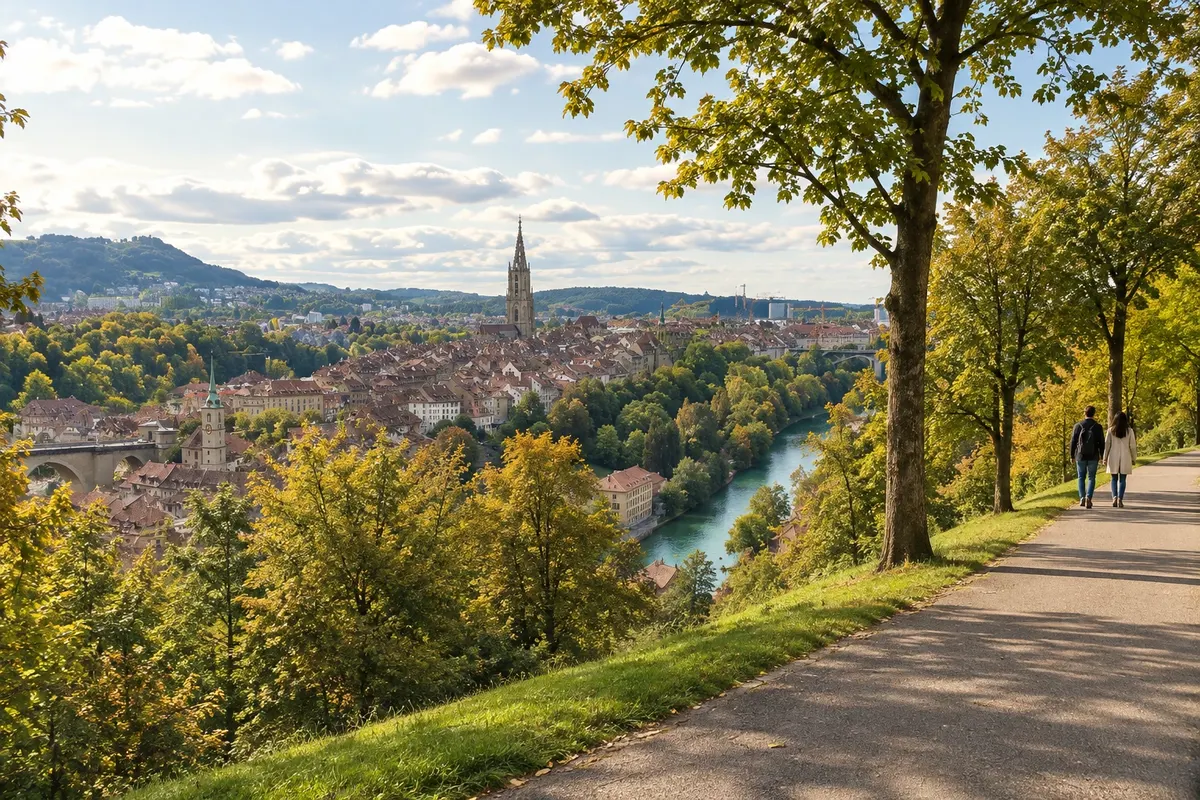
In the photo: Historic centre of Berna seen from the Rosengarten

Illustrative images. The pictures in this guide are illustrations based on the real place, not photographs, and may differ from it.

Get it on Google Play Send your photos

Get to know the place

A region to enjoy
at your own pace.

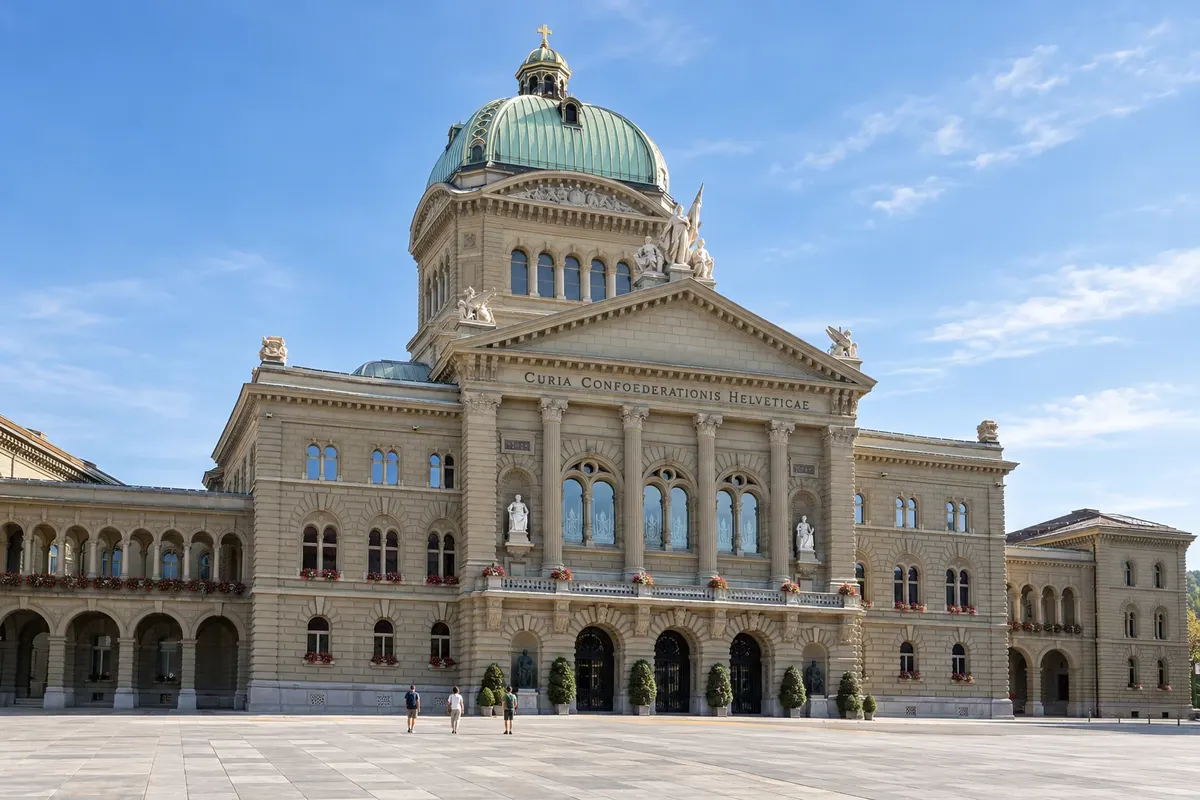
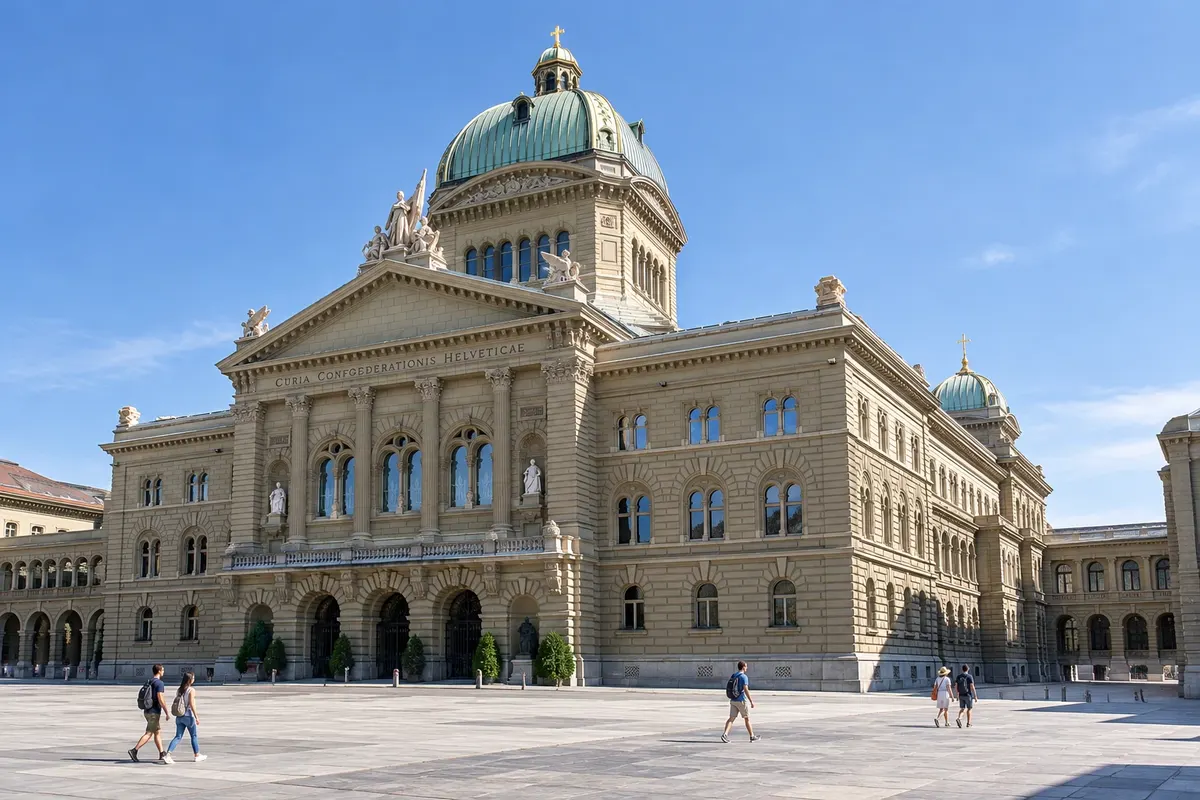
Berna is in the centre-west of the Suíça, between Zurique and Genebra, and is the seat of the country's government and parliament. Officially, the Suíça has no capital: Berna is the federal city, chosen in 1848 to host the federal authorities. In practice, it functions as the capital, with the Palácio Federal perched on the hill above the river.

The city was founded in 1191 by Duke Bertoldo V of Zähringen, on a peninsula surrounded by the Aare river on three sides. After the fire of 1405, wooden houses were replaced by sandstone buildings. The historic centre, the Altstadt, has been a UNESCO World Heritage Site since 1983, with covered arcaded streets, Renaissance fountains with colourful figures, the Zytglogge clock tower and the Gothic cathedral, the Berner Münster.

Outside the medieval core, Berna has museums of art and history. The Zentrum Paul Klee, by Renzo Piano, houses works by the painter who grew up in the city, and Albert Einstein lived there when he formulated the special theory of relativity. The bear, the city's symbol, appears on the coat of arms, in the fountains and at the Bärenpark on the riverbank.

The language is German, and in the streets you hear the Bernese dialect, a form of Swiss German. English is widely spoken in tourism. The currency is the franco suíço. Berna is a railway hub: Zurique, Basileia, Lucerna and Interlaken are about an hour away by train, which makes the city a base for exploring the centre of the country.

This destination brings together 1 city: Berna.

Share: WhatsApp
Traveler, share your experiences through photos Up to 5 photos of each place you visited.

One destination, many paths

The cities on this trip

Start with one city or combine several in your itinerary.

Where Berna is
Berna

Contornos: ©swisstopo. Adaptação do Cidade Turismo.

How to get there: Berna

✈ Aeroporto de Zurique (ZRH), in Kloten · 125 km to Berna

✈ Bern Airport (BRN), in Belp · 10 km to Berna

Confirm before booking. Berna has a small airport in Belp, with few flights.

The local experience

Things to do in Berna

Altstadt von Bern
Berna · Berna · Historic center

Altstadt von Bern

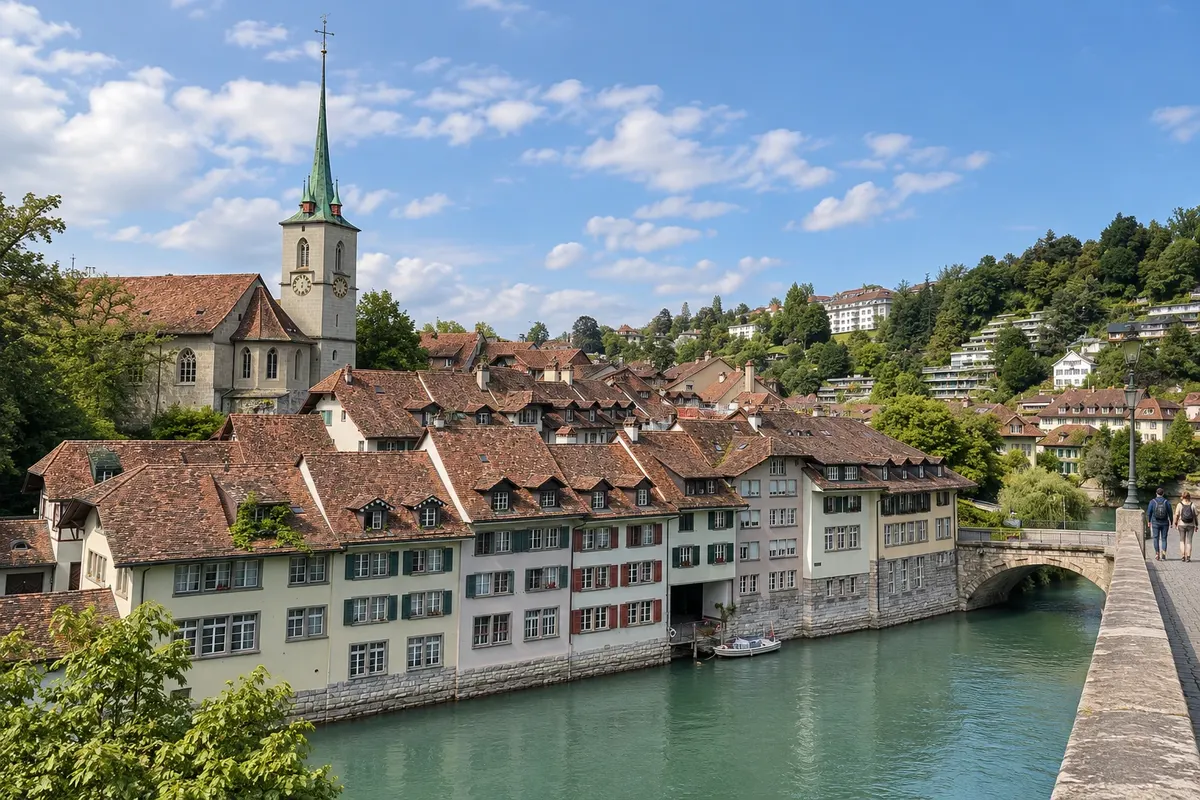
The historic center sits on a peninsula of the Aare, a UNESCO World Heritage site, with streets of sandstone houses, about 6 km of covered arcades, cellars with shops and bars, medieval towers and fountains with 16th-century figures.

Zytglogge
Berna · Berna · Monument

Zytglogge

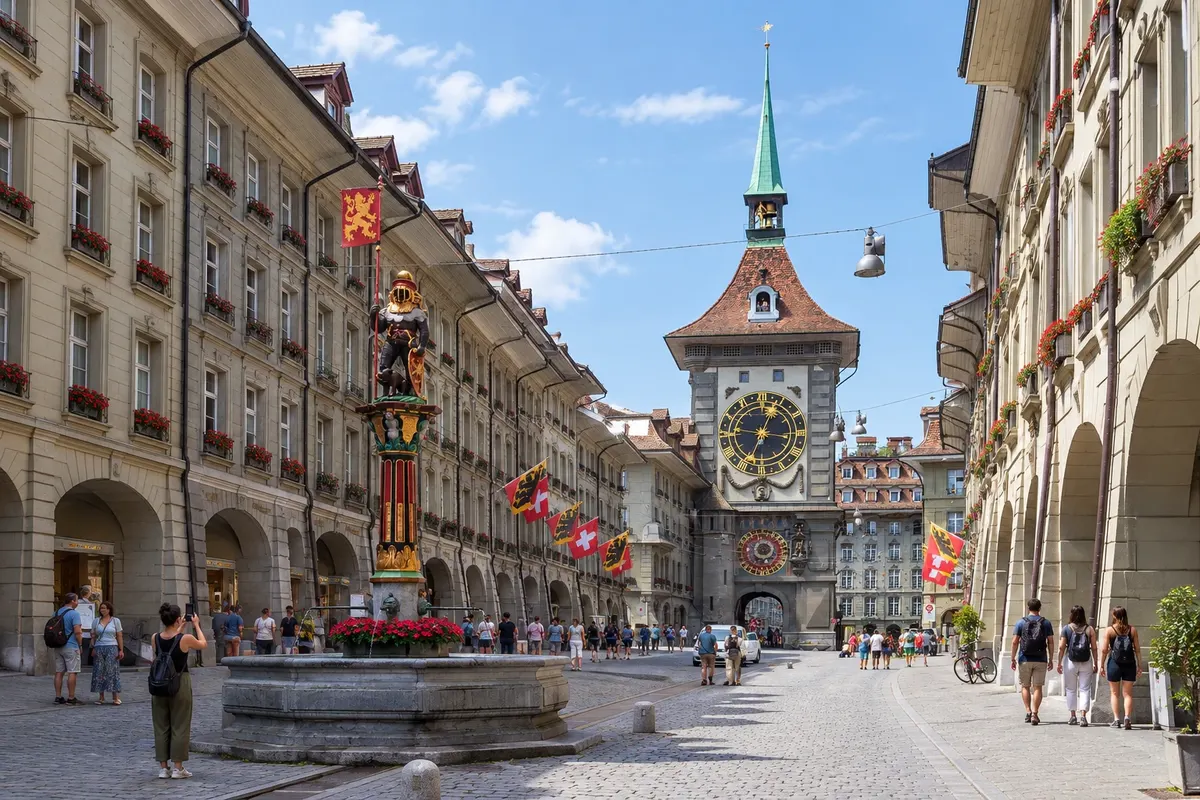
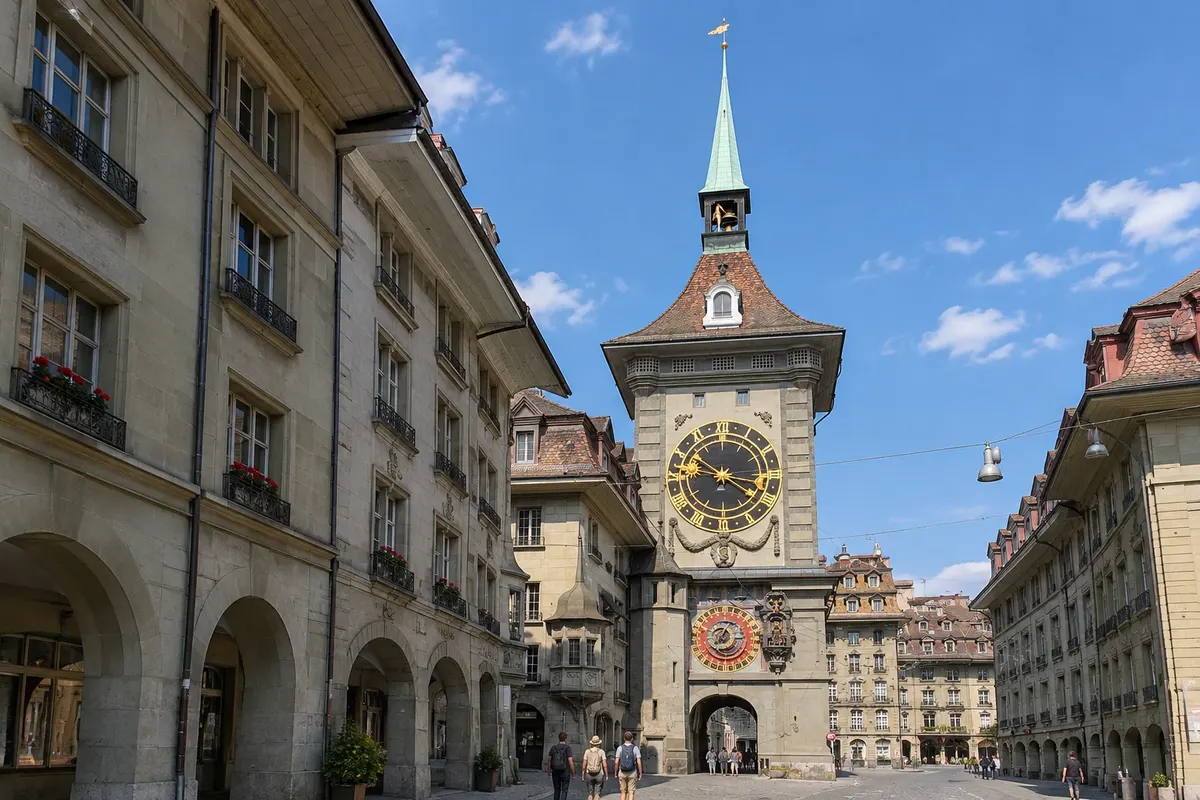
The clock tower in the middle of the Altstadt, a former city gate, featuring a 1530 astronomical clock and a carillon of figures that move every hour: a rooster, a jester, bears and Chronos.

Bundeshaus
Berna · Berna · Historic building

Bundeshaus

The Federal Palace, seat of the Swiss government and parliament, opened in 1902, with a green dome and a sandstone façade. In front is the Bundesplatz, with 26 water jets and a market on Tuesdays and Saturdays.

Berner Münster
Berna · Berna · Church

Berner Münster

Bern's Gothic cathedral, begun in 1421, with the Last Judgment portal and a tower just over 100 m high. The climb leads to two galleries with views over the Altstadt, the Aare and, on clear days, the Alps.

See 11 more places in Berna
Einsteinhaus
Berna · Berna · Museum

Einsteinhaus

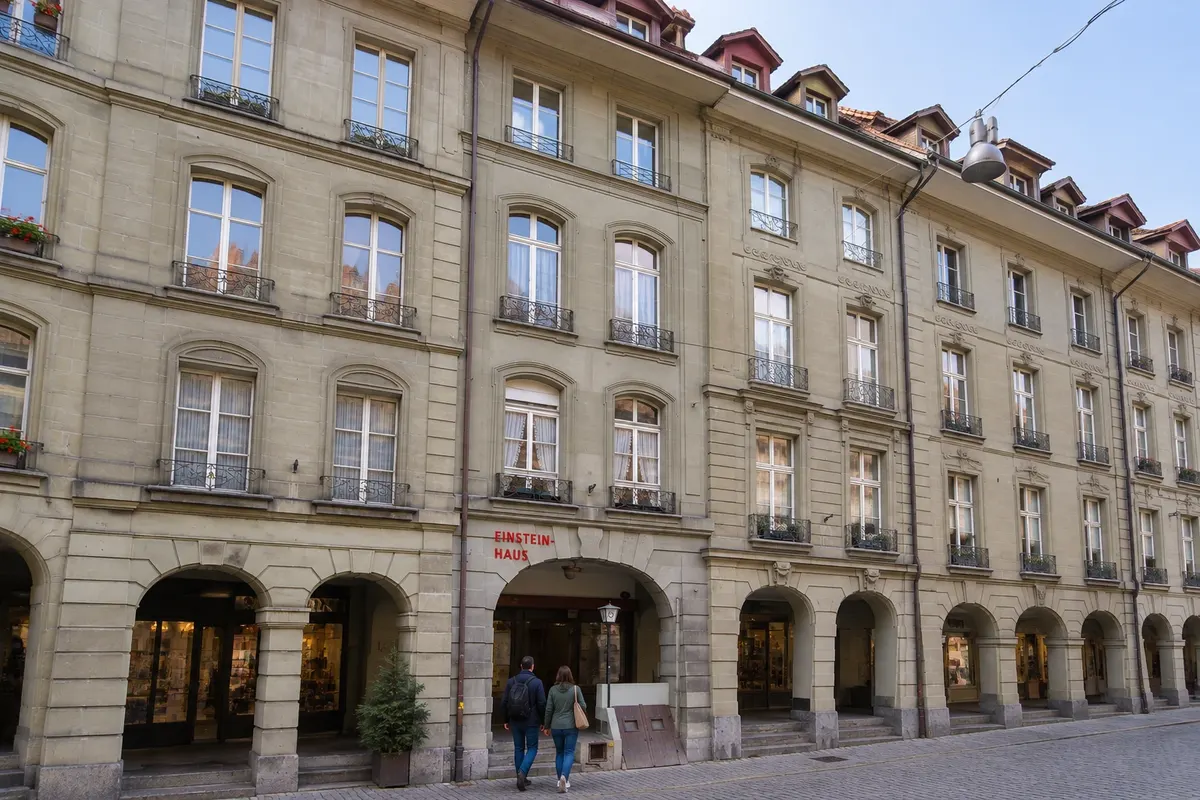
The apartment at Kramgasse 49 where Albert Einstein lived from 1903 to 1905, the years when he published the theory of special relativity. Furnished as it was then, it has an exhibition about the physicist's life on the upper floor.

Kindlifresserbrunnen
Berna · Berna · Monument

Kindlifresserbrunnen

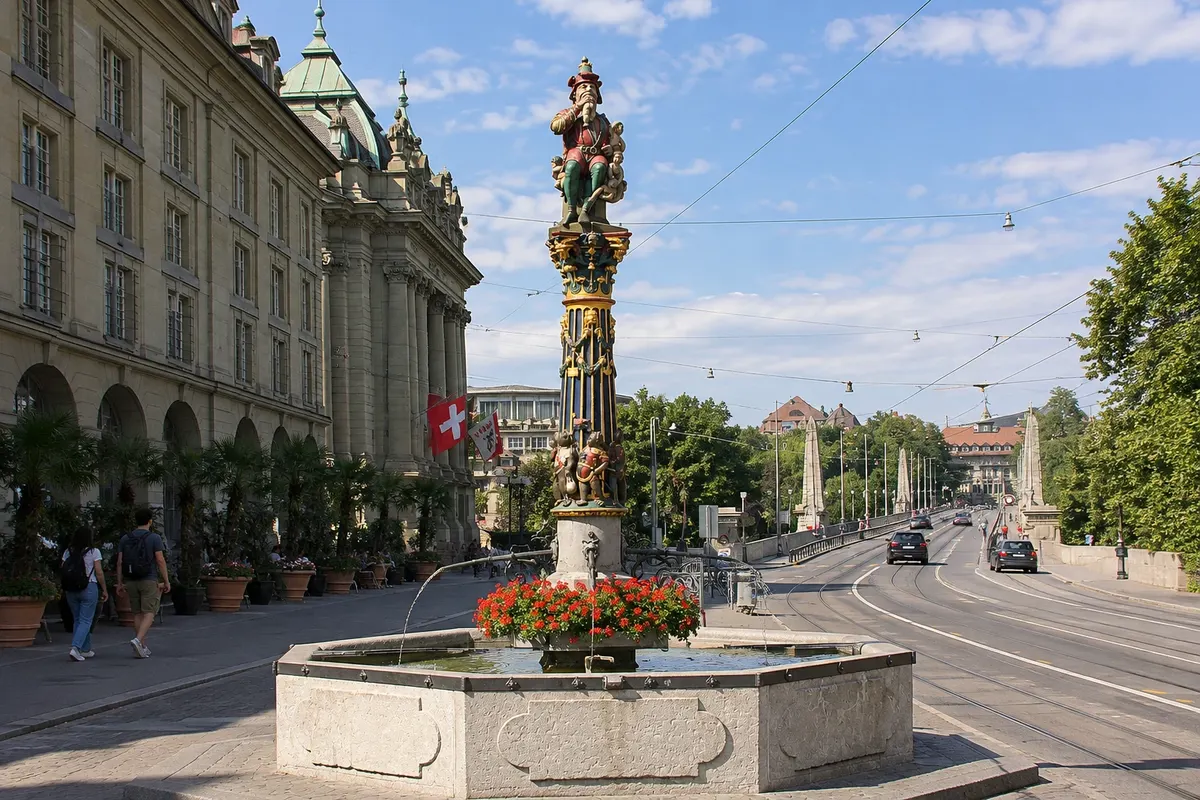
The Child‑Eater fountain, in Kornhausplatz, sculpted in 1545 and 1546. It is part of a group of eleven painted‑figure fountains from the 16th century scattered across the Altstadt.

Bärenpark
Berna · Berna · Park

Bärenpark

The bear park on the slope above the Aare, next to the Nydeggbrücke, opened in 2009 next to the old pit. The bears, a symbol of Bern, live in an area with trees, caves and a pond.

Rosengarten
Berna · Berna · Garden

Rosengarten

A garden on the top of the slope, above the Bärenpark, with about 250 types of roses, irises and rhododendrons, and a viewpoint over the Altstadt’s rooftops, the cathedral and the bends of the Aare.

Matte
Berna · Berna · Neighborhood

Matte

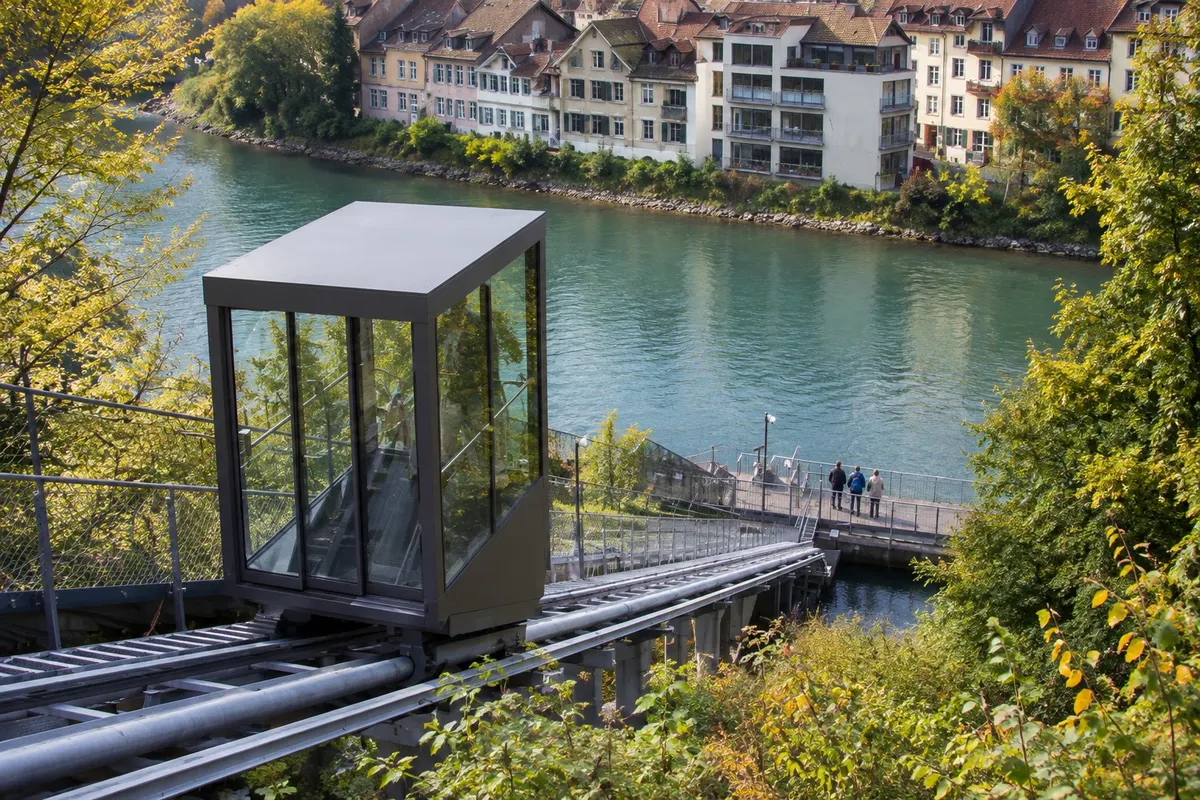
The old neighborhood of craftsmen and boatmen on the Aare’s bank, below the cathedral, with low houses, cafés and studios. The Mattelift, dating from 1897, links the Münsterplattform to the Badgasse.

Marzili
Berna · Berna · Park

Marzili

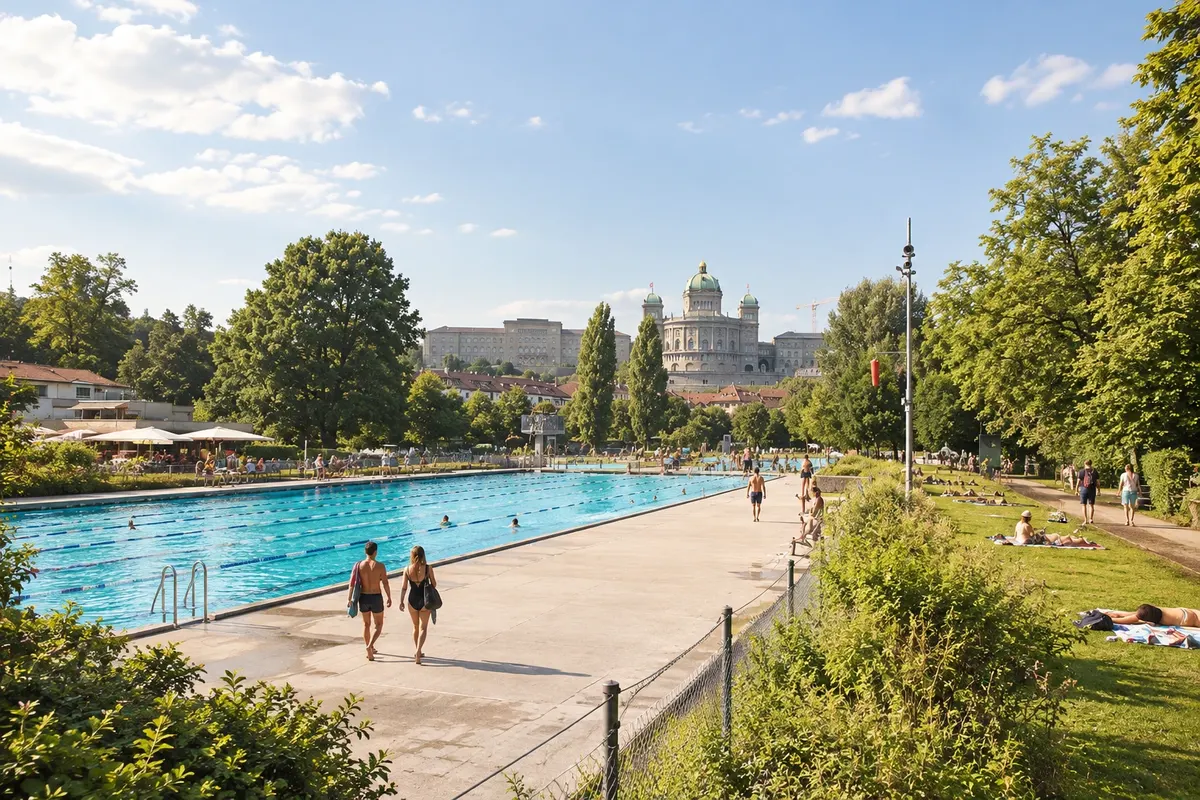
The public swimming facility on the Aare’s bank, just below the Federal Palace, with lawns and pools. In the European summer, locals who are strong swimmers go down the river with the current and exit at the Marzili.

Gurten
Berna · Berna · Observation deck

Gurten

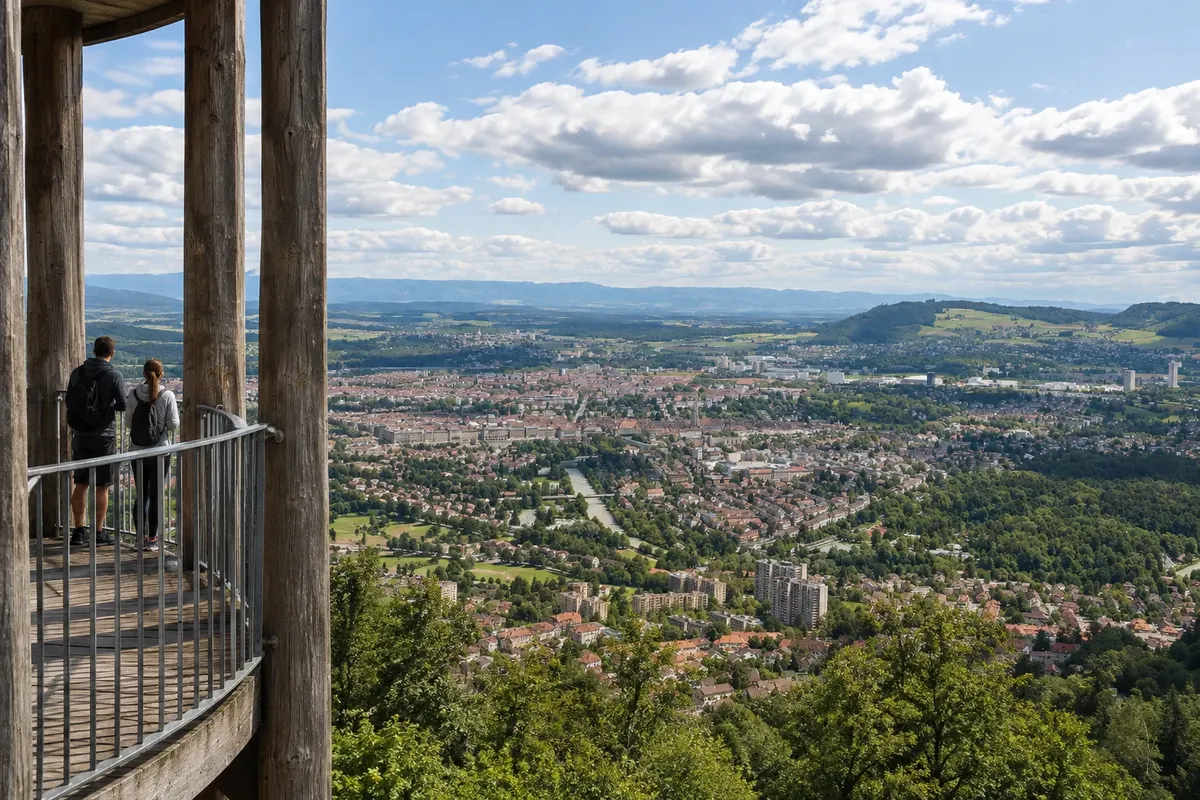
The hill of Berna, at 858 m, to the south of the city, with a funicular since 1899, a wooden observation tower, and a park with playgrounds and trails. On clear days the view reaches the Bernese Alps and the Jura.

Zentrum Paul Klee
Berna · Berna · Museum

Zentrum Paul Klee

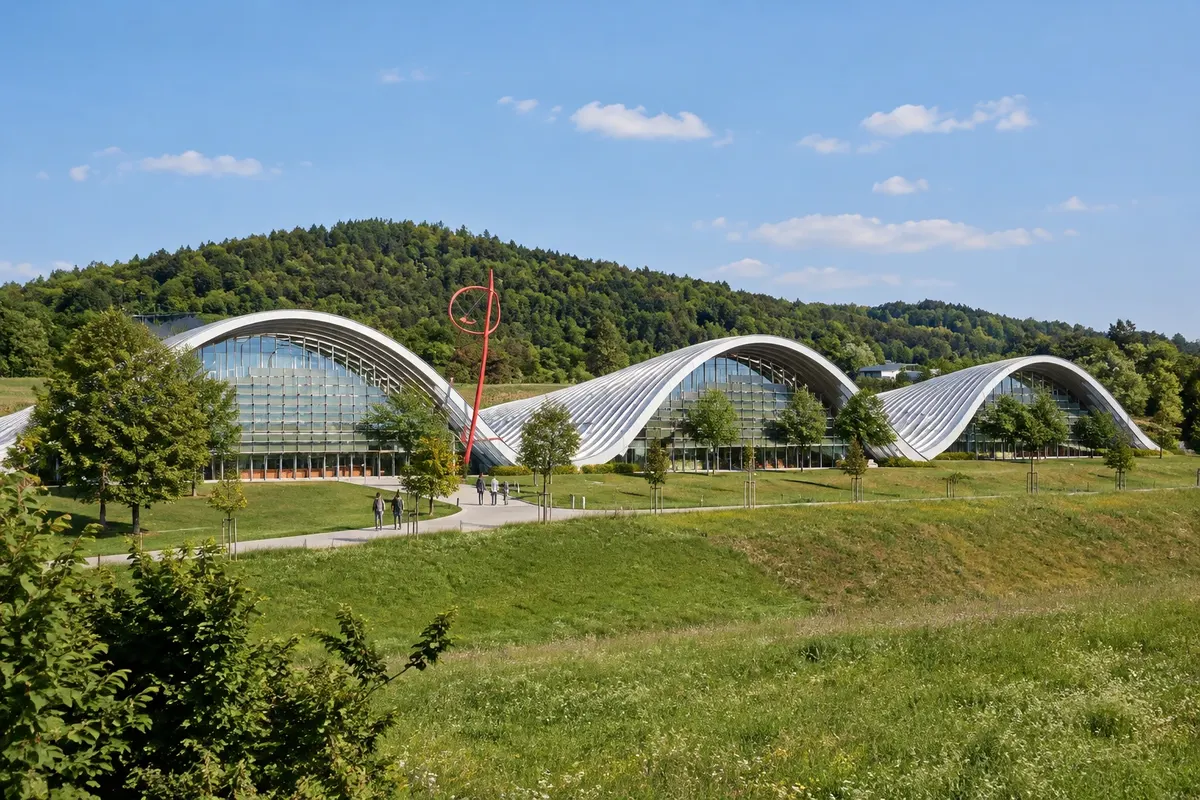
Museum dedicated to Paul Klee, opened in 2005 in a Renzo Piano building shaped like three waves of glass and steel, on the eastern outskirts of Berna. It houses around 4,000 works by the painter.

Kunstmuseum Bern
Berna · Berna · Museum

Kunstmuseum Bern

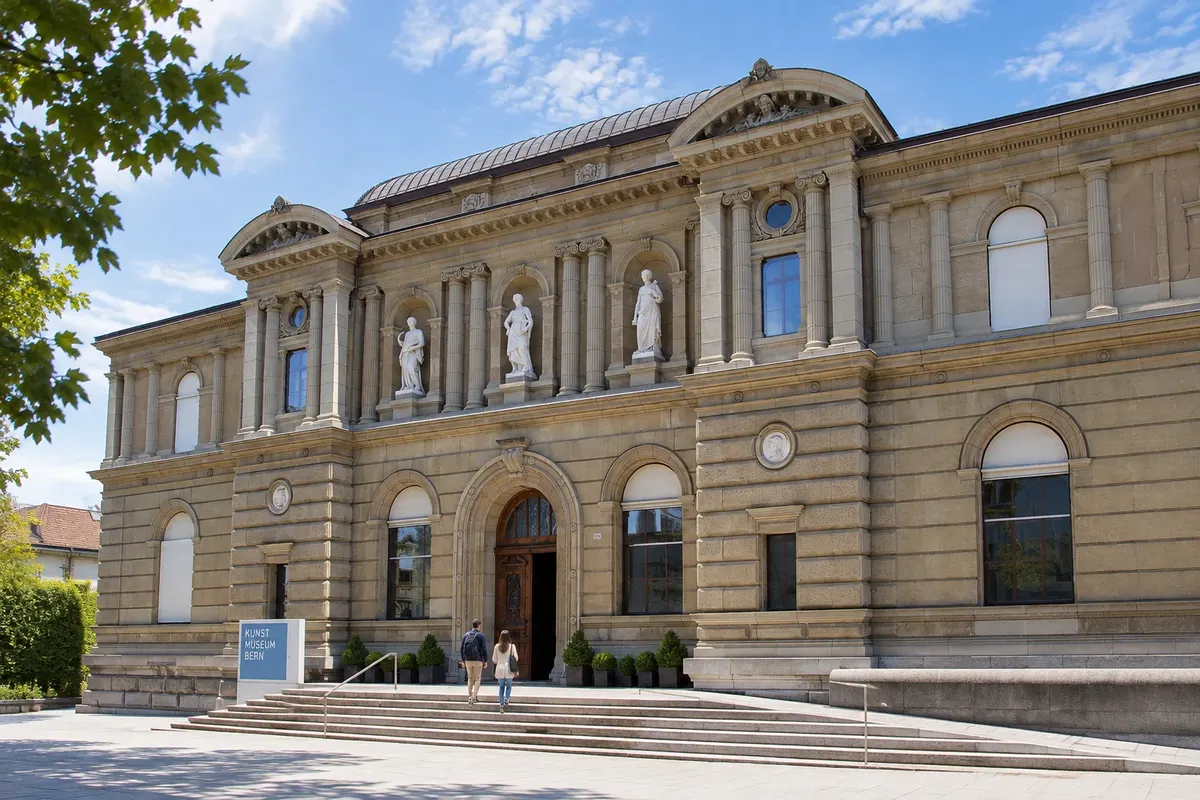
The art museum of Berna, near the station, with a collection that ranges from the Middle Ages to contemporary art: more than 3,000 paintings and sculptures, including works by Hodler, Klee, Picasso and Meret Oppenheim.

Bernisches Historisches Museum
Berna · Berna · Museum

Bernisches Historisches Museum

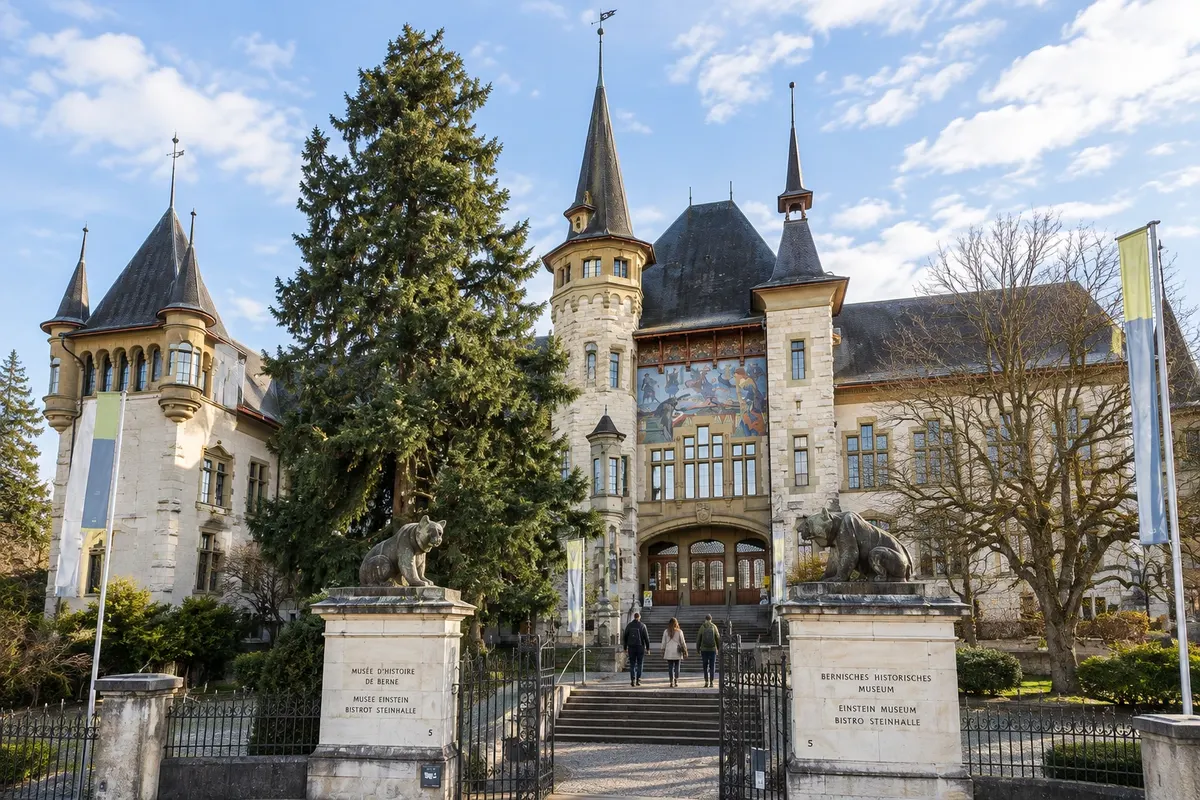
The Bern Historical Museum, in a 1894 building inspired by castles, with about 500,000 objects, from Burgundian tapestries to items from various continents, and the Einstein Museum.

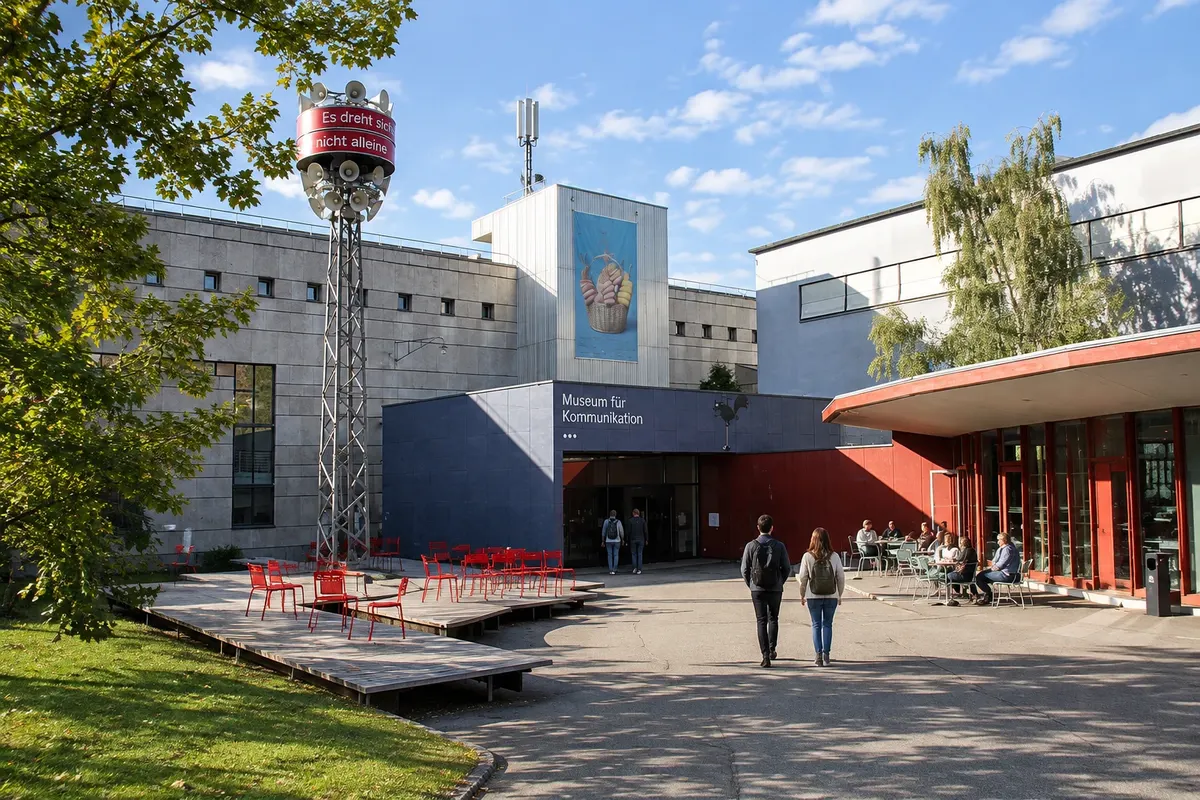
Museum für Kommunikation
Berna · Berna · Museum

Museum für Kommunikation

Interactive museum about human communication, from the postal service to the digital age, in the Kirchenfeld museum quarter. The permanent exhibition spans three floors and invites you to touch, test and play.

Before you go

Practical information

A little planning leaves more time to enjoy the journey.

When to go

From May to September the days are long, the fountains and gardens bloom and, in the European summer (June to August), many people cool off in the Aare. In November the Zibelemärit, the onion market, takes place. In December there are Christmas markets; winter, from December to February, is cold and the days are short.

The seasons shown are the most usual ones; nature doesn't always follow the calendar.

How many days to stay

Two days are enough for the historic centre, the Palácio Federal, the cathedral, the Bärenpark and one or two museums, such as the Zentrum Paul Klee. With three days there is time for the Gurten, the Matte neighbourhood and the Museu de História with the Einstein Museum. Berna also serves as a base for day trips by train to Interlaken, Lucerna and Friburgo.

Which city to stay in

The Altstadt, between the station and the Bärenpark, leaves almost everything within walking distance: the cathedral, the Zytglogge, the Palácio Federal and restaurants under the arcades. The central station area is convenient for those making train day trips. The Kirchenfeld neighbourhood, on the other side of the bridge, is residential and close to the museums. The Matte, on the banks of the Aare, is quieter, with old houses and small cafés.

Respect the place

Take your trash with you, follow the signs and support local businesses. In natural areas, follow the visiting guidelines.

Get your questions answered

Frequently asked questions about Berna

Is Berna the capital of the Suíça?

In practice, yes: it is the seat of the government, the parliament and much of the federal administration. Officially, however, the Suíça has no capital, and Berna is called the federal city (Bundesstadt), a title it received in 1848.

How many days to stay in Berna?

Two days cover the historic centre, the Palácio Federal, the cathedral and one museum. Three days allow you to include the Gurten, the Zentrum Paul Klee and the Museu de História at a relaxed pace.

Can you do Berna as a day trip from Zurique?

Yes. The direct train takes about an hour. In one day you can see the Altstadt, the Zytglogge, the cathedral, the Palácio Federal and the Bärenpark. For museums, it's worth staying overnight in the city.

Do you need a car in Berna?

No. The historic centre is walkable, and trams and buses connect the station to the museums and the Gurten. To travel beyond the city, SBB trains reach all regions of the country, with timetables integrated with boats, PostAuto buses and mountain trains. There are rail passes for tourists.

What is the best time to visit Berna?

From May to September, with long days and mild weather; in the European summer, from June to August, the river becomes a meeting point. The Zibelemärit, the onion fair, takes place on the fourth Monday of November. Winter, from December to February, is cold and it gets dark early, but there are Christmas markets.

Explore other destinations Search by state and city
Back