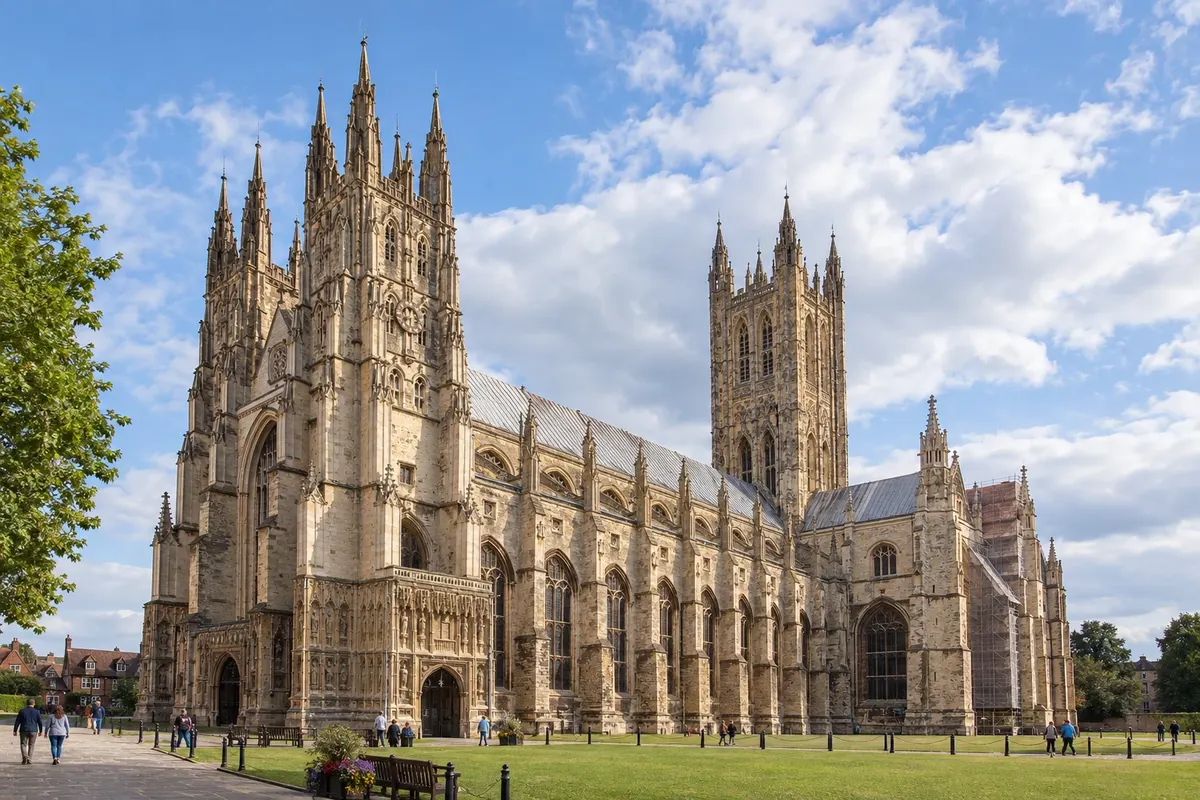
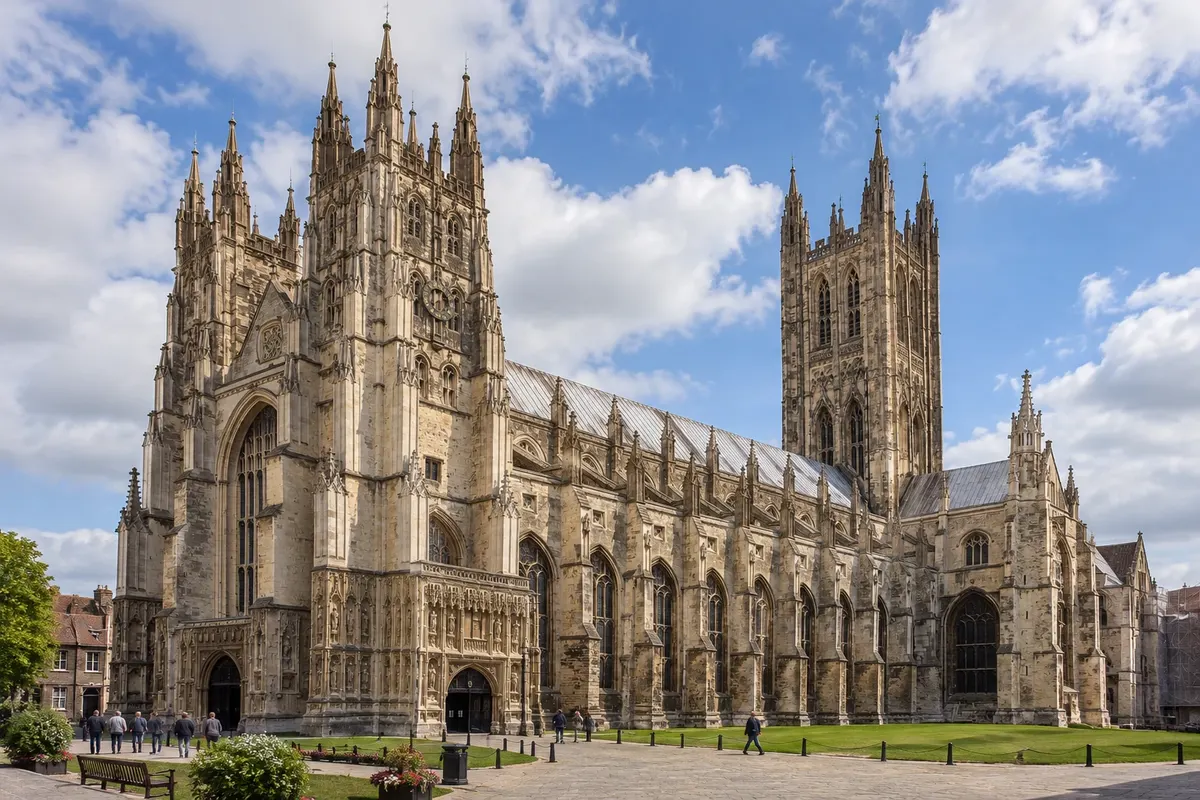
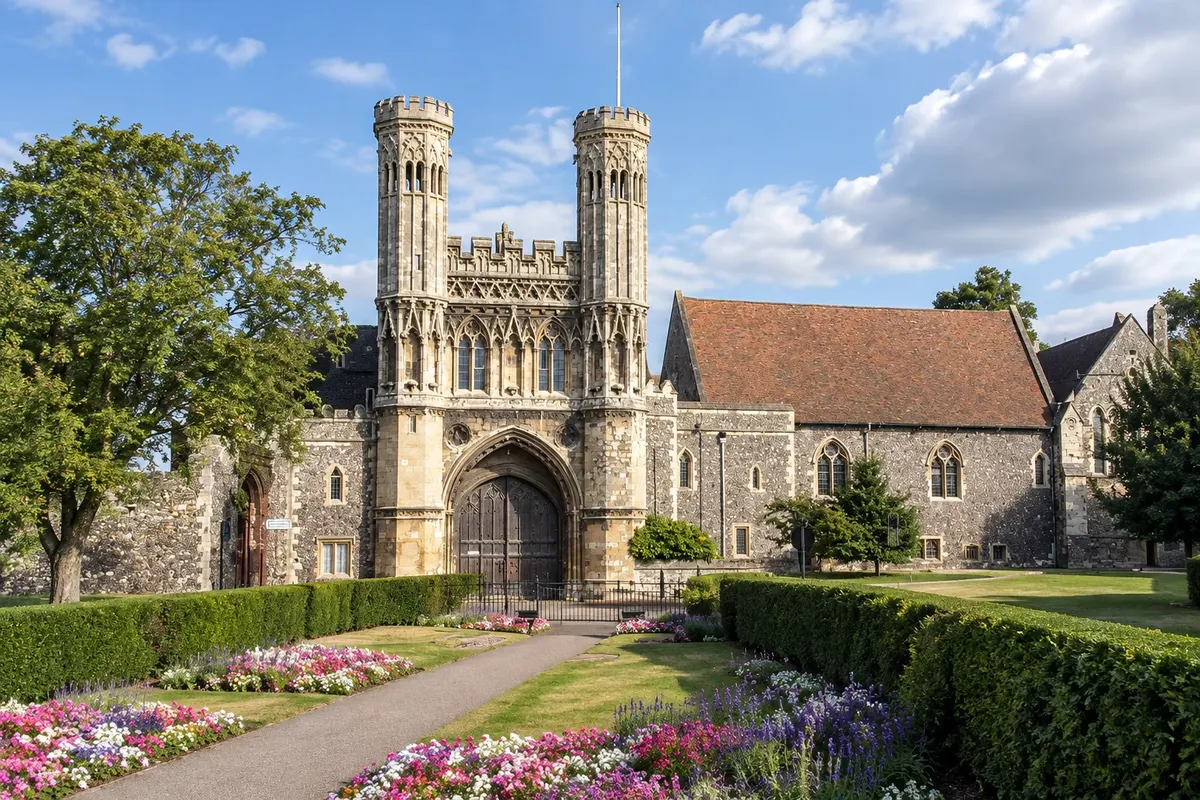
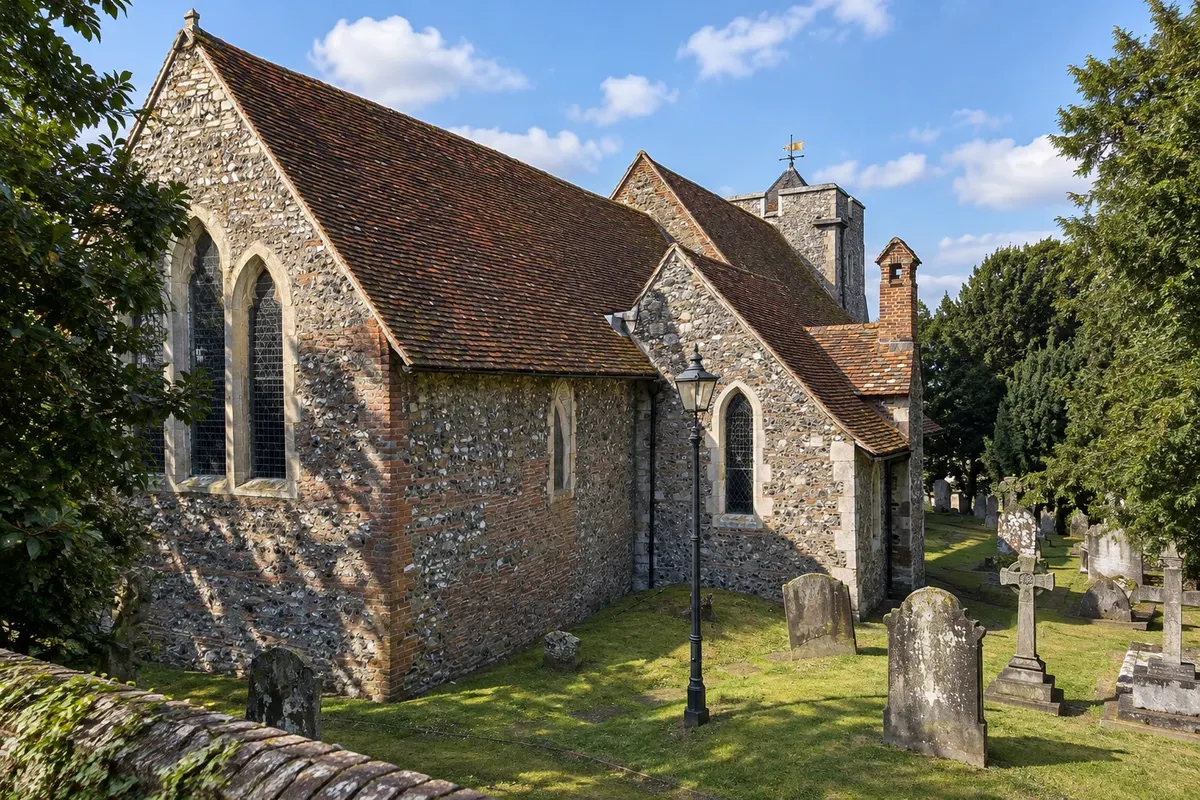
Canterbury is in the county of Kent, in southeast England, about 95 km from London. It was there that the monk Agostinho, sent by Pope Gregório Magno in 597, began converting the Anglo-Saxons to Christianity, and since then the city has been the seat of the Archbishop of Canterbury, head of the Church of England. The cathedral, the Abadia de Santo Agostinho and the church of São Martinho form an ensemble that is a UNESCO World Heritage Site.
In 1170, Archbishop Thomas Becket was murdered inside the cathedral by knights tied to King Henry II, and his tomb drew pilgrims from across Europe during the Middle Ages. The stories of a group of those pilgrims gave rise to the Contos de Canterbury by Geoffrey Chaucer at the end of the 14th century. The city is also the starting point of the Via Francígena, the medieval pilgrimage route to Rome.
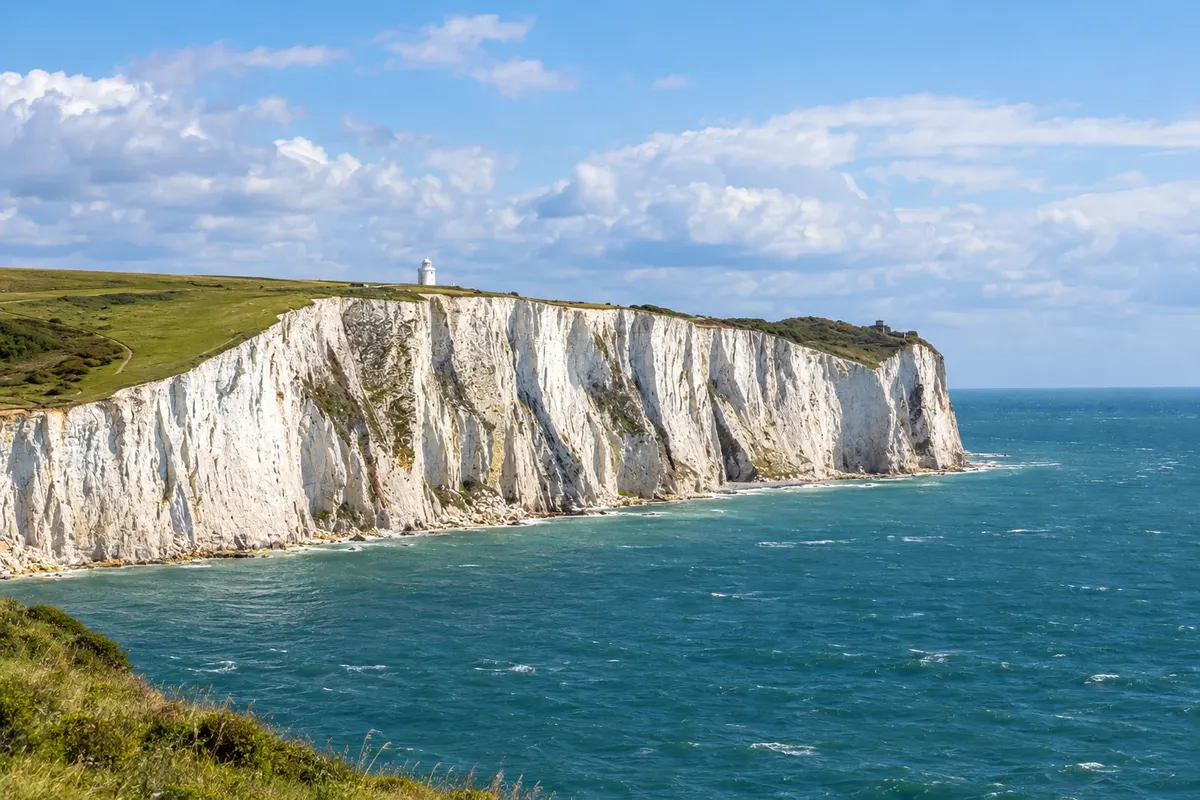
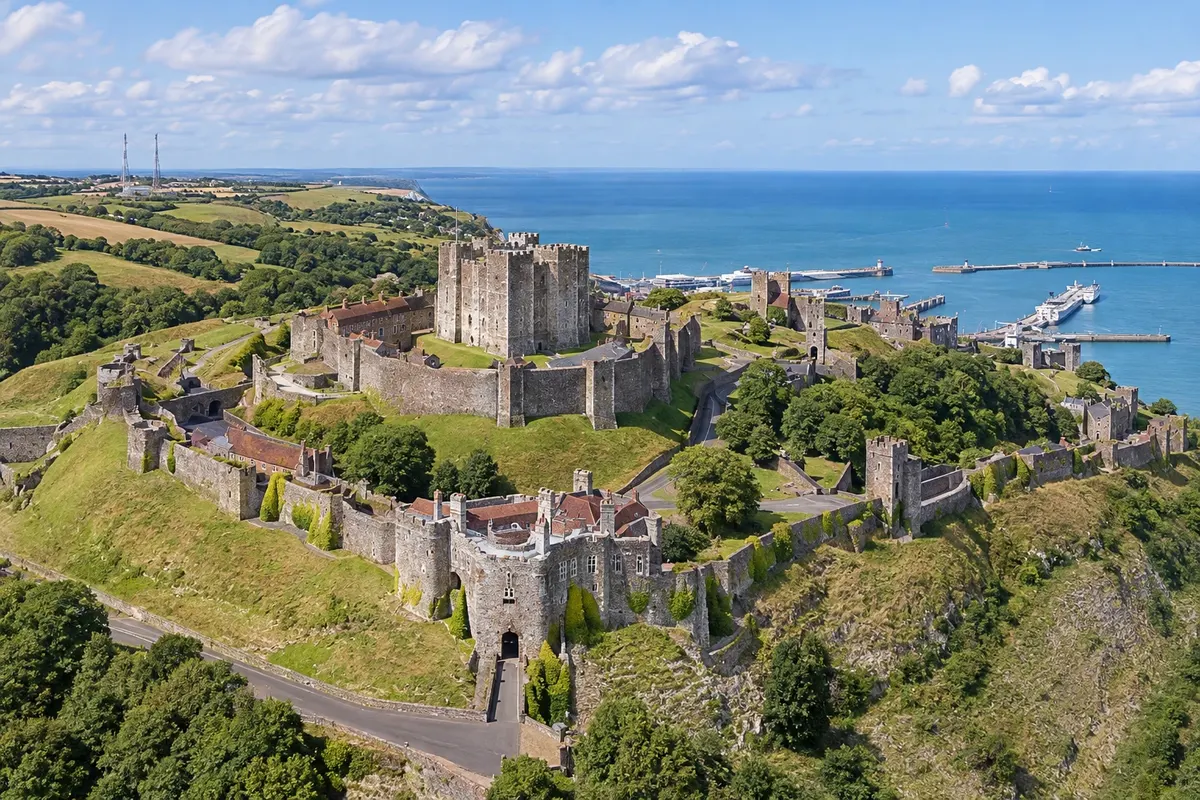
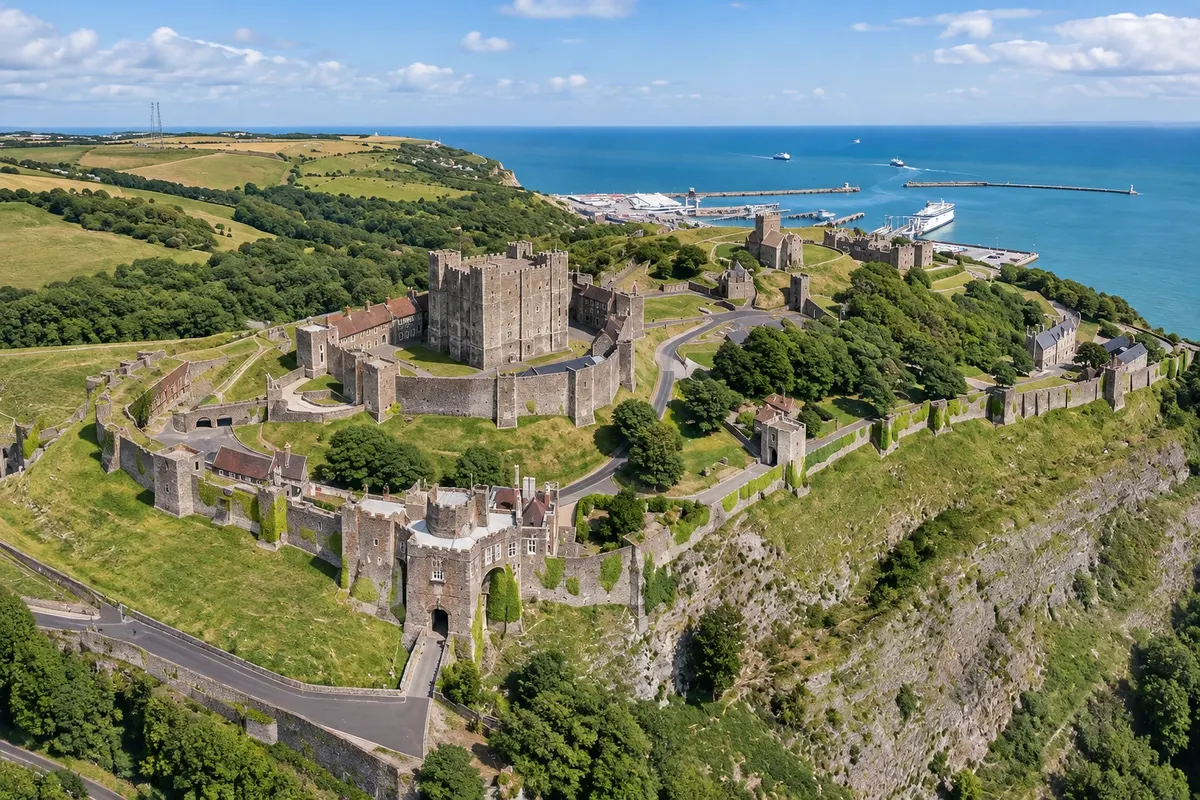
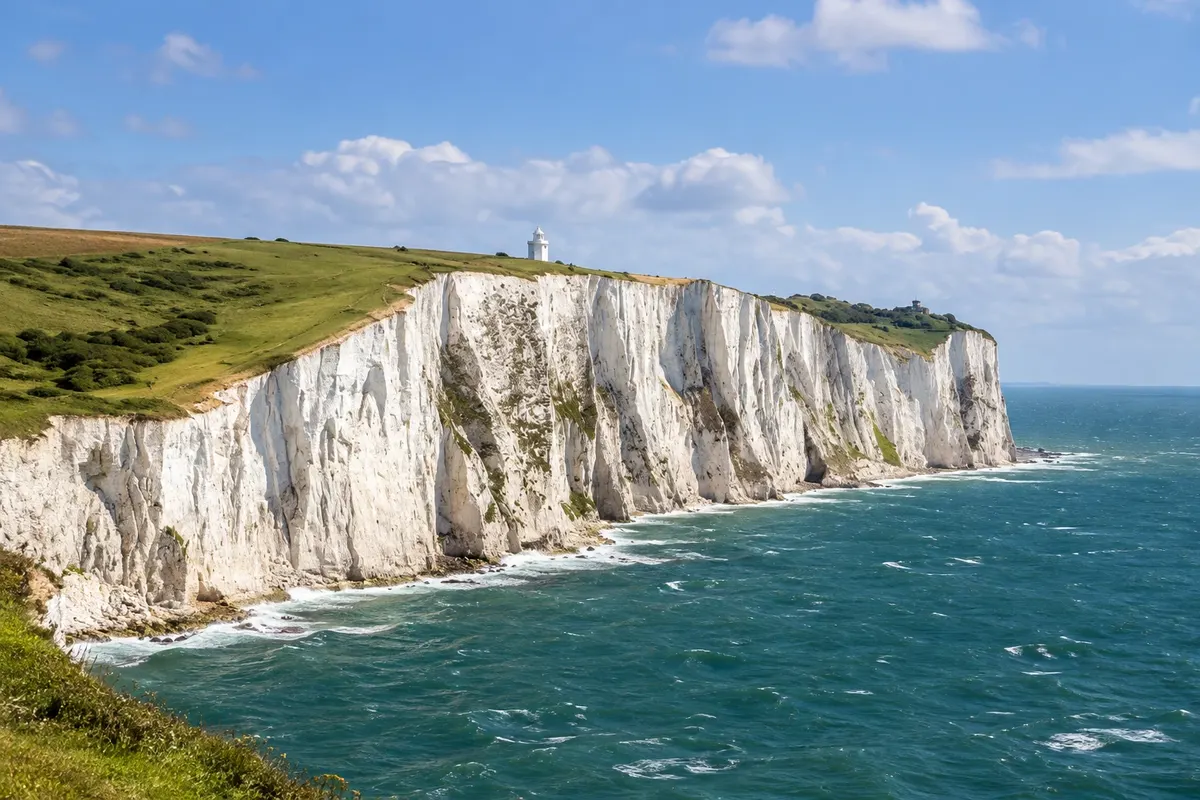
The medieval centre is largely surrounded by walls, with the Westgate gate, and is crossed by the River Stour, where boat trips run. Narrow streets like Mercery Lane have timber-framed houses with upper floors projecting over the pavement. About 27 km away is Dover, the port closest to France, with the Castelo de Dover, a 12th-century fortress built over Second World War tunnels, and the Falésias Brancas, chalk cliffs above the English Channel.
Dover is on the same line, and both towns fit into a two-day itinerary. On clear days you can see the French coast from the falésias, about 33 km away.
This destination brings together 2 cities: Canterbury, Dover.


 Brazil
 Argentina
 Chile
Chile Colombia
 Peru
Peru Uruguay
 Germany
 Belgium
 Spain
Spain France
 Greece
 the Netherlands
 Ireland
 Italy
Italy Luxembourg
 Portugal
 Switzerland