

 Brazil
 Argentina
 Chile
Chile Colombia
 Peru
Peru Uruguay
 Germany
 Belgium
 Spain
Spain France
 Greece
 the Netherlands
 Ireland
 Italy
Italy the United Kingdom
 Switzerland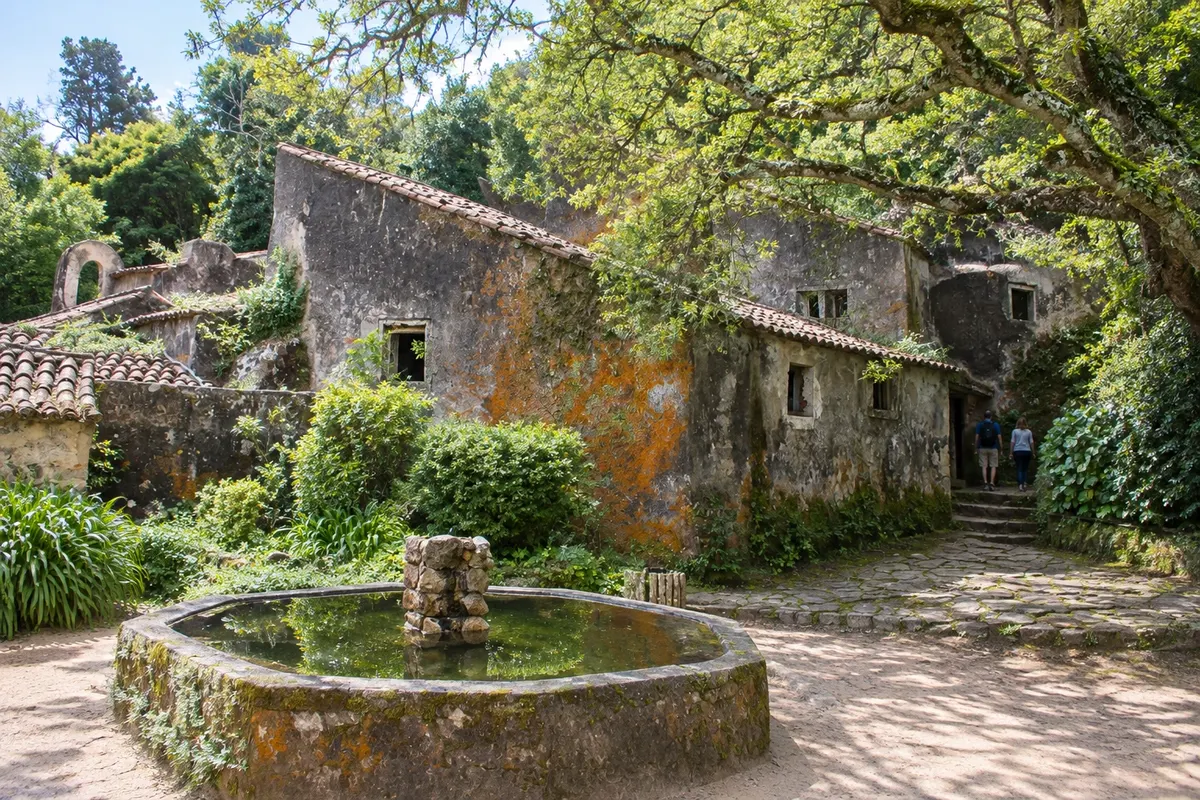
Convent · Sintra, Lisboa
Convento dos Capuchos
Small Franciscan convent from 1560 hidden in the mountain woodland, with tiny cork-lined cells and paths among rocks, showing the austere life of the friars.
Illustrative images. The pictures in this guide are illustrations based on the real place, not photographs, and may differ from it.

Discover
About Convento dos Capuchos
The Convento dos Capuchos was founded in 1560 by D. Álvaro de Castro for Franciscan friars, in an isolated area of the Serra de Sintra. The friars lived there until 1834, when religious orders were abolished in Portugal.
The convent is small and simple. The cells, chapel and refectory were fitted between large rocks, with low doors and narrow spaces.
To protect against cold and humidity, the walls and doors were lined with cork, which gave the place the nickname Convento da Cortiça.
Around it, the mountain woodland, with moss and rocks, completes the visit. The convent is part of the Parques de Sintra and has much less foot traffic than the palaces.
Before you go
Practical information
Cidade Turismo reviews its information regularly, but something may have changed. Check with the place before planning your trip.
How much time to set aside
From 45 minutes to an hour.
Best time
At any time of year; humid days enhance the moss and woodland. Check the opening hours before you go.
How to get there
It's in the middle of the hills, about 8 km from Sintra's center. Access is by car or taxi; there is no regular public transport to the door.
Tip
The doors and passages are low: watch your head. Combine it with Monserrate and Cabo da Roca, on the same side of the hills.
Official website
Get your questions answered
Frequently asked questions about Convento dos Capuchos
Why is it called Convento da Cortiça?
Because the walls and cell doors were lined with cork to protect against cold and damp.
When does Convento dos Capuchos date from?
It was founded in 1560 for Franciscan friars.
How to get to Convento dos Capuchos?
By car or taxi, through the hills; there is no regular transport to it.