

 Brazil
 Argentina
 Chile
Chile Colombia
 Peru
Peru Uruguay
 Germany
 Belgium
 Spain
Spain France
 Greece
 the Netherlands
 Ireland
 Italy
Italy Luxembourg
 the United Kingdom
 Switzerland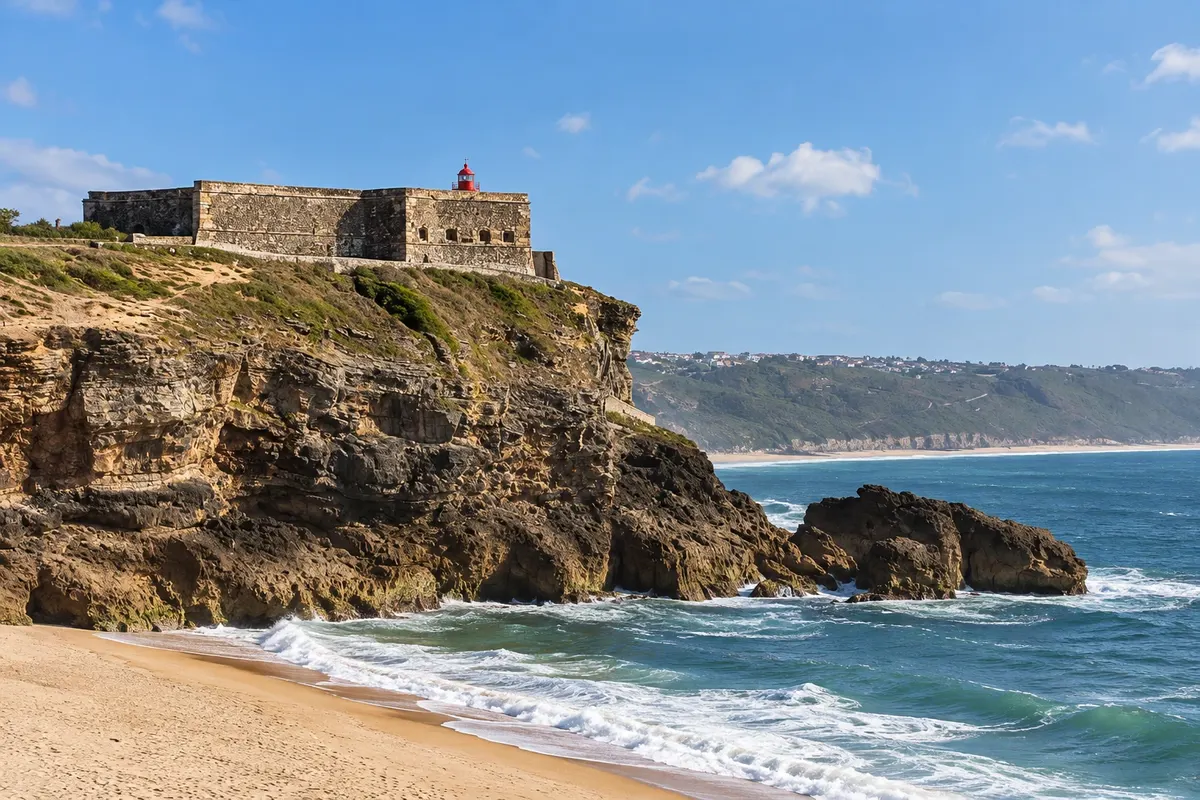
Fortress · Nazaré, Leiria
Forte de São Miguel Arcanjo
16th‑century fort at the tip of the promontory, with the Nazaré lighthouse. It’s the best spot to view the giant waves at Praia do Norte and houses an exhibition about big‑wave surfing.
Illustrative images. The pictures in this guide are illustrations based on the real place, not photographs, and may differ from it.

Discover
About Forte de São Miguel Arcanjo
The Forte de São Miguel Arcanjo was built in the 16th century on the promontory tip of Nazaré to defend the coast from pirates. The Nazaré lighthouse sits atop the fort.
To the north of the fort lies Praia do Norte, where in winter some of the largest surfed waves in the world often form. They are caused by the Canhão da Nazaré, an underwater canyon about 5 km deep that focuses wave energy close to the shore.
In 2011 Hawaiian surfer Garrett McNamara rode a wave there of roughly 24 meters, and Praia do Norte began to attract big‑wave surfers from around the world.
Inside the fort is an exhibition about big‑wave surfing, with surfboards from well‑known surfers and explanations about the underwater canyon. The ramparts provide a natural vantage point over the sea.
Before you go
Practical information
Cidade Turismo reviews its information regularly, but something may have changed. Check with the place before planning your trip.
How much time to set aside
30 minutes to an hour; longer on big‑wave days.
Best time
Between October and March, on days with strong swell, when big waves tend to appear. Surfers follow the forecasts; there is no set day.
How to get there
It sits on the promontory tip, about 1 km from the Sítio, on foot via a slope or by car, with limited parking.
Tip
On big‑wave days access gets crowded: arrive early. Respect the fences: the sea can reach the rocks.
Get your questions answered
Frequently asked questions about Forte de São Miguel Arcanjo
Why are Nazaré's waves so large?
Because of the Canhão da Nazaré, an underwater valley that concentrates the energy of the waves near the coast.
When do the giant waves usually appear?
Between October and March, on stormy days in the Atlantic.
What's inside the fort?
An exhibition about big-wave surfing and the Farol da Nazaré.