

 Brazil
 Argentina
 Chile
Chile Colombia
 Peru
Peru Uruguay
 Germany
 Belgium
 Spain
Spain France
 Greece
 the Netherlands
 Ireland
 Italy
Italy Luxembourg
 the United Kingdom
 Switzerland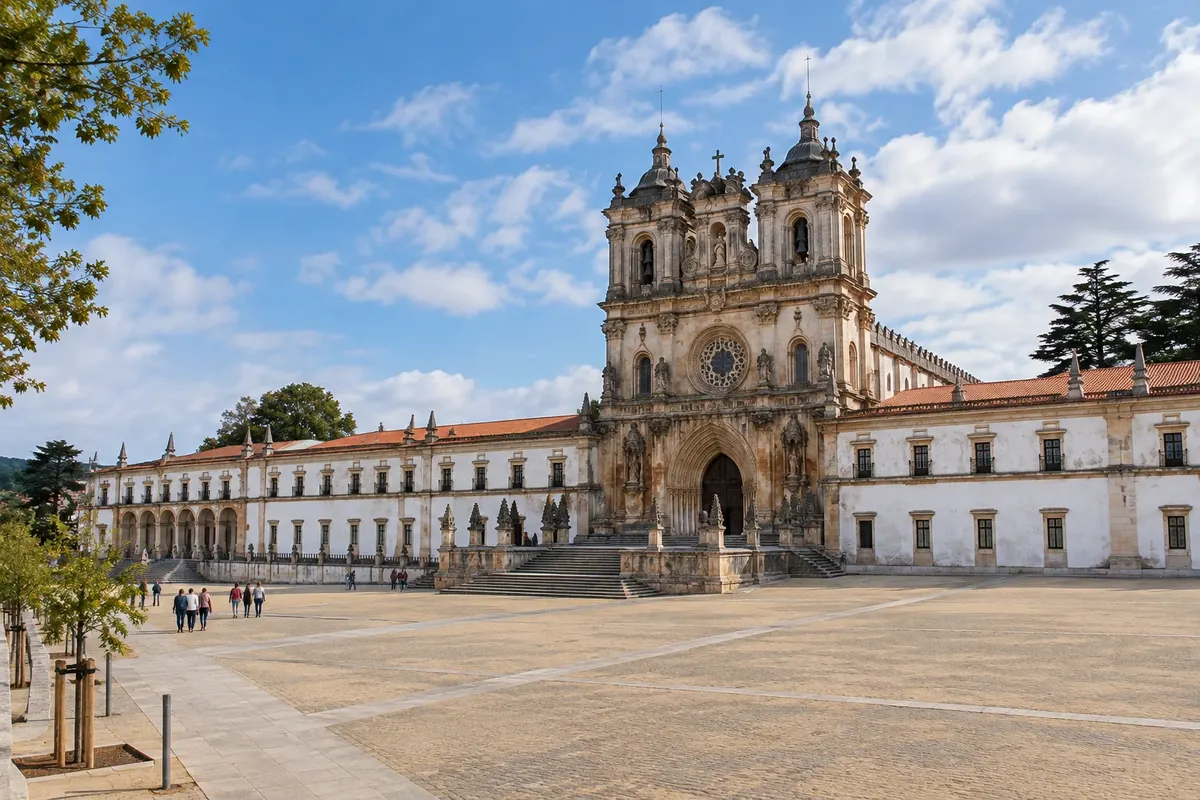
Monastery · Alcobaça, Leiria
Mosteiro de Alcobaça
Cistercian monastery founded in 1153 by D. Afonso Henriques, with the largest church in Portugal, the Gothic tombs of D. Pedro I and Inês de Castro, and a monumental kitchen. World Heritage site since 1989.
Illustrative images. The pictures in this guide are illustrations based on the real place, not photographs, and may differ from it.

Discover
About Mosteiro de Alcobaça
The Monastery of Santa Maria de Alcobaça was founded in 1153 by D. Afonso Henriques, the first king of Portugal, who donated the land to the monks of the Cister Order. The church, begun in 1178, is the largest in Portugal and one of the country's earliest Gothic works, with a high, sober and very well-lit nave.
In the transept are the tombs of D. Pedro I and Inês de Castro, carved in the 14th century. The story of the two is the best-known in Portugal: Inês, the prince's lover and later his wife, was murdered in 1355 by order of King D. Afonso IV; when Pedro ascended the throne, he declared her queen. The tombs were placed facing each other so that the two would see one another when they rise at the Last Judgment.
The Cloister of D. Dinis, or of Silence, has two levels. The kitchen, from the 18th century, impresses with its huge chimney clad in white tiles and with a water channel that ran across the floor, bringing live fish from the river.
The monastery was designated a World Heritage site by UNESCO in 1989. The Baroque façade facing the square hides the 12th-century Gothic church.
Before you go
Practical information
Cidade Turismo reviews its information regularly, but something may have changed. Check with the place before planning your trip.
How much time to set aside
From an hour and a half to two hours.
Best time
At opening or late in the afternoon, outside group tours. The monastery closes on some holidays: check before you go.
How to get there
It's on Alcobaça's central square, a few minutes' walk from the bus terminal.
Tip
The church has free admission; the ticket is for the cloister, the kitchen and the other areas. Allow time for the tombs of Pedro and Inês.
Get your questions answered
Frequently asked questions about Mosteiro de Alcobaça
Who is buried in the Mosteiro de Alcobaça?
D. Pedro I and Inês de Castro, in Gothic tombs placed facing each other.
Why are the tombs facing each other?
According to tradition, so that Pedro and Inês would see each other when they rise at the Last Judgment.
Is the monastery a World Heritage site?
Yes, since 1989.
What's special about the kitchen?
A huge chimney covered in tiles and a water channel that ran across the floor.