

 Brazil
 Argentina
 Chile
Chile Colombia
 Peru
Peru Uruguay
 Germany
 Belgium
 Spain
Spain France
 Greece
 the Netherlands
 Ireland
 Italy
Italy the United Kingdom
 Switzerland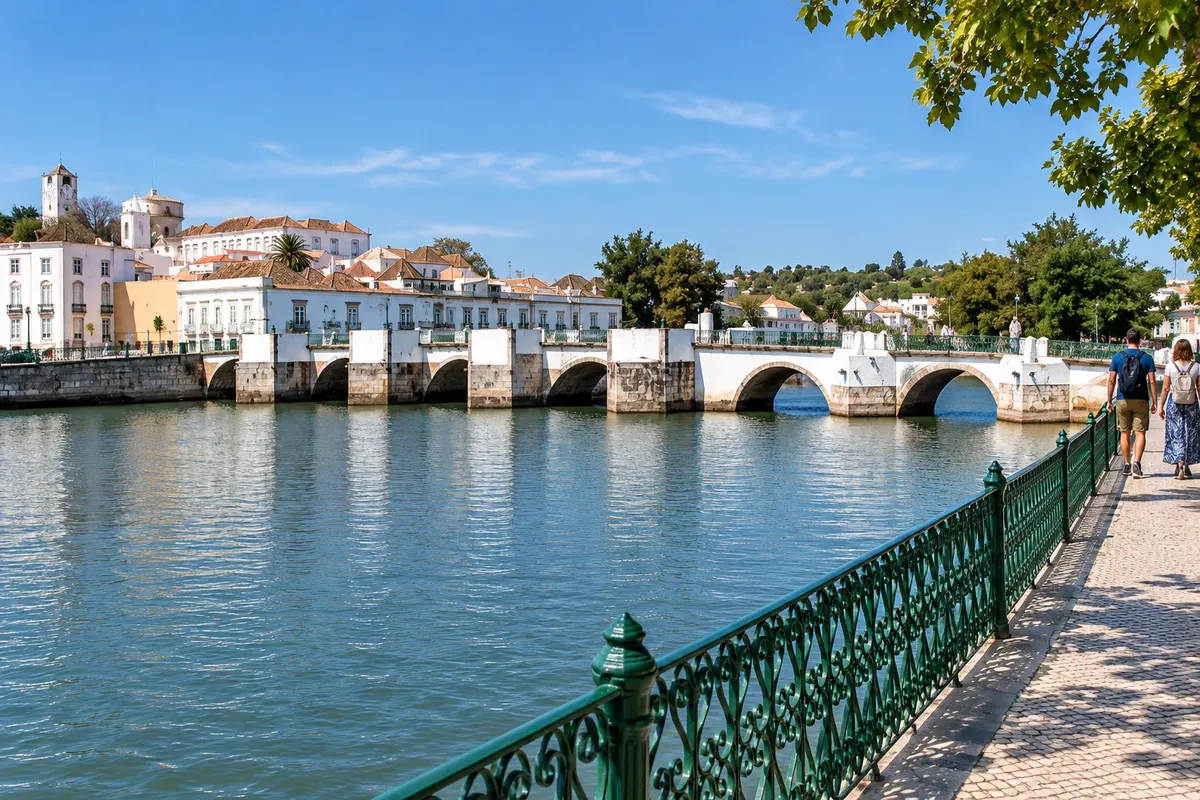
Historic center · Tavira, Faro
Centro Histórico de Tavira
White houses line both banks of the Rio Gilão, linked by the old seven-arched bridge, with the Praça da República, churches, the old market and the town's characteristic four-sloped roofs.
Illustrative images. The pictures in this guide are illustrations based on the real place, not photographs, and may differ from it.

Discover
About Centro Histórico de Tavira
Tavira spreads across both banks of the Rio Gilão, near the Ria Formosa. The centre is known for its white houses, iron balconies and four-sloped roofs, a typical local style.
The old stone bridge, with seven arches, links the banks. It is called the Roman bridge, but the present structure is mainly 17th century, rebuilt on older foundations, and today it is pedestrian-only.
Beside the bridge lies the Praça da República, with the Câmara Municipal and a riverside garden. Downriver, the old iron market has become a space for shops and restaurants.
The town has more than twenty churches, such as the Igreja da Misericórdia with its Renaissance portal, many of which lie on the route between the square and the castle.
Before you go
Practical information
Cidade Turismo reviews its information regularly, but something may have changed. Check with the place before planning your trip.
How much time to set aside
Two to three hours.
Best time
In the morning or late afternoon, outside the heat. In the evening the riverbank becomes pleasant for dinner.
How to get there
The centre is about 1 km on foot from Tavira Station.
Tip
Cross the old bridge on foot and walk along both banks of the Gilão. Notice the four-sloped roofs.
Get your questions answered
Frequently asked questions about Centro Histórico de Tavira
Is the Tavira bridge really Roman?
It is called that, but the current structure is mainly from the 17th century.
What are hipped roofs?
Roofs with four sloping sides, typical of Tavira.
Is the centre far from the station?
No, about 1 km on foot.