

 Brazil
 Argentina
 Chile
Chile Colombia
 Peru
Peru Uruguay
 Germany
 Belgium
 Spain
Spain France
 Greece
 the Netherlands
 Ireland
 Portugal
 the United Kingdom
 Switzerland
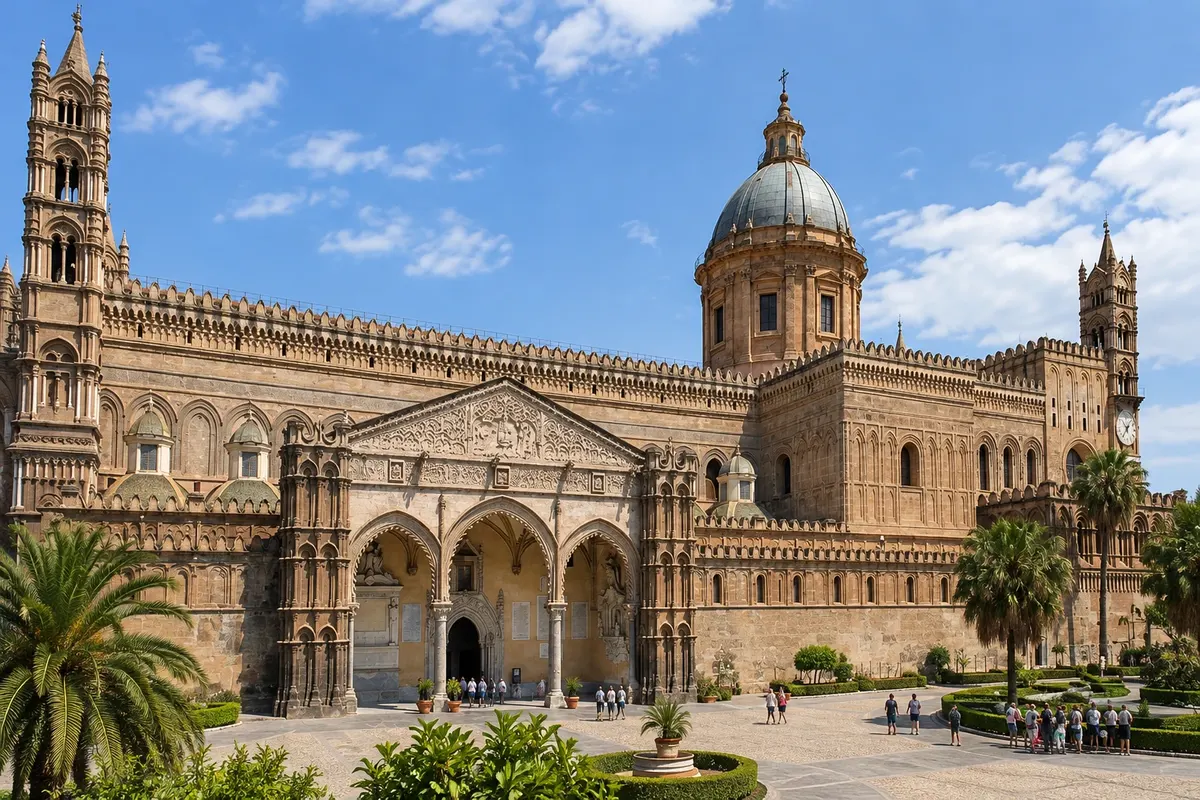
Cathedral
Cattedrale di Palermo
The cathedral of Palermo, built beginning in 1185, mixes Norman, Catalan Gothic and Neoclassical styles. It houses tombs of kings and emperors and the silver reliquary of Santa Rosália.
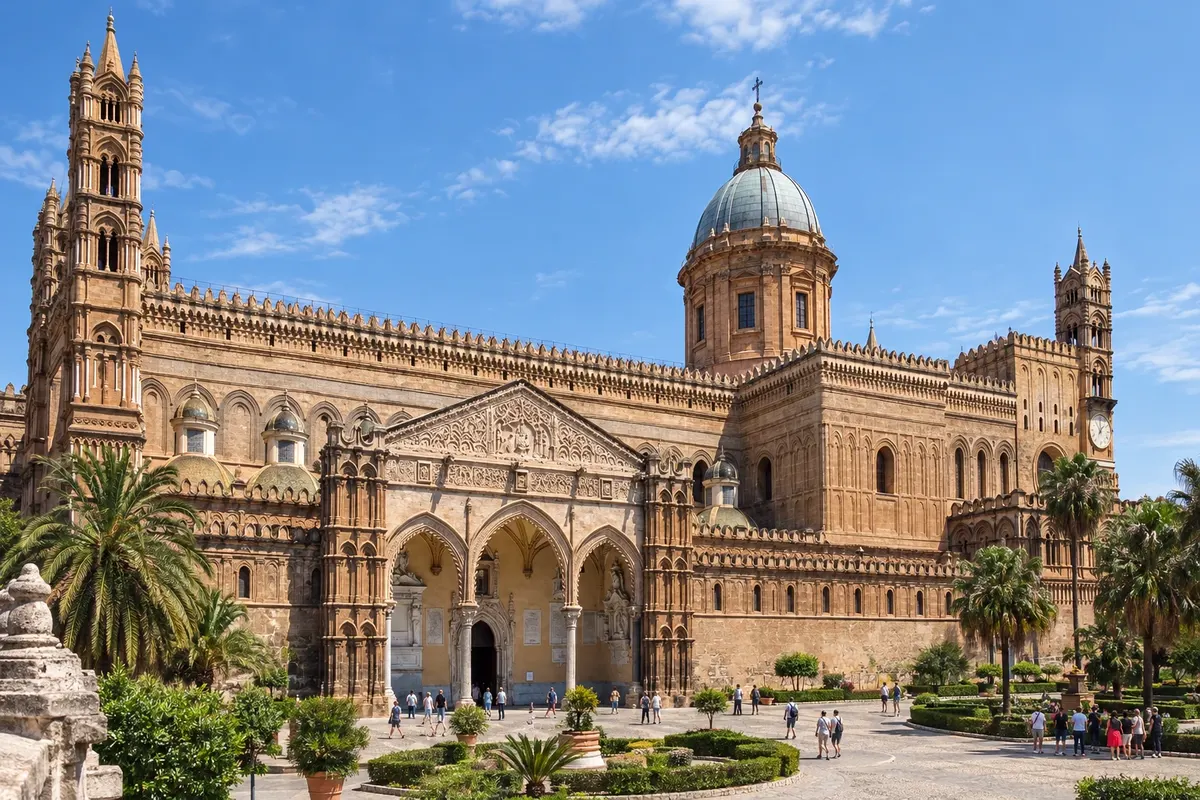
Sicília · Italy Capital
In the destination Sicília.
In the photo: Cattedrale di Palermo
Illustrative images. The pictures in this guide are illustrations based on the real place, not photographs, and may differ from it.
The city
Palermo is the capital of Sicily and the city of the Arab-Norman UNESCO World Heritage ensemble: the cathedral, the Palazzo dei Normanni with the Cappella Palatina, the Martorana, San Giovanni degli Eremiti, the Zisa and the Duomo di Monreale. It has the Quattro Canti, Piazza Pretoria, the Teatro Massimo, the museums of Palazzo Abatellis and Salinas, the Catacombe dei Cappuccini, the Ballarò market, the sanctuary of Santa Rosália and the beach of Mondello.
There's no accommodation in the guide yet in Palermo.
There are no restaurants in the guide yet in Palermo.
Know a good one? Recommend it to ushow to get there · how many days · itinerary · questions
The local experience
The cathedral of Palermo, built beginning in 1185, mixes Norman, Catalan Gothic and Neoclassical styles. It houses tombs of kings and emperors and the silver reliquary of Santa Rosália.
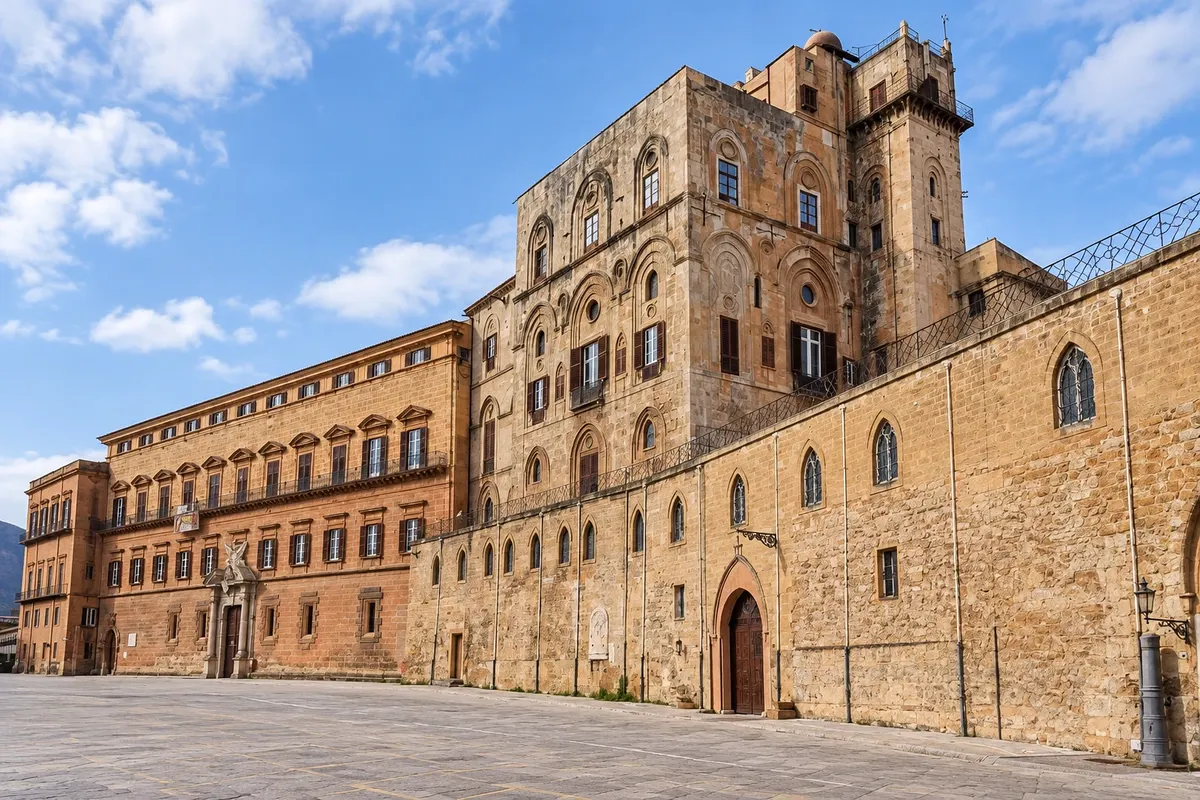
Royal palace of the Normans, seat of the Sicilian Regional Assembly. On the first floor is the Cappella Palatina, from 1140, covered in Byzantine mosaics and with a wooden ceiling in an Arabic style.
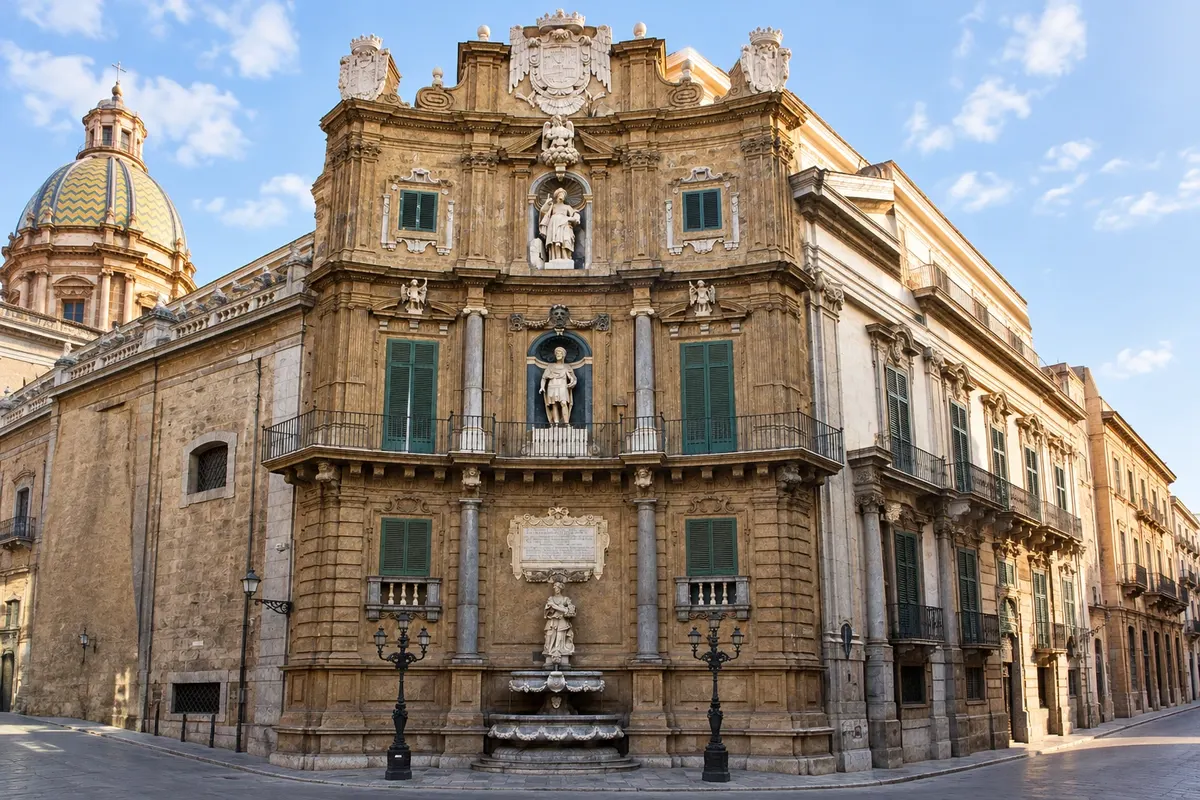
The baroque intersection of Palermo's two main streets, Via Maqueda and Corso Vittorio Emanuele, with four curved facades decorated with fountains, statues of kings and patron saints.
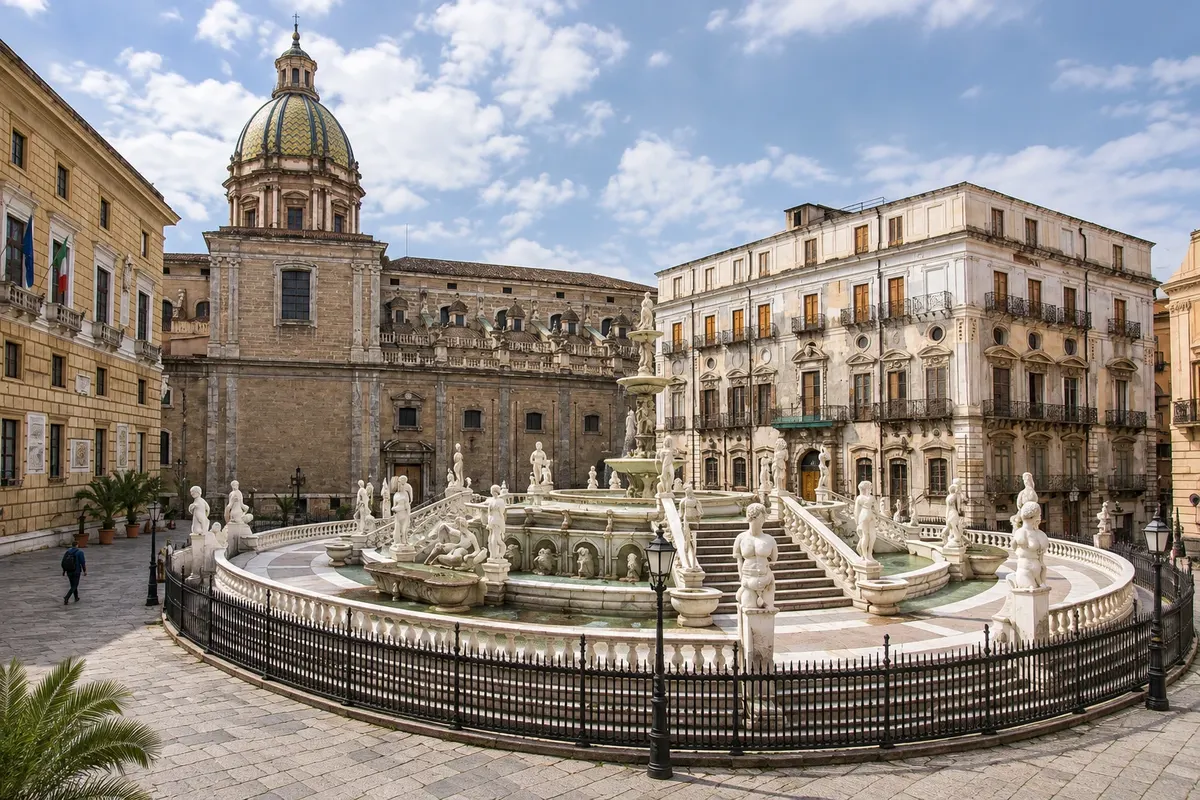
Square next to the Quattro Canti featuring the Fontana Pretoria, a Renaissance marble fountain with dozens of statues, made in Florence in the 16th century and reassembled in Palermo.
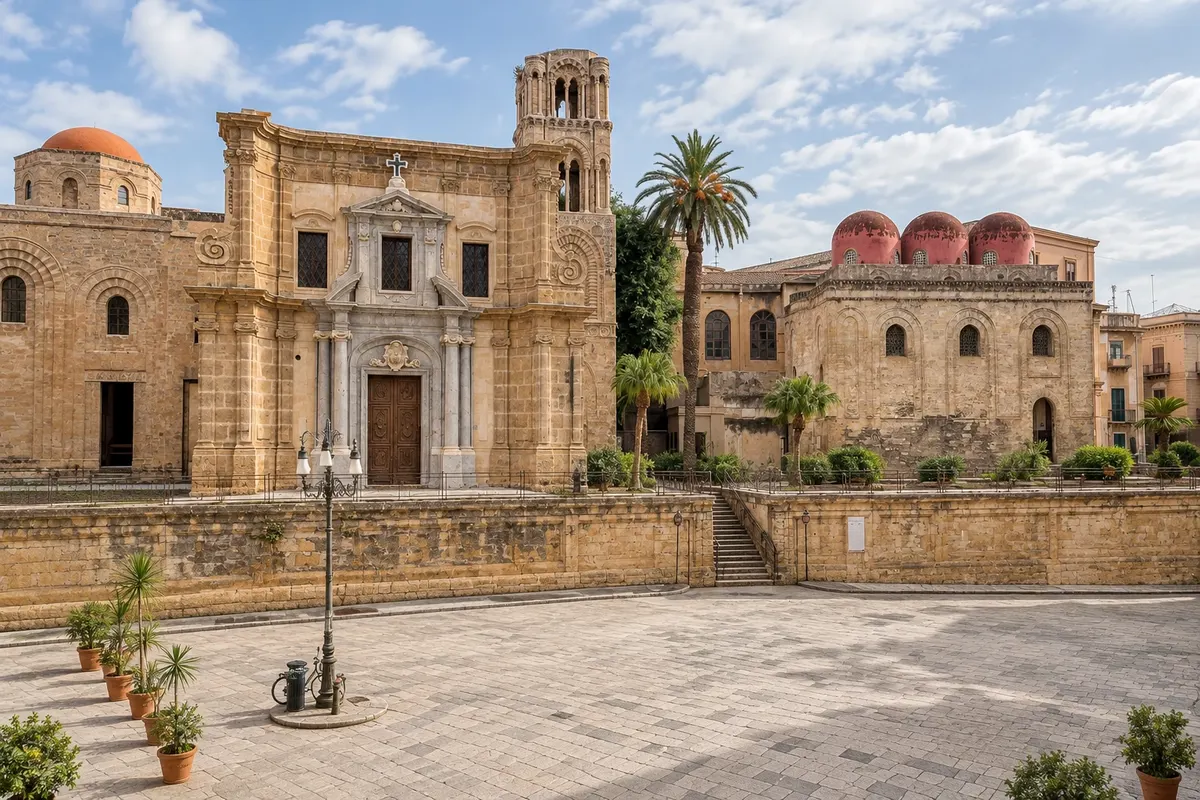
The Martorana, a church from 1143 with Byzantine gold-background mosaics, including Rogério II crowned by Christ. Beside it, the small San Cataldo, with red domes.
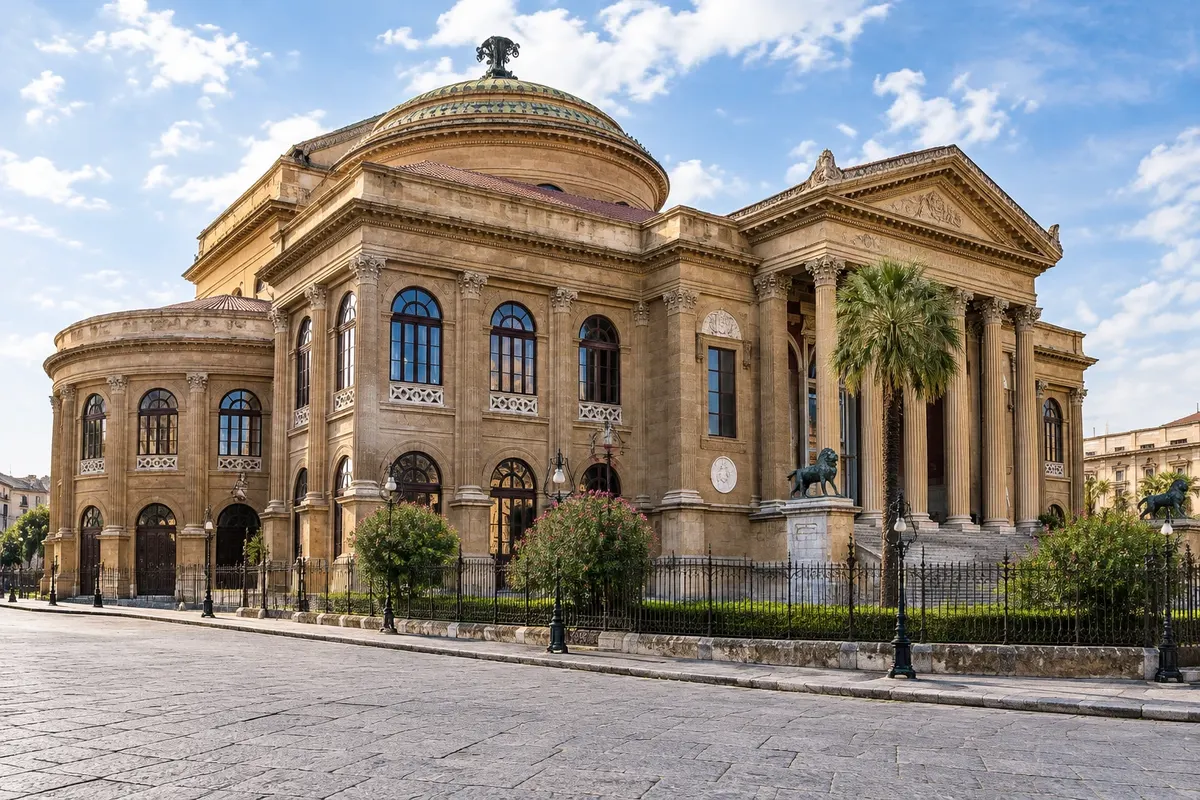
The Teatro Massimo Vittorio Emanuele, opened in 1897, is the largest opera house in Italy. Guided tours visit the auditorium, the boxes and the Pompeian hall.
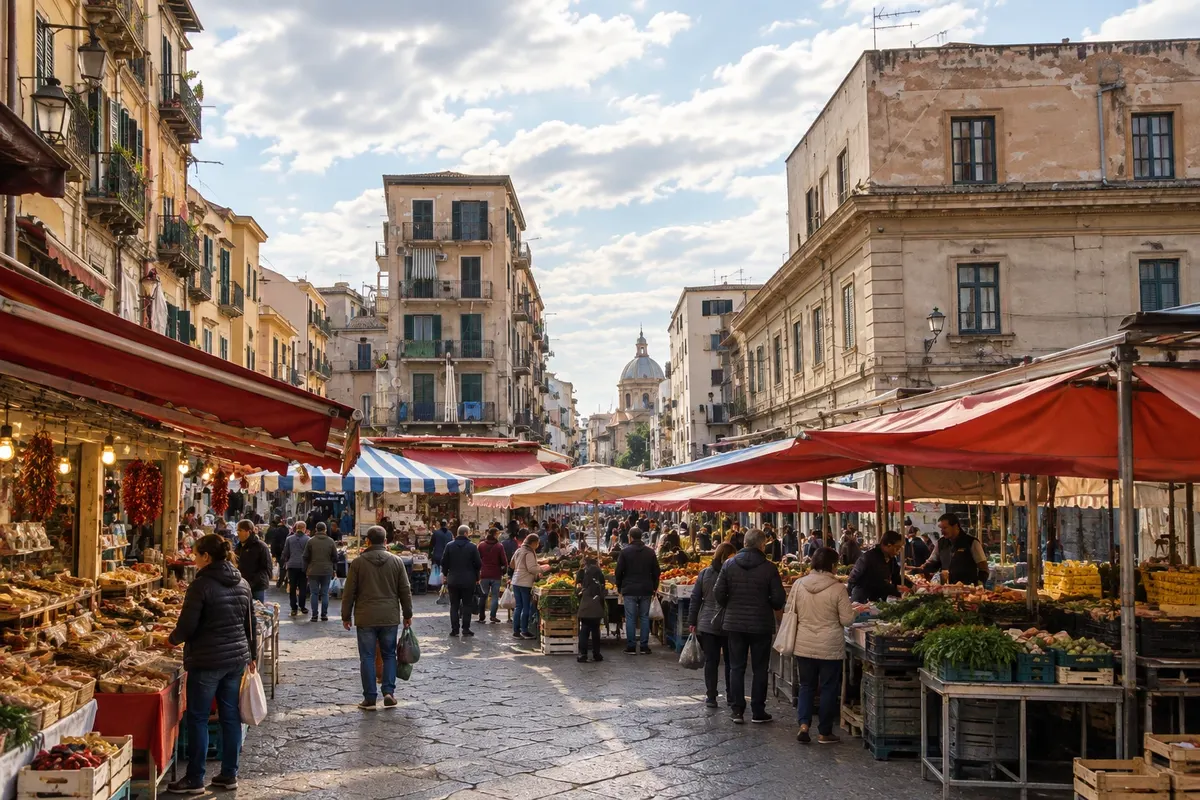
The oldest street market in Palermo, in the Albergheria district, with stalls selling fish, fruit and vegetables and Sicilian street food such as panelle and arancine.
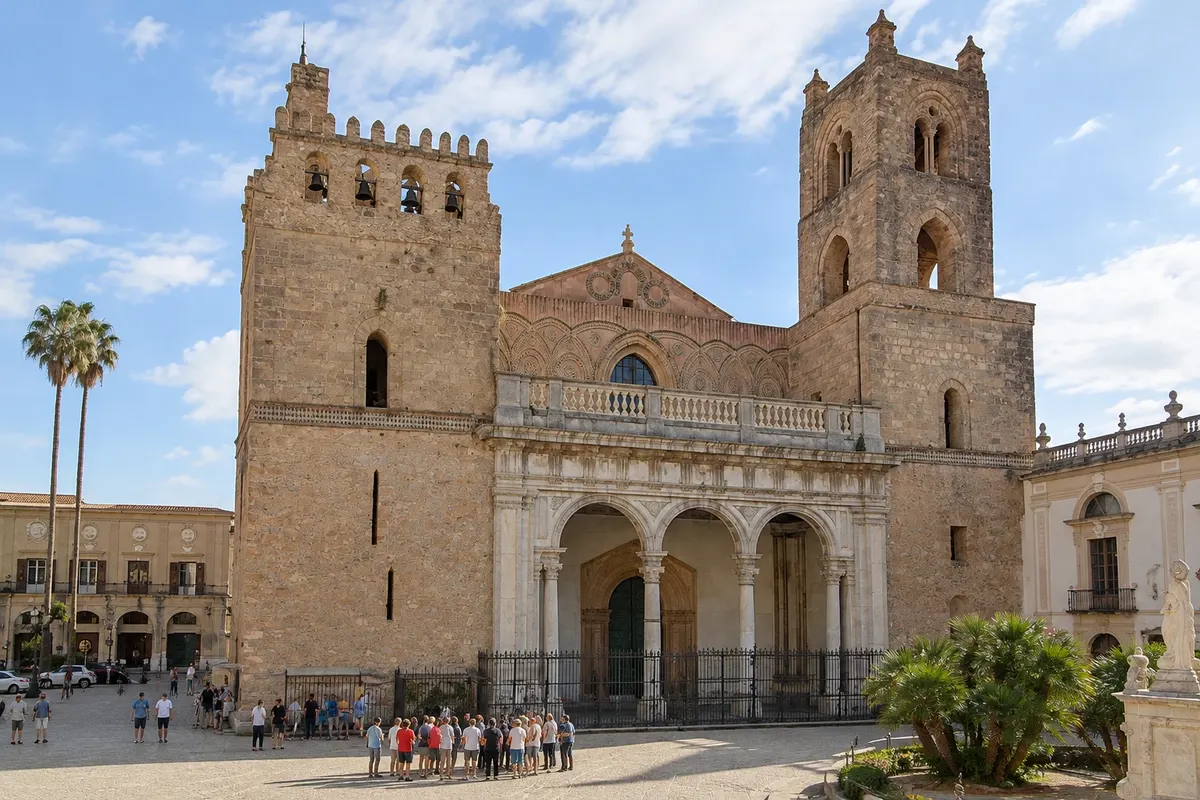
The Norman cathedral of Monreale, 8 km from Palermo, begun in 1174 by Guilherme II, has about 6,400 m² of gold mosaics and a cloister with 228 double columns.
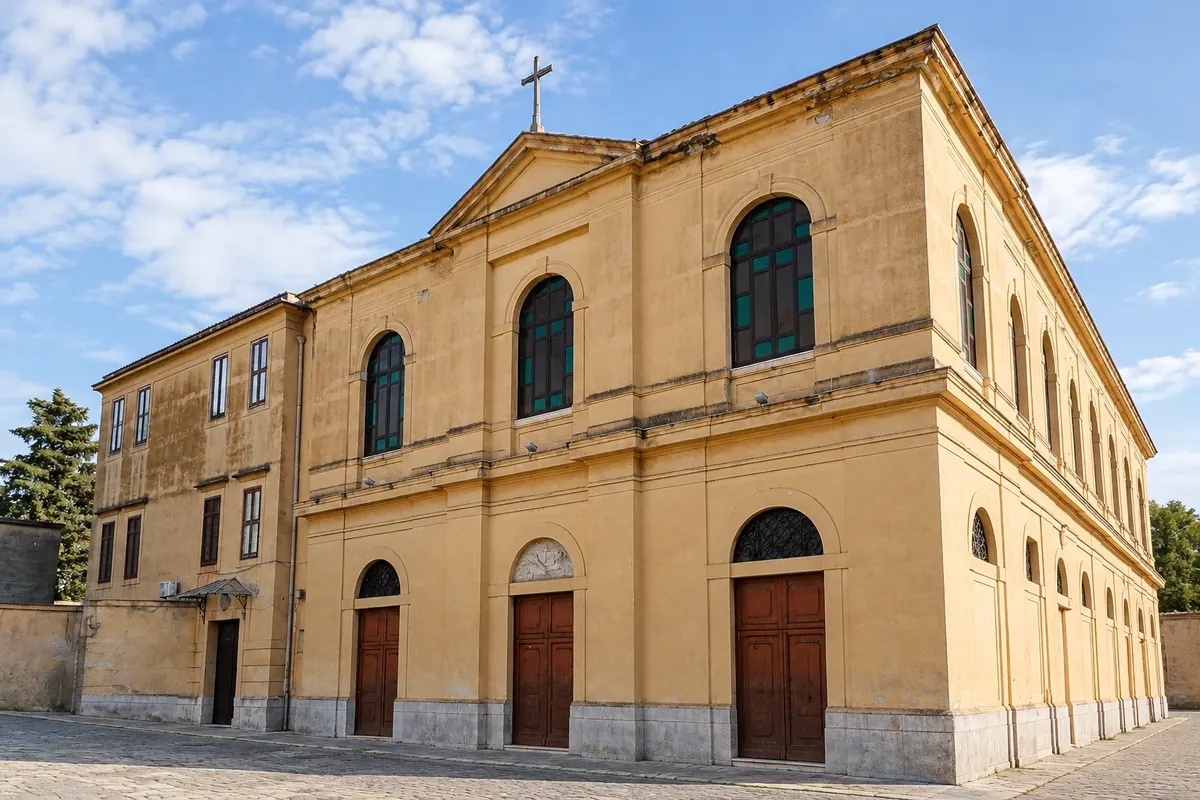
Underground galleries of the Capuchin convent where, from the late 16th century to the early 20th century, thousands of dressed bodies were preserved and displayed.
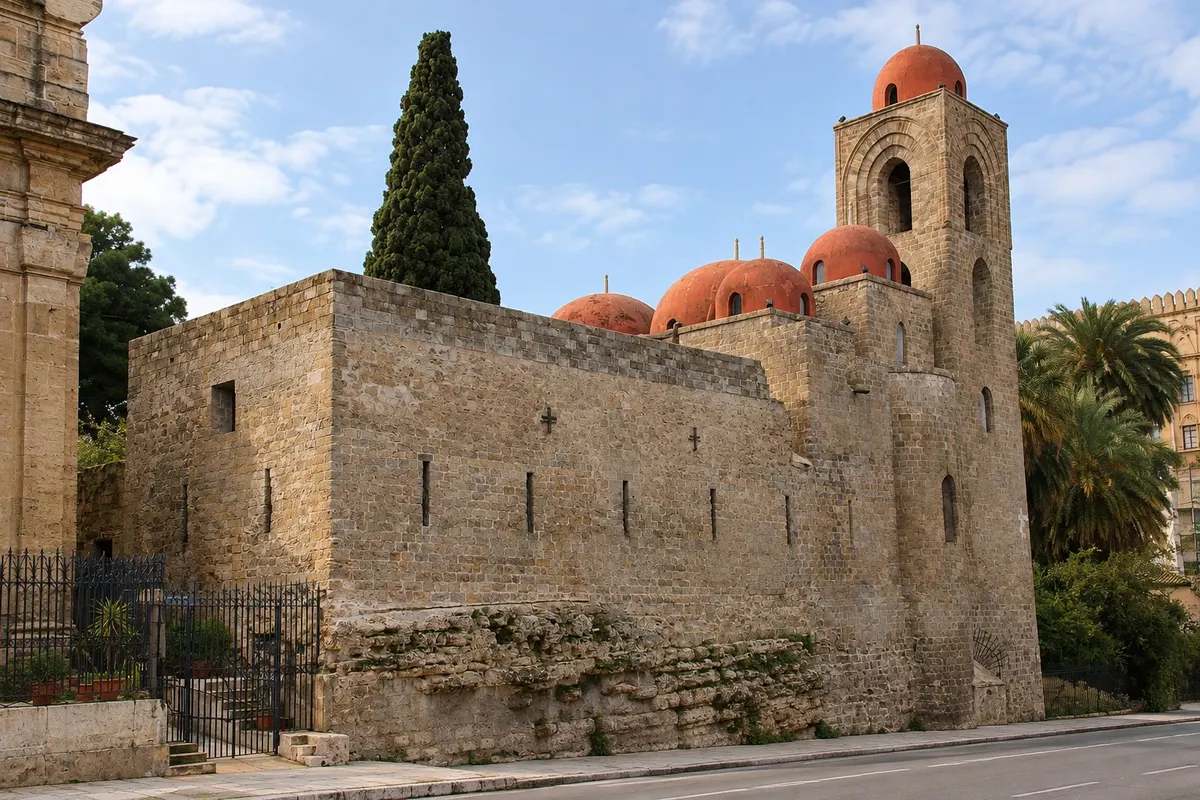
12th-century Norman church, with five red domes of Arabic inspiration and a small cloister with a garden of orange trees and Mediterranean plants.
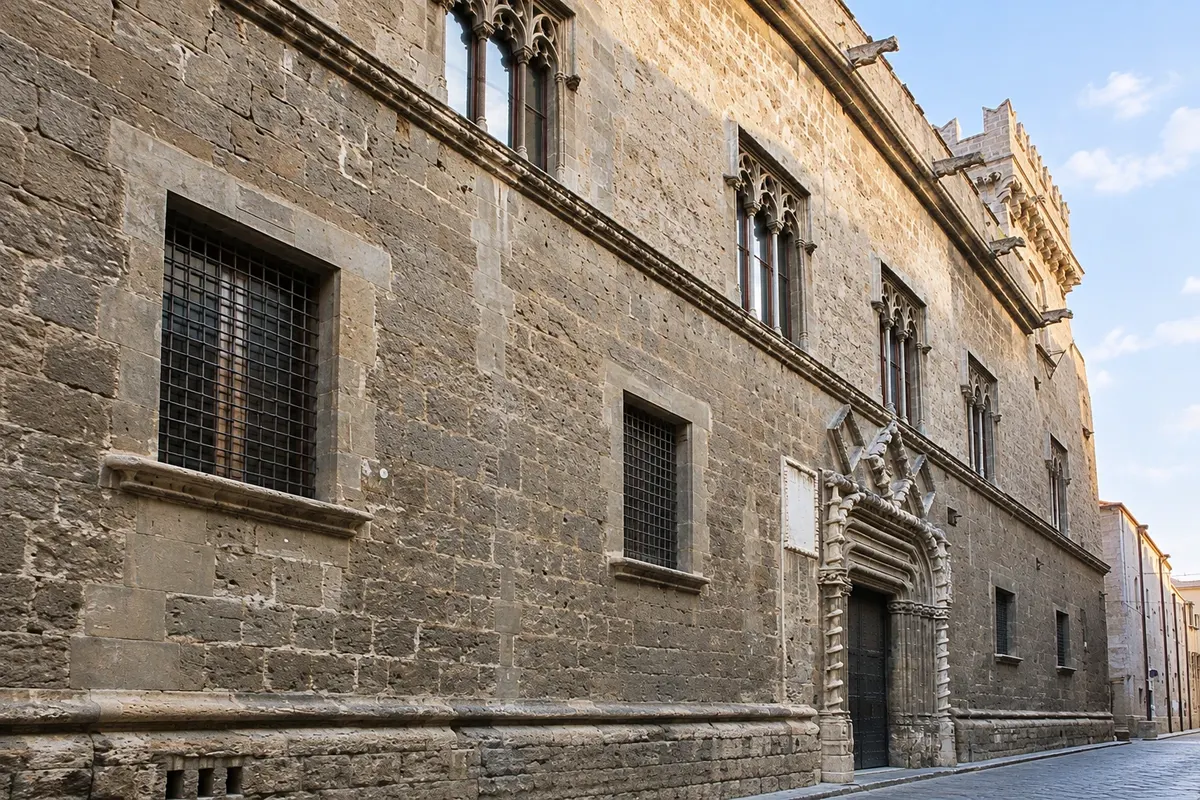
15th‑century Catalan‑Gothic palace that houses the Galleria Regionale della Sicilia, including the Triumph of Death fresco and Antonello da Messina's Virgin Annunciate.
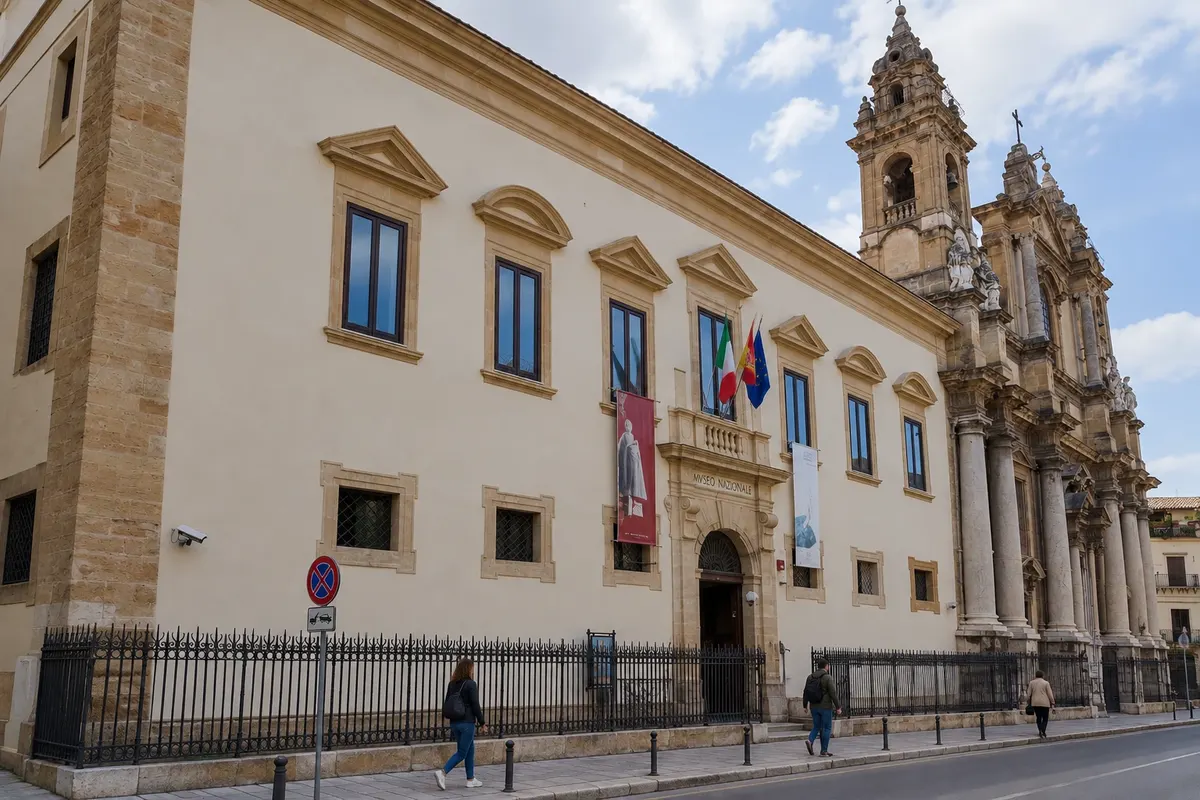
One of Italy's main archaeological museums, in the former convent of the Olivella, with the metopes from the temples of Selinunte and Punic, Greek and Roman pieces from Sicily.
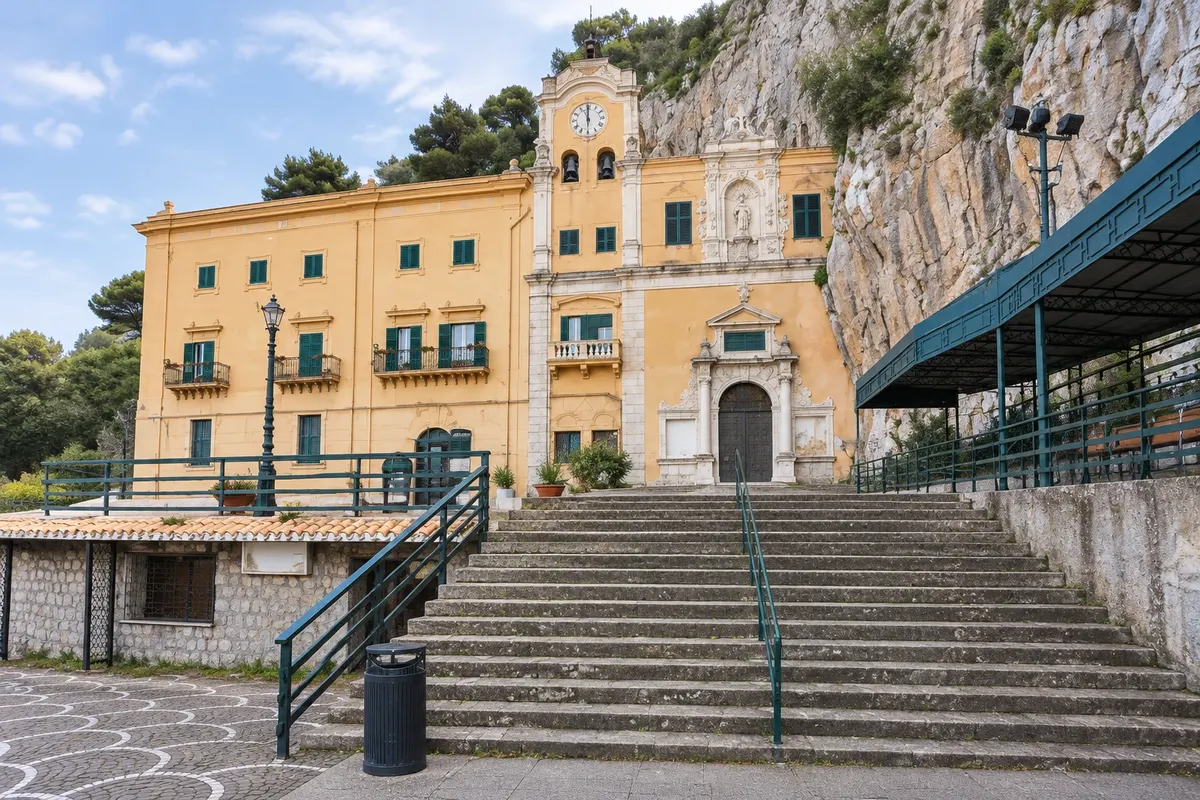
Sanctuary in a grotto on Monte Pellegrino, 600 meters above Palermo, where Saint Rosalia lived, patron saint of the city. The road up there has views over the gulf.
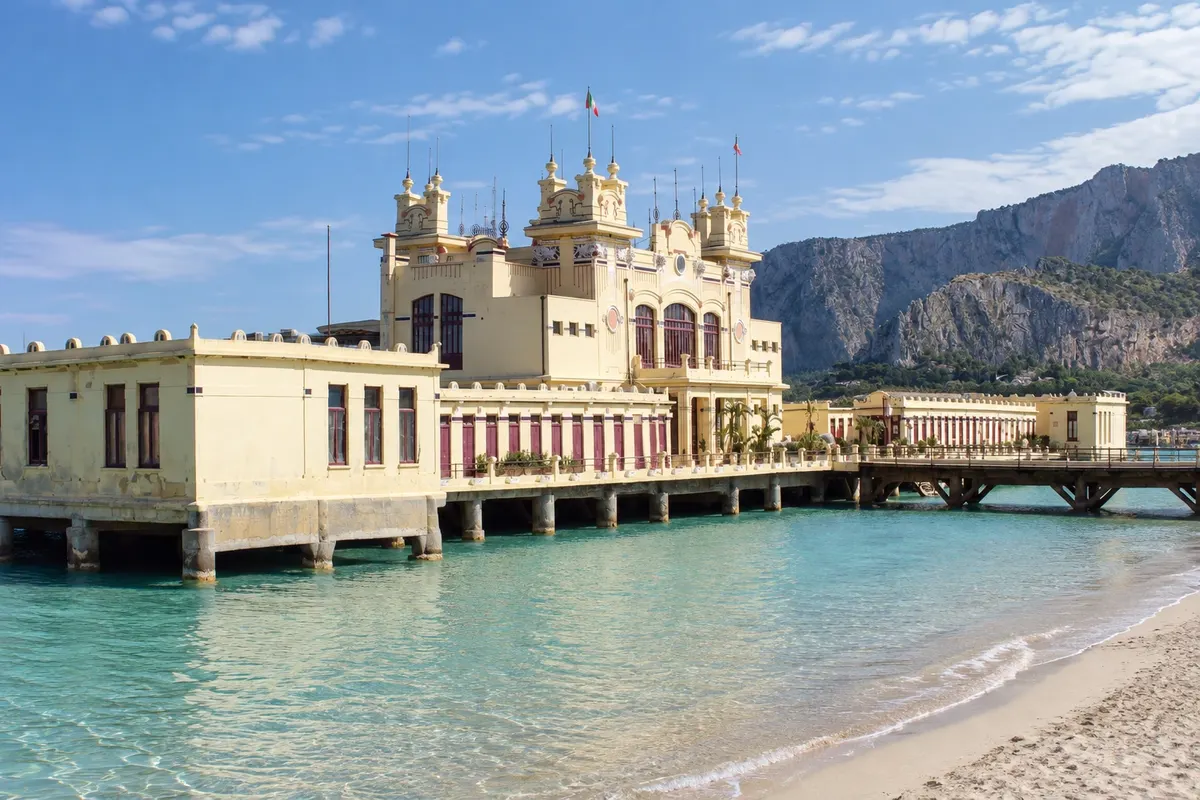
Palermo's beach, in a gulf between Monte Pellegrino and Monte Gallo, with pale sand, clear water and the old liberty‑style bathing establishment built over the sea.
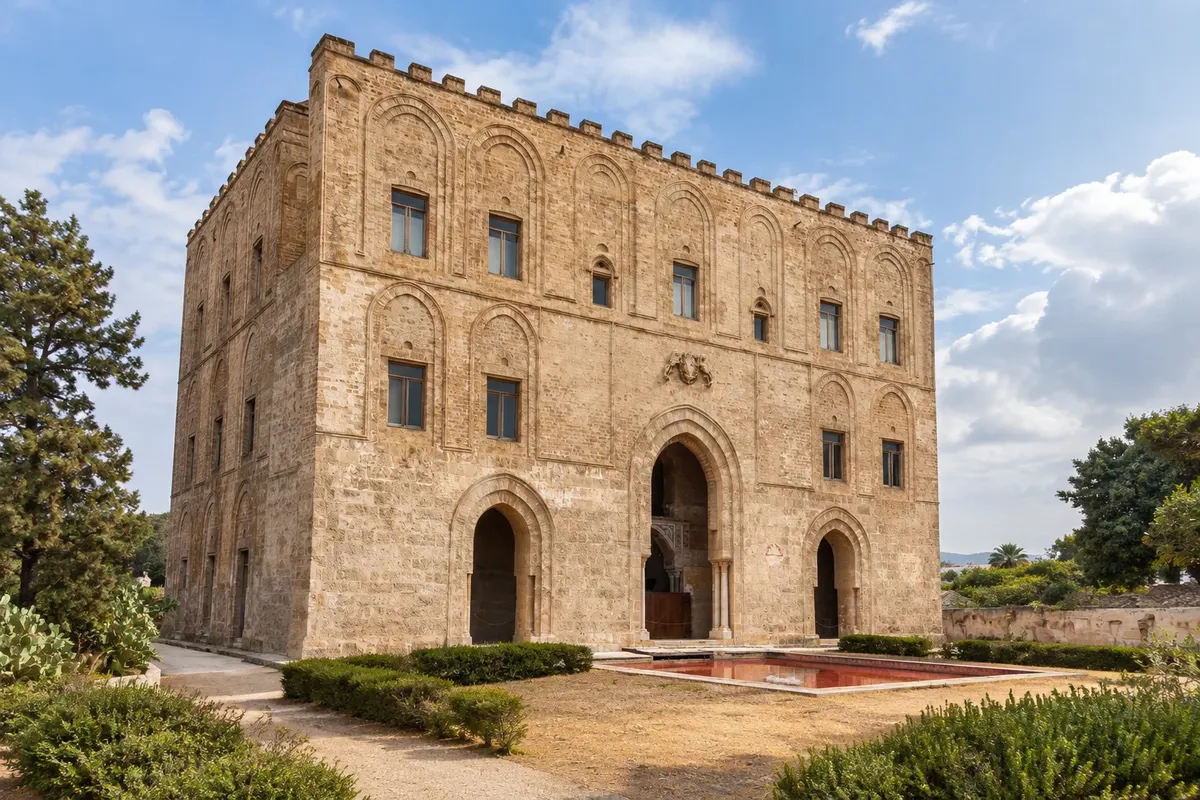
Summer palace of the Norman kings, begun by Guilherme I around 1165, with the muqarnas fountain room. It houses a museum of Islamic art.