

 Brazil
 Argentina
 Chile
Chile Colombia
 Peru
Peru Uruguay
 Germany
 Belgium
 Spain
Spain France
 Greece
 the Netherlands
 Ireland
 Portugal
 the United Kingdom
 Switzerland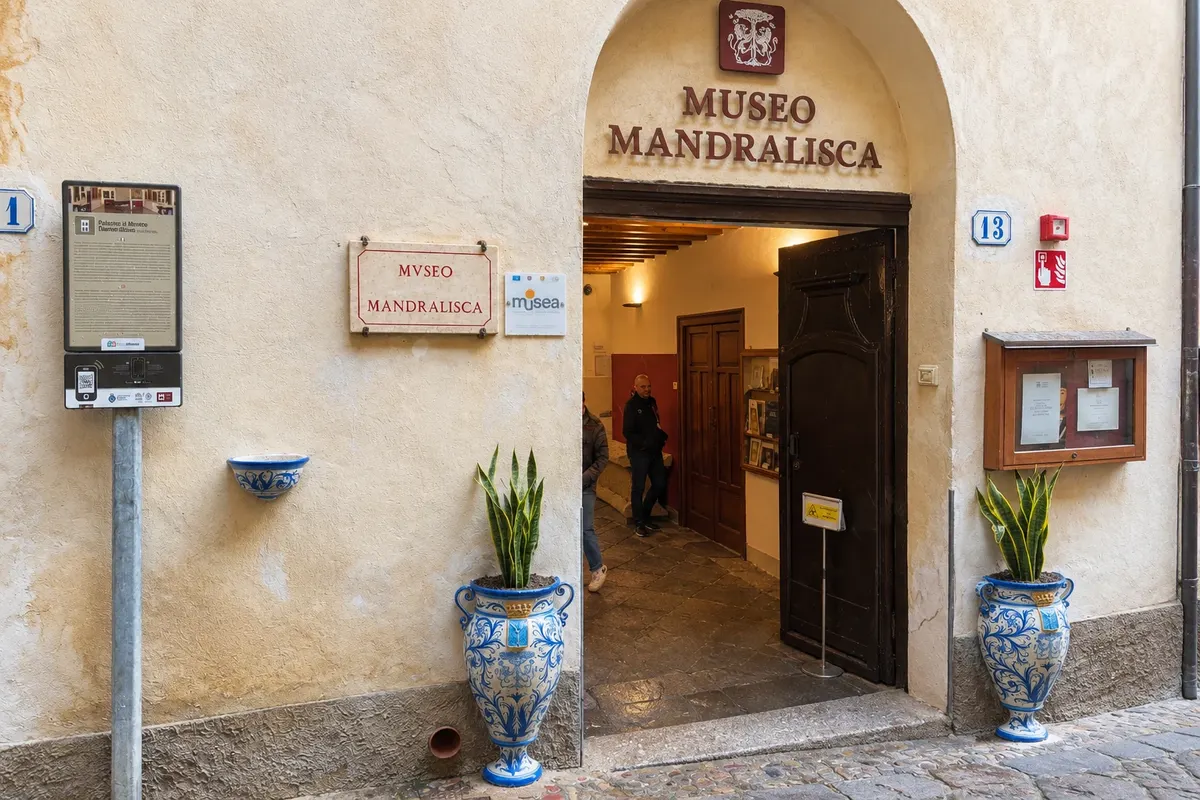
Museum · Cefalù, Sicília
Museo Mandralisca
Museum in the house of Baron Enrico Pirajno di Mandralisca, with Antonello da Messina's Portrait of an Unknown Man, a Greek krater with a tuna seller and collections of shells.
Illustrative images. The pictures in this guide are illustrations based on the real place, not photographs, and may differ from it.

Discover
About Museo Mandralisca
The Museo Mandralisca occupies the house of Baron Enrico Pirajno di Mandralisca, a 19th-century collector and naturalist who assembled art, archaeology, coins and shells and bequeathed everything to the city.
The best-known work is the Portrait of an Unknown Man by Antonello da Messina, painted around 1465–1476. The man with the ironic smile became a symbol of Sicily and inspired Vincenzo Consolo's novel. Another well-known piece is a 4th-century BC Greek krater showing a tuna seller arguing with a customer, a rare depiction of the fish trade in Antiquity.
The museum is on Via Mandralisca, between the Duomo and the sea. A few steps away, on Via Vittorio Emanuele, is the lavatoio medievale, a stone wash-house with steps that descend to the spouts where the Cefalino river runs to the sea, used by washerwomen until the 20th century.
Before you go
Practical information
Cidade Turismo reviews its information regularly, but something may have changed. Check with the place before planning your trip.
How much time to set aside
About 45 minutes to 1 hour; plus 15 minutes for the lavatoio.
Best time
At midday, to avoid the sun, or on a day with rough seas.
How to get there
It's on Via Mandralisca, about a 2-minute walk from the Piazza del Duomo. The lavatoio is about 3 minutes from there, down to Via Vittorio Emanuele.
Tip
Antonello's portrait is small: allow time to look at it up close. Check opening hours, which are usually longer in summer.
Get your questions answered
Frequently asked questions about Museo Mandralisca
What is the most important work in the museum?
The Portrait of an Unknown Man by Antonello da Messina, from the 15th century.
What is the lavatoio medievale?
A stone public wash-house next to the Cefalino river where women washed clothes. It's a few steps from the museum and there is no charge to enter.
How long does the visit take?
About an hour, combining the museum and the lavatoio.