

 Brazil
 Argentina
 Chile
Chile Colombia
 Peru
Peru Uruguay
 Germany
 Belgium
 Spain
Spain France
 Greece
 the Netherlands
 Ireland
 Portugal
 the United Kingdom
 Switzerland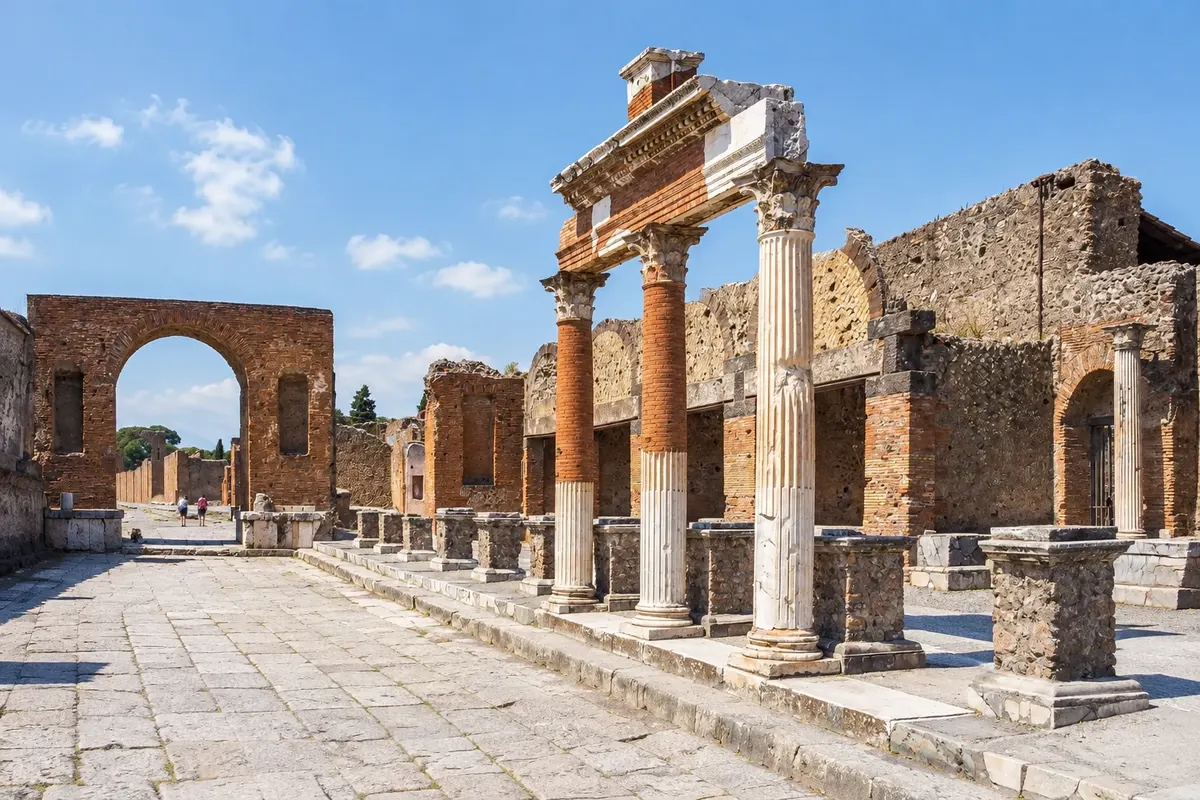
Archaeological site · Pompeia, Campânia
Parco Archeologico di Pompei
The Roman city buried by the eruption of Vesuvius in 79 AD, with streets, houses, baths, theatres and an amphitheatre. UNESCO World Heritage.
Illustrative images. The pictures in this guide are illustrations based on the real place, not photographs, and may differ from it.

Discover
About Parco Archeologico di Pompei
Pompeia was a prosperous Roman town, with a river port, trade and wealthy houses, when Vesuvius erupted in 79 AD. In a few hours the town was covered by ash and pumice, and later by clouds of gas and hot material. The layer preserved streets, painted walls, charred loaves of bread and the voids left by bodies, which 19th-century archaeologists filled with plaster.
Excavations began in 1748, under the Bourbon, and continue to this day. The visitable area is huge: the Forum, with the temple of Jupiter and Vesuvius in the background; the Stabian Baths; the Grande Theatre; the amphitheatre, the oldest known in the Roman world; bakeries with ovens and millstones; the lupanar; and houses such as the Casa del Fauno, from which the Alexander mosaic came, and the House of the Vettii, with restored frescoes.
Pompeia, Herculano and Oplontis were inscribed together as a World Heritage Site by UNESCO in 1997. Many original pieces are in the Museo Archeologico Nazionale of Naples, which helps explain why some houses appear empty.
Tickets are nominal and there is a daily visitor limit, with morning and afternoon entry slots. There is a ticket just for the ancient town and another that includes the suburban villas, like the Villa dei Misteri. Buy in advance on the official website and bring the ID used for the purchase.
Before you go
Practical information
Cidade Turismo reviews its information regularly, but something may have changed. Check with the place before planning your trip.
How much time to set aside
At least four hours for the essentials. A full day to see everything at a relaxed pace, including the Villa dei Misteri.
Best time
Arrive at opening time: the morning is cooler and the site has almost no shade. In summer, avoid midday. Spring and autumn are usually the best times to visit.
How to get there
From Naples, the Circumvesuviana (Napoli–Sorrento line) takes about 35 to 40 minutes to Pompei Scavi – Villa dei Misteri station, a few steps from the Porta Marina entrance. The Piazza Anfiteatro entrance is on the side of the modern town.
Tip
Bring water, a hat and sunscreen, and wear closed shoes: the streets have large, uneven stones. Download the official map beforehand and choose a route; you can't see everything in one day. Large suitcases are not permitted.
Official website
Get your questions answered
Frequently asked questions about Parco Archeologico di Pompei
Do I need to buy a ticket in advance for Pompeia?
It's recommended. Tickets are nominal, there is a daily limit on entries and time slots in the morning and afternoon. Buy on the official website and bring the ID used for the purchase.
How long does the visit take?
At least four hours for the main site; a whole day to see it at a relaxed pace, including the Villa dei Misteri.
How to get from Naples to Pompeia?
By Circumvesuviana, Napoli–Sorrento line, to Pompei Scavi – Villa dei Misteri station, in about 35 to 40 minutes.
Is it worth going to the Museo Archeologico in Naples as well?
Yes. Many mosaics, frescoes and objects found in Pompeia are there.