

 Brazil
 Argentina
 Chile
Chile Colombia
 Peru
Peru Uruguay
 Germany
 Belgium
 Spain
Spain France
 Greece
 the Netherlands
 Ireland
 Portugal
 the United Kingdom
 Switzerland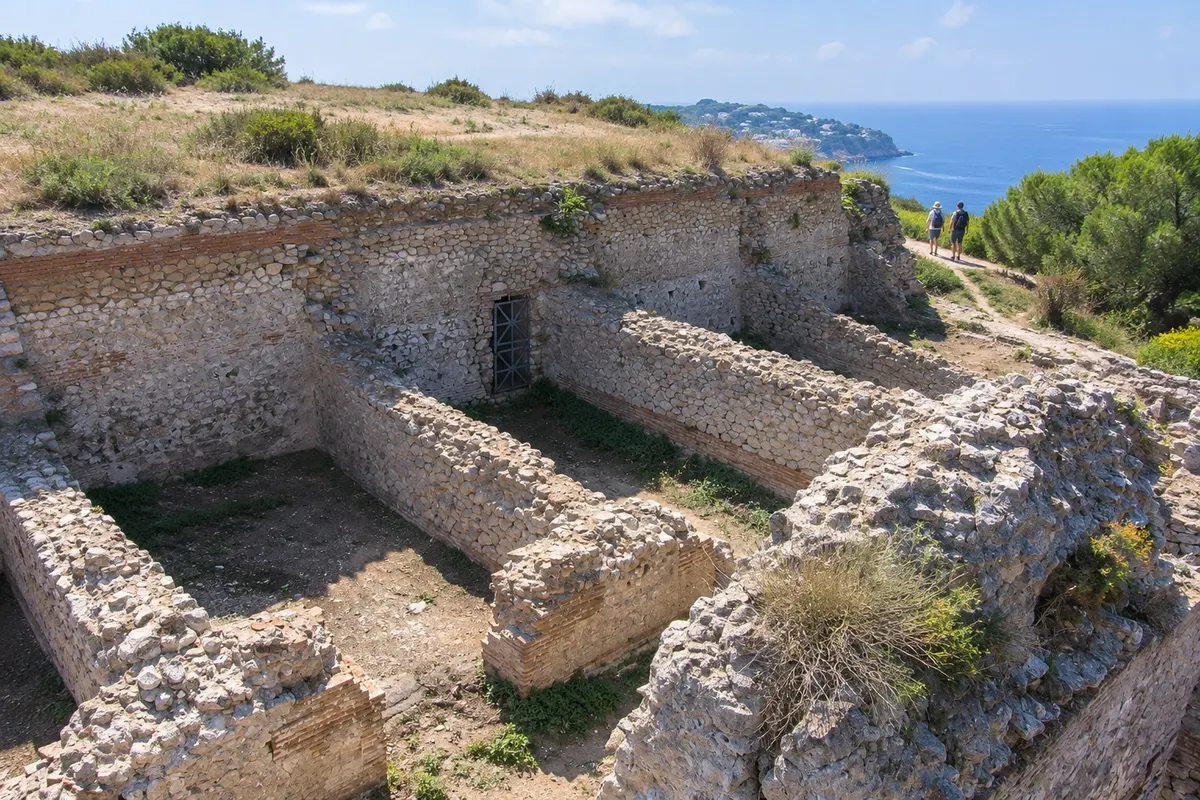
Ruins · Capri, Campânia
Villa Jovis
Ruins of the largest villa of emperor Tibério, on the top of Monte Tiberio, at the northeastern tip of the island, overlooking the golfo de Nápoles.
Illustrative images. The pictures in this guide are illustrations based on the real place, not photographs, and may differ from it.

Discover
About Villa Jovis
Emperor Tiberius governed Rome from Capri between 27 and 37 AD. Of the twelve villas attributed to him on the island, Villa Jovis was the largest. It sits atop Monte Tiberio, more than 300 meters above the sea, at Capri's northeast tip.
The ruins show large cisterns that stored rainwater, remains of baths, halls and corridors, and the loggia that looked out over the gulf. Beside it stands the small church of Santa Maria del Soccorso, with a terrace facing the Sorrento peninsula.
Near the villa is the Salto di Tiberio, a cliff from which, according to Roman historians, the emperor ordered those who fell from favor to be thrown. Today it is a protected viewpoint.
Before you go
Practical information
Cidade Turismo reviews its information regularly, but something may have changed. Check with the place before planning your trip.
How much time to set aside
About one hour on site, plus a 40–50 minute uphill walk from the Piazzetta.
Best time
Early in the morning or late afternoon to avoid the heat on the climb. Check opening days before you go.
How to get there
On foot only: from the Piazzetta follow Via Le Botteghe, Via Croce and Via Tiberio — a 40–50 minute uphill walk through houses and gardens.
Tip
Bring water and wear comfortable shoes; there's no bus up there. The walk is the least crowded excursion on the island.
Official website
Get your questions answered
Frequently asked questions about Villa Jovis
How to reach Villa Jovis?
On foot only, by a 40–50 minute climb from the Piazzetta.
Who lived in Villa Jovis?
Emperor Tiberius, who governed the Roman Empire from Capri in his later years.
What is the Salto di Tiberio?
A cliff near the villa, now a viewpoint, from which, according to ancient authors, Tiberius ordered his enemies to be thrown.