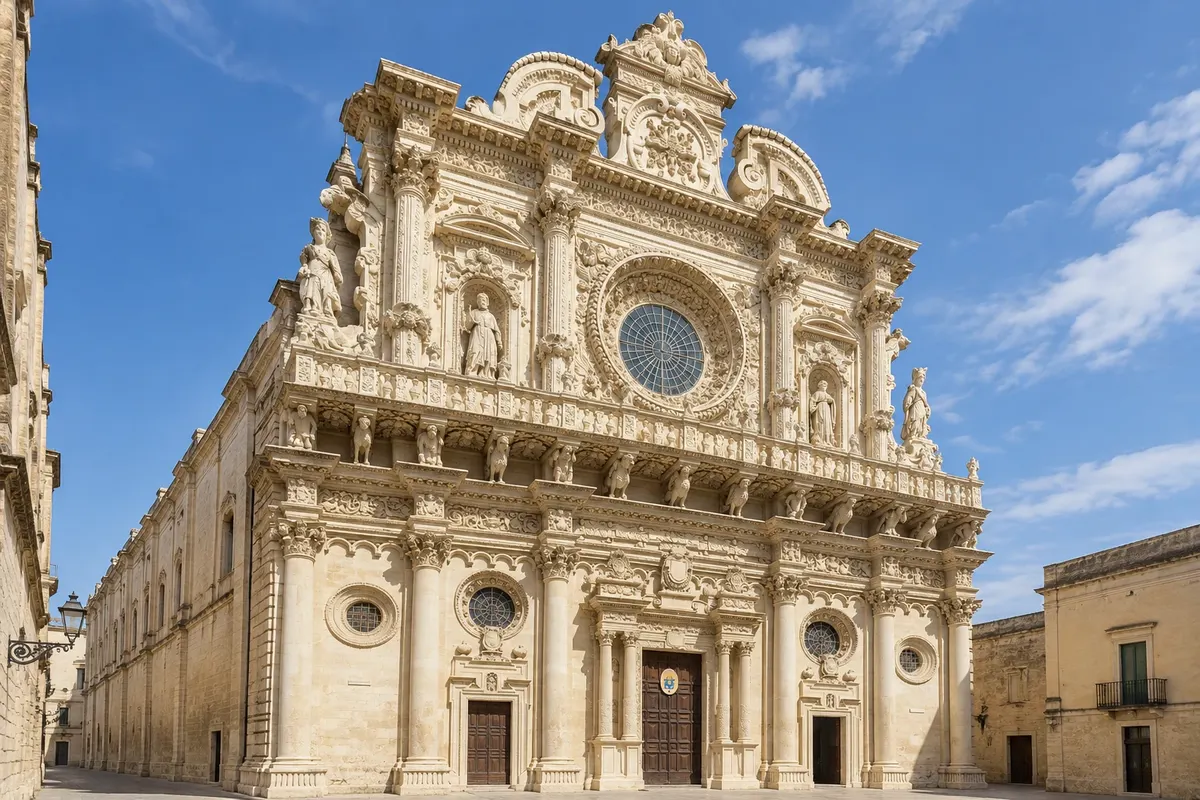
Basilica di Santa Croce
16th–17th century basilica considered the masterpiece of the barroco leccese, with a façade full of grotesque figures, animals and a large rose window. Beside it is the former convent of the Celestines.
Apúlia · Italy
In the destination Apúlia and Matera.
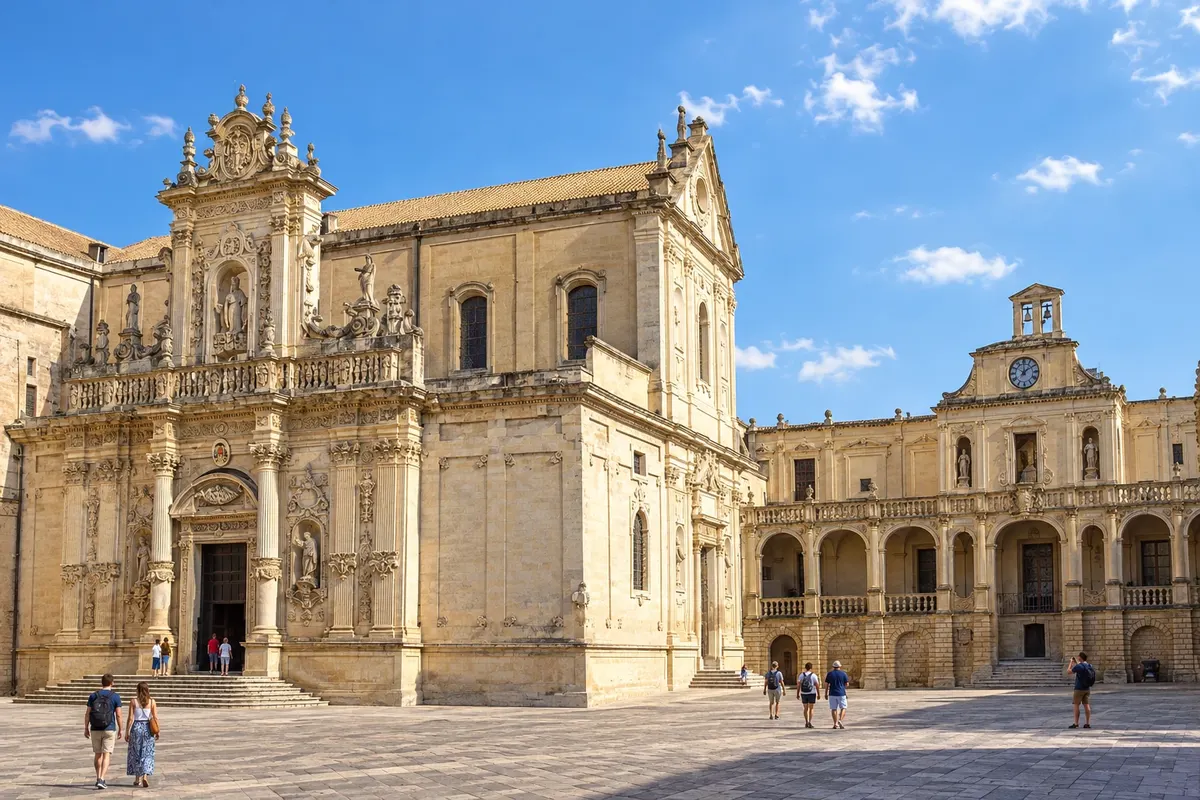
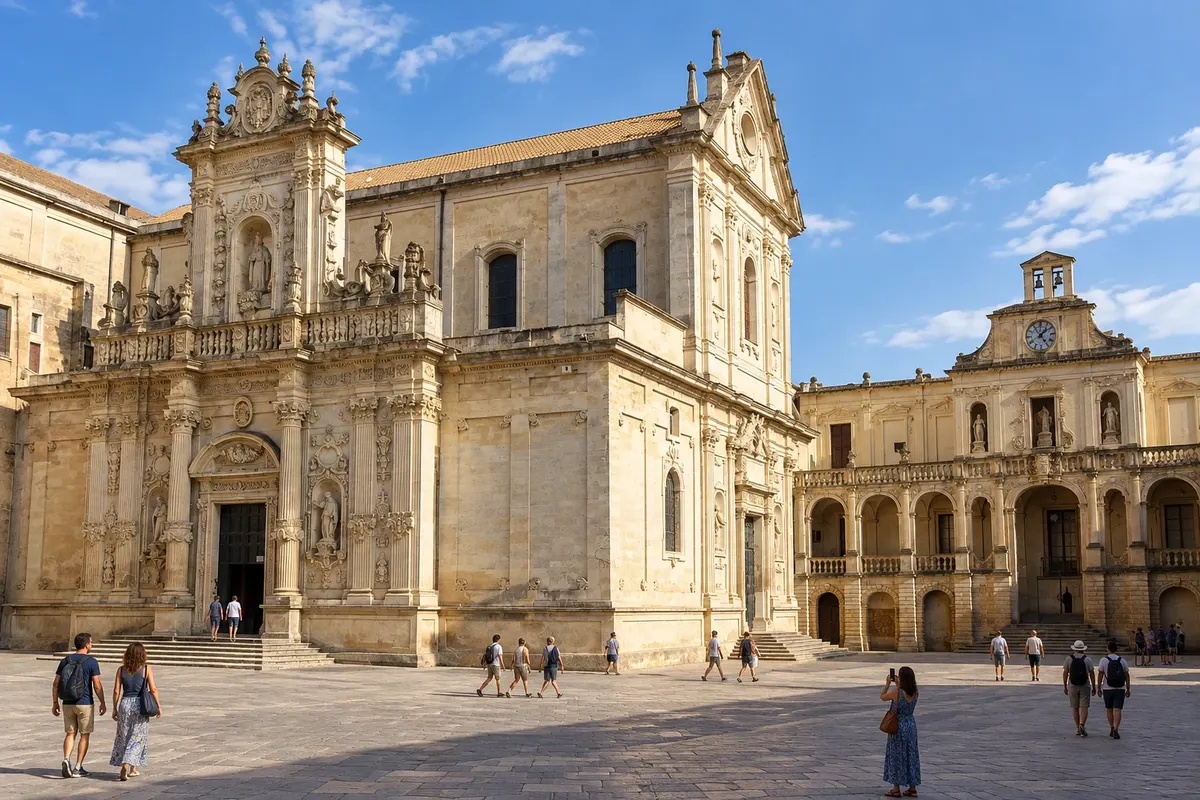
In the photo: Duomo di Lecce, Piazza del Duomo
Illustrative images. The pictures in this guide are illustrations based on the real place, not photographs, and may differ from it.
The city
Lecce is the main city of the Salento, the heel of the Italian boot, and became famous for the barroco leccese, carved in the light, soft stone of the region between the 16th and 18th centuries. In the centro storico (historic center) are the Basilica di Santa Croce, the Piazza del Duomo with the cathedral and the 70-metre bell tower, the Piazza Sant'Oronzo with the Anfiteatro Romano, the Porta Napoli and the Castello Carlo V. Otranto, on the Adriatic, is about 45 km away.
There's no accommodation in the guide yet in Lecce.
There are no restaurants in the guide yet in Lecce.
Know a good one? Recommend it to ushow to get there · how many days · itinerary · questions
The local experience
16th–17th century basilica considered the masterpiece of the barroco leccese, with a façade full of grotesque figures, animals and a large rose window. Beside it is the former convent of the Celestines.
An enclosed square, almost a courtyard, surrounded by the Cattedrale di Santa Maria Assunta, the 70-meter campanile, the episcopal palace and the former seminary, all in leccese Baroque.
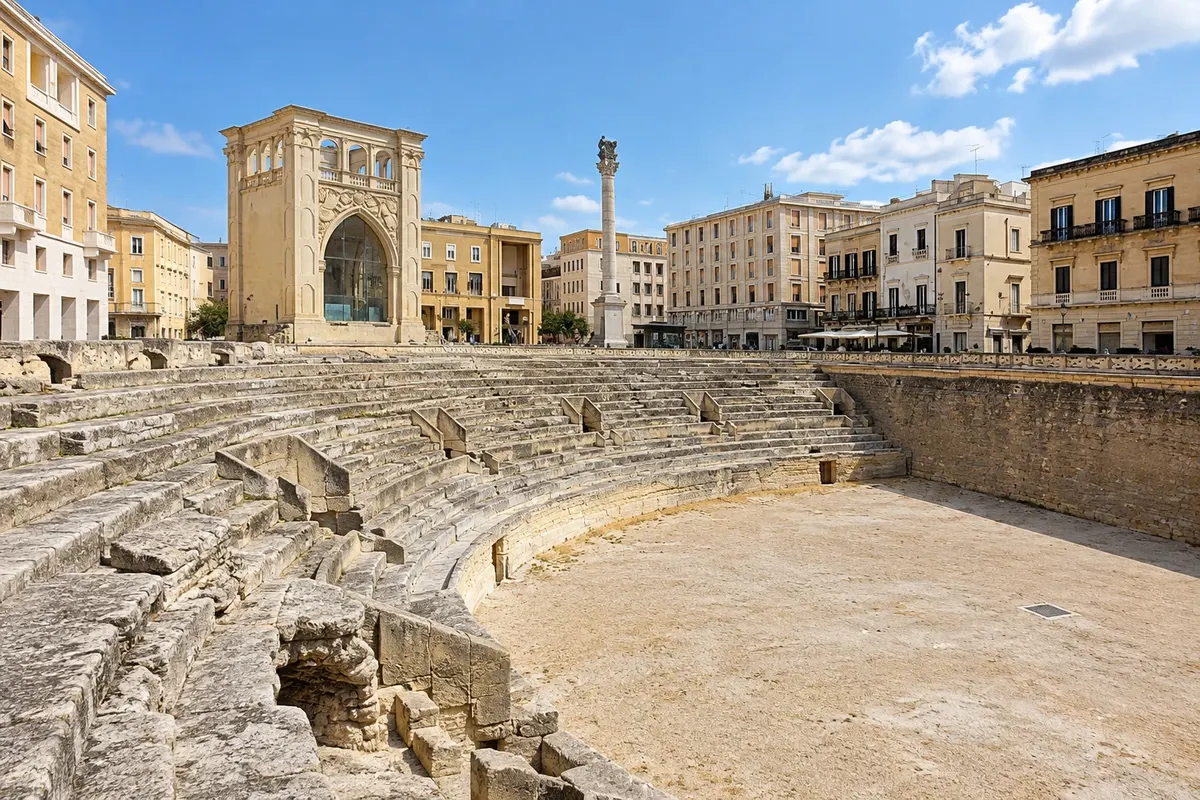
Remains of the Roman amphitheatre from the time of Augustus, discovered in the early 20th century and exposed outdoors in Piazza Sant'Oronzo, the main square of Lecce, next to the patron's column.
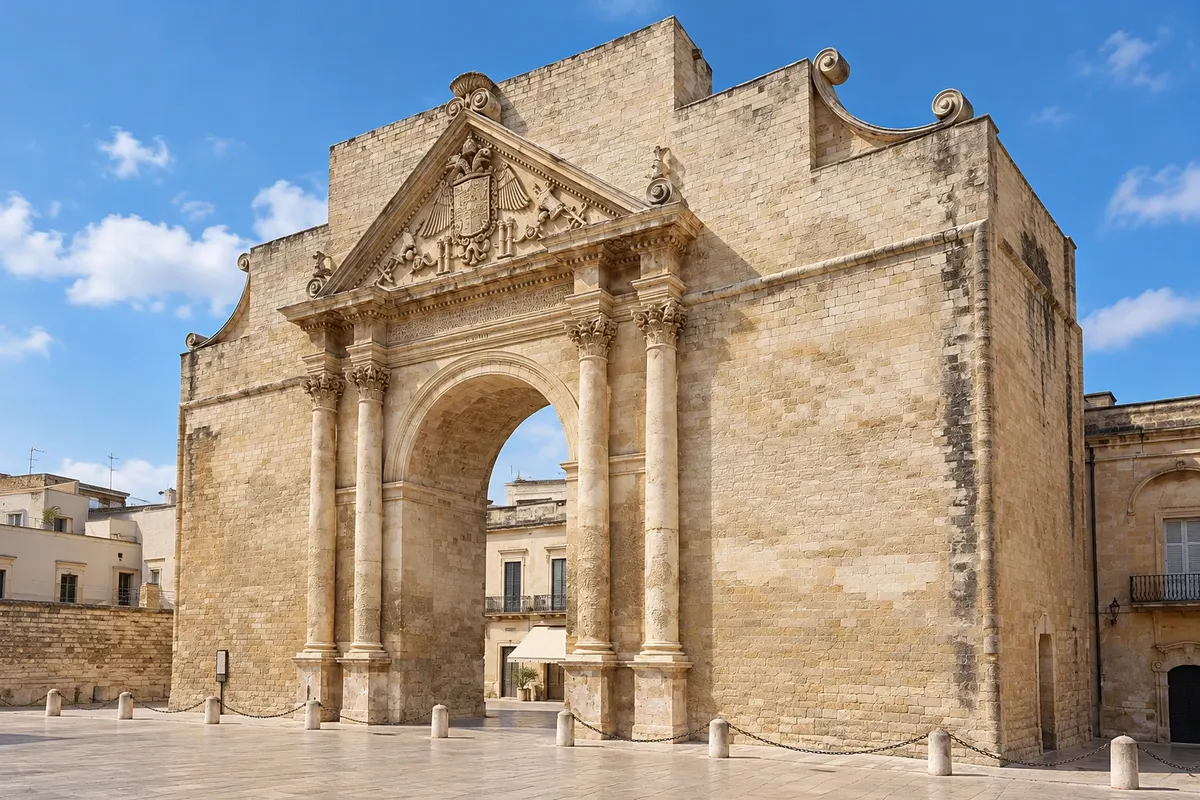
Triumphal arch from 1548 erected in honor of Emperor Charles V, at the northern entrance to the historic center of Lecce, facing a 19th-century obelisk.

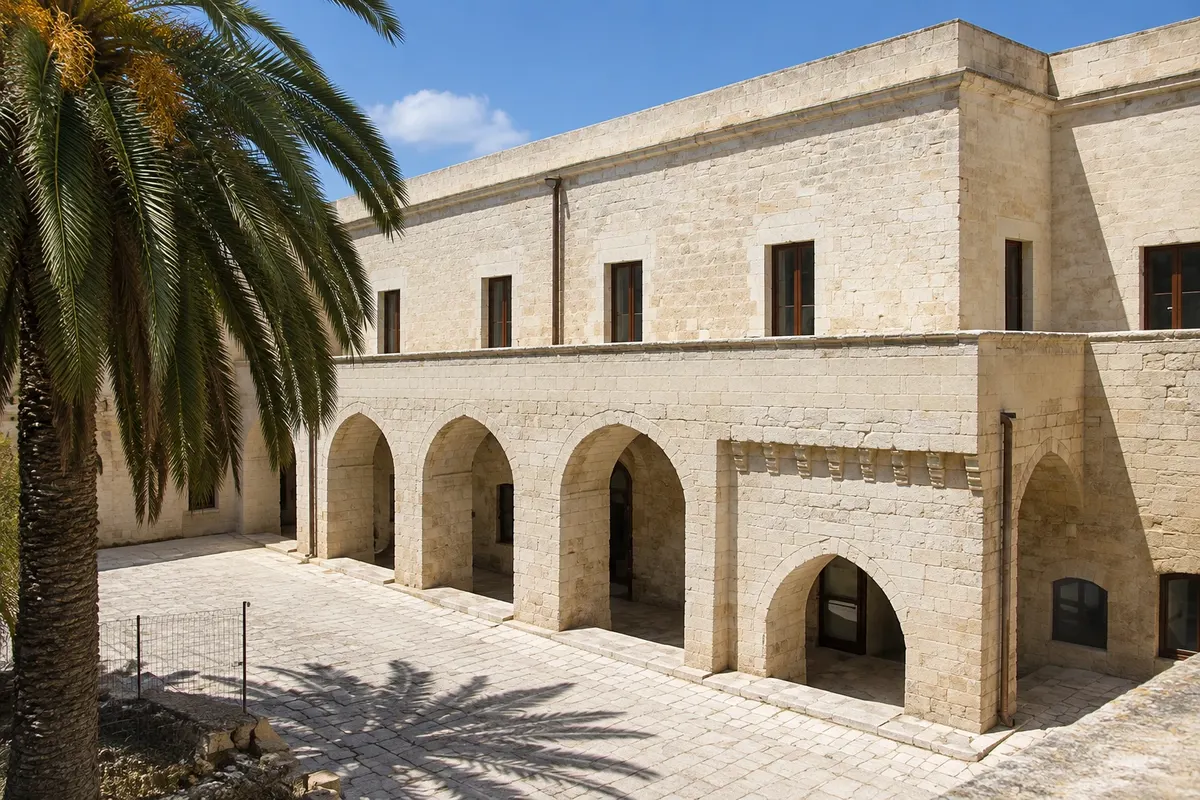
Fortress built from 1539 by order of Carlos V, next to the historic center. Today it serves as a cultural space run by the city council, hosting exhibitions and routes through the castle's former rooms.
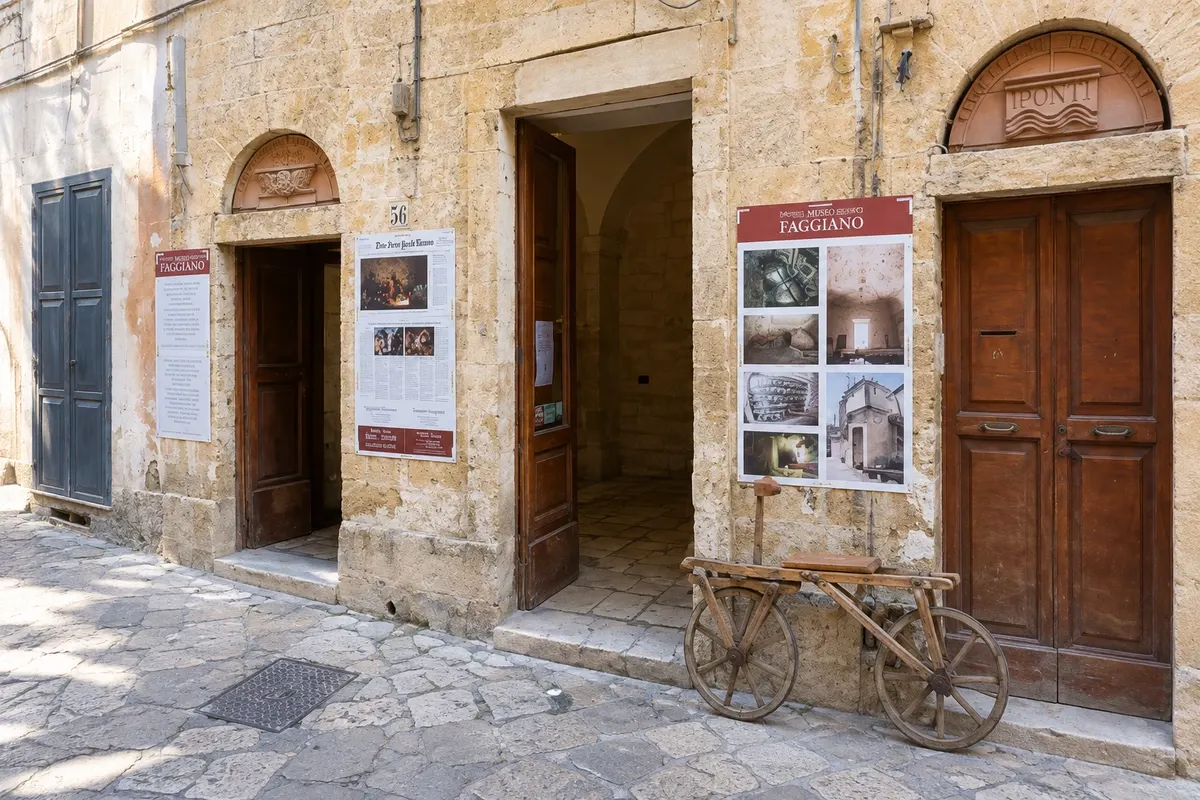
A private house in the historic center where, following plumbing work in 2001, layers of Lecce’s history were revealed: Messapian tombs, Roman silos, medieval remains and an old Templar house.
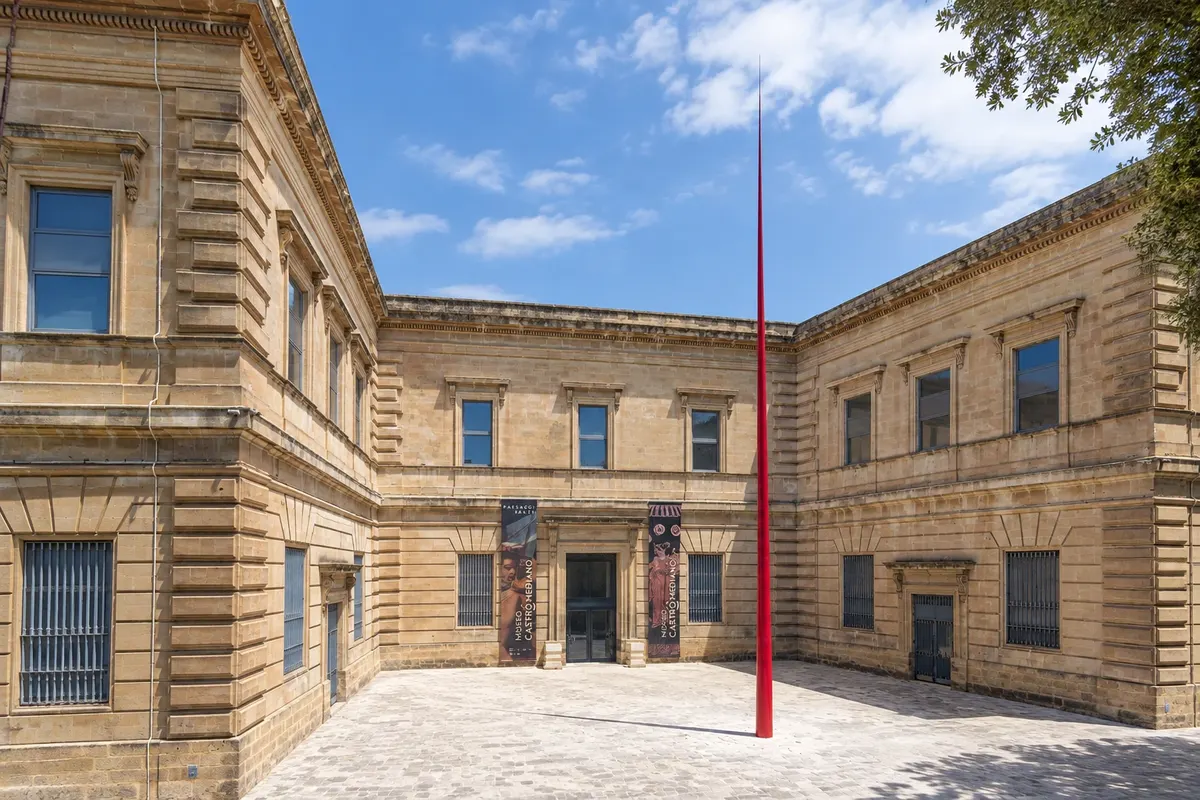
The oldest museum in Apúlia, founded in 1868, with Messapian and Roman pieces from the Salento, an art gallery and a reconstruction of the Grotta dei Cervi of Porto Badisco, featuring prehistoric paintings.
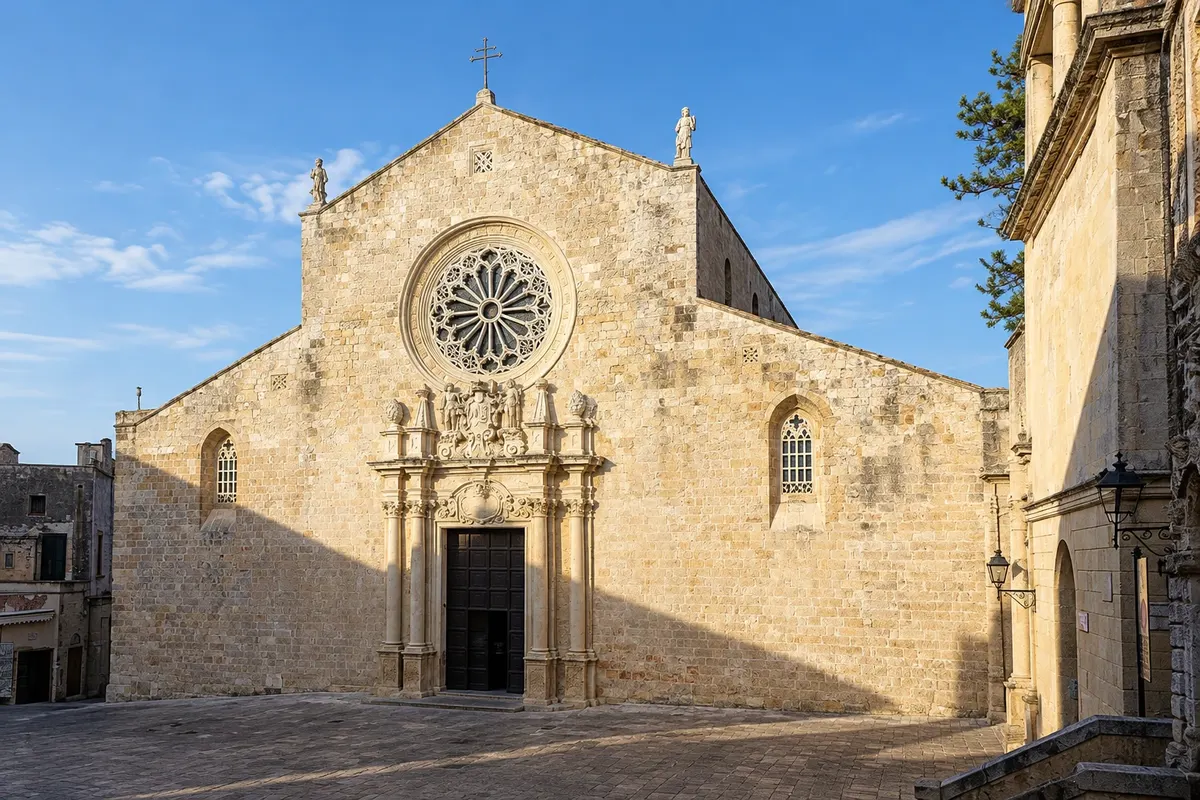
Romanesque cathedral from the 11th century in Otranto, about 45 km from Lecce, with a floor mosaic from 1163–1165 that covers the entire nave and the chapel housing the remains of the Martyrs of Otranto.