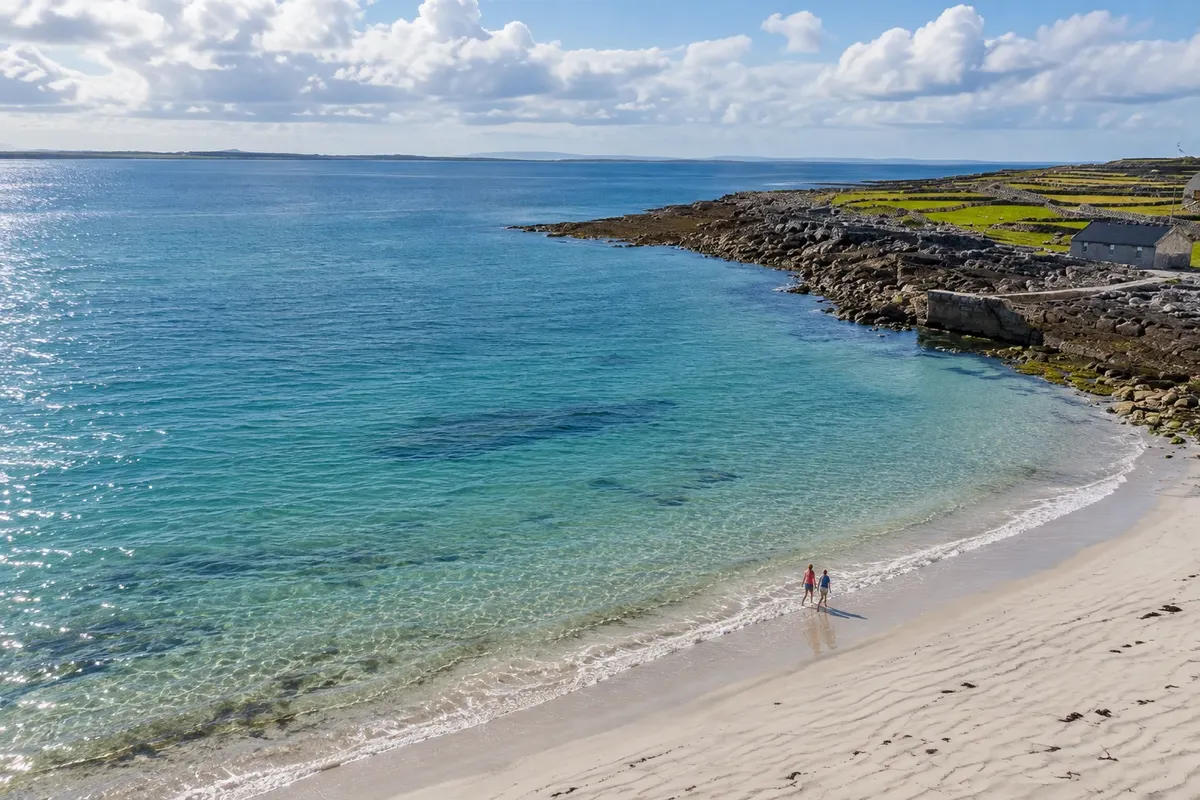
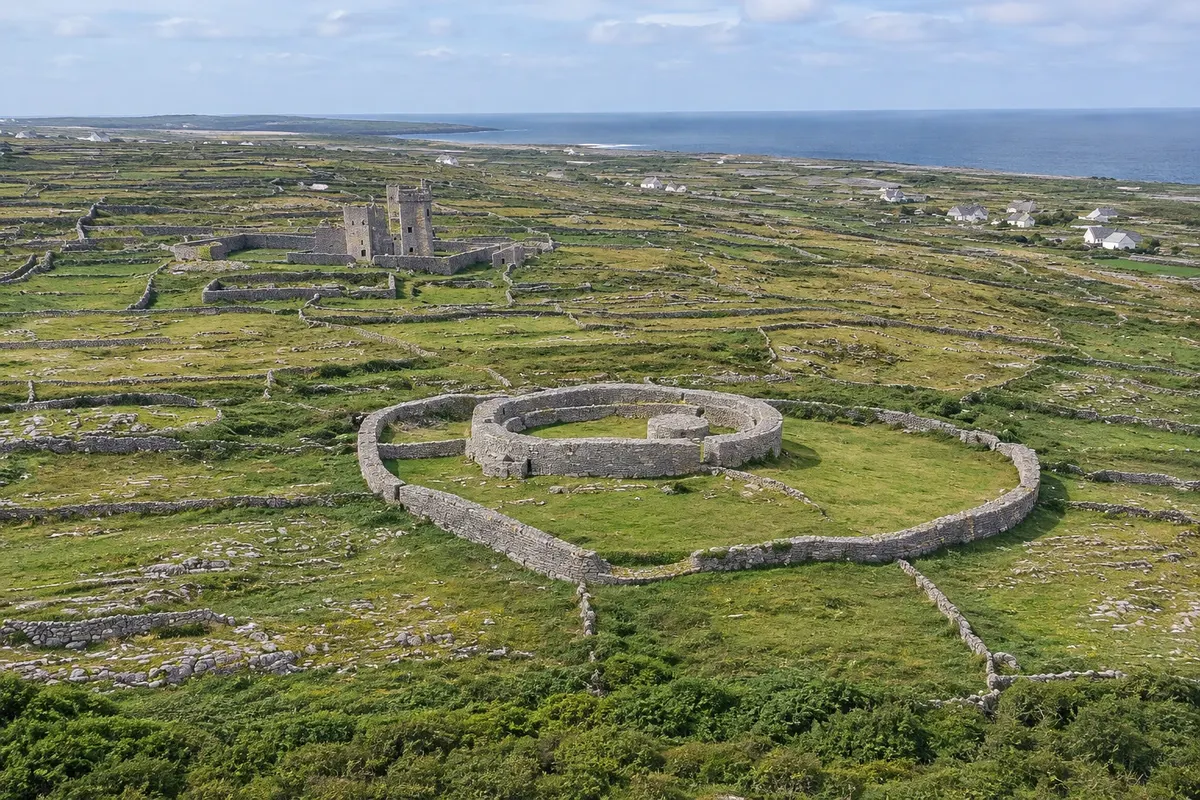
The Ilhas Aran are three islands at the entrance to Galway Bay, on Ireland’s west coast: Inis Mór, the largest at about 14 km long, Inis Meáin in the middle, and Inis Oírr, the smallest and closest to Clare. They form a continuation of the Burren limestone, visible as bare slabs cut by fissures, and the landscape is made up of small fields separated by dry-stone walls that together stretch for thousands of kilometers.
The islands are Gaeltacht: Irish is the everyday language, and the signs are only in that language. Residents make a living from fishing, cattle rearing, tourism and crafts, and the islands gave their name to Aran wool knits, with braided stitches developed by each family. Island life was recorded by writers such as J. M. Synge and in the 1934 film Man of Aran.
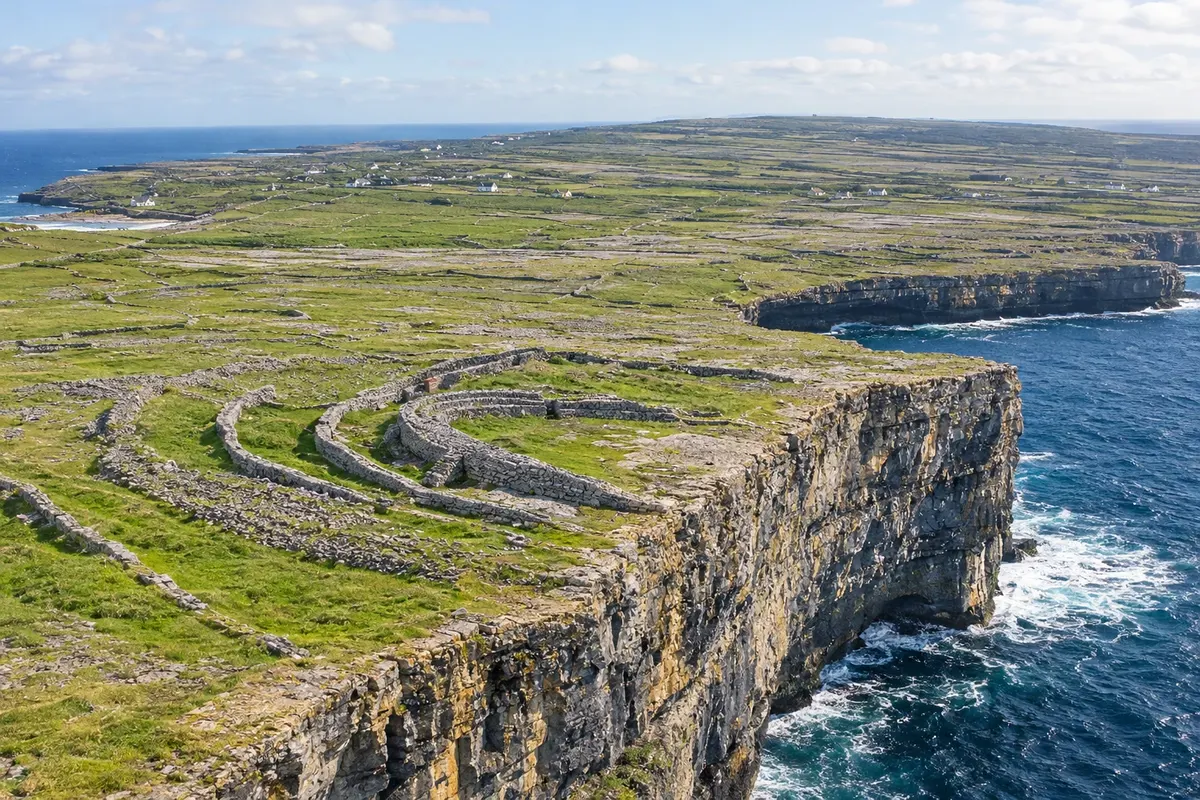
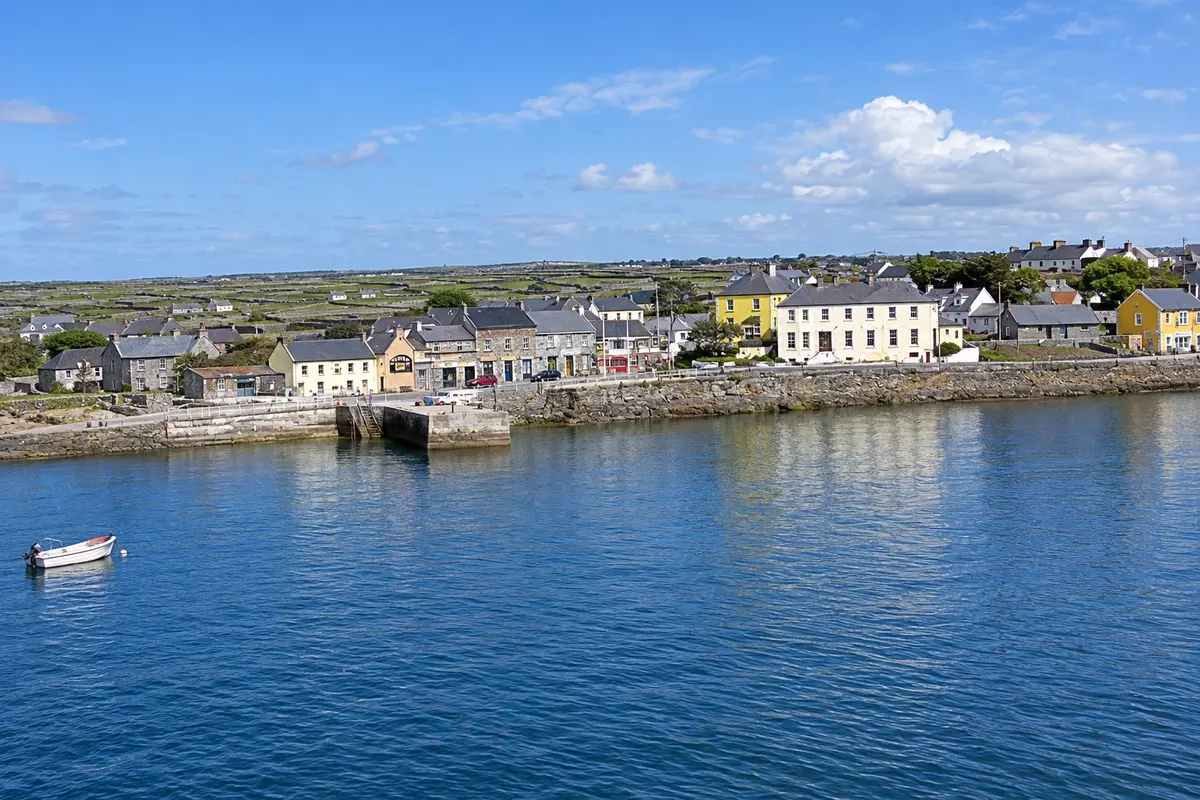
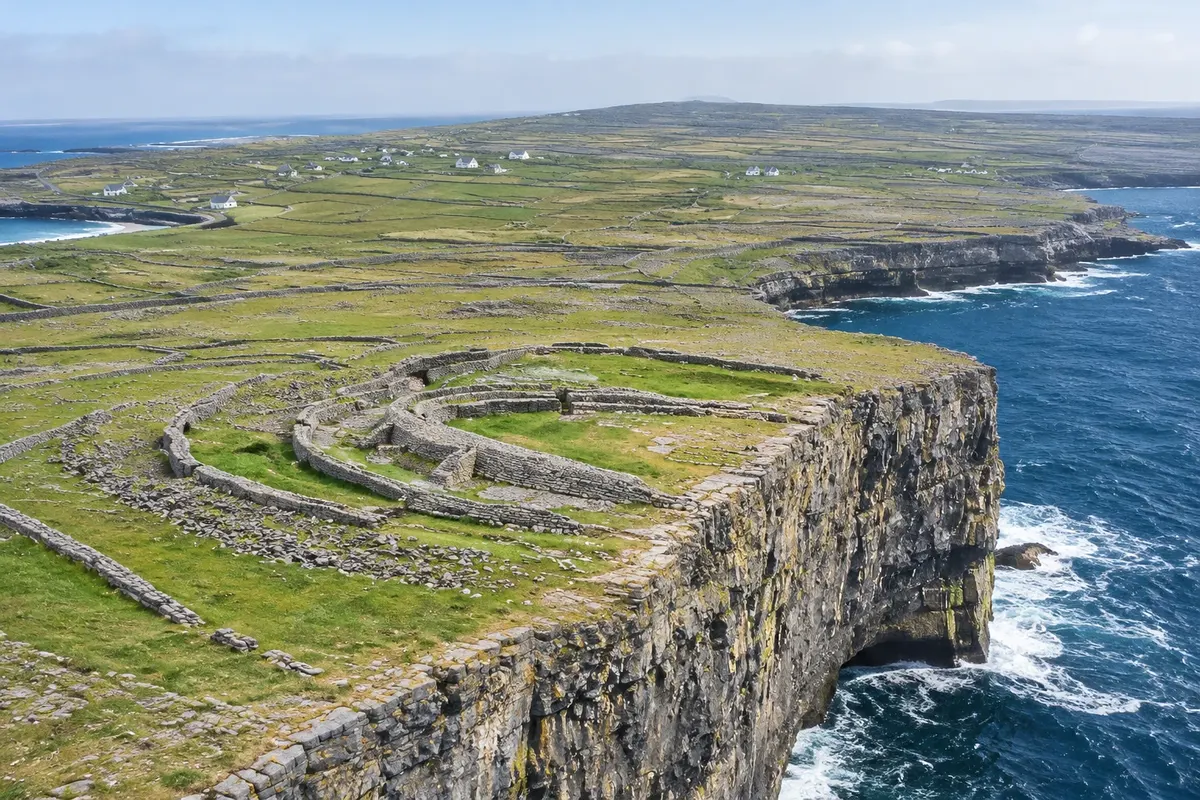
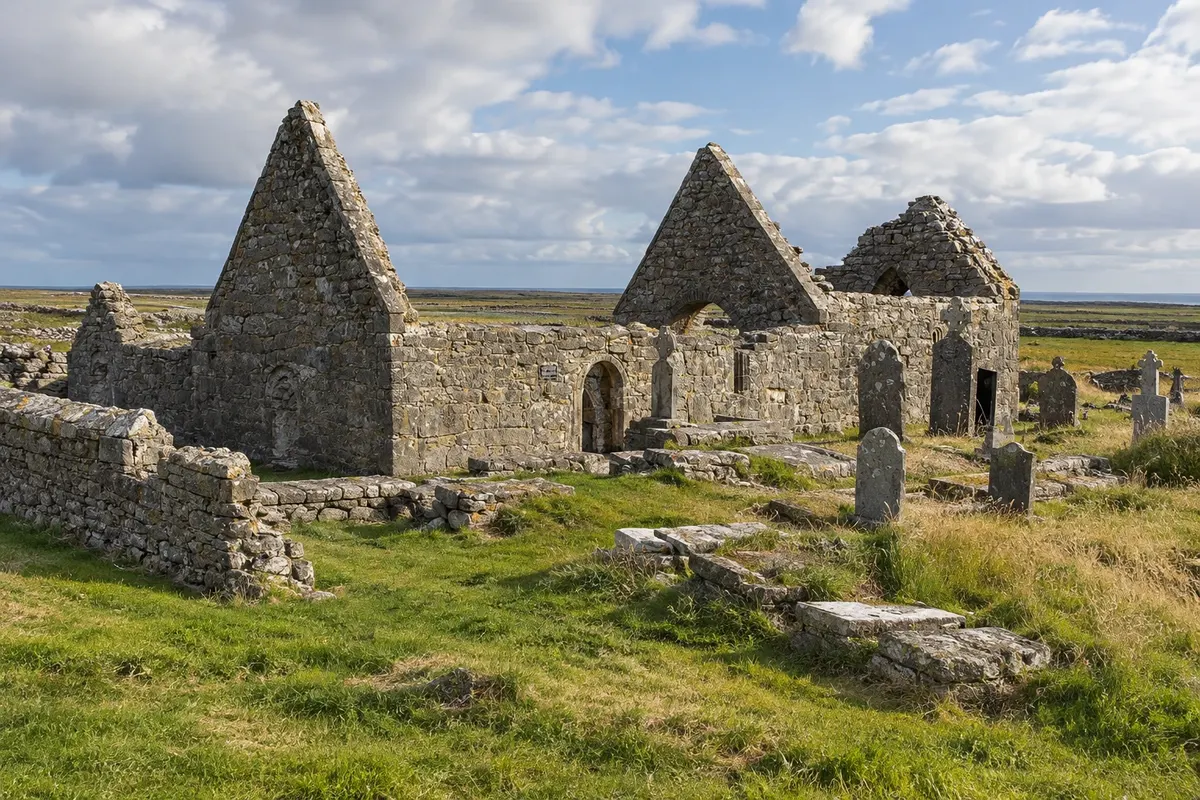
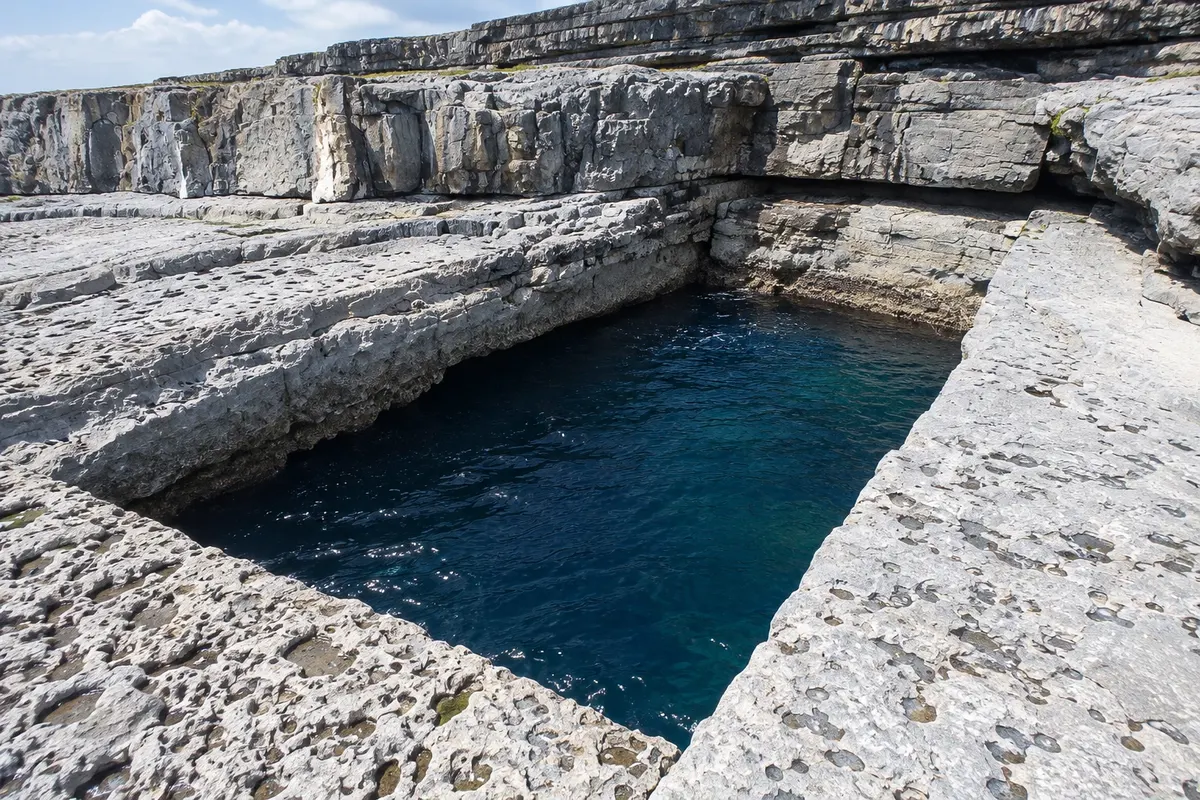
Inis Mór contains the main monuments. Dún Aonghasa is a prehistoric semicircular stone fort built on the edge of a cliff about 100 meters above the Atlantic. There are other forts, like Dún Eochla at the island’s highest point, the monastic ruins of the Seven Churches, the sandy beach of Kilmurvey and the Poll na bPéist, a rectangular natural pool in the rock. The port of Kilronan is where boats arrive, with shops, pubs and bike rentals.
Visitors do not bring cars to the islands: travel is by bicycle, minibus or pony-and-trap. The wind is strong and the sea can suspend sailings at any time of year.
This destination brings together 1 city: Kilronan.


 Brazil
 Argentina
 Chile
Chile Colombia
 Peru
Peru Uruguay
 Germany
 Belgium
 Spain
Spain France
 Greece
 the Netherlands
 Italy
Italy Luxembourg
 Portugal
 the United Kingdom
 Switzerland