Meteora

Tessália · Greece

Meteora

Six Orthodox monasteries atop rock towers in Tessália, a World Heritage Site: stairways carved into the rock, 16th‑century frescoes and ancient trails between Kalambaka and Kastraki.

Atenas e Centro

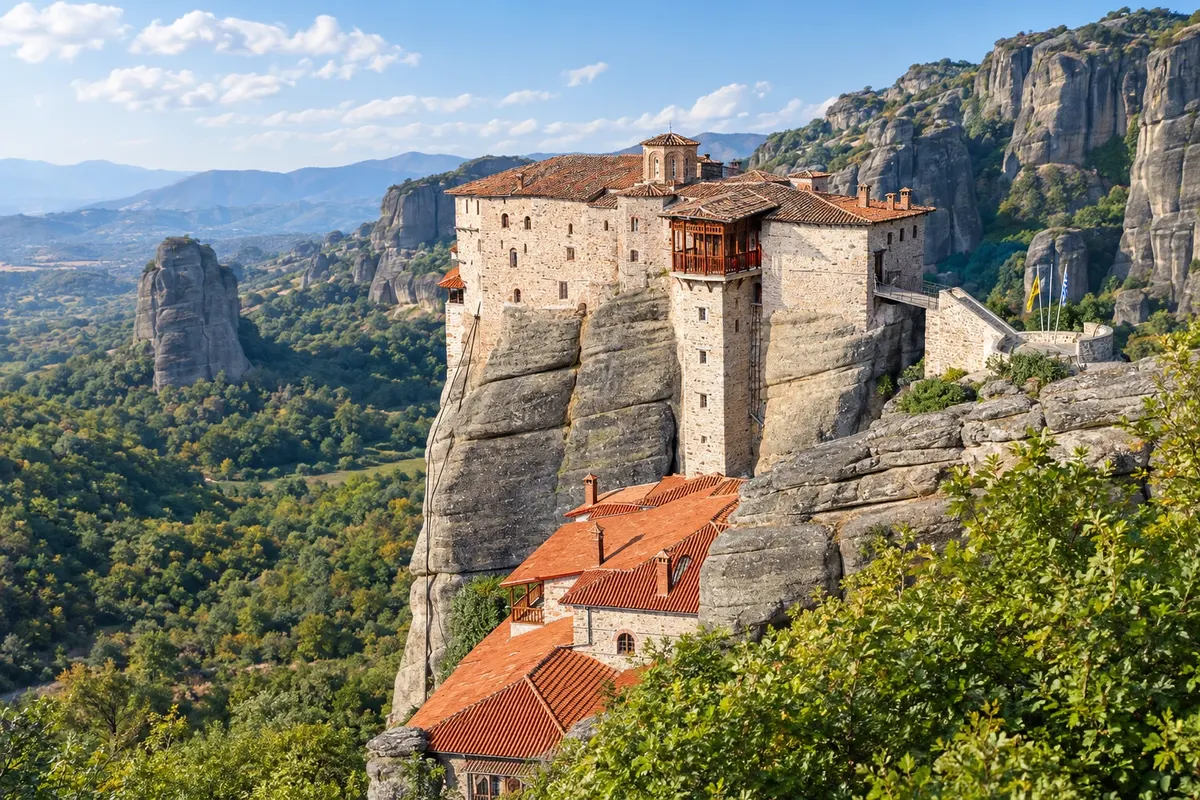
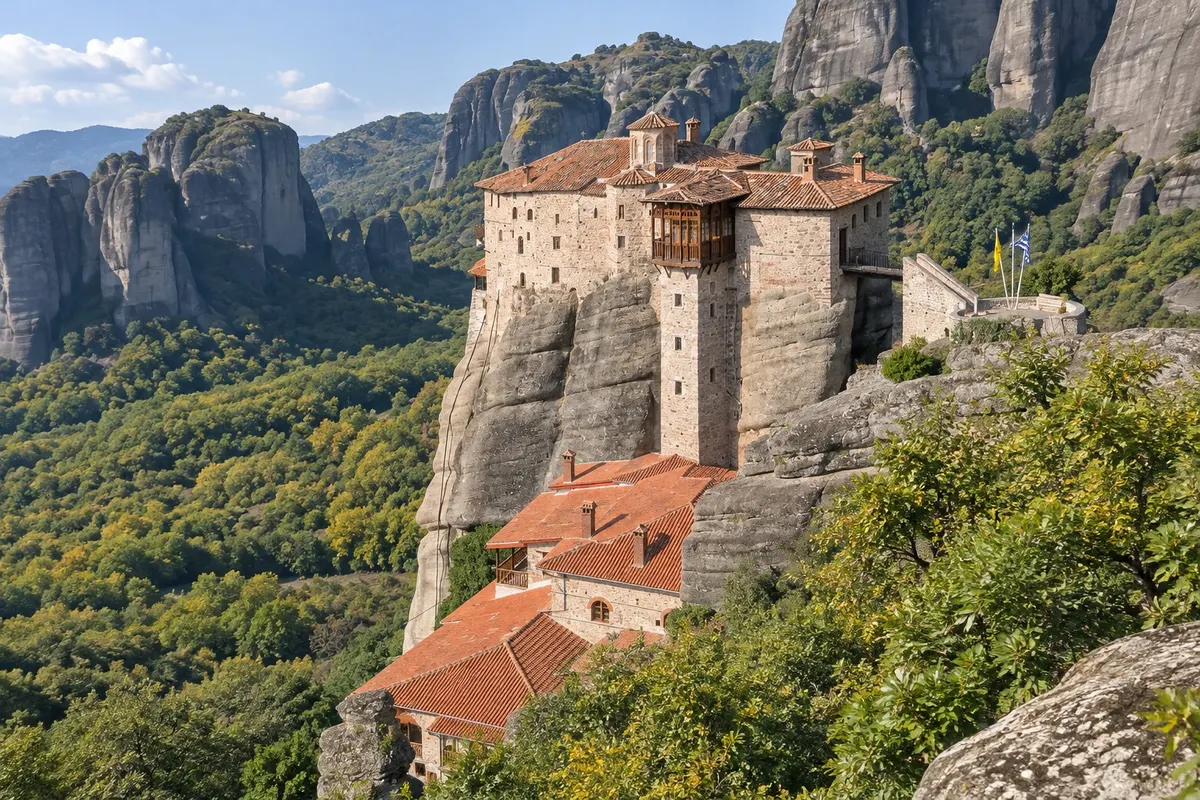
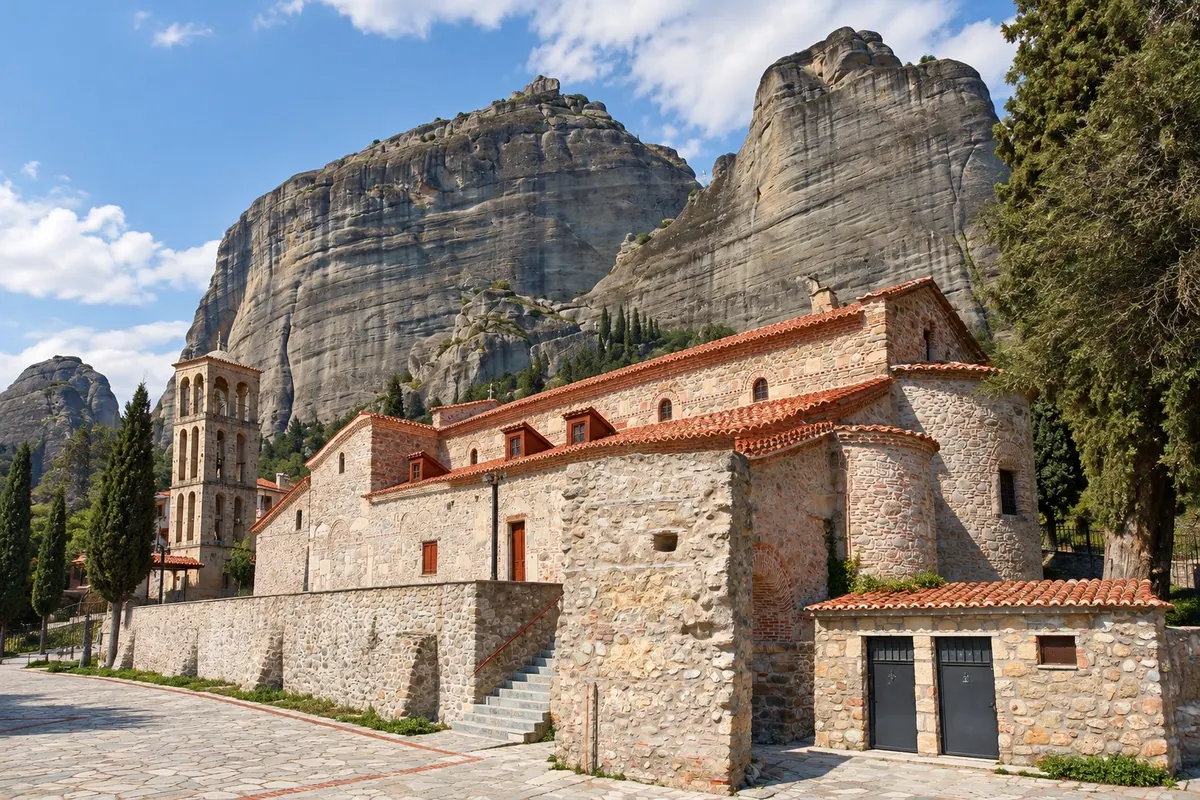
In the photo: Monastery of Rousanou

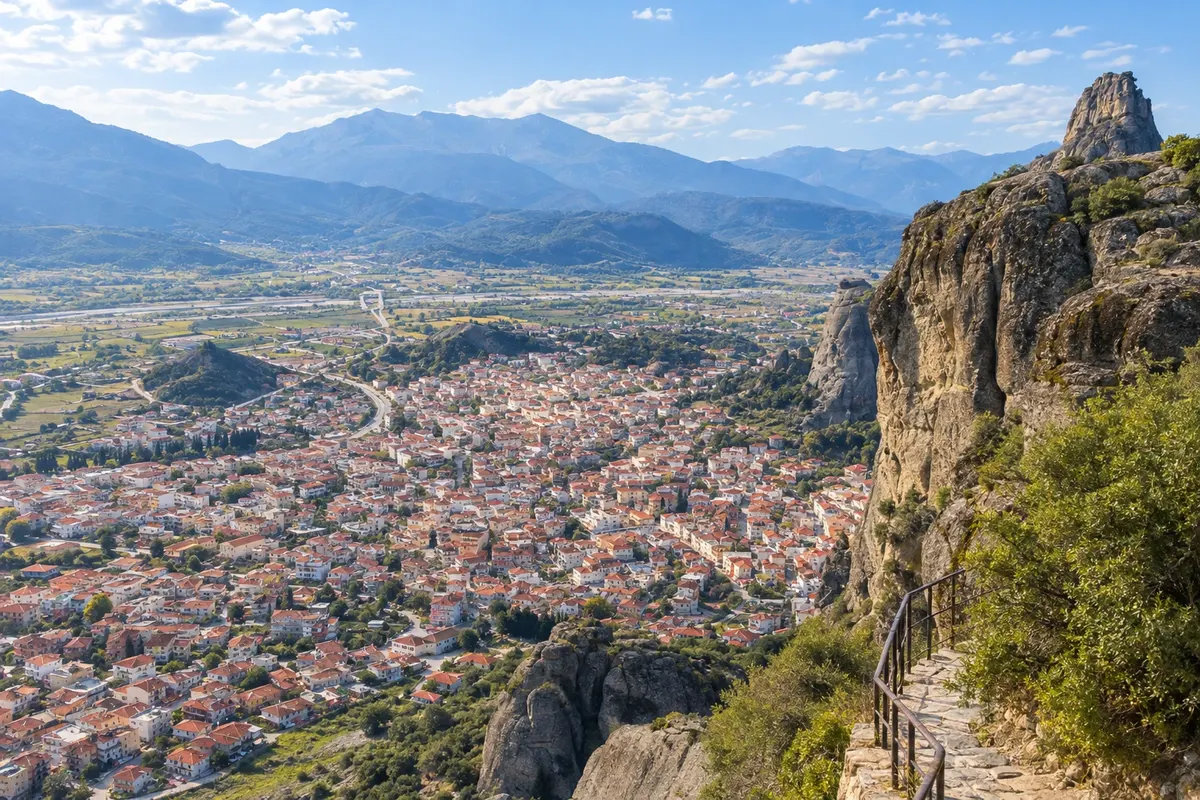
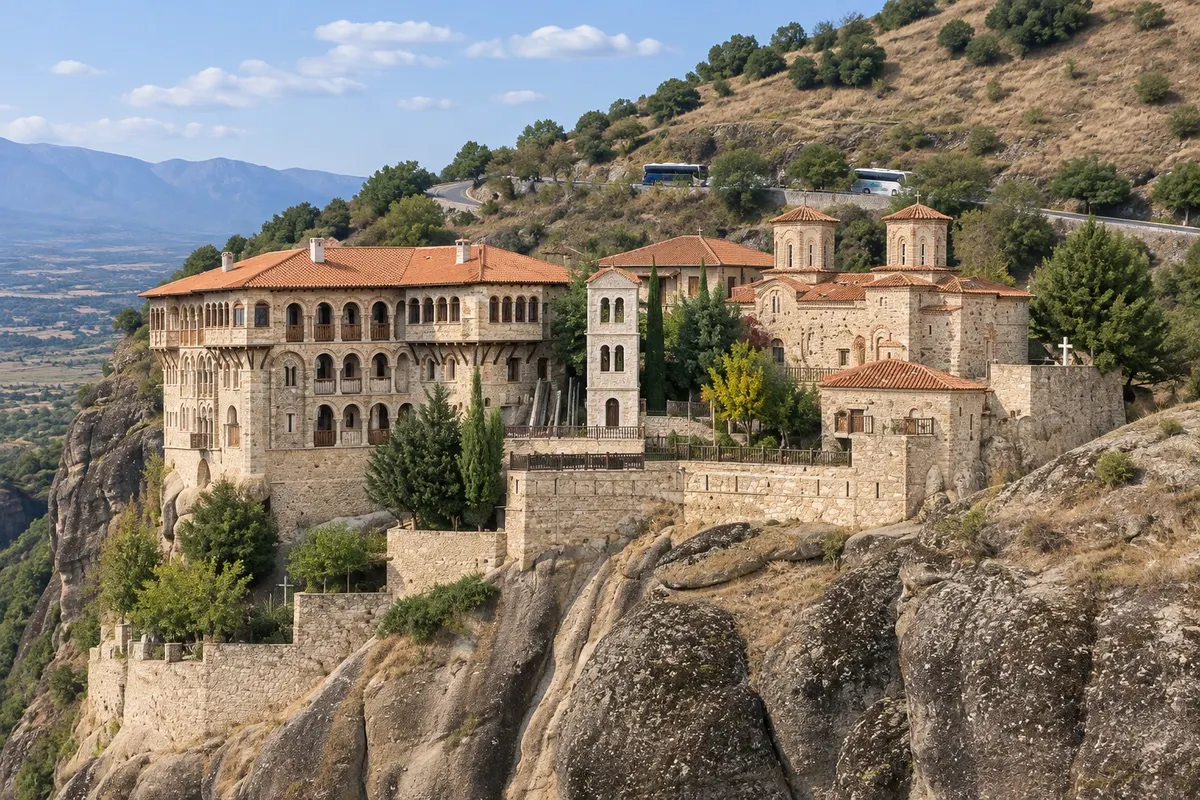
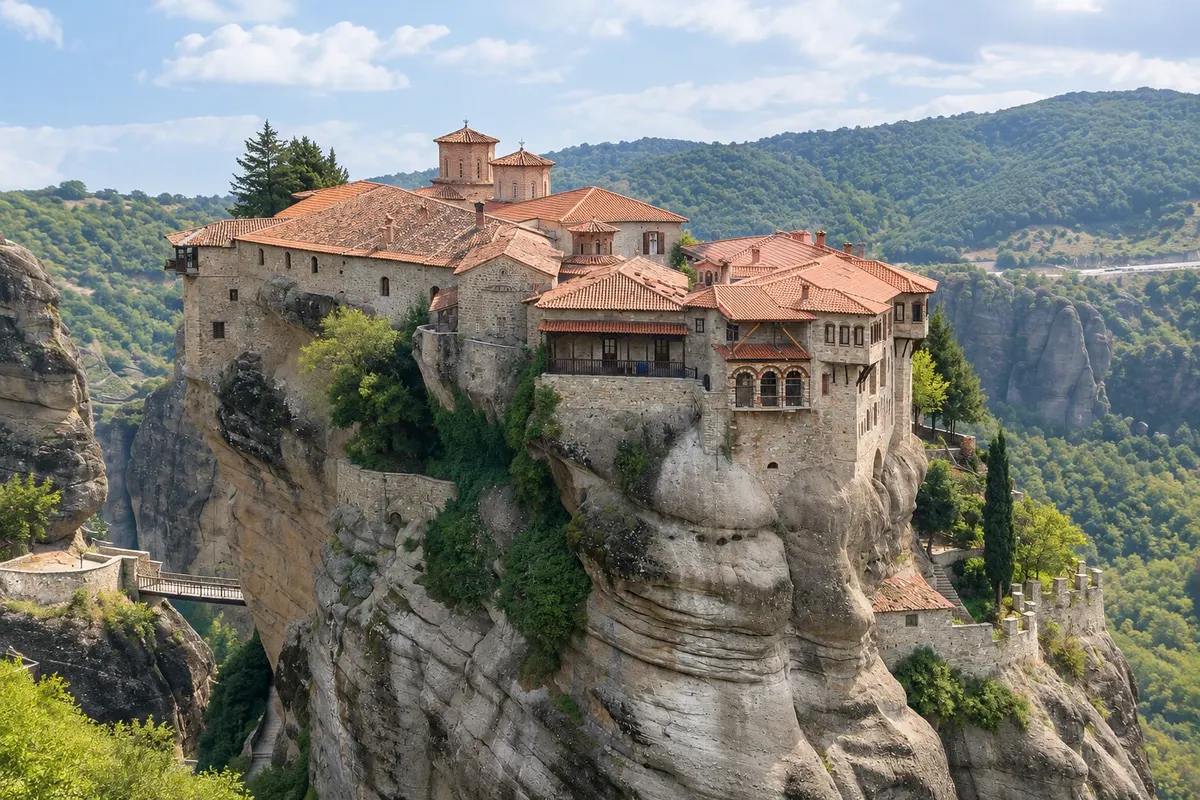
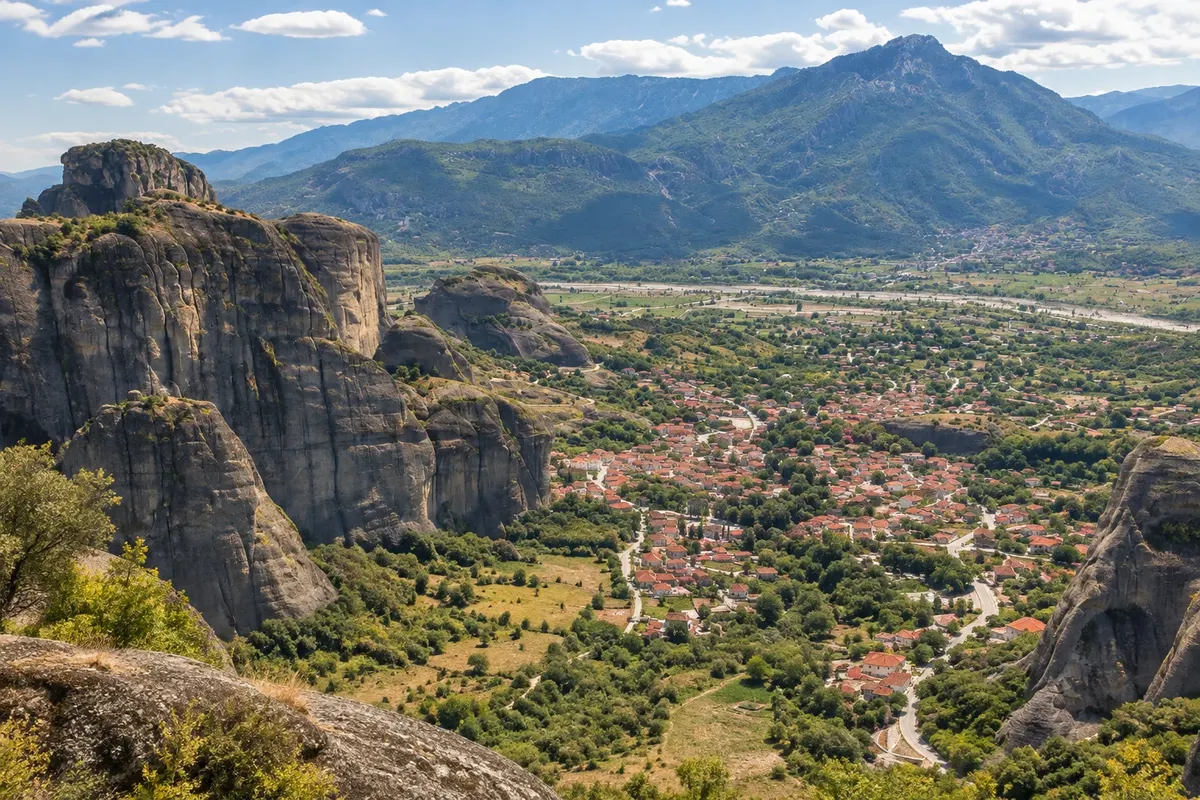
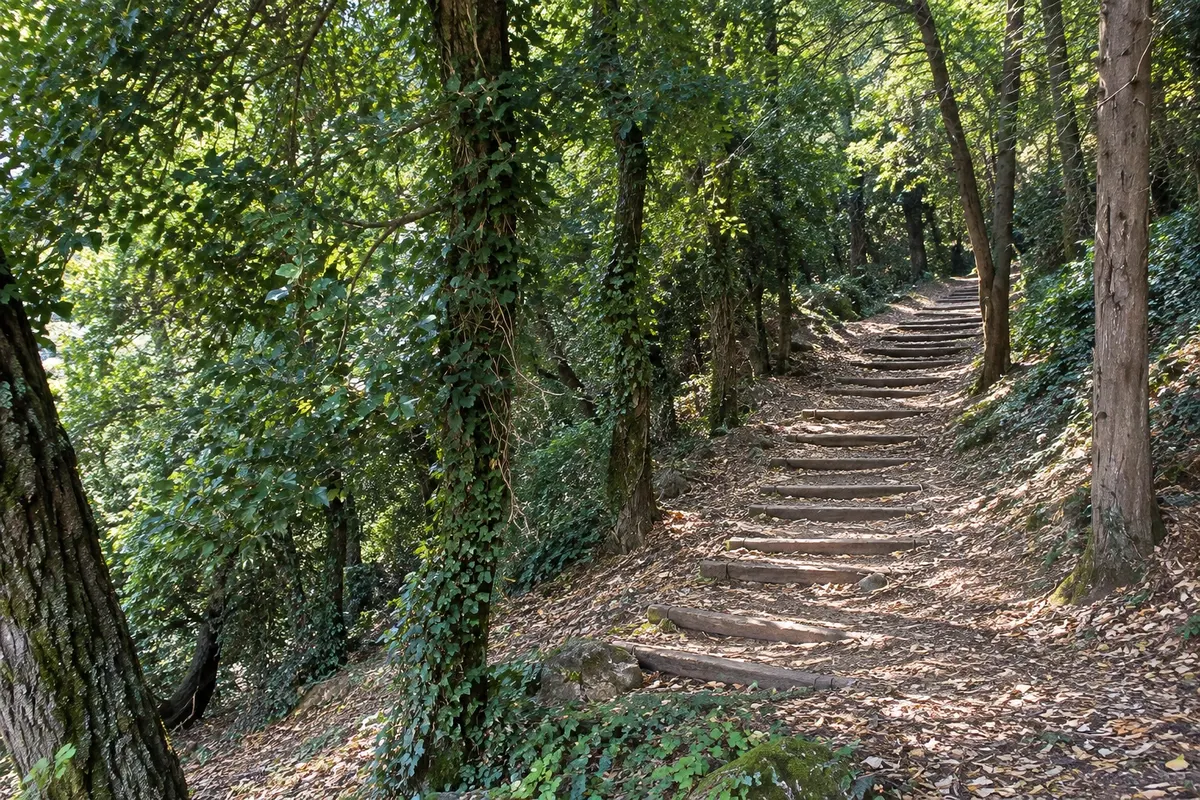
Illustrative images. The pictures in this guide are illustrations based on the real place, not photographs, and may differ from it.

Get it on Google Play Send your photos

Get to know the place

A region to enjoy
at your own pace.

Meteora is a group of sandstone pillars that rise more than 300 meters above the plain of Tessália, next to the town of Kalambaka. On the tops of some of them, monks built monasteries from the 14th century onward, when the region was marked by the instability of the late Byzantine Empire. There used to be 24 monastic houses; six remain inhabited and open to visitors. The name comes from Greek and means something like "suspended in the air."

The six monasteries are Great Meteoro, Varlaam, Rousanou, Agios Nikolaos Anapafsas, Agia Triada and Agios Stefanos. Until the 20th century they were reached only by rope ladders and nets hauled up by winches; the stone stairs and bridges you see today were opened from the 1920s onward. Inside, visitors find small churches completely painted, refectories turned into museums, old kitchens and balconies over the void. The complex has been a UNESCO World Heritage Site since 1988 for its cultural and natural value.

The base is Kalambaka, a town of about 8,000 inhabitants with a train station, bus terminal and hotels. The village of Kastraki, clinging to the rocks, is the quieter alternative and the starting point for the trails. A paved road of roughly 10 km climbs from Kastraki and passes the entrances to the six monasteries, with viewpoints along the way. Those who don’t drive use the local bus, taxis or do the circuit on foot via the monks’ old paths.

The monasteries are active places of worship, and visits follow dress rules and closing days that vary from house to house. It’s worth allowing two days: one for the monasteries by car or bus and another for the trails, the town and the Theopetra cave.

This destination brings together 1 city: Kalambaka.

Share: WhatsApp
Traveler, share your experiences through photos Up to 5 photos of each place you visited.

One destination, many paths

The cities on this trip

Start with one city or combine several in your itinerary.

Where Meteora is
Kalambaka

Contornos: Natural Earth (domínio público). Adaptação do Cidade Turismo.

How to get there: Meteora

✈ Aeroporto de Tessalônica Macedonia (SKG), in Tessalônica · 230 km to Kalambaka

✈ Aeroporto Internacional de Atenas Eleftherios Venizelos (ATH), in Spata · 360 km to Kalambaka

Check before booking. From Atenas, the train takes about 4 to 5 hours to Kalambaka, direct or with a change at Paleofarsalos; check the timetable for the day. KTEL buses run from Atenas and from Tessalônica to Trikala, from where another bus continues to Kalambaka, 21 km away. By car it’s about 350 km from Atenas and 230 km from Tessalônica.

The local experience

Things to do in Meteora

Mosteiro do Grande Meteoro (Moni Megalou Meteorou)
Kalambaka · Tessália · Monastery

Mosteiro do Grande Meteoro (Moni Megalou Meteorou)

The largest and highest of the Meteora monasteries, founded in the 14th century by Atanásio the Meteorite, atop the rock Platys Lithos. Church painted in 1552, refectory-museum from 1557, ancient kitchen and the monks' ossuary.

Mosteiro de Varlaam (Moni Varlaam)
Kalambaka · Tessália · Monastery

Mosteiro de Varlaam (Moni Varlaam)

Second largest monastery in Meteora, opposite the Grande Meteoro. Church of All Saints from 1541, frescoes from 1548 attributed to Frangos Katelanos, a tower with the hauling mechanism and the old net, and a museum of manuscripts and vestments.

Mosteiro de Rousanou (Moni Rousanou)
Kalambaka · Tessália · Monastery

Mosteiro de Rousanou (Moni Rousanou)

Female monastery on a narrow rock between Varlaam and Agios Nikolaos, dedicated to Santa Bárbara. 16th-century church with frescoes from 1560 of the Cretan school; access by bridge and about 140 steps.

Mosteiro de São Nicolau Anapafsas (Moni Agiou Nikolaou Anapafsa)
Kalambaka · Tessália · Monastery

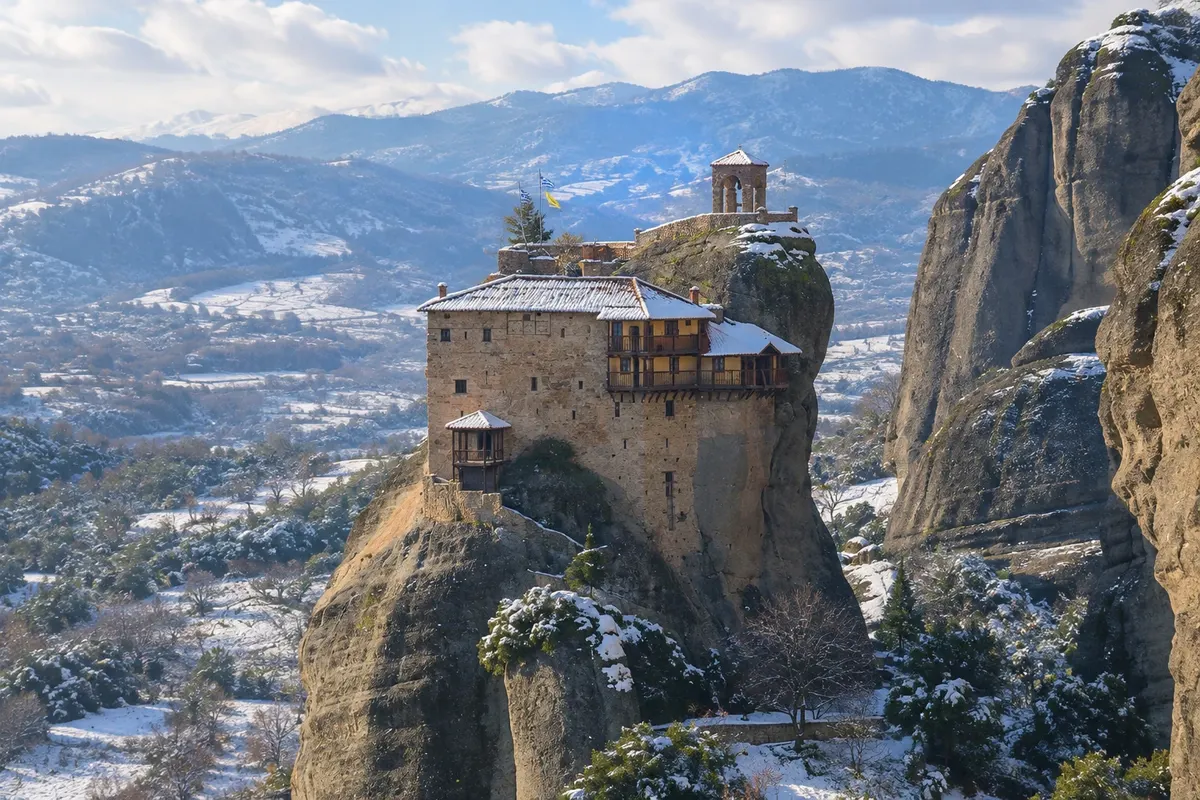
Mosteiro de São Nicolau Anapafsas (Moni Agiou Nikolaou Anapafsa)

The first monastery on the road, near Kastraki, built in levels on a narrow rock. It houses the 1527 frescoes by Teófanes, the Cretan, the painter’s oldest dated work.

See 7 more places in Meteora
Mosteiro da Santíssima Trindade (Moni Agias Triados)
Kalambaka · Tessália · Monastery

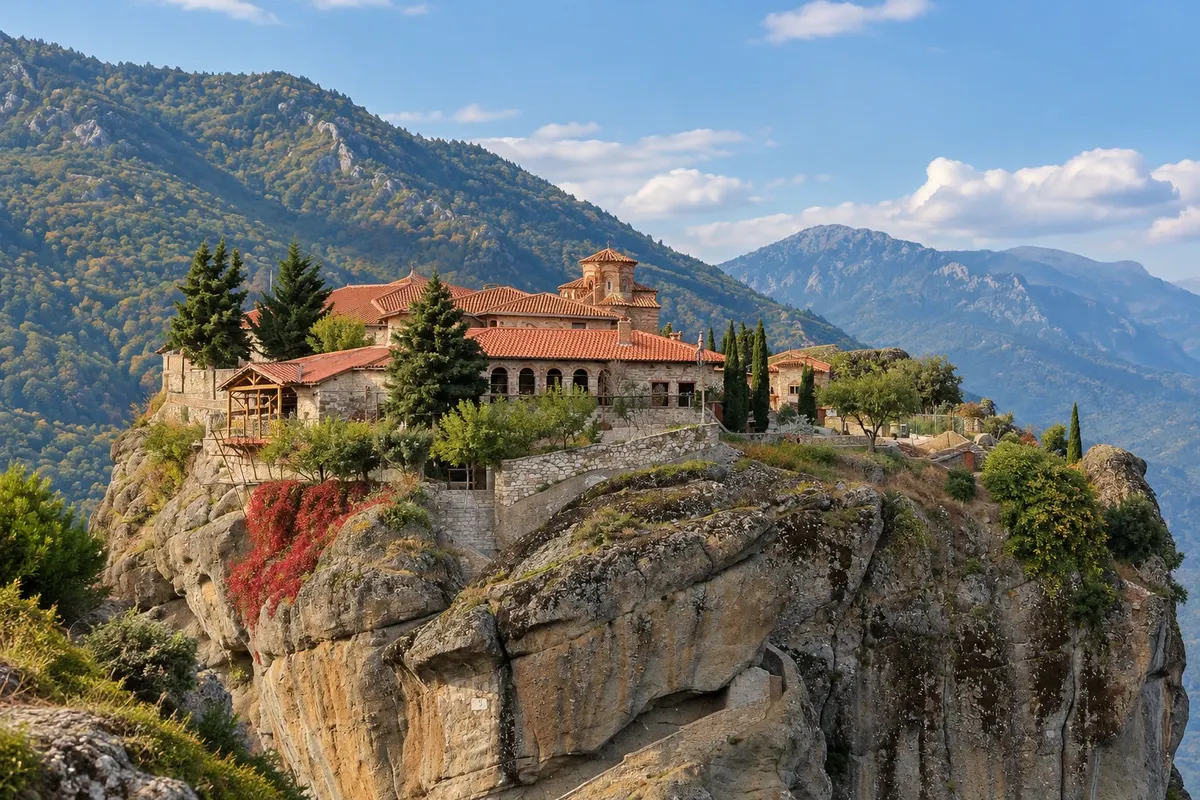
Mosteiro da Santíssima Trindade (Moni Agias Triados)

The monastery of the Santíssima Trindade, isolated atop a separate pillar, with a church dating to 1475 and a chapel carved into the rock. The climb has about 140 steps along a staircase cut into the stone, and the view reaches Kalambaka and the plain.

Mosteiro de Santo Estêvão (Moni Agiou Stefanou)
Kalambaka · Tessália · Monastery

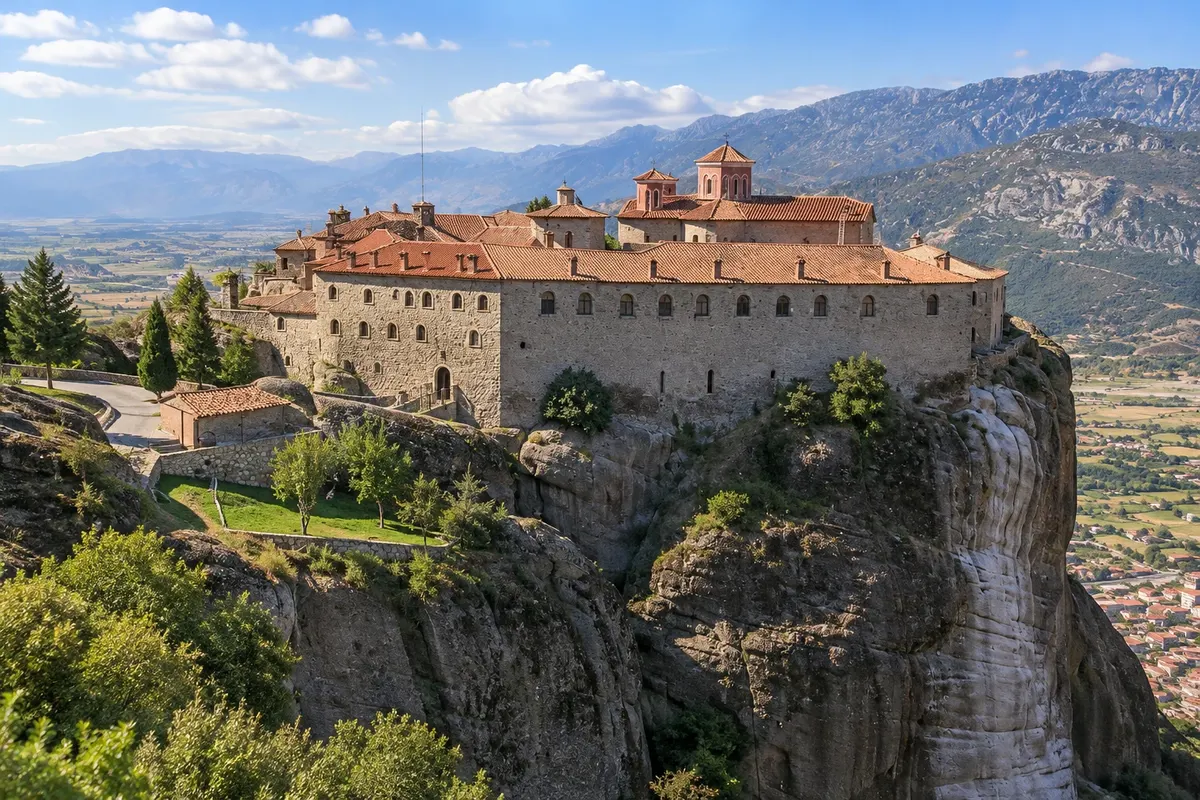
Mosteiro de Santo Estêvão (Moni Agiou Stefanou)

Female monastery at the end of the road, the only one reachable by a bridge without stairs. Old 14th-century church, the church of Agios Charalambos from 1798, and a museum with manuscripts and embroideries.

Igreja da Dormição da Virgem (Kimisis tis Theotokou)
Kalambaka · Tessália · Church

Igreja da Dormição da Virgem (Kimisis tis Theotokou)

Igreja bizantina da Dormição da Virgem, in the upper neighborhood of Kalambaka, built between the 10th and 12th centuries atop a paleochristian basilica. It preserves a marble ambo in the middle of the nave, frescoes from 1573 and sections of ancient mosaic flooring.

Kastraki
Kalambaka · Tessália · Village

Kastraki

Village of about a thousand inhabitants tucked against the rocks of Meteora, 2 km from Kalambaka. Stone houses with red roofs, tavernas, guesthouses and the start of the road and trails to the monasteries.

Trilhas de Meteora
Kalambaka · Tessália · Trail

Trilhas de Meteora

Old monk paths that link Kastraki and Kalambaka to the six monasteries, through oak woods and between the rocks. Sections range from 30 minutes to 3 hours, with steep climbs and viewpoints off the road.

Kalambaka · Tessália · Cave

Gruta de Theopetra (Spilaio Theopetras)

Prehistoric cave about 5 km from Kalambaka, inhabited continuously from the Paleolithic to the Neolithic. A 17-metre-wide entrance with views of the Meteora rocks and a documentation center in the village of Theopetra.

Kalambaka · Tessália · Museum

Museu de História Natural de Meteora e Museu dos Cogumelos

Natural history and mushroom museum in Kalambaka, opened in 2014. Dioramas with around 350 species of birds and mammals from the region and a collection of roughly 250 mushroom species, with tastings and truffle-hunting outings.

Before you go

Practical information

A little planning leaves more time to enjoy the journey.

When to go

From April to June and from September to October the weather is usually mild for climbing stairs and walking the trails, and the monasteries stay open longer. July and August are hot and busy, with little shade on the rocks. In winter, from November to March, the monasteries have reduced hours and close more days of the week; fog and snow occur occasionally and transform the landscape.

The seasons shown are the most usual ones; nature doesn't always follow the calendar.

How many days to stay

A full day is enough to visit three or four monasteries by car or bus, using the road viewpoints. Two days is ideal: on the second day hike the old trails from Kastraki to the remaining monasteries and see Kalambaka’s Byzantine church and the Theopetra cave. If you arrive by train late in the afternoon, plan an extra night, because the monasteries close in the mid‑afternoon.

Which city to stay in

Kalambaka concentrates the hotels, the train station and the bus terminal; the upper neighborhoods near the Dormition church have views of the rocks. Kastraki, 2 km away, is a small village at the foot of the pillars, with family-run guesthouses, tavernas and the start of the trails: it’s the best choice for walkers who want to see the rocks from their window. If you have a car you can stay in either; without a car, Kalambaka makes arriving and departing by train easier.

Respect the place

Take your trash with you, follow the signs and support local businesses. In natural areas, follow the visiting guidelines.

Get your questions answered

Frequently asked questions about Meteora

How to get from Atenas to Meteora without a car?

By train to Kalambaka station in about 4 to 5 hours, direct or with a change at Paleofarsalos; check the schedule because there are few departures per day. The other option is the KTEL bus from Atenas to Trikala and from there the local bus to Kalambaka. Agencies in Atenas also sell a day‑trip that departs early and returns late.

Is it possible to visit the six monasteries in one day?

By car or with the local bus it is possible, but tiring: each monastery has between 140 and 300 steps and different opening hours. Bear in mind that each house closes on a different day of the week, so at least one will be closed on any given day. The most common approach is to choose three or four and leave the rest for the next day.

Is there a dress code to enter the monasteries?

Yes. Women must wear skirts below the knee; there are skirts to borrow at the entrance to wear over trousers. Men should wear long pants. Shoulders must be covered for everyone. Photography is not allowed inside the churches.

Do I need a car in Meteora?

It’s not mandatory. A local bus runs from Kalambaka and Kastraki up to the monasteries at several times of day, and taxis cover the route. The old trails connect the village of Kastraki on foot to almost all the monasteries. A car helps those who want to visit the viewpoints at the end of the day and continue on to Tessalônica or Ioannina.

Which is the better base: Kalambaka or Kastraki?

Kalambaka has the station, the bus terminal and more restaurants and hotels. Kastraki lies at the foot of the rocks, is quieter and is where the trails start. They are 2 km apart, connected by the local bus and by a walking path.

Does Meteora work as a stop between Atenas and Tessalônica?

Yes. Kalambaka is about 350 km from Atenas and 230 km from Tessalônica, and trains and buses link the three cities. Many people do Atenas, Delfos, Meteora and Tessalônica in sequence, by car or by bus.

Explore other destinations Search by state and city
Back