Corfu

Ilhas Jônicas · Epiro · Greece

Corfu

The green island of the Ionian Sea, with an old Venetian town listed by UNESCO, two fortresses, churches with Italian bell towers, monasteries above the sea and sandy beaches on the west coast.

Ilhas

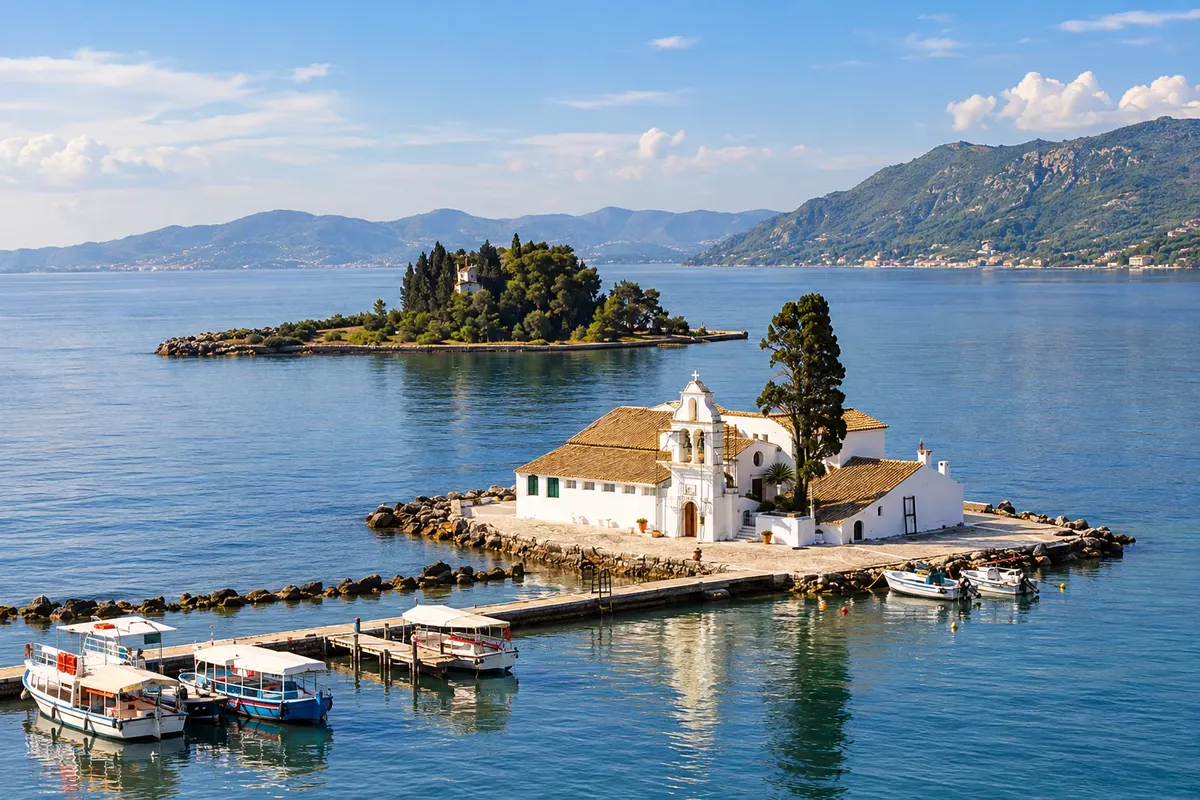
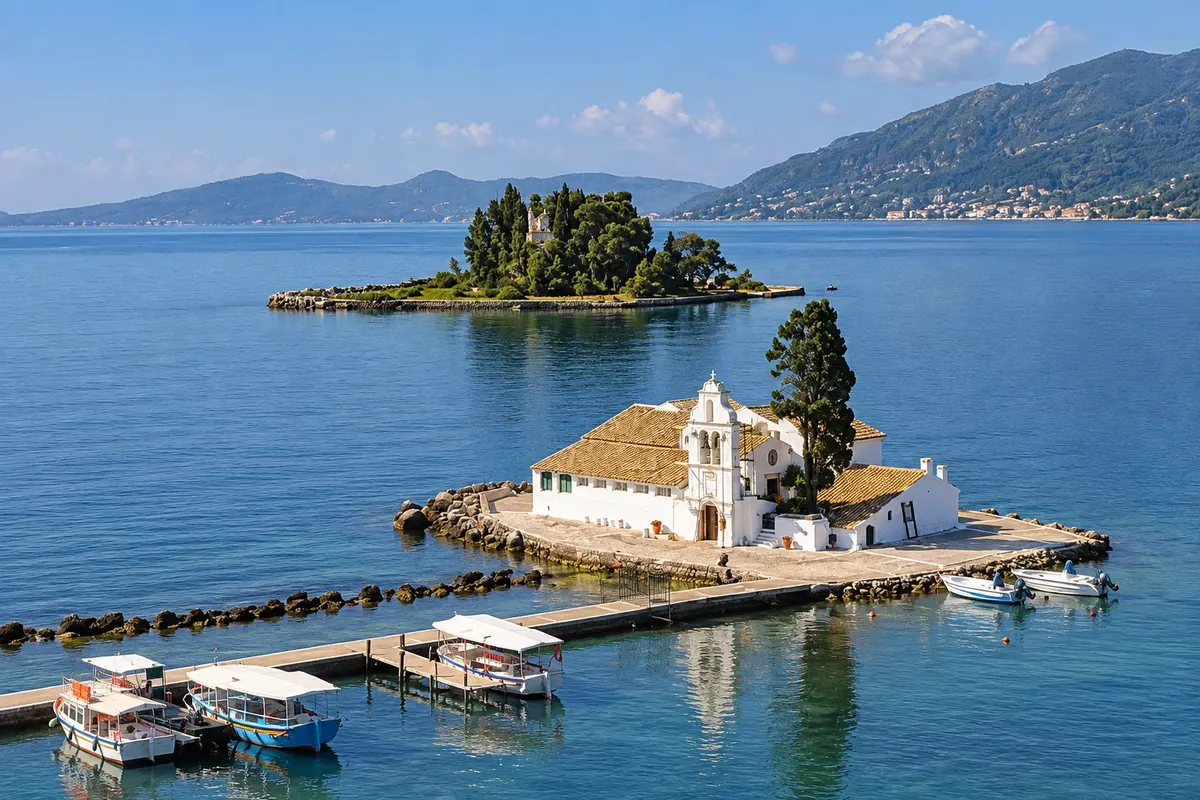
In the photo: Vlacherna and Pontikonisi

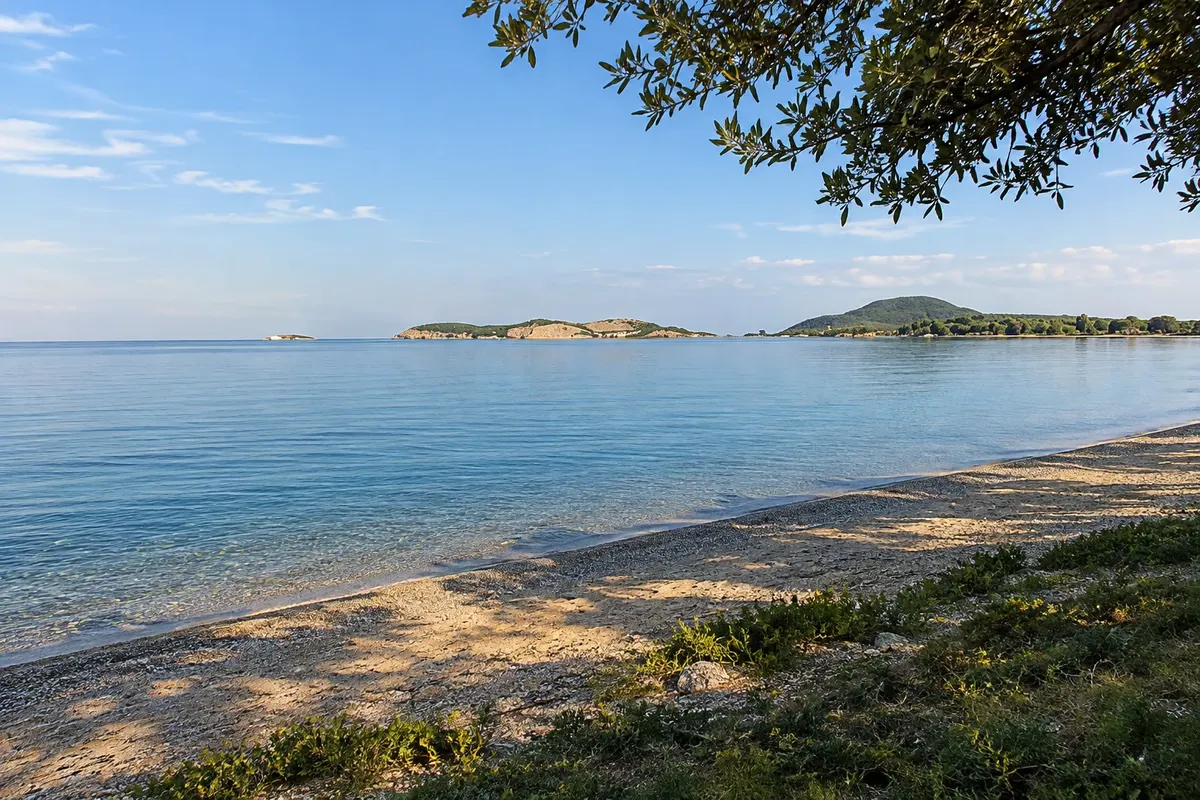
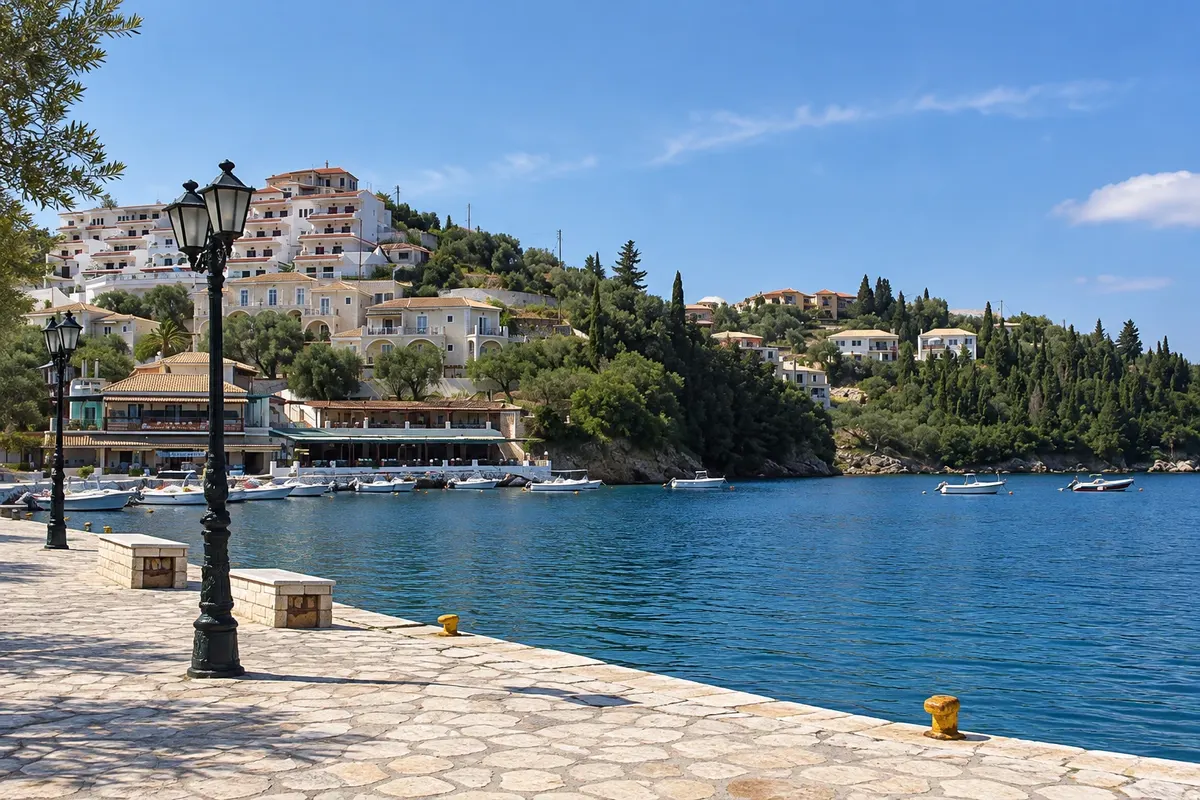
Illustrative images. The pictures in this guide are illustrations based on the real place, not photographs, and may differ from it.

Get it on Google Play Send your photos

Get to know the place

A region to enjoy
at your own pace.

Corfu (Kerkyra in Greek) is the northernmost of the Ionian islands, facing Albania and the coast of Epirus, and the capital of the Ionian Islands region. Unlike the Aegean islands, it is green year-round, covered in olive trees and cypresses, with real rain in winter. It was Venetian from 1386 to 1797, then French and British, and only became part of Greece in 1864. That history explains the town: arcades, palaces and churches with Italian bell towers, a cricket ground, coffee with milk in the morning and the kumquat, a fruit brought by the British.

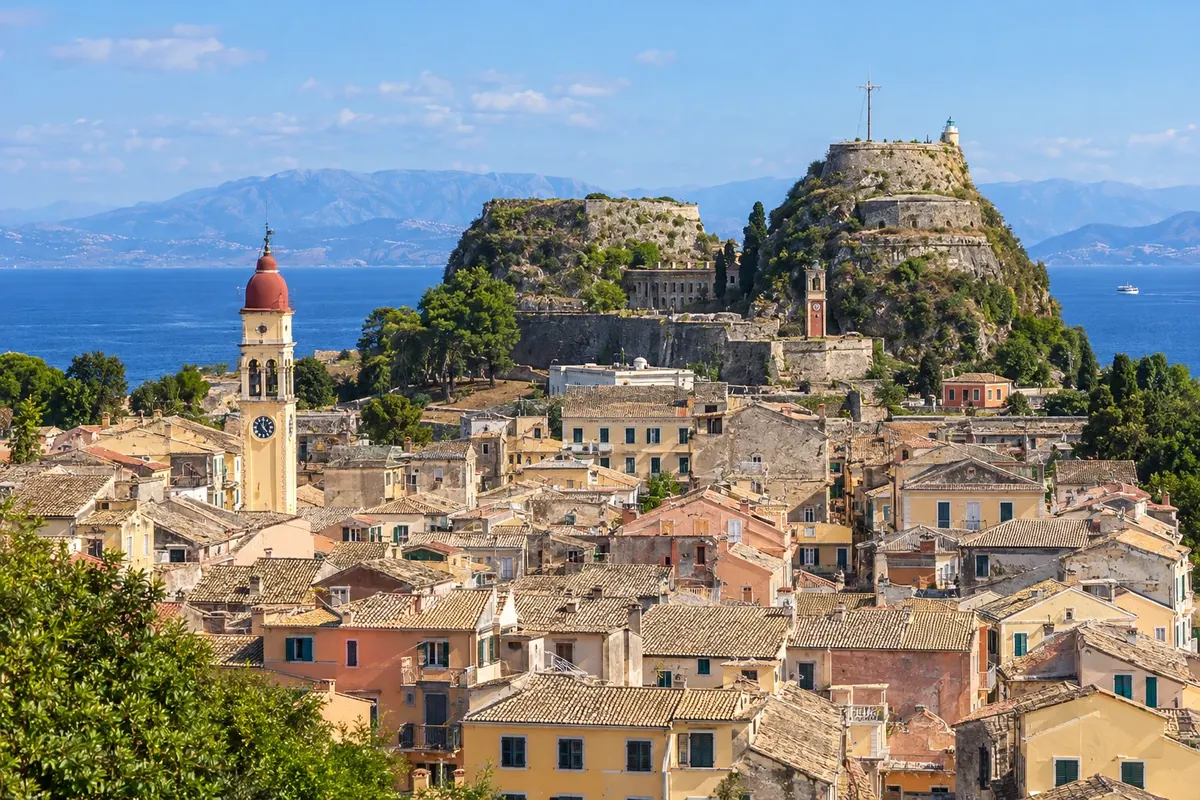
The town of Corfu, inscribed by UNESCO in 2007, sits on a peninsula between two Venetian fortresses. Between them spreads the old town, a maze of stone alleys (kantounia) with laundry at the windows, the church of São Spyridon, the island’s patron, the British palace that is now an Asian art museum, and the Spianada, the large esplanade with the arcades of the Liston.

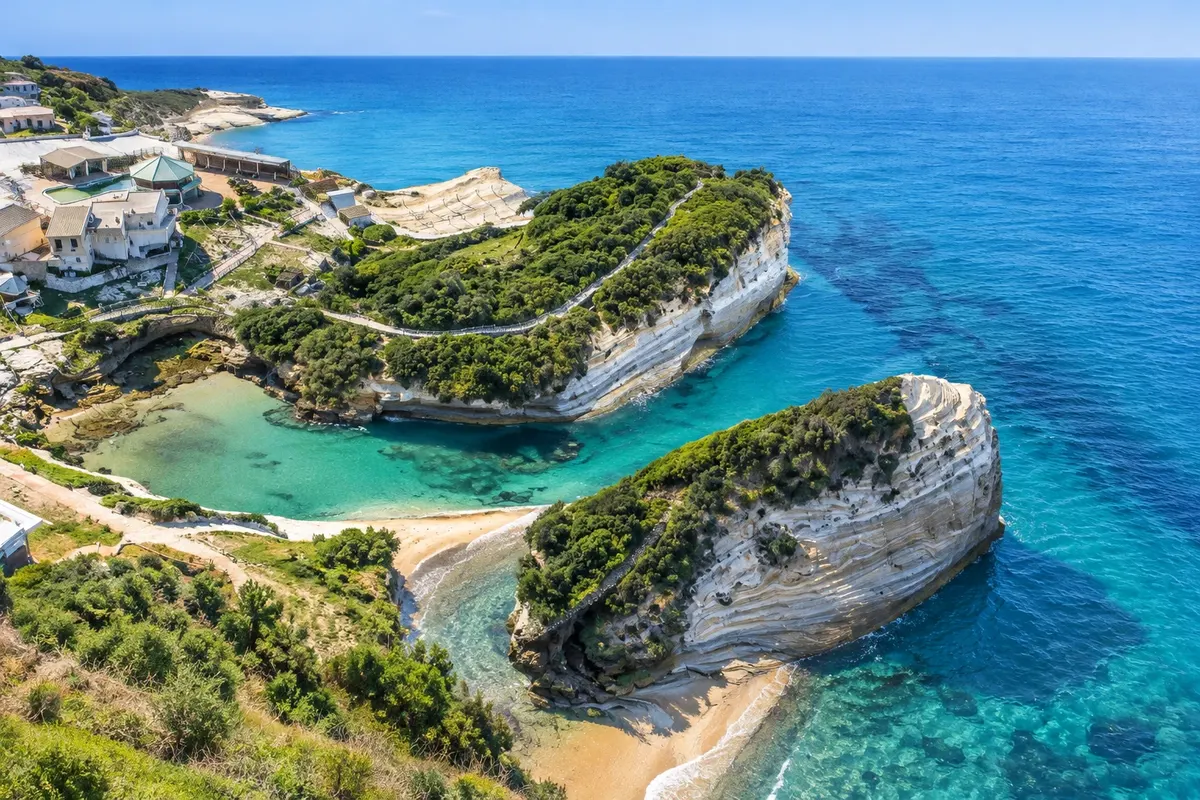
Outside the town, the east coast is calm, with villas and coves facing the mainland; to the west, cliffs and sandy beaches open to the sea, such as Paleokastritsa, with its monastery, and Pelekas. The north has the sandstone formations of Sidari and the castle of Angelokastro atop a rock. The interior is made up of villages, olive groves and tavernas.

Orthodox Easter is the island’s biggest celebration, with processions, bands and the custom of throwing earthenware pots from windows on Holy Saturday.

This destination brings together 2 cities: Corfu, Igoumenitsa.

Share: WhatsApp
Traveler, share your experiences through photos Up to 5 photos of each place you visited.

One destination, many paths

The cities on this trip

Start with one city or combine several in your itinerary.

Where Corfu is
CorfuIgoumenitsa

Contornos: Natural Earth (domínio público). Adaptação do Cidade Turismo.

How to get there: Corfu

✈ Aeroporto Internacional de Corfu Ioannis Kapodistrias (CFU) · 3 km to Corfu

Confirm before buying. From Athens, the flight to Corfu takes about an hour; in season there are flights from several European cities. By land and sea, take the KTEL bus to Igoumenitsa and a one-and-a-half-hour ferry to Corfu port, year-round. There are ferries from Italy depending on the season.

Suggested arrival point: Corfu

The local experience

Things to do in Corfu

Igoumenitsa · Epiro · Museum

Archaeological Museum of Igoumenitsa

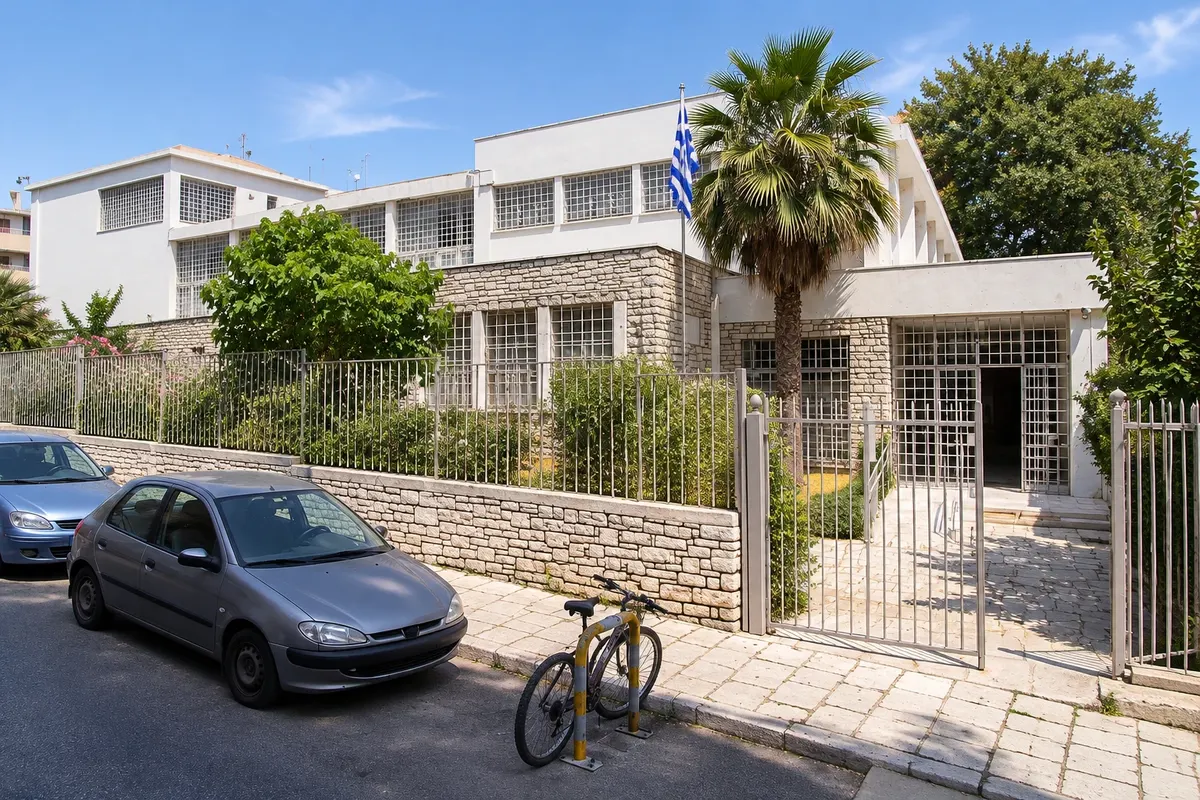
Museum opened in 2009 covering the history of Tesprócia, from the ancient cities of the region to the Byzantine period, organized into five thematic sections.

Cidade velha de Corfu (Palia Poli tis Kerkyras)
Corfu · Ilhas Jônicas · Neighborhood

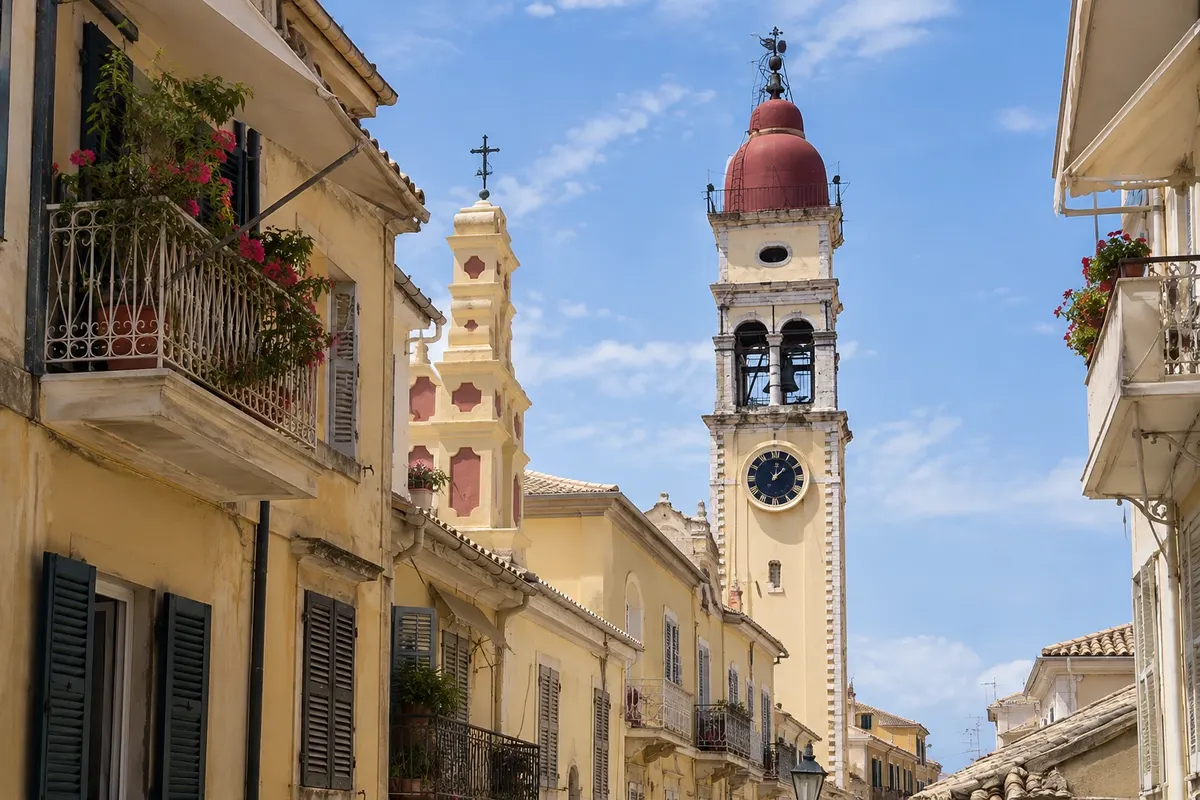
Cidade velha de Corfu (Palia Poli tis Kerkyras)

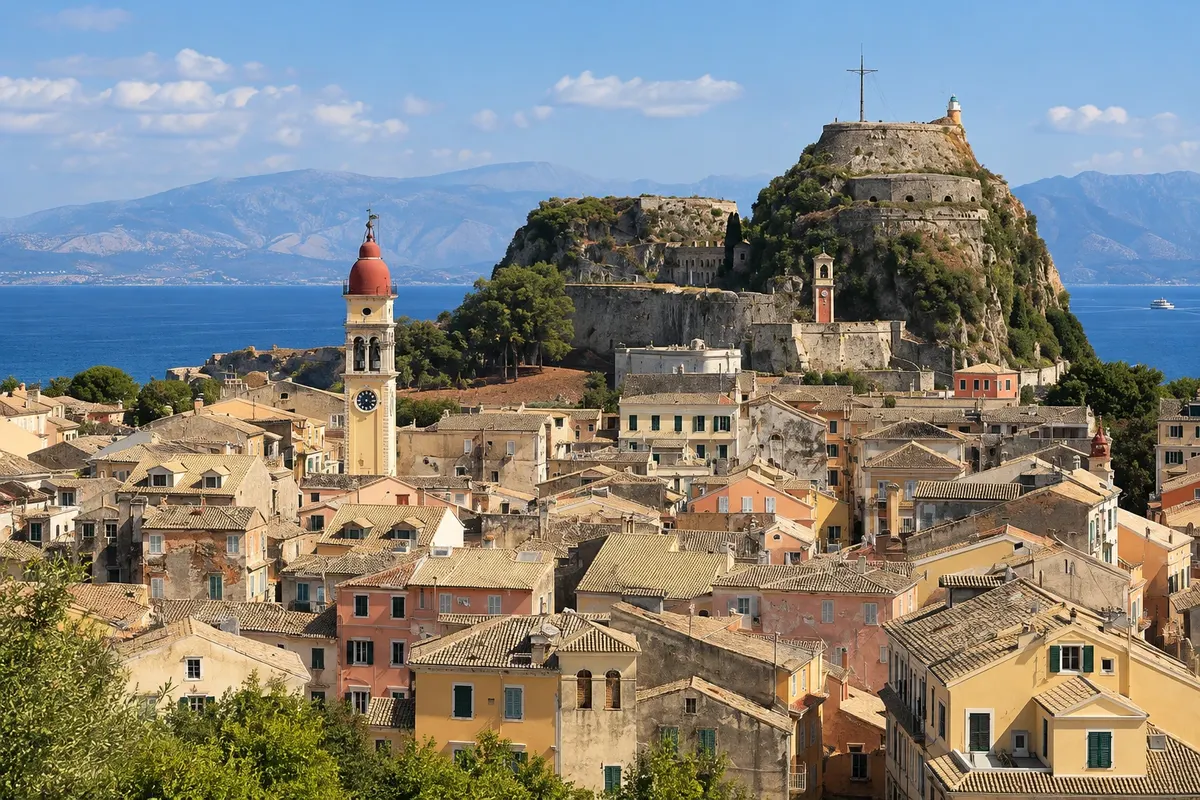
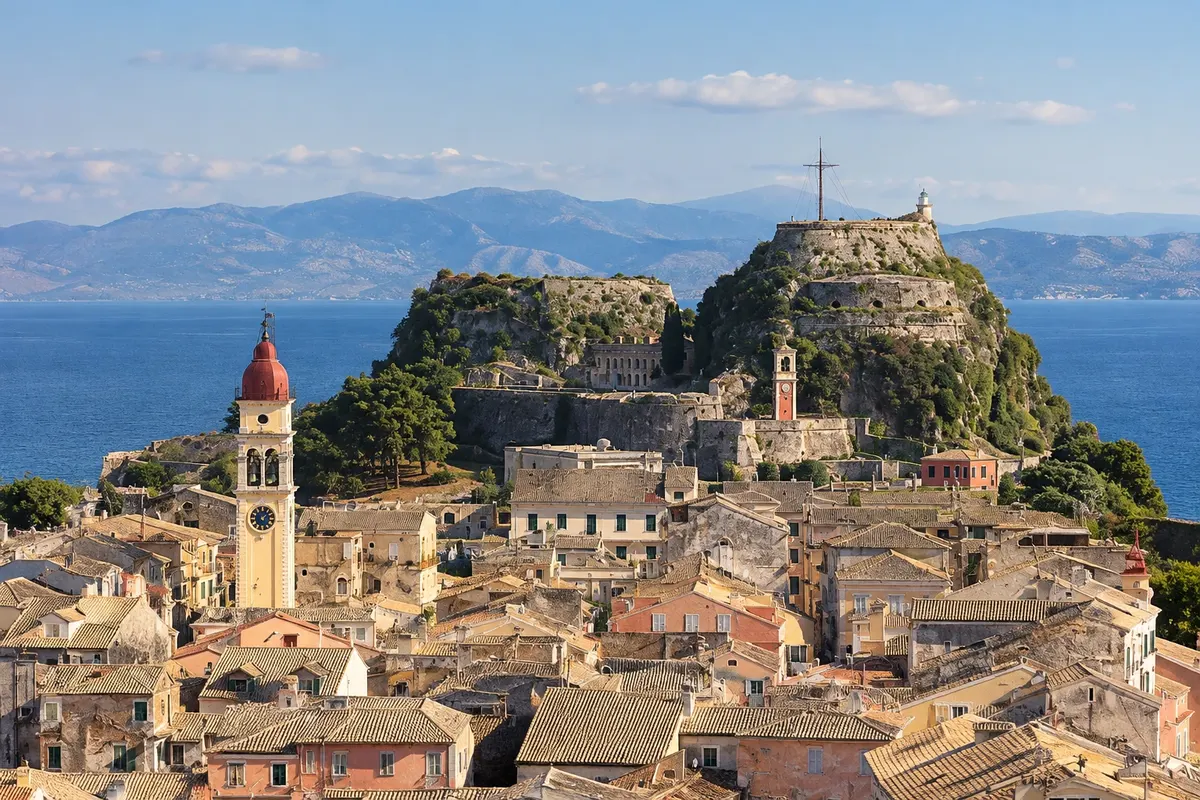
Corfu’s Old Town, a UNESCO World Heritage site: Venetian alleys (kantounia), tall houses with laundry at the windows, churches with Italian-style bell towers and squares between the two fortresses.

Drepano Beach
Igoumenitsa · Epiro · Beach

Drepano Beach

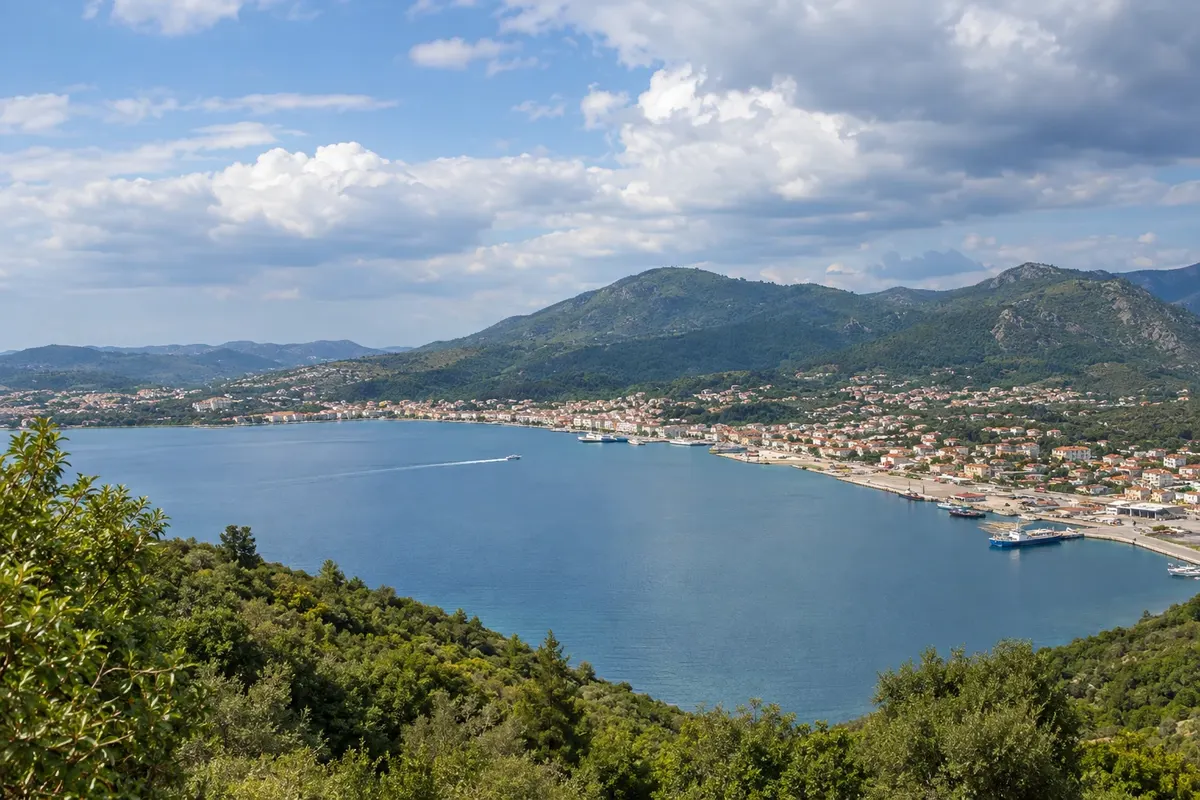
Long stretch of sand on the northwest side of the gulf of Igoumenitsa, between the sea and a lagoon, a few minutes from town.

Fortaleza Velha (Palaio Frourio)
Corfu · Ilhas Jônicas · Fortress

Fortaleza Velha (Palaio Frourio)

The Fortaleza Velha, on a peninsula separated from the town by a sea-water moat, with 16th-century Venetian bastions, a Doric church of São Jorge, a lighthouse and views over the town and the mainland.

See 15 more places in Corfu
Fortaleza Nova (Neo Frourio)
Corfu · Ilhas Jônicas · Fortress

Fortaleza Nova (Neo Frourio)

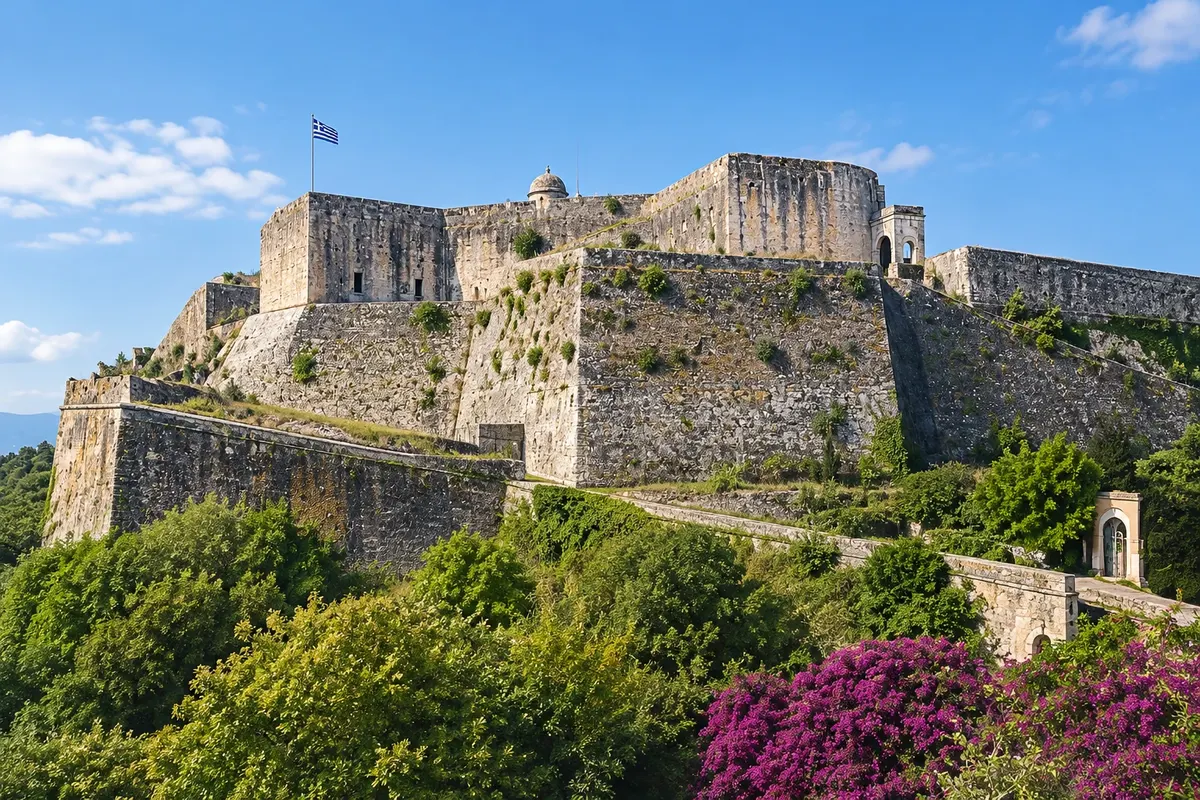
The Fortaleza Nova, from the late 16th century, on the hill of São Marcos above the old port: galleries, cisterns and Venetian bastions with the Lion of São Marcos over the gate and views over the town and the sea.

Syvota
Igoumenitsa · Epiro · Village and beaches

Syvota

A fishing village south of Igoumenitsa, with coves of clear water, islets covered in pines and beaches such as Bella Vraka, connected to a small islet by a sand spit.

Acheron Springs
Igoumenitsa · Epiro · Nature

Acheron Springs

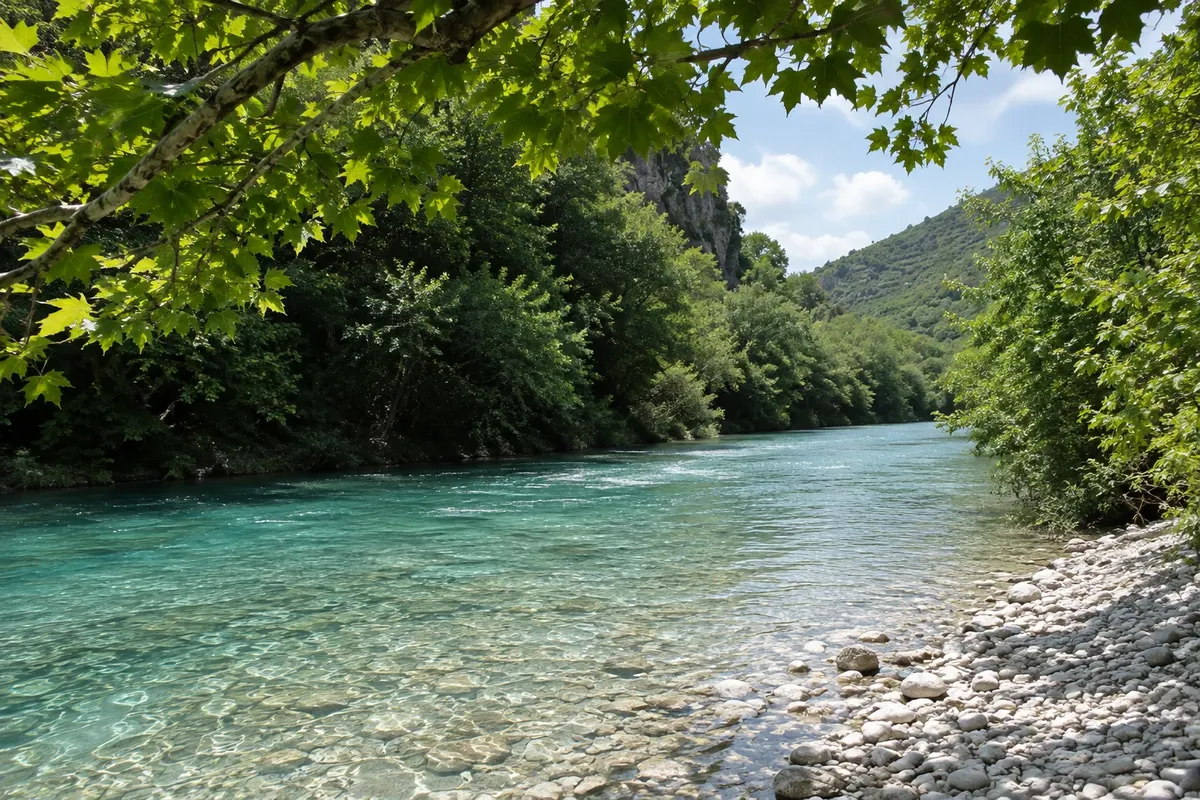
The springs of the river Acheron, near the village of Glyki, with a trail that follows the riverbed, through cold water, between rock walls.

Spianada e Liston
Corfu · Ilhas Jônicas · Square

Spianada e Liston

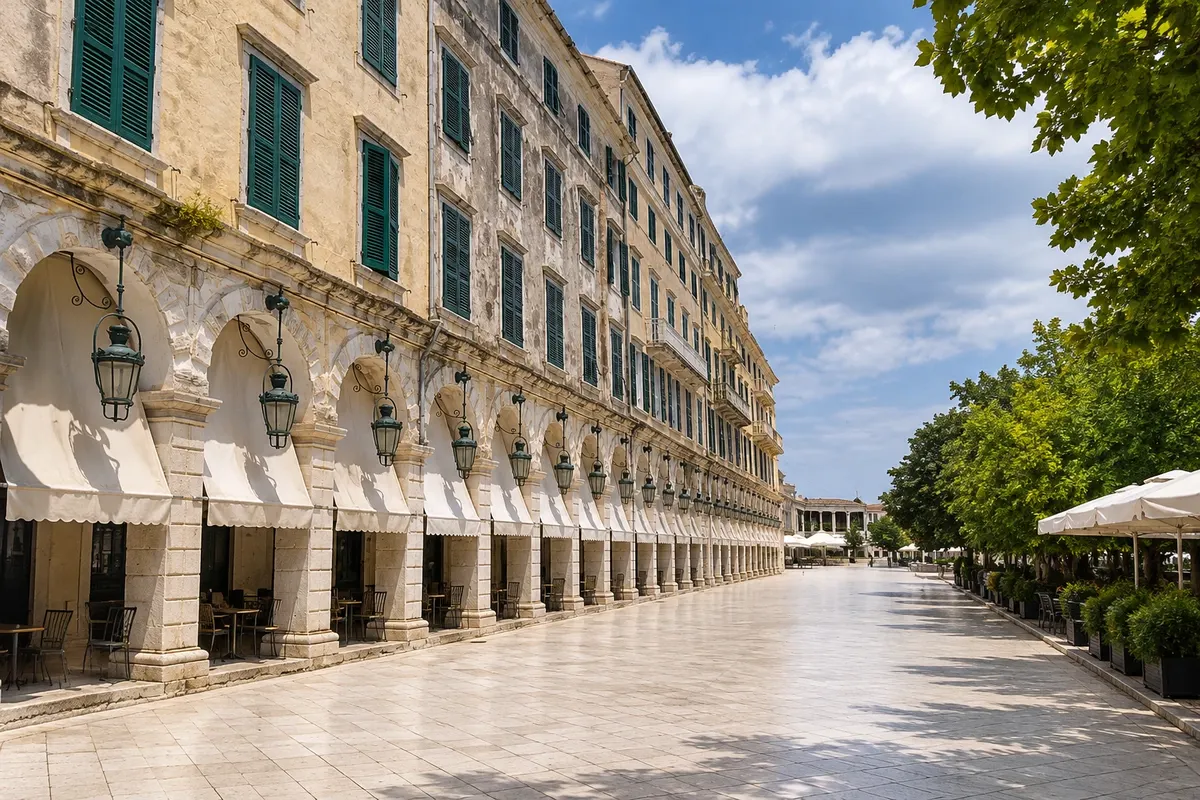
The large esplanade between the old town and the Fortaleza Velha, with a cricket field, a bandstand, the rotunda de Maitland and the arcades of the Liston, inspired by the rue de Rivoli, full of cafés.

Necromanteion of Acheron
Igoumenitsa · Epiro · Archaeological site

Necromanteion of Acheron

Hellenistic ruins on a hilltop near the mouth of the Acheron, identified in the 1950s as the oracle of the dead mentioned by Homer and Herodotus, an interpretation now debated.

Palácio de São Miguel e São Jorge (Anaktora Agion Michail kai Georgiou)
Corfu · Ilhas Jônicas · Palace

Palácio de São Miguel e São Jorge (Anaktora Agion Michail kai Georgiou)

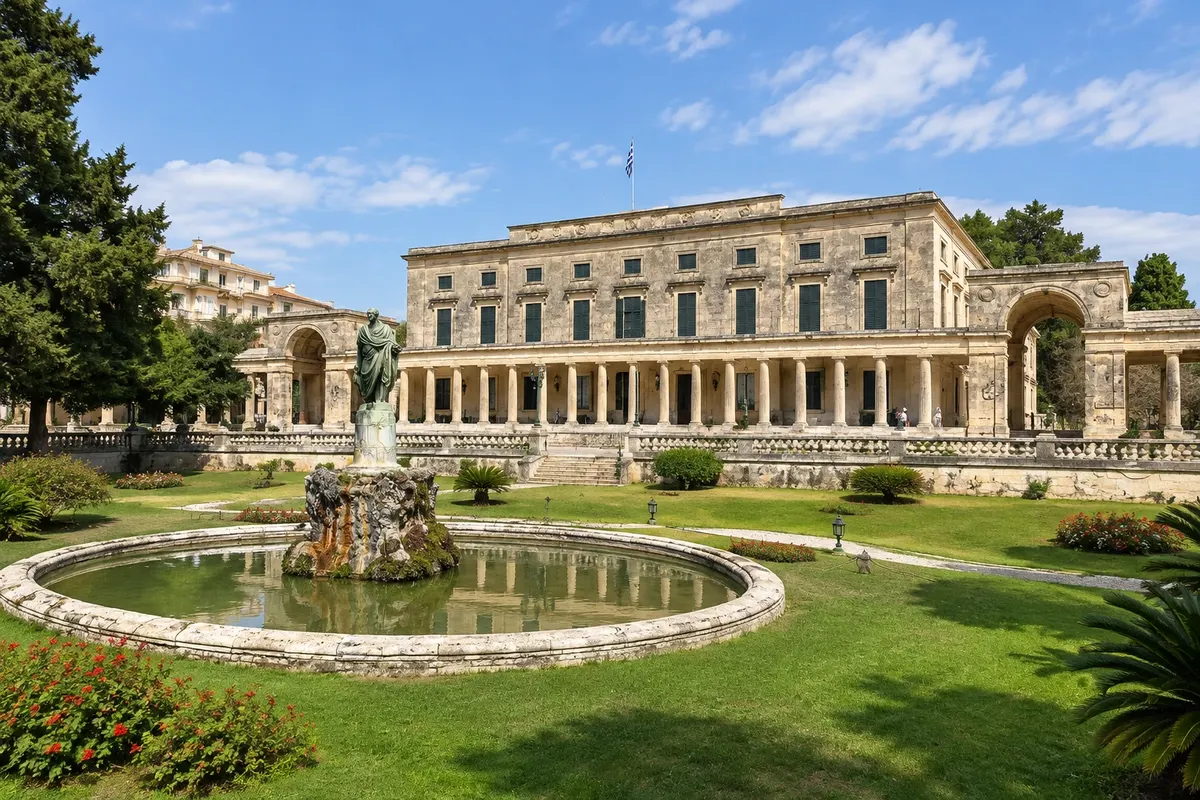
The neoclassical palace of the British high commissioners, dating from 1824, at the end of the Spianada, today houses the Museu de Arte Asiática, with about 10,000 pieces from China, Japan, India and Southeast Asia.

Igreja de São Spyridon (Agios Spyridonas)
Corfu · Ilhas Jônicas · Church

Igreja de São Spyridon (Agios Spyridonas)

The church of Corfu’s patron saint, dating from 1589, with the tallest bell tower in the Ilhas Jônicas and the saint’s body in a silver reliquary, carried in procession through the town four times a year.

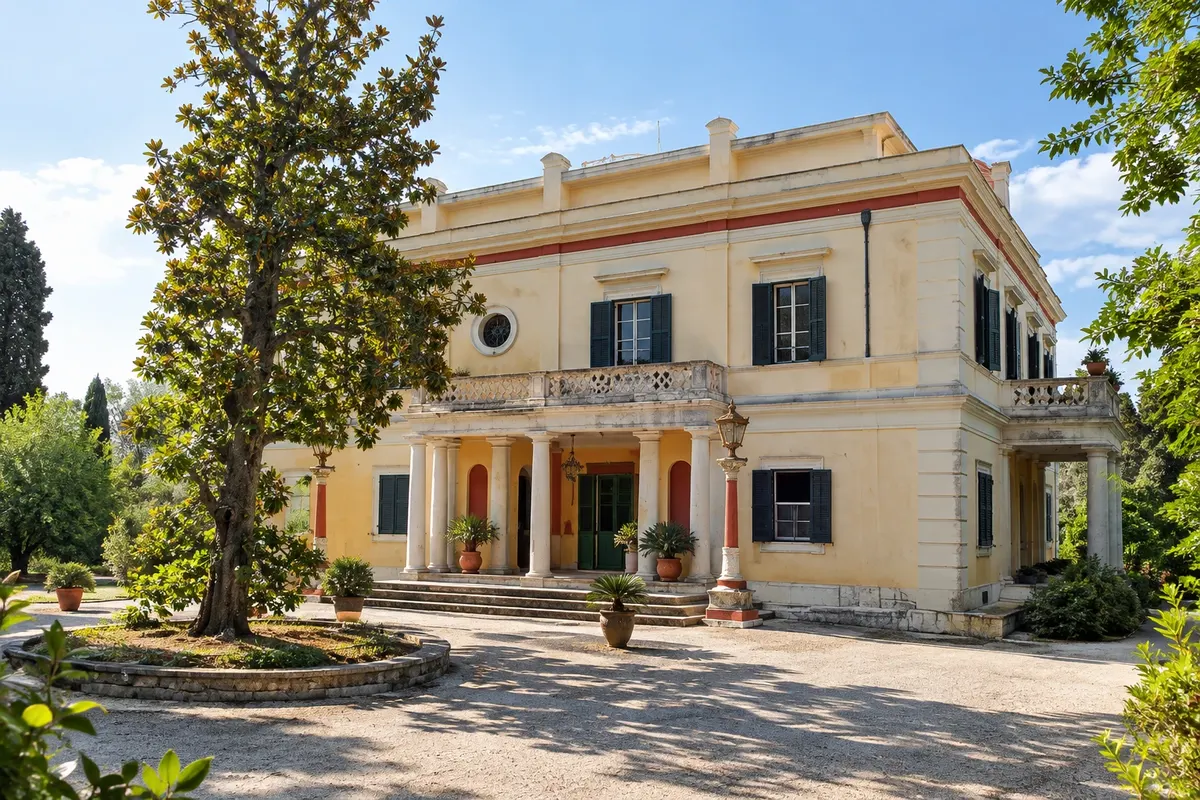
Mon Repos
Corfu · Ilhas Jônicas · Palace

Mon Repos

Neoclassical villa from 1831 in a woodland overlooking the sea, where Prince Philip, husband of Queen Elizabeth II, was born. Today it houses the Museu de Paleópolis, with the finds from the ancient city that once stood around it.

Kanoni, Vlacherna e Pontikonisi
Corfu · Ilhas Jônicas · Viewpoint

Kanoni, Vlacherna e Pontikonisi

The Kanoni lookout over the lagoon, with the white monastery of Vlacherna connected to the mainland by a causeway and, behind it, the islet of Pontikonisi with its Byzantine chapel: the most iconic image of Corfu.

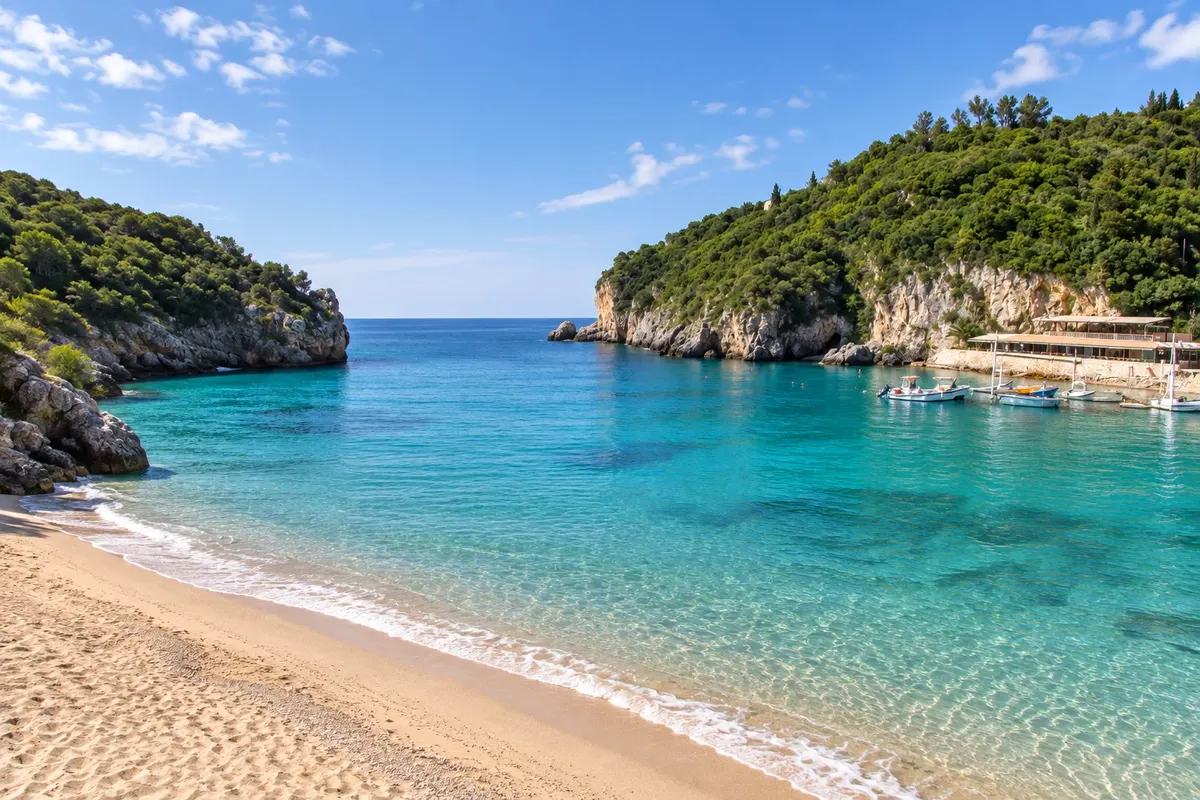
Paleokastritsa e Mosteiro da Theotokos (Moni Theotokou Palaiokastritsas)
Corfu · Ilhas Jônicas · Monastery

Paleokastritsa e Mosteiro da Theotokos (Moni Theotokou Palaiokastritsas)

The Monastery of the Virgin atop the Paleokastritsa promontory, founded in 1225 and rebuilt in the 18th century, with a courtyard of bougainvillea, a small museum and views over the coves of the west coast.

Angelokastro
Corfu · Ilhas Jônicas · Castle

Angelokastro

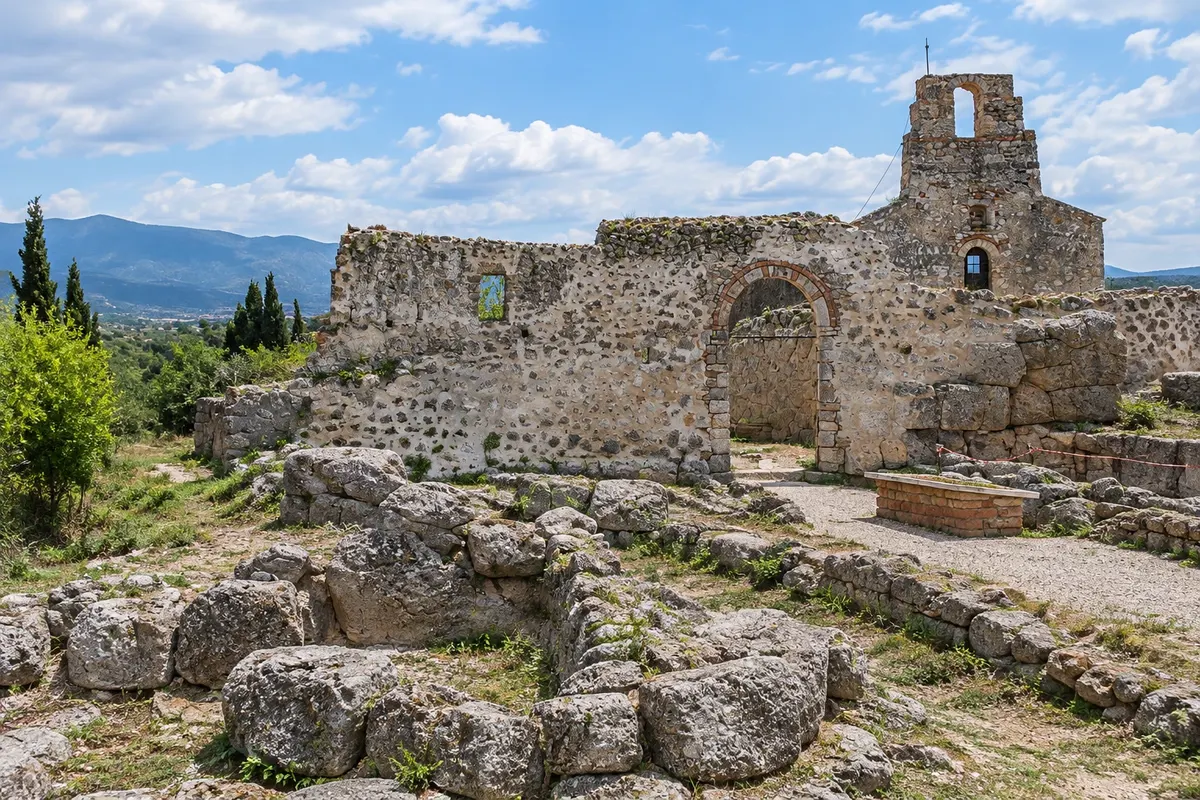
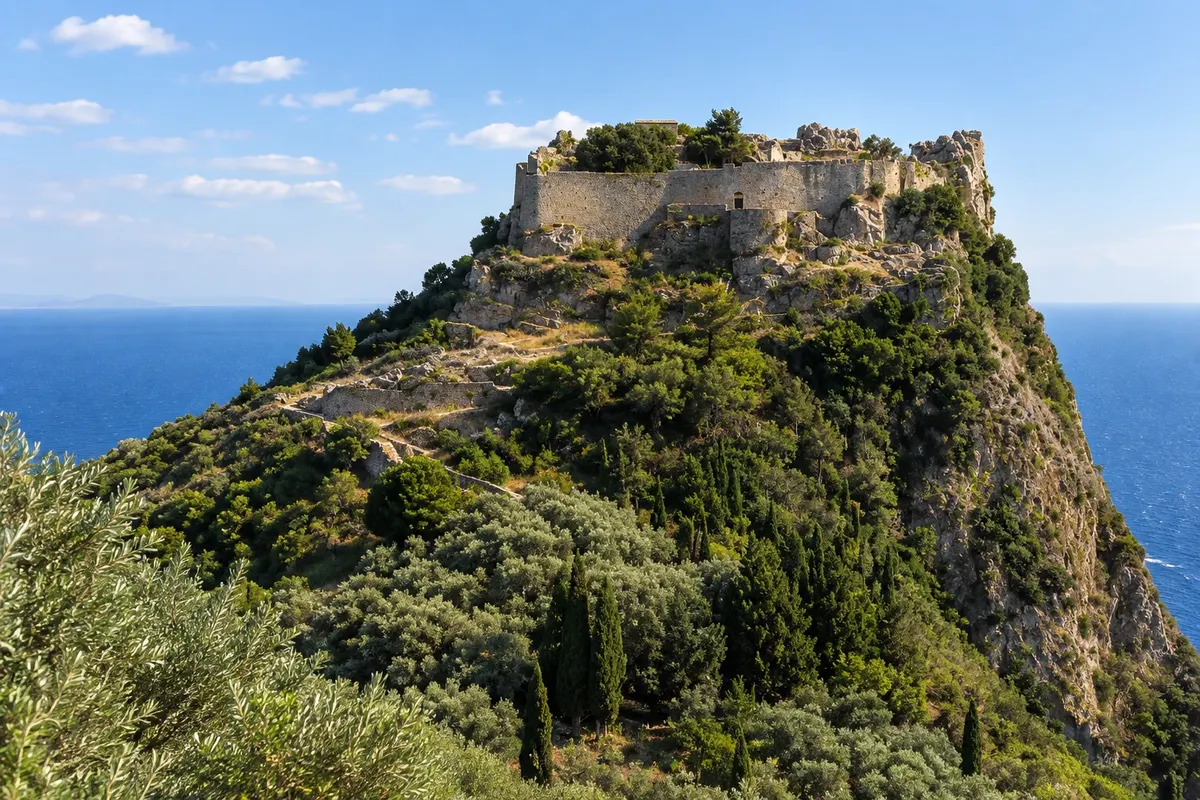
Byzantine castle ruins atop a cliff 305 meters above the sea on the northwest coast, which was never captured. A 20-minute walk up and views from Paleokastritsa to the open sea.

Museu Arqueológico de Corfu (Archaiologiko Mouseio Kerkyras)
Corfu · Ilhas Jônicas · Museum

Museu Arqueológico de Corfu (Archaiologiko Mouseio Kerkyras)

The renovated Archaeological Museum of Corfu, featuring the Gorgon pediment from the temple of Artemis—the oldest stone pediment in Greece—the Lion of Menecrates and finds from the ancient city.

Museu Bizantino de Antivouniotissa (Mouseio Antivouniotissas)
Corfu · Ilhas Jônicas · Museum

Museu Bizantino de Antivouniotissa (Mouseio Antivouniotissas)

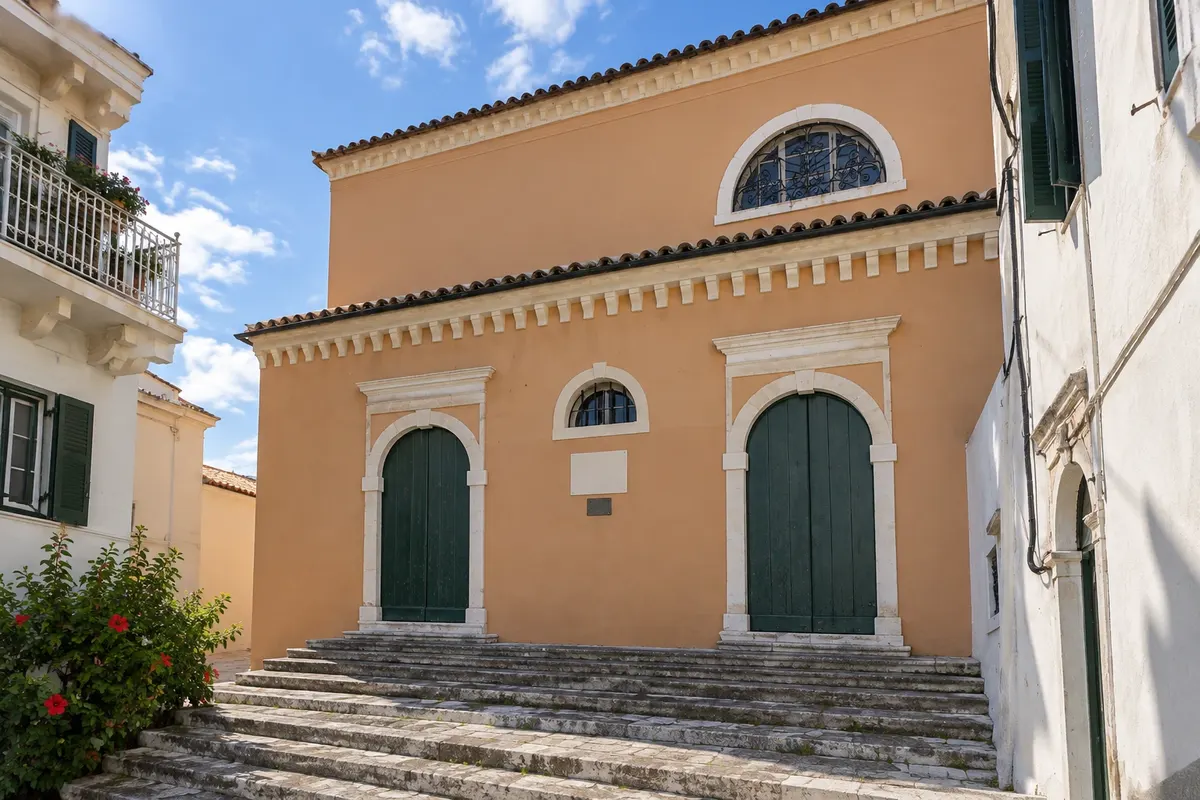
Byzantine museum of Corfu in a 15th-century church in Campiello, with icons from the 15th to the 19th centuries of the Cretan and Ionian schools and a courtyard with views of the sea and the mainland.

Pelekas e Trono do Kaiser
Corfu · Ilhas Jônicas · Village

Pelekas e Trono do Kaiser

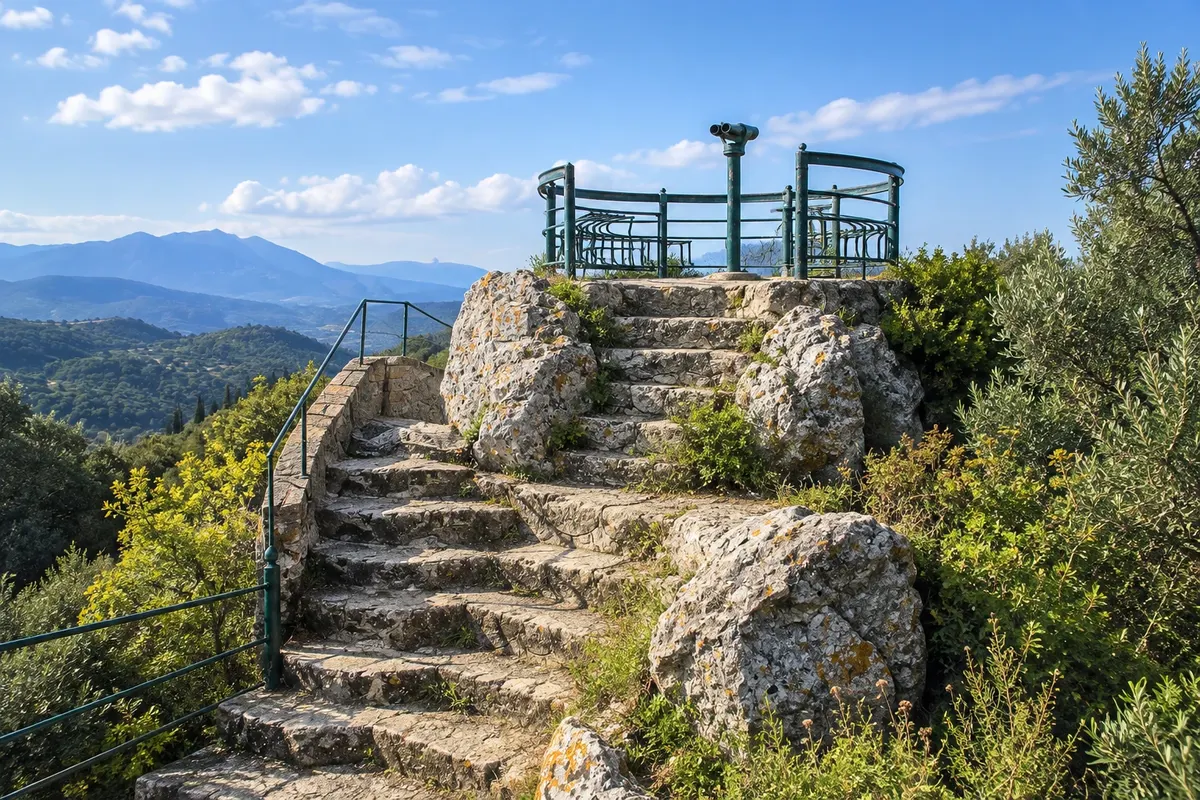
Village on top of a hill on the west coast, 13 km from the town, with the viewpoint called Trono do Kaiser where Wilhelm II used to watch the sunset, and the beaches of Kontogialos and Glyfada below.

Canal d'Amour (Sidari)
Corfu · Ilhas Jônicas · Beach

Canal d'Amour (Sidari)

Sandstone formations sculpted by the sea at Sidari, on the north of the island: a narrow channel between stone walls, small coves and the legend that those who swim through it find love.

Before you go

Practical information

A little planning leaves more time to enjoy the journey.

When to go

From May to June and from September to early October, with warm sea, long days and fewer people than at the height of the season. July and August are hot and crowded, with high-season prices. From November to March it rains a lot, many coastal hotels and restaurants close and boats to the beaches stop; the town remains lively, and Orthodox Easter, in April or May, is the most special time of the year.

The seasons shown are the most usual ones; nature doesn't always follow the calendar.

How many days to stay

Two days are enough for the old town at a relaxed pace: fortresses, São Spyridon, the palace and the Asian art museum, the Archaeological Museum and Kanoni. Four days allow you to include Paleokastritsa and Angelokastro in one day and Pelekas or Sidari on another. A week is the right length for those who want a beach every day and a boat trip to Paxos or Antipaxos.

Which city to stay in

The old town (Palia Poli) is the best base for those without a car: everything is walkable, with quiet lanes at night and the Spianada nearby; rooms are small and there are many stairs. Garitsa, south of the Old Fortress, is a residential neighborhood facing the bay, a 10-minute walk from the center, with larger hotels. Kanoni, near the airport, has views and upscale hotels, but lives with aircraft noise. For beaches, Paleokastritsa and Glyfada on the west coast, and Dassia and Gouvia on the east, close to town; the south of the island is quieter and more remote.

Respect the place

Take your trash with you, follow the signs and support local businesses. In natural areas, follow the visiting guidelines.

Get your questions answered

Frequently asked questions about Corfu

How many days to stay in Corfu?

Two days for the old town and Kanoni; four to include Paleokastritsa, Angelokastro and a west-coast beach; a week for those who want a beach every day and a boat trip to Paxos.

Do you need a car in Corfu?

In town, no: everything is walkable. For beaches and monasteries, the KTEL green bus reaches the main spots, like Paleokastritsa, Sidari and Pelekas, with less frequent schedules in winter. A car gives freedom to reach smaller beaches and inland villages; the roads are narrow and winding.

What is the best time to go?

May, June and September: pleasant sea, long days and fewer people. July and August get crowded. In winter it rains, many coastal services close, but the town still functions. Orthodox Easter is the most attended celebration.

Is Corfu doable as a day trip from Athens?

It's not worth it. Even by plane, going and returning the same day leaves only a few hours on the island. The reasonable minimum is two nights.

What do you eat in Corfu?

Dishes with Venetian influence: pastitsada (meat with pasta in a tomato sauce flavored with cinnamon and clove), sofrito (meat in a white wine and garlic sauce) and bourdeto (fish with pepper). Kumquat liqueur and sweets are the typical souvenir. Ginger beer (tsitsibira) is a British legacy.

Rotas entre países

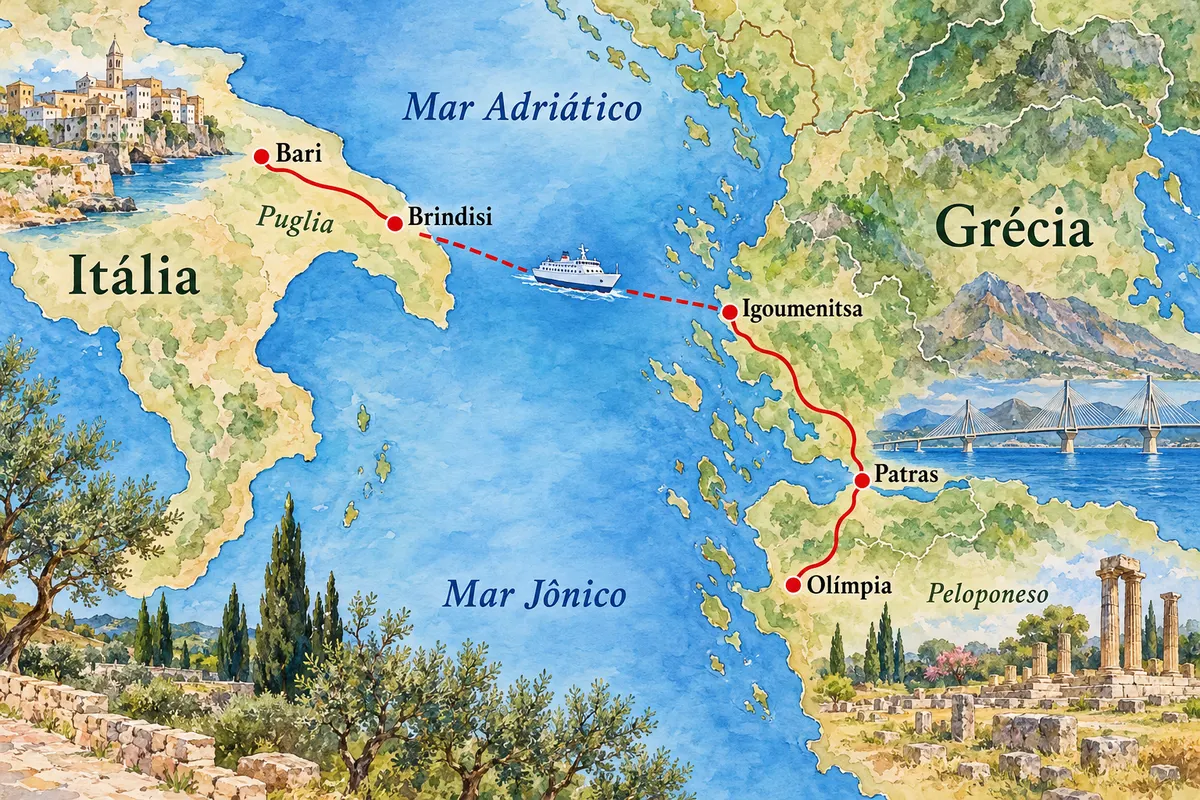
Corfu is on the Italy–Greece ferry across the Adriatic

From Puglia to Greece by sea: overnight ferries depart from Bari and Brindisi and arrive in the morning at Igoumenitsa, in Epirus, or continue to Patras, the gateway to the Peloponnese.

Illustrative map, not to scale. Tap a city to open its page.
Illustrated map of Italy–Greece ferry across the Adriatic
Explore the Italy–Greece ferry across the Adriatic
Explore other destinations Search by state and city
Back