

 Brazil
 Argentina
 Chile
Chile Colombia
 Peru
Peru Uruguay
 Germany
 Belgium
 Spain
Spain Greece
 the Netherlands
 Ireland
 Italy
Italy Portugal
 the United Kingdom
 Switzerland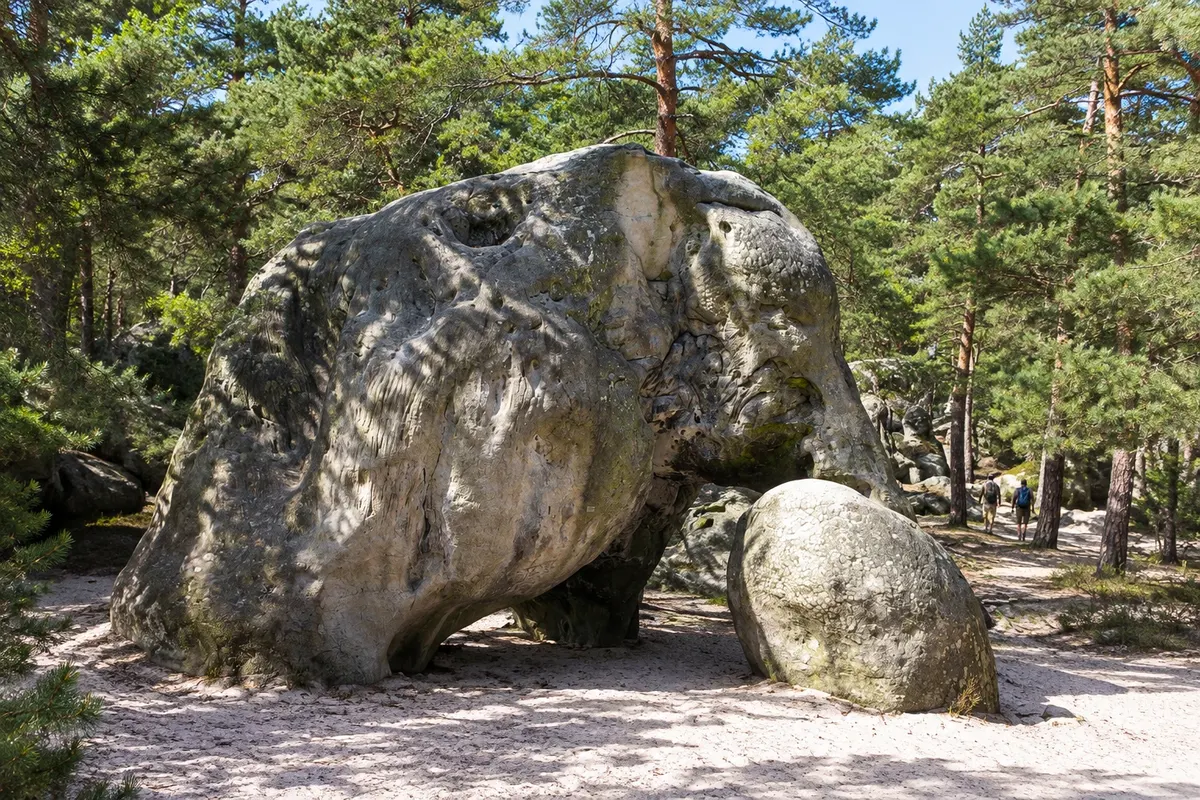
Park · Fontainebleau, Ilha de França
Forêt de Fontainebleau
Forest of about 25,000 hectares around the town, with waymarked trails since the 19th century, white sand gorges and thousands of sandstone boulders used for bouldering.
Illustrative images. The pictures in this guide are illustrations based on the real place, not photographs, and may differ from it.

Discover
About Forêt de Fontainebleau
The Forêt de Fontainebleau surrounds the town on all sides. The massif covers about 25,000 hectares of oaks, beeches, pines, sand and sandstone boulders, and was a royal hunting ground for centuries. Today it is a biosphere reserve and one of the most visited forests in France.
The trails are a story in themselves. From 1842 Claude-François Denecourt began opening and waymarking paths through the forest; the sentiers bleus, the blue paths, now amount to over 150 km and are considered one of the oldest marked trail networks in the world. Among the most popular walks are the Gorges de Franchard, a basin of white sand surrounded by rocks, and the Gorges d'Apremont, near Barbizon.
The sandstone boulders made Fontainebleau a world reference for bouldering, low‑height climbing without ropes. There are thousands of boulders with circuits painted by difficulty color, from orange for beginners to black. Climbers from many countries come to places like Bas-Cuvier, Cuisinière, Rocher Canon and Apremont.
There are also protected sections in the forest, such as Bas-Bréau, with very old oaks that inspired the painters of Barbizon in the 19th century.
Before you go
Practical information
Cidade Turismo reviews its information regularly, but something may have changed. Check with the place before planning your trip.
How much time to set aside
From 2 hours for a short hike to a full day for a long hike or climbing.
Best time
From the European spring to autumn, April to October. For climbing, spring and autumn are usually better because the rock stays dry and cool; in summer the sandstone heats up. After heavy rain the wet rock becomes fragile and climbing is not recommended.
How to get there
Some access points start on foot from the town and from the Fontainebleau-Avon station, such as Rocher d'Avon and Rocher Bouligny. Spots like Franchard and Apremont are 7–10 km from town and require a car, taxi, bike or seasonal shuttles, which usually run from April to October.
Tip
Download a trail map beforehand, because mobile signal fails in some sections. To climb without experience, hire a guide or go to a local climbing school and bring a crash pad, which can be rented in town. Bring water and snacks: there are no shops inside the forest.
Get your questions answered
Frequently asked questions about Forêt de Fontainebleau
Do you need experience to climb in Fontainebleau?
No. The boulders are low and there are orange and yellow circuits for beginners. Even so, anyone who has never climbed should go with a guide or a school, use a crash pad and not climb on wet rock.
Which trail to do on a day trip?
The Gorges de Franchard and the Gorges d'Apremont are the most popular, with loops of 10 to 12 km, taking 3 to 4 hours. For something shorter, the sentiers bleus near the town have sections of one or two hours.
Is it possible to get to the forest without a car?
You can for some sections near the town and the station. For Franchard, Apremont and Barbizon, use a taxi, bicycle or the seasonal shuttles, which usually run from April to October.
Is the forest open year-round?
Yes. It's a public forest, without gates, and there's no entrance fee. In winter the days are short, so plan to return before dark.