Lakes and Volcanoes

Los Lagos · Araucanía · Chile

Lakes and Volcanoes

Cold-water lakes, snow-capped volcanoes and towns of German heritage in southern Chile, between Puerto Varas, Frutillar, Puerto Montt and Pucón.

South

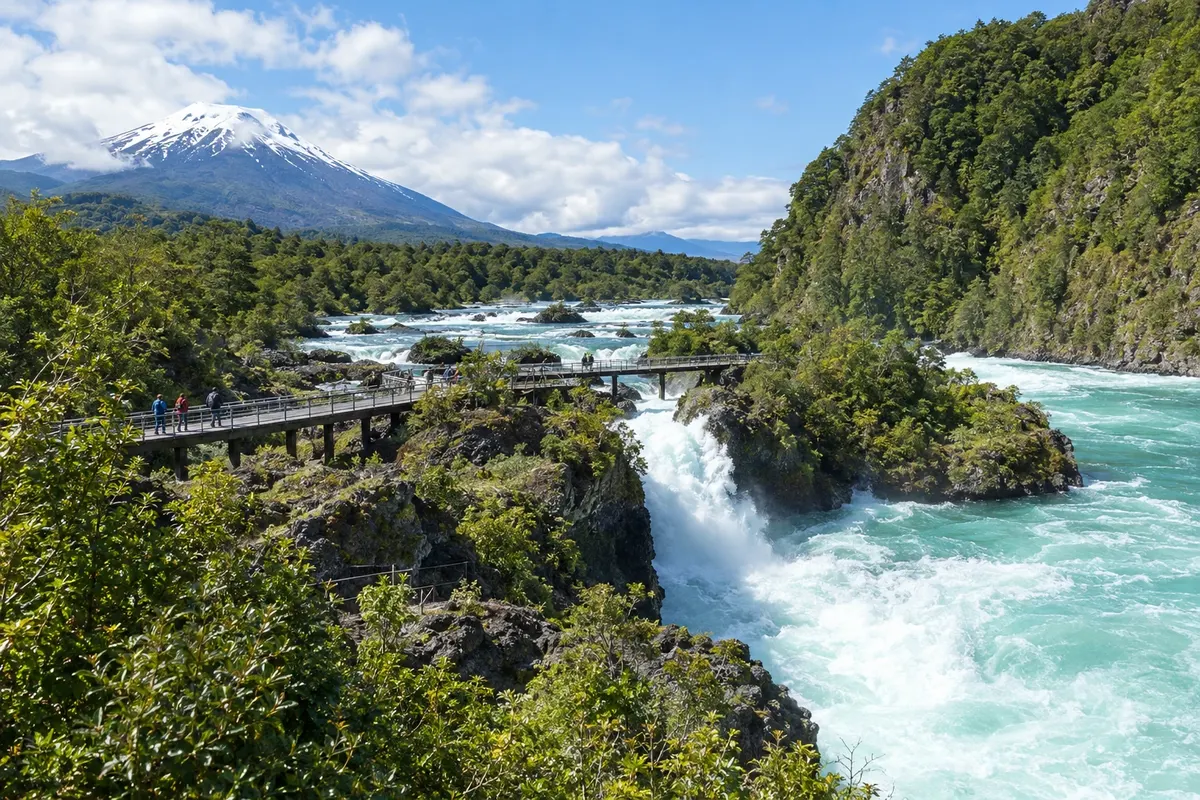
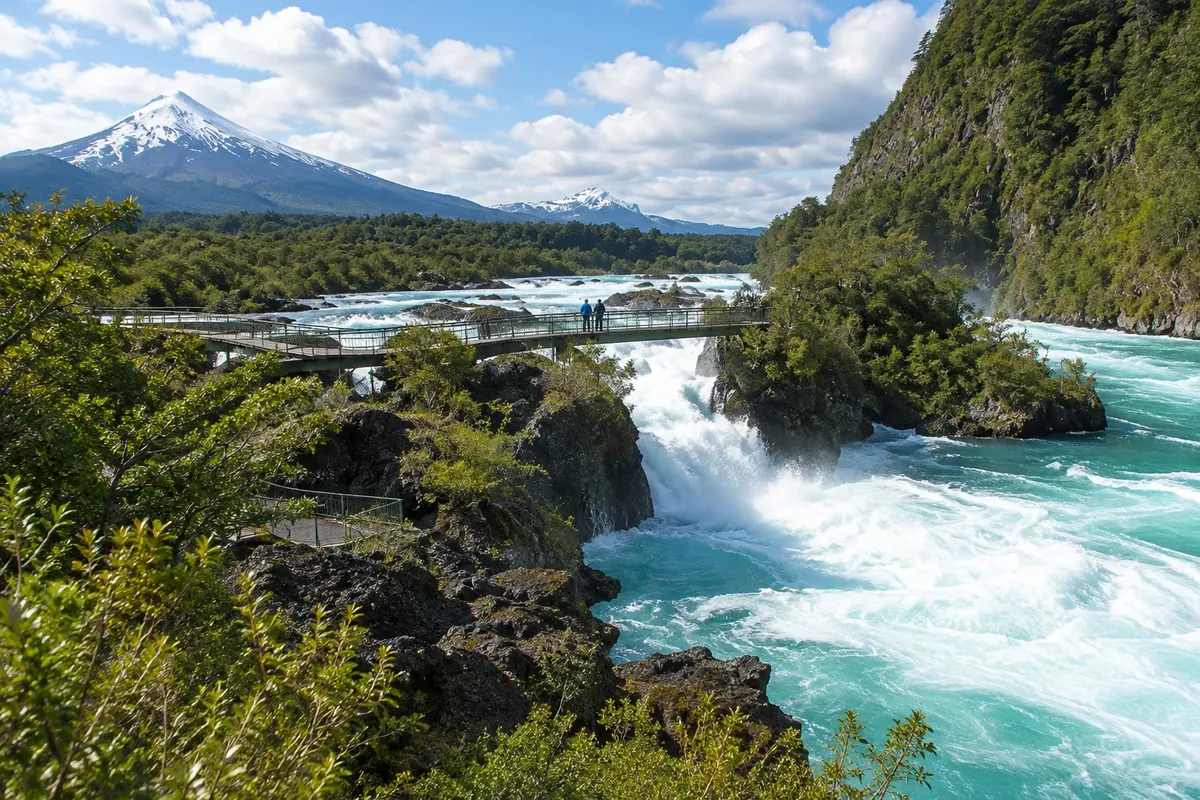
In the photo: Saltos del Petrohué, Parque Nacional Vicente Pérez Rosales

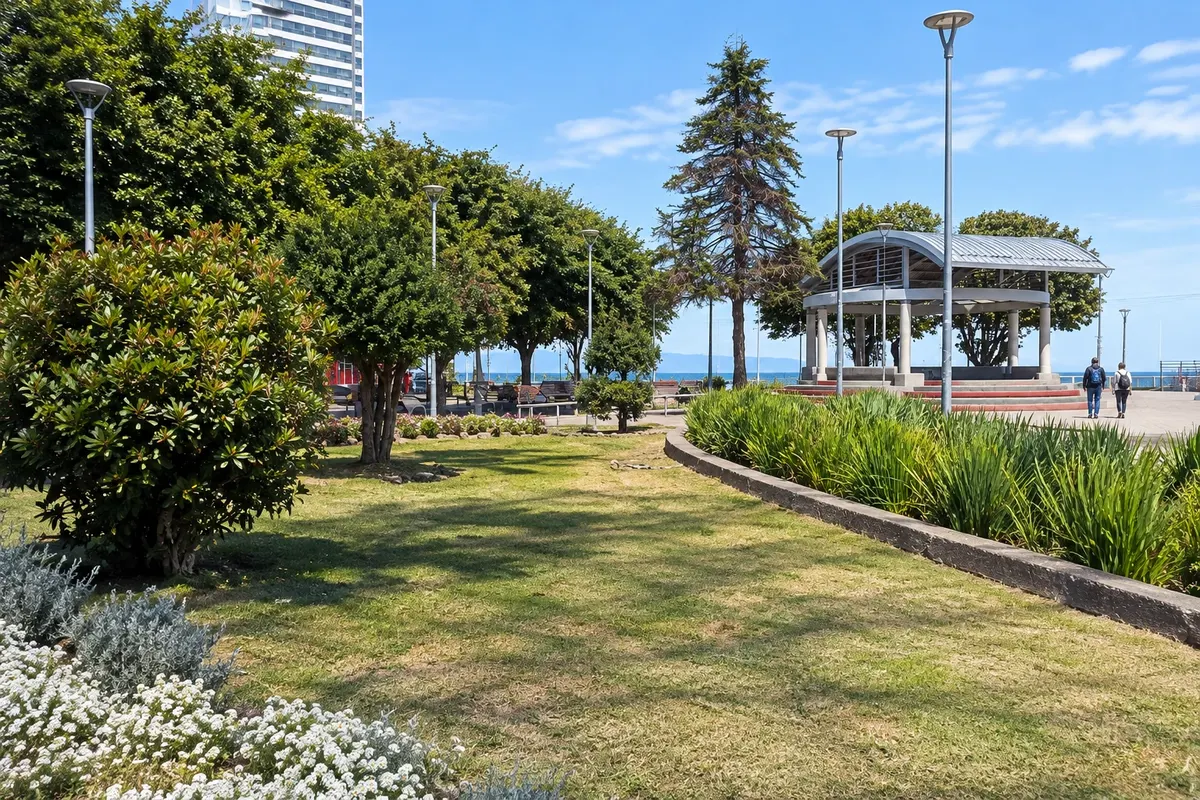
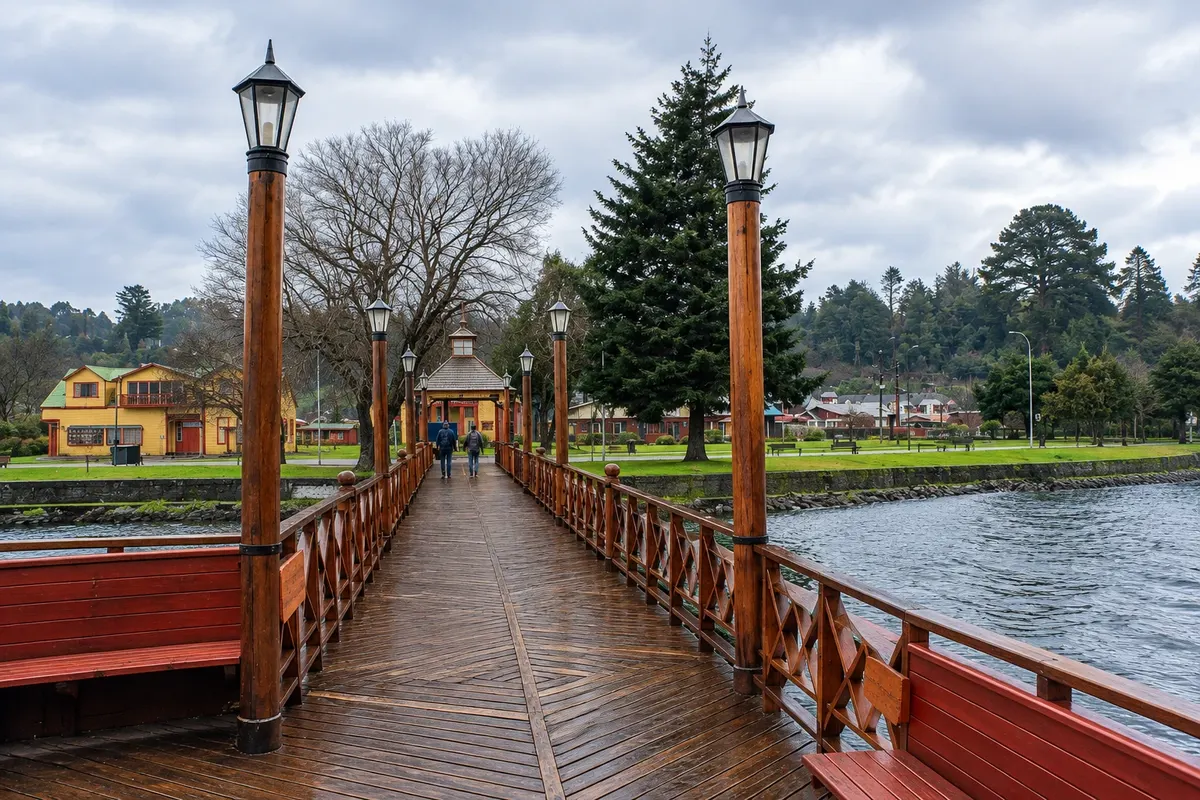
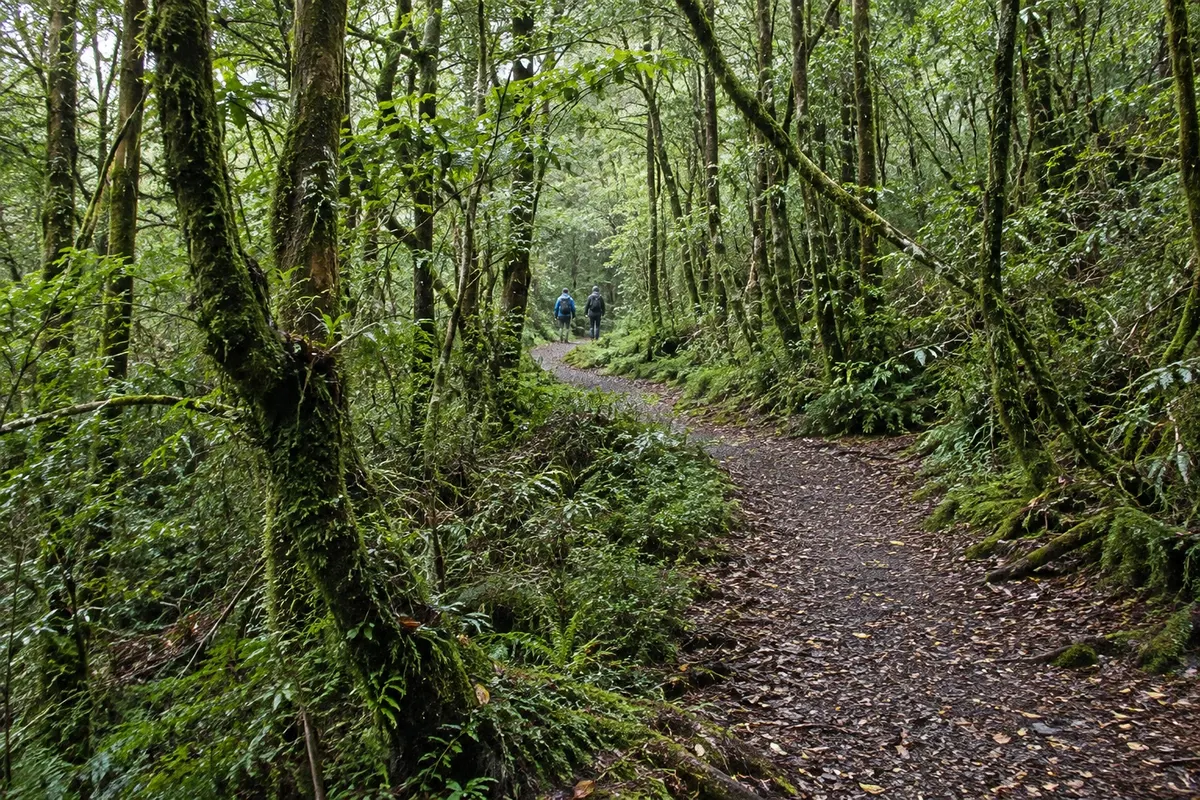
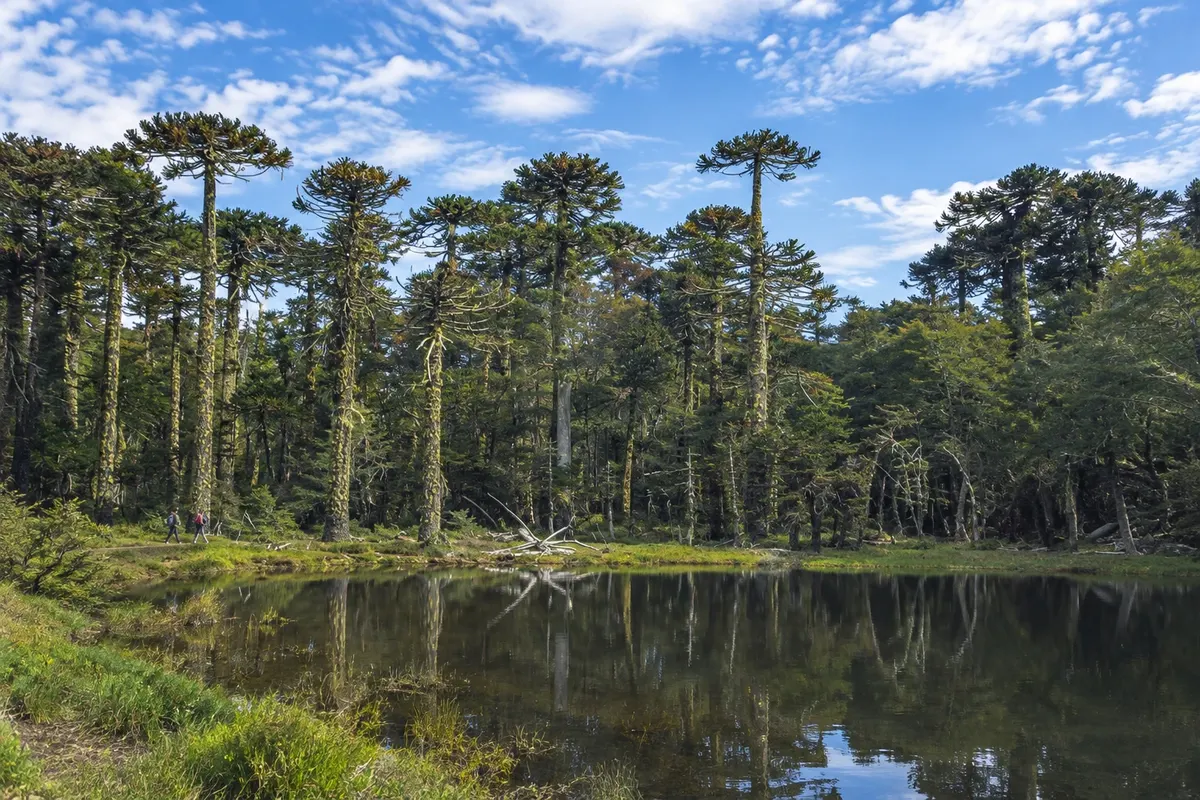
Illustrative images. The pictures in this guide are illustrations based on the real place, not photographs, and may differ from it.

Get it on Google Play Send your photos

Get to know the place

A region to enjoy
at your own pace.

The Região dos Lagos occupies southern Chile, between the Cordilheira dos Andes and the Pacific, about a thousand kilometers south of Santiago. It is a land of glacial lakes, humid forests and perfectly conical volcanoes. This destination brings together two hubs: the shore of Lago Llanquihue, with Puerto Varas, Frutillar and Puerto Montt, and Pucón, further north, on the shore of Lago Villarrica.

Puerto Varas is the most commonly used base. From the Costanera de Puerto Varas you can see the Volcán Osorno on the far side of the lake, and the Iglesia del Sagrado Corazón de Jesús sits above the town. Along the road that circles the lake you reach the Saltos del Petrohué and the Lago Todos los Santos, inside Parque Nacional Vicente Pérez Rosales. In Frutillar, the Teatro del Lago, the Museo Colonial Alemán and the Costanera de Frutillar sum up the history of those who colonized the western shore.

The German imprint comes from colonization promoted by the Chilean government starting in 1852. Families from Hesse, Silésia, Vestfália and other regions were granted land around the Llanquihue, cleared areas of forest and built wooden houses with steep roofs. From that time remain surnames, Lutheran churches, clubs and the tradition of kuchen, the German sweet pie made with a soft dough topped with fruit, served in the afternoon with coffee.

Puerto Montt, the regional capital, is the air gateway and the starting point for Chiloé and Patagonia. Activity concentrates at Caleta Angelmó and the Plaza de Armas de Puerto Montt; to the southeast is Parque Nacional Alerce Andino. Pucón, in the Araucanía, sits at the foot of the Volcán Villarrica and serves as a base for Lago Villarrica, Parque Nacional Huerquehue and the Ojos del Caburgua.

The climate is wet: it rains in every season, and summer, from December to March, is the driest and most popular period. Bring a waterproof jacket even in January, because temperatures fall quickly at the lakeshores.

This destination brings together 4 cities: Puerto Varas, Frutillar, Puerto Montt, Pucón.

Share: WhatsApp
Traveler, share your experiences through photos Up to 5 photos of each place you visited.

One destination, many paths

The cities on this trip

Start with one city or combine several in your itinerary.

Where Lakes and Volcanoes is
Puerto VarasFrutillarPuerto MonttPucón

Contornos: Natural Earth (domínio público). Adaptação do Cidade Turismo.

How to get there: Lakes and Volcanoes

✈ Aeropuerto El Tepual (PMC), in Puerto Montt · 30 km to Puerto Varas

The most practical entry point is El Tepual airport in Puerto Montt, about a two-hour flight from Santiago. Confirm before purchasing. For Pucón, the airport used is Temuco. Overnight buses link Santiago with the four towns.

Suggested arrival point: Puerto Varas

The local experience

Things to do in Lakes and Volcanoes

Caleta Angelmó
Puerto Montt · Los Lagos · Market and fair

Caleta Angelmó

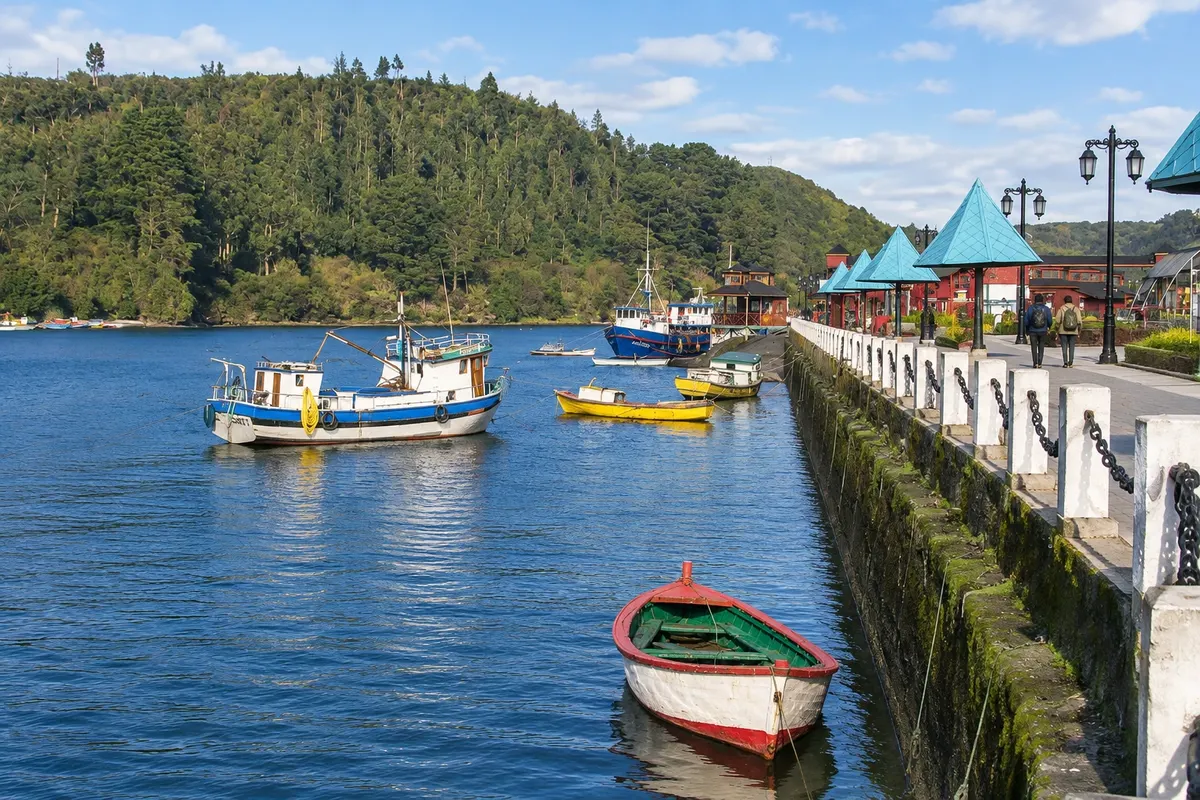
Fishermen's cove west of Puerto Montt's center, with a craft fair, fish and seafood market, small seafood eateries (cocinerías) and boats to Isla Tenglo.

Costanera de Puerto Varas
Puerto Varas · Los Lagos · Lakeside promenade

Costanera de Puerto Varas

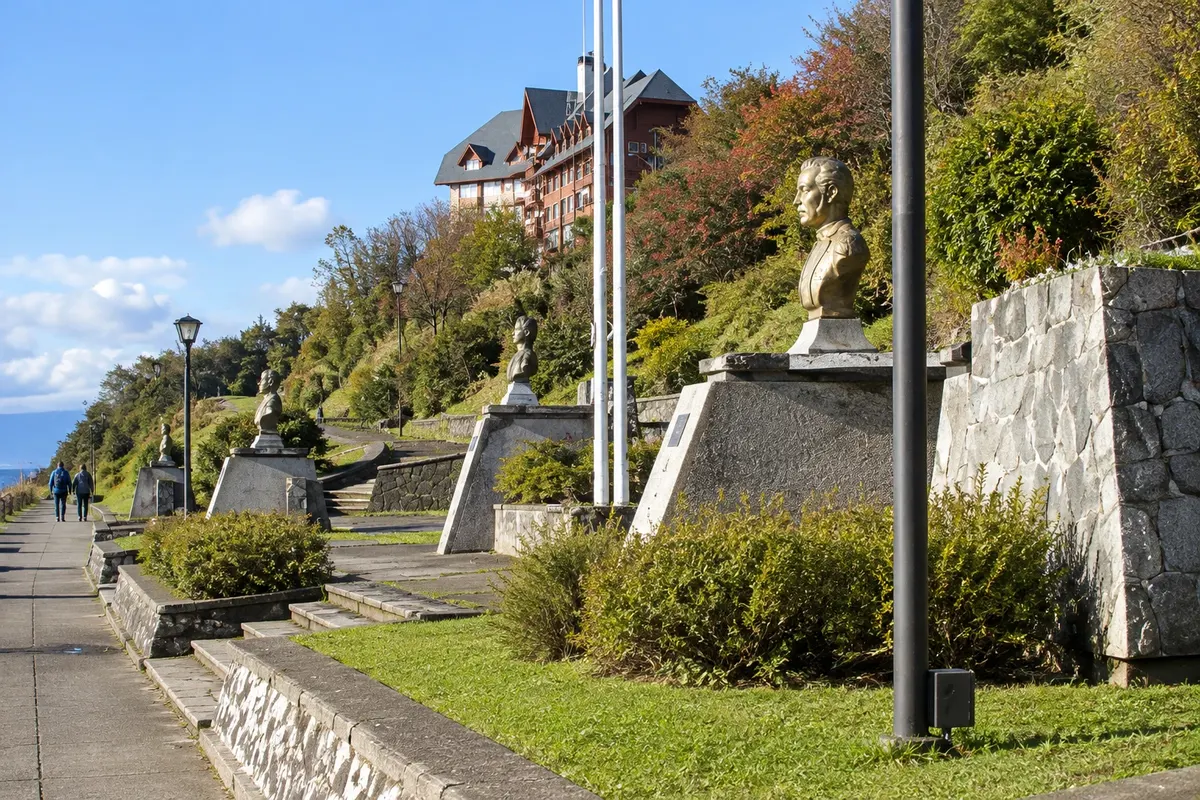
Lago Llanquihue waterfront in the centre of Puerto Varas, with Muelle Piedraplén, the urban beach and views of the volcanoes Osorno and Calbuco across the water.

Teatro del Lago
Frutillar · Los Lagos · Cultural center

Teatro del Lago

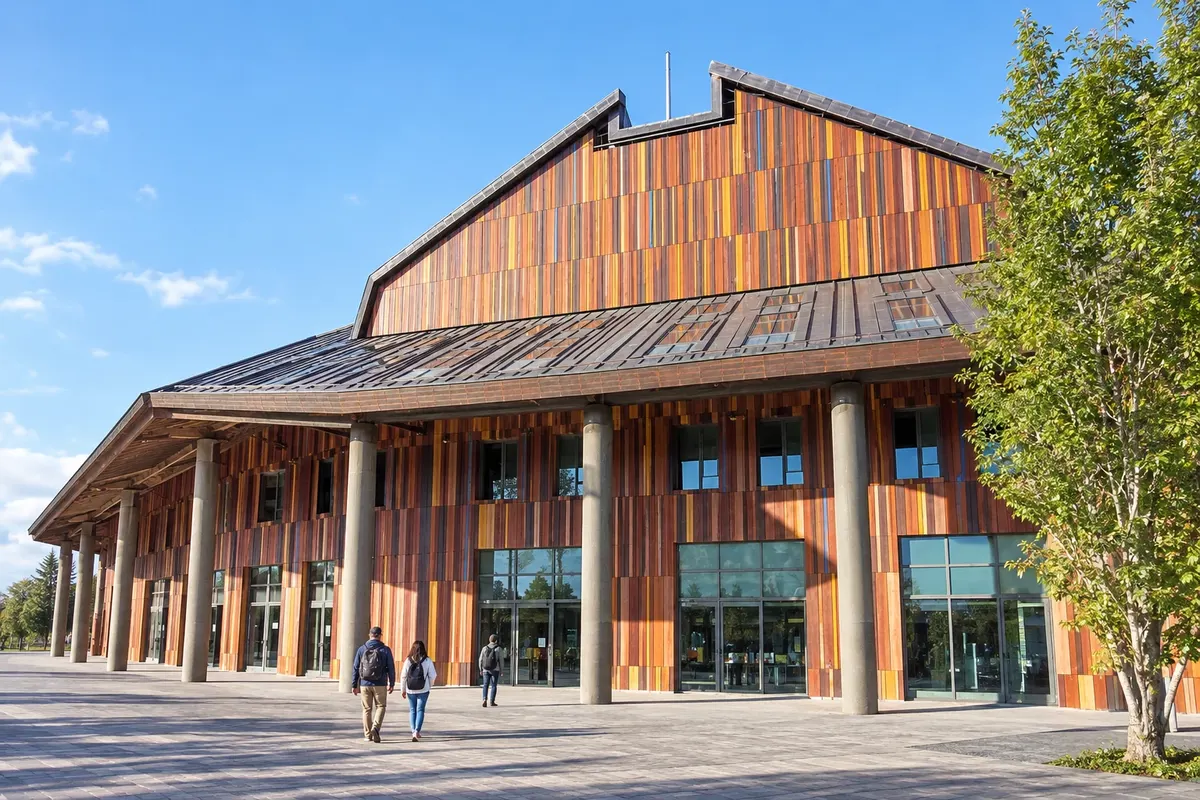
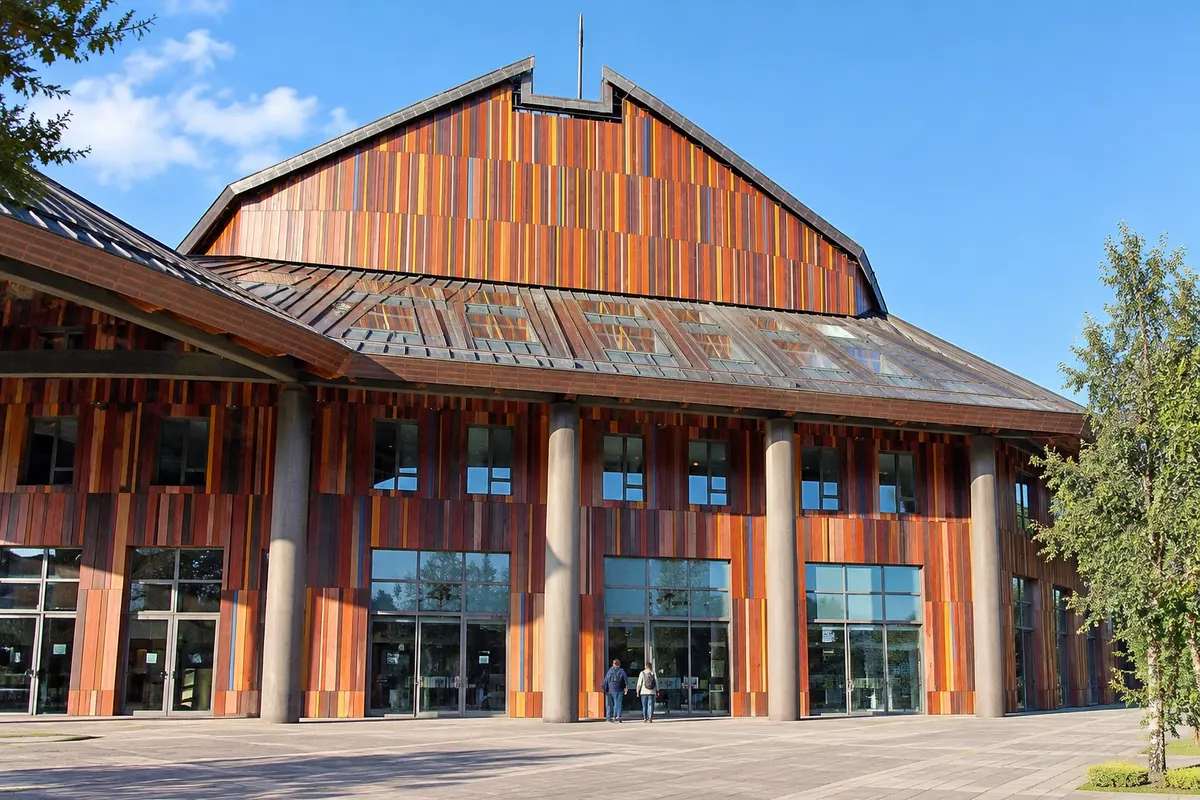
Arts center on the shore of Lago Llanquihue, with a main hall for about 1,200 people, a wooden façade and a program of classical music, opera and dance.

Volcán Villarrica
Pucón · Araucanía · Volcano

Volcán Villarrica

Active volcano of 2,860 meters south of Pucón, with glaciers on the summit and an intermittent lava lake in the crater. Guided climbs depend on alert levels and weather.

See 11 more places in Lakes and Volcanoes
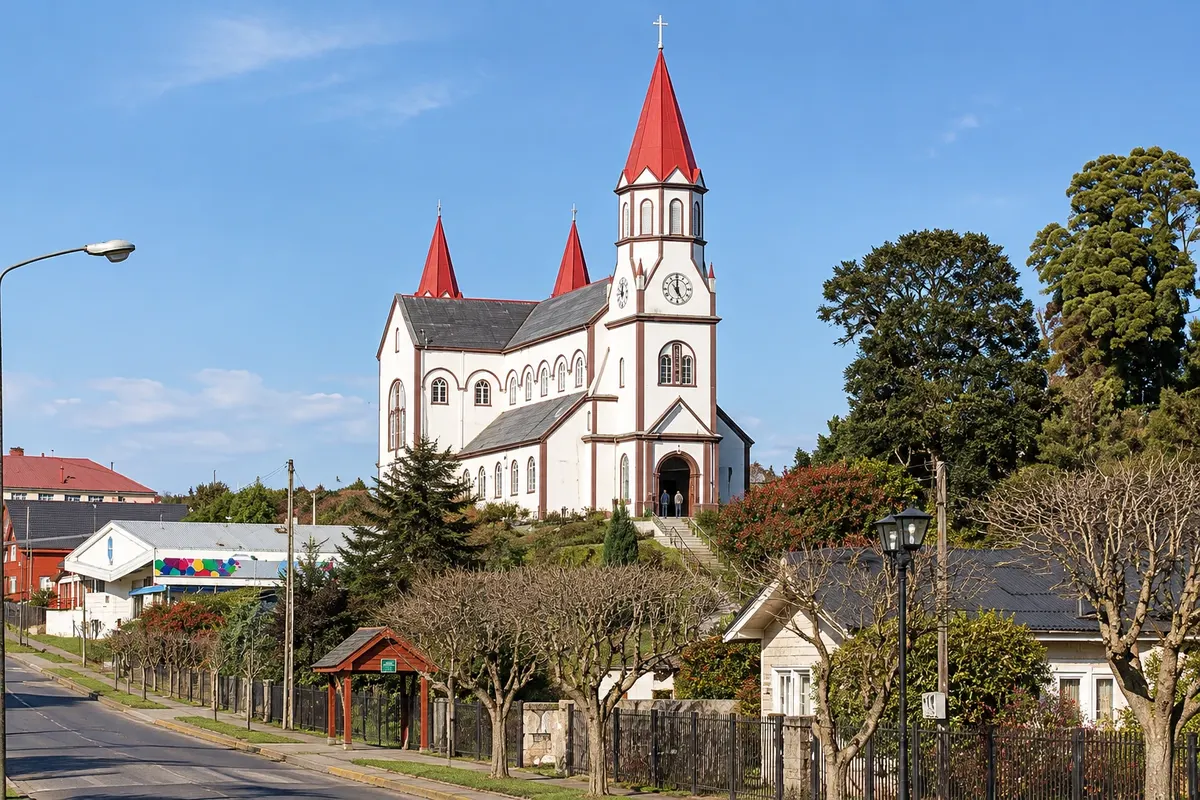
Iglesia del Sagrado Corazón de Jesús
Puerto Varas · Los Lagos · Historic church

Iglesia del Sagrado Corazón de Jesús

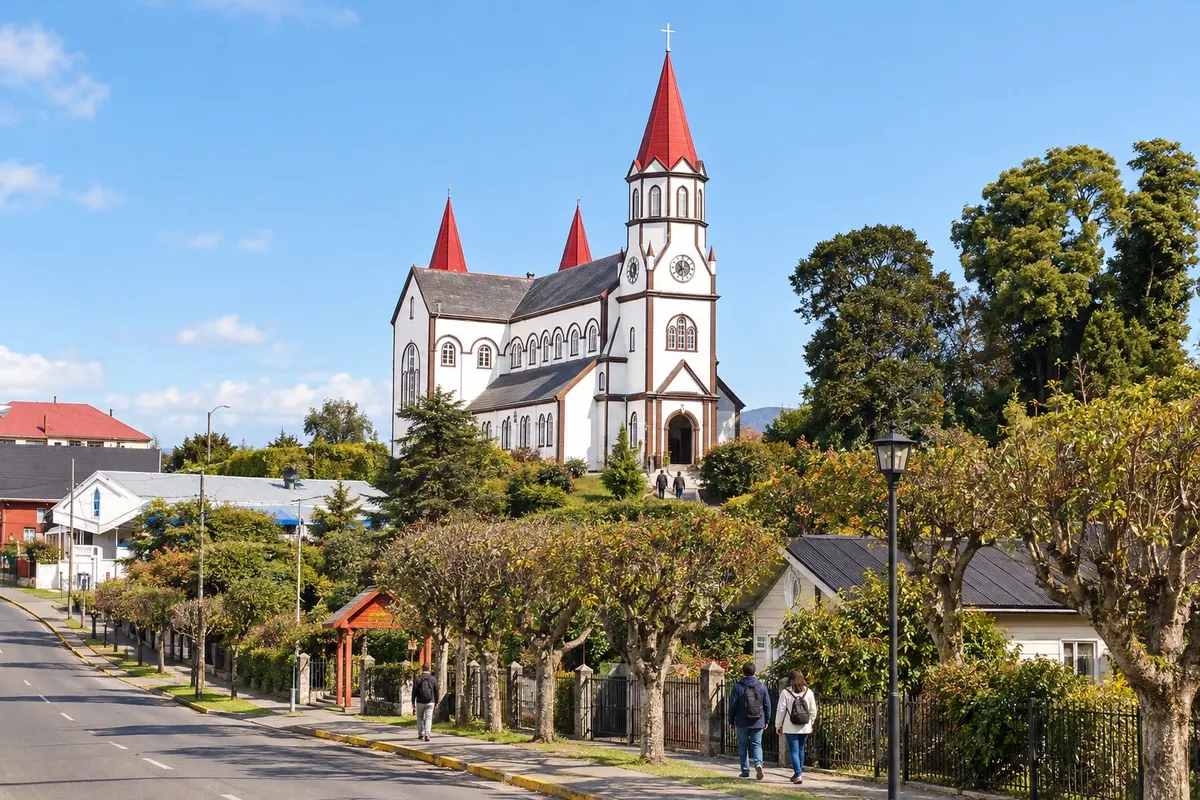
Wooden Catholic church built between 1915 and 1918 on one of the highest points of Puerto Varas, with a pointed tower and red roof visible from the whole waterfront.

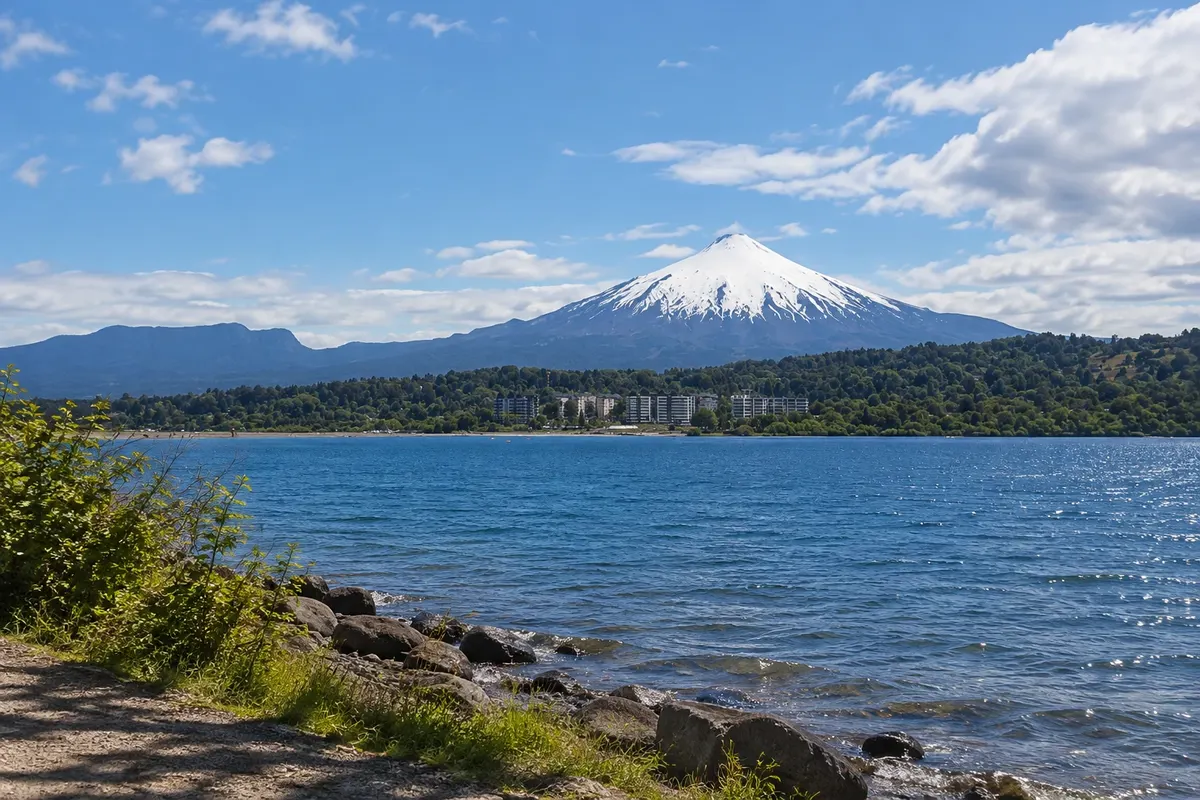
Lago Villarrica
Pucón · Araucanía · Lake and beach

Lago Villarrica

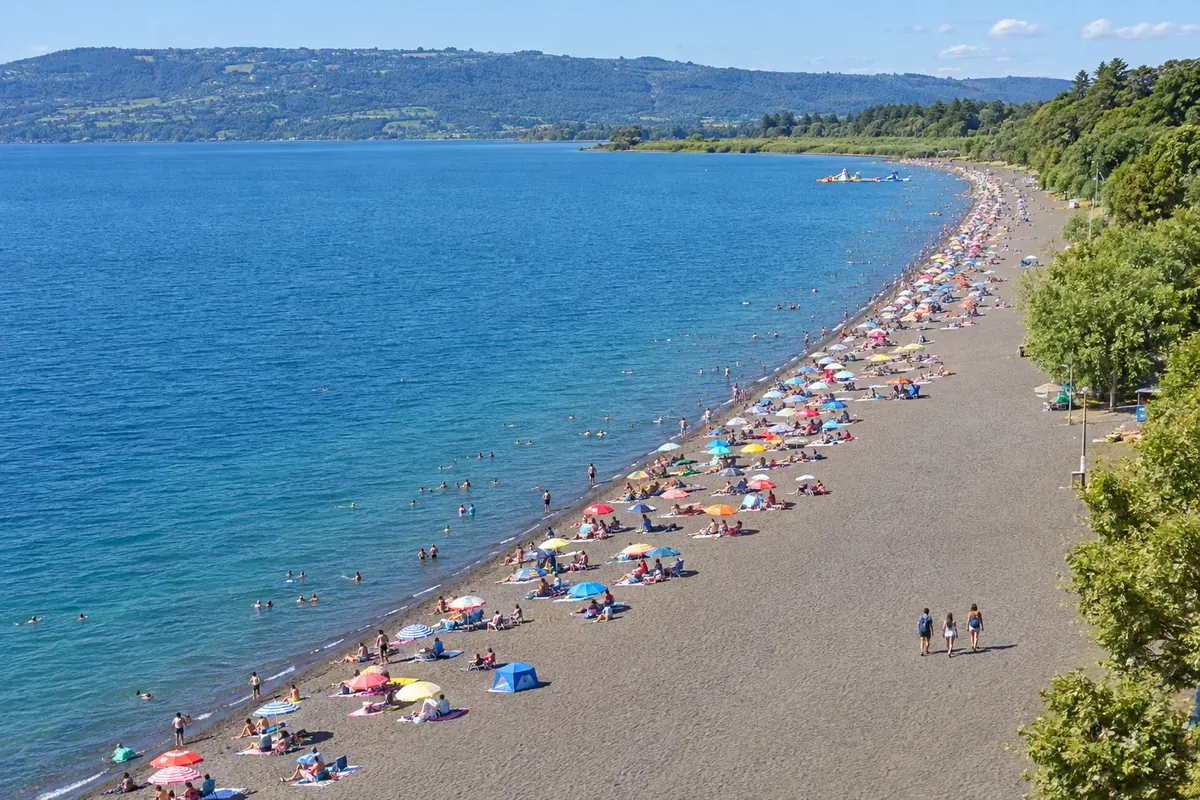
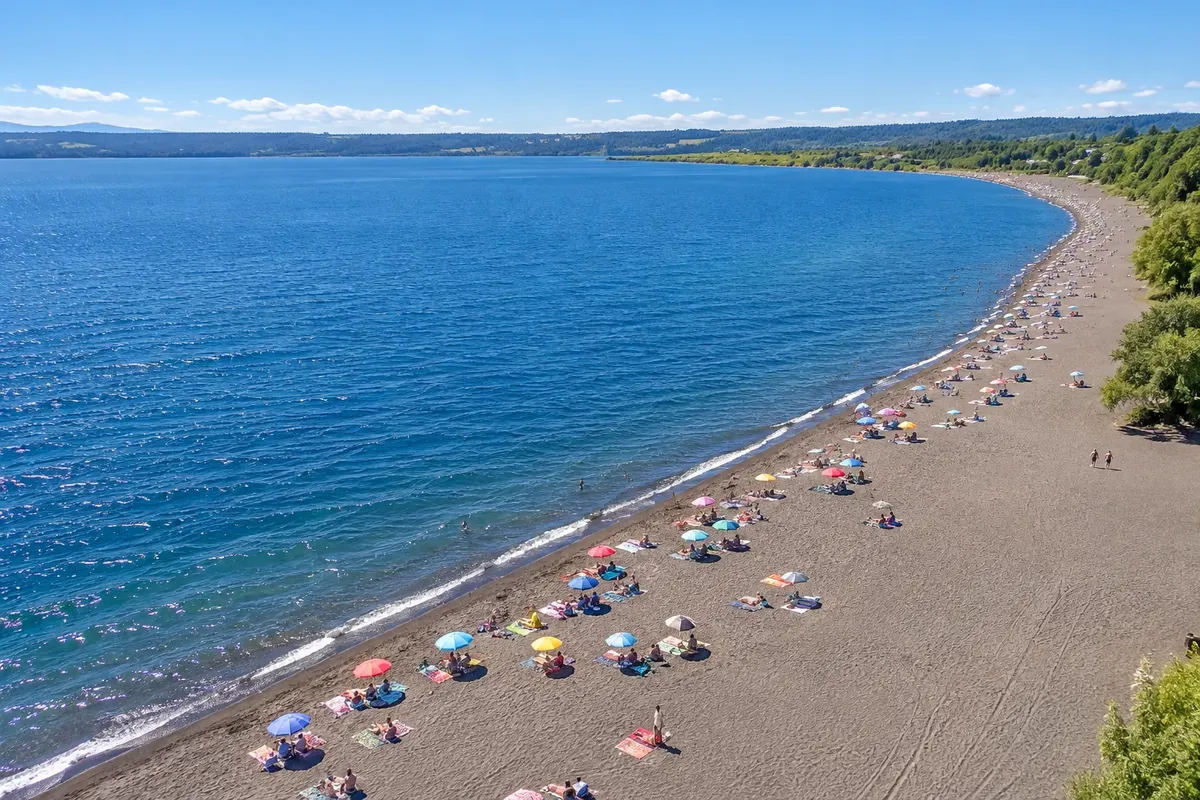
Glacial-origin lake whose eastern shore is home to Pucón, with the cove of La Poza, the Playa Grande of dark volcanic sand and views of the volcano.

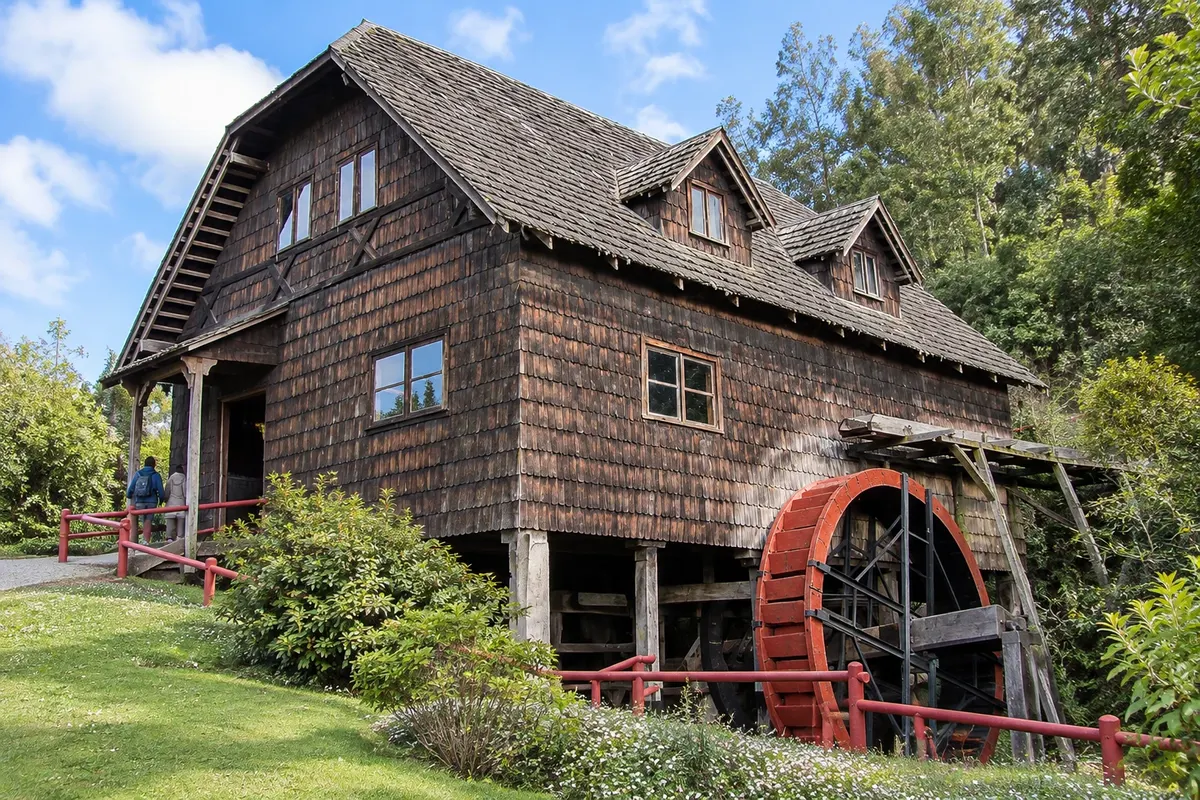
Museo Colonial Alemán de Frutillar
Frutillar · Los Lagos · Open-air museum

Museo Colonial Alemán de Frutillar

Open-air museum about the German colonization of Llanquihue, with a water mill, smithy, a circular machine shed and a settler's house from 1889, set in a three-hectare garden.

Plaza de Armas de Puerto Montt
Puerto Montt · Los Lagos · Historic square

Plaza de Armas de Puerto Montt

Central square of Puerto Montt, one block from the sea, with the wooden cathedral with a columned façade and, near the waterfront, the monument to German colonization.

Costanera de Frutillar
Frutillar · Los Lagos · Lakeside promenade

Costanera de Frutillar

Promenade on the edge of the Bahía de Frutillar, with a beach, a pier and wooden houses from the settlers' era, facing the volcanoes Osorno, Calbuco, Puntiagudo and Tronador.

Parque Nacional Alerce Andino
Puerto Montt · Los Lagos · National park

Parque Nacional Alerce Andino

CONAF park southeast of Puerto Montt with alerce forests up to 3,000 years old, about 50 lakes and ponds, and trails in the Correntoso, Sargazo and Chaicas sectors.

Parque Nacional Huerquehue
Pucón · Araucanía · National park

Parque Nacional Huerquehue

CONAF park northeast of Pucón with araucarias, waterfalls and mountain lakes such as Tinquilco, Chico, Verde and Toro, connected by trails.

Volcán Osorno
Puerto Varas · Los Lagos · Volcano

Volcán Osorno

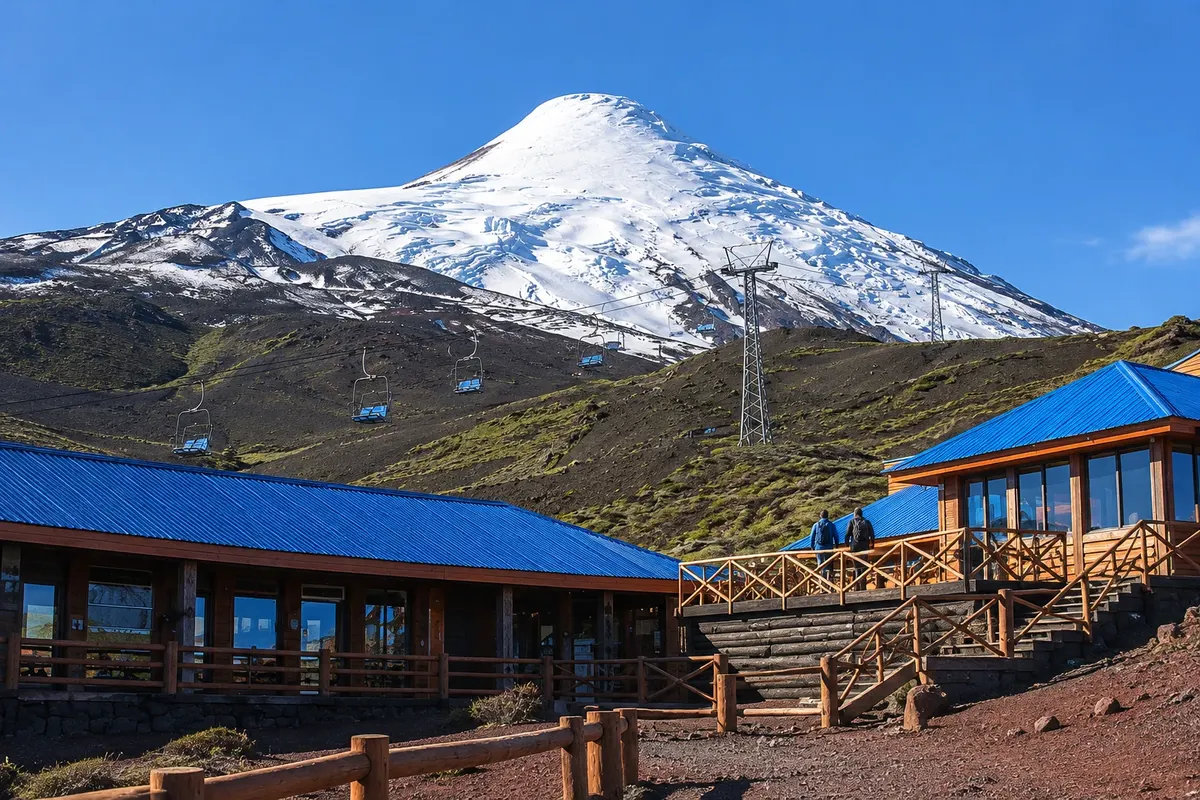
A 2,652-meter volcano with a symmetrical cone and a summit that's white year-round, between Lago Llanquihue and Lago Todos los Santos. A road climbs the slope up to the ski and mountain center.

Ojos del Caburgua
Pucón · Araucanía · Waterfalls

Ojos del Caburgua

Pools of turquoise-colored water fed by an underground flow from Lago Caburgua, with 15 to 20 meter drops surrounded by forest, east of Pucón.

Saltos del Petrohué
Puerto Varas · Los Lagos · Waterfall

Saltos del Petrohué

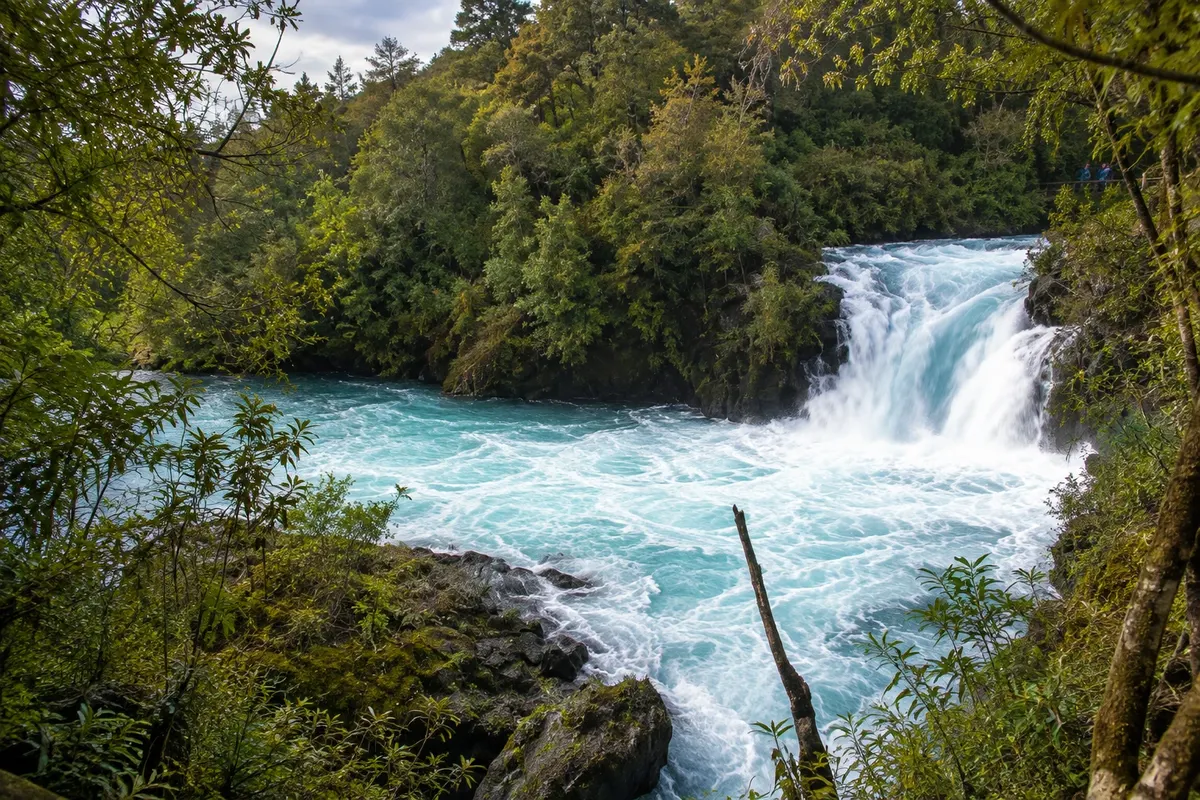
Rapids of the Rio Petrohué over lava from Volcán Osorno, with green-blue water and the volcano in the background, inside Parque Nacional Vicente Pérez Rosales.

Lago Todos los Santos
Puerto Varas · Los Lagos · Lake

Lago Todos los Santos

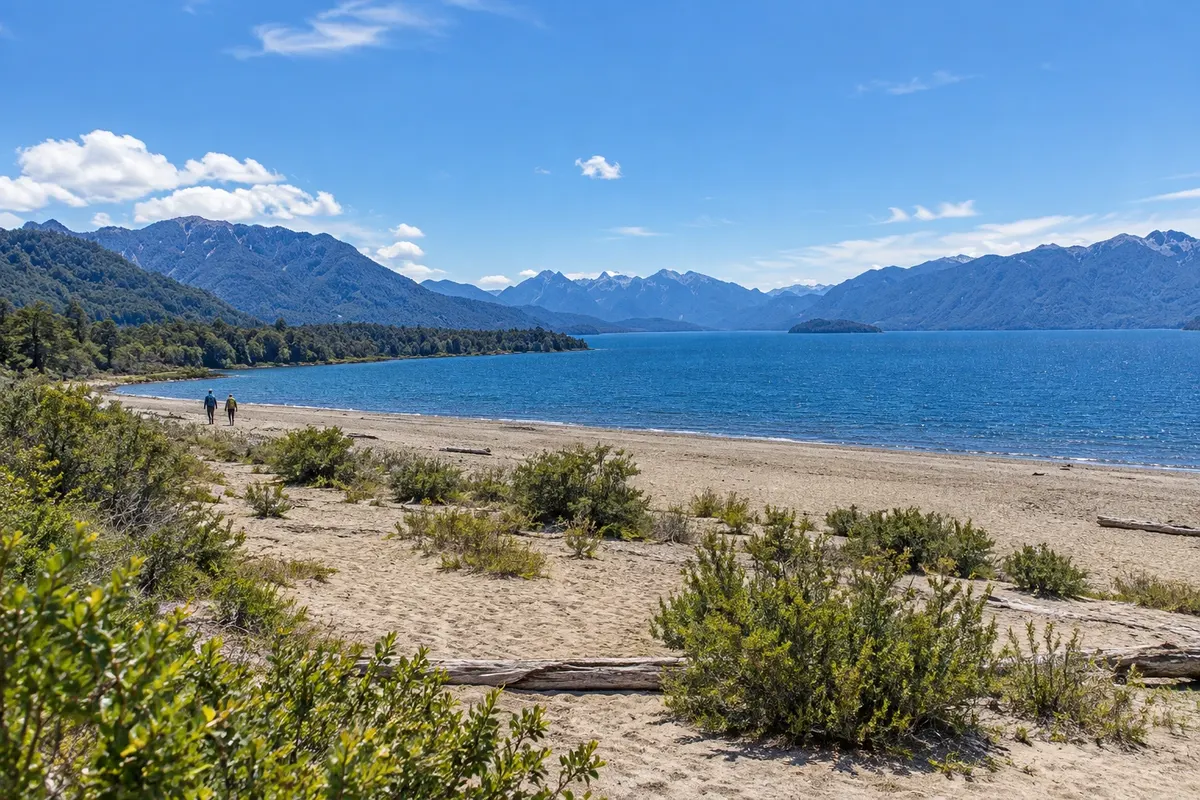
Lake of emerald‑green water surrounded by the volcanoes Osorno and Puntiagudo and by Cerro Tronador. The Petrohué pier is the departure point for boat tours.

Before you go

Practical information

A little planning leaves more time to enjoy the journey.

When to go

From December to March the weather is usually drier and the days are long, which favors hikes, boat trips and the climb up the Villarrica. April and November are quieter, with more rain. Between June and September it’s cold, it rains a lot and snow often covers the volcano slopes — the ski season.

The seasons shown are the most usual ones; nature doesn't always follow the calendar.

How many days to stay

Allow five to seven days. Three or four in Puerto Varas cover Frutillar, Puerto Montt, the Volcán Osorno and Parque Nacional Vicente Pérez Rosales. Pucón requires two or three more days for the volcano, Huerquehue and the lakes. The two bases are about 300 km apart.

Which city to stay in

In Puerto Varas, the center near the Plaza de Armas and the waterfront concentrates restaurants and agencies, and everything is walkable; the Puerto Chico area to the east has lakefront lodging. Frutillar Bajo, by the bay, suits those seeking quiet and the theater’s program. In Puerto Montt the center is convenient for those arriving late or leaving early. In Pucón the streets around Avenida O'Higgins and the beach gather guesthouses and cabins; those with cars can stay along the road to Caburgua.

Respect the place

Take your trash with you, follow the signs and support local businesses. In natural areas, follow the visiting guidelines.

Get your questions answered

Frequently asked questions about Lakes and Volcanoes

How many days to allocate for Puerto Varas and Pucón?

With a week you can split time between the two bases: four days in Puerto Varas, with outings to Frutillar, Puerto Montt, the Volcán Osorno and the Saltos del Petrohué, and three in Pucón for the Villarrica, Huerquehue and the Ojos del Caburgua. With five days, choose one base and don’t try to see everything.

What is the best time to visit the lakes of southern Chile?

Summer, from December to March, usually brings less rain, more pleasant water for lakeside beaches and open trails. It is also high season, with more people and busy reservations. In winter, from June to September, it rains a lot and snow often appears on the volcanoes, which attracts those who want to ski.

Do you need a car in the Região dos Lagos?

It helps a lot. Roads are paved and well signposted, and a car allows you to stop at viewpoints around Lago Llanquihue and arrive early at the parks. Without a car, the micros — as locals call the regional buses — frequently connect Puerto Montt, Puerto Varas and Frutillar, and agencies run tours to the volcanoes. In Pucón, buses go to Caburgua and Huerquehue.

Can you do a day trip from Santiago to the lakes?

No. Puerto Montt is more than a thousand kilometers from Santiago, and Pucón nearly 800 km. The bus trip takes all night, and even by plane a day isn’t enough to see the region. Plan for at least four nights.

Explore other destinations Search by state and city
Back