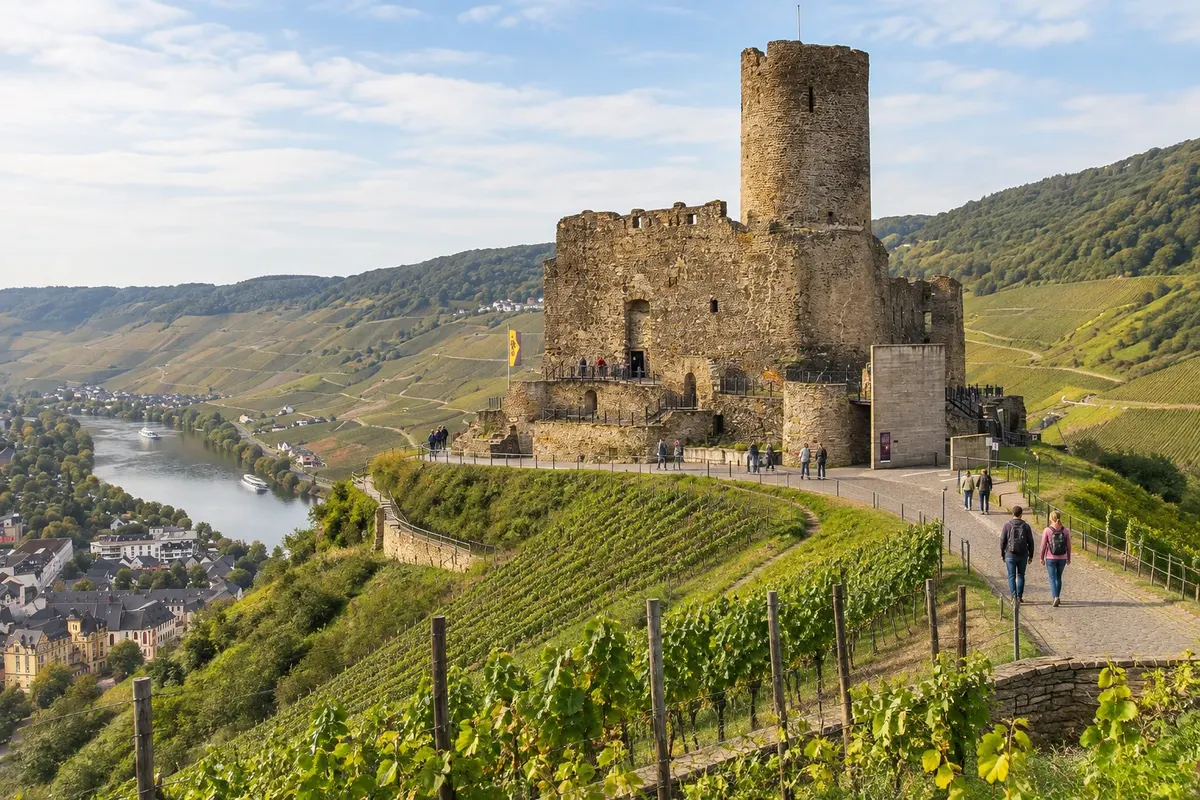
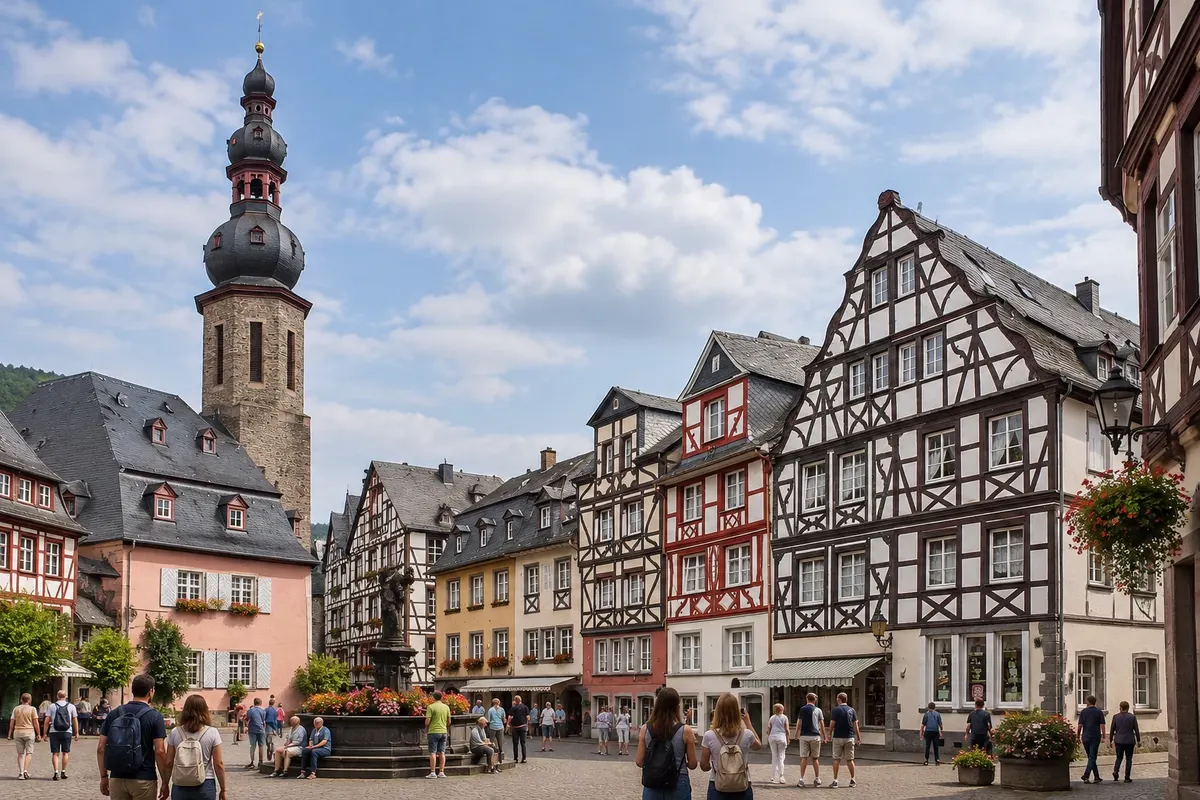
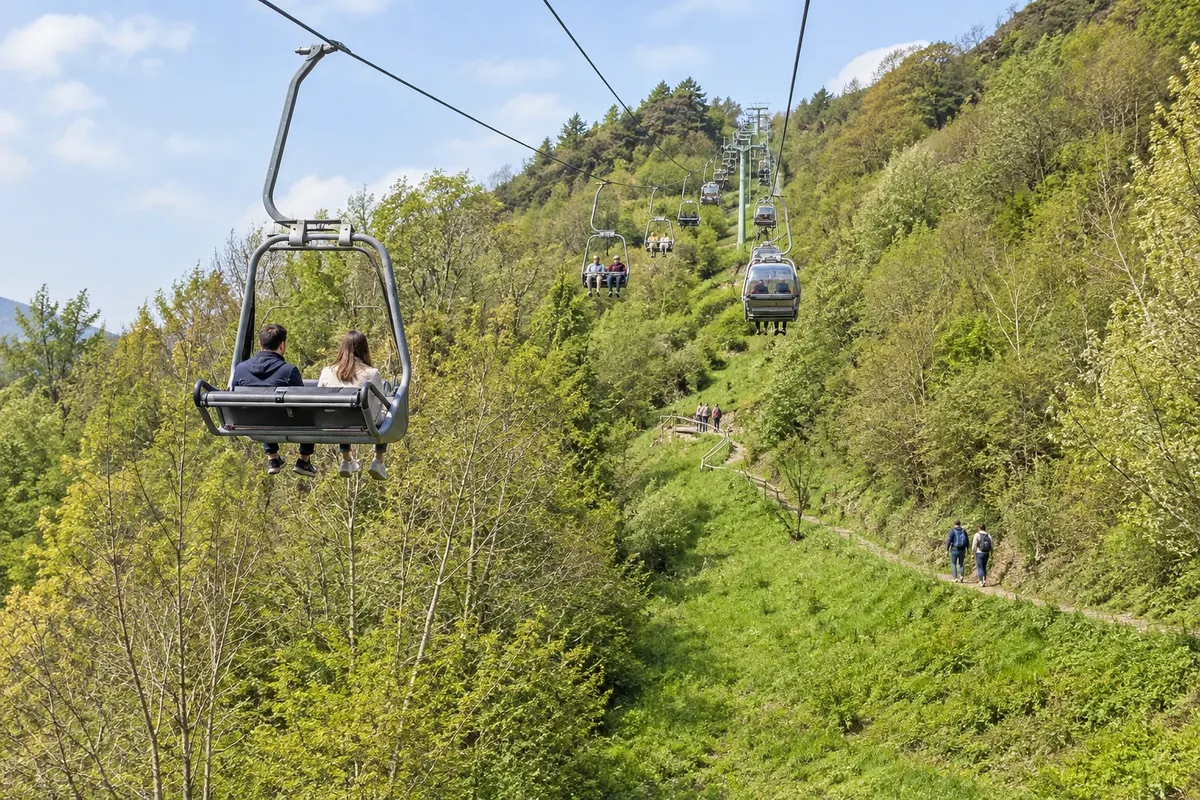
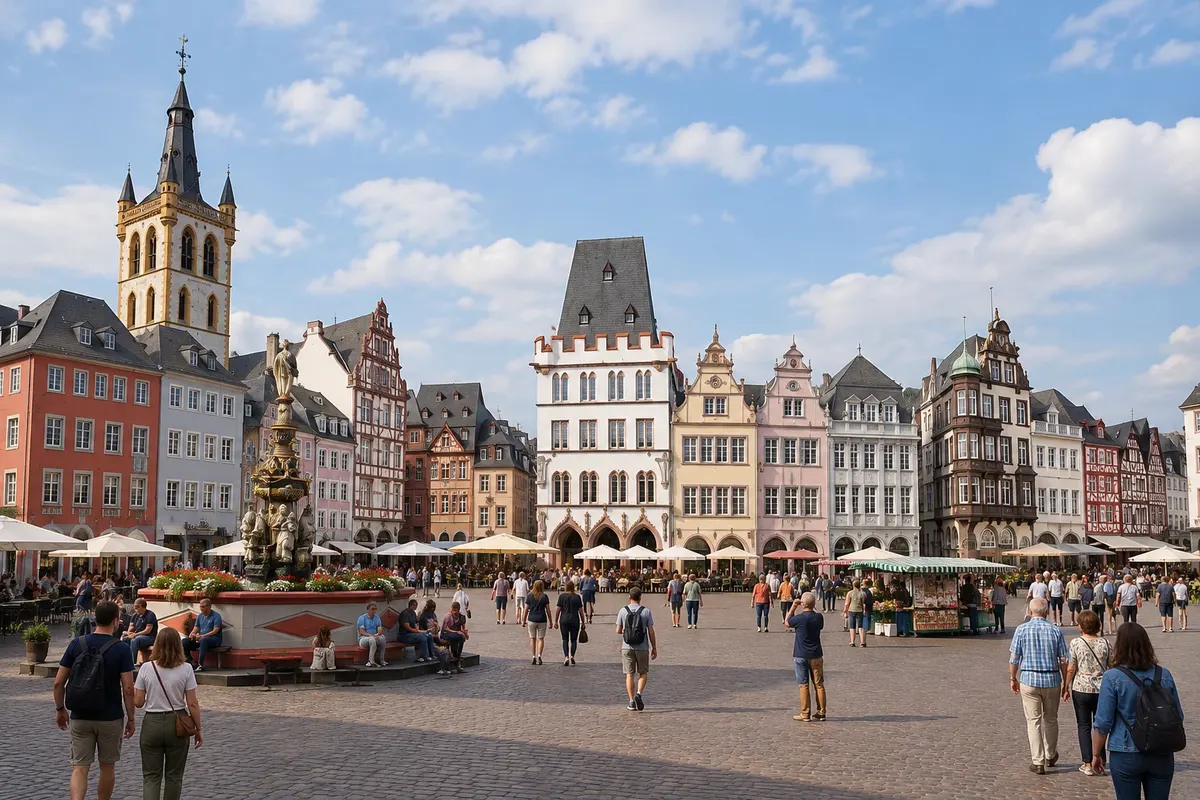
The Mosela rises in France, passes through Luxembourg and enters Germany to run in tight bends until it meets the Rhine in Koblenz. In the German section, the valley is in the state of Renânia-Palatinado: slate-covered slopes planted with vineyards, half-timbered towns clinging to the water and castles atop the hills.
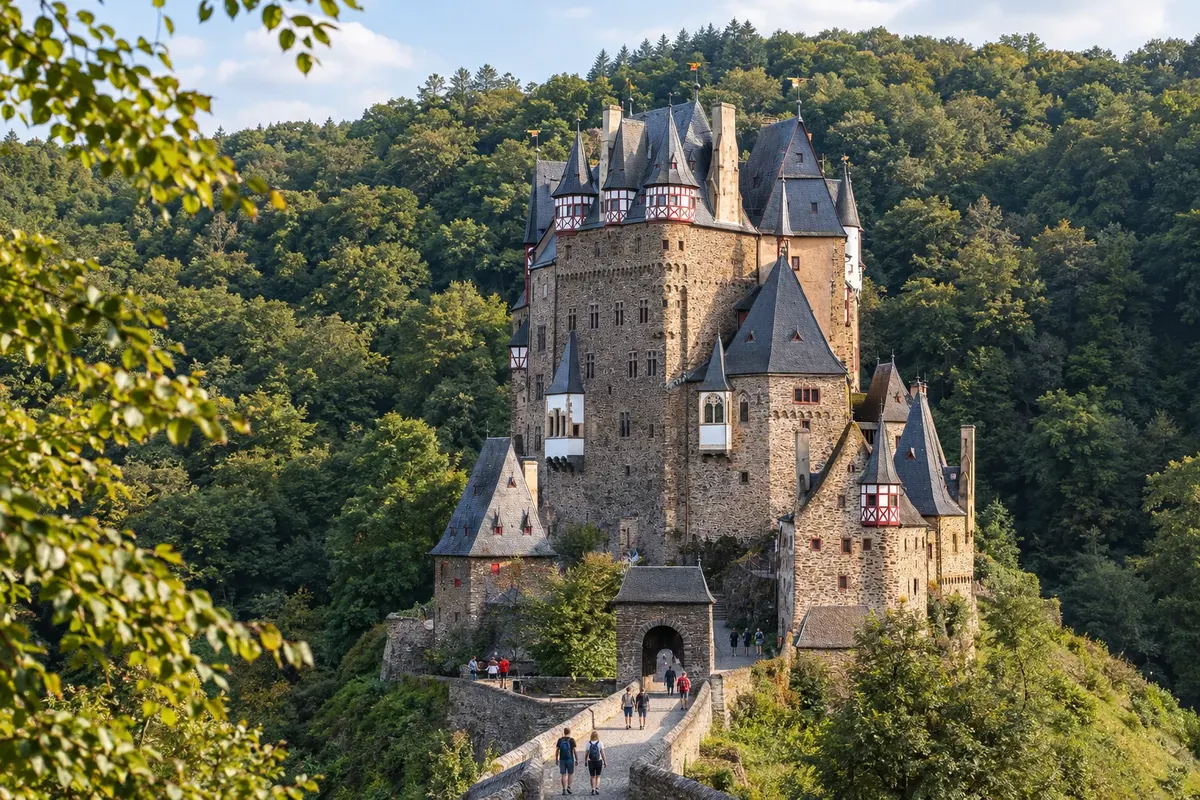
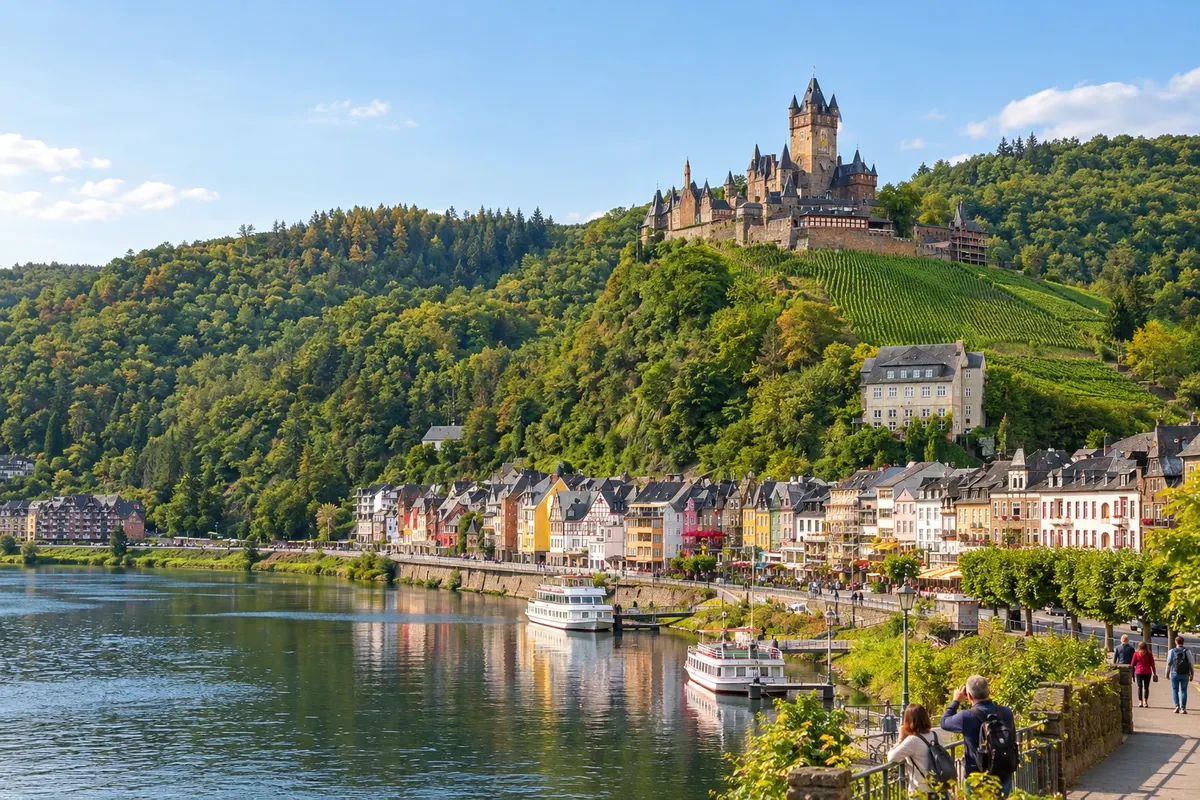
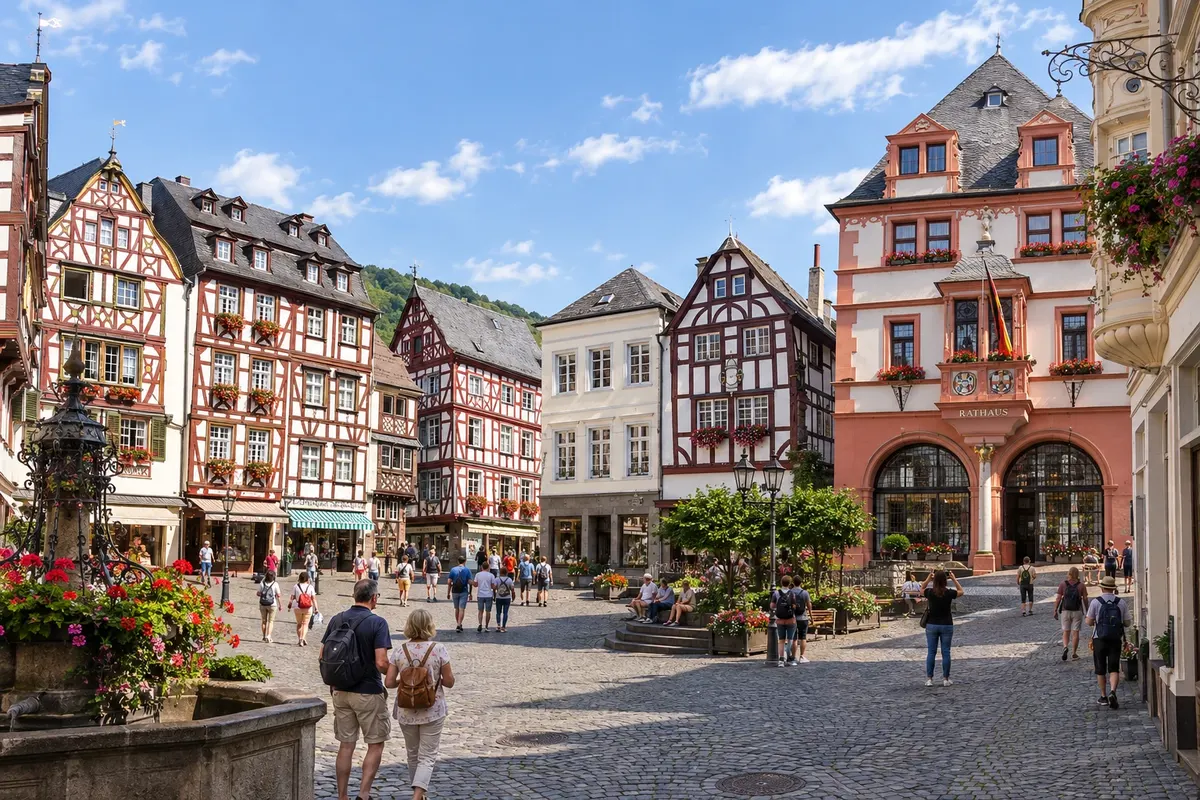
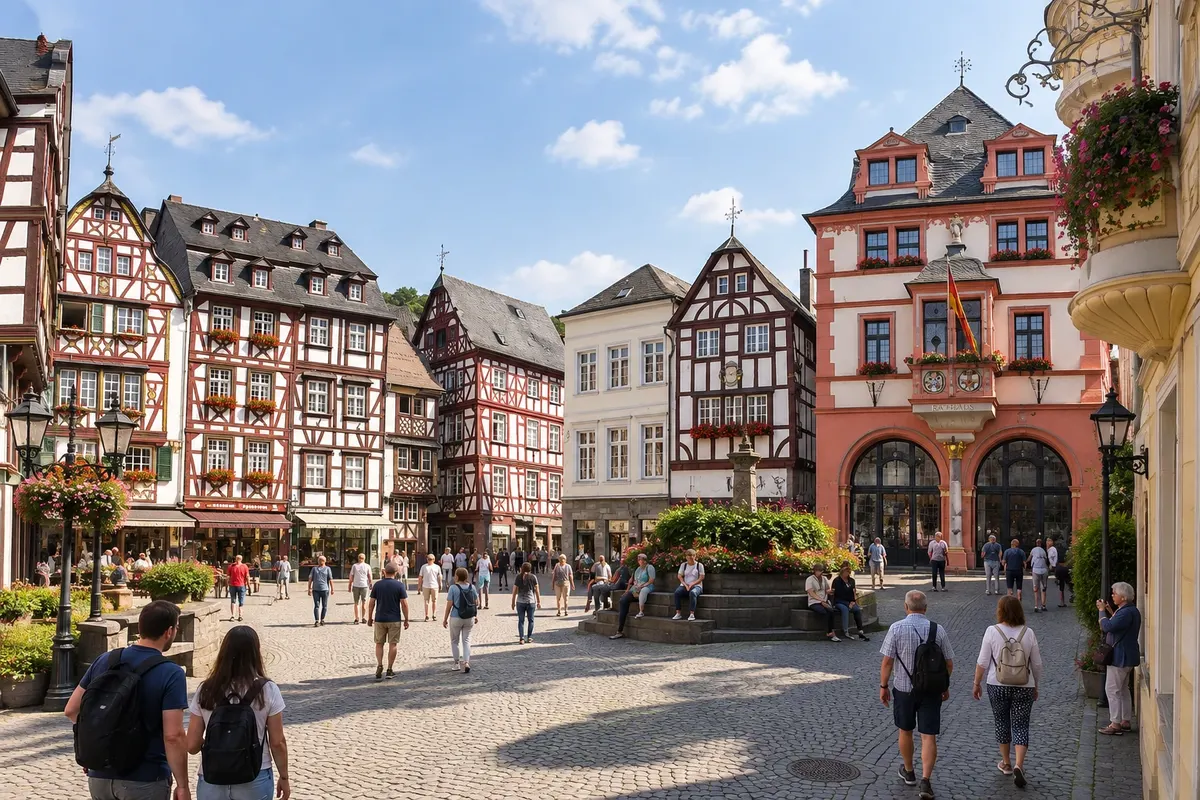
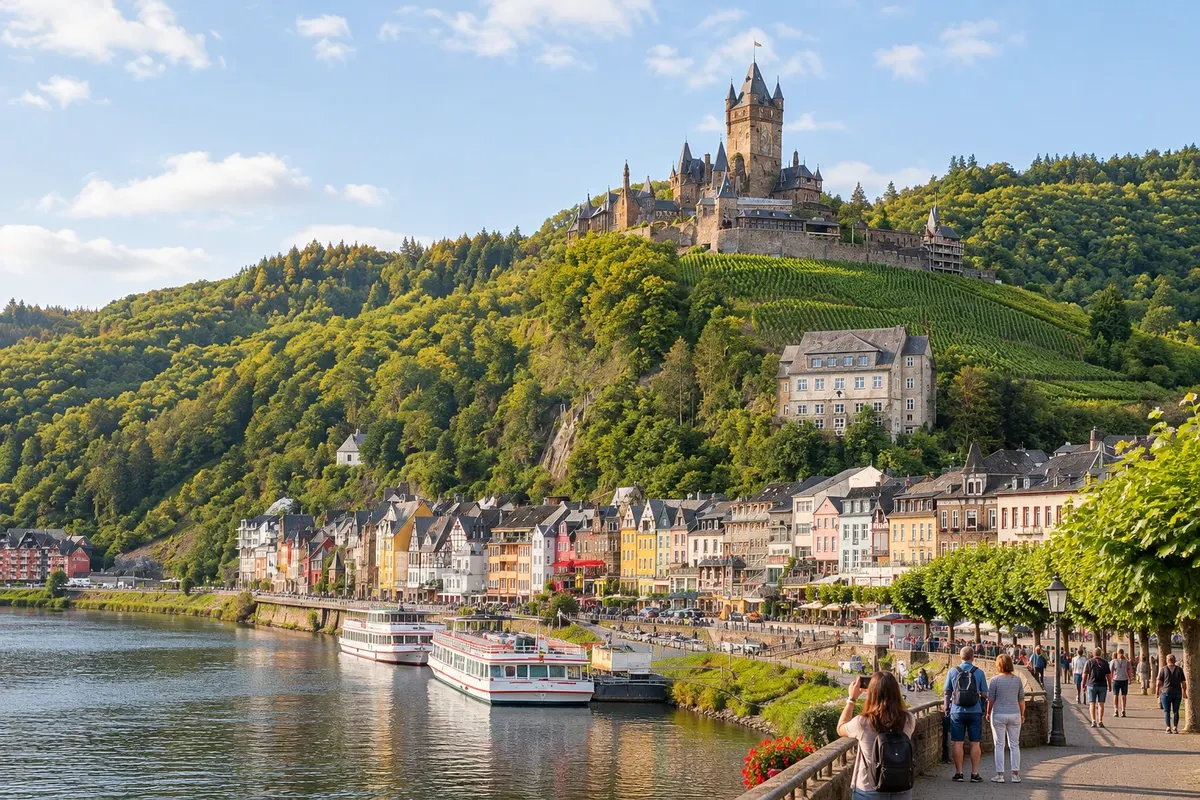
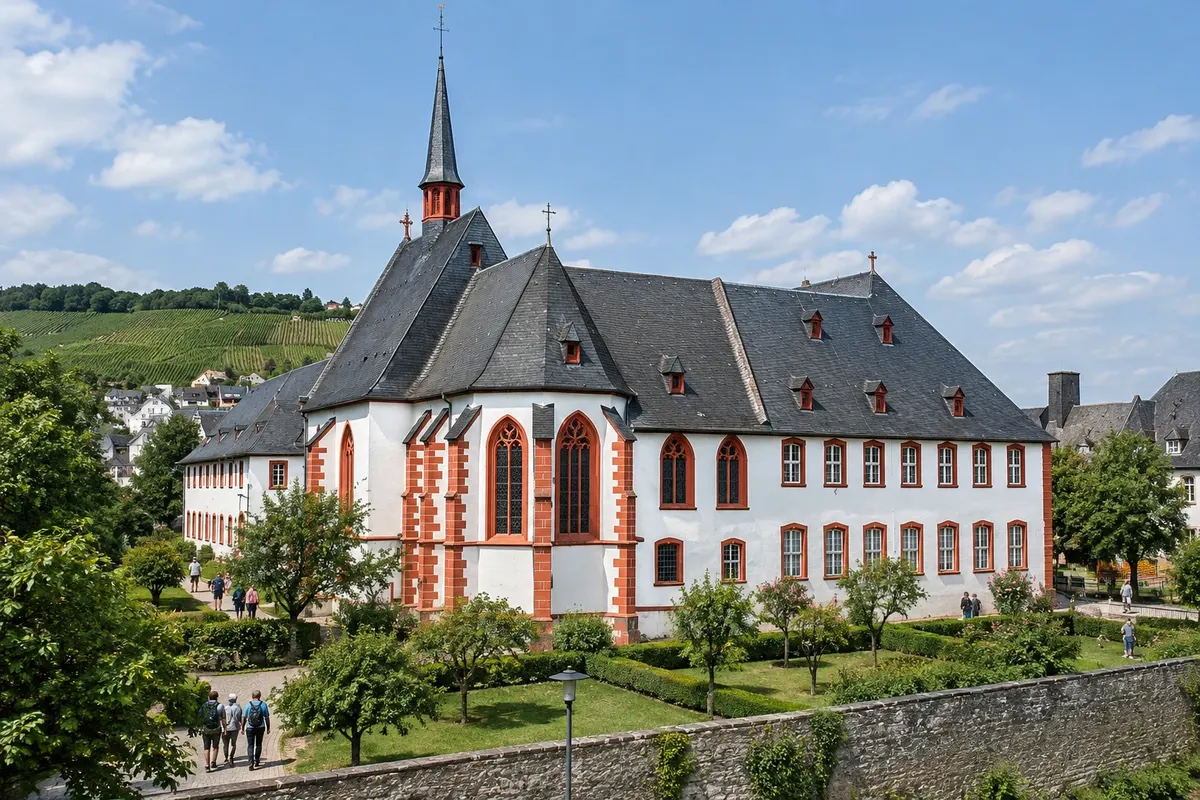
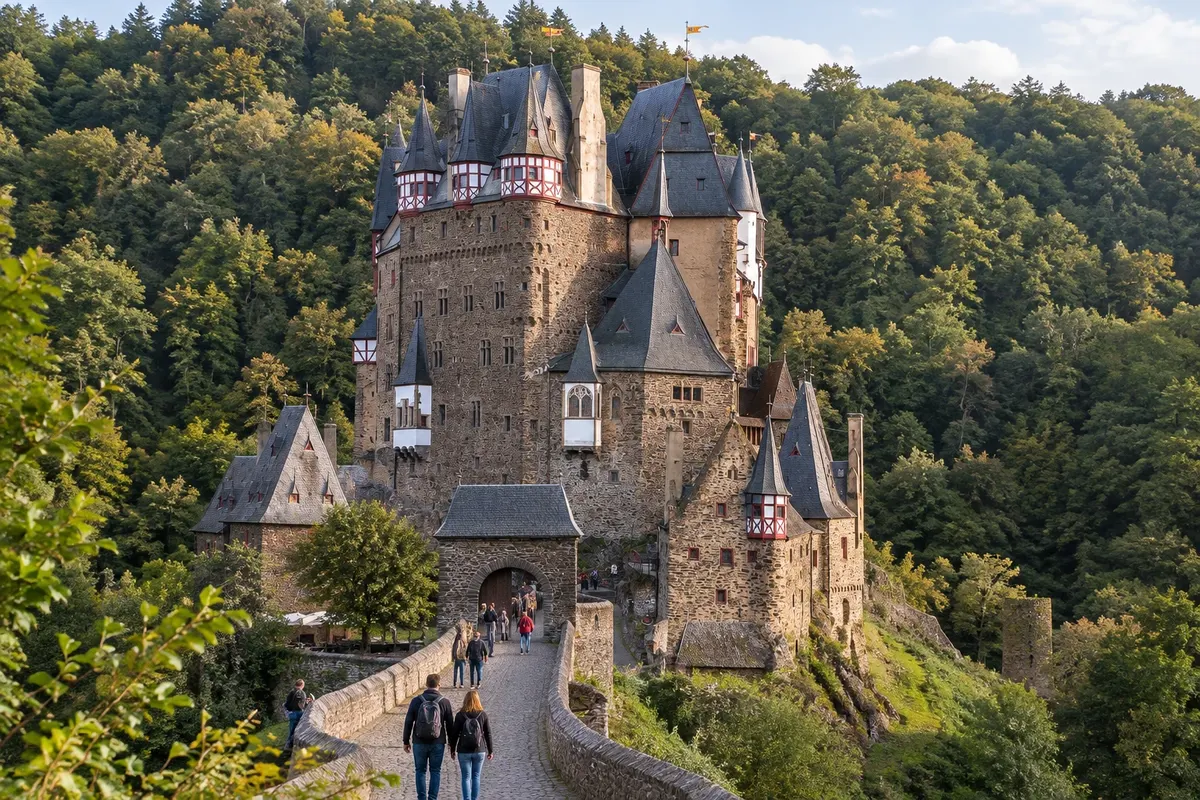
Cochem is the best-known stop of the lower Mosela, with the Reichsburg above the town and Burg Eltz, a medieval castle that was never destroyed, hidden in a side valley a few kilometres away. Upstream, Bernkastel-Kues combines a market square surrounded by half-timbered houses, the ruin of Burg Landshut and the St.-Nikolaus-Hospital, founded by the philosopher Nicolau de Cusa.
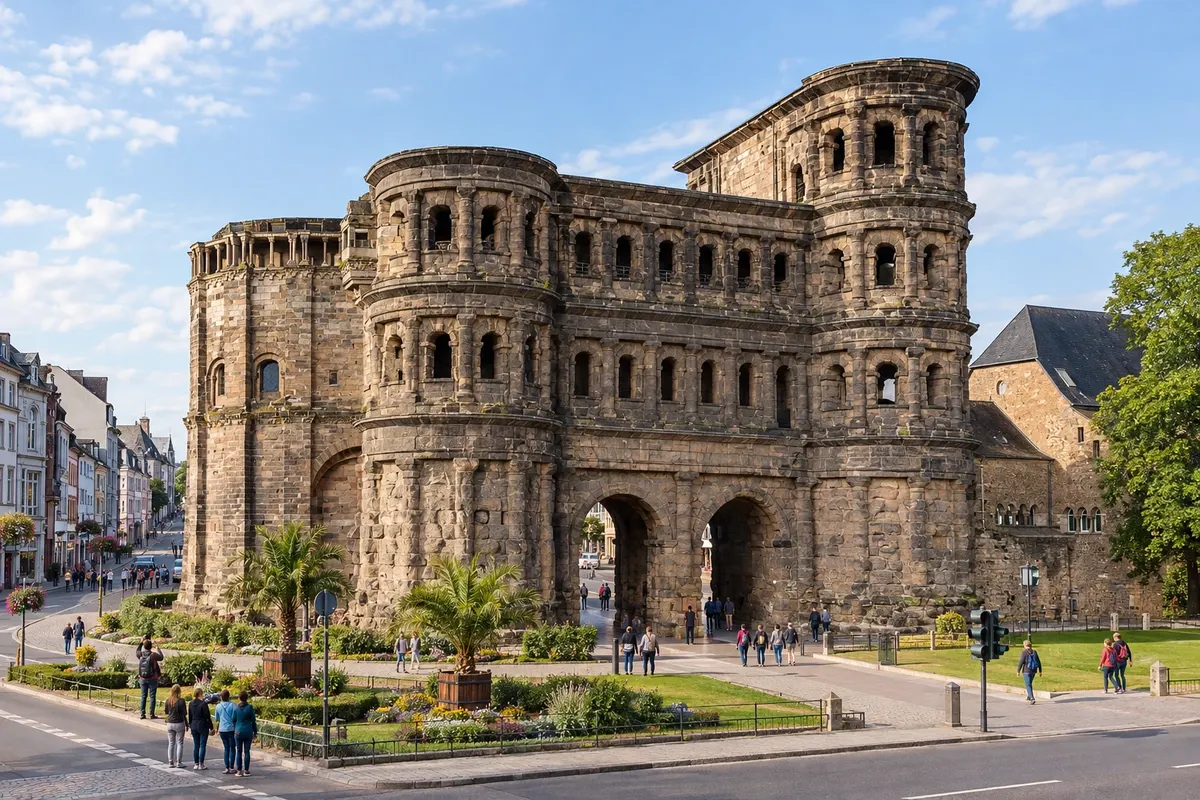
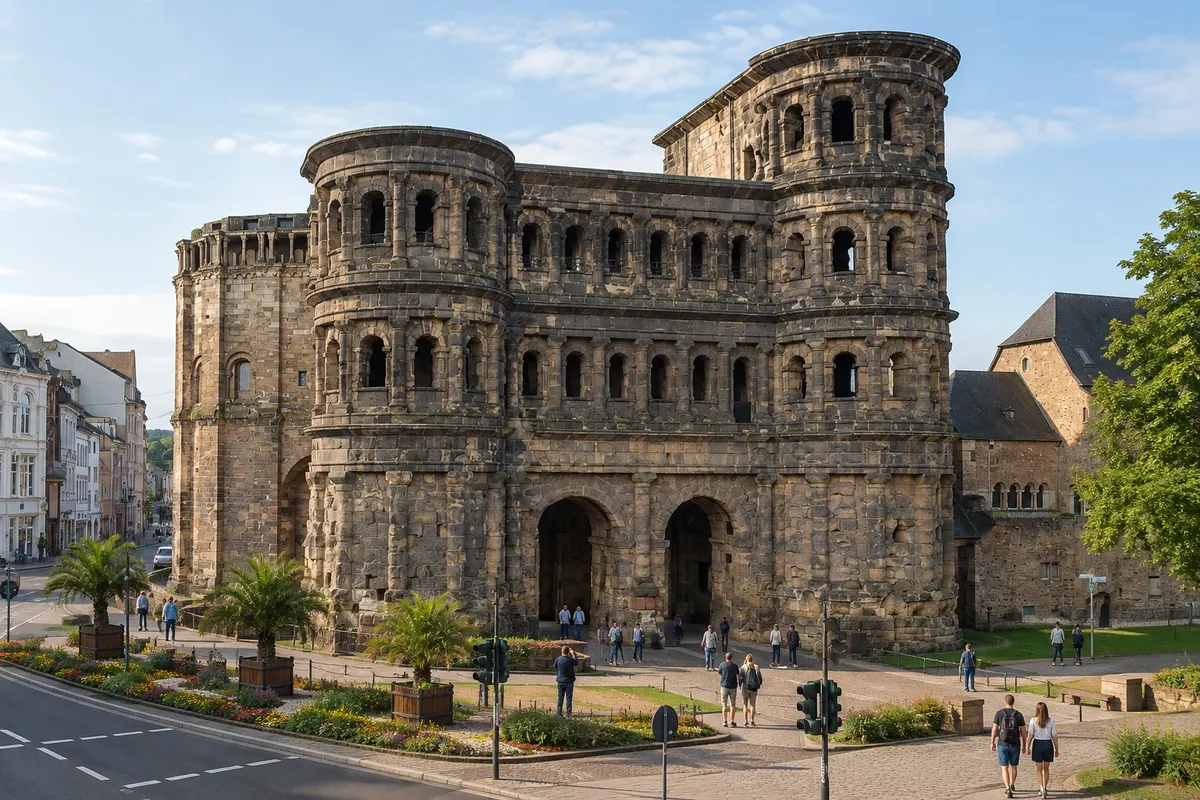
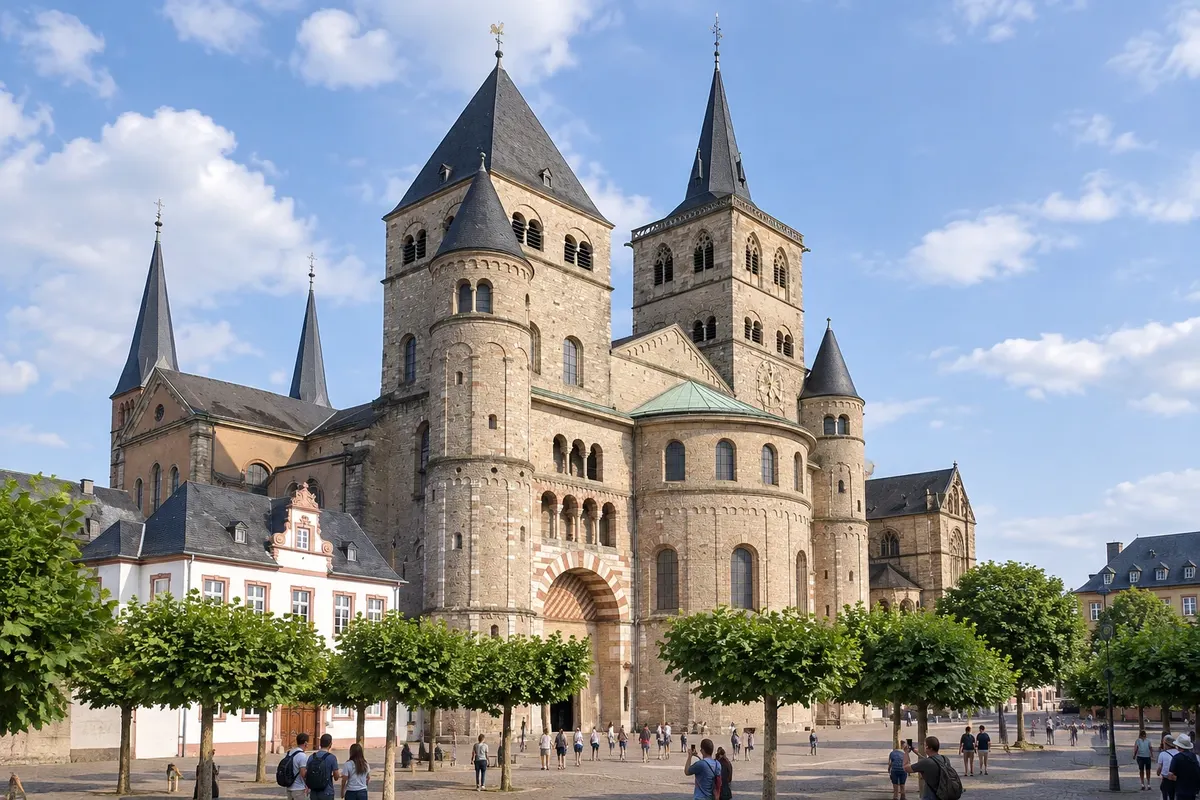
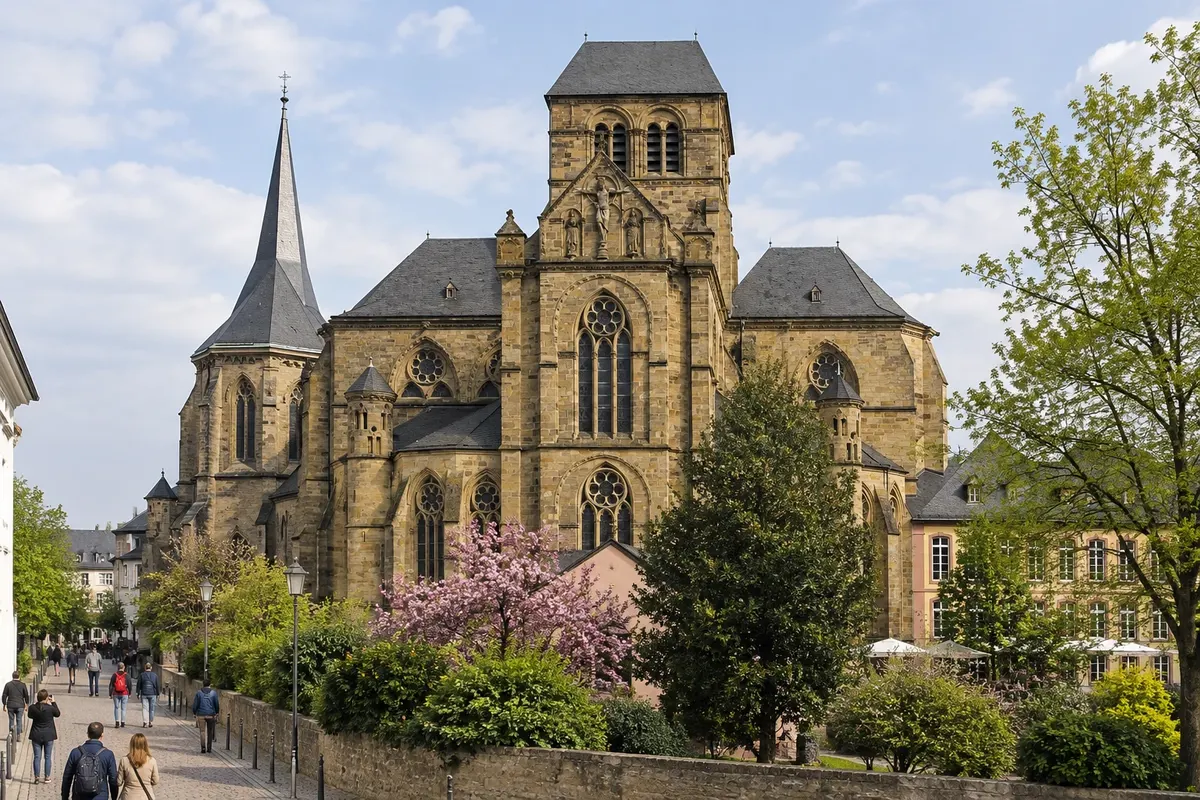
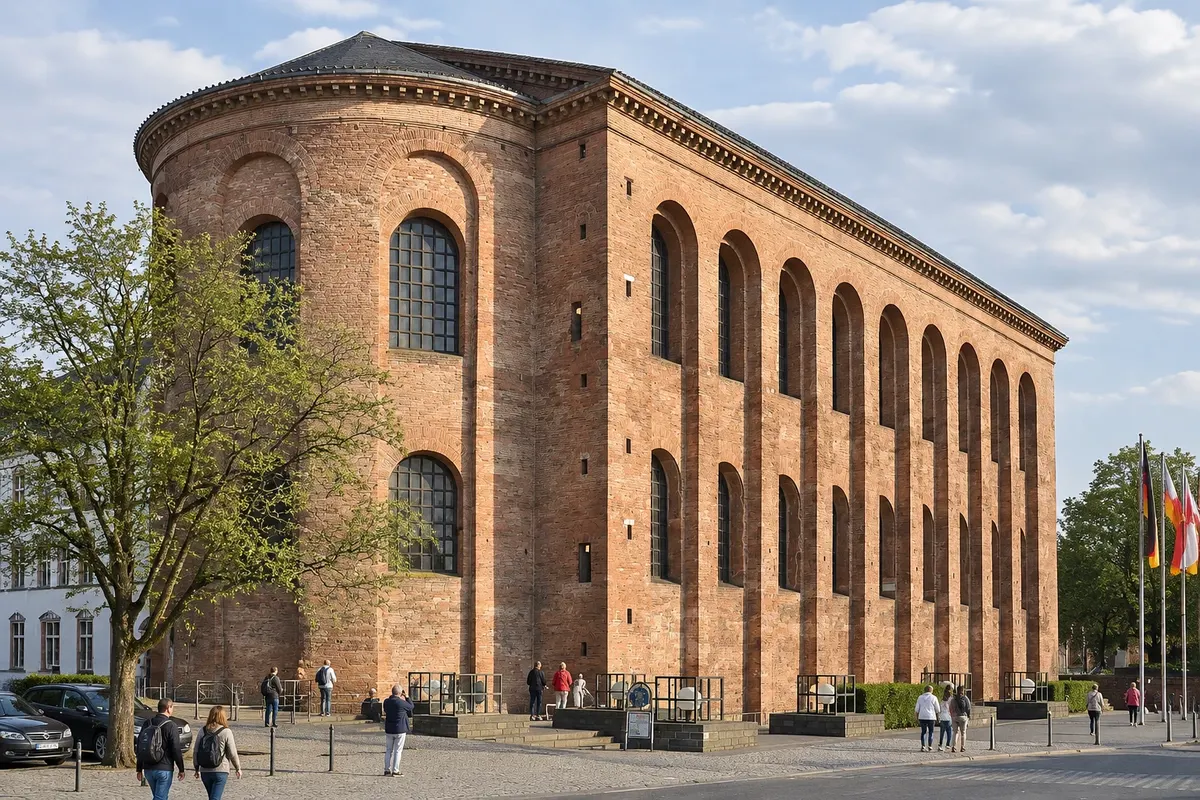
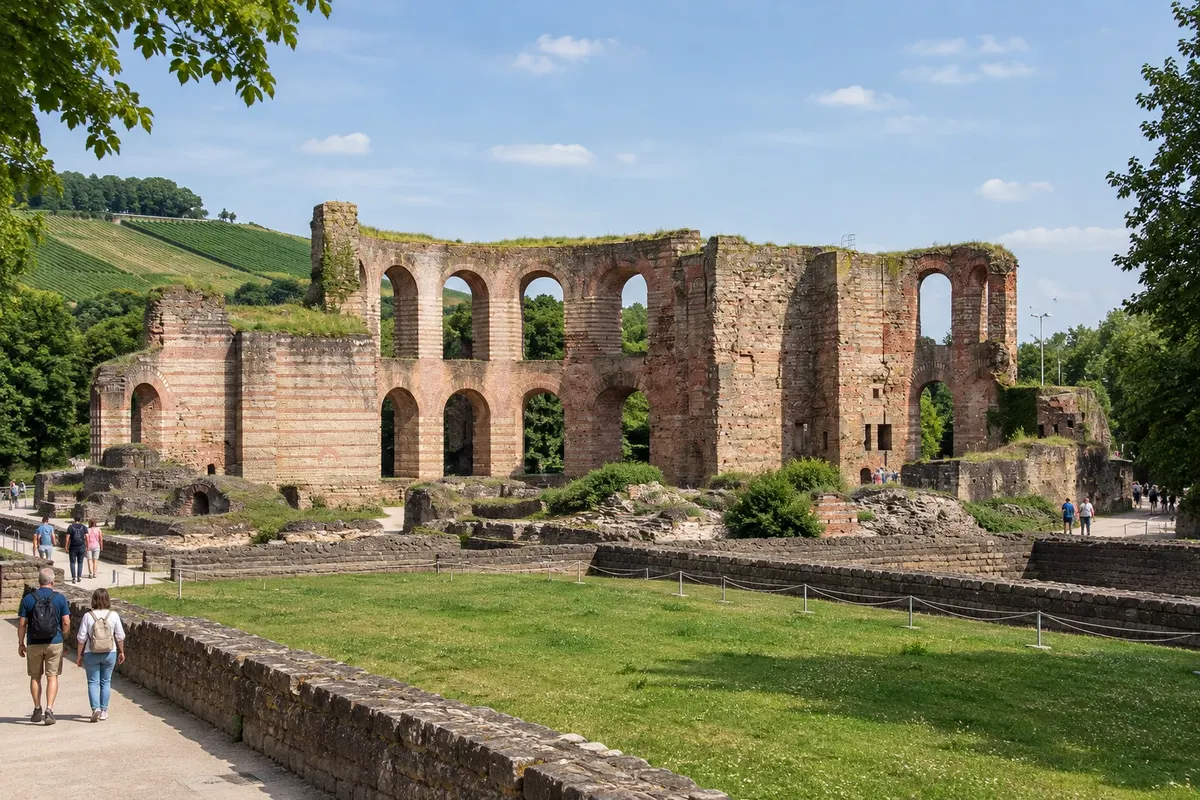
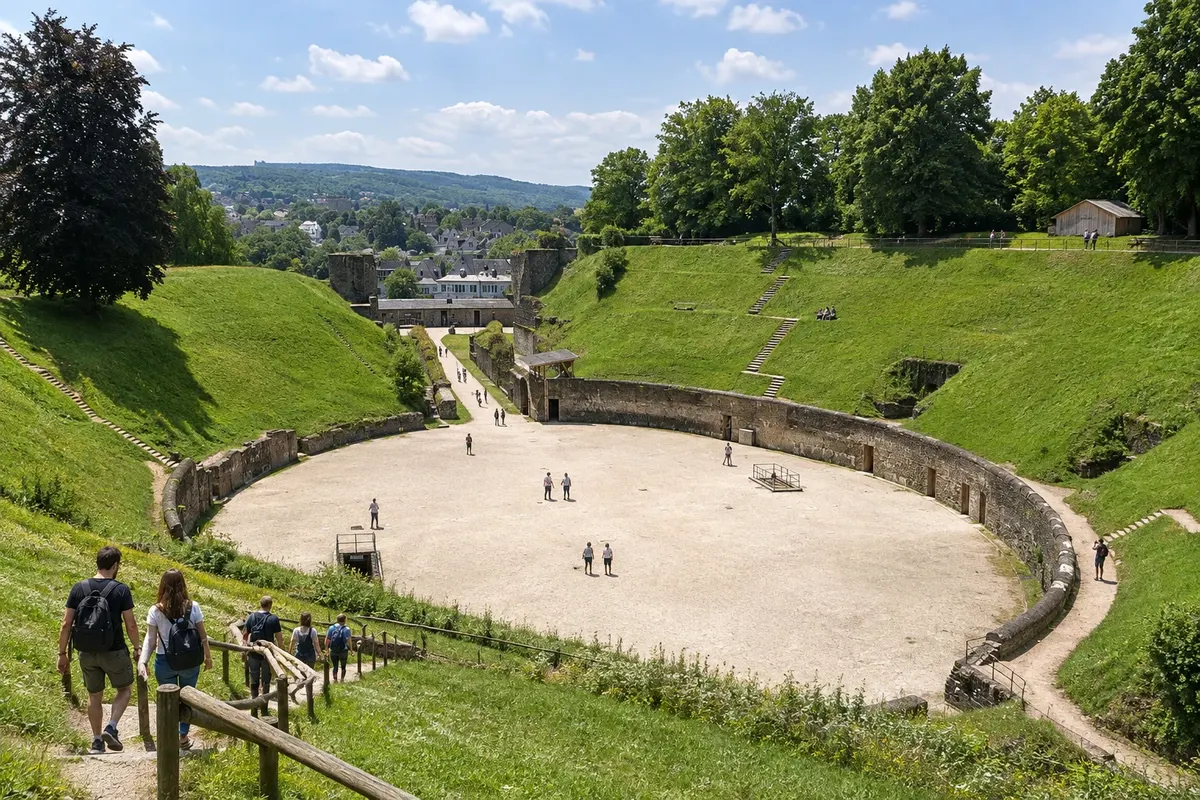
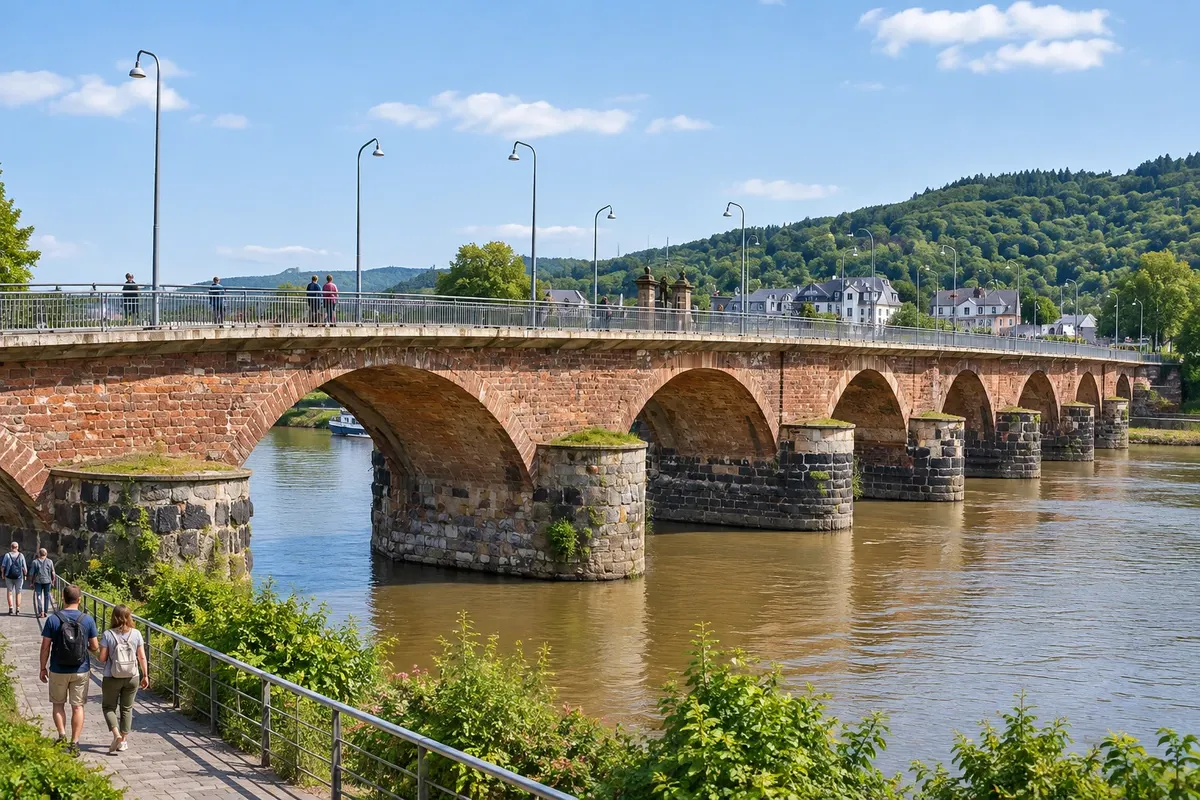
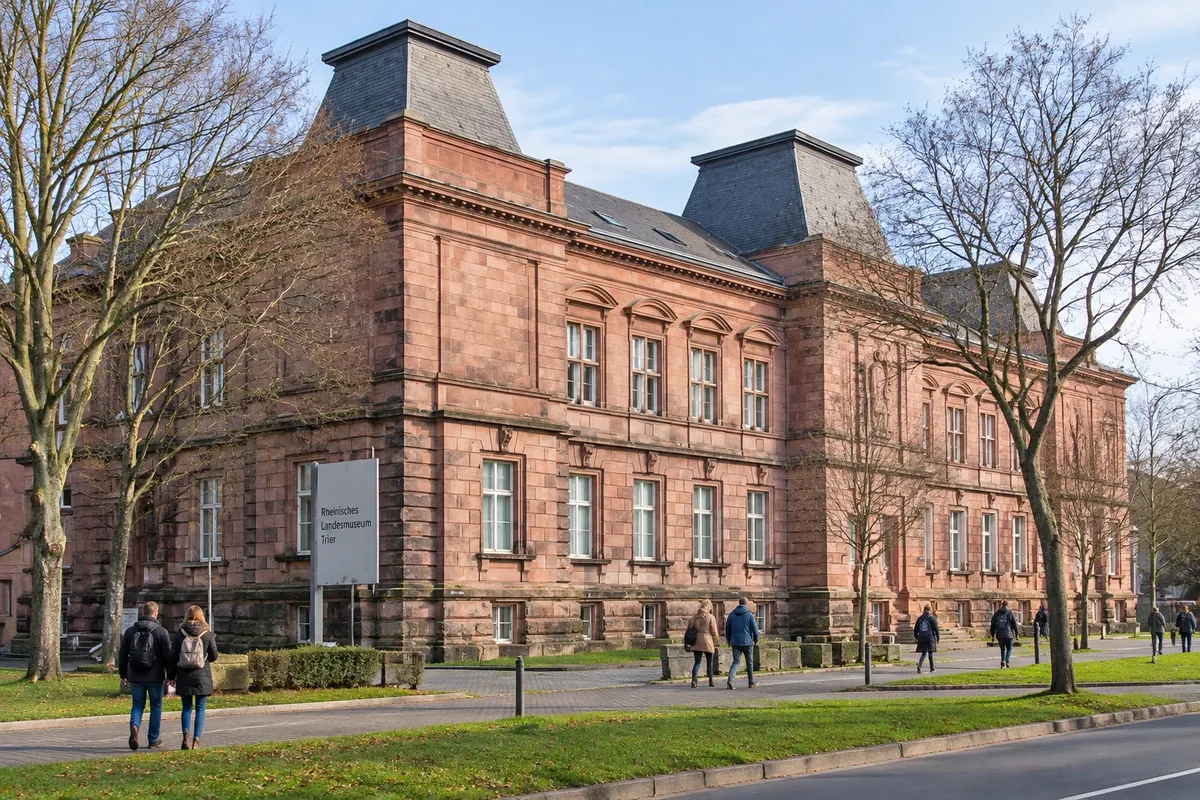
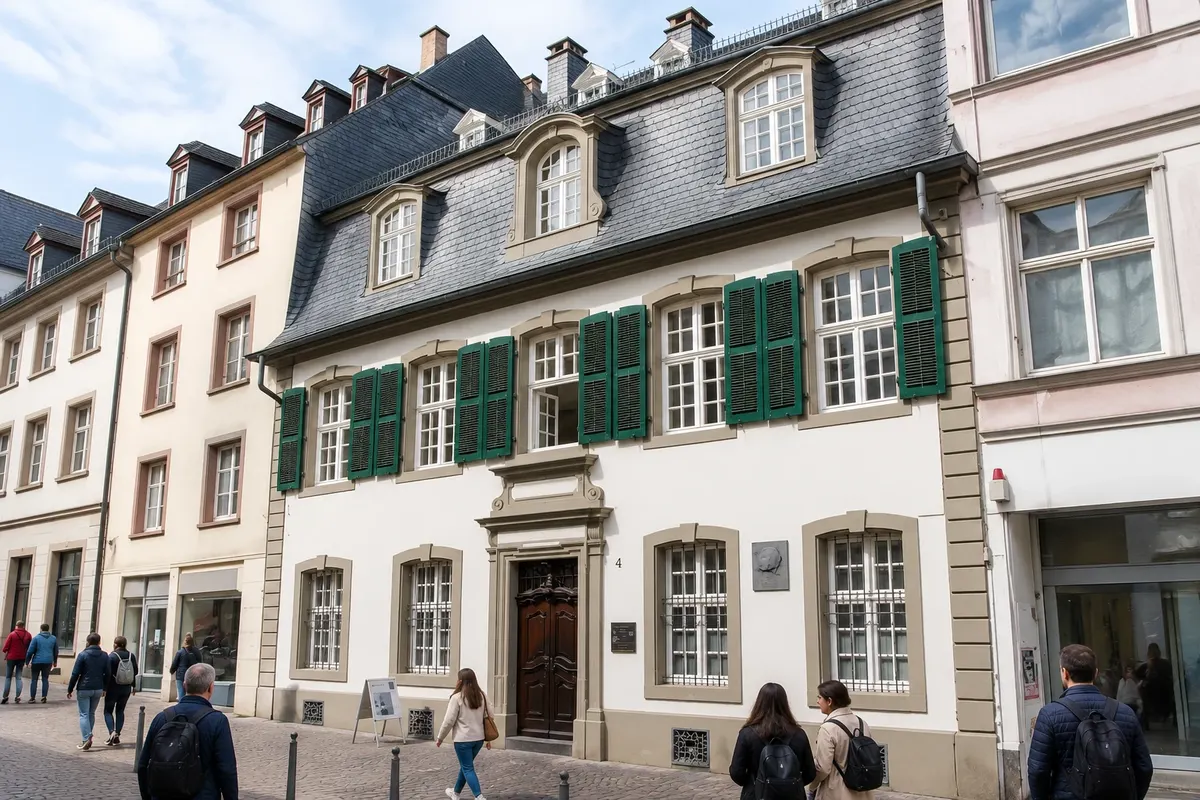
In the far west lies Trier, founded by the Romans as Augusta Treverorum and considered the oldest city in Germany. The Porta Nigra, the Konstantinbasilika, the imperial baths, the amphitheatre, the Roman bridge, the cathedral and the Liebfrauenkirche form an ensemble declared a World Heritage Site by UNESCO in 1986. Karl Marx was born in the city, and the house where he was born is now a museum.
Wine is part of the local culture: Riesling dominates the slopes, and wine festivals take place from late summer into autumn. The regional train connects Koblenz, Cochem and Trier along the river, and the excursion boats usually operate from March or April to October.
This destination brings together 3 cities: Cochem, Bernkastel-Kues, Trier.


 Brazil
 Argentina
 Chile
Chile Colombia
 Peru
Peru Uruguay
 Belgium
 Spain
Spain France
 Greece
 the Netherlands
 Ireland
 Italy
Italy Portugal
 the United Kingdom
 Switzerland